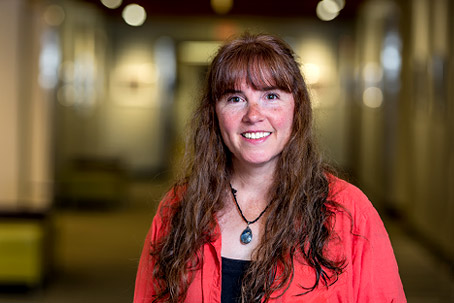
Tina Hudson is a Professor of Electrical and Computer Engineering at Rose-Hulman Institute of Technology , specializing in analog/digital systems, electronic device modeling, and engineering education. With a Ph.D. from Georgia Institute of Technology (2000), she focuses on curriculum innovation, critical thinking pedagogy, and industry collaboration. Education : Ph.D. (2000), MSEE (1995), BEE (1992) from Georgia Tech; BS in Engineering from Berry College (1992). Research Interests span test and product engineering for analog/mixed-signal circuits, behavioral analysis in analog circuit education, and integrated circuits emulating neural systems. Her work emphasizes industrial partnerships and pedagogical research. Publication Trends include engineering education methodologies (2014-2008), industry-driven curriculum design (2009), and analog/digital hybrid systems (2009-2006). Key subfields: pedagogical innovation, industrial testing, neural emulation, and hysteresis control. Scientific Awards : Dean’s Outstanding Teacher Award (2014). Teaching & Industry Engagement : Develops curricula for test engineering, conducts workshops for pedagogical research, and collaborates with Teradyne, Micron, and Texas Instruments to enhance student internships and lab resources.
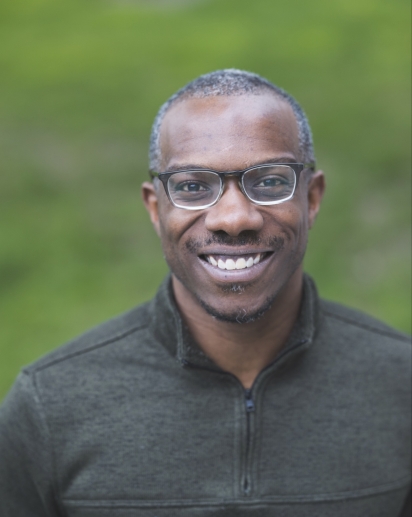
James Daniel Whitfield is an Associate Professor of Physics at Dartmouth College, specializing in quantum computing, quantum information science, and computational chemistry. His research focuses on the intersection of quantum mechanics and computational methods, with applications to electronic structure and fermionic systems. Ph.D. and M.A. in Physics from Harvard University B.S. in Physics from Morehouse College The Whitfield Group explores quantum simulations for physical systems, bridging classical and quantum computing techniques. Their work includes basis set optimization for NISQ-era quantum devices, entanglement spectrum analysis, and algorithmic solutions for quantum chemistry. Current projects funded by the Department of Energy and Army Research Office address: Quantum Chemistry for Quantum Computers (QCQC) Optimal Basis Set Design for Computational Chemistry Key research areas include quantum algorithm limitations, hybrid quantum-classical interfaces, and stochastic processes in uncertain systems. The group also develops educational tools like the qbraid platform for quantum technology training. Students and Team Members : Brent Harrison Weshi Wang Notable Collaborations : Viola Research Group Hautier Group qBraid Quantum Research
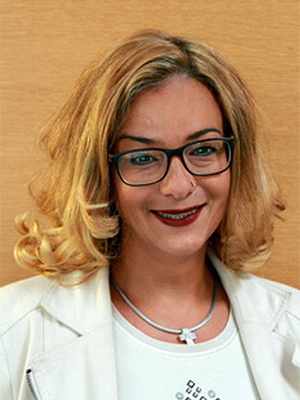
Prof. Dr.-Ing. Tamara Bechtold holds dual academic positions as Lecturer and group leader at the Institute of Device Systems and Circuit Technology, University of Rostock, and Professor for Mechatronic Systems at Jade University of Applied Sciences in Wilhelmshaven. Her research integrates advanced mathematical methodologies with engineering applications, focusing on computational efficiency and multi-physics system modeling. Her primary research domains include: Model Order Reduction for large-scale dynamical systems Topology optimization in engineering design Multi-physical modeling of micro-mechatronic components System-level simulation techniques Compact modeling approaches Professionally, she leads the Steinbeis Transfer Center Finite Element Simulation, Model Order Reduction and Optimal Design, serves on the board of VDE North-West (Association for Electrical, Electronic and Information Technologies), and contributes to the steering committees of the EuroSimE conference. Her academic activities span both theoretical development and industrial application transfer through her Steinbeis leadership role.
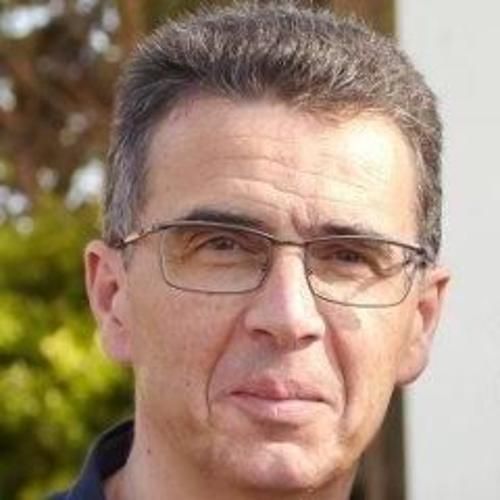
Professor Rolf Drechsler is affiliated with the Department of Mathematics and Computer Science at the University of Bremen, where he maintains an active research profile in formal verification, hardware design, and quantum computing. His office is located in the Multi-purpose high-rise building (MZH) 4330, and he can be reached at drechsler@uni-bremen.de or drechsler@informatik.uni-bremen.de. Dr. Drechsler's research focuses on formal verification techniques, particularly polynomial formal verification methods, binary decision diagrams (BDDs), in-memory computing architectures, and quantum circuit verification. His work bridges theoretical computer science with practical hardware implementation challenges. Notably, he has recently explored the integration of large language models (LLMs) with hardware verification and design automation, representing an emerging interdisciplinary research direction. An analysis of his 2024-2025 publications reveals a strong emphasis on verification methodologies for emerging computing paradigms. His research spans quantum computing verification (qSAT, quantum circuit debugging), in-memory computing (MAGIC-based architectures, memristive crossbars), and traditional hardware verification enhanced by AI techniques. The publications show a pattern of addressing verification challenges in novel computing architectures while maintaining theoretical rigor in formal methods. Professor Drechsler has made significant contributions to Binary Decision Diagram optimization, formal verification of arithmetic circuits, and hardware security. His work on polynomial formal verification represents a distinctive research thread that has evolved over recent years, addressing verification challenges for sequential circuits, approximate adders, and multi-valued logic circuits.
Heikki Tanila is a Professor of Translational Neuroscience and Deputy Head of Department at the A.I. Virtanen Institute for Molecular Sciences, Faculty of Health Sciences, University of Eastern Finland. He leads the Neurobiology of Memory Research group, focusing on cellular mechanisms that mediate selective loss of recent memory in early Alzheimer's Disease. His work bridges basic neuroscience with clinical applications, particularly in neurodegenerative disorders. Professor Tanila's research interests center on Alzheimer's disease mechanisms, memory dysfunction, and translational neuroscience. His work extensively utilizes animal models, particularly transgenic mouse models of Alzheimer's disease, to investigate the cellular and molecular basis of memory loss. He employs sophisticated techniques including electrophysiology, behavioral testing, neuroimaging (particularly fMRI), and molecular analyses to understand disease progression and identify potential therapeutic targets. His research has made significant contributions to understanding the relationship between amyloid pathology, tau pathology, and cognitive decline. Analysis of Professor Tanila's recent publications reveals a strong focus on Alzheimer's disease mechanisms and potential interventions. His work spans from basic investigations of cellular mechanisms in memory loss to translational studies examining potential therapeutic approaches including immunotherapy, metabolic interventions, and genetic modifications. A notable trend is the increasing integration of advanced imaging techniques with traditional behavioral and molecular approaches to provide comprehensive understanding of disease processes. His research often examines the intersection between different pathological processes in Alzheimer's disease, including amyloid and tau pathology, neuroinflammation, and metabolic dysfunction. Professor Tanila maintains an active research program with numerous ongoing projects, including the Neuro-Innovation project (2021-2026) and the NOVEL MSCA Postdoctoral Programme (2024-2029). His laboratory, the Neurobiology of Memory Research group, represents a significant center for Alzheimer's disease research in Finland, contributing to both national and international collaborative efforts in understanding and treating neurodegenerative disorders.
Olli Gröhn is a Professor at the A.I. Virtanen Institute for Molecular Sciences, Faculty of Health Sciences, University of Eastern Finland. His research focuses on biomedical MRI , neuroimaging, traumatic brain injury (TBI), and epileptogenesis. He leads projects including Neuro-Innovation (2021–2026) and the NOVEL MSCA Postdoctoral Programme (2024–2029), advancing preclinical MRI methodologies. Dr. Gröhn's work emphasizes the development of novel MRI techniques—such as zero-echo-time fMRI and multi-coil TMS—for studying brain function, neurodegeneration, and injury biomarkers. His research spans: Functional and structural brain mapping in rodent models Biomarker discovery for post-traumatic epilepsy Advanced neurostimulation integrated with ultra-high-field MRI Sensory processing and neural circuit analysis His recent publications (2022–2025) demonstrate strong trends in quantitative MRI validation, multi-modal biomarker development, and innovative neuroimaging protocols for awake animal studies. Research frequently addresses TBI mechanisms, Alzheimer's pathology, and translational neurotechnology refinement. Dr. Gröhn collaborates extensively in multicenter consortia (e.g., EpiBioS4Rx) to standardize preclinical neuroimaging and enhance reproducibility in biomarker studies.
Angel Quiros Olozabal is an Associate Professor at the University of Cadiz, affiliated with the Department of Automatic, Electronic, Computer Architecture and Networks Engineering. His research focuses on hardware development, FPGA optimization, and circuit design, with applications in Boundary Scan (JTAG) test automation, power quality monitoring, neuromorphic systems, and biomedical devices like TMS coils. His work spans diverse subfields including digital signal processing, electromagnetic modeling, and educational technologies. Key methodologies involve VHDL synthesis, boundary element analysis, and real-time system implementation. Current research trends emphasize privacy-preserving data collection protocols, thermal modeling for medical devices, and low-cost embedded platforms for circuit emulation. Scientific awards are not explicitly mentioned in the provided data. No student advisement records were found. For collaboration or inquiries, his email is angel.quiros@uca.es .
Claude Thibeault is a Professor in the Department of Electrical Engineering at École de technologie supérieure (ÉTS), with a Ph.D. from Polytechnique Montréal and a B.Eng. from UQAC. His research focuses on microelectronics , integrated circuit testing , and fault tolerance , particularly in aerospace and FPGA systems. He leads the LaCIME lab, which specializes in communications and microelectronic integration. His work spans radiation effects on circuits , asynchronous design , and test methodologies . Recent publications analyze cosmic radiation impacts on FPGA architectures and knowledge-based diagnostic systems . He supervises numerous graduate students in projects related to hardware acceleration , chaotic communication systems , and power-aware testing . LaCIME emphasizes industry collaboration and technology transfer , with research axes in intelligent systems and connectivity . The lab actively recruits students with backgrounds in electrical or microelectronics engineering.
Will Roseby is a Visiting Research Fellow at the School of Psychology, University of Sussex, where he examines cortical organization in neurodevelopmental differences such as synaesthesia and autism. His work integrates neuroscience with computational modeling and statistical approaches to derive valid biological inferences. PhD in Neuroscience from University of Sussex (2020-2024) MRes in Experimental Neuroscience (Distinction) from Imperial College London (2019-2020) BSc in Biochemistry (1st) from Imperial College London (2016-2019) Roseby's research spans neurodevelopmental disorders, sensory neuroscience, and interdisciplinary methodologies. He has published on topics ranging from Drosophila behavior under sensory perturbation to the psychological impact of psychedelic use and energy dynamics in Photosystem II. His work emphasizes experimental design, including optogenetics and thermogenetics in fruit fly larvae studies. Recent publications highlight trends in computational neuroscience, sensory processing, and the intersection of biochemistry with psychological outcomes. These studies often involve connectome data, microRNA profiling, and mechanistic analysis of neural circuits. Distinction in MRes Experimental Neuroscience First-Class BSc in Biochemistry Roseby has contributed to postgraduate teaching as a postdoctoral researcher by designing master's practical sessions on optogenetics and thermogenetics. During his PhD, he participated in the Doctoral Tutor scheme at Sussex, assisting in modules like Cell Biology, Neural Circuits, and Research Methods in Biochemistry. His affiliations include both the Psychology and Life Sciences departments at Sussex, reflecting his interdisciplinary focus.
Jiaqi Gu is an Assistant Professor at the School of Electrical, Computer and Energy Engineering at Arizona State University. His work bridges photonics, quantum computing, and machine learning to develop next-generation hardware for efficient computing. PhD in Electrical and Computer Engineering, University of Texas at Austin (2023) His research focuses on emerging hardware design (photonics, post-CMOS electronics, quantum), hardware-algorithm co-design , AI/ML algorithms , and electronic-photonic design automation . He explores how photonic and quantum systems can be optimized for AI workloads, with recent work on differentiable photonic simulation, compact optical neurons, and quantum component placement tools. His publications include 20+ papers in 2025 on topics like photonic tensor cores, optical neural networks, and quantum-aware design. Key trends: integrating machine learning with photonic device simulation, optimizing photonic circuits for adversarial robustness, and advancing quantum computer compilation. Scientific awards include: Best Paper at ASP-DAC 2020 Best Poster at NSF Workshop on Machine Learning Hardware 2020 Margarida Jacome Dissertation Prize 2023 Outstanding Dissertation Award 2024 Dr. Gu advises students through EEE 490/590/790 courses and leads the ScopeX research group , which develops tools for photonic and quantum hardware design.
Elodie Gratreau is a permanent professor and researcher at the University of Technology of Compiègne (UTC) , affiliated with the COSTECH Laboratory . Her work bridges philosophy, epistemology, and psychiatry, with a focus on the Research Domain Criteria (RDoC) project. She investigates how technologies reconfigure mental disorder classifications and examines the ontological, methodological, and ethical implications of these shifts. PhD in Epistemology of Psychiatry (UTC, ongoing since 2020) Master 2 in Epistemology, History of Science and Technology (University of Nantes, 2020) Engineering Degree in Biological Engineering (UTC, 2019) Her research emphasizes the integration of biological and behavioral data in psychiatry, advocating for an "ethics of ambiguity" to address epistemic pluralism. She contributes to interdisciplinary seminars ( PHITECO ) and supervises research dissertations in science humanities. Recent publications analyze the RDoC project's governance mechanisms, transdiagnostic biomarkers, and tensions between technological integration and psychiatric pluralism. She also engages in public science communication, notably at the Pint of Science festival.
John Joshua Lawrence, Ph.D. is an Associate Professor in the Department of Pharmacology and Neuroscience at the Texas Tech University Health Sciences Center School of Medicine. His research program is deeply integrated with the Garrison Institute on Aging, the Center of Excellence for Translational Neuroscience and Therapeutics, and the Center for Excellence in Integrated Health, providing him with a comprehensive understanding of Alzheimer's disease pathogenesis and its impact on hippocampal learning. Dr. Lawrence's research focuses on the intersection of metabolic health and neurological function, with particular emphasis on nutrigenomics, cellular and synaptic physiology of Alzheimer's disease, excitation/inhibition balance in disease states, hippocampal learning and memory circuitry, GABAergic inhibition, cell type specificity of neuromodulation, antioxidant depletion across lifespan, neuroinflammation, effects of diet on healthy aging, computational neuroscience, and bioinformatics. His work investigates how vitamin A homeostasis disruption contributes to Alzheimer's disease pathogenesis, with a specific focus on all-trans retinoic acid (ATRA) depletion in memory circuits as an early event leading to reduced retinoic acid receptor occupancy, excess reactive oxygen species, and mitochondrial dysfunction. His recent publications demonstrate a clear research trajectory focused on Alzheimer's disease mechanisms and therapeutic interventions, particularly examining vitamin A/retinoic acid pathways, cholesterol modification strategies, and the convergence of artificial intelligence with neuroscience for neurological disorder diagnosis. This work spans both basic science investigations of molecular and cellular mechanisms and translational applications for therapeutic development. Dr. Lawrence currently leads two major NIH R01-funded projects: one investigating transcriptional dysfunction in dentate gyrus cell types related to retinoic acid responsive genes in Alzheimer's protection, and another examining how HDAC inhibition and vitamin A supplementation can boost retinoic acid-sensitive gene transcription to prevent Alzheimer's-related learning deficits. He also studies vitamin D deficiency in health disparities and cognitive decline, particularly among Hispanic populations. His laboratory maintains active research collaborations across Texas Tech University faculty in Engineering, Biology, Nutritional Sciences, and the Center for Biotechnology and Genomics, creating a multidisciplinary approach to understanding and addressing the complex mechanisms of Alzheimer's disease and healthy aging.
Michael Tempelmeier is a researcher at the Chair of Information Security, Technical University of Munich (TUM), specializing in hardware security and cryptographic implementations. His work focuses on authenticated encryption, lightweight cryptography (NIST LWC/CAESAR), and the development of evaluation frameworks for cryptographic hardware. He actively contributes to teaching, holding the Zertifikat Hochschullehre der Bayerischen Universitäten and leading courses like Angewandte Kryptologie and SmartCard Projektpraktikum . Tempelmeier's research centers on optimizing and securing cryptographic implementations for embedded systems. Key areas include: Design of hardware APIs for lightweight cryptography Side-channel and fault-attack countermeasures Trusted hardware gateways for IoT devices Efficient benchmarking methodologies for cryptographic hardware His publications demonstrate consistent focus on hardware vulnerabilities, cryptographic efficiency, and standardized evaluation frameworks. He maintains active involvement in tool development (e.g., MaskVer for detecting flawed masking implementations) and contributes to major projects like the Hardware API for Lightweight Cryptography. No awards or direct student supervision are mentioned in the provided text.
Prof. Dr. Simon Jacob is a leading researcher in translational neurotechnology at the Technische Universität München . As head of the Translational NeuroTechnology Laboratory and associate member of multiple neuroscience networks, he bridges rodent models with human neurosurgical research to unravel cognitive mechanisms. Board-certified neurologist Director of preclinical and clinical BCI research His research focuses on Neuronal basis of higher cognition Dopamine's role in executive function Neuromodulation of mental health using advanced methods like optogenetics , multi-scale neuroimaging , and computational modeling . Recent scientific publications reveal groundbreaking insights into Prefrontal cortex organization Striatal dopamine signaling Neuronal distraction filtering with implications for brain-computer interfaces and cognitive disorders. Recognized with a prestigious ERC Consolidator Grant , he mentors a diverse team of students spanning medicine, psychology, and AI. His teaching includes courses on neuroanatomy, cognitive neuroscience, and translational approaches to psychiatric disorders at TUM's elite programs.
Veeti Lahtinen is a Doctoral Researcher at Aalto University's Department of Electronics and Nanoengineering. He is affiliated with the Marko Kosunen Group, contributing to research in analog and microwave circuit design. His work focuses on automation frameworks for circuit design and verification. Research Focus: Integrated circuit design automation Specializations: Analog-to-digital converters, Microwave integrated circuits, Procedural verification His recent publications appear in top conferences like SMACD and NorCAS, emphasizing automated design methodologies. Reach him at veeti.lahtinen@aalto.fi .