Dr. Daniel Roxbury is an Associate Professor and Graduate Director at the Department of Chemical, Biomolecular and Materials Engineering within the University of Rhode Island's College of Engineering. With expertise in nanoscience and carbon nanomaterials, his research focuses on nano-bio interactions, developing functionalized nanotubes for biomedical applications and environmental monitoring through his NanoBio Engineering Laboratory. His work spans multiple disciplines including: Biomedical nanosensors Smart wearable biomaterials Targeted drug delivery systems Environmental nanotechnology Single-molecule imaging Nanotoxicology Recent publications emphasize machine learning-enhanced spectral analysis, coral reef conservation nanotechnology, and wearable stress monitoring textiles. His 2024 ACS Nano study introduces AI-driven macrophage phenotyping, while 2023 Nature Nanotechnology work explores coral reef restoration strategies using nanomaterials. Awarded the 2019 NSF CAREER grant for cellular nanometrology, he leads multiple NIH-funded projects including: $820,000 NSF CAREER: Spectral Imaging for Sub-Cellular Nanometrology $140,000 Miriam Hospital COBRE: Cortisol Detection Textiles $700,000 NSF EAGER: Multiplexed Wound Biomarker Detection His laboratory houses state-of-the-art equipment including: Near Infrared Hyperspectral Microscope Custom NIR Fluorescence Spectrometer Jasco UV/VIS/NIR Spectrophotometer Biosafety Cabinet Cell Culture Incubator Cryo-Storage System
Maiken Mikkelsen is the James N. and Elizabeth H. Barton Associate Professor of Electrical and Computer Engineering at Duke University, promoted to Professor in 2025. She holds a secondary appointment as Associate Professor of Physics (2023–present) within Trinity College of Arts & Sciences. Her research bridges Nanophotonics , Quantum Materials , and Ultrafast Spectroscopy , focusing on plasmonic nanostructures and nonlinear metasurfaces for quantum optics and optoelectronic applications. Education: Ph.D. in Physics (University of California, Santa Barbara, 2009), B.S. in Physics (University of Copenhagen, 2004), postdoctoral work at University of California, Berkeley. Her work explores Plasmonics and Quantum Optics to engineer nanoscale light-matter interactions, enabling transformative technologies in Single-Photon Sources , Ultrafast Photodetectors , and Active Metasurfaces . Recent projects include real-time tunable lasing and polarization-controlled nanocavity systems. Her 2016–2025 publications highlight breakthroughs in plasmonic fluorescence enhancement, hot electron dynamics, and room-temperature quantum devices. Grants include Nano Solutions On-Chip (Triad National Security, LLC, 2025–2029) and Meta-Imaging (Air Force Office of Scientific Research, 2021–2026). Her lab, jointly based in Electrical & Computer Engineering and Physics, has graduated PhD students Eunso Shin and Hengming Li, and actively engages in STEM outreach initiatives.
Peng Xiong is a Professor in the Department of Physics at Florida State University, with a research focus on electron and spin transport in low-dimensional quantum materials. He is affiliated with the Integrative NanoScience Institute (INSI) and has made significant contributions to mesoscale physics, spintronics, and organic/solid-state hybrid systems. B.S. in Physics (1987, University of Science and Technology of China) Ph.D. in Physics (1993, Brown University) Postdoctoral Fellowship (1993-1997, University of California at San Diego) Research Interests: Mesoscale Physics: Quantum phase transitions and fluctuation effects in 2D and 1D systems, semiconductor nanowires, carbon nanotubes, and nano-magnetism. Spintronics: Spin-polarized transport in hybrid structures (ferromagnet/normal metal, ferromagnet/superconductor, ferromagnet/semiconductor), magnetic semiconductors, and spin injection/detection. Organic/Solid-State Hybrids: Nanoscale biosensors utilizing magnetic and electrical principles, bio-mechanical devices, organic/solid interfaces, and template-directed nanostructure self-assembly. Publication Trends: His recent work spans superconducting fluctuations in ultrathin films, chirality-induced spin transport in semiconductors, interplay between structural chirality and spin-orbital effects, ion migration dynamics in 1D hybrids, quantum interference in nanowire loops, and modulation of nanomaterial properties through surface defect engineering. These studies often combine material synthesis, nanofabrication, cryogenic transport, and tunneling measurements. Scientific Recognition: Alfred P. Sloan Research Fellowship (1998) University Teaching Award (2003) PAI Award for Excellence (2004) Developing Scholar Award (2007) Fellow of the American Physical Society (2012) Advising Legacy: He has mentored numerous graduate students including Jeffrey Parker (Ph.D. 2003) Yongqing Li (Ph.D. 2003) Tianhan Liu (Ph.D. 2021) Jacob Hudis (Ph.D. 2021) and continues to guide current candidates like Yuwaraj Adhikari and Zhenqi Hua. Experimental Facilities: The lab at FSU features advanced equipment for nano-fabrication, including clean rooms, mask aligners, and thin film deposition systems. Cryogenic capabilities extend to dilution refrigerators (15 mK) and He3/He4 cryostats for ultralow-temperature studies of magnetic and superconducting systems.
Adam Khalifa is an Assistant Professor in the Department of Electrical & Computer Engineering at the University of Florida. His research focuses on low-power analog/RF/Mixed-mode ASIC design, miniaturization of biomedical devices, wireless powering solutions, and neural stimulation/recording techniques in animal models. He holds a PhD from Johns Hopkins University and degrees from The Hong Kong University of Science and Technology. His work emphasizes implant packaging, electrode microfabrication, and coil design for medical applications. Key research areas include developing energy-efficient wireless systems for implanted devices, such as magnetoelectric antennas and galvanic body-coupled powering. He has pioneered advancements in miniaturized implantable devices, including the 'Microbead' stimulator. His NIH T32 Fellowship (2019) and Ferdinand H. Fellowship (2018) reflect his impactful contributions. Publications highlight innovations in wireless power transfer, metamaterials for biomedical implants, and injectable microdevice fabrication. His work spans from circuit-level modeling to in vivo validation, emphasizing both technical and biological integration challenges. Collaborative efforts address challenges like implant migration tracking via MRI and energy harvesting for battery-free systems.
Josh Atkinson is an Assistant Professor in the Department of Civil and Environmental Engineering and the Omenn-Darling Bioengineering Institute at Princeton University. His research focuses on using synthetic biology and protein engineering to control electron transport in microbes for environmental applications, such as bioelectronic sensors and bioremediation. The Atkinson Lab investigates microbial energy processing, biofilm-electronic interfaces, and sustainable biotechnologies. Affiliations: Princeton University, Omenn-Darling Bioengineering Institute Research Interests: Microbial electron transport, bioelectronic systems, environmental monitoring, sustainable catalysis His work bridges disciplines like electrochemistry, bioengineering, and environmental science to engineer living materials for real-world challenges. The lab recruits students across levels, emphasizing diversity and interdisciplinary collaboration. Recent projects include real-time contaminant sensors and light-controlled biofilm patterning. Articles highlight innovations in bioelectronics and microbial systems engineering. The lab’s future directions involve scaling-up bioelectronic devices and enhancing microbial community understanding.
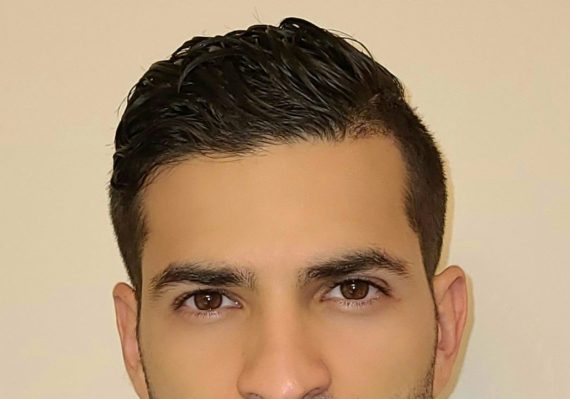
Dr. Honggang Wang is a Professor in the Department of Electrical & Computer Engineering at the University of Massachusetts Dartmouth. He holds a PhD from the University of Nebraska-Lincoln and MS/BE degrees from Southwest Jiaotong University, China. His research focuses on Internet of Things (IoT), Wireless Body Area Networks (BAN), Multimedia Communications, and Connected Vehicle Systems. Notable projects include developing lightweight authentication systems for healthcare IoT and mmWave communication for vehicle safety. Editor-in-Chief of IEEE Internet of Things Journal since 2020 Former Chair of IEEE Multimedia Communications Technical Committee (2018-2020) Current Chair of IEEE eHealth Technical Committee (2020-2021) His work emphasizes secure, low-power communication protocols for medical devices and vehicular networks. Over 200 publications in top-tier venues have earned him six best paper awards and IEEE Fellow recognition.
Prof. Dr. Markus Schwarzländer leads the Arbeitsgruppe for Plant Energy Biology at the Institute for Plant Biology and Biotechnology (WWU Münster) . His research focuses on mitochondrial physiology, redox signaling, and biosensor development in Arabidopsis thaliana and other plant species, integrating molecular biology with systems-level analyses to understand energy regulation. Key Research Areas: Mitochondrial-NAD(P)H dynamics Redox-regulated signaling networks Organelle communication Stress-adaptive metabolism Recent work highlights Golgi-localized mitochondrial uncoupling proteins , chloroplast-mitochondria redox coupling , and mitochondrial calcium uniporter function . His group employs cutting-edge fluorescent biosensors and proteomic approaches to dissect energy physiology. Students benefit from hands-on training in bioimaging , metabolic modeling , and organelle biology through iMoPLANT and Life Sciences programs. Scientific Awards: DAAD Fellowship (2019) As an active member of the Faculty of Biology , he collaborates with international institutions including University of São Paulo , CEA France , and Siberian Institute of Plant Physiology , while maintaining a robust publication record in top journals like Plant Cell and Nature . His teaching emphasizes integrative plant sciences and advanced biosensing techniques for B.Sc. and M.Sc. students.
Dr. G.K. Knopf is a Professor in the Department of Mechanical & Materials Engineering at Western University, Canada. He holds a Ph.D. (1991), M.Sc. (1987), and B.E. (1984) from the University of Saskatchewan. His work bridges product design, advanced manufacturing, and bio-inspired technologies. Research Focus: Dr. Knopf’s research spans 3D shape reconstruction , laser microfabrication , micro-optics , and bioelectronic imaging arrays . Recent projects emphasize light-driven actuators , flexible electronics , and graphene-based inks for printing circuits on unconventional substrates like silk and paper. Publications: Over 150 peer-reviewed works, including two edited CRC Press volumes ( Smart Biosensor Technology , Optical Nano and Micro Actuator Technology ). Key contributions involve non-lithographic fabrication , bacteriorhodopsin photodetectors , and self-organizing feature maps for data visualization. Awards/Patents: Co-inventor of two U.S. patents (6,542,249 for 3D surface measurement; 7,573,024 for bioelectronic imaging arrays). Teaching: Leads graduate courses in Medical Device Design and Optomechatronic Systems , as well as undergraduate Mechatronics and Medical Device Development courses.
Florian 'Floyd' Mueller is a Professor of Future Interfaces at Monash University in Melbourne, Australia, where he directs the award-winning Exertion Games Lab within the Department of Human-Centred Computing (ranked among the top 20 HCI departments globally). Previously, he held positions at RMIT University, Stanford, University of Melbourne, Microsoft Research, MIT Media Lab, Fuji-Xerox Palo Alto Labs, Xerox Parc, and Australia's CSIRO. Mueller is a member of the prestigious ACM SIGCHI Academy, an honorary group recognizing leaders who have made substantial contributions to Human-Computer Interaction (HCI). Professor Mueller's research focuses on the intersections between technology, the human body, and play. He originated the concept of "Exertion Interface," arguing that we should not just design "easy-to-use" interactions when "hard-to-use" interactions can also be beneficial. His work spans movement-based interactions, whole-body interfaces, uncomfortable interactions, somaesthetics, and exertion games. Mueller's research methodology often employs research through design, design ethnography, and autoethnography to explore these novel interaction paradigms, incorporating mixed-reality, augmented reality, virtual reality, electronic muscle stimulation, biosensors, wearables, and drones. His recent publications demonstrate a continued focus on bodily interactions and human-computer integration, with particular emphasis on emerging subfields like WaterHCI and SportsHCI, brain-computer interfaces, and gustosonic (taste and sound) experiences. Mueller's work has evolved from foundational exertion game concepts to more sophisticated explorations of human-computer integration where technology becomes seamlessly woven into the fabric of human experience. Professor Mueller's contributions have been widely recognized with numerous awards including: Inaugural honouree of the Australian Design Centre's Design Honours Tall Poppy award for "intellectual and scientific excellence" 10 "Best Paper Honorable Mentions" (top 5%) from premier HCI conferences 2 "Best Paper" awards (top 1%) at CHI PLAY and CHI Shortlisted for the European Innovation Games Award (alongside Nintendo's WiiFit) Nokia Mindtrek Ubimedia Award Mueller has successfully secured some of Australia's largest and most competitive research grants, achieving a remarkable 14% success rate on Australian Research Council Discovery Project applications. He has served as General co-Chair for CHI PLAY'18 and CHI'20, becoming the first Australian-based researcher to spearhead HCI's highest-ranked publication outlet, and is currently General co-Chair for CHI'24. He is Associate Editor for tier A journals including Elsevier's IJHCS (International Journal of Human-Computer Studies) and ACM's IMWUT (Interactive, Mobile, Wearable and Ubiquitous Technologies). As director of the Exertion Games Lab, Mueller leads a research team whose innovations have been experienced by over 20,000 users across 3 continents and featured on the BBC, ABC, Discovery Science Channel, and Wired magazine. The lab has produced groundbreaking work in bodily interfaces, co-founding the CHI PLAY conference series and establishing new research directions in SportsHCI and WaterHCI through recent "Grand Challenges" papers. Mueller's lab continues to push boundaries with projects exploring brain-to-brain interfaces, lucid dreaming induction, and novel gustosonic experiences.
Deji Akinwande is a Professor and holds the Cockrell Family Regents Chair in Engineering #8 at The University of Texas at Austin's Chandra Family Department of Electrical and Computer Engineering. He earned his PhD in Electrical Engineering from Stanford University (2009) and an MS in Applied Physics from Case Western Reserve University. His research focuses on 2D materials, nanotechnology, and flexible electronics, with breakthroughs in atomristors, graphene-based biosensors, and wearable electronic tattoos. Key achievements include pioneering work on silicene, being elevated to IEEE Fellow (2021), and receiving the PECASE Award (Obama administration). His lab, the Akinwande Nano Research Group, explores nanoelectronics, bioelectronics, and RF systems for societal applications like health monitoring and 6G communications. Education: PhD, Electrical Engineering, Stanford University, 2009 MS, Applied Physics, Case Western Reserve University Awards: 2021 IEEE Fellow APS Fellow (2017) PECASE Award Moore Inventor Fellowship His research spans neuromorphic computing, flexible sensors, and energy-efficient memory devices. Over 100+ publications highlight his work on graphene, MXenes, and 2D material applications. He co-authored a textbook on carbon nanotubes and graphene (Cambridge University Press, 2011) and serves as an IEEE Distinguished Lecturer and editor for Nature NPJ 2D Materials . Lab and Collaborations: The Akinwande Nano Lab develops scalable 2D electronics, wearable health monitors, and next-gen RF components. Recent grants include NSF CHIPS Act funding and DoD support for 6G switches and neuromorphic hardware.
Philip Poole is a Professor of Plant Microbiology at the University of Oxford's Department of Plant Sciences and Senior Research Fellow at Somerville College. His research focuses on plant-microbe interactions, nitrogen fixation, and rhizosphere microbiology. He has led major international projects including the BBSRC-NSF Synthetic Symbioses program (2014-2019) and the India-UK Nitrogen Fixation Consortium (2016-2019). With 26 grants as PI from the UK's BBSRC, he has secured over £10.5 million in funding. His work includes pioneering bacterial Lux biosensors for metabolite analysis, transcriptomics under sterile conditions, and metatranscriptomics in soil to study microbiome-plant interactions. Current projects model nitrogen fixation biochemistry in legume nodules and investigate rhizobia lifecycle transitions from rhizosphere colonization to symbiotic bacteroid differentiation. He co-directs the Oxford Centre for Plants for the 21st Century and serves on editorial/advisory boards for Microbiology UK, The Journal of Bacteriology, and Pivot Bio. His contributions include elucidating the ammonia-alanine pathway for nitrogen secretion and demonstrating symbiotic auxotrophy dependencies in bacteroids. Key achievements include developing global mutagenesis strategies (INSeq) and advancing understanding of microbial community structures in the rhizosphere. His research integrates molecular, genetic, and systems biology approaches to address global challenges in sustainable agriculture.
Steven A. Soper is a Foundation Distinguished Professor in the Department of Chemistry and Mechanical Engineering at the University of Kansas. He serves as Director of the NIH-funded Center for BioModular Multi-Scale Systems for Precision Medicine and leads international collaborations with institutions like UNIST in South Korea. His career spans faculty roles at LSU, UNC, and KU, with interdisciplinary research bridging chemistry, biomedical engineering, and materials science. Ph.D. in Bioanalytical Chemistry, University of Kansas (1989) Postdoctoral Fellow, Los Alamos National Laboratory (1991) B.S. in Chemistry and Psychology, University of Nebraska (1980-1982) Research Interests focus on micro-/nanofabricated biochemical analysis systems for clinical diagnostics, particularly circulating tumor cell analysis , cell-free DNA detection , and single-molecule fluorescence applications. His work integrates polymer microfabrication, FRET-based assays, and thermoplastic nanofluidics for cancer, stroke, and infectious disease diagnostics. Scientific Awards include: R&D 100 Award (2010) Shannon Award (NIH) (1994) Distinguished Research Master, LSU (2002) Fellow, AAAS/RSC/SAS (2010) Sutton Family Research Impact Award (2021) Teaching & Collaboration involves mentoring 39 professional-degree recipients, organizing multidisciplinary research teams, and co-teaching courses in Biofluid Mechanics and Nanotechnology . His lab partners with institutions in South Korea and UNC/NCSU, while hosting international students and professionals. Labs & Centers : Leads the Soper Research Group and the Center for BioModular Multi-Scale Systems , which provides access to state-of-the-art nanofabrication tools and collaborative expertise across 12 institutions.
Mustafa Yavuz is a Professor and Director of the Nano and Micro Systems Lab (NMSL) at the University of Waterloo, Canada, affiliated with Mechanical & Mechatronics Engineering, System Design Engineering, and Electrical & Computer Engineering. He holds cross-appointments in multiple departments and has been a faculty member since 2009. His research focuses on Opto-Nano/MEMS devices, quantum electronic solids, graphene, and superconductors. Yavuz has supervised over 28 graduate students and postdoctoral fellows, leading to impactful contributions in sensors, nanomaterials, and energy harvesting. He has authored/co-authored numerous articles and holds patents in MEMS and nanotechnology. His awards include the University of Waterloo Research Excellence Award (2018) and international fellowships from MINATEC and JSPS. Education: Ph.D. Materials Engineering (University of Wollongong, 1996) Ph.D. Applied Physics (University of Wollongong, 1995) M.Sc. Materials Engineering (Middle East Technical University, 1991) B.Sc. Materials Engineering (Middle East Technical University, 1989) Research Interests: Yavuz specializes in advanced materials and MEMS/NEMS technologies, including opto-nano-MEMS devices, quantum electronic solids (superconductors, graphene), and functional nanomaterials for sensors and energy systems. His work integrates fabrication, packaging, and reliability testing of nanoscale devices for applications in photonics, biomedical sensing, and environmental monitoring. Recent trends in his articles highlight innovations in resonant MEMS mirrors, graphene-based biosensors, and laser-functionalized 2D materials. Scientific Awards: MINATEC Fellowship (2019) Waterloo Engineering Research Excellence Award (2018) International Nanoarchitectonics Fellowship (2017) JSPS Fellowship (2007) Advising & Grants: Yavuz has supervised 26 doctoral students and 28 postdoctoral researchers. His labs, including the NMSL and BioGraph Sense Inc., focus on MEMS packaging, nanojoining, and plasmonic biosensors. He has led projects funded by NSERC, CFI, and industry collaborations with companies like Apple, Samsung, and Smarter Alloys. Labs/Teams: Director of the Nano and Micro Systems Lab (NMSL), co-founder of BioGraph Sense Inc., and collaborator in the Waterloo Institute for Nanotechnology (WIN). His research group develops cutting-edge nanoscale devices with applications in healthcare, energy, and environmental sensing.
Thomas Winkler is an Associate Professor at the Division of Micro and Nanosystems, KTH Royal Institute of Technology, Sweden, and collaborates with TU Braunschweig, Germany. His research focuses on solving life science challenges using microsystems tools, particularly in neuropsychiatric disorders like schizophrenia. He develops organ-on-chip models, engineered microfluidic platforms, and biosensors for point-of-care diagnostics. Winkler leads an interdisciplinary ERC-funded team addressing metabolic coupling in neurovascular units and oxidative stress biomarkers. Key achievements include the ERC Starting Grant (2023) and work on electrochemical sensors for clozapine monitoring. He teaches courses such as Microsystem Technology (EK2350) and supervises PhD and postdoctoral researchers. Current projects include machine learning-guided robotic organoid maturation and electrochemical technology development for the CHIPzophrenia initiative. His lab actively seeks talent through open positions in Stockholm and Braunschweig. Scientific awards include the ERC Starting Grant and Marie Skłodowska-Curie Actions Fellowship. Research spans sensor development, microfabrication, and biomaterials, with a focus on translating lab technologies to clinical applications. Collaborations bridge engineering and life sciences, emphasizing personalized mental healthcare solutions.
Lukas Hiendlmeier is a Researcher at the Technical University of Munich, affiliated with the Munich Institute of Biomedical Engineering (MIBE) and the Associate Professorship of Neuroelectronics led by Prof. Bernhard Wolfrum. He holds a Master of Science in Mechanical Engineering from TUM. His research focuses on advanced fabrication technologies such as 3D printing, laser micromachining, and polymer material science, with applications in neuroelectronics and biomedical devices. Hiendlmeier’s work emphasizes developing self-folding bioelectronic interfaces, flexible electrodes, and implantable neural devices for peripheral nerve interfacing. His contributions include innovations in 4D printing techniques, thermoformed materials, and origami-inspired electrode designs. He collaborates on projects involving cell manipulation, microfluidic lab-on-a-chip systems, and closed-loop neural stimulation systems. Publications span topics like self-folding bioelectronics, flexible sensor arrays, and nanorobotics, showcasing expertise in materials science and biomedical engineering. His research bridges fundamental science and translational applications, addressing challenges in neural prosthetics, wearable diagnostics, and tissue engineering. Hiendlmeier is actively involved in the neuroTUM initiative and contributes to interdisciplinary teams at TUM, focusing on advancing neurotechnology through innovative fabrication methods and biomaterials.



/prod01/production-cdn-pxl/media/umassdartmouth/profiles/engineering/220517-08.HONGGANG-WANG.jpg)