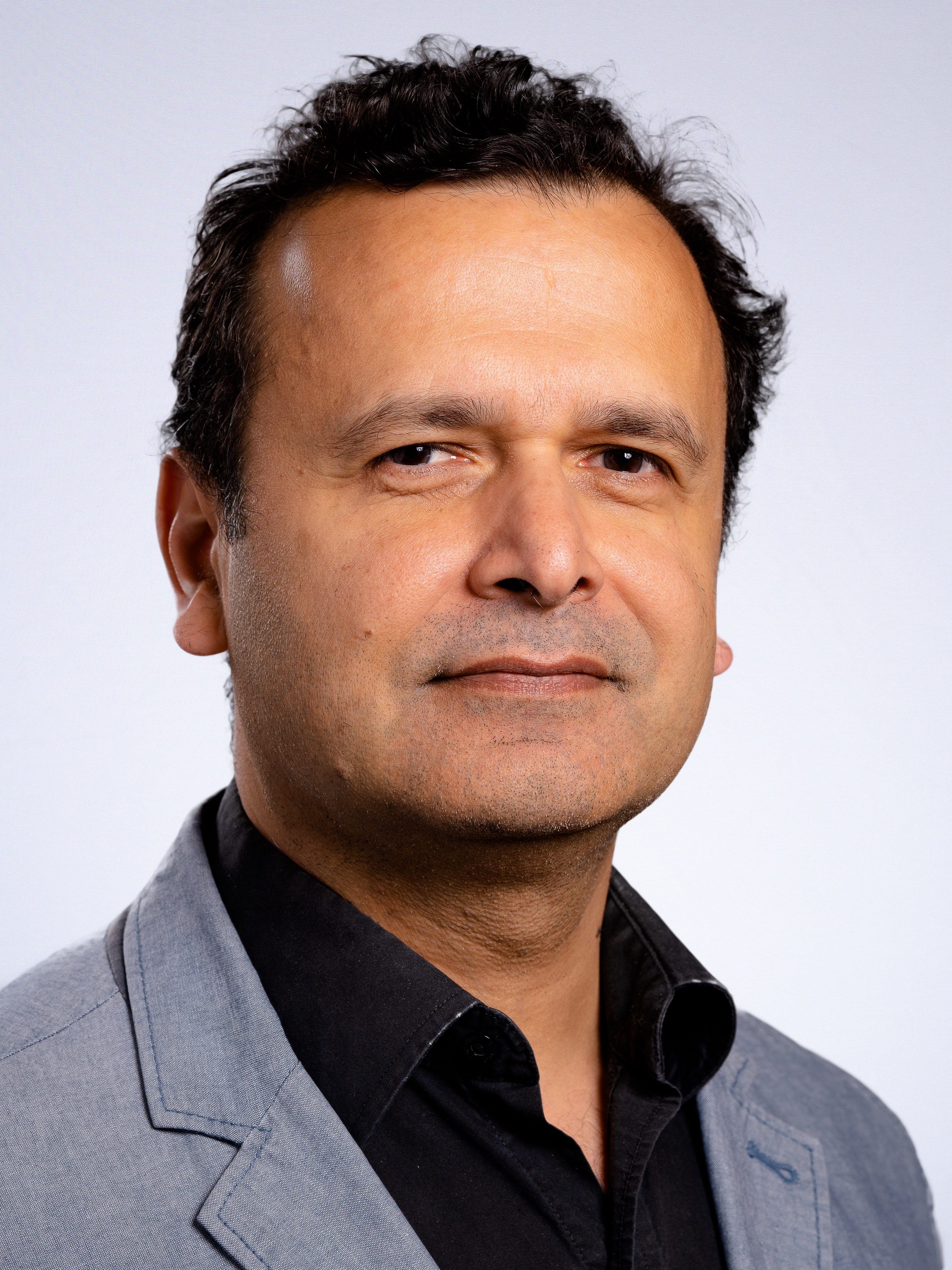
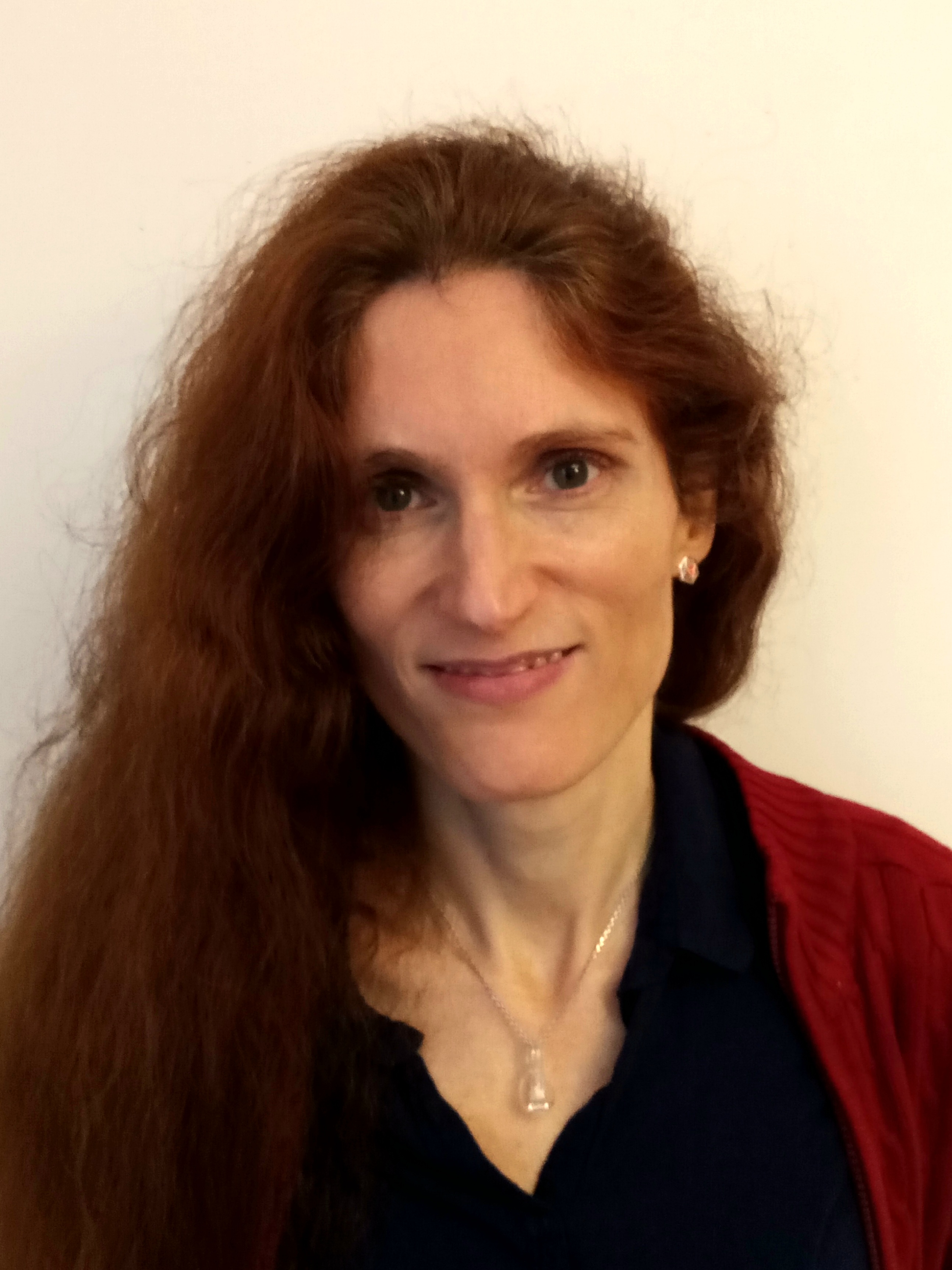
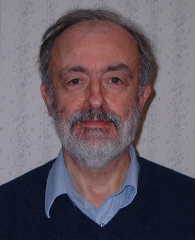
Stephen Melczer is an Assistant Professor in Combinatorics and Optimization at the Cheriton School of Computer Science, University of Waterloo. His research advances analytic combinatorics, lattice path enumeration, and symbolic computation techniques. Research develops multivariate methods for asymptotic enumeration, including work on generating functions, lattice paths, and tree structures. Recent publications focus on SageMath implementations, AVL tree encodings, and singularity analysis. Publications demonstrate consistent innovation in combinatorial algorithms with applications to information theory and data structures. Work integrates symbolic computation with asymptotic analysis for rigorous combinatorial results.
Houcine Ben Dali is a Benjamin Peirce Fellow at Harvard University and a postdoctoral researcher at the Center of Mathematical Sciences and Applications . He earned his PhD from Université de Lorraine in June 2024 under the supervision of Valentin Féray and Guillaume Chapuy. His research focuses on algebraic and enumerative combinatorics, particularly connections between Jack and Macdonald polynomials and combinatorial objects such as non-orientable maps and Łukasiewicz paths. Education: PhD in Mathematics, Université de Lorraine (2024), supervised by Valentin Féray and Guillaume Chapuy. His work bridges algebraic combinatorics with mathematical physics, topology, and representation theory. He investigates integrality properties in the Matching-Jack conjecture, differential equations for hypermaps, and combinatorial interpretations of symmetric functions. Notable contributions include a new formula for Macdonald polynomials, differential equations for hypermap series, and proofs of Lassalle's conjecture. His publications appear in top venues such as the Electronic Journal of Combinatorics , Combinatorial Theory , and Transactions of the American Mathematical Society . Scientific Awards: Best Student Paper Award, FPSAC 2022 Contact: Email: bendali@math.harvard.edu Office: Science Center Office 238, Cambridge MA 02138
Dmitriy (Tim) Kunisky is an Assistant Professor in the Department of Applied Mathematics and Statistics at Johns Hopkins University (JHU), affiliated with the Data Science and AI Institute, Department of Mathematics, and Algorithms and Complexity Group. Prior to JHU, he was a postdoctoral associate at Yale University (2021–2024) and earned his PhD in Mathematics from New York University’s Courant Institute (2021), advised by Afonso Bandeira and Gérard Ben Arous. His research focuses on the interplay between probability theory, mathematical statistics, and computational complexity, particularly in high-dimensional data and algorithmic limitations. He has held roles in software engineering (Google) and academic advising (ETH Zurich). Education: Bachelor’s in Mathematics, Princeton University PhD in Mathematics, Courant Institute, NYU Research Interests: His work examines computational thresholds in statistical problems, spectral algorithms, random matrix theory, and convex optimization. He explores the mathematical foundations of algorithmic performance, including information-computation gaps and pseudorandomness. Recent topics include nonlinear Laplacians, random circulant graphs, and low-coordinate-degree algorithms. Teaching & Outreach: In Fall 2025, he teaches Random Matrix Theory in Data Science . Past courses include Sum-of-Squares Optimization (Yale) and Mathematical Statistics (NYU). He advises graduate students like David Opalic and Nikolaus Doppelbauer on topics like Sherrington-Kirkpatrick Hamiltonians and mutually unbiased bases. Upcoming Engagements: BIRS Workshop on Combinatorics (June 2025) TTIC Workshop on Information-Computation Tradeoffs (June 2025) INFORMS Applied Probability Conference (July 2025) COLT Conference (July 2025) Labs/Teams: Active in JHU’s Data Science and AI Institute, collaborating on projects involving high-dimensional statistics, convex optimization, and algorithm design.
Dr. Sanjaye Ramgoolam is a Reader in Theoretical Physics at the School of Physical and Chemical Sciences, Queen Mary University of London. His research focuses on string theory, quantum field theory, representation theory, and combinatorics, with particular emphasis on gauge-string duality (AdS/CFT correspondence) and permutation invariant matrix models. He has pioneered mathematical frameworks using representation theory and combinatorics to explore the holographic map between quantum field theories and string theory. His work also extends to applications in financial matrix models and computational linguistics via matrix statistics. Teaching roles include advanced courses such as Mathematical Techniques 4 and Advanced Quantum Field Theory. He has supervised numerous PhD students, including Costis Papageorgakis and Tom Brown, and collaborates with researchers like Andreas Brandhuber and Rodolfo Russo on grants like 'Amplitudes, Strings and Duality' funded by STFC. Recent research highlights include Gaussian permutation invariant matrix models, quantum thermodynamics in large N systems, and combinatorial topological string theories. His work bridges fundamental physics with mathematical structures, offering insights into quantum gravity and dualities. Key grants include the Royal Society-funded 'Combinatorics and algorithms for quantum states in holography' (2025-2026) and STFC's 'Amplitudes, Strings and Duality' (2023-2026). His 15 most recent articles span topics like eigenvalue systems for multi-matrix invariants, permutation symmetry in quantum thermodynamics, and Kronecker coefficients from ribbon graphs. Though no explicit awards are listed, his extensive publications and grants reflect significant contributions to theoretical physics.
Dmitry Chelkak is the Keeler Professor of Mathematics at the University of Michigan's College of Literature, Science, and the Arts (LSA). His primary affiliation is within the Department of Mathematics, focusing on Probability Theory, Mathematical Physics, and Analysis. Chelkak holds a Ph.D. from the PDMI RAS (2003). His research interests center on critical phenomena in statistical physics, including the Ising model, dimer models, and conformal invariance. He has made significant contributions to understanding spin correlations, universality in lattice models, and the interplay between discrete and continuous systems. His work often employs advanced techniques from complex analysis and discrete geometry. Recent articles highlight investigations into universality in the Ising model on isoradial graphs, dimer models on planar graphs, and the application of tau-functions to cylindrical event probabilities. His studies frequently bridge combinatorial structures with probabilistic and geometric frameworks. No scientific awards are explicitly listed in the provided texts. Chelkak's advising record and grants are not detailed here, but his research has explored foundational topics in statistical mechanics and mathematical physics.
Matilde Lalín is a Full Professor at the University of Montreal's Department of Mathematics and Statistics, affiliated with the CICMA (Centre Interuniversitaire en Calcul Mathématique Algébrique) and the Montreal Number Theory Group. She holds a Licenciatura in Mathematics from the University of Buenos Aires, pursued graduate studies at Princeton University, and completed her PhD in Number Theory at the University of Texas at Austin under Fernando Rodríguez Villegas. Her research focuses on Mahler measure, L-functions, elliptic curves, and their connections to algebraic geometry and analysis. Her notable contributions include studies on Mahler measure’s relationship with hyperbolic volumes and L-functions, functional equations in genus-one curves, and statistical properties of zeta functions in function fields. She has been a Clay Mathematics Institute Liftoff Fellow and a PIMS postdoctoral fellow. Her work bridges analytic and algebraic number theory, with applications to arithmetic statistics and geometric structures. Recent articles highlight advancements in Mahler measure under variable transformations, Northcott properties of zeta functions, and symplectic conjectures in divisor function analysis. Collaborations span international institutions, and she actively organizes conferences like Women in Numbers and analytic number theory symposia. Teaching includes advanced courses on modular forms, algebraic number theory, and elliptic curves. Education: PhD (UT Austin), Licenciatura (Buenos Aires) Awards: Clay Liftoff Fellowship Key Research Themes: Mahler measure, L-functions, elliptic curves, arithmetic statistics Professional Roles: Conference organizer, instructor at summer schools, mentor in analytic number theory
Amanda Redlich is an Assistant Professor in the Department of Mathematics & Statistics at the University of Massachusetts Lowell (UML), part of the Kennedy College of Sciences. She holds a PhD in Mathematics from the Massachusetts Institute of Technology (2010) and a BA in Mathematics from the University of Chicago (2005), with additional studies at the Budapest Semesters in Mathematics (2003). Her research focuses on probabilistic combinatorics, randomized algorithms, random graphs, and applications to biological and social networks. Her work explores allocation processes, graph decomposition, and stochastic systems, with notable contributions to balanced and unbalanced allocation models. Publications highlight advancements in load balancing, graph theory, and combinatorial analysis. Redlich has been recognized with prestigious fellowships, including the NSF Mathematical Sciences Postdoctoral Research Fellowship (2010) and the Akamai Presidential Fellowship (2005). Her academic journey includes postdoctoral work at Rutgers University and the Institute for Computational and Experimental Research in Mathematics (ICERM) at Brown University, as well as teaching roles at Bowdoin College. She actively engages in research seminars and workshops, presenting on topics like network science and combinatorial games.
Prof. Dr. Patrick Felke is a Professor for IT Security at the University of Applied Sciences Emden/Leer, affiliated with the Department of Technology, Electrical Engineering and Informatics. His research focuses on advanced cryptographic techniques, including cryptanalysis of encryption algorithms, IoT security vulnerabilities (e.g., Z-Wave protocols), and mathematical foundations of cryptographic primitives. He leads the IT-Sec Lab (https://itsec-lab.hs-emden-leer.de/), which explores topics like multivariate cryptography, symmetric cipher design, and side-channel attack mitigation. His research spans both theoretical and applied aspects of information security, with notable contributions to cryptanalysis of TETRA encryption algorithms, analysis of multivariate encryption schemes (e.g., EFLASH), and identification of critical flaws in wireless communication standards. Felke also contributes to the Digital Hub Ostfriesland initiative, focusing on IT security advancements in regional technology ecosystems. Key areas of expertise include: Cryptographic protocol vulnerability analysis Z-Wave and IoT device security Design and cryptanalysis of symmetric/asymmetric encryption systems Mathematical foundations of nonlinear functions in cryptography Publications emphasize practical cryptanalysis methods, algorithmic decomposition techniques, and cryptographic standard evaluation. His work bridges academic research with real-world cybersecurity challenges in telecommunications and embedded systems.
Andrew Harder is an Associate Professor in the Department of Mathematics at Lehigh University. He specializes in algebraic geometry with strong connections to Hodge theory, mathematical physics, and symplectic geometry. Before joining Lehigh in 2019, he held a postdoctoral position at the University of Miami as part of the Simons Collaboration in Homological Mirror Symmetry. Education: Ph.D. in Mathematics, University of Alberta (2016) M.Sc. in Mathematics, Queen’s University (2011) B.Sc. in Mathematics, Queen’s University (2009) Research focuses on advanced topics including: Applications of mirror symmetry to Calabi-Yau varieties Hodge-theoretic analysis of Landau-Ginzburg models Interactions between holomorphic symplectic geometry and tropical geometry Connections between Feynman integrals and algebraic periods Recent work explores modular properties of Landau-Ginzburg models, motivic geometry of Feynman integrals, and P=W phenomena in hyper-Kähler manifolds. His research bridges pure mathematics with theoretical physics through geometric frameworks. Teaching includes advanced courses like Topics in Algebraic Geometry and graduate-level algebraic structures. Active in mentoring through graduate seminars and advising on thesis projects.
Adrien Kassel is a Researcher at CNRS based at École Normale Supérieure de Lyon, working within the Unit for Pure and Applied Mathematics (UMPA) in the Probabilities team. His research spans the intersection of probability theory, combinatorics, and mathematical physics, with particular focus on random structures on graphs and surfaces. Dr. Kassel's research centers on probabilistic combinatorial structures, especially determinantal point processes , random spanning trees and forests , and loop models . His work connects deep mathematical concepts from statistical mechanics with geometric and topological structures. He investigates scaling limits of discrete models, connections to conformal field theory, and applications to mathematical physics. His research often reveals profound connections between seemingly disparate areas of mathematics through the lens of probability. His publications demonstrate a consistent focus on the interplay between combinatorial structures and probabilistic phenomena. The research trajectory shows increasing sophistication in handling geometric aspects of random processes, with recent work exploring connections to quantum gravity and conformal field theory through Schramm-Loewner evolution. Dr. Kassel received the prestigious Paul R. Halmos - Lester R. Ford Award for his article "The Looping Rate and Sandpile Density of Planar Graphs" co-authored with David B. Wilson. This award recognizes expository excellence in mathematical writing. He has advised Héloïse Constantin, who successfully defended her PhD thesis on "Spanning forests and phase transition" in June 2023. Dr. Kassel teaches advanced courses including "Determinantal processes" at the Master's level and "Integration and Probability" at the undergraduate level. He has co-organized numerous academic events including the ICJ-UMPA probability seminar, workshops on random maps and matrices, and meetings between ENS Lyon and SISSA. As coordinator of MathαLyon from 2017-2022, he actively engaged in mathematical outreach, bringing exhibits to middle and high schools across the Lyon region. His commitment to popularization extends to writing for Images des Mathématiques and participating in various math circles and outreach programs.
Sumitra Mukherjee is a Professor in the Department of Computing at Nova Southeastern University's College of Computing & Engineering. He holds a Ph.D. in Decision and Information Systems from Carnegie Mellon University and a B.S. from the Indian Institute of Technology, Kanpur. His research focuses on analytics, data science, machine learning, artificial intelligence, and data security. Prior to NSU, he was at Baruch College, CUNY. His work spans healthcare prediction models, sensor networks, high-energy physics, and algorithmic optimization. He has published in journals like Management Science and IEEE Transactions. Education: Ph.D. (Carnegie Mellon), B.S. (IIT Kanpur) Key Research Areas: Machine Learning, Healthcare Analytics, Sensor Technology Research highlights include septic shock prediction using ensemble methods, adversarial training alternatives, and cooperative agent systems. Over 40 peer-reviewed articles demonstrate interdisciplinary impact in computing and engineering. Recognized for contributions to computational methods in diverse fields, including medical diagnostics and particle physics instrumentation. Enjoys wildlife photography and coral reef exploration.
Bjorn Poonen is a Professor of Mathematics and Distinguished Professor in Science at the Massachusetts Institute of Technology . His research spans Arithmetic Geometry , Number Theory , and Computational Mathematics , with support from the National Science Foundation and the Simons Foundation . He is a founding member of the Simons Collaboration on Arithmetic Geometry, Number Theory, and Computation . Research Interests : Poonen investigates Rational Points on Varieties , Undecidability in Number Theory , and Computational Methods for solving Diophantine equations. His work bridges Arithmetic Geometry with Number Theory , often leveraging Algebraic Geometry and Model Theory to address foundational problems. Recent Publications highlight trends in Explicit Descent , Brauer-Manin Obstructions , and Galois Representations . Notably, he explores Effective Methods for determining Integral Points on curves and Uniform Boundedness of rational and preperiodic points on varieties. Awards and Recognition : Awarded the 2023 AMS Doob Prize for his influential book Rational Points on Varieties . Recipient of the 2011 Chauvenet Prize for expository excellence in Undecidability in Number Theory . Recognized for Outstanding Undergraduate Teaching at MIT, including the MIT School of Science Prize in Undergraduate Teaching (2014, 2009). Academic Service : Poonen has organized major conferences like the Arizona Winter School and Arithmetic Geometry, Number Theory, and Computation workshops. He serves on editorial boards for journals such as the Journal of the American Mathematical Society and Involve , and participates in panels for the American Mathematical Society , including the Leroy P. Steele Prize and Cole Prize committees.
Brian Rider is a Professor and Chair of the Department of Mathematics at Temple University's College of Science and Technology. He is actively engaged in research and academic leadership, with a strong focus on probability and mathematical physics. His research centers on Random Matrix Theory , where he explores the interplay between probabilistic and integrable methods. Notably, he developed the random operator approach to random matrix limit theorems, leading to new characterizations of the Tracy-Widom distributions—key in modeling nonlinear phenomena across interacting particle systems, stochastic partial differential equations, combinatorics, and high-dimensional data analysis. Brian Rider has taught advanced courses such as Probability in High Dimensions , Stochastic Differential Equations , Complex Variables , and Mathematical Aspects of Data Science . He is also involved in the Temple/UPenn Probability Seminar, contributing to the broader academic community. Research Focus: Probability, Random Matrix Theory, Integrable Probability Key Contribution: Random operator approach to limit theorems and Tracy-Widom laws He advises no students listed in the provided materials and has no scientific awards mentioned. There is no indication of part-time status, grants, or lab affiliations.
Minghao Liu is a Postdoctoral Research Associate in the Department of Computer Science at the University of Oxford, working under the supervision of Prof. Marta Kwiatkowska and previously with Dr. Andrew Cropper. He is affiliated with the Artificial Intelligence and Machine Learning theme and the FAIR project at Oxford. His research integrates symbolic reasoning with machine learning, focusing on automated reasoning, constraint programming, and combinatorial optimization. PhD in Computer Science and Technology, University of Chinese Academy of Sciences (UCAS), 2023 BSc in Computer Science and Technology, Northeast Normal University (NENU), 2017 His research interests span automated reasoning, constraint programming, combinatorial optimization, and the integration of symbolic reasoning with machine learning. He develops novel algorithms for SMT solving, optimization modulo theories, and neural-symbolic systems, often leveraging machine learning to enhance classical reasoning systems. The recent publications show a strong trend in hybrid AI systems, particularly using graph neural networks to solve combinatorial problems like MaxSAT and Pseudo-Boolean Satisfiability. There is also a significant focus on improving solvers for nonlinear arithmetic and modal logics, often guided by reinforcement learning or probabilistic methods. His work bridges formal methods with deep learning, aiming to create more robust and scalable reasoning systems. Notable scientific awards include: ACM SIGSOFT Distinguished Paper Award at ISSTA 2023 Best Student Abstract Honorable Mention Award at AAAI 2023 2nd Place in SMT Competition (Nonlinear Real Arithmetic Track, 2022) Gold Medal in ACM-ICPC Asia Regional (2016) National Scholarship of China (2014) Minghao Liu has been actively involved in academic service and teaching. He has served as a Class Tutor for Logic and Proof and Knowledge Representation and Reasoning, a Practical Demonstrator for Design and Analysis of Algorithms, and a Student Project Supervisor for Group Design Practical at Oxford. He was also a Teaching Assistant for Theoretical Computer Science at UCAS. He has received multiple scholarships and honors, reflecting his academic excellence. His service includes being a PC member for AAAI (2023–2025), ECAI 2024, and ICTAI 2023, and a reviewer for IEEE TNNLS, IEEE TKDE, and CSSE. He is actively involved in research projects such as FAIR and maintains open-source implementations of his work on GitHub, including solvers for MaxSAT, SMT(NRA), and Holey Latin Squares, demonstrating strong software engineering and reproducibility practices.
David M.R. Jackson is a Professor in the Department of Combinatorics & Optimization at the University of Waterloo, within the Faculty of Mathematics. He holds a PhD from the University of Cambridge (1970) and has been affiliated with Waterloo since 1972. His research focuses on algebraic and enumerative combinatorics, with applications to algebraic geometry and quantum field theory. Jackson has co-founded the Journal of Algebraic Combinatorics and served as its managing editor. He is a Fellow of the Royal Society of Canada and a Member of the Academy of Mathematical and Physical Sciences. Education: PhD in Mathematics from the University of Cambridge (1970). Research Interests: Algebraic combinatorics, enumerative combinatorics, applications to algebraic geometry, quantum field theory, and map enumeration. Current projects include integrable hierarchies, Hurwitz problems, and the b-conjecture related to Jack symmetric functions. Students: Advised over 20 graduate students, including notable works on factorizations in symmetric groups, map enumeration, and combinatorial constructions. Publications: Over 100 papers on topics like matrix integrals, random matrices, and combinatorial enumeration. His work on Combinatorial Enumeration (with I.P. Goulden) is a key textbook. Awards: Recognitions include Fellowships from the Royal Society of Canada and contributions to mathematical literature via the Oxford English Dictionary Project.