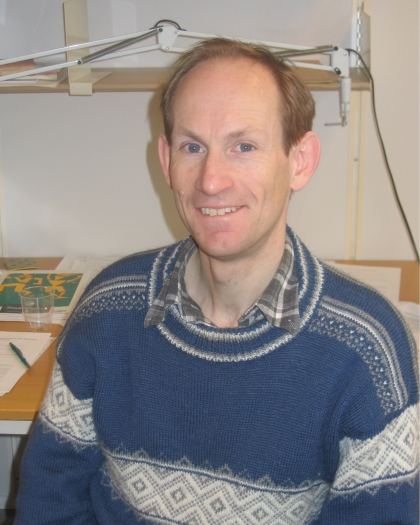
Morten Hovd is a Professor at the Department of Engineering Cybernetics, Norwegian University of Science and Technology (NTNU). His work focuses on advanced control systems, particularly in model predictive control, optimization, and power electronics. He has contributed to control design for uncertain systems, bilinear models, and modular multilevel converters. Research Interests Control Theory and Model Predictive Control (MPC) Optimization Techniques in Control Systems Power Electronics and Smart Grid Applications Stability Analysis of Hybrid and Discrete-Time Systems Teaching TTK4210 - Advanced Control of Industrial Processes TK8118 - Mini-seminar in Cybernetics
Mina Mirhosseini is a Research Fellow at the Faculty of Logistics, Molde University College, Norway. She holds a PhD in Computer Science from Shahid Beheshti University of Tehran, Iran, and has prior academic experience as a faculty member and lecturer in Iran and as a remote teaching assistant at the University of Hertfordshire, UK. Her primary research interests include Optimization Methods, Metaheuristics, Heuristics, Linear Integer Programming, Parallel Processing, Machine Learning, Artificial Intelligence, and Logistics. She has made significant contributions to solving complex computational problems such as the n-similarity problem and Mixed Integer Linear Programming (MILP) models using hybrid and parallel algorithms, particularly in the context of high-level synthesis and wireless sensor networks. The analysis of her recent publications reveals a strong focus on developing and applying advanced optimization techniques, especially quantum-inspired gravitational search algorithms and parallel genetic algorithms, to real-world engineering and computational challenges. Her work consistently emphasizes performance improvement, scalability, and load balancing in distributed and heterogeneous computing environments. Mina Mirhosseini has an extensive publication record in high-impact journals such as IEEE Transactions on Parallel and Distributed Systems, Journal of Parallel and Distributed Computing, Journal of Supercomputing, and Computers and Electrical Engineering. Her research has been published across a range of venues, reflecting interdisciplinary work at the intersection of computer science, electrical engineering, and applied optimization. She has actively contributed to the academic community through roles such as program committee member and executive committee member for conferences on fuzzy systems, swarm intelligence, and evolutionary computation. Her academic journey includes teaching and research roles in Iran, demonstrating a sustained commitment to higher education and scientific inquiry. Mina Mirhosseini is part of the research group focused on Planning, Optimization and Decision Support at Molde University College. Her current work continues to advance the state-of-the-art in parallel and metaheuristic optimization methods, with applications in logistics, synthesis, and sensor network design.
Bjarne André Grimstad is an Associate Professor at the Norwegian University of Science and Technology (NTNU). His work focuses on virtual flow metering, surrogate modeling, and optimization of industrial systems. He has extensively explored hybrid modeling approaches combining data-driven and mechanistic methods, particularly through B-spline constraints and neural networks. His research spans mathematical programming, multi-task learning, and adaptive observer designs for gas-lift wells. His publications highlight advancements in virtual flow metering, including Bayesian neural networks, gray-box modeling, and nonstationarity handling. Key collaborations include Lars Struen Imsland, Odd Kolbjørnsen, and Bjarne Anton Foss. While no specific educational details are provided, his 2015 PhD thesis at NTNU established the foundation for his work in surrogate modeling and production optimization. Grimstad’s work trends involve integrating machine learning with industrial control systems, emphasizing practical applications in petroleum production. He has contributed to methods using B-splines for global optimization and divide-and-conquer strategies in production systems. Despite numerous publications, no scientific awards or student advising details are mentioned in the available text.
Curtis Hays Whitson is a Professor at the Institute of Geo Sciences, NTNU, affiliated with the Petroleum Technical Center. His research focuses on reservoir fluid characterization, CO2 sequestration, unconventional reservoirs, and enhanced oil recovery (EOR). He has advised numerous PhD students and contributed to over 100 peer-reviewed publications since 1980, including seminal works on PVT modeling, diffusion mechanisms, and shale gas optimization. His recent work emphasizes field-scale EOR optimization and CO2 injection in fractured systems. Whitson has supervised doctoral theses on topics like CO2-EOR in Iran’s Haft Kel field and gas-cycling benchmarking. His research integrates reservoir simulation, material balance analysis, and multiphase flow dynamics. Key research themes include: (1) CO2 injection in chalk and unconventional reservoirs, (2) diffusion-driven recovery mechanisms, (3) shale gas depletion performance, and (4) integrated field optimization. His articles span fluid property characterization, numerical modeling of transport phenomena, and production optimization strategies. Whitson collaborates widely with industry partners on projects involving experimental fluid analysis and reservoir-plant integration.
Bjarne André Grimstad is an Associate Professor at the Norwegian University of Science and Technology (NTNU). His work focuses on optimization, surrogate modeling, and data-driven approaches for complex systems in chemical and petroleum engineering. Key contributions include advancements in B-spline models, hybrid gray-box systems, and neural network applications for virtual flow metering. Research interests span optimization algorithms, machine learning integration with physical models, and industrial process control. Notable publications address multi-task learning frameworks, identifiability in hybrid models, and the efficacy of gray-box modeling in nonstationary environments. Publications (2024–2015) highlight interdisciplinary work combining mathematical programming with real-world applications in oil & gas production and flow measurement. His 2015 doctoral dissertation explored daily production optimization using surrogate modeling techniques. Outreach activities include academic lectures at international conferences (e.g., IFAC OOGP 2015) and poster presentations on hybrid modeling at Geilo Winter School 2021. Collaborations with industry partners like SINTEF and TU Delft underscore his applied research focus.
Michael Kirkedal Thomsen is an Associate Professor in the Department of Informatics at the University of Oslo's Faculty of Mathematics and Natural Sciences. His office is located in room 10461 at Gaustadalléen 23B, 0373 Oslo, with postal address PO Box 1080 Blindern 0316 Oslo. His research focuses on programming languages and security, with particular expertise in reversible computing and programming language theory. Thomsen's research spans multiple interconnected domains within computer science. His primary focus is on reversible computing - investigating how to design programming languages, compilers, and hardware that minimize energy consumption through reversible operations. He has developed Jeopardy, an invertible functional programming language, and has made significant contributions to reversible circuit design, reversible arithmetic operations, and energy-efficient computation. His work bridges theoretical computer science with practical hardware implementation concerns, particularly examining how reversible programs behave on conventional irreversible hardware. An analysis of his recent publications reveals a clear evolution in his research trajectory. Starting with foundational work on reversible circuits and arithmetic operations (2008-2014), he has progressed toward higher-level programming language constructs for reversible computation. His 2022-2024 publications demonstrate a shift toward practical applications, educational tools, and energy analysis of reversible systems. The recurring themes across his work include invertibility, energy efficiency, formal methods, and the relationship between high-level programming abstractions and low-level hardware implementation. While specific grant information isn't detailed in the available text, Thomsen's research program clearly involves significant collaboration with colleagues at the University of Oslo and international partners. His publications show consistent work with researchers including Holger Bock Axelsen, Robert Glück, Joachim Tilsted Kristensen, and Robin Kaarsgaard across multiple years, suggesting ongoing collaborative projects and likely sustained funding support. Though not explicitly stated in the available information, Thomsen's work on reversible processor architecture, Jeopardy programming language, and energy analysis strongly suggests involvement with research groups focused on energy-efficient computing, programming language design, and potentially quantum-inspired computing architectures at the University of Oslo's Department of Informatics.
Vegard Heimly Brun serves as an Associate Professor at UiT The Arctic University of Norway, actively engaged with the Breast and endocrine surgery research group. He concurrently participates in the Gastrosurgery and Neurobiology research groups while contributing to the LevDOSE project focused on optimizing thyroid hormone replacement therapy. His research spans two distinct domains: contemporary endocrine surgery and foundational neuroscience. In surgical research, he pioneers advanced imaging techniques for parathyroid localization, develops patient-specific levothyroxine dosing algorithms, and investigates decision-making protocols for thyroidectomies. His neuroscience work explores growth hormone's modulation of hippocampal spatial memory, dendritic spine plasticity, and fear conditioning mechanisms. This dual expertise bridges clinical innovation with fundamental neurobiological inquiry. Publication analysis (2015-2025) reveals an evolutionary trajectory from neuroscience-focused investigations (2015-2019) toward clinically applied endocrine surgery research (2021-2025). Recent work emphasizes surgical innovation in thyroid/parathyroid disorders through pharmacokinetic modeling and multimodal imaging, while earlier contributions established critical links between hippocampal growth hormone signaling and memory processes. This progression demonstrates translational research spanning basic science to surgical practice. No scientific awards were documented in the source materials. While no student advising relationships or specific grant funding details were disclosed, his collaborative publications across medical and neuroscience disciplines indicate extensive interdisciplinary engagement. The LevDOSE project represents a significant clinical research initiative in personalized endocrine therapy. Dr. Brun operates within UiT's multidisciplinary research ecosystem through three primary groups: the Breast and endocrine surgery research group (focusing on surgical oncology and endocrine disorders), the Gastrosurgery group (addressing gastrointestinal malignancies), and the Neurobiology group (investigating fundamental memory mechanisms). His laboratory work integrates clinical surgical practice with basic neuroscience methodologies, particularly in hippocampal function and hormone-brain interactions.
Lars Magnus Hvattum is a Professor in Quantitative Logistics at Molde University College, Faculty of Logistics. His work focuses on developing mathematical models and optimization methods for complex planning problems across various domains including transportation, maritime logistics, and sports analytics. Professor Hvattum's primary research interests span several key areas in operations research and optimization: Mathematical modeling of complex planning situations Methods to solve combinatorial optimization problems Dealing with uncertainty in planning Development of decision support systems His research portfolio demonstrates a strong focus on both theoretical and applied aspects of optimization. In recent years, he has published extensively on tabu search algorithms, vehicle routing problems, maritime inventory routing, and the application of machine learning techniques to optimization challenges. His work bridges the gap between theoretical advances in operations research and practical applications in logistics and beyond. Professor Hvattum is actively involved in multiple research groups including ABC-AI (Applied, Basic, and Conscientious Artificial Intelligence), the Center for Healthcare Operations Management, and the Energy Logistics Research Group (EneLog). His collaborative research extends across international boundaries with frequent co-authorship with researchers from various institutions worldwide.
Abdalrahman Algendi is a Research Fellow at the Faculty of Logistics, Molde University College. His primary role involves advancing research in logistics optimization, decision support systems, and operational planning. Contactable at abdalrahman1.algendi@himolde.no and located in Office C314. Research Interests: Focused on solving complex logistics challenges through optimization techniques. Specializes in integrating mathematical models for healthcare routing, maritime inventory systems, and decision support frameworks. His work bridges theoretical algorithms with real-world applications in emergency healthcare logistics and maritime supply chains. Advising & Grants: Currently involved in research projects related to home healthcare optimization and maritime logistics. No listed advisees/students at present. Labs/Teams: Active member of the Planning, Optimization and Decision Support research group at Molde University College.
Matin Bagherpour is an Associate Professor in the Energy Systems department at the University of Oslo. His primary affiliation is with the Energy Systems Section, focusing on interdisciplinary research at the intersection of telecommunications, networking, and operations research. His work addresses challenges in network optimization, multicast systems, and remanufacturing logistics. He has collaborated extensively with researchers like Øivind Kure and contributed to projects such as DESSI (Distributed Energy System and Security Infrastructure). Research interests include energy systems modeling, network reliability, and algorithmic solutions for telecommunications. His 2010-2011 publications primarily address multicast protocols, remanufacturing systems, and mobile ad hoc networks, reflecting a technical focus on mathematical modeling and optimization. Key works include developing revenue maximization models for media streaming and enhancing data transmission reliability through multipath strategies. Despite no listed awards, his active publication record from 2010-2011 indicates sustained academic engagement. Current involvement in the DESSI project suggests ongoing work in energy infrastructure security and transactive energy systems.
Ottar Laurits Osen is a Professor in Automation at the Norwegian University of Science and Technology (NTNU), Department of ICT and Natural Sciences, Ålesund campus. He serves as Deputy Leader for Innovation and Sustainability and coordinates maritime research activities in the CPS Lab . Research focuses on Industrial Control Systems, Intelligent Systems, Microcontrollers, Technical Safety (SIL), and Pedagogics (Problem-Based/Project-Based Learning). His work spans maritime automation, robotics, IIoT, and educational technology. Key collaborations include projects with researchers like Guoyuan Li, Houxiang Zhang, and Robin Bye. Recent publications emphasize path planning for autonomous vessels, dynamic positioning thruster analysis, and IIoT applications in maritime processes. Teaching includes courses on industrial control systems, mechatronics, and digital technology.
Magnus Stålhane is a Professor at the Department of Industrial Economics and Technology Management, Norwegian University of Science and Technology (NTNU). His research focuses on Operations Research , Maritime Logistics , Vehicle Routing , and Optimization , with applications in offshore wind farms, liner shipping, and military logistics. He has published extensively in journals like Transportation Science , European Journal of Operational Research , and Journal of Heuristics . Recent works include Electric Vehicle Routing with heterogeneous recharging technologies, Maritime Fleet Composition under emission restrictions, and Inventory Routing with time-varying demands. His methodologies span Branch-Price-and-Cut , Matheuristics , and Stochastic Programming . Collaborations include researchers from NTNU, Norwegian institutions, and international teams.
Steffen J.S. Bakker is an Associate Professor in Quantitative Logistics at the Department of Industrial Economics and Technology Management (IØT) at the Norwegian University of Science and Technology (NTNU). His research applies operations research methods to transport and energy systems, with a focus on sustainability and optimization. MSc in Econometrics and Operations Research from the University of Groningen PhD in Industrial Economics and Technology Management from NTNU Bakker’s research spans transport systems , energy systems , and optimization , particularly in offshore oil and gas logistics, urban mobility, and freight decarbonization. Recent work includes strategic network models for sustainable freight, micromobility simulation tools, and interdisciplinary studies on bioconversion for circular supply chains. His publications highlight integrating freight transport and energy system models for decarbonization, optimizing offshore plug-and-abandonment campaigns , and developing stochastic programming techniques for dynamic logistics. Key applications include Norwegian maritime transitions, bicycle rebalancing, and infrastructure investments. As a supervisor, Bakker has guided numerous Master’s and Bachelor’s theses on topics like battery-electric truck transitions, bike-sharing demand prediction, and railway wagon allocation. His outreach includes lectures on AI in port logistics and media interviews on sustainable transport solutions.
Dag Haugland is a Professor in the Department of Informatics at the University of Bergen, Norway, where he conducts research and teaches in optimization, particularly combinatorial and global optimization with applications in network flows, energy systems, and logistics. He is affiliated with the Optimization research group and maintains an active research profile with recent publications in top-tier journals. Research Interests: His work focuses on Combinatorial Optimization , Global Optimization , and Network Flow Models , applying mathematical programming techniques to real-world problems in offshore wind energy, gas pipeline transportation, wireless networks, and vehicle routing. His research emphasizes integer programming, polyhedral analysis, and algorithmic design. Recent Research Trends: His latest publications (2023–2024) address tighter bounds in broadcast time problems and hydropower scheduling, reflecting a continued focus on theoretical and applied optimization in communication and energy networks. Earlier works (2016–2020) explore pooling problems, offshore wind farm cable layouts, and portfolio optimization, demonstrating interdisciplinary reach. Scientific Contributions: Extensive publication record in optimization and operations research. Supervision of multiple PhD and master’s students. Active involvement in conference proceedings and technical reports. Advising and Grants: Dag Haugland has supervised numerous students, including Marika Ivanova and Arne Klein, on topics such as offshore wind farm optimization and multicast tree problems. His work has been supported by Norwegian research funding, including the Research Council of Norway (project reference 249994). He contributes to academic service through conference organization (e.g., Norsk Informatikkonferanse) and collaborative research. Labs and Teams: He is a key member of the Optimization research group at the Department of Informatics, University of Bergen, which focuses on algorithmic and mathematical approaches to complex decision problems in engineering and industry.
Anders Nordby Gullhav is an Associate Professor at the Department of Industrial Economics and Technology Management, Norwegian University of Science and Technology (NTNU). His research focuses on optimization, simulation, and resource planning in healthcare and cloud computing. He has developed models for surgical clinic planning, nurse rostering, emergency exit layout design, and MRI lab scheduling. His work integrates operations research methods like adaptive large neighborhood search and discrete event simulation. Key research areas include healthcare logistics (e.g., reducing waiting times in mental health services, emergency patient flow during pandemics) and cloud computing resource allocation. He has published extensively in journals like European Journal of Operational Research and Operations Research for Health Care , with over 20 peer-reviewed articles since 2015. His teaching includes courses on optimization methods and applied economics. Recent work emphasizes integrated scheduling frameworks across surgical units and outpatient clinics, leveraging stochastic modeling and Dantzig-Wolfe decomposition. He collaborates with hospitals and industry on practical applications of optimization algorithms, such as block scheduling in MRI labs and snow grooming routing. His educational contributions include student-centered modeling workshops in operations analysis. He actively presents at conferences like ORAHS and INFORMS, addressing topics such as chemotherapy clinic scheduling and project-personnel integration in construction.




/matinb/me.jpg)