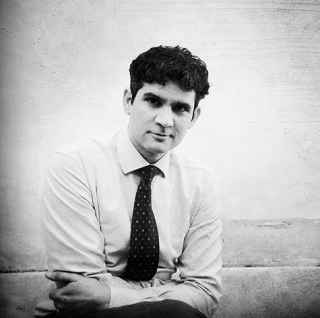
Filippo Fabiani is an Assistant Professor at the IMT School. His research focuses on control systems, game theory, and optimization, with applications to robotics, multi-agent systems, and nonlinear dynamics. He explores topics such as Nash equilibrium seeking in strategic environments, fault-tolerant control, and neural network-based system identification. His work combines theoretical advancements in distributed algorithms with practical implementations in aerospace and robotic systems. Notable areas include spacecraft proximity guidance, resilient control for nonlinear systems, and adaptive strategies in competitive multi-agent scenarios. He also investigates belief-sharing mechanisms and robust stabilization under uncertainty. Publications highlight contributions to generalized Nash games, distributed equilibrium-seeking algorithms, and model predictive control. Research spans both foundational theory and applied engineering solutions, emphasizing the interplay between strategic decision-making and control system design.
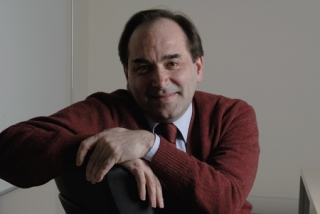
Fabrizio Rossi is a Full Professor of Operations Research at the University of L'Aquila, Department of Information Engineering, Computer Science and Mathematics. He has been a member of the Board of Administration at the university since 2019 and previously from 2010 to 2012. His academic career spans over two decades, including roles as Associate Professor (2005–2019) and Assistant Professor (1997–2002). Education: Ph.D. in Operations Research, University of Rome 'La Sapienza' (1996) Laurea Degree in Electrical Engineering, University of Rome 'La Sapienza' (1992) Visiting Student in IEOR at Columbia University, New York (1996) Operations Research School, Scuola di Matematica Interuniversitaria (1996) Research Interests: Fabrizio Rossi specializes in large-scale optimization methodologies, including Integer Programming and Combinatorial Optimization. His work addresses complex applications in telecommunications network design, manufacturing process optimization, logistics systems, and healthcare. Recent innovations include algorithms for DNA sequence optimization and tumor classification using machine learning. He focuses on practical solutions through advanced techniques like lift-and-project operators and robust optimization frameworks, with significant contributions to scheduling and resource allocation in call centers and satellite missions. Scientific Awards: Informs Computing Society Prize (2014) (collaborative with Jim Ostrowski, Jeff Linderoth, Stefano Smriglio) Finalist, Euro Excellence in Practice Award (2006) for research on terrestrial broadcasting migration Advising and Grants: As a project leader, he coordinated major initiatives such as: PRIN 2010–2012 : Integer Programming methods for radio transmission networks 2008–2009 : Analog-to-digital broadcasting migration optimization IST SAILOR Project (2002–2005) : Satellite UMTS emulation systems He also contributed to European Space Agency's MAS Project (2004–2006) and collaborated with Italian regulatory bodies on telecommunication projects. His research portfolio includes over 50 projects since 1993, emphasizing real-world applications in manufacturing, logistics, and healthcare systems. Labs/Teams: His research is conducted within the Department's optimization groups and industry partnerships. Collaborations include ESA satellite scheduling, RAIWay frequency assignment, and healthcare institutions for treatment planning systems.
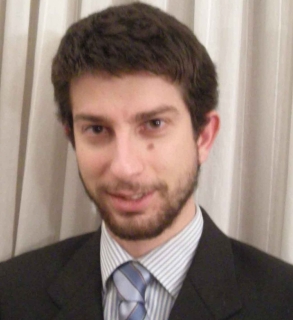
Francesco Lo Iudice is an Assistant Professor of Automatic Control at the University of Naples Federico II, Italy. His research focuses on control theory applied to complex networks, including network dynamics, opinion formation, power systems, and multi-agent systems. He explores topics such as synchronization, consensus protocols, pinning control strategies, and optimal control in renewable energy communities. His work bridges theoretical advancements with practical applications in smart grids, autonomous systems, and social network analysis. Key research themes include: Controllability and observability of complex networks Opinion dynamics in social-technical systems Design of distributed control algorithms for power systems Analysis of temporal and hypergraph networks His recent publications emphasize: Explosive synchronization phenomena Optimal recharge scheduling in automated systems Strategies for parallel power system restoration Modeling vaccine hesitancy via opinion dynamics Dr. Lo Iudice collaborates internationally on interdisciplinary projects combining control engineering with network science. His work has been applied to pandemic response modeling and smart energy management systems.
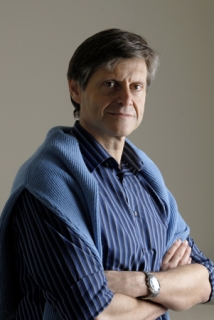
Luigi Glielmo is a Professor of Automatic Control at the University of Sannio in Benevento, Italy. He holds a Master's and PhD in Electronic Engineering and Automatic Control from the University of Naples Federico II. Previously, he taught at the University of Palermo before returning to Naples. His academic leadership roles include Head of the Department of Engineering at University of Sannio (2001–2007), Rector’s Delegate for Technology Transfer (2009–2019), and Coordinator of PhD programs in Information Engineering and Information Technologies for Engineering. Research interests focus on automatic control engineering, including model predictive control, renewable energy systems, smart grids, robotics, biomedical applications (e.g., deep brain stimulation modeling), satellite autonomy, and Boolean control networks. He founded the GRACE research group and has authored over 190 papers, two books, and holds two patents. He is a Senior Member of IEEE, serves on the editorial board of IEEE Control Systems Letters, and chairs the IEEE Control Systems Society Technical Committee on Automotive Controls. Leadership roles include General Co-Chair of the 2019 European Control Conference and ordinary member of IFAC’s Conference Board. His work bridges theoretical advancements with practical applications in energy systems, robotics, and industrial automation.
Francesca PARPINEL serves as an Associate Professor in the Department of Economics at Ca' Foscari University of Venice, holding additional responsibilities as Department Delegate for Language Training. Her academic work spans statistical methodology development and practical applications in economics and finance. Her educational background includes a Degree in Statistics Applied to Economics (1990) and PhD in Statistics (1994), both from the University of Padua. She progressed from Assistant Professor (1996-2002) to her current Associate Professor position (2002-present), while coordinating the Bachelor's Degree Program in International Trade and Tourism from 2011-2018. Research interests focus on advanced statistical methodologies including estimation methods for regressions on complex spaces , evolutionary algorithms for regime-changing models , and statistical measures of systemic risk . Her work bridges theoretical statistics with practical financial applications, particularly in trading systems and risk assessment. Recent publications demonstrate strong interdisciplinary connections between statistics, finance, and computational methods, with increasing emphasis on machine learning applications in financial distress prediction and climate derivatives pricing. She actively supervises undergraduate and graduate theses requiring data analysis, emphasizing proficiency in R programming. Her teaching portfolio includes Statistics, Multivariate Statistics, and specialized laboratories across multiple degree programs including International Trade and Tourism, Economics and Commerce, and Global Development. PARPINEL has organized significant academic events including SIS 2015 (Statistics and Demography: the Legacy of Corrado Gini) and multiple MAF conferences, while maintaining membership in the Italian Statistical Society (SIS).
Claudio Pizzi is an Associate Professor of Economic Statistics at the Department of Economics within Ca' Foscari University of Venice . He also participates in the Interdepartmental School of Economics, Languages and Entrepreneurship for International Exchanges at the Treviso campus. With over two decades at the institution (since 2004 as faculty), he has extensive experience in quantitative methods and their applications to economic/financial phenomena. Academic affiliation: Department of Economics & SELISI Interdepartmental Center Research locations: San Giobbe (Venice) and Palazzo San Paolo (Treviso) Office hours: Venice (Wednesdays) and Treviso (Thursdays) via in-person or virtual meetings His research integrates statistical modeling with artificial intelligence , focusing on: Financial time series analysis (parametric/non-parametric) Machine learning applications in economic and financial contexts Technical analysis trading strategies Emotional/social/cognitive competency measurement Nonlinear cointegration and hidden dependency detection Article analysis reveals consistent themes in computational finance , evolutionary algorithms , and organizational behavior . He frequently employs Particle Swarm Optimization for financial modeling, explores emotional intelligence in career development, and contributes to actuarial science through derivative pricing and risk modeling techniques. As part of his academic service, Pizzi: Participates in the SELISI Joint Commission Organizes international conferences (MAF2008, MAF2012) Collaborates across disciplines with institutions like the Department of Management Teaches computational methods to economics students
Marcello Dalpasso is an Associate Professor of Computer Science at the School of Engineering, University of Padova, Italy, and a member of the Department of Information Engineering. He has held this position since 2004 after serving as a researcher and teaching assistant at the same university from 1998. Born in Ferrara, Italy (1965) Graduated with highest honors in Electronic Engineering (1990), University of Bologna PhD in Electronic Engineering and Computer Science (1994), Rome His research focuses on integrated circuit testing , fault simulation , and algorithm design . He has developed techniques for IDDQ testing , bridging fault modeling , and Boolean satisfiability applications in digital systems. Other contributions include optimization algorithms for Traveling Salesman Problem (TSP) and efficient data structures. Recent publications highlight his work on Answer Set Programming for timing analysis, Python programming education , and TSP neighborhood exploration . His research spans both theoretical and applied domains, from hardware testing to software development and computational biology. He has co-authored textbooks on Computer Networks , Software Design , and Programming in Java/Python/C++ , serving as a key contributor to educational materials in computer science.
Francesco Costantino is an Associate Professor at Sapienza University of Rome, affiliated with the Department of Computer, Management, and Control Engineering. He holds a PhD in Industrial Production Engineering (2005) and has been qualified as a Full Professor since 2018. Education: PhD in Industrial Production Engineering (2005), Master's in Quality Engineering and Management (2002), BS in Mechanical Engineering (2001), all from Sapienza University. His research focuses on digital innovation in production systems , lean and Six Sigma methodologies , supply chain management , and expert systems . Recent work explores applications in space manufacturing, cybersecurity, and virtual reality training. 2025 publications highlight large language models for accident analysis, smart manufacturing maturity , and human-machine reliability . 2024 contributions include models for hybrid agricultural vehicles , adaptive automation , and cyber-socio-technical systems .
Alberto De Santis is an Associate Professor in the Department of Computer, Automatic and Management Engineering A. Ruberti at the University of Rome La Sapienza, Faculty of Information Engineering, Computer Science and Statistics. He has maintained this position since 1998 in the sector ING-INF04 - Automatica, following his progression from researcher positions at both the National Research Council and the university's Department of Computer and System Engineering. His educational background includes a degree in Electronic Engineering from University of Rome La Sapienza (1984, with honors) and a Specialization in Control Systems and Automatic Computing Engineering (1985-86). His academic journey included a visiting scholar position at UCLA's School of Engineering and Applied Mathematics (1990-91) and research fellowships at the Institute of Systems Analysis and Informatics. Professor De Santis teaches Fundamentals of Automatic Control for Management Engineering undergraduate programs and Modeling and Identification for Master's degree students. His research spans theoretical and applied domains with particular emphasis on filtering and control theory, signal processing, and system identification. He's also a member of Continuous Optimization research group and since 2011 has been associated with the university spin-off ACTOR SRL focused on Analytics, Control Technologies and Operations Research. His recent publications (2022-2024) demonstrate remarkable interdisciplinary reach, connecting traditional control engineering with aerospace systems, nutrition science, healthcare optimization, and sports medicine. This reflects a research trajectory that has evolved from core control theory to practical applications across diverse fields including aircraft formation, sustainable diet planning, emergency department operations, and dietary supplement usage patterns. He maintains active academic engagement through regular teaching (with documented 2024/25 course schedules), ongoing research collaborations, and participation in university spin-off initiatives. His office is located in room A204 at the university's Department of Computer, Automatic and Management Engineering.
Alessandro Di Giorgio is Associate Professor of Automatic Control at the Department of Computer, Control and Management Engineering Antonio Ruberti (DIAG) , Sapienza University of Rome, where he teaches courses on Automation, Network Control and Handling, and Modeling & Simulation. He coordinates the Smart Energy Research Group of the Consorzio per la Ricerca nell’Automatica e nelle Telecomunicazioni and acts as scientific referent of the university start-up Applied Research to Technologies . Education Ph.D. in Systems Engineering, Sapienza University of Rome, 2010 M.Sc. in Physics (110/110 cum laude), Sapienza University of Rome, 2005 Research interests revolve around advanced control architectures for future power systems, with particular emphasis on smart-grid planning and real-time operation , model-predictive control of micro-grids , large-scale integration of renewable generation and storage , stochastic optimisation of electric-vehicle charging infrastructures , and cyber-physical security against malicious attacks . His work combines systems theory with practical implementations validated within several European and national projects. Recent publications (2023-24) demonstrate a clear trend toward data-driven and stochastic model-predictive strategies that coordinate millions of grid-edge resources—electric vehicles, batteries, renewable plants—while guaranteeing economic efficiency, reliability and resilience of distribution networks. Projects & Technology Transfer Scientific responsible in 10 EU-funded research projects on smart grids and electromobility Principal Investigator of Italian academic and Industria 2015 programmes Co-founder & scientific reference, start-up Applied Research to Technologies (technology transfer on EV-charging optimisation) He is member of the Networked Systems Cybersecurity initiative and serves as reviewer and organiser for major IEEE conferences on power systems and control.
Stefano Lucidi is a Full Professor of Operations Research at Sapienza University of Rome, where he is affiliated with the Department of Computer, Automatic and Management Engineering within the Faculty of Information Engineering, Computer Science and Statistics. He has held this position since November 1, 2000, after serving as Associate Professor from November 1, 1992 to October 31, 2000. He was coordinator of the PhD program in Operations Research from 2010 to 2012 and was a shareholder of the university spin-off ACTOR SRL until July 2024. His research interests span Nonlinear Optimization, Derivative-Free Optimization, Mixed Integer Programming, and Global Optimization. His methodological work focuses on unconstrained optimization methods, constrained optimization methods, non-differentiable optimization methods, derivative-free methods, and global optimization techniques. His applied research includes mathematical modeling of biological phenomena in cell kinetics, identification of astrophysical parameters, optimal management of bookable seats in rail transport, and optimal design of electromagnetic devices and industrial electric motors. His recent publications demonstrate a strong focus on derivative-free optimization methods, complexity analysis of algorithms, multi-objective optimization, and applications in diverse fields including healthcare, transportation, and neuroscience. His work bridges theoretical advances in optimization with practical applications across multiple domains. His significant contributions to the field include developing algorithms for simulation-driven design optimization, addressing nonsmooth optimization problems, and creating methods for multi-fidelity computations. His research has been published in top journals including Optimization Methods & Software, Journal of Optimization Theory and Applications, and Optimization Letters. Full Professor of Operations Research since 2000 PhD program coordinator (2010-2012) Shareholder of ACTOR SRL spin-off (2011-2024) Active contributor to optimization theory and applications Professor Lucidi has been instrumental in advancing optimization methodologies while maintaining strong connections to practical applications across various industries. His work continues to influence both theoretical developments and real-world implementations of optimization techniques.