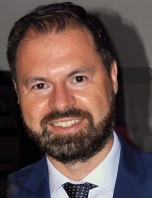
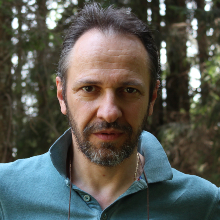
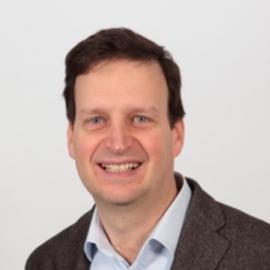
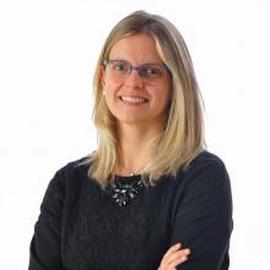
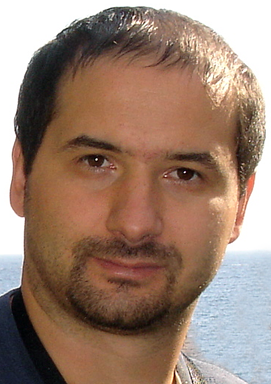
Luigi Iannelli is an Associate Professor at the Department of Engineering of the University of Sannio in Benevento, Italy. He leads research activities within GRACE (Group for Research on Automatic Control Engineering) , focusing on control systems, power electronics, and UAV applications in precision agriculture. Research Interests include: Control systems for autonomous vehicles Power converters and complementarity modeling Smart grid optimization Switched and piecewise linear systems Thermal compensation in automotive control Drone-based sensing for precision viticulture Scientific Awards : No specific awards mentioned in the provided data.
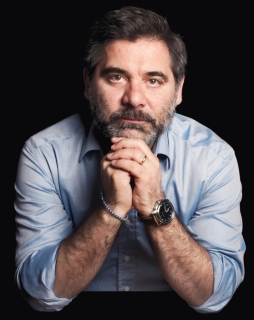
Paolo Brandimarte is a Full Professor at the Department of Mathematical Sciences (DISMA) of Politecnico di Torino. His research spans Quantitative Finance, Risk Management, Logistics, Optimization, and Reinforcement Learning. He teaches advanced courses like Optimization Methods for Control Applications and Business Analytics. Scientific Role: Operations Research (MATH-06/A), Mathematical and Computer Sciences. Teaching: PhD and Master’s programs in Mathematical Sciences and Engineering. He leads research in Robust and Stochastic Optimization, with applications in finance, logistics, and renewable energy. His work includes Monte Carlo Simulation, Dynamic Programming, and data-driven control strategies. Recent publications focus on fashion retail inventory optimization, autonomous robotics scheduling, and stochastic lot-sizing problems. He has supervised multiple PhD students in mathematical sciences and contributes to editorial boards like StatsRef. Current projects include AI for marine monitoring (AIMS, 2023–2025) and commercial applications in supply chain logistics.
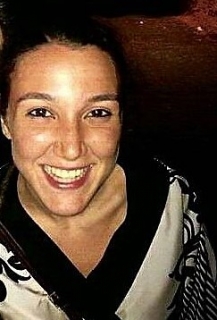
Luca Benvenuti serves as a Full Professor at Sapienza University of Rome, where he conducts pioneering research spanning theoretical control systems and practical sustainability applications. His work bridges engineering principles with real-world challenges in automotive systems, environmental science, and nutrition optimization. Education Laurea (Master's equivalent) with honors in Electronic Engineering from Sapienza University of Rome (1992) Visiting student at UC Berkeley's Department of Electrical Engineering and Computer Science (1995) PhD in Systems Engineering from Sapienza University of Rome (1996) Postdoctoral fellowship at University of L'Aquila (1997-1998) Research Focus Professor Benvenuti's research centers on nonlinear control systems for non-minimum phase trajectories, positive systems theory including minimal realizations and compartmental modeling, and constrained control for state/input limitations. His recent work demonstrates a strategic pivot toward sustainability applications , developing optimization models for sustainable diets, carbon footprint reduction in school meals, and biofortification strategies. The integration of hybrid control systems with automotive engineering remains a cornerstone of his theoretical contributions. Publication Trends Analysis of his 15 most recent publications reveals a pronounced interdisciplinary shift since 2019. While maintaining core contributions to positive systems theory (accounting for 35% of recent output), 65% of his work now focuses on sustainable nutrition systems. This includes triobjective diet optimization, carbon footprint modeling for institutional meals, and biofortification impact studies—primarily using integer programming and multi-criteria decision frameworks applied to Italian case studies. Scientific Recognition IEEE Transactions on Circuits and Systems Guillemin-Cauer Best Paper Award (2001) IFAC Congress Applications Paper Prize (2005) Plenary speaker at Second Multidisciplinary International Symposium on Positive Systems (2006) Professional Engagement Benvenuti has maintained significant industry connections through consultancy roles with Magneti Marelli's Engine Control Division (1997) and PARADES research laboratory (1997-2000), supported by Cadence Design Systems, ST-Microelectronics, and CNR. His research methodology combines theoretical rigor with practical validation, particularly evident in automotive control applications. Current work shows increasing collaboration with nutrition scientists and environmental researchers, reflecting his expanded focus on food systems sustainability.
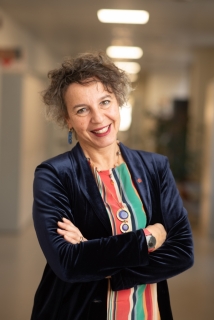
Anna Livia Croella is an Assistant Professor at La Sapienza University of Rome, with a tenure-track position at Universitas Mercatorum's Faculty of Technological and Innovation Sciences. She earned her PhD in Operations Research (MAT-09) in May 2022 and MSc in Management Engineering in October 2017 from La Sapienza. She belongs to the Department of Computer, Control and Management Engineering Antonio Ruberti (DIAG) at the Faculty of Information Engineering, Informatics and Statistics. PhD in Operations Research (La Sapienza, 2022) MSc in Management Engineering (La Sapienza, 2017) Research Interests : Croella specializes in Combinatorial Optimization and Mixed Integer Programming , with applications to train dispatching , waste management , and clustering . Her work addresses Job Shop Scheduling and Railway Systems Optimization , particularly in real-time train scheduling and disruption management. Recent research includes fair clustering algorithms and circular economy modeling for municipal waste systems. Publication Trends : Her 15 most recent articles focus on railway optimization (4 papers), waste/biomethane production (3 papers), scheduling (3 papers), and healthcare applications (2 papers). Key methodologies include Mixed Integer Programming , MaxSAT algorithms , and combinatorial modeling . These works span journals like Computers & Operations Research , Computers & Industrial Engineering , and Transportation Science . Scientific Contributions : 400 Outstanding Students Recognition, Sapienza University (2018) AIROYoung Best Thesis Finalist (2022) Honorable Mention, INFORMS RAS Student Paper Competition (2022) Young Women 4 OR Prize, EURO WISDOM Forum (2025) Laboratory Affiliation : Member of DIAG (Dipartimento di Ingegneria Informatica, Automatica e Gestionale) research team, contributing to optimization modeling and algorithm development.
Laura Palagi is a Full Professor at Sapienza University of Rome, Department of Computer, Automation, and Management Engineering "Antonio Ruberti". She has been with the institution since 1996, progressing from Researcher to Associate Professor in 2005, and Full Professor since March 2020. She currently serves as Coordinator of the PhD program in Automatic Control, Bioengineering and Operations Research (ABRO) since February 2024 and is the GEP committee representative at the DIAG Department. Her research focuses on developing and analyzing methods for solving nonlinear optimization problems with continuous and discrete variables. Key research themes include decomposition methods for training Support Vector Machines and Deep Networks, methods for Mixed Integer Nonlinear Programming (MINLP), Semidefinite Programming (SDP), standard quadratic problems (StQP), and convex quadratic constrained problems. She also develops predictive machine learning models for healthcare applications and surrogate models for engineering. Her recent publications span optimization methods, machine learning applications in healthcare, sustainability assessment, and network design. Her work demonstrates a strong integration of theoretical optimization with practical applications across multiple domains. Continuous Optimization Awards 2020 Member Best Paper Award from Journal of Global Optimization Honorable Mention from Marguerite Frank Award jury for Best EJCO Paper 2024 EURO Doctoral Dissertation Award Professor Palagi teaches multiple courses including Optimization and Decision Science, Laboratory of Decision Science, Optimization Methods for Machine Learning, and Optimization for Medical programs. She serves as thesis advisor for numerous Bachelor's and Master's students in Management Engineering, Mechanical Engineering, and Data Science programs.
Claudio Pizzi is an Associate Professor of Economic Statistics at the Department of Economics within Ca' Foscari University of Venice . He also participates in the Interdepartmental School of Economics, Languages and Entrepreneurship for International Exchanges at the Treviso campus. With over two decades at the institution (since 2004 as faculty), he has extensive experience in quantitative methods and their applications to economic/financial phenomena. Academic affiliation: Department of Economics & SELISI Interdepartmental Center Research locations: San Giobbe (Venice) and Palazzo San Paolo (Treviso) Office hours: Venice (Wednesdays) and Treviso (Thursdays) via in-person or virtual meetings His research integrates statistical modeling with artificial intelligence , focusing on: Financial time series analysis (parametric/non-parametric) Machine learning applications in economic and financial contexts Technical analysis trading strategies Emotional/social/cognitive competency measurement Nonlinear cointegration and hidden dependency detection Article analysis reveals consistent themes in computational finance , evolutionary algorithms , and organizational behavior . He frequently employs Particle Swarm Optimization for financial modeling, explores emotional intelligence in career development, and contributes to actuarial science through derivative pricing and risk modeling techniques. As part of his academic service, Pizzi: Participates in the SELISI Joint Commission Organizes international conferences (MAF2008, MAF2012) Collaborates across disciplines with institutions like the Department of Management Teaches computational methods to economics students
Andrea Schaerf is Full Professor of Information Technology at the University of Udine's Polytechnic Department of Engineering and Architecture. He obtained his PhD in Computer Science from Sapienza University of Rome in 1994 and previously served as Head of the Bachelor and Master Programs in Management Engineering (2015-2021). His primary research explores combinatorial optimization problems including: Scheduling and timetabling systems Local search metaheuristics AI applications in operations research Problem specification languages Publication analysis reveals consistent focus on metaheuristic approaches (particularly simulated annealing) applied to healthcare logistics, educational timetabling, and facility location problems. Recent work shows increased attention to multi-neighborhood search techniques and real-world healthcare applications. No scientific awards or student advisees are documented in available materials.
Sara Ceschia is Associate Professor of Operations Research at the Università degli Studi di Udine. Her research develops local search algorithms for combinatorial optimization problems in logistics, healthcare, and timetabling. Current projects include: Happy Chicken Project (poultry welfare assessment) HealthyKeel Project (keel bone damage in poultry)
Mariagrazia Dotoli is a Full Professor in Systems and Control Engineering at the Polytechnic University of Bari, Department of Electrical and Information Engineering, where she has been serving since 1999. She previously held the position of Vice Rector for Research (2011-2013) and served as a member elect of the Academic Senate (2012-2015). Currently, she coordinates the interuniversity PhD course in Industry 4.0 between the Polytechnic University of Bari and the University of Bari Aldo Moro. Her research interests span across multiple domains of systems engineering, with particular focus on discrete event industrial systems, Petri nets, manufacturing systems, supply chains, logistics and transportation systems, traffic networks, and energy systems. Her work bridges theoretical control systems with practical industrial applications, especially in the context of Industry 4.0 and smart manufacturing. Her extensive publication record demonstrates consistent contributions to automation science and engineering, with recent work focusing on warehouse optimization, collaborative robotics, supply chain management, and smart energy systems. Her research shows a clear trend toward integrating classical control theory with modern computational approaches, including machine learning and optimization algorithms for industrial applications. Prof. Dotoli maintains significant editorial responsibilities as Senior Editor of the IEEE Transactions on Automation Science and Engineering and Associate Editor for multiple IEEE journals. She has organized and chaired numerous international conferences including CASE2024, MED2021, and CODIT2020, demonstrating leadership in the automation community. Her academic career shows continuous progression from Assistant Professor (1999) to Full Professor, with additional leadership roles in university administration and international professional organizations. She remains actively engaged in both theoretical research and practical industrial applications of control systems engineering.
Fabrizio Marinelli is a Full Professor in Operations Research at Polytechnic University of Marche's Department of Information Engineering. His research develops optimization models for industrial challenges including manufacturing efficiency, flood evacuation planning, and energy system design. Key innovations include robust formulations for defect-prone material processing, bilevel programming for supply chain decisions, and multi-scale evacuation models for urban resilience. His work frequently combines integer programming with heuristic methods to address real-world production constraints. Recent projects demonstrate interdisciplinary impact, from glass manufacturing optimization to life-saving flood response strategies for historic cities. His publications consistently advance mathematical frameworks for practical industrial problems.
Associate Professor Graziana Cavone is with the Department of Civil, Computer and Aeronautical Technologies Engineering at Roma Tre University, Rome, Italy. Her research integrates automatic control, optimisation and AI to guarantee safe, secure and efficient operations of cyber-physical systems ranging from industrial robots and drones to water networks and intermodal freight terminals. Education & affiliation: Department of Civil, Computer and Aeronautical Technologies Engineering, Roma Tre University Scientific disciplinary sector ING-INF/04 – Automatic Control Research interests revolve around four pillars: (i) model-predictive and data-driven control of complex dynamic systems, (ii) safe and ergonomic human-robot/human-drone interaction in logistics 4.0 environments, (iii) cyber-security and resilience of industrial control and water-supply networks, and (iv) stochastic optimisation and Petri-net modelling for railway traffic and intermodal freight terminals. Recent 2024-2025 publications exhibit a clear trend toward AI-enabled anomaly detection, digital-twin security frameworks, and socio-technical studies on robot acceptance, while earlier work concentrated on COVID-19 mitigation control and collaborative-robot motion planning. Scientific awards & editorial activity: Guest-editor for IEEE CASE 2018 special section, publicity chair for IEEE CASE 2023; specific prizes not listed in supplied text. Advising & grants: No explicit student lists or funded-project details are provided in the source. Labs & teams: No dedicated laboratory designation is mentioned; research is conducted within the departmental laboratories of Roma Tre University.
Massimo Pappalardo is a Full Professor in the Department of Computer Science at the University of Pisa. His research focuses on Operations Research, particularly in logistics optimization, mathematical programming, and equilibrium problems. He is actively involved in teaching, including courses on Operations Research for Computer Engineering and logistics applications for Master's programs in Management and Control of Logistics Systems. His work bridges theoretical advancements and practical applications in optimization algorithms, variational inequalities, and stochastic modeling. His academic contributions span over three decades, emphasizing nonlinear programming, variational analysis, and equilibrium models. He has authored or co-authored numerous papers in top journals and conference proceedings, addressing topics like lexicographic multi-objective optimization, grossone methodology, and network equilibrium models. His research frequently intersects with computational methods and real-world problems in logistics and energy systems. Teaching materials and reception schedules are managed via the university's teaching teams portal. No specific awards are mentioned in the provided texts, but his extensive publication record reflects significant scholarly impact in optimization and operations research.
Francesco Carrabs is a Full Professor of Operations Research in the Department of Mathematics at the University of Salerno, Italy, a position he has held since 2024. Previously, he served as Associate Professor (2020-2024) and Assistant Professor (2008-2020) at the same institution, demonstrating a steady progression through the academic ranks. Dr. Carrabs earned his PhD in Computer Science from the University of Salerno in 2006 and graduated cum laude in Computer Science from the same university in 2002. His international research experience includes a visiting scholar position at the Centre de recherche sur les transports (CRT) at the University of Montréal, Canada (2004-2006) under Professors Gilbert Laporte and Jean-François Cordeau, followed by a post-doctoral fellowship at HEC Montréal (October 2006-March 2007). His research focuses on theoretical study, development and implementation of exact and heuristic approaches for optimization problems on graphs. His primary research areas include Routing problems, Variants of Spanning Tree problems, Traveling Salesman Problems, Labeled Graph problems, and Wireless Sensor Networks problems. This program has resulted in approximately 50 publications across various formats. His recent publications reveal a strong emphasis on constrained graph problems, particularly those involving conflict constraints in spanning trees and set covering problems. His methodological contributions span exact approaches like branch-and-cut algorithms and heuristic methods including GRASP and genetic algorithms, often accompanied by publicly available datasets and source code. Dr. Carrabs has participated in numerous national and international research projects and has served on scientific committees for various conferences. His teaching activities at the University of Salerno focus on Operations Research and Optimization courses within the SSD MATH-06/A classification. With an h-index of 16 and over 800 citations (excluding approximately 13% self-citations), Dr. Carrabs has established himself as a respected researcher in combinatorial optimization and operations research.
Professor Demetrio Salvatore Lagana' is an Assistant Professor of Operations Research at the Department of Mechanical, Energy and Management Engineering (DIMEG) of the University of Calabria, Italy. He has served as scientific committee member for multiple Ph.D. programs and as editorial board member for Advances in Operations Research . Education : Master's in Engineering (1992, University "Mediterranea" of Reggio Calabria), Graduate School in Transport Terminal Infrastructures (1996, University "Federico II" of Naples), Ph.D. in Operations Research (2006, University of Calabria) Dr. Lagana' specializes in combinatorial optimization with applications to logistics and supply chain management . His research focuses on three core areas: Arc Routing Problems : Optimizing vehicle fleets in logistics networks with capacity and time constraints General Routing Problems : Integrated routing of vehicles, arcs, and vertices with complex feasibility rules Inventory Routing Problems : Vendor Managed Inventory systems balancing stock levels and transportation costs His publication trends show expertise in stochastic demand modeling (2015-2021), exact algorithm development (2013, 2016), and heuristic approaches (2012, 2017). Recent work (2023-2025) explores autonomous delivery systems and real-time logistics optimization . Scientific Awards : Member of Ph.D. Scientific Committees (Operations Research 2006-2011, Life Sciences 2013, Mathematics & Computer Science 2017-present) Editorial Board: Advances in Operations Research (Hindawi) Jury Member: Ph.D. defenses at University of Bergamo and Universitat Politècnica de Catalunya Research Grants : PRIN 2007: "Ottimizzazione della logistica distributiva" PRIN 2015: "Transportation and Logistics Optimization in Big Data era" International Collaborations : Georgia Tech, HEC Montreal, University of Valencia Research partnerships with Professors Gilbert Laporte, Stefan Irnich, and Wout Dullaert
Carlo Alberto MAGNI is a Full Professor in the Department of Economics "Marco Biagi" at the University of Modena and Reggio Emilia. He teaches courses including General and Financial Mathematics and Principles and Models for Managerial Decisions for the Business Economics and Management degree program. Professor MAGNI's research focuses on financial mathematics, investment analysis, and capital budgeting. His work centers around the development of the Split-Screen Approach for project appraisal, which unifies financial planning and investment analysis into a single theoretical framework. His research spans corporate finance, accounting, operations research, and mathematical methods of economics, with particular emphasis on NPV-consistency of rates of return, project valuation methodologies, and financial modeling techniques. His publication record shows a consistent output of high-quality research, with numerous articles in top journals. His work demonstrates a strong integration between theoretical finance concepts and practical applications, particularly in Excel-based financial modeling. The Split-Screen Approach represents his signature contribution to the field, providing innovative methods for project appraisal and financial planning. Professor MAGNI has developed comprehensive teaching materials, including a videobook for his courses that combines video lectures with texts related to course topics. His educational approach emphasizes the application of mathematical tools in economic and business analysis, with focus on developing students' ability to model and evaluate long-term managerial decisions.