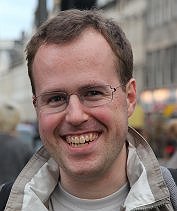
Rui Sá Shibasaki is a lecturer at the University of Picardie Jules Verne, specializing in Optimization and Cryptography within the AI - OCIA department. His research focuses on operational research and mathematical optimization, particularly in network design, assembly line balancing, and energy efficiency. Research Trends: His recent publications emphasize energy optimization in manufacturing processes, robust assembly line balancing under uncertainty, MaxSAT formulations for integer programming, and advanced decomposition methods in large-scale network design. Key themes include constraint programming, heuristic algorithms, and sustainability in industrial systems. Notable Contributions: He has developed Dantzig-Wolfe decomposition techniques for stability radius optimization and explored entropy-based sensor placement strategies. His work bridges theoretical optimization with practical applications in logistics and production planning.
Laurent ALFANDARI is a Full Professor at ESSEC Business School, specializing in Operations Research and Decision Analytics within the Information Systems, Decision Sciences and Statistics (IDS) Department. He has held key academic roles including Academic Co-Director of the ESSEC-CentraleSupélec Master in Data Sciences & Business Analytics (2019–2023) and Coordinator of the Operations & Data Analytics PhD concentration (2018–2021). His research focuses on optimization techniques applied to supply chains, logistics, healthcare, and disaster preparedness. He has authored over 50 journal articles in top venues like European Journal of Operational Research and Transportation Science. Education : - Doctorate in Operations Research (Université Paris Dauphine-PSL, 1999) - Master of Research in Management Science (Université Paris Dauphine-PSL, 1995) - M.Sc in Management (ESSEC Business School, 1993) - Bachelor in Mathematics & Social Sciences (Université Paris Dauphine-PSL, 1990) Research Interests : His work addresses complex optimization challenges in urban logistics, healthcare networks, and disaster response. Notable contributions include freight-on-transit systems, autonomous robot delivery, and pandemic intervention sequencing. He emphasizes practical solutions for real-world problems through mixed-integer programming and robust optimization frameworks. Teaching & Mentoring : Teaches Decision Analytics and Operations Research across ESSEC programs (Grande École, Executive MBA, PhD). Supervised 14 PhD theses, including recent works on sustainable last-mile deliveries and healthcare analytics. Awards & Activities : 2020 ESSEC Top 4 Teaching Award, Vice-President of ROADEF (2012–2015), and leader in industrial collaborations with SNCF and Aid-Impact. Active in organizing academic conferences and serves as a journal reviewer for Annals of Operations Research and others. Labs & Collaborations : Member of LIPN (Sorbonne Université) and LAMSADE (Paris Dauphine). Consults for organizations like Babcock-Wanson and contributes to public-sector projects like EDF's ROADEF challenge.
Simon Thevenin is an Assistant Professor in the Automation, Production, and Computer Sciences Department at IMT Atlantique in France since 2018. He holds a Ph.D. from the University of Geneva (2015) and previously worked as a Postdoctoral researcher at HEC Montreal and an Algorithm Expert at Quintiq. His research focuses on optimization methods for production management, including scheduling, planning, and manufacturing line design. He leads projects such as the EU-funded ASSISTANT (2020-2023), ALICIA (2023-2025), and ACCURATE (2023-2026), advancing AI-driven solutions for sustainable manufacturing and supply chain resilience. His work integrates machine learning, robust optimization, and digital twin technologies to enhance production systems' adaptability and efficiency. Education: Ph.D. in Production Systems Scheduling, University of Geneva (2015) Teaching/Research Assistant, University of Geneva (2010-2015) Research Interests: His research emphasizes optimization under uncertainty, reconfigurable manufacturing systems, and AI applications in production. He explores topics like lot-sizing models, equipment lifecycle management, and circular manufacturing ecosystems. Grants/Projects: ASSISTANT (EU-funded, 2020-2023): AI for production digital twins ALICIA (EU-funded, 2023-2025): Circular production resource ecosystems ACCURATE (EU-funded, 2023-2026): Supply chain resilience against disruptions Labs/Teams: Part of the LS2N research lab (Modelis team) at IMT Atlantique, specializing in logistics and industrial optimization.
Professor Mohammad REIHANEH is an Assistant Professor of Operations Management at IÉSEG School of Management. He holds a Ph.D. in Operations Management from the University of Massachusetts (USA), an MSc in Industrial Engineering from Isfahan University of Technology (Iran), and a BSc in Applied Mathematics from Ferdowsi University of Mashhad (Iran). His research focuses on optimization algorithms, vehicle routing problems, scheduling theory, and logistics systems. He is a member of the LEM research group and has published extensively in top-tier journals such as the European Journal of Operational Research and the Journal of the Operational Research Society. Education: 2018: Ph.D., Operations Management, University of Massachusetts, USA 2012: MSc, Industrial Engineering, Isfahan University of Technology, Iran 2009: BSc, Applied Mathematics, Ferdowsi University of Mashhad, Iran Research Interests: Mohammad’s work emphasizes practical applications of optimization in logistics and healthcare systems. He develops exact algorithms (e.g., branch-and-price) and heuristic methods for complex routing problems, maintenance scheduling, and resource allocation in healthcare settings. His contributions bridge theoretical advancements in operations research with real-world operational challenges in industries like renewable energy (offshore wind farms) and humanitarian logistics. Publications: His recent work addresses cutting-edge challenges such as multi-period offshore wind farm routing, hemodialysis center scheduling, and food bank distribution optimization. He frequently collaborates with international researchers on projects involving vehicle routing, reliability engineering, and control chart design for manufacturing systems. Advising & Grants: No specific student advisees or grant details are listed in the provided materials.
Prof. José Neto is a Professor at Télécom SudParis, part of the Institut Polytechnique de Paris, affiliated with the SAMOVAR research department. His work focuses on combinatorial optimization, mathematical programming, and graph theory. He has contributed to polyhedral studies of cut and assignment polytopes, spectral bounds for graph partitioning, and optimization algorithms for mixed-variable and blackbox problems. His research spans topics like network pricing complexity, domination in graphs, and robustness verification in neural networks. He has published extensively in top journals such as Mathematical Programming, Discrete Applied Mathematics, and Networks. Key contributions include developing efficient algorithms for combinatorial pricing, analyzing optimization relaxations, and exploring structural properties of discrete mathematical objects. His work bridges theoretical foundations and practical applications in operations research, with recent interests in binarized neural network verification and mixed-variable optimization. He has collaborated on projects related to cloud virtual machine mapping and combinatorial pricing models. Labs/Teams: Active member of the SAMOVAR laboratory, specializing in applied mathematics and optimization research.
Carsten Fuhs is a Senior Lecturer at the School of Computing and Mathematical Sciences at Birkbeck, University of London . His research focuses on Program Analysis , Termination , Complexity Bounds , and Term Rewriting , with applications in Verification and SAT Encodings . Research Group Lead of the Logical Methods research group (2023–present) Member of the Board of Trustees for CADE (2023–present) Chair of the Bill McCune PhD Award Expert Committee (2024, 2025) Active in conference organization and program committees (FSCD, IJCAR, LOPSTR, etc.) Research Interests : Carsten Fuhs specializes in automated termination and complexity analysis for term rewriting and programming languages. His work leverages SAT solving and constraint-based methods to develop tools like AProVE for program verification. Key areas include parallel term rewriting , higher-order dependency pairs , and memory safety proofs . Selected Publications Trends : Recent articles emphasize higher-order rewriting (2025), parallel complexity analysis (2024), and modular termination proofs (2022–2024). Earlier work (2014–2017) explores pointer arithmetic verification , separation logic , and integer program complexity . Scientific Awards : Best Paper Award, LOPSTR 2022 Teaching and Mentoring : Carsten Fuhs has lectured on Java programming , compilers , and term rewriting at Birkbeck and international summer schools. He contributes to SAT competitions as a benchmark submitter and organizes regional programming language seminars like S-REPLS 10 (2018).
Rabéa Ameur-Boulifa is an Associate Professor at Télécom Paris, affiliated with the Communications and Electronics (Comelec) Department. She is a member of the LabSoc research team within the Information Processing and Communication Laboratory (LTCI). Her work focuses on integrated and embedded systems, emphasizing design, modeling, verification, and security. LabSoc (System on Chip research team) LTCI (Information Processing and Communication Laboratory) Her research spans formal methods for system verification, security guidelines specification, and compositional analysis of distributed systems. Publications highlight applications in automotive software safety, asynchronous component modeling, and detection of vulnerabilities like integer overflow in embedded systems. The majority of her recent work (2022–2025) centers on open automata refinements, formal requirement validation, and compositional verification techniques. Keywords include formal methods, embedded systems, security guidelines, and distributed component modeling.
Emiliano Traversi is an Associate Professor in the Department of Information Systems, Data Analytics and Operations at ESSEC Business School. He holds a PhD in Operations Research from the University of Bologna and previously served as a Full Professor at LIRMM, University of Montpellier. His research focuses on mathematical optimization, decomposition methods, and machine learning, with recent emphasis on network slicing in UAV-based 5G systems and multi-drone formation strategies. His work bridges theoretical optimization frameworks with practical applications in telecommunications and autonomous systems. Education: PhD in Operations Research, University of Bologna Habilitation à diriger des recherches, Business Administration, Sorbonne Université (2023) Research Interests: Mathematical Optimization (Convex/Non-Convex) Decomposition Algorithms (e.g., Benders, Dantzig-Wolfe) Network Slicing & Resource Allocation for 5G/6G Autonomous Systems & Multi-Agent Coordination Applications in Telecommunications and Transportation Recent Research Trends: His 2025 publications highlight advancements in UAV-enabled 5G network slicing frameworks (EASIER) and mathematical foundations for drone fleet formations. Earlier work extends to optimization methods for transportation systems, quantum computing challenges, and power grid management through semidefinite relaxations. Professional Contributions: 20+ peer-reviewed articles in top journals/conferences (e.g., Computer Networks, AICA) Development of optimization frameworks with real-world applications Labs/Teams: Active collaborations in ESSEC's data analytics initiatives and international projects on UAV communication systems.
Shahin Gelareh is an Associate Professor in Operations Research and Logistics at the Université d'Artois, France, affiliated with the Department of Networks and Telecommunications at the IUT de Béthune. He holds a PhD in Optimization from the Technical University of Kaiserslautern (2008), an MSc in Applied Mathematics from the University of Sistan and Baluchestan (2005), and a BSc from Ferdowsi University of Mashhad (2003). His research focuses on Locational Analysis , Integer Programming , Metaheuristics , Global Network Design , and applications in Maritime Transport , Supply Chain , and Telecommunications . Notable areas include hub-and-spoke network optimization, liner shipping fleet deployment, and competitive analysis using game theory. Recent publications emphasize innovations in Neural Benders Decomposition for optimization, cross-docking systems , and hub location routing . His work spans theoretical advancements and industry collaborations in transportation and telecom sectors. Professional activities include memberships in leading OR societies (EWGLA, EWGT, VeRoLog) and roles as an ad-hoc reviewer for high-impact journals like Transportation Research Part E and European Journal of Operational Research .
Professor Odile Bellenguez is a faculty member in the Automation, Production and Computer Sciences department at IMT Atlantique. Her work focuses on integrating ethical considerations into algorithm design, particularly in personnel scheduling and decision support systems. She holds a University Diploma in Philosophy from Université Paris Nanterre, enhancing her interdisciplinary approach. Her research bridges computer science, discrete mathematics, and social sciences, with collaborations in sociology, psychology, and management science. Notable projects include co-supervising a thesis on ethical inclusion in healthcare scheduling and developing fair nurse rostering algorithms. She also pioneered a philosophy-infused framework for algorithmic ethics, addressing fairness and equity in automated systems. Professor Bellenguez actively engages in pedagogy, designing courses that teach ethical implications of algorithms through case studies like traffic navigation and workforce scheduling. Her recent work emphasizes cross-disciplinary dialogue to address societal challenges posed by algorithmic systems. Her contributions span over 50 publications, with a focus on scheduling optimization (RCPSP variants, nurse rostering) and ethical frameworks for automated decision-making. She plans to host a summer school for PhD students exploring ethics in algorithmics.
Soufia Benhida is a researcher specializing in optimization, operations research, and data approximation methods, with affiliations to both INSA Rouen Normandie and ENSA Agadir . Her doctoral work focused on decision support systems for logistics chains under uncertainty, combining theoretical and applied approaches to problems like the Probabilistic Traveling Salesman Problem (PTSP). She collaborated on the M2NUM project (Normandy and Europe region) and received joint supervision from Ahmed Mir (ENSA Agadir), Christian Gout, and Arnaud Knippel (INSA Rouen). Ph.D. Defense: December 12, 2018 Supervisors: Christian Gout, Ahmed Mir, Arnaud Knippel Projects: M2NUM, Logistics Optimization under Uncertainty Her research integrates optimization techniques for solving complex problems in logistics and industrial engineering, with a focus on exact methods for the Traveling Salesman Problem and data approximation using finite elements and splines. Current work involves probabilistic modeling for market uncertainty applications and wind field approximation considering topographic factors. Key publication trends include combinatorial optimization , subtour elimination constraints , and vector field approximation , reflecting interdisciplinary applications in logistics, environmental modeling, and industrial systems. Collaborations span institutions in Morocco and France. She has presented her work at major conferences including the International Symposium on Combinatorial Optimization (Marrakech) , CESCA Agadir , and LOGISTIQUA 2018 , showcasing methodological comparisons and novel formulations for the TSP.
Axel Parmentier is a Lecturer and researcher at the École Nationale des Ponts et Chaussées, where he founded the AI for Air Transport industry research chair with Air France. His work focuses on the intersection of operations research and machine learning, particularly in data-driven combinatorial optimization and stochastic optimization, with industrial applications in air transportation, supply chain, and predictive maintenance. He holds a Ph.D. and has been recognized with awards including the AMIES Dissertation Award (2017) for applied mathematics with industrial impact and the Robert Faure Prize (under 35) from ROADEF. His research also includes contributions to structured reinforcement learning, optimization layers in machine learning, and explainable AI for operational decisions. Awards: AMIES Dissertation Award, Robert Faure Prize Labs/Teams: CERMICS laboratory, AI for Air Transport Chair (collaboration with Air France) Grants/Projects: Continent-scale inventory routing solutions, Renault’s logistics optimization His advising includes students like Victor Cohen, whose work on predictive maintenance was featured on France Culture.
Julien Bernat is a Lecturer in Mathematics at the University of Lorraine, specifically at INSPÉ (National Higher Institute for Teaching and Education) of Lorraine, where he has held teaching and research positions since 2007. He is affiliated with the Analysis and Number Theory research team at IECL (Institut Élie Cartan de Lorraine), a joint research unit of CNRS and the University of Lorraine. Bernat's research centers on non-standard number systems, aperiodic structures, and word combinatorics. His work bridges theoretical computer science and pure mathematics, with significant contributions to β-numeration systems, substitution dynamics, fractal geometry of number representations, and combinatorial properties of infinite words. Key methodologies include geometric modeling of substitutions, analysis of aperiodic tilings, and computational approaches to Pisot number systems. His publication record from 2006-2011 reveals consistent focus on the intersection of number theory and discrete structures. Dominant themes include geometric interpretations of substitution systems, topological properties of β-integers, factor complexity of infinite words, and arithmetic operations in non-standard numeration. The research demonstrates strong connections between abstract combinatorics and concrete geometric realizations, particularly in fractal set theory. Beyond research, Bernat holds substantial educational responsibilities as coordinator for mathematics at INSPÉ's Nancy site and head of the M2 MEEF mathematics program. He actively develops mathematical outreach through the IREM group "games in the teaching of mathematics," creating innovative activities like "well-colored squares," "escape of the clones," and particle dynamics demonstrations that make advanced concepts accessible. His public engagement includes science festival presentations on mathematical paradoxes, knot theory, and societal roles of mathematics, alongside publications in outreach journals like "Découverte" and "le Petit Vert" covering polyominoes, quadrilaterals, and mathematical divination techniques.
David Shmoys is a Professor at Cornell University, focusing on discrete optimization and approximation algorithms with applications in scheduling, inventory theory, computational biology, and computational sustainability. He currently serves as Co-Chair of the Academic Planning Committee for Cornell Tech and Associate Director of the Institute of Computational Sustainability. His research has earned him Fellowships from the ACM, INFORMS, and SIAM, alongside the 2013 Lanchester Prize for his co-authored book The Design of Approximation Algorithms and the 2018 INFORMS Daniel H. Wagner Prize for his work on bike-sharing systems. He has advised 21 Ph.D. students, many of whom hold faculty positions at top institutions. Key Collaborations: Citibike, Motivate, Hangil Chung, Aaron Ferber, Nanjing Jian, Ashkan Nourozi-Fard, Alice Paul, David Williamson Recent Projects: Optimization of bike-sharing systems using Markov chains, integer programming, and crowd-sourced rebalancing via the Bike Angels program Editorial Roles: Associate Editor for Mathematics of Operations Research , former Editor-in-Chief of SIAM Journal on Discrete Mathematics , and editorial board member for multiple journals including Operations Research and Mathematical Programming .
Remy Dupas is a Professor at the University of Bordeaux , affiliated with the IMS Bordeaux - Integration, Material to System Laboratory within the Production Engineering research group. His work focuses on Operations Research , Logistics , and Transportation Systems , developing advanced algorithms for complex routing and supply chain optimization problems. Research Highlights: Innovative Branch-Cut-and-Price algorithms for Two-Echelon Vehicle Routing Problems with drones and time windows City Logistics models for sustainable urban freight distribution in Tokyo MultiAgent Systems for supply chain coordination 3D Loading Constraints integration in pickup-and-delivery problem solving Rail-Rail Transshipment scheduling methodologies Key Publications (2024-2007) demonstrate expertise in Combinatorial Optimization , Dynamic Routing , and Interoperability Metrics for enterprise systems. His research is characterized by strong Algorithm Development and Real-Time Transportation solutions.