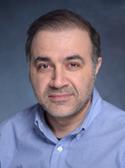
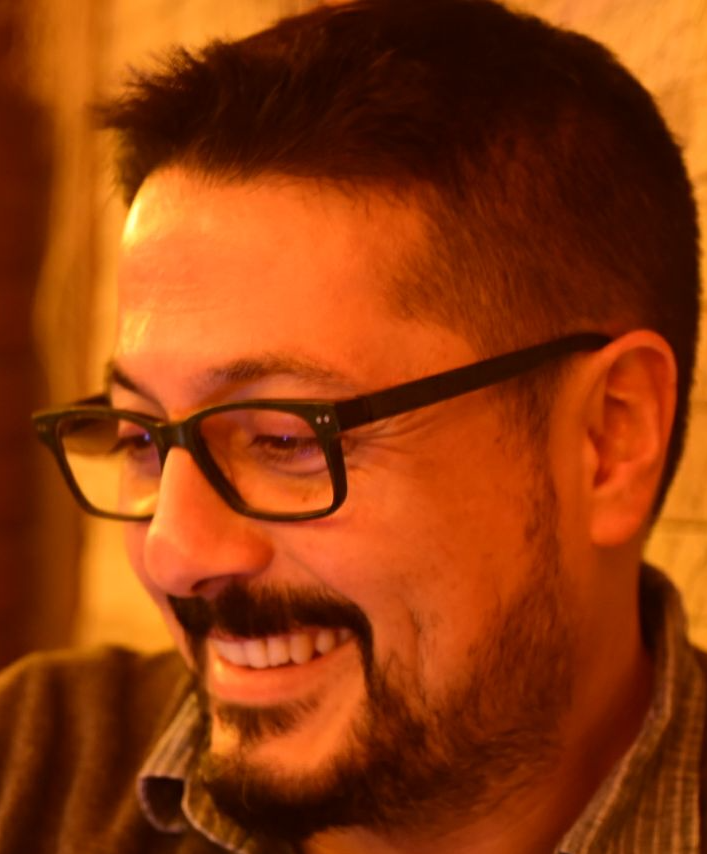
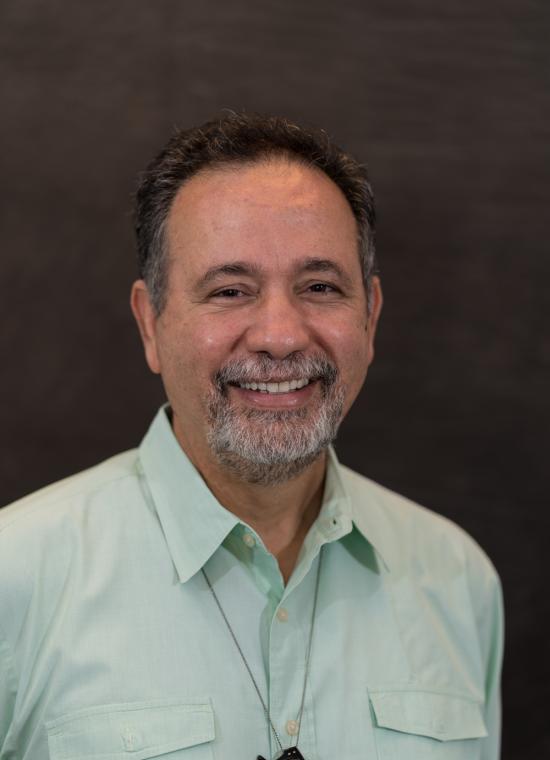
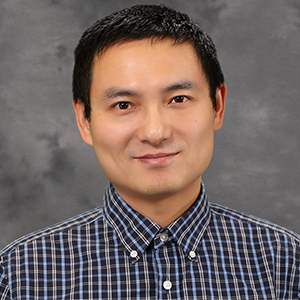
Selcuk Koyuncu is an Associate Professor in the Department of Mathematics at the University of North Georgia. His work focuses on advanced matrix theory, topology, operator theory, and combinatorial mathematics. He holds a prominent role in the Mathematics academic programs, contributing to both research and education. His research interests include structural analysis of matrices (e.g., Toeplitz, centrosymmetric, doubly stochastic), topological properties of mathematical objects, and applications in fields like evolutionary biology and signal processing. He has published extensively in journals covering matrix theory, combinatorics, and operator theory. Recent work explores topics such as extreme points of matrix polytopes, sub-defect variations in substochastic matrices, and Lie group structures of Toeplitz operators. His contributions have addressed applications ranging from numerical methods to algebraic topology. Dr. Koyuncu has no listed scientific awards or grants in the provided information. He can be contacted at selcuk.koyuncu@ung.edu and is located in the Watkins Academic Building, Gainesville campus.
Sheldon Jacobson is a Professor in the Department of Computer Science at the Siebel School of Computing and Data Science, University of Illinois at Urbana-Champaign. He holds cross-appointments in Electrical and Computer Engineering, Industrial and Enterprise Systems Engineering, Biomedical and Translational Sciences, Mathematics, and Statistics. His research spans operations research, optimization, probability, and applied mathematics, with applications in political redistricting, homeland security, stochastic processes, and societal problem-solving. Key focus areas include developing algorithmic frameworks for electoral fairness, optimizing complex systems, and advancing computational solutions for public policy challenges. Recent publications demonstrate strong emphasis on redistricting algorithms, optimization methodologies, and computational social science, with consistent applications in political systems and security domains.
Prof. Dr. Ilker Birbil is a Professor of AI & Optimization Techniques for Business & Society at the University of Amsterdam (UvA), affiliated with the Amsterdam Business School's Business Analytics section. He previously held professorships at Erasmus University and Sabancı University, focusing on optimization and data science. His research interests include interpretable machine learning, data privacy, and optimization methods in decision-making. Education: PhD in Operations Research from North Carolina State University Postdoc at Erasmus Research Institute of Management (ERIM), Netherlands Research Interests: Optimization in data science, interpretable AI, privacy-preserving algorithms, and decision-making systems. Recent work focuses on differentially private optimization and meta-learning techniques like LESS. Key Achievements: Recipient of multiple teaching awards at Sabancı University Affiliated researcher at OPTIMAL (Optimization for and with Machine Learning) Organized workshops on ML for optimization and mathematics of ML Grants & Teams: Leads the UvA group on Optimization and Machine Learning at LNMB. Collaborates on projects blending OR and ML, including privacy-aware algorithms and revenue management systems. Labs/Teams: OPTIMAL, UvA Optimization Group, and interdisciplinary teams in data analytics.
Asaf Shapira is a Professor at the School of Mathematical Sciences, Tel-Aviv University. His research focuses on combinatorics, graph theory, and extremal problems, with notable contributions to Ramsey theory, probabilistic methods, and algorithmic applications. He has authored over 50 publications in top-tier journals and has taught advanced courses such as Extremal Graph Theory and Probabilistic Methods in Combinatorics. His research interests include extremal combinatorics, hypergraph theory, and structural graph theory. Recent work includes advancements in removal lemmas, partition properties, and algorithmic testing of graph properties. Shapira has also contributed to foundational results in property testing and combinatorial optimization. His teaching spans undergraduate and graduate levels, covering topics like combinatorial analysis, algebraic methods, and advanced algorithms. While no explicit awards are listed, his extensive publication record reflects significant scholarly impact.
Karthekeyan Chandrasekaran is an Associate Professor in the Department of Industrial and Enterprise Systems Engineering at the University of Illinois at Urbana-Champaign (UIUC), where he has been since 2014. He holds an affiliate position in the Department of Computer Science. His academic career includes a Visiting Fellowship at ICERM (Spring 2023) and Eötvös Loránd University (Budapest, Fall 2022). He earned a B.Tech. in Computer Science and Engineering from the Indian Institute of Technology Madras (2007) and a Ph.D. in Algorithms, Combinatorics, and Optimization from Georgia Institute of Technology (2012). Before joining UIUC, he was a Simons Postdoctoral Research Fellow at Harvard University (2012–2014). His research focuses on Probabilistic Methods and Analysis , Algorithms , Mathematical Programming , and Combinatorial Optimization . He explores theoretical foundations of optimization, graph theory, and hypergraphs, with applications in algorithm design and complexity analysis. Recent work emphasizes hypergraph partitioning, submodular functions, and approximation algorithms. Chandrasekaran has received the Sharp Outstanding Teaching Award in Industrial Engineering (2018) and the College of Computing Dissertation Prize (2012) . His teaching includes courses such as Deterministic Models in Optimization and Combinatorial Optimization , reflecting his expertise in operations research and algorithmic theory. His research output spans over 50 publications, addressing cutting-edge topics like hypergraph connectivity augmentation, feedback vertex set problems, and strongly polynomial algorithms. He actively contributes to theoretical computer science and combinatorial optimization, with a focus on bridging mathematical rigor and practical algorithmic solutions.
Wojciech Matysiak is an Assistant Professor in the Faculty of Mathematics and Information Science at Warsaw University of Technology. His research lies at the intersection of probability theory, quantum stochastic processes, and algebraic structures in mathematics. Institution: Warsaw University of Technology School: Faculty of Mathematics and Information Science Position: Assistant Professor of Mathematics Email: matysiak@mini.pw.edu.pl Office: 439, Mathematics Building, ul. Koszykowa 75, Warsaw, Poland His primary research interests include Probability Theory , Quantum Stochastic Processes , Orthogonal Polynomials , and Noncommutative Probability . He investigates structures such as quadratic harnesses, quantum Bessel processes, and random fields with linear regressions, often using operator-theoretic and algebraic methods. The analysis of his recent publications reveals a strong focus on the interplay between algebra and probability, particularly through q-commutation relations, martingale polynomials, and generalized stochastic processes. His work spans pure mathematics with applications in mathematical physics and has extended into interdisciplinary domains such as soil science and oncology. Wojciech Matysiak has published in prestigious journals including Transactions of the American Mathematical Society , Stochastic Processes and their Applications , and Journal of Theoretical Probability . His recent work continues to explore deep connections between algebraic identities and probabilistic models. He collaborates with researchers such as Włodzimierz Bryc, Jacek Wesołowski, and Marcin Świeca. He is involved in the Probability Seminar at his institution and contributes to teaching materials for mathematics and engineering students. No scientific awards or grants are mentioned in the provided texts. He maintains a research webpage and is actively publishing, indicating ongoing scholarly activity in mathematical probability and its applications.
Shahriar Shahriari is the William Polk Russell Professor of Mathematics at Pomona College, part of The Claremont Colleges. He has been affiliated with Pomona since 1989, holding roles such as Department Chair (2004–2007) and Associate Dean of the College (2000–2003). His research focuses on combinatorics, particularly chain partitions, cut-sets in Boolean lattices, and finite group theory. He is renowned for his teaching excellence, including the 2015 Deborah and Franklin Tepper Haimo Award for Distinguished Teaching. His textbook Approximately Calculus (2006) won a Choice Outstanding Academic Title. He has authored over 30 refereed papers in combinatorics and algebra, edited volumes, and Persian-language expository works. His academic service includes editorial roles at Order and Math Horizons , and he has held visiting positions at institutions including Columbia University and EPFL. Shahriari earned his Ph.D. from the University of Wisconsin-Madison (1986) and B.A. from Oberlin College (1977). Education: Ph.D. in Mathematics (1986) from University of Wisconsin-Madison; B.A. in Mathematics and Economics (1977) from Oberlin College. Recent Courses: Abstract Algebra, Combinatorics, Deterministic Operations Research, and Honors Calculus. Publications: Includes books on combinatorics and algebra, plus peer-reviewed articles in Journal of Combinatorial Theory , Proceedings of the AMS , and others. Awards: Multiple Wig Teaching Awards (1993, 1999, 2008, 2013), MAA's Allendoerfer Award (1998), and Pomona College Alumni Service Award (2017). His research emphasizes combinatorial structures and pedagogical innovation.
Ilse Fischer is a Professor in the Department of Mathematics at the Faculty of Mathematics, University of Vienna. She holds the titles of Univ.-Prof., Mag. Dr., and Privatdoz., reflecting her senior academic status and contributions to combinatorics. Her research is centered on algebraic and enumerative combinatorics, with a focus on alternating sign matrices, plane partitions, lozenge tilings, and symmetric functions. Her research interests include: Enumerative and bijective combinatorics Alternating sign matrices and their symmetry classes Plane partitions and totally symmetric variants Lozenge tilings of hexagons with defects Gelfand-Tsetlin patterns and lattice path models Combinatorial identities and symmetric functions Analysis of her recent publications (2020–2024) reveals a consistent focus on exact enumeration, combinatorial bijections, and algebraic structures. Her work often bridges combinatorics with mathematical physics, particularly through models like the six-vertex (square ice) model. She frequently collaborates with leading researchers such as Matjaž Konvalinka, Mircea Ciucu, and Florian Schreier-Aigner, publishing in top journals including Advances in Mathematics , European Journal of Combinatorics , and Algebraic Combinatorics . She has received two scientific prizes, though specific names are not listed. Her academic activity remains strong, with ongoing projects and publications, indicating active research leadership. She advises students and postdoctoral researchers, though specific names are not provided in the text. She has led multiple research projects, particularly in the areas of combinatorial enumeration and symmetric functions. She is involved in collaborative research networks and regularly contributes to major combinatorics conferences such as FPSAC and AofA. Her work continues to advance foundational results in algebraic combinatorics, including bijective proofs of long-standing conjectures.
Matthew Just is a Lecturer in the Department of Mathematics at the University of Georgia, where he completed his PhD in 2022 after earning BS (2012) and MS (2016) degrees from Georgia Southern University. He teaches mathematics courses for middle grades education majors and mentors undergraduate research. His educational background includes: BS in Mathematics, Georgia Southern University, 2012 MS in Mathematics, Georgia Southern University, 2016 PhD in Mathematics, University of Georgia, 2022 Just's research centers on number theory and combinatorics, investigating the interplay between additive and multiplicative structures, integer partitions, and analytic properties of power series/modular forms. His earlier work developed transmission models for Ebola and typhoid outbreaks, demonstrating cross-disciplinary applications in mathematical biology. His publication trends reveal deep integration of analytic methods across number theory and combinatorics, with emerging connections to arithmetic geometry through partition Eisenstein series and semi-modular forms, while maintaining relevance to real-world problems via epidemiological modeling. His academic honors include: Outstanding Graduate Teaching Assistant (2019) David Galewski Outstanding Graduate Teaching Award (2020) As an active mentor, Just guides over 10 undergraduate researchers through the Directed Reading Program and as Undergraduate Research Mentor for combinatorics/number theory, yielding one published paper and multiple manuscripts in preparation. He also provides specialized tutoring for students with diverse learning needs across all age groups. He participates in departmental seminars like Combinatorics SMARTS and contributes to the academic community through the UGA Duplicate Bridge Club, while balancing family life with his wife Erin and children Filly and August.
Foad Mahdavi Pajouh is an Associate Professor at the School of Business, Stevens Institute of Technology, where he holds the Jack Howe Fellowship. Previously, he served as an Assistant Professor at the University of Massachusetts Boston (2014–2021) and a Research Assistant Professor at the University of Florida (2012–2014). He earned his PhD in Industrial Engineering from Oklahoma State University (2012), and earlier degrees from Tarbiat Modares University (MS, 2006) and Sharif University of Technology (BS, 2004). His research focuses on theoretical, computational, and algorithmic optimization, with applications in big data analytics of complex networks. Key areas include business analytics, social network analysis, financial network analysis, and cybersecurity. His work emphasizes clique relaxations, network interdiction, and resilient network design. Recent studies address influential group detection, risk-averse clustering, and robust infrastructure planning. Publications highlight contributions to clique detection algorithms, network resilience, and optimization models. Over 30 peer-reviewed articles appear in top journals like European Journal of Operational Research , INFORMS Journal on Computing , and Annals of Operations Research . His work bridges graph theory and real-world network challenges in finance, cybersecurity, and environmental systems. Notably absent are explicit mentions of awards or grants, though his prolific publication record and academic roles suggest significant professional recognition. No student advisees are listed in the provided information.
Marina Iliopoulou is a Professor of Mathematics at the Department of Mathematics, National and Kapodistrian University of Athens, Greece. Her research focuses on harmonic analysis, incidence geometry, geometric measure theory, and additive combinatorics. She has made significant contributions to understanding oscillatory integral operators, Kakeya-type problems, and inequalities in harmonic and functional analysis. Education: PhD in Mathematics from the University of Edinburgh (2013), thesis titled Discrete analogues of Kakeya problems . Research Highlights: Developed sharp estimates for oscillatory integral operators using polynomial partitioning, earning a Frontiers of Science Award (2018-22). Advanced studies on incidence geometry, including joints problems and multijoints over arbitrary fields. Contributed to Mizohata-Takeuchi-type inequalities and Riesz-Sobolev inequalities on Abelian groups. Recognition: Recipient of the Frontiers of Science Award for the paper Sharp estimates for oscillatory integral operators via polynomial partitioning . Advising & Grants: No listed advisees or grant details provided. Labs/Teams: No specific laboratories or collaborative teams explicitly mentioned in the provided information.
Dr. Jia Huang is a Professor of Mathematics and Statistics at the University of Nebraska at Kearney (UNK). He holds a Ph.D. in Mathematics from the University of Minnesota and a B.S. in Mathematics and Applied Mathematics from the University of Science and Technology of China. His research focuses on Discrete Mathematics, including Algebraic and Enumerative Combinatorics, Combinatorial Representation Theory, and Graph Theory. Notable areas of study include compositions with restricted parts, nonassociative binary operations, and the combinatorics of Hopf algebras. Dr. Huang has organized the UNK Undergraduate Research Mathematics Mini-Symposium since 2017 and has mentored multiple undergraduate research fellows. He teaches a wide range of courses, including Advanced Calculus, Discrete Mathematics, and Linear Algebra. His academic career includes postdoctoral work at the University of Minnesota and tenure progression from Assistant to Associate to Full Professor at UNK. Recent research contributions span topics like associative-commutative spectra of binary operations, partially palindromic compositions, and domination ratios in graph theory. He actively publishes in journals such as Discrete Mathematics , Journal of Integer Sequences , and Electronic Journal of Combinatorics . Dr. Huang's advising efforts include guiding students like Gamaliel Montero Alcaraz and Evan Olson. He also collaborates with institutions globally, including presentations at the International Conference on Enumerative Combinatorics and the Formal Power Series and Algebraic Combinatorics conference.
Petra Mutzel is a Professor of Computer Science at the University of Bonn. Her research focuses on graph algorithmics, temporal networks, and combinatorial optimization with applications in data science and bioinformatics. She holds a PhD in Computer Science from the University of Cologne (1994) and a Diplom in Mathematics from the University of Augsburg (1990). Her work emphasizes algorithmic solutions for complex graph problems, including temporal graph analysis, graph learning, and optimization frameworks for real-world networks. She has contributed to open-source libraries like Tglib for temporal graph processing and frameworks like Scaffold Hunter for medicinal chemistry. Her research spans theoretical foundations and practical implementations, with notable contributions to graph drawing, vehicle routing optimization, and protein complex analysis. Mutzel’s recent publications (2022-2025) explore temporal network dynamics, robust combinatorial optimization, and scalable graph kernel methods. She actively engages in academic leadership, organizing conferences such as WALCOM 2022, and serves on editorial boards for journals in algorithms and computational geometry.
Dr Jonathan Chapman is a Research Fellow at the Department of Mathematics, University of Warwick. His research focuses on additive combinatorics, Ramsey theory, and number theory, with particular emphasis on partition regularity, Diophantine equations, and combinatorial structures in number systems. His work bridges algebraic, analytic, and probabilistic methods to address problems in arithmetic Ramsey theory and additive patterns. Recent publications explore topics such as monochromatic solutions to multiplicative equations, additive Ramsey configurations over primes and non-integer sequences, and generalizations of classical Ramsey criteria like Rado and Roth theorems. His studies often involve intricate interplays between linear algebraic structures, syndetic sets, and hypergraph Ramsey phenomena. No scientific awards or grants are explicitly listed in available records. He currently holds no documented advisees, though his research likely involves collaboration with graduate students and postdocs in the Mathematics Institute. His affiliations include the Mathematics Institute at the University of Warwick, with office B2.28 and contact details available via institutional channels.
Pavlo Krokhmal is a Professor in the Department of Systems and Industrial Engineering at the College of Engineering, University of Arizona. He serves as the Director of Industrial Engineering and is a member of the Graduate Faculty. He has previously held academic positions at the University of Iowa and the University of Florida. Education: PhD in Operations Research, University of Florida, Gainesville, Florida, United States PhD in Mechanics of Solids and Applied Mathematics, Kyiv National Taras Shevchenko University, Kyiv, Ukraine MS in Applied Mathematics and Mechanics, Kyiv National Taras Shevchenko University, Kyiv, Ukraine His research focuses on stochastic optimization, risk analysis, and decision-making under uncertainty, with applications in financial engineering, network resilience, and renewable energy systems. He also contributes to multidisciplinary optimization and cooperative control. His work bridges applied mathematics, engineering, and operations research. The most recent publications reflect a strong trend in risk-averse optimization under uncertainty, especially in network structures, energy systems, and combinatorial problems. His work integrates advanced mathematical modeling, stochastic programming, and computational algorithms. Topics frequently include risk measures like CVaR, p-cone programming, and PDE-constrained optimization with stochastic inputs. Scientific Awards and Honors: Diploma in the Competition of Young Scientists and Students for the Best Research Project, National Academy of Sciences of Ukraine, Spring 1997 Soros Student Award, International Soros Science and Education Program, Fall 1994 Scholarship for scientific and academic achievements, National Academy of Sciences of Ukraine, Spring 1994 Air Force Summer Faculty Fellowship Award (multiple years: 2011, 2012, 2014, 2018, 2019) NRC Senior Research Associateship Award, National Research Council, Spring 2015 Donald E. Bently Faculty Fellowship of Engineering, University of Iowa, Fall 2013 Recognition for Excellence in Teaching, College of Engineering, University of Iowa (2010, 2013) Dr. Krokhmal has been actively involved in advising graduate students and leading research projects funded by agencies such as the Air Force Office of Scientific Research. His collaborations span across institutions and disciplines, including work with researchers at the University of Florida, University of Iowa, and military research labs. He has served on editorial boards and contributed to academic leadership through journal editorials and peer review. His research is conducted within interdisciplinary teams focusing on optimization, risk modeling, and complex systems. These teams often involve mathematical modeling, algorithm development, and simulation for real-world applications in defense, energy, and infrastructure resilience.