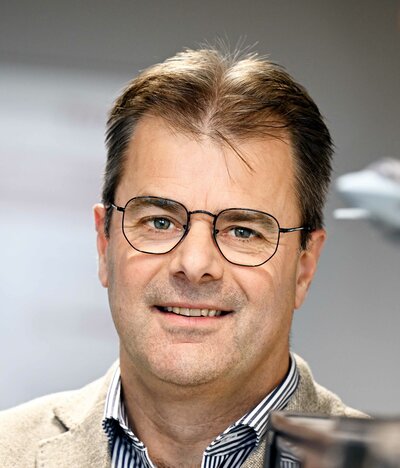
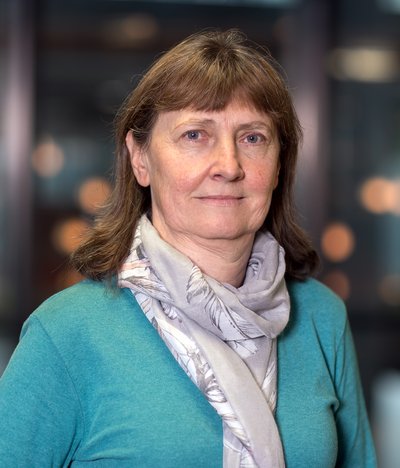
Mathijs de Weerdt is a Full Professor at Delft University of Technology, leading the Algorithmics Group within the Faculty of Electrical Engineering, Mathematics and Computer Science. His research focuses on developing advanced algorithms for planning and scheduling under uncertainty, with applications in energy systems, railway logistics, satellite operations, and agricultural supply chains. He bridges fundamental AI research with practical implementations through collaborations with Dutch National Railways (NS), Shell Recharge, and industry partners. Education: PhD in Multi-Agent Plan Merging (2003), MSc in Computer Science (Utrecht University, cum laude) Research Interests: Robustness in AI, Scalability of Optimization Algorithms, and Multi-Party Coordination His work integrates Stochastic Programming , Reinforcement Learning , and Constraint Programming to address challenges in energy transition and transportation. Recent 15 most recent publications emphasize surrogate modeling for EV charging optimization, multi-agent pathfinding in railways, and dynamic programming for decision trees. Scientific Awards: Recipient of the Erasmus Energy Forum Science Award (2016), Best Teacher Award in Delft Computer Science (2015), and honorable mentions for dissertation and paper awards. As a promotor , he guides over 20 PhD candidates in projects spanning smart grid algorithms, train unit shunting, and strawberry supply chain optimization. He leads large-scale initiatives like the NWO ESI-FAR project and co-chairs the Dutch AI Coalition's Energy & Sustainability working group.
Judith Keijsper is a Lecturer at the Department of Mathematics and Computer Science at Eindhoven University of Technology (TU/e) , where she has been affiliated since 2000. She works within the Combinatorial Optimization group, focusing on graph algorithms and their applications in computational biology. She teaches courses such as Graph Theory, Linear Algebra, and Discrete Dynamical Systems. Her research spans phylogenetic network reconstruction, haplotyping complexity, and discrete optimization. Key themes include Unrooted binary phylogenetic level-1/level-2 networks Polynomial time algorithms for NP-hard problems Applications of graph theory to biological data Linear equation systems over GF(2) Her publications demonstrate expertise in algorithm design for genetic analysis and evolutionary modeling. No scientific awards are explicitly mentioned in the provided texts.
Dr. Olga Kuryatnikova is an Assistant Professor at the Econometric Institute within Erasmus School of Economics, Erasmus University Rotterdam. She specializes in developing solution approaches for non-linear optimization problems using convex programming, with applications in energy, transport, and network systems. Previously, she worked as a financial analyst in industry. Her research focuses on optimization over networks, energy systems, and machine learning applications. She holds a PhD in Operations Research from Tilburg University and an MSc in Econometrics and Operations Research (cum laude). Kuryatnikova teaches courses including Linear Programming, Optimization under Uncertainty, and Convex Analysis for Optimization. She coordinates Erasmus University's Sectorplan SSH-Breed initiative on societal effects of digitalization.
Dr. Paolo Gorgi is an Associate Professor at the Department of Econometrics and Data Science in the School of Business and Economics at Vrije Universiteit Amsterdam. He holds a PhD in Statistics and Econometrics from the Joint Degree Program of the University of Padova and Vrije Universiteit Amsterdam (2017). His research focuses on score-driven time series models, stochastic processes, forecasting economic variables, and statistical inference in non-linear dynamic models. He is also a Partner at ACMetric B.V. since 2021. His work contributes to UN Sustainable Development Goals related to economic growth and sustainable cities. Key research interests include developing novel methodologies for time series analysis, particularly in handling non-linear dynamics and high-dimensional data. He has authored over 36 publications, including influential works on score-driven models, copula-based count models, and robust statistical estimation techniques. Teaching responsibilities include courses on Data Science Methods and Financial Econometrics . His research network spans collaborations with institutions globally, focusing on econometric applications in finance, macroeconomics, and sports analytics. He has supervised two PhD theses and actively contributes to the academic community through editorial roles and conference participation.
Marleen Balvert is an Assistant Professor at Tilburg University's Tilburg School of Economics and Management (TiSEM), Department of Econometrics and Operations Research. Her research focuses on applying optimization and machine learning to address challenges in the medical and humanitarian sectors. She leads projects such as the Zero Hunger Lab, developing tools to improve food security operations, and collaborates with institutions like the World Food Program and Erasmus Medical Center. Her work includes creating the ARAN dataset for child health monitoring and optimizing radiotherapy workflows in healthcare. Key research interests include genomics data analysis for disease identification, resilient food systems, and interpretable machine learning methods. She teaches courses on operations research and machine learning at TiSEM. Balvert has been awarded the NWO Veni Grant and actively contributes to interdisciplinary projects bridging academia and real-world applications. Her recent publications emphasize data-driven solutions in healthcare and humanitarian logistics, with collaborations spanning bioinformatics, medical research, and global hunger initiatives.
Prof. Gabriele Keller is a Professor of Software Technology at Utrecht University's Faculty of Science. She previously held roles at the University of New South Wales, including Associate Professor (2014–2018) and Senior Lecturer (2001–2013). Her research focuses on functional programming, type systems, high-performance computing, and verification methodologies. Current projects include Accelerate (a parallel computing DSL embedded in Haskell) and Cogent (a systems programming language with formal verification features). Education: PhD in Natural Sciences (Technische Universität Berlin, 1999): 'Efficient Compilation of Nested Data-Parallelism for Distributed Memory Machines' MSc Computer Science (Technische Universität Berlin, 1995) Research Interests: Type systems and correctness guarantees Parallel computing and GPU programming Formal verification of systems software Domain-specific languages for high-performance domains Professional Activities: Co-Chair, IPN Working Group on Equity, Diversity & Inclusion Editor, Journal of Functional Programming Member, IFIP Working Group 2.8 Selected Projects: Accelerate: Optimized parallel computing for Haskell Cogent: Verified systems programming with uniqueness types EmoSTL: Formal verification of game emotion logic
Alessandro Zocca is an Assistant Professor in the Department of Mathematics at the Vrije Universiteit Amsterdam , where he has been since 2019. His research sits at the intersection of applied probability , reinforcement learning , and network optimization , with primary applications in power systems resilience against climate-driven uncertainties. Education: PhD in Mathematics (2015, Eindhoven University of Technology), Postdoctoral work at Caltech (2017-2019) and CWI Amsterdam (2016-2017) Key Research Themes: Stochastic dynamics on networks, climate crisis impact on infrastructure, optimization under uncertainty Awards: Applied Probability Trust award (2015), NWO Rubicon grant (2017) His recent work focuses on reinforcement learning for grid topology control, two-stage stochastic programming for exponential constraint handling, and Markov Chain Monte Carlo methods for rare-event analysis. He actively supervises five PhD students on topics ranging from weather-driven grid failures to stochastic frequency reserve optimization . Co-author of the textbook Hands-On Mathematical Optimization with Python (Cambridge University Press, 2025), he also organizes the IFIP Performance 2025 conference in Amsterdam.
Meik B. Franke is a Full Professor in Sustainable Process Technology at the Technical University of Dortmund. His research spans chemical engineering optimization, reactive distillation, hybrid separation processes, and sustainable energy systems. Key Affiliations: Technical University of Dortmund, Collaborations with E. Zondervan, K.V. Camarda Research Themes: Ferrofluidic extraction, Biodiesel production, Discrete-event simulation, Algae biorefinery optimization His recent work focuses on integrating MILP with discrete-event simulation and applying AI to chemical process optimization. He has presented at conferences on process optimization challenges in the chemical industry, emphasizing sustainability and energy efficiency. His publications reveal expertise in: Optimization algorithms (Benders decomposition, MILP-DES integration) Distillation and hybrid process design Biorefinery systems for biodiesel and algae-derived products Dynamic process modeling and control Heat integration for energy efficiency AI/ML applications in chemical engineering
Ilke Bakir is an Associate Professor in the Department of Operations at the Faculty of Economics and Business, University of Groningen. She has been part of the faculty since 2018, holding roles as Assistant Professor (2018–2023) and currently as Associate Professor. Her expertise spans Operations Research, Transportation and Logistics, Supply Chain Management, and Stochastic Optimization. Education: Ph.D. in Industrial Engineering, Georgia Institute of Technology (2017) M.Sc. in Industrial Engineering, North Carolina State University (2011) B.Sc. in Industrial Engineering, Bogazici University (2009) Research Interests: Her work focuses on optimizing complex systems in transportation and energy sectors, including fleet management, wind farm operations, and data-driven maintenance strategies. She also explores digital transformation in supply chain logistics and stochastic optimization frameworks. Recent projects include the SMiLES initiative (NWO-funded) and hospital logistics planning under pandemic constraints. Grants & Projects: SMiLES: Shared connectivity in Mobility and Logistics Enable Sustainability (2019–2024) – NWO, TKI Dinalog, Ministry of Infrastructure Hospital logistics in the 1.5-meter society (2020) – ZonMw-funded Advising: Supervises four PhD students focusing on logistics optimization, dynamic service systems, and collaborative carrier networks. Teaching: Courses include 'Introduction to Operations Research', 'Supply Chain Network Design', and 'Supply Chain Analytics' at both BSc and MSc levels.
Geert-Jan van Houtum is Dean of the Department of Industrial Engineering and Innovation Sciences at Eindhoven University of Technology (TU/e), a position he has held since October 2023. He is also a Full Professor and chairs the Maintenance and Reliability group within the Operations Planning, Accounting & Control department. He is affiliated with EAISI (Eindhoven Artificial Intelligence Systems Institute), particularly in the High Tech Systems and Mobility domains. Dean, Department of Industrial Engineering and Innovation Sciences, TU/e (2023–present) Full Professor, Maintenance and Reliability, TU/e (2008–present) Vice-Dean, Industrial Engineering, TU/e (2017–2023) Group: Operations Planning, Accounting & Control Research Institute: EAISI High Tech Systems Geert-Jan van Houtum obtained his MSc and PhD in Applied Mathematics from Eindhoven University of Technology in 1990 and 1995, respectively. He served as assistant/associate professor at the University of Twente and TU/e before being appointed Full Professor in 2008. He was also a visiting professor at Carnegie Mellon University in 2001. His research focuses on improving system availability and reducing total cost of ownership (TCO) for capital goods through innovations in maintenance and reliability. Key areas include design and control of spare parts networks, predictive and condition-based maintenance, and product design decisions that influence service performance. He investigates the value of remote monitoring and degradation data in maintenance logistics. His work is strongly industry-oriented, involving collaborations with ASML, Dutch Railways, Philips, Canon-Océ, Marel, Royal Netherlands Navy, and Vanderlande. The recent publications highlight a consistent focus on optimizing maintenance policies using advanced operations research techniques. Topics include restless bandit models for scheduling, two-threshold condition-based maintenance for multi-component systems, spare parts recommendation under demand dependency, and real-time data-driven logistics. These works reflect a strong integration of theoretical modeling with practical industrial applications, particularly in high-tech and capital-intensive sectors. Geert-Jan van Houtum has over 100 publications in leading journals such as Operations Research , Manufacturing and Service Operations Management , IISE Transactions , European Journal of Operational Research , and Reliability Engineering and System Safety . He co-authored the book Spare Parts Inventory Control under System Availability Constraints with Bram Kranenburg. He is actively involved in research funding and collaboration. Recent work has been supported by the Netherlands Organization for Scientific Research (NWO) and the EU-funded 'DayTiMe – Digital Lifecycle Twins for Predictive Maintenance' project. He leads a research group that bridges academic rigor with industrial relevance, mentoring researchers and contributing to public-private innovation initiatives. He is a key figure in the EAISI High Tech Systems group and contributes to interdisciplinary efforts in data-driven maintenance, digital twins, and intelligent systems. His leadership extends to shaping academic strategy as Dean while maintaining an active research agenda in operations and maintenance optimization.
Dr. Marcel van Kooten Niekerk serves as an Assistant Professor in the Department of Information and Computing Sciences within the Faculty of Science at Utrecht University. His academic appointment focuses on the Simulation of Complex Systems subgroup, where he applies computational methods to solve challenging transportation problems. He also maintains a professional connection with the transportation industry as a Consultant Logistics and Innovation at Qbuzz BV, demonstrating his commitment to bridging academic research with practical applications in public transport. Van Kooten Niekerk's research spans two primary domains: transportation optimization and theoretical computer science. His more recent work centers on public transportation systems, particularly focusing on the integration of electric vehicles into existing public transit networks. His expertise encompasses complex scheduling challenges including electric bus operations, platform assignments across multiple stations, and the integration of timetabling with vehicle scheduling. Earlier in his career, he made significant contributions to theoretical computer science, particularly in graph theory and combinatorial optimization problems such as partitioning graphs into triangles. His publication record reveals a clear evolution from theoretical computer science toward applied transportation research, with a growing emphasis on sustainability. The most recent publications demonstrate sophisticated approaches to handling uncertainty in electric bus operations, optimizing platform assignments across multiple bus stations in Utrecht, and developing comprehensive frameworks for reliable and sustainable public transport systems. His work consistently applies operations research methodologies, particularly integer linear programming and stochastic optimization techniques, to solve real-world transportation challenges. Van Kooten Niekerk has established himself as a researcher who effectively bridges theoretical computer science with practical transportation applications. His work has gained significant attention, with some publications accumulating over 100 citations and reader captures, indicating substantial impact in the transportation research community. His doctoral thesis on optimizing for reliable and sustainable public transport represents a comprehensive contribution to the field of electric vehicle integration in public transportation systems.
Vladimir Filipović is a Full Professor at the Department for Computer Science, Faculty of Mathematics, University of Belgrade. He is also a member of the Modelling and optimization group within the Department for Computer Science. His academic career spans over 30 years at the University of Belgrade, where he has held various positions including teaching assistant, assistant professor, associate professor, and since December 2019, Full Professor. He has also served in administrative roles such as Head of the Software Examination and Certification Laboratory (2007-2016), Vice Dean for Academic Affairs (2008-2011), and Head of the Department for Computer Science (2017). Additionally, he was a Visiting Fellow at University Milano-Bicocca (2017-2018) and a visiting professor at University of Banja Luka (2007-2020). Dr. Filipović earned his BSc in Computer Science (1993), MSc degree (1998), and PhD in Computer Science (2006), all from the Faculty of Mathematics, University of Belgrade. His doctoral thesis was titled 'Selection and Migration Operators and Web Services in Evolutionary Applications'. His research interests span across Operational research, Computational intelligence, Big data, Soft-computing, Metaheuristics, Evolutionary algorithms, Bioinformatics, and Graph theory. His work demonstrates a strong interdisciplinary approach, bridging theoretical computer science with practical applications in bioinformatics, network optimization, and biomedical data analysis. His research has resulted in numerous publications in high-impact journals and conferences, with a recent focus on topological variable neighborhood search methods and cancer evolution inference. Analysis of his recent publications (2020-2024) reveals a strong trend toward applying advanced metaheuristics to complex problems in bioinformatics and graph theory. His work increasingly focuses on topological approaches to variable neighborhood search, cancer phylogeny inference, and complex network analysis in biological systems. This represents a maturation of his research from foundational work in evolutionary algorithms to sophisticated applications in computational biology and network science. Best Practice in the area of the 'Introduction of the IT in Service Provision Process' awarded by Union of Municipalities of Montenegro (December 2010) Best Paper Prize award for 'Two Hybrid Genetic Algorithms for Solving the Super-Peer Selection Problem' presented at Online World Conference on Soft Computing in Industrial Applications, WSC 2008 Dr. Filipović has supervised numerous Master's students at both University of Belgrade and University of Banja Luka, with over 25 successful thesis completions. His professional activities extend beyond academia to include leadership in significant IT projects such as the 'eMunicipality' system for city administration, the 'Polyclinic' information system, and digitalization projects for cultural heritage institutions like the Bar County Museum. He has also been involved in educational initiatives including developing new study programs and translating computer science textbooks. He is actively involved with several professional organizations including IEEE Systems, Men and Cybernetics Society - Technical Committee for Soft Computing, IEEE Computational Intelligence Society, IEEE Big Data Community, Mathematical Society of Serbia, and The Heritage Forum of Serbia. His work with the Modelling and optimization group at University of Belgrade represents a significant research hub for computational optimization methods.
Asia van de Mortel-Fronczak is an Assistant Professor at the Mechanical Engineering Department of Eindhoven University of Technology (TU/e) , where she has been since 1997. Her work focuses on model-based engineering and synthesis of supervisory control systems , with applications in cyber-physical systems like wafer scanners, high-volume printers, vehicles with ADAS, and dynamic traffic infrastructure (e.g., water locks, moveable bridges, tunnels). Academic Background : MSc (1982) and PhD (1993) in Computer Science from AGH University of Science and Technology and TU/e, respectively. Research : Formal models for supervisory control, synthesis-based engineering (SBE), and verification techniques using tools like mCRL2. Her work bridges discrete-event control theory with real-time industrial implementations. Recent Trends : Recent articles highlight her focus on distributed supervisory controllers , communication delay robustness , and dynamic traffic management using formal methods like ACP and ILP. Teaching : Offers courses on supervisory control, model-based systems engineering, and cyber-physical systems. Collaborations : Works with Rijkswaterstaat and ASML, applying her research to real-world systems like ship locks and road tunnels.
Cor Hurkens is an Assistant Professor in the Department of Mathematics and Computer Science at Eindhoven University of Technology (TU/e). His expertise spans operations research, combinatorial optimization, algorithm design, and applied mathematical modeling. Research Focus : Worst-case analysis of combinatorial algorithms, complexity of combinatorial problems, polyhedral theory, and local search approximation methods. Educational Contributions : Supervision of industrial projects and master projects, with a strong emphasis on mathematical modeling in the curriculum. Publications Analysis : His work addresses optimization problems in diverse domains, including Traveling Salesman Problem heuristics , path packing algorithms , optical router revenue maximization , and classification tree learning via column generation . Grants : Supported by the NWO Gravitation project NETWORKS (Grant Number 024.002.003).
L.A.M. (Berry) Schoenmakers is an Associate Professor at the Coding Theory and Cryptology department of Eindhoven University of Technology. His research spans cryptography, secure computation, and algorithm design, with a focus on threshold systems and numerical methods in cryptographic contexts. Active in Secure Multiparty Computation , Secret Sharing , and Elliptic Curve Cryptography Published extensively in Cryptography , Fixed-Point Arithmetic , and Algorithm Design Recent work includes secure implementations of Newton-Raphson iteration and Extended GCD algorithms . He teaches courses in Cryptographic Protocols , Linear Algebra , and Programming , with active supervision of research outputs.