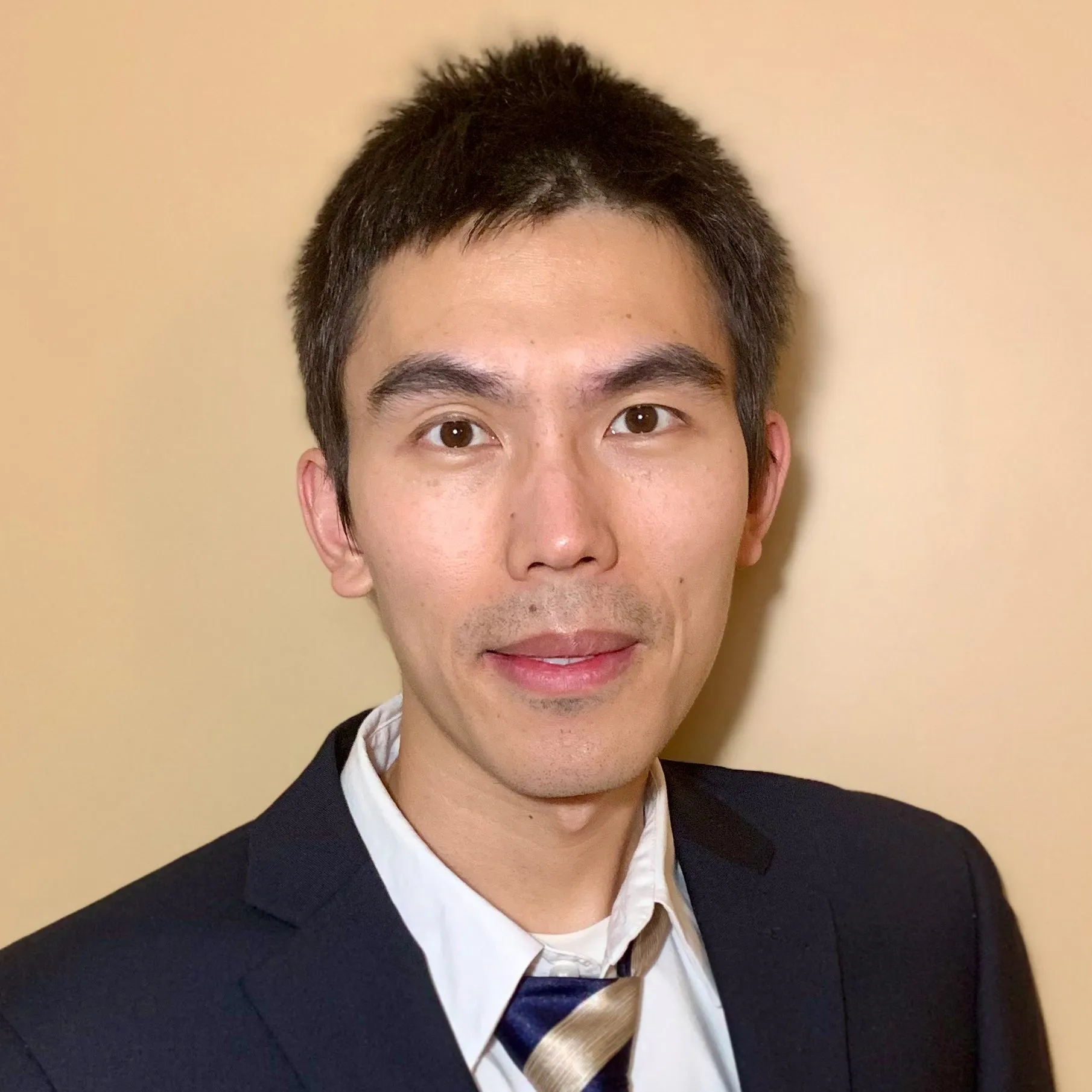
Katja Tikka is a Researcher in Legal History at the Faculty of Law, University of Helsinki, with a focus on migration, minority histories (particularly Karelians), and early modern legal-commercial systems. She holds a Doctor of Law (2020) and Master's in Nordic History (2014). Her work spans genealogy research, organizational histories, and popular non-fiction, editing two peer-reviewed genealogy journals. Key research areas include Karelian identity, post-WWII land disputes, and early modern European mobility/empires. Active in 5 research projects (e.g., COST Action EU-PoTaRCh as coordinator), she has over 70 publications across legal history, migration studies, and environmental history. Awards include Academy of Finland grants. Teaching emphasizes student-centered methods at multiple Finnish universities. Editorial roles and board memberships include Geneettisen sukututkimuksen seura. Recent activities include keynote presentations at Nordiska rättshistorikermöte (2024) and theology conferences.
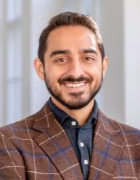
Trent Krupa is an Assistant Professor of Accounting at the Smeal College of Business, Pennsylvania State University, joining in July 2025. Previously, he held the same position at the Walton College of Business, University of Arkansas. He earned his PhD in Accounting from the University of Connecticut and has eight years of industry experience in governance, risk, and compliance within the insurance sector. His research focuses on corporate taxation, particularly the interplay between tax policies, business decisions, and capital markets. Key areas include tax avoidance strategies, regulatory compliance, risk governance, and the impact of tax strategies on firm behavior. His work has been published in top journals such as The Accounting Review and Contemporary Accounting Research. Before academia, Krupa’s professional background in assessing tax consequences of strategic decisions and enterprise-wide risks informs his academic contributions. His recent publications explore topics like tax enforcement mechanisms, the effects of progressive tax rates, and the role of artificial intelligence in tax strategy optimization. His advising and grants section remains unspecified in available records, though his research aligns with labs or teams investigating tax policy implications and corporate governance frameworks.
Prof. Sudharsanan Nikkil is a Rudolf-Mößbauer Assistant Professor and head of the Behavioral Sciences in Prevention and Care at the TUM School of Medicine and Health, Technical University of Munich. His research focuses on applying behavioral science insights to improve preventive healthcare in low- and middle-income countries, particularly addressing cardiovascular disease prevention and aging societies in Asia and Africa. He holds a BA from UC Berkeley, MPH from Emory University, and MS/PhD from the University of Pennsylvania. Key research areas include: Behavioral determinants of health decisions Interventions to enhance preventive care delivery Health systems strengthening in LMICs Awards: Lehrpreis Beste Vorlesung (2025) Falling Walls Science Breakthrough Finalist (2022) Delta Omega Honor Society (2013) Recent Work Trends: His 2025 studies emphasize randomized trials on hypertension management, health insurance utilization, and the HEARTS initiative for CVD reduction. 2023-2024 work explores machine learning applications in cardiovascular risk prediction and WhatsApp-based interventions for follow-up adherence.
Dr. Linda K. Nozick is a Professor and Director of Civil and Environmental Engineering at Cornell University, leading research in infrastructure resilience and disaster risk management. She co-founded the College Program in Systems Engineering and previously served as a Visiting Associate Professor at the Naval Postgraduate School. Her work focuses on mathematical modeling for complex systems, including transportation networks, natural hazard mitigation, and critical infrastructure protection. Education: B.S. in Systems Analysis and Engineering, George Washington University (1989) M.S./Ph.D. in Systems Engineering, University of Pennsylvania (1990-1992) Research Interests: She pioneers models for transportation systems, network science, and disaster risk management. Key areas include: Optimization of infrastructure resilience Hurricane evacuation modeling Insurance-market dynamics for catastrophic risks Seismic retrofitting strategies Data-driven decision support systems Recent Work Highlights: Recent studies address hurricane evacuation behavior prediction using mobility data, equity in hazmat routing, and multi-hazard risk assessment for power grids. Awards: 2011 Presidential Early Career Award for Scientists and Engineers NSF CAREER Award (1997) Sandia National Labs Recognition Award (2009) Member of Nuclear Waste Technical Review Board Academic Service: Leads Cornell's Master of Engineering strategic planning and coordinates the Engineering Systems & Management mission area. She advises federal agencies on infrastructure renewal through National Academy Committees. Lab/Team Affiliations: Directs research initiatives in disaster resilience engineering and collaborates with Sandia National Labs on infrastructure optimization tools.
Süheyla Özyıldırım is an Associate Professor at the Faculty of Business Administration , Bilkent University , Ankara, Turkey. She holds a PhD in Economics from Bilkent University (1997), an MA in Economics from Johns Hopkins University (1993), and completed postgraduate studies at the University of Wisconsin-Madison and Harvard University. Her teaching focuses on Managerial Economics , Financial Institutions and Markets , and graduate-level courses at Tilburg University, Netherlands. Her research interests center on Banking , Financial Intermediation , and Macroeconomics , with a focus on topics such as interbank market structures, credit volatility, and the role of foreign banks in economic fluctuations. Recent work explores deviations in covered interest parity, systemic risk in interbank networks, and hedging strategies in emerging markets. Dr. Özyıldırım has authored over 30 peer-reviewed publications in journals like Journal of Banking & Finance , International Review of Financial Analysis , and Cambridge Journal of Economics . Her research frequently addresses systemic risks, banking sector dynamics, and policy implications for emerging economies. No notable awards or grants are listed in the provided text.
Sarah Stith serves as Associate Professor and Undergraduate Director in the Department of Economics at the University of New Mexico. Her research affiliations include: Senior Fellow, UNM Center for Health Policy Research Fellow, Center for Financial Security (University of Wisconsin-Madison) Affiliated Researcher, UNM Medical Cannabis Research Fund Her research program focuses on applied microeconomic analysis of healthcare systems: Efficiency and equity impacts of health regulation Provider behavior in organ transplantation markets Cannabis-pharmaceutical market interactions Public assistance-healthcare intersections Publications from 2014-2020 reveal consistent methodological rigor in health policy evaluation, with recurring themes of regulatory gaming, market spillovers, and access-to-care dynamics across transplantation, insurance, and cannabis sectors. Her work bridges theoretical industrial organization with real-world policy analysis. As Undergraduate Director, she oversees academic programming while maintaining active research collaborations. Her center affiliations facilitate interdisciplinary work connecting economics, public health, and policy implementation through institutional partnerships.
Pedro Portugal is an Adjunct Professor of Economics at Nova School of Business and Economics and a Senior Researcher at the Bank of Portugal. He holds a PhD in Economics from the University of South Carolina (1991) and an Agregação from Universidade do Porto (1999). His research focuses on applied labor economics, including unemployment dynamics, wage bargaining, microeconometric methods, and drug policy. He has published extensively in top journals like the American Economic Review and the Journal of Labor Economics. His work often explores worker displacement, firm survival, and labor market institutions. Portugal’s contributions include analyzing wage disparities, unemployment compensation systems, and the impact of drug decriminalization policies. He collaborates closely with institutions like the Bank of Portugal and international partners, contributing to policy-relevant economic analysis. Education: PhD in Economics, University of South Carolina, 1991 Agregação in Economics, Universidade do Porto, 1999 Master’s equivalent in Economics, Universidade do Porto, 1982 Research Interests: Portugal’s work spans microeconomic foundations of unemployment, wage determination mechanisms, and survival dynamics of firms. He employs advanced econometric techniques to analyze labor market structures, including the effects of collective bargaining, unemployment insurance systems, and labor contract types. His recent studies address wage persistence, gender wage gaps, and the socio-economic impacts of drug policy reforms. Grants and Collaborations: His research has been supported by international collaborations, including projects with the European Union and the Bank of Portugal. He frequently participates in policy forums addressing labor market challenges and economic recovery strategies post-recession. Labs/Teams: Leads research initiatives at the Bank of Portugal’s Economic Analysis Department, focusing on macroeconomic and labor market modeling. Collaborates with global institutions like IZA Institute of Labor Economics and the European Economic Association.
Theodore J. Iwashyna is a Professor at the University of Michigan in the Department of Health Policy and Management, with a joint affiliation at the Johns Hopkins School of Medicine. He is a dual-trained physician-scientist (MD, PhD) specializing in critical care and health services research, focusing on the long-term impact of severe illness and systemic factors influencing recovery. MD, University of Chicago, 2002 PhD, University of Chicago, 2001 AB, Princeton University, 1994 Dr. Iwashyna's research centers on critical illness survivorship, particularly sepsis and ICU outcomes. He investigates how social, economic, and organizational contexts shape recovery, including cognitive and functional decline, caregiver burden, and financial toxicity. His work has redefined post-ICU care by emphasizing integration of social support and neighborhood factors into treatment planning. His recent publications highlight emerging concerns such as racial bias in pulse oximetry, center-level variation in neonatal outcomes, and tele-triage decision-making. Collectively, his work spans health policy, medical equity, and clinical innovation, with a strong emphasis on data-driven, patient-centered improvements in care delivery. Selected for the 2025 STATUS List, STAT News Member, Association of American Physicians Johns Hopkins Discovery Award Distinguished Mentor Award, University of Michigan Member, American Society for Clinical Investigation (ASCI) Sepsis Hero, Sepsis Alliance American Medical Women's Association Gender Equity Award Fellow, American College of Critical Care Medicine Pulmonary and Critical Care Fellows' Outstanding Educator Award Jerome W. Conn Award for Excellence in Research H. Marvin Pollard Award for Outstanding Teaching Dr. Iwashyna has led numerous federally funded studies using large administrative datasets like Medicare claims to evaluate long-term outcomes after critical illness. He mentors a broad network of trainees and collaborates internationally to improve sepsis care and survivorship. His work on family-centered recovery has influenced clinical guidelines and policy recommendations. He is actively involved in multiple research teams studying ICU recovery, health equity in medical devices, and organizational effectiveness. His lab integrates epidemiology, health services research, and policy analysis to generate actionable insights for clinicians, hospitals, and policymakers.
Veronica Yank, MD , is an Associate Professor in the Department of Medicine at the University of California, San Francisco (UCSF), School of Medicine. She is a primary care physician-investigator whose research centers on informal caregivers, chronic disease prevention, and health equity for older adults and underserved populations. She leads multiple NIH-funded trials focused on improving care for dementia caregivers and enhancing access to primary care for adults with disabilities. Her educational background includes a BA in History and Literature from Harvard, an MD from UCSF, Internal Medicine Residency at the University of Washington, and a postdoctoral research fellowship at Stanford. She holds leadership roles as Associate Director of the UCSF National Clinician Scholars Program, Site Director of the UCSF Primary Care Research Fellowship, and Core Faculty at the UCSF Multiethnic Health Equity Research Center. Dr. Yank’s research interests include geriatrics, health services research, caregiver support, implementation science, and community-based interventions. Her recent work explores online self-management programs for rural caregivers, the impact of high-deductible health plans on care access, and postoperative recovery in older adults. Her publications span high-impact journals in internal medicine, geriatrics, public health, and medical informatics. She has received several honors, including the Robert H. Crede Award for Excellence in Research (2019), recognition as a Fellow of the American College of Physicians (2011), and the Award for Excellence in Medical Education from Stanford (2010). Her current research portfolio includes principal investigator roles on grants from the National Institute on Aging and the Mount Zion Health Fund, focusing on dementia caregiving, caregiver navigation, and health equity. Associate Director, UCSF National Clinician Scholars Program Site Director, UCSF Primary Care Research Fellowship Core Faculty, Multiethnic Health Equity Research Center Supervisor, San Francisco State University Public Health Students Dr. Yank actively mentors faculty, fellows, residents, and students in health services and community-based research. Her work is widely disseminated through over 50 peer-reviewed publications and has been featured in news outlets and policy discussions. She is committed to translating evidence into practice to reduce health disparities and improve outcomes for vulnerable populations.
Amedeo Piolatto is an Associate Professor (with tenure) in the Department of Economics and Economic History at the Autonomous University of Barcelona (UAB), where he also serves as Co-director of Graduate Studies (IDEA) and Chair of the Hiring Committee. He is an Affiliated Professor at the Barcelona School of Economics (BSE) and a Research Affiliate at the Barcelona Institute of Economics (IEB), maintaining a strong presence in the European economics research community. Research Interests: Industrial Organisation Microeconomic Theory Political Economy Public Economics Federalism and Fiscal Federalism Media, Information, and Piracy Taxation and Tax Evasion Political Centralization and Accountability Education Economics His research employs applied theoretical models to study interactions between firms, governments, and citizens. The 15 most recent publications reflect a consistent focus on institutional design, regulatory policy, and strategic behavior in political and market environments. Key themes include the economics of digital platforms, political business cycles in federations, partisan bias in disaster relief, and the role of information in media and electoral systems. His work frequently appears in top journals such as the Quarterly Journal of Economics , Journal of Public Economics , and Regional Science and Urban Economics . Scientific Awards and Recognition: Ramón y Cajal Fellowship (2018–2023) BBVA Foundation Grant for Researchers and Cultural Creators (2016–2018) Advising and Grants: Piolatto has advised PhD students, including Francisco de Lima Cavalcanti. He has secured significant competitive funding as Principal Investigator, including grants from the Spanish Government (Generación de conocimiento, Consolidación investigadora), the Ramón y Cajal program, and BSE Seeds. He has also been a team member on multiple national and regional research projects. He actively organizes academic events, serves on editorial boards (including as Co-editor of Economics ), and participates in PhD juries and institutional governance at UAB, BSE, and other universities. Labs and Teams: He is affiliated with the Barcelona Institute of Economics (IEB) and the Barcelona School of Economics (BSE), where he contributes to research workshops and collaborative initiatives in public economics and political economy.
Jennifer Chan is a Professor in the Statistics Department at the University of Sydney's Faculty of Science. She earned her PhD from the University of New South Wales in 1997 and previously lectured at the University of Hong Kong before joining her current institution in 2006. Her research integrates statistical and machine learning models with applications in finance and insurance, including volatility modeling, Bayesian methods, and neural network applications. Her interdisciplinary research focuses on: Generalized linear mixed models and multivariate volatility measures Machine learning techniques for financial risk assessment Bayesian robustness and portfolio optimization Time-series analysis of cryptocurrencies and equity markets Recent publications demonstrate strong focus on Bayesian models in finance (42% of last 15 papers), machine learning applications (33%), and actuarial science (25%), with emerging emphasis on neural networks for financial forecasting. Awards & Honors: Second prize, Natural Science Award of China's Ministry of Education (2008) National Drug Strategy Research Scholarship (1994-1996) She supervises doctoral candidates working on machine learning applications in finance and insurance. Her international collaborations include institutions in Israel, Japan, Malaysia, and the United States.
Maria Apostolova-Mihaylova is an Associate Professor of Economics and Business at Centre College, where she also chairs the Economics and Business Programs. She joined the faculty in 2015 and holds offices in 456 Crounse Hall. BS in International Economics, University of National and World Economy in Sofia, Bulgaria MS in International Economics, University of National and World Economy in Sofia, Bulgaria MS in Management, Université Pierre Mendès France in Grenoble, France MBA in Finance, Montclair State University MS in Economics, University of Kentucky PhD in Economics, University of Kentucky Her research spans macroeconomics, economic education, health economics, and public economics, often addressing intersections between policy and individual behavior. She has conducted field experiments on educational outcomes and fertility determinants, with a focus on gender effects and healthcare impacts. Maria’s publications reveal trends in behavioral economics applications to education and health policy, including experimental analysis of loss aversion in classrooms and the influence of health insurance on reproductive decisions. Her work bridges theoretical economics with practical policy implications. She serves on the Board of Directors of the Kentucky Economic Association and can be reached at maria.apostolova@centre.edu or 859.238.5426.
Professor Ralf Kellner holds the Chair of Financial Data Analytics at the University of Passau, Faculty of Economics. His work integrates economics, data science, and statistics, focusing on empirical and application-oriented research to explore how statistical learning and AI can uncover insights in data-driven decision-making processes that generate economic value. He also teaches courses such as Deep Learning and Text Analysis in Finance, Financial Data Analytics and Machine Learning, and Scientific Computing with Python. His research examines the intersection of financial markets, statistical learning, and artificial intelligence, with specific interests in modeling adverse financial developments, systemic risks, and analyzing text data via domain-specific language models. Publications highlight collaborations with researchers like D. Rösch and N. Gatzert. Recent publications include work on hybrid service agents, quantile neural networks, default resolution time analysis, Bayesian sovereign bond risk models, and international diversification studies. His methodological approaches span extreme value theory, quantile regression, and multivariate statistical techniques applied to financial and insurance contexts. Contact: ralf.kellner@uni-passau.de
Stephen T. Parente, Ph.D., MPH, MS, is the Minnesota Insurance Industry Chair of Health Finance and a Professor in the Department of Finance at the University of Minnesota's Carlson School of Management. He also serves as Associate Dean of the Carlson Global Institute. Previously, he was Associate Dean of MBA and MS programs (2014–2017) and Director of the Medical Industry Leadership Institute (2006–2017). His government service includes roles as Chief Economist for Health Policy at the White House Council of Economic Advisers (2019–2021) and Senior Adviser to the Secretary for Health Economics at the U.S. Department of Health and Human Services. Education: BA in Health and Society, University of Rochester (1987) MS in Public Policy Analysis, University of Rochester (1988) MPH in Health Economics, University of Rochester (1989) PhD in Health Finance and Organization, Johns Hopkins University (1995) Research Interests: Dr. Parente specializes in health economics, health insurance design, health information technology impact assessment, medical technology evaluation, and policy micro-simulation. His work explores consumer-driven health plans, healthcare fraud detection via predictive analytics, international health system efficiency, and the economic implications of health reforms like the Affordable Care Act. He founded the Medical Valuation Laboratory to accelerate medical innovation translation. Publication Trends: Parente's recent articles focus on payment reform (e.g., site-neutral payments), healthcare pricing transparency, predictive analytics in Medicaid, workforce impacts of health policy, and international health system comparisons. His research consistently integrates economic modeling with empirical data analysis to evaluate cost, access, and efficiency in healthcare delivery and financing. Scientific Awards: Faculty Media Star Award (2010, 2005) Special Recognition, Pioneer Institute’s Better Government Competition (2009) Faculty Research Award (2006) Class of 1981 Faculty Member of the Year (2005) Delta Omega Honor Society (2002) John P. Young Student Prize (1993) Advising and Grants: Dr. Parente has advised 16 graduate students (5 PhD, 5 MS, 6 undergraduate theses). He secured major grants from Robert Wood Johnson Foundation, AHRQ, and DHHS, including studies on consumer-driven health plans ($1M+), health IT impact on quality ($500k), and Medicare policy simulation. His current research explores health savings accounts, medical innovation valuation, and fraud prevention analytics. Leadership: He directs the Medical Valuation Laboratory and serves as President of the American Society of Health Economists. Previous leadership includes Governing Chair of the Health Care Cost Institute and Board Member of Academy Health.
Jie Ding is an Associate Professor at the University of Minnesota's School of Statistics with graduate faculty appointments in Electrical Engineering, Computer Science, and the Data Science Program. He serves as a core faculty member of the Data Science and AI Hub and holds an Amazon Scholar position with the Amazon AGI Team focusing on foundation model training. His educational background includes a Ph.D. in Engineering Sciences from Harvard University (2017), postdoctoral work at Duke University (2018), and a B.S. from Tsinghua University where he participated in both the Math & Physics Academic Talent Program and Electrical Engineering program. Ding's research sits at the intersection of artificial intelligence, statistics, and scientific computing, with focus areas including Agentic AI for autonomous data science workflows, AI Foundations for interpretability and trustworthiness, Scalable Modeling for broader AI accessibility, Decentralized and Collaborative AI systems, and AI Safety addressing privacy and security concerns. He developed the STAT 8931 Generative AI course with open-source materials available at genai-course.jding.org . His recent publications demonstrate strong activity across multiple AI subfields, particularly in value alignment (MAP framework), AI safety mechanisms, federated learning innovations, and statistical foundations for modern AI systems. The breadth of venues (ICML, ICLR, NeurIPS) indicates significant impact across the AI research community. NSF CAREER Award (2024) Army Early Career Program (Young Investigator) Award (2023) Cisco Research Award (2022-25) AWS Cloud Credits for Research (2021-22) Meta/Facebook Faculty Research Award (2021-22) UMN Thank-A-Teacher Teaching Award (2019-20) Ding leads the Agentic AI for Data Science Benchmark initiative, collaborating with University of Minnesota colleagues and Minnesota industry partners to evaluate AI agent capabilities across healthcare, insurance, retail, energy and other sectors. His research group actively recruits PhD students interested in AI/Statistics intersections, with focus on developing theoretically grounded yet practically impactful AI systems.