Runhuan Feng is a Professor of Statistics and holds a secondary appointment in the Department of Mathematics at the University of Illinois at Urbana-Champaign. He is affiliated with the College of Liberal Arts & Sciences. His research focuses on risk analytics, actuarial science, quantitative finance, pension planning, healthcare data analytics, and innovations in FinTech/InsurTech. Recent work addresses risk aggregation methodologies, peer-to-peer insurance models for flood risks, multi-risk insurance frameworks, mortality shock management, and editorial leadership in actuarial science. His research bridges theoretical models with practical applications in finance and insurance sectors. No scientific awards are explicitly mentioned in the profile. Advising and grants sections remain unspecified. His research outputs reflect interdisciplinary collaboration, as seen in his editorial role and co-authored studies.
Florian Hoffmann is an Associate Professor and BIE Director at the Vancouver School of Economics within the Faculty of Arts at the University of British Columbia. He received his Ph.D. from the University of Toronto in 2010 and has established himself as a leading researcher in labor economics. His professional affiliations include membership in the Human Capital and Economic Opportunity Working Group within the Becker-Friedman Institute at the University of Chicago since 2012, Research Fellow at the Halle Institute for Economic Research, Director of the IAB Research Data Center, and Board Member of the Canadian Labour Economics Forum (CLEF). Ph.D., University of Toronto, 2010 Hoffmann's research focuses on the determinants of life-cycle earnings and career dynamics, dynamic discrete choice models of human capital formation, estimation of equilibrium search models, and the importance of student-instructor interactions for academic achievement. His work bridges theoretical econometrics with empirical applications in labor markets. His research has identified significant effects of demographic matching between instructors and students, showing that the performance gap between white and underrepresented minority students falls by roughly half when taught by an underrepresented minority instructor. Hoffmann's publications appear in top economics journals including the American Economic Review, Journal of Economic Perspectives, The Review of Economics and Statistics, and Journal of Human Resources. His recent work has examined growing income inequality across advanced economies, complex-task biased technological change effects on labor markets, and Burdett-Mortensen models of on-the-job search. Growing Income Inequality in the United States and Other Advanced Economies (2020) Complex-Task Biased Technological Change and the Labor Market (2017) Burdett-Mortensen Model of On-the-Job Search with Two Sectors (2016) As an educator, Hoffmann teaches several courses at UBC including ECON 326 (Methods of Empirical Research), ECON 360 (3rd Year Labour Economics), and ECON 460 (4th Year Labour Economics). He has also been invited to teach labor economics courses at the Bavarian Graduate Program in Economics and the University of Halle-Wittenberg. His research methodology combines sophisticated econometric techniques with large administrative datasets to address fundamental questions about labor market dynamics.
Andrea Louise Campbell is the Arthur and Ruth Sloan Professor of Political Science at the Massachusetts Institute of Technology, where she also serves as Director of Undergraduate Studies in the Department of Political Science within the School of Humanities, Arts, and Social Sciences. Her educational background includes an AB degree from Harvard University and a PhD from UC Berkeley. Her research focuses on American politics, political behavior, public opinion, and political inequality, particularly at the intersection with social welfare policy, health policy, and tax policy. Professor Campbell's scholarship examines how policies shape political behavior and public opinion, with particular emphasis on policy feedback effects. Her research spans social welfare programs, healthcare policy, and tax policy, where she has demonstrated how specific policy designs influence public attitudes and political engagement. Her work combines rigorous empirical analysis with compelling narrative approaches, including drawing on personal experiences with her family's navigation of the healthcare system. Her publications reveal consistent thematic development across American social policy, with increasing attention to tax policy as a critical but understudied dimension of public opinion. Her work shows how seemingly technical policy designs have profound political consequences, influencing citizen engagement and shaping future policy debates. Wildavsky Enduring Contribution Award (2021) for How Policies Make Citizens Excellence in Mentoring Award (2020) MIT MacVicar Fellowship (2024) Inducted into the American Academy of Arts and Sciences (2016) Inducted into the National Academy of Social Insurance (2007) Professor Campbell has secured research funding from the National Science Foundation, Robert Wood Johnson Foundation, and Russell Sage Foundation, and has held residential fellowships at the Library of Congress Kluge Center, the Radcliffe Institute for Advanced Study, and the Robert Wood Johnson Foundation Scholars in Health Policy Research program. She served on the National Academy of Sciences Commission on the Fiscal Future of the United States and continues to be actively engaged in shaping public discourse on social policy through media appearances and policy-relevant scholarship.
Dr David Chivers is an Associate Professor in the Business School and Associate Fellow in the Institute of Advanced Study at Durham University. Previously, he held roles at the University of Oxford and worked with the Home Office on evaluating the Drugs Interventions Programme. He specializes in macroeconomics, particularly growth, inequality, and development, with a focus on labour markets and statistical literacy. His research interests span macroeconomic dynamics, labour mobility, poverty traps, and the intersection of health policy with economic systems. Notable publications include How to Read Numbers (2021), a guide to statistical literacy, and studies on labour immobility between industries (2024) and health insurance misallocation (2017). Chivers’ work often addresses how uncertainty and institutional frameworks shape economic outcomes. His academic trajectory includes a PhD from the University of Manchester under Professors Keith Blackburn and Anne Villamil.
Professor Morten Lau is a leading academic in behavioral finance and experimental economics, holding the position of Professor at Durham University Business School since October 2010. Previously, he served as Professor of Economics at Newcastle University (2008–2010) and held roles at Durham University Business School (2005–2008). Prior to academia, he worked as an Economist at Denmark’s Ministry of Business and Industry (1996–2005). His research focuses on applied microeconomics, behavioral finance, experimental economics, and public finance. Notable contributions include studies on risk aversion in game shows, temporal stability of prospect theory, and discounting behavior in field experiments. He has published extensively in top journals like Econometrica and American Economic Review , and co-authored influential works on behavioral econometrics and experimental design. Lau’s work integrates theoretical models with empirical analysis, emphasizing field experiments to assess real-world decision-making. His research often explores policy implications, such as tax reforms, social security incentives, and gambling risk mitigation. He has advised on economic policy in Denmark and contributed to understanding behavioral biases in financial markets and public health contexts. He leads the Center for Behavioral Economics and Finance at Durham University, fostering interdisciplinary collaborations. His current projects include longitudinal studies on discounting behavior and the psychological underpinnings of economic decisions.
Liqun Diao is an Associate Professor (Tenured) in the Department of Statistics and Actuarial Science at the University of Waterloo. He holds affiliations with the Health Data Science Lab and the Waterloo Artificial Intelligence Institute. His research focuses on developing statistical methods and machine learning algorithms for applications in medicine, public health, and insurance. Education: B.Econ. in Statistics, Renmin University of China (2007) M.Math. in Statistics (Biostatistics), University of Waterloo (2009) Ph.D. in Statistics (Biostatistics), University of Waterloo (2013) Research Interests: Recursive partitioning and tree-based methods for survival and health data Causal inference and missing data methodologies Bayesian nonparametric models and copula dependence structures Mortality forecasting and actuarial science applications Awards: 2013 Pierre Robillard Award (best doctoral thesis in Canadian statistics) 2024 Outstanding Performance and Teaching Awards at UW Professional Activities: Led research groups in health data science and AI Recipient of multiple grants from NSERC and industry partners Advises graduate students in statistics and actuarial science Labs/Teams: Active contributor to the Health Data Science Lab and Waterloo AI Institute, focusing on applying statistical innovations to real-world health and insurance challenges.
Prof. Petra Steinorth holds the Chair of Risk Management and Insurance at the University of Hamburg Business School, part of the University of Hamburg. Her research focuses on risk attitudes, behavioral economics, insurance mechanisms, and the intersection of mental health with financial decision-making. She leads a team in the Risk Management and Insurance department, contributing to both theoretical and applied studies in insurance economics. Research interests include the influence of personality traits (e.g., Dark Triad) on health-related risk behaviors, multiplicative risk exposure effects, and family dynamics impacting risk preferences. Her work bridges experimental economics with real-world policy applications, such as flood insurance design and health insurer regulatory compliance. Notable studies analyze the correlation between self-reported risk measures and behavioral experiments, as well as the demand for sustainable insurance products. Publications span 2010–2025, emphasizing trends in risk-taking under varying socio-economic conditions and the role of background risks. Her recent work highlights pandemic-era behavioral shifts and climate-related insurance challenges. No awards or grants are explicitly listed, though her extensive publication record reflects sustained academic contribution. She advises the RMI team and maintains an office at Moorweidenstraße 18, Hamburg.
Morten Hviid is a Professor of Law at the University of East Anglia (UEA) School of Law, specializing in competition law, tort law, contract law, and the economic analysis of legal systems. He joined UEA in 2004 after holding economics positions at the University of Copenhagen, University of Warwick, and UEA's School of Economic and Social Studies. A founding member and former Director (2011-2018) of the Centre for Competition Policy, he contributes to the Centre for Business Research at Cambridge University, UK Intellectual Property Office advisory groups, and Ofgem's academic panel. Biography: Holds MA and PhD in Economics from Warwick, economic degree from Aarhus University, and has been a visiting scholar at Yale, UC Berkeley, University of Michigan, and Copenhagen. Editorial Roles: Former editor of the Journal of Industrial Economics and associate editor of the International Journal of Industrial Organization. Former EARIE Executive Committee member. Research Focus: Applies economic principles and game theory to competition law, tort, and contract law. Current projects examine policy arguments in tort cases, non-compensatory damages in contract law, collusive practices, and digitalization impacts in creative industries. Funded by Danish Social Science Research Council, ESRC, AHRC, Ofcom, Ofgem, and OECD. Publications: Appear in journals like Economic Journal, European Competition Journal, Journal of Law and Economics, and Oxford Journal of Legal Studies. Recurring themes include competition policy implementation, pricing dynamics, and algorithmic market impacts. Teaching: Leads undergraduate LLB modules on Tort and The Economic Approach to Law. Previously taught UK Competition Law, Regulation of Network Industries, and research seminars. Extensive experience supervising over 35 doctoral students. External Collaborations: Engaged in consultancy projects with Anglian Water, Korean Government Fellowship, and policy responses for UK regulatory bodies like CMA, Financial Conduct Authority, and BEIS.
Philippe Gachon is a Professor in the Department of Geography at the University of Quebec at Montreal (UQAM), Director of the ESCER Research Centre, and leader of the Quebec InterSectoral Flooding Network (RIISQ). He specializes in hydro-climatology and climate risk assessment, with extensive experience at Environment Canada and as a Strategic Research Chair holder on Hydrometeorological Risks Related to Climate Change. His research examines climate change impacts on extreme weather events including floods, droughts, and heat waves. Recent work focuses on improving risk identification and adaptation strategies through intersectoral approaches. Key research themes include: Regional climate modeling and validation Hydro-meteorological hazard intensification Systemic risk assessment Community-scale resilience building Climate services development His recent publications demonstrate advanced statistical approaches for modeling non-stationary flood regimes, evaluating wildfire risks under climate change, and quantifying vector-borne disease transmission. Collaborative projects with 16 universities address physical climate risks and socioeconomic vulnerabilities across Quebec.
Jane Ruseski is a Professor and Economics Ph.D. Coordinator at West Virginia University's Department of Economics. She is affiliated with the Center for Free Enterprise Expertise. Her research focuses on applied microeconomics, with core interests in health economics, health policy, sports economics, and industrial organization. Dr. Ruseski's work examines socioeconomic determinants of health behaviors, policy impacts on public health, and the economic implications of sports-related phenomena. She has held editorial roles at journals such as Contemporary Economic Policy and the International Journal of Sport Finance . Education: Ph.D. in Economics (Johns Hopkins University), M.A. in Economics (Johns Hopkins University), B.S. in Health Management and Policy (University of New Hampshire). Research Interests: Dr. Ruseski investigates topics such as maternal smoking in Appalachia, the socioeconomic drivers of chronic health conditions, policy interventions to improve health behaviors, and the economic effects of sports facilities and events. Her work bridges health outcomes with economic mechanisms, emphasizing policy relevance. Recent studies include analyses of sports betting legalization's mental health impacts, air quality's influence on NFL performance, and opioid prescribing patterns under monitoring programs. Editorial Contributions: Co-editor of Contemporary Economic Policy , associate editor of International Journal of Sport Finance . Advising and Grants: As Economics Ph.D. Coordinator, Dr. Ruseski oversees graduate training in applied economics. Her research has been supported by grants examining regional health disparities, sports economics, and health policy evaluation.
Francesco Guala is a Professor of Political Economy in the Department of Philosophy at the University of Milan. His work bridges philosophy of economics, experimental economics, and social ontology, focusing on institutional theory and the methodology of social science. He leads the PHILAB research center and has been awarded a €2 million grant from the Italian Ministry of University and Research for his project on 'The Normative Roots of Social Kinds'. Education: Advanced training in philosophy and economics, with a focus on interdisciplinary research Research interests include the nature of social institutions, coordination problems in economic interactions, and the role of experimental methods in understanding social phenomena. His publications explore topics such as social ontology, institutional functions, and the philosophical foundations of behavioral economics. Key contributions include Understanding Institutions: The Science and Philosophy of Living Together and The Methodology of Experimental Economics . He collaborates with economists and philosophers internationally, emphasizing applied philosophy to address real-world challenges in social science.
Anne E. Brisendine, DrPH, MPH, CHES is an Assistant Professor at the University of Alabama at Birmingham (UAB) School of Public Health, Department of Health Policy & Organization. She also serves as Deputy Director of UAB's Applied Evaluation and Assessment Collaborative (AEAC) and Associate Scientist at Civitan International Research Center. Education: DrPH in Maternal and Child Health (UAB, 2017) MPH in Maternal and Child Health (UAB, 2013) BA in American Studies (Barnard College, 2009) Research Interests span maternal and child health, autism spectrum disorders, developmental monitoring in early education, statewide health systems development, early childhood mental health, and telehealth implementation. Her work examines social determinants of health, particularly focusing on disparities in pediatric emergency care, telehealth access, and vaccine acceptance. Recent Articles reveal expertise in telehealth utilization patterns, ASD service equity, and community health assessment methodologies. Notably, she investigates racial disparities in healthcare access, Medicaid population challenges, and pandemic-related healthcare delivery innovations. Teaching Activities include courses on Foundations of Maternal and Child Health (HPO605) and Policy and Women's Health (HPO633) at UAB School of Public Health, along with graduate committee memberships. Grants focus on Alabama's maternal and child health initiatives, including Title V Needs Assessment, 988 Suicide Crisis Line capacity building, and statewide developmental monitoring programs.
Jessie Kemmick Pintor, PhD, MPH, is an Assistant Professor in the Department of Health Management and Policy at Drexel University’s Dornsife School of Public Health. She holds a PhD in Health Services Research, Policy & Administration and an MPH in Maternal & Child Health from the University of Minnesota, followed by an AHRQ-funded postdoctoral fellowship at UC Davis. Her research focuses on immigration and healthcare policy, health disparities, and mixed-methods approaches to evaluate population health interventions. She has extensive experience working with Latino immigrant communities and studying the impacts of policy on healthcare access for children and families. Key research areas include immigrant health, maternal and child health equity, and state-level policies affecting healthcare coverage. Her work emphasizes community-based participatory research and policy analysis. Dr. Kemmick Pintor has contributed to studies on Medicaid expansion impacts, disparities in insurance coverage, and the mental health consequences of immigration enforcement on US-citizen children of undocumented parents. Publications span topics like maternal-clinician ethnic concordance, ACA implementation effects, and discrimination in healthcare. Her research has been published in high-impact journals such as JAMA Network Open and PLoS One. While no formal academic awards are listed, her work reflects strong engagement with vulnerable populations and policy advocacy. She advises no explicitly listed students, though her postdoctoral training and collaborations suggest active mentorship roles. Grants include AHRQ funding for her postdoctoral work.
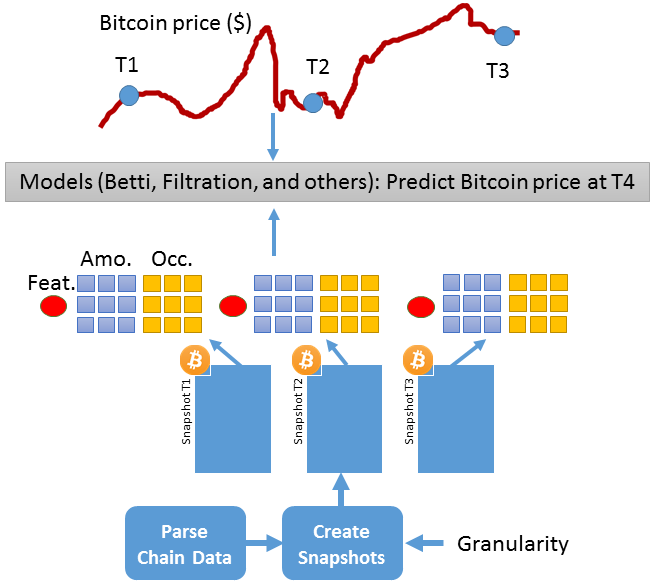
Cuneyt Gurcan Akcora is an Associate Professor of Computer Science at the University of Central Florida (UCF) and an Adjunct Professor in Computer Science and Statistics at the University of Manitoba, Canada. He holds a Ph.D. from Università degli Studi dell’Insubria (Italy) and an M.S. from SUNY Buffalo (USA) as a Fulbright Scholar. His research focuses on data science applied to complex networks and graph mining, particularly in blockchain and online social networks. He has collaborated with institutions like Yahoo! Research Barcelona, Qatar Computing Research Institute, and Huawei. Education: PhD in Computer Science, 2014 – Università degli Studi dell’Insubria, Italy MEng in Computer Science, 2010 – SUNY Buffalo, USA BSc in Electrical & Electronics Engineering, 2008 – Karadeniz Technical University, Turkey Research Interests: Explainable AI and Graph Machine Learning Topological Data Analysis (TDA) for Blockchain Networks Large-Scale Graph Analysis and Anomaly Detection Nonparametric Statistical Methods Key Contributions: His work includes developing chainlet theory for Bitcoin price prediction, scalable TDA algorithms for blockchain forensics, and interdisciplinary grants exploring blockchain applications in insurance. Notable projects include the Chartalist Dataset for blockchain network analysis and ChainNet , a topological graph learning framework. Awards & Grants: NSERC Discovery Grant (2020) UCF Interdisciplinary Grant for Blockchain in Insurance (2020) Fulbright Scholarship (M.S., SUNY Buffalo) Labs & Teams: Active in UCF’s FData Lab and leads blockchain data analytics initiatives. His work bridges academia and industry through collaborations with Huawei, QCRI, and others.
Konstantinos Skindilias holds the position of Senior Lecturer in Data Science at the University of Greenwich's School of Computing and Mathematical Sciences, within the Faculty of Engineering and Science. Concurrently, he serves as a Director in a Big-4 firm advising investment banks, bridging academic and industry expertise. His qualifications include a BSc, MSc, and PhD in relevant fields. His research focuses on quantitative finance, stochastic modeling, derivatives pricing, and risk management. Key areas include market risk methodologies, volatility calibration, and energy commodity analysis. He specializes in developing models for contingent claims pricing, portfolio insurance strategies, and regulatory frameworks like SIMM. Publications emphasize advanced numerical techniques such as Markov chain approximations for derivatives pricing and volatility forecasting. His work addresses practical challenges in turbulent markets and energy security, with contributions to both theoretical and applied finance domains. No scientific awards or grants are explicitly listed in the provided information. His dual role in academia and financial services highlights his interdisciplinary engagement, though specific lab affiliations or teams are not detailed here.








.jpg)