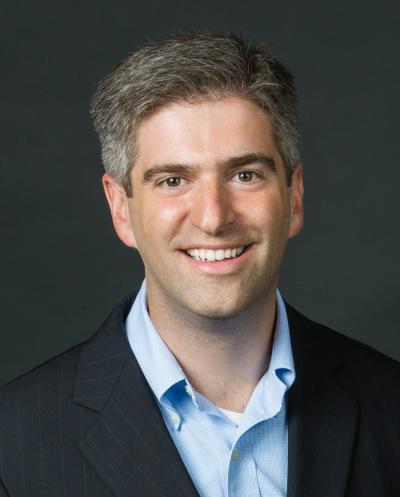
Benjamin J. Keys is a Research Associate at the University of Pennsylvania's Wharton School within the Public Economics program. His work focuses on public economics, environmental economics, and financial risk management with particular emphasis on housing markets and climate change impacts. University of Pennsylvania - The Wharton School Public Economics Department His research explores: Climate risk capitalization in housing markets Mortgage insurance moral hazard Consumer credit card payment behaviors Emergency credit systems Regional economic redistribution through mortgages Email: benkeys@wharton.upenn.edu Scientific awards include: Fellowships on Consumer Financial Management
Zurich University of Applied Sciences (ZHAW)Switzerland
Dr. Marcel Dettling is a Group Lead in Data Analysis and Statistics at the ZHAW School of Engineering , focusing on predictive analytics, applied statistics, and complex data analysis. He also serves as a Lecturer at ETH Zurich , teaching advanced statistical methods. Education : PhD in Mathematics (2000-2004), ETH Zurich Postdoc in Applied Statistics (2004-2006), Johns Hopkins University His research spans predictive analytics (regression, classification, time series), data mining, and applications in health economics, transportation safety, social sciences , and business analytics . Recent work includes pharmaceutical cost group analysis for Swiss healthcare and predictive maintenance for marine vessels. Selected publications highlight his expertise in flight trajectory modeling , deep learning error mitigation , and statistical frameworks for rehabilitation finance . His projects address diverse fields like crowdworking in nursing, energy optimization for shipping, and customer behavior prediction.
Swiss Federal Institute of Technology in LausanneSwitzerland
Academic Profile: Damir Filipovic is a Full Professor and the Swissquote Chair in Quantitative Finance at the College of Management of Technology (CDM) of École Polytechnique Fédérale de Lausanne (EPFL), Switzerland. He previously held academic positions at the University of Vienna, University of Munich, and Princeton University, and served as Head of the Vienna Institute of Finance. Research Focus: Quantitative finance, risk management, stochastic processes, term structure modeling, volatility risk, and machine learning applications in financial markets. Industry Collaboration: Co-developed the Swiss Solvency Test for insurance capital requirements while consulting for the Swiss Federal Office of Private Insurance. Publications: Contributed extensively to journals like Journal of Financial Economics, Mathematical Finance, and Annals of Applied Probability, with a textbook on Term-Structure Models. Academic Service: Editorial board member of multiple journals and organizer of advanced workshops on systemic risk and financial technology. Recent Research: His work emphasizes machine learning for portfolio risk management, kernel-based yield curve estimation, and robust stochastic modeling. Keynote speaker at international conferences on finance and insurance mathematics, with over 15 recent publications in 2023-2025 addressing high-dimensional financial problems, neural control systems, and causal inference in market data. Education: Ph.D. in Mathematics from ETH Zurich (2000). Graduate of ETH Zurich and University of Vienna. Teaching & Mentorship: Supervises current and former EPFL Ph.D. students in quantitative finance, including Nicolas Camenzind, Joshua Hayes, Andrea Ruglioni, and ten others. Former students like Damien Ackerer and Lotfi Boudabsa now lead research in risk management. Labs & Programs: Directs EPFL's Finance and Technology Programme, leads the Computational Finance Group (CSF) at EPFL, and contributes to Swiss Finance Institute initiatives. Scientific Leadership: Served on EPFL Committee of Academic Evaluation and Doctoral Program Finance committee.
Fritz Brugger is a Lecturer at the Department of Humanities, Social and Political Sciences at ETH Zürich and serves as the executive director of NADEL (Network for African-Ethiopian Development Linkages). He holds a PhD in Development Studies from the Graduate Institute of International and Development Studies in Geneva. His research focuses on the developmental impacts of natural resource extraction, extractive industries' corporate roles, and governance challenges in Sub-Saharan Africa. Key areas include health impacts of mining, illicit financial flows, and policy interventions in resource-dependent economies. Prior to joining ETH Zürich, Brugger worked at Helvetas for eight years, later becoming a consultant on governance issues in water management, agriculture, and corporate responsibility. He designed an index-based agricultural insurance system and a mobile-tech platform for smallholder farmers' market access. His work spans diverse regions, with a focus on Burkina Faso, Ghana, and Mozambique. His publications emphasize interdisciplinary approaches, such as Q-methodology for policy engagement, and address topics like mercury use in artisanal mining, corporate due diligence, and the energy transition's impact on social licenses. He contributes to global debates on illicit financial flows, tax evasion, and sustainable development goals implementation through multilateral institutions. Brugger's advisory and grant work includes projects on health impact assessments in mining communities, policy coherence in development aid, and the nexus of extractive industries and conflict. He collaborates with NGOs, governments, and private sector entities to bridge research and policy, particularly in fragile contexts.
Gautam Gowrisankaran is a Professor of Economics at Columbia University , with affiliations as a Research Associate at the National Bureau of Economic Research (NBER), a Research Fellow at the Centre for Economic and Policy Research (CEPR), and a Professeur affilié at HEC Montréal. His research spans Health Economics , Industrial Organization , and Environmental Economics . Primary Affiliation : Columbia University, Department of Economics Secondary Affiliations : NBER, CEPR, HEC Montréal His work investigates dynamic market behaviors , including hospital pricing under Medicare reforms, energy transitions in regulated markets, and the impact of policy uncertainty on technology adoption. Recent publications focus on renewable energy integration , insurance market dynamics , and environmental regulation enforcement . Key trends in his research include applied microeconomic modeling , policy evaluation , and strategic interactions in markets with high stakes such as healthcare and energy. His methodological approach often combines structural estimation with empirical data analysis . Notable Grants : Doctoral Dissertation Research in Economics (Effect of Certified Nurse Midwife Scope-of-Practice Laws) Gautam actively contributes to academic discourse through collaborations with institutions like the University of Arizona and University of Chicago . His work addresses critical societal challenges, including healthcare affordability, energy sustainability, and regulatory efficiency.
Meredith Fowlie is a Research Fellow at the University of California, Berkeley, affiliated with the Department of Agricultural & Resource Economics and the Environment and Energy Economics Program. Her work focuses on environmental economics, energy policy, and industrial regulation, with particular expertise in climate policy, emissions trading, and market-based solutions. University : University of California, Berkeley School : College of Natural Resources Department : Department of Agricultural & Resource Economics Role : Co-Director of the Environment and Energy Economics Program, Research Fellow Over the past two decades, Fowlie has led influential research on carbon pricing, insurance market adaptations to climate change, energy efficiency programs, and regulatory design. Her publications span topics like NOx trading programs , satellite-based air quality analysis , and default effects in electricity pricing . She has collaborated extensively with scholars such as Catherine Wolfram, Christopher R. Knittel, and Nicholas Muller. Her recent work (2025-2022) emphasizes catastrophe insurance equity , climate risk classification , and carbon pricing mechanisms . Earlier studies (2020-2008) addressed co-benefits in regulatory analysis, emissions leakage in incomplete markets, and optimal pollution regulation across stationary/non-stationary sources.
Prof. Oliver Faude is a Professor and Researcher at the Department of Motor Performance & Biomechanics within the University of Basel's Department of Sport, Exercise and Health (DSBG). His research focuses on exercise physiology, sports medicine, and the application of physical activity in managing chronic conditions like type 2 diabetes. He supervises doctoral students, including Vivien Hohberg, whose work on telephone-based health coaching for diabetes patients was published in the Journal of Science and Medicine in Sport. Faude collaborates on projects such as the dbcoach intervention, funded by Innosuisse and health insurers, demonstrating how personalized coaching increases physical activity in diabetic populations. His work also extends to musculoskeletal imaging innovations, such as the UMUD web application for ultrasonography data access, and the PrepAir study addressing chemotherapy-induced sensory dysfunction in children. Faude's interdisciplinary approach integrates clinical research, biomechanics, and public health, with a particular emphasis on aging populations and pediatric oncology. He contributes to injury prevention strategies in sports like badminton and soccer, while advancing methodologies for muscle volume assessment via 3D ultrasound and MRI comparisons. Key Projects: dbcoach program, PrepAir study, musculoskeletal imaging tools, agility training for frailty prevention. Grants: Innosuisse, SwissLife Foundation, Voluntary Academic Society of Basel. Students: Vivien Hohberg (PhD). Labs/Teams: Motor Performance & Biomechanics lab, collaborations with Prof. Bart Roelands (Vrije Universiteit Brussel) on overtraining syndrome research.
Jonathan Zhang is an Assistant Professor at Duke University's Sanford School of Public Policy and a Faculty Research Fellow at the National Bureau of Economic Research (NBER). He is also affiliated with the US Veterans Affairs Office of Mental Health. Previously, he served on the faculty at McMaster University and was a Postdoctoral Scholar at Princeton University. His academic journey includes a PhD in Economics from Stanford University (2020) and a BSc from UBC. Dr. Zhang's research spans health economics and public finance, with particular focus on physician behavior, health policies, and safety net programs. His work demonstrates deep interest in mental health and substance use issues, examining how healthcare systems impact vulnerable populations. His research methodology often leverages quasi-random assignment and natural experiments to establish causal relationships in complex healthcare settings. His publication record reveals significant contributions to understanding healthcare disparities, particularly regarding racial differences in medical testing accuracy, socioeconomic status impacts on mental health access, and veteran healthcare outcomes. His work frequently appears in prominent working paper series, with numerous 2025 publications indicating active and ongoing research programs. Dr. Zhang maintains active professional engagement through his Google Scholar profile and personal website (jonathanzhang.net). He will be visiting the University of Copenhagen from August 1 - November 15, 2025, suggesting international collaboration and scholarly exchange.
Swiss Federal Institute of Technology in LausanneSwitzerland
Natalia Díaz Rodríguez is an Assistant Professor of Artificial Intelligence at ENSTA ParisTech, where she works in the Computer Science and Systems Engineering department within the Autonomous Systems and Robotics Lab (U2IS). She is also affiliated with the INRIA Flowers team, focusing on developmental robotics. Her research spans deep learning, reinforcement learning, continual learning, and symbolic AI, with applications in explainable AI, computer vision, and robotics for social good. Her academic background includes a double PhD in Artificial Intelligence from Abo Akademi University and the University of Granada, alongside MSc degrees in Soft Computing and Computer Engineering from the University of Granada. She contributes to interdisciplinary AI, particularly in robotics, ethics, and healthcare applications, and co-organizes workshops on continual learning. Double PhD in Artificial Intelligence (2015), Abo Akademi University and University of Granada Doctoral diploma on Innovation and Entrepreneurship (2017), EIT Digital MSc in Soft Computing and Intelligent Systems (2012), University of Granada MSc in Computer Engineering (2010), University of Granada Her recent publications focus on trustworthy AI, including bias identification, counterfactual explanations, and continual learning strategies, reflecting her commitment to ethical and robust AI systems. She also explores AI applications in structural engineering, climate visualization, and financial risk assessment, emphasizing practical deployment and interpretability.
Markus Christen is a researcher and Managing Director of the Digital Society Initiative at the University of Zurich, where he leads the Digital Ethics Lab within the Institute of Biomedical Ethics and History of Medicine. His work bridges empirical ethics, neuroethics, and ICT ethics with a focus on data analysis methodologies. Affiliation: University of Zurich (Faculty of Medicine) Role: Managing Director of the Digital Society Initiative Lab: Digital Ethics Lab Christen’s research explores ethical challenges in AI, cybersecurity, and digital health. He investigates value conflicts in technology design, moral sensitivity training through serious games, and human-AI accountability frameworks . His recent publications address digital twins in medicine , AI accessibility for disabled students , and cross-cultural responsibility gaps in AI systems. Key trends in his work include: Empirical ethics applied to AI and cybersecurity Neuroethical dimensions of technology Responsible AI integration in education and healthcare Data privacy and fairness in insurance Cross-cultural ethical assessments Christen’s lab develops frameworks for value-sensitive design and human-AI collaboration , with projects like "Responsible AI in practice" and "DSI AI-WEEK."
Dr. Marcus Dillender is an Assistant Professor in the Department of Economics at Vanderbilt University, a Faculty Research Fellow at the National Bureau of Economic Research (NBER), and a Research Fellow at the IZA Institute of Labor Economics. His research focuses on the intersection of health, labor, and public economics, with particular attention to occupational health, workers' compensation insurance, and healthcare labor markets. PhD in Economics from the University of Texas at Austin (2013) Prior affiliations: W.E. Upjohn Institute for Employment Research, University of Illinois at Chicago School of Public Health Dr. Dillender's recent work investigates gender disparities in medical evaluations and policy impacts on healthcare markets . He has also studied the effects of air pollution on workplace safety , computerization on employment , and public health funding efficacy . His research appears in journals such as the Journal of Health Economics and Journal of Public Economics. Office hours: Tuesdays, 3-5pm at Vanderbilt University.
Prof. Dr. Michael Gerfin is a Professor of Public Economics at the University of Bern, affiliated with the Center for Regional Economic Development (CRED). His research focuses on health economics, labor economics, and tax-benefit models. He holds an office at A315 and can be reached via email. His work examines topics such as healthcare demand, physician incentives, and policy design, with recent contributions analyzing drug pricing, pandemic response strategies, and educational interventions in developing countries. Key themes in his publications include understanding how financial mechanisms influence provider behavior and designing effective social policies. Gerfin's research spans empirical studies on healthcare utilization, wage dynamics, and household decision-making. His analysis often integrates microsimulation techniques to evaluate policy impacts, such as in-work benefits and active labor market policies. Collaborations with Swiss statistical agencies highlight his engagement with real-world data, such as studies on adverse healthcare events and nursing staff ratios. His work bridges theoretical economic models with practical policy applications, emphasizing evidence-based solutions for public welfare challenges. Labs/Teams: Core member of the Center for Regional Economic Development (CRED), contributing to interdisciplinary projects on regional economic trends and public policy evaluation.
Professor Christian Biener is a faculty member at the University of St. Gallen, affiliated with the School of Economics and Political Science and the Department of Economics. His research focuses on insurance economics, behavioral economics, and risk management, with particular emphasis on topics like cyber risk, microinsurance, health insurance design, and the societal impacts of emerging technologies such as chatbots and telematics. He holds a prominent role in academic and industry discourse through his extensive publication record and contributions to policy-relevant research. Biener’s work bridges theoretical economic analysis with practical applications, addressing challenges in global insurance markets, pandemic response strategies, and the interplay between technological innovation and human behavior. His research has explored how factors like microbiome composition influence economic decision-making, the ethical implications of contact-tracing apps, and the design of effective reinsurance strategies. He actively engages with industry trends, advising on future skills requirements in reinsurance and the balance between privacy and risk hedging in digital environments. His scholarly output spans over a decade, with recent trends emphasizing behavioral aspects of insurance decisions, the impact of global events on healthcare costs, and the transformational role of technology in insurance products. Biener’s articles consistently analyze both micro-level individual decision-making and macro-level market dynamics, offering insights that inform both academic theory and policy formation. While no formal awards are explicitly mentioned, his prolific publication record and institutional affiliation suggest significant recognition within the field. Biener’s work often incorporates experimental methodologies, such as randomized controlled trials, to empirically validate theoretical models. He collaborates across disciplines, integrating insights from psychology, computer science, and public health into his economic analyses. Biener’s current research agenda includes investigating the insurability of novel risks (e.g., cyber threats), optimizing microinsurance programs in emerging markets, and analyzing non-cognitive skills’ role in post-crisis economic recovery. He leads projects at the Institute for Economics (IVW) at HSG, contributing to both academic and applied research initiatives.
Tarun Ramadorai is Professor of Financial Economics at Imperial College London, with a distinguished career spanning household finance, financial economics, behavioral economics, real estate, and international finance. He serves as Executive Editor of the Review of Financial Studies and holds prestigious fellowships including Research Fellow of the Centre for Economic Policy Research (CEPR), Senior Academic Fellow of the Asian Bureau of Finance and Economics Research (ABFER), and Nonresident Senior Fellow at the National Council of Applied Economic Research (NCAER). Education BA in Mathematics and Economics from Williams College MPhil in Economics from the University of Cambridge PhD in Business Economics from Harvard University Research Interests Professor Ramadorai's research spans household finance, financial economics, behavioral economics, real estate, and international finance. His work examines how households make financial decisions across different markets and countries, with particular focus on housing markets, investment behavior, and financial inclusion. He has established himself as a leading expert in international comparative household finance, having previously served as Principal Investigator on a transformational initiative financed by the Sloan Foundation to establish this sub-field of finance and economics. His recent research explores the intersection of technology and personal finance, housing market dynamics, and optimal tax policy. He has demonstrated how housing costs impact fertility decisions, how machine learning affects credit markets, and how privacy policies influence consumer data extraction. His work combines rigorous theoretical frameworks with innovative empirical approaches using large-scale datasets from diverse markets. Publication Trends Professor Ramadorai's recent publications reveal a strong focus on household decision-making in financial markets, with increasing attention to the digital transformation of finance. His work bridges theoretical insights with practical policy implications, particularly in emerging economies. There is a clear trend toward interdisciplinary research that combines finance, economics, and data science to address pressing questions about financial inclusion, housing affordability, and the impact of technology on traditional financial services. Scientific Awards Brattle prize for best paper in the Journal of Finance Jensen prize for the best paper in the Journal of Financial Economics Wharton School-WRDS Best Paper Award in Empirical Finance James A Lebenthal Excellence in Municipal Finance Research Prize FMA Napa Conference Best Paper Prize INQUIRE Europe third prize Viz Risk Management Best paper prize Policy Engagement and Advisory Roles Professor Ramadorai has made significant contributions to policy discussions worldwide. He served as Chairman of the Inter-Regulatory Committee on Household Finance constituted by the Reserve Bank of India, which produced the influential "Indian Household Finance" report. He has advised numerous institutions including the Economic Advisory Council to the Prime Minister of India, the European Securities and Markets Authority, and the Norwegian Sovereign Wealth Fund. Currently, he co-chairs the Fintech workstream of the India-UK Financial Partnership, helping to shape the future of financial technology across borders. Research Initiatives Professor Ramadorai previously led the Initiative on International Comparative Household Finance, funded by the Sloan Foundation, which established household finance as a distinct sub-field of research. He is in the process of setting up a new initiative at Imperial College Business School to further advance this area of study. His work has influenced both academic research and practical policy interventions in financial markets around the world.
Prof. Antoine Bommier is a Full Professor at ETH Zurich's Department of Management, Technology, and Economics, serving as Deputy Head of the department. He holds a Chair in Integrative Risk Management and Economics and is a member of the ETH Risk Center's Steering Committee. His academic journey includes a PhD in Mathematics from École Polytechnique (1993) and a Habilitation à Diriger des Recherches in Economics from the University of Toulouse (2005). Prior roles include positions at CNRS (France), University Paris-Nanterre, and Berkeley. His research focuses on risk management, intergenerational equity, uncertainty modeling, and public policy. Key areas include climate change mitigation, annuity markets, and the valuation of catastrophic risks. Bommier has been recognized with the Robert C. Witt Award (2013) and a best-paper award from the Journal of Risk and Insurance (2012). Recent work explores ambiguity aversion's impact on savings and insurance, dynamic preferences in risky environments, and equity considerations in exhaustible resource management. He also investigates mortality-linked retirement policies and the societal value of risk reduction. Editorial Roles: Associate Editor of Decisions in Economics and Finance Professional Activities: Visiting appointments at Paris School of Economics and University Paris-Nanterre Key Themes: Climate policy, actuarial fairness, recursive utility, and sustainable development