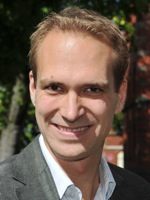
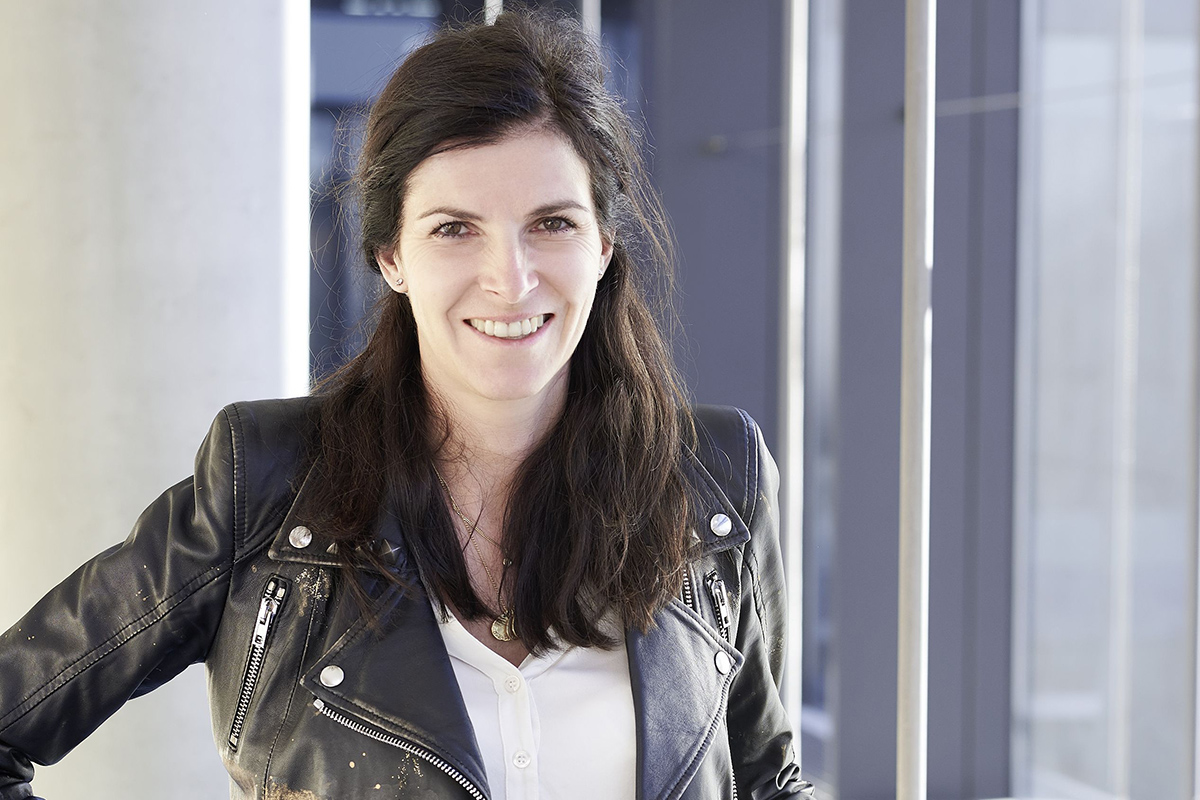
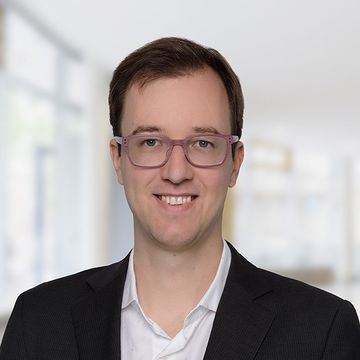
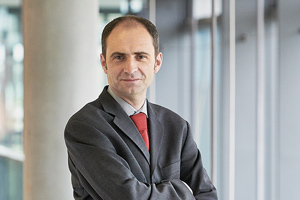
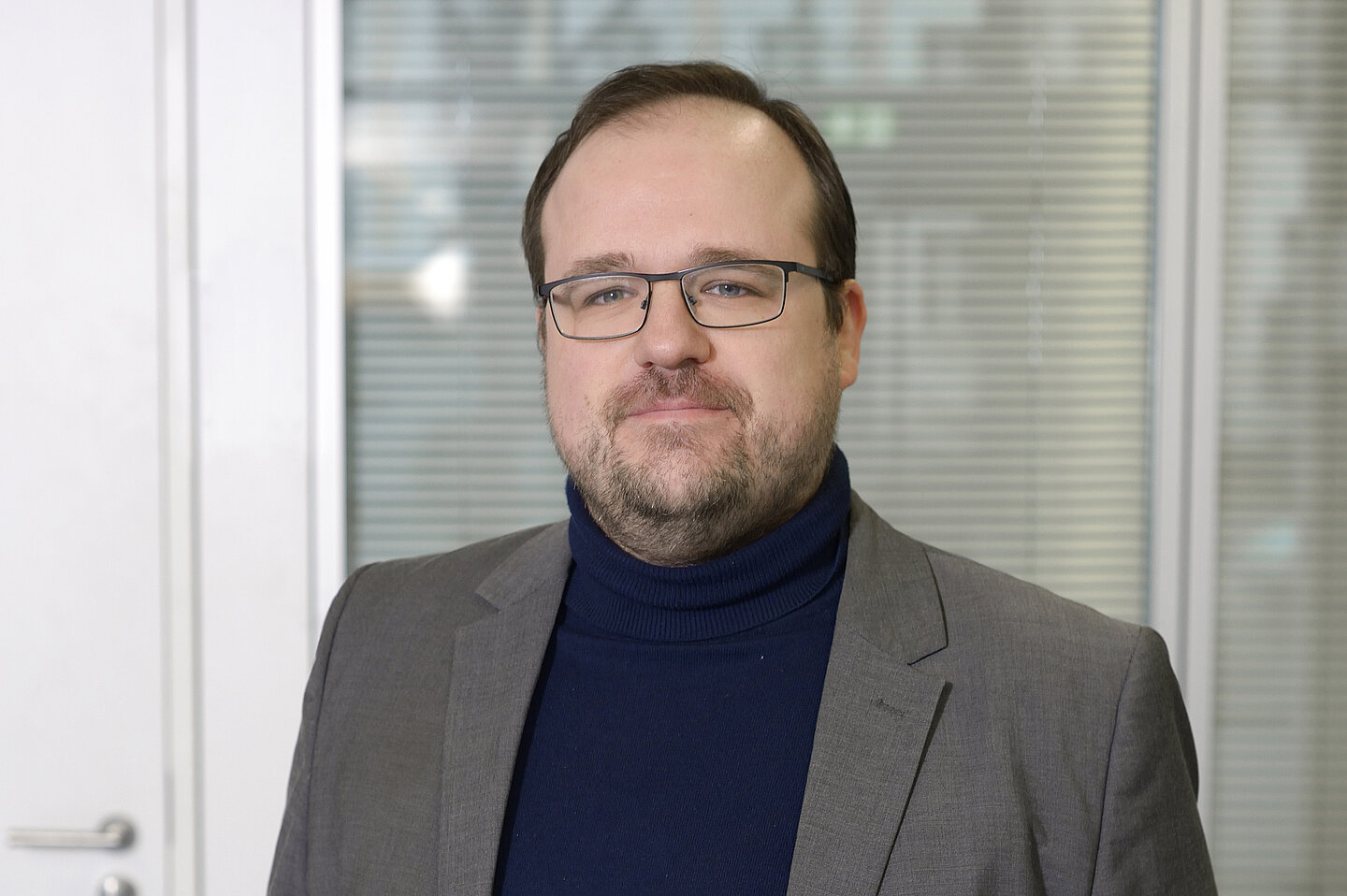
Prof. Dr. Joachim Wuermeling is a Professor at ESMT Berlin and an attorney at A&O Shearman in Frankfurt. He previously served as a member of the Deutsche Bundesbank’s Executive Board, where his responsibilities included banking supervision, IT, data, and organizational governance. He was also part of the ECB’s Single Supervisory Mechanism Supervisory Board, the Basel Committee on Banking Supervision, and the German Financial Stability Board. Education: Holds degrees from the University of Bayreuth and the European University Institute in Florence. Prior roles include Member of the European Parliament, German State Secretary for Economics and Technology, and leadership positions in the German Insurance Association and Sparda-Banken Association. His research and professional focus centers on financial regulation, banking supervision frameworks, and the intersection of law with financial systems. He has contributed to shaping EU and global financial policies through his involvement in key regulatory bodies.
Professor Rainer Böhme is a prominent academic in the field of IT security and privacy at the University of Münster's School of Business and Economics, Department of Information Systems. He also holds a professorship for Security and Privacy at the University of Innsbruck's Institute of Computer Science. His research spans multiple dimensions of digital security, with particular expertise in steganography, digital forensics, privacy-enhancing technologies, and the economic aspects of cybersecurity. Dr. Böhme earned his Doctoral Degree from TU Dresden's Faculty of Computer Science in 2008, following studies in Communications, Economics and Computer Science at Technische Universität Dresden and Université Paris XII. His academic journey includes positions as Assistant Professor at the University of Münster (2010-2015), Postdoctoral Fellow at the International Computer Science Institute in Berkeley (2009-2010), and Scientific Staff at TU Dresden's Chair of Privacy and Data Security. His research interests focus on steganography and steganalysis, digital forensics, privacy-enhancing technologies, security and usability, economic and behavioral aspects of information privacy, virtual currencies, and the economics of information security. His work bridges technical security mechanisms with economic and behavioral considerations, creating a unique interdisciplinary approach to cybersecurity challenges. Analysis of his recent publications reveals a strong trend toward the economics of security, particularly regarding blockchain technologies, cryptocurrency, and privacy valuation. His work increasingly examines the intersection of technical security mechanisms with market dynamics, regulatory frameworks, and user behavior. The research spans theoretical game-theoretic models, empirical studies of user behavior, and practical applications in digital forensics and privacy protection. Program Co-Chair, Financial Cryptography and Data Security (2015) Program Co-Chair, New Security Paradigms Workshop (NSPW) (2015) General Chair, 8th International Conference on IT Security Incident Management & IT Forensics (2014) Organizer and Program Co-Chair, 1st Workshop on Bitcoin Research (2014) Associate Editor, Electronic Commerce Research (since 2013) Associate Editor, EURASIP Journal on Information Security (since 2013) Professor Böhme has supervised multiple Master's theses in Information Systems, including work on static code analysis for smart contracts, remote maintenance protocol security, and application protection requirements in retail banking. His research is supported by significant grants from the German Federal Ministry of Research, Technology and Space, the DFG, and the EU FP7 program, with projects focusing on digital forensics, privacy-enhancing technologies, and cryptocurrency crime prevention. He leads the IT Security Research Group at the University of Münster, which investigates theoretical and applied aspects of information security with particular emphasis on the economic dimensions of security decisions.
Ernst Maug, Ph.D. is Professor of Corporate Finance at the University of Mannheim Business School, where he has held a faculty position since February 2006. He has served in significant leadership roles including Associate Dean for Research and director of the business school's doctoral programs. Maug currently holds the position of President of the European Finance Association, reflecting his standing in the academic finance community. Professor Maug's research program focuses on corporate finance with particular emphasis on corporate governance mechanisms. His work examines the interface between financial markets and labor markets, executive compensation structures, shareholder voting behavior, and the role of institutional blockholders. His research demonstrates a consistent interest in understanding how governance structures affect firm performance and decision-making processes. The analysis of Professor Maug's recent publications reveals a strong focus on shareholder democracy, executive compensation design, and the intersection of labor markets with corporate governance. His work frequently appears in the top finance journals including the Journal of Finance, Journal of Financial Economics, and Review of Financial Studies, indicating the high quality and impact of his research contributions. Professor Maug has served in significant academic leadership positions, directing doctoral programs and contributing to research strategy as Associate Dean for Research at the University of Mannheim Business School. His service as President of the European Finance Association further demonstrates his influence in shaping the direction of finance research across Europe.
Prof. Dr. Evi Hartmann holds the Chair of Business Administration, especially Supply Chain Management at Friedrich-Alexander University Erlangen-Nuremberg (FAU) within the Department of Business, Economics, and Social Sciences. She is actively involved in multiple research focus areas including sustainability, energy markets and energy system analysis, and insurance and risk. Her academic leadership extends across interdisciplinary collaborations with engineering, mathematics, and industry partners. Dr. Hartmann studied industrial engineering at the University of Karlsruhe (TH), received her doctorate in 2002 from the Institute of Technology and Management at the Technical University of Berlin, and completed her habilitation in business administration in 2008. Prior to her academic career, she worked as a consultant at AT Kearney from 1998 to 2005, followed by a junior professorship for 'Purchasing and Supply Management' at the Supply Chain Management Institute at the European Business School. Her research program focuses on supply chain management, purchasing, and strategic foresight, with particular emphasis on application-oriented approaches that bridge theory and practice. Current research trajectories include supply chain resilience in crisis situations (including pandemic response), digital transformation through Industry 4.0 technologies, sustainable and low-carbon supply chains, and the integration of strategic foresight methodologies in logistics decision-making. Her work frequently employs Delphi studies, bibliometric analyses, and multi-tier case studies to examine complex supply chain phenomena. Analysis of her recent publications reveals a strong trend toward interdisciplinary research that combines supply chain management with digital transformation, sustainability, and crisis response. Her work increasingly examines the intersection of technology adoption (particularly Industry 4.0), organizational culture, and supply chain resilience across multiple industries including automotive, food, and maritime logistics. Prof. Hartmann is recognized as the author of two academic bestsellers in her field, though specific awards are not detailed in available materials. Her research has been published in top-tier journals including IEEE Transactions on Engineering Management, International Journal of Production Research, and Journal of Cleaner Production. Her research program demonstrates extensive industry collaboration, with numerous projects involving real-world implementations and close partnerships with companies. She leads research initiatives examining the practical implications of digital transformation, sustainability challenges, and resilience strategies in supply chain operations. Current projects include studies on digital ecosystems, physical internet applications, and the future of freight forwarding technologies. Prof. Hartmann participates in several research networks including the Energy Campus Nuremberg (EnCN) and collaborates with the Department of Mathematics on gas networks and markets research. She is also involved with the Nuremberg Energy Region (Energieregion Nürnberg eV) and contributes to interdisciplinary research centers focused on sustainable development and digital transformation in supply chains.
Professor Dr. Prof. h.c. Thomas M.J. Möllers holds the Chair for Civil Law, Commercial Law, European Law, International Private Law and Comparative Law at the Faculty of Law, University of Augsburg. As a full professor, he leads research and teaching in multiple legal disciplines with a particular focus on German and European financial regulation, corporate law, and legal methodology. His work bridges traditional legal scholarship with contemporary challenges posed by digitalization and globalization. Professor Möllers' research interests span German and European Capital Markets law, German and European Company Law, Legal methods, Comparative Law, European Union Law, and Competition Law. His scholarly work demonstrates exceptional breadth, connecting doctrinal legal analysis with practical applications in evolving regulatory environments. He has made significant contributions to understanding the interface between national legal systems and EU regulation, particularly in financial markets. His recent publications reveal a strong focus on capital markets regulation, particularly regarding the Wirecard scandal and auditor liability, consumer protection in e-commerce, data protection across different legal systems, and the impact of AI on legal methodology. The trajectory of his work shows increasing engagement with comparative legal analysis between European, American, and Chinese legal systems, reflecting his growing international influence. TOP 1% Most Cited Books (2019-2023) - Legal Translations in China for his 'Legal Methodology' Honorary Professor at Central South University, Changsha, Hunan (2024) Professor Möllers has mentored numerous successful legal scholars who have gone on to academic and professional careers, including Dr. Liuhua Shen (now a professor at Jiangsu University), Dr. Maximilian Merwald, and Dr. Lisa Wolf. His research is supported by various grants, including DAAD funding for US exchange programs and participation in the Jean Monnet Centre of Excellence - INspiRE on consumer protection, capital markets, and competition law enforcement. He leads the Research Center of Innovation and Legal Studies between China and Europe (RICE) and is actively involved in the Caplaw initiative, which provides resources on European and national business law. His work connects legal scholarship with practical applications through podcasts, student research showcases, and collaborative projects across multiple legal systems.
Prof. Andreas Gulyas is an Assistant Professor of Macroeconomics at the Department of Economics, University of Mannheim, and a research affiliate at IZA. He holds a Ph.D. from UCLA and a M.Sc. from the University of Vienna. His research focuses on Macroeconomics, Labor Economics, Search Theory, and Machine Learning applications in economics. Education: Ph.D. in Economics, UCLA, Los Angeles, USA M.Sc. in Economics, University of Vienna, Austria Research Interests: Gulyas examines labor market dynamics, monetary policy impacts, wage transparency, and the consequences of job displacement. His work combines theoretical models with empirical analysis, often employing field experiments and machine learning techniques to explore labor market inefficiencies and policy implications. Notable areas include cross-country comparisons of economic inequality and pandemic-induced unemployment effects. Articles Trends: His recent work emphasizes labor market policies, wage structures, and macroeconomic shocks. Key themes include the role of fringe benefits in job search behavior, monetary policy's heterogeneous effects, and pandemic-related unemployment disparities. Machine learning is increasingly used to analyze heterogeneous outcomes in displacement scenarios. Awards: No scientific awards listed. Advising/Grants: No advising records or grant information provided in available texts. His current research is likely supported through institutional funding and affiliations like IZA. Labs/Teams: Affiliated with the AEE Seminar at Mannheim, contributing to collaborative economics research initiatives.
Prof. Dr. Rudi Zagst is a Professor of Mathematical Finance at the Technical University of Munich (TUM), where he serves as Head of the Department of Mathematical Finance within the TUM School of Computation, Information and Technology. He has held this position since 2001 and is actively involved in teaching, research, and academic leadership. In 2003, he was appointed as a second member of the Faculty of Economics, and since 2004, he has served as Deputy Chairman of the joint elite degree program 'Finance & Information Management' of the University of Augsburg and TUM. Prof. Zagst earned his doctorate in business mathematics from the University of Ulm, where he later completed his habilitation in 2000. His academic journey began with a professional career at HypoVereinsbank AG, where he served as Head of Product Development in Institutional Investment Management before becoming Managing Director of RiskLab GmbH in 1997. His research focuses primarily on financial engineering, risk management, and asset management, with particular emphasis on portfolio optimization, mathematical finance, and quantitative risk management. His work bridges theoretical finance with practical applications, often incorporating advanced mathematical techniques to solve complex financial problems. Recent publications demonstrate his continued interest in GARCH models, portfolio optimization under various constraints, and the application of machine learning techniques to financial problems. Analysis of his recent publications (2024-2025) reveals a strong focus on portfolio optimization under complex market conditions, particularly using GARCH models to capture volatility dynamics. His work increasingly incorporates machine learning techniques (as seen in the credit spread analysis paper) while maintaining rigorous mathematical foundations. Many papers explore the intersection of theoretical finance with practical investment strategies, reflecting his commitment to bridging academic research with real-world financial applications. Professor of the Year 2007 (awarded by Unicum Profession magazine) Prof. Zagst has supervised numerous bachelor's, master's, and doctoral theses through TUM's Finance and Actuarial Science research group. His collaborative work with industry partners through the TUM CAIR Labs and RiskFactory demonstrates strong connections between academic research and practical financial applications. He has received research funding through various industry partnerships with major financial institutions including Allianz, Munich Re, and ERGO Group AG. Prof. Zagst leads the Research Group Finance and Actuarial Science at TUM, which includes Professors Matthias Scherer, Aleksey Min, and Christoph Knochenhauer. The group maintains strong industry connections through the TUM CAIR Labs initiative, collaborating with over 25 financial institutions including Allianz, Munich Re, Deloitte, PwC, and KPMG. Their RiskFactory laboratory serves as a bridge between academic research and practical financial risk management applications in the industry.
Prof. Dr. Harald Wehnes serves as a Professor at the University of Würzburg within the Faculty of Mathematics and Computer Science, specifically affiliated with the Institute of Computer Science's Chair of Computer Science III (Communication Networks). His office is located in room A206 at the Hubland campus, with contact email wehnes@informatik.uni-wuerzburg.de. His research centers on project management methodologies, with particular emphasis on the Project Excellence Model and its practical applications. Prof. Wehnes has developed significant expertise in applying project management frameworks to complex IT infrastructure initiatives and healthcare systems. His work demonstrates how theoretical project management concepts translate into real-world implementation, especially in cross-organizational contexts. Analysis of his publication history reveals a consistent focus on practical project management applications, particularly the NIMBUS project case study which documented the consolidation of 12 data centers into a single state data center. His publications demonstrate evolving expertise from foundational programming work (evidenced by his 1981 book "Strukturierte Programmierung mit FORTRAN 77" which went through seven editions) to sophisticated project management frameworks. Prof. Wehnes has maintained active engagement with the German Project Management Association (GPM), presenting at numerous forums and events. His international reach is evident through presentations at institutions including the University of the United Arab Emirates and the University of Canterbury in New Zealand. From 2013-2020, he taught specialized courses on professional project management (Spezialvorlesung aus der Praxis: Professionelles Projektmanagement) at the University of Würzburg, sharing his extensive practical experience with students. His work environment within the Chair of Computer Science III connects his project management expertise with research areas including 5G & 6G network technologies, network and service management, and green communication networks.
Prof. Dr. Harald Tauchmann is a Professor of Health Economics at Friedrich-Alexander University Erlangen-Nuremberg (FAU), where he has held a faculty position since 2013. He is affiliated with the School of Business, Economics and Social Sciences, specifically within the Department of Economics. Prof. Tauchmann also participates in multiple research focus areas at FAU, including 'Insurance and Risk' and 'Work in Transition,' demonstrating his interdisciplinary approach to health economics. Prof. Tauchmann received his education at Heidelberg University and the University of Manchester, UK, where he studied economics, political science, and sociology. He graduated in 1998 and completed his doctorate at the Interdisciplinary Institute for Environmental Economics (University of Heidelberg) in 2003. Prior to joining FAU, he worked as a research associate at the Rhineland-Westphalian Institute for Economic Research (RWI) in Essen from 2003 to 2012 and headed a junior research group at the health economics research center CINCH at the University of Duisburg-Essen. His research expertise lies in empirical health economics, with a particular emphasis on health insurance choice and competition, as well as individual health behavior. He has made significant contributions to understanding obesity, health shocks, mental health care payment systems, and thyroid diagnostics through his extensive publication record. His methodological work includes developing specialized Stata modules for econometric analysis, which have been widely adopted by researchers in the field. Prof. Tauchmann's scholarly work demonstrates a consistent focus on applying rigorous econometric methods to pressing health policy questions. His research portfolio shows particular strength in causal analysis of health behavior, especially regarding obesity interventions, health insurance market dynamics, and the economic consequences of health shocks. His recent publications (including several forthcoming in 2025) indicate continued scholarly productivity and relevance to current health policy debates. From March 2021 to April 2022, Prof. Tauchmann served as chairman of the German Society for Health Economics, highlighting his leadership and recognition within the national health economics community. His email contact is harald.tauchmann@fau.de for professional inquiries.
Prof. Dr. Oliver Crönertz serves as Dean and Professor of Business Administration and IT-Supported Business Processes at the Faculty of Digital Transformation , HTWK Leipzig. His work bridges digital transformation with business management, focusing on interdisciplinary project management, digital business models, and sustainability. Current roles: Dean, supervising professor for HTWK Robots/nao Team Research areas: Digital Transformation, Business Analytics, Industry 4.0, Stoffstrommanagement Research Trends : Recent publications emphasize digital solutions for environmental management, business process optimization, and smart urban logistics. His work connects Industry 4.0 with financial sustainability and societal impacts of digitalization. Projects : Leads Mittelstand-Digital Zentrum Leipzig-Halle, involved in EXIST-Potentiale, Future Parking, and FAssMII (Feedback-based E-Assessment in STEM).
Dr. Julius Emmrich serves as a neurologist and neuroscientist at Charité – Universitätsmedizin Berlin, holding appointments as Assistant physician in the Clinic for Neurology and Associate Member of the Einstein Center Digital Future. He is a Digital Clinician Scientist funded by the German Research Foundation and leads projects within the Berlin Institute of Health's Digital Health Accelerator Program. Additionally, he co-founded and chairs the nonprofit Doctors for Madagascar since 2011. His educational background includes: Medical studies at University of Freiburg and Leipzig Doctorate (Dr. med.) from University of Leipzig / Mount Sinai School of Medicine, NYC (2012) Master of Philosophy in Neuroscience from University of Cambridge (2012) Medical license (2011) Emmrich's research integrates digital health innovation with global health equity, focusing on mobile technology solutions for healthcare access in resource-limited settings. His work with Doctors for Madagascar developed mTOMADY—a USSD-based platform enabling mobile health financing through savings, insurance, and voucher systems. This bridges his clinical neurology expertise with practical applications in maternal health, rural insurance coverage, and last-mile health fund delivery across Madagascar and the Democratic Republic of Congo. He directs significant research initiatives including the Mobile Maternal Health Wallet and Digital Insurance Card programs, funded through German Research Foundation grants and Berlin Institute of Health partnerships. His prior roles include Junior Clinician Scientist at Berlin Institute of Health (2015-2017) and visiting researcher positions at Cambridge University and the Federal Institute for Risk Assessment. As chairman of Doctors for Madagascar, Emmrich oversees operations supporting over 200,000 people through mTOMADY, which has facilitated 100,000+ treatments since 2019. The organization implements context-specific solutions including mobile health wallets for cocoa farming communities and voucher programs in remote regions, demonstrating scalable models for equitable healthcare financing.
Prof. Dr. Johanna Kokot is a leading academic at the Hamburg Center for Health Economics (HCHE) , affiliated with the University of Hamburg. She holds the Professorship of Social Economics within the Faculty of Economics and Social Sciences, where she teaches courses on behavioral economics, health economics, and the behavioral economics of health. Research Focus: Physician payment systems, health insurance choice, and risk preferences in healthcare markets Recent Leadership: Deputy Chair of the dggö Committee 'Allocation and Distribution' (since 2024) Academic Networks: Active in EuHEA (elected to Early Career Committee in 2025) Her experimental research explores: Behavioral responses to financial incentives in healthcare Patient decision-making under risk Quality competition in medical markets Impact of AI on healthcare-related social behaviors Current projects include the Health Econ Lab , an e-learning initiative. Contact: johanna.kokot@uni-hamburg.de | Office: Esplanade 36, Room 5017, Hamburg.
Professor Vitali Wachtel of Bielefeld University's Faculty of Mathematics specializes in advanced stochastic processes, probability theory, and their applications in mathematical modeling. Since 2021, he holds a W3 Professorship and serves as Principal Investigator in CRC 1283 'Taming uncertainty and profiting from randomness and low regularity in analysis, stochastics and their applications' since 2023. Chaired Examination Boards for Bachelor & Master Business Mathematics Member, Bielefeld Graduate School in Theoretical Sciences Research focus: Markov processes, random walks in cones, branching processes Research Trends: His recent work spans critical multitype branching in random environments (2025), asymptotic expansions for conditioned random walks (2024), and invariance principles for integrated processes. He explores connections between stochastic processes, combinatorial structures, and risk modeling with level-dependent premiums. Awards: Feodor Lynen Research Fellowship (2017), Alexander von Humboldt Foundation Teaching: Coordinates modules including 'Stochastic Processes' (24-M-PT-STP) and 'Introduction to Probability Theory' (24-B-EW-5). Active in curriculum development and academic governance through multiple university committees.
Professor Joaquim Pinto is a leading climate scientist at the Karlsruhe Institute of Technology (KIT), where he serves as Head of the Working Group "Regional Climate and Weather Hazards" and as Spokesperson of the collegial institute management team. He holds the prestigious AXA Research Fund Chair position at the Institute of Meteorology and Climate Research - Troposphere Research (IMK-TRO). His academic background includes a Licenciate in Geophysical Sciences - Meteorology from the University of Lisbon (1990-1996), PhD studies at the University of Cologne (1998-2002), and academic positions at the University of Cologne (2002-2016) and University of Reading (2013-2016) before joining KIT in 2016. He became a Privatdozent (lecturer) at the University of Cologne in 2011 and earned his habilitation with research on extreme European wind storms. Professor Pinto's research focuses on mid-latitude meteorology and climatology, with special emphasis on extreme weather events , climate variability in Europe across multiple time scales, regional climate modeling and downscaling methods , and the diagnostic modeling and quantification of risks associated with extreme events affecting Europe. His work bridges fundamental climate science with practical applications for risk assessment and management. His extensive publication record demonstrates expertise in analyzing European windstorms, heatwaves, and compound extreme events. Recent work examines the impacts of climate change on wind energy potential, extreme precipitation events, and the complex interactions between atmospheric circulation patterns and regional climate extremes. His research often employs high-resolution climate modeling, statistical-dynamical downscaling approaches, and interdisciplinary collaborations to address pressing climate challenges. AXA Research Fund Chair in Regional Climate and Weather Hazards Professor Pinto teaches graduate and undergraduate courses including "Climate Modelling and Dynamics with ICON," "IPCC Assessment Report," "Climatology," "Energy Meteorology," "Methods of Data Analysis," and "Regional Climate and Weather Hazards." His teaching reflects his research expertise in climate modeling, extreme events, and regional climate change impacts.
Thorsten Schmidt is Professor of Mathematical Stochastics at the University of Freiburg, succeeding Prof. Ernst Eberlein in the summer semester of 2015. He also serves as Senior Financial Engineer at MathFinance. Previously, he held professorships at Chemnitz University of Technology (2008-2015), Technical University Munich (2008), and University of Leipzig (2004 onwards). From 2017-2019, he was a Research Fellow at the Freiburg Institute for Advanced Studies (FRIAS) in a joint research group with the University of Strasbourg and USIAS on the topic of Linking Finance and Insurance. His research focuses primarily on financial and actuarial mathematics, stochastic processes, and statistics, with recent work on machine learning methods and their applications in financial mathematics and AI regulation. In Freiburg, his goal with his young team is to tackle complex challenges with improved mathematical models and apply these methodologies to various fields. Key Research Areas: Financial mathematics and credit risks Pricing and hedging of derivative financial products Statistics of stochastic processes Energy markets and nonlinear filter theory Machine learning applications in finance and insurance His recent publications show a strong trend toward integrating machine learning with traditional mathematical finance, particularly in risk management, insurance-finance arbitrage, and robust financial modeling. His work increasingly addresses ethical considerations in AI applications within finance, reflecting his broader interest in responsible AI development. Notable Awards: IDA Award Finance (2015) FRIAS-USIAS Research Fellow (2017/2018) IDA Award Machine Learning and AI (2020) MAPFRE Research Grant (2020) Luis Bachelier Fellow (2021) As Editor-in-Chief of Statistics and Risk Modeling and Associate Editor for Mathematical Finance and International Journal of Theoretical and Applied Finance, Schmidt plays a significant role in academic publishing. He leads the CRC 'Small Data' research center with Harald Binder, focusing on medical problems where disease progression must be estimated with few data points per patient. His LeanAI project, funded by the Vector Foundation, explores the connection between machine learning and theorem-proving software LEAN, aiming to develop AI that can translate between mathematics and formal proof systems. His laboratory work centers around the application of stochastic methods combined with machine learning to solve problems in finance and insurance where data is limited ('Small Data' initiative), with significant funding from DFG (€12 million for CRC Small Data) and the Carl Zeiss Foundation.