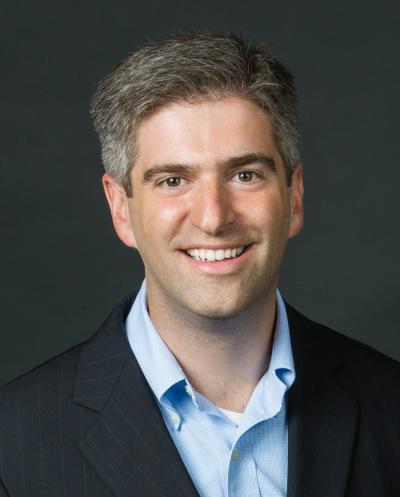
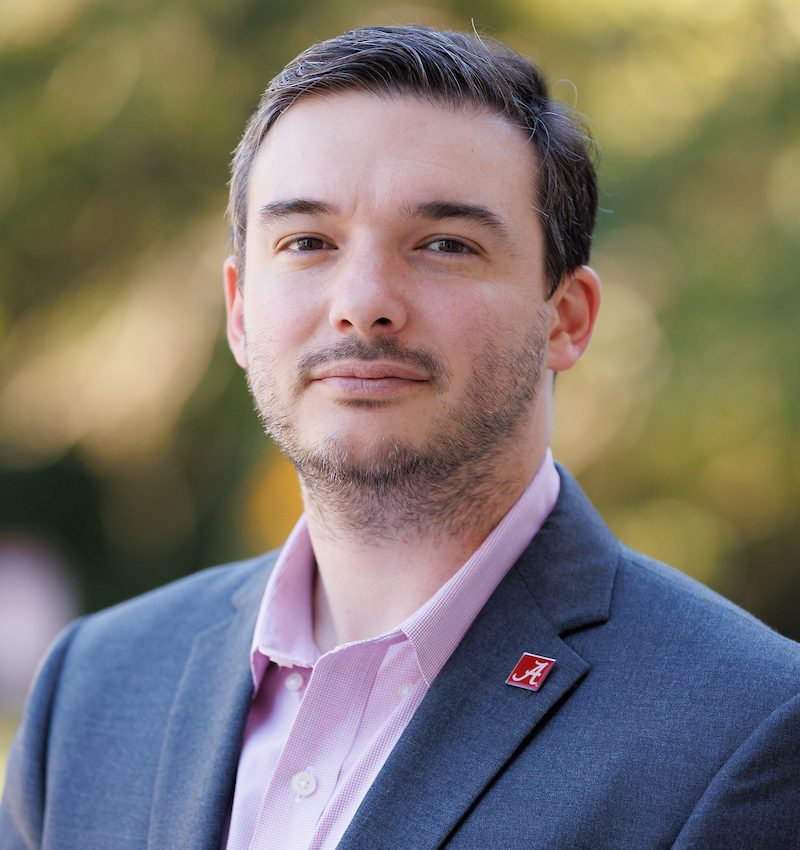
Benjamin J. Keys is a Research Associate at the University of Pennsylvania's Wharton School within the Public Economics program. His work focuses on public economics, environmental economics, and financial risk management with particular emphasis on housing markets and climate change impacts. University of Pennsylvania - The Wharton School Public Economics Department His research explores: Climate risk capitalization in housing markets Mortgage insurance moral hazard Consumer credit card payment behaviors Emergency credit systems Regional economic redistribution through mortgages Email: benkeys@wharton.upenn.edu Scientific awards include: Fellowships on Consumer Financial Management
Chee-Wooi Ten is a tenured Professor in the Department of Electrical and Computer Engineering at Michigan Technological University, where he has served since 2010 and achieved tenure in 2016. He concurrently holds an Affiliated Professor appointment in Applied Computing and directs both the PSERC Site and ICC CPS Center. His institutional roles emphasize cyber-physical security integration within power infrastructure. His educational background includes: PhD in Electrical Engineering from University College Dublin (2009) MSc in Electrical Engineering from Iowa State University (2001) BSc in Electrical Engineering from Iowa State University (1999) Ten's research pioneers cyber-informed security engineering strategies for bulk power systems, focusing on quantifying rare events through system risk models and data science. His work bridges power grid interactions with robotics and transportation systems to advance decarbonization and electrification. Key methodologies include validating cyber-physical security frameworks against steady-state and dynamic grid approaches, with emphasis on attack/defense combinatorics and smart home technologies. This transdisciplinary approach supports the fourth industrial revolution's resilience requirements. His publication trends reveal strong focus on risk-aggregated substation testbeds using generative adversarial networks, cyber insurance models for power systems, and cascading failure analysis from switching attacks. Recent works increasingly integrate machine learning with physics-based modeling to address cybersecurity threats in inverter-based resource integration and distribution emergency operations. Ten has secured over $6.5M in active funding including: $2M DOE grant (MTU portion $105,000) for CyDERMS Center on DERs/Microgrids cybersecurity $704,409 CyManII award for secure digitalization in smart manufacturing $1.05M DOE ARPA-E grant for decarbonized freight transportation modeling NSF CyberCorps Scholarship for Service program ($3.38M) His grants consistently address risk management through data-driven and physics-based modeling, with industry partnerships through PSERC and utility collaborations. As ICC CPS Center Director, he leads research on cyber-physical security testbeds and coordinates the PSERC Summer Transformation School. His team develops validation frameworks for NERC CIP compliance while addressing practical pain points in OT cybersecurity for grid operators.
Brett Sanders is a Professor in the Department of Civil and Environmental Engineering at the Samueli School of Engineering, University of California, Irvine. His research focuses on developing innovative algorithms for flow and transport in river and coastal systems and integrating information technologies to create more accurate and efficient simulation tools for flood hazard assessment. His primary research interests include: Flooding and erosion hazards, particularly coastal flooding and urban flooding Surface water quality Low impact development impacts on hydrology Dam-break flooding Aerial and terrestrial lidar scanning Geographical information systems High performance computing for simulation tools Social dimensions of flood risk and adaptation behaviors Dr. Sanders' recent publications (2024-2025) reveal a comprehensive research program addressing both technical and social aspects of flood risk. His work spans computational hydrodynamics, flood hazard mapping, infrastructure vulnerability assessment, and the socioeconomic dimensions of flood risk. He has made significant contributions to understanding multi-grid modeling of urban flooding, post-fire flood hazards, satellite-based monitoring of land motion, and social inequalities in flood exposure. His research demonstrates how flood dynamics are more complex than simple bath-tub filling models suggest, with important implications for urban planning and climate adaptation. Dr. Sanders has received recognition as a Chancellor's Professor at UC Irvine, indicating distinguished scholarly achievement. His educational background includes: Ph.D. in Civil Engineering from the University of Michigan (1997) M.S. in Civil Engineering from the University of Michigan (1994) B.S. in Civil Engineering from the University of California, Berkeley (1993)
Michael O. Wood is an Associate Professor in the School of Environment, Enterprise and Development (SEED) at the University of Waterloo and currently serves as the Associate Dean of Work-Integrated Learning in the Faculty of Environment. He holds a Ph.D. in Strategy and Sustainability from the Ivey Business School at Western University, an M.A. in Environmental Studies in Sustainability Management from Western University, and a B.A. in Science from the University of Guelph. Ph.D. in Strategy and Sustainability, Ivey Business School, Western University M.A. in Environmental Studies in Sustainability Management, Western University B.A. in Science, University of Guelph Dr. Wood's research focuses on organizational responses to sustainability challenges through the lenses of space, time, scale, and social license to operate. His work spans industries like insurance, mining, carbon management, waste management, and global security, with a particular emphasis on the Blue Economy and climate change. He has contributed to frameworks for water risk assessment, sustainable packaging practices, and the role of governance in sustainability-financial performance linkages. His recent publications address transdisciplinary tools for water risk management, workforce practices' impact on sustainability, ETS policy effects, and disaster response patterns in multinational corporations. While no scientific awards are explicitly mentioned, his work has been published in journals such as the International Journal of Disaster Risk Reduction and Economic Systems Research . Dr. Wood teaches courses like Introduction to Environment and Business and Environment and Business Project , and he collaborates with researchers like Sandhu, Weber, and Bansal on sustainability-related projects. His studies often incorporate mixed-methods analysis and policy reviews for sustainable resource management in Ontario and Canada.
Andrew Plantinga is a Professor of Natural Resource Economics and Policy at the Bren School of Environmental Science and Management, UC Santa Barbara. He also serves as Director of the Productive Landscapes Group at the Environmental Markets Solution Lab (emLab). His academic journey includes faculty roles at Oregon State University and the University of Maine before joining UCSB in 2012. He holds a PhD in Agricultural and Resource Economics from UC Berkeley, an MS in Forestry from the University of Wisconsin, and a BA in English from Grinnell College. Plantinga’s research focuses on the economics of land use, climate change, and forests. Key areas include econometric modeling of land-use decisions, environmental policy analysis, and wildfire risk management. A current NSF-funded project examines how wildfire salience influences public agency decisions. He emphasizes tradable property rights for groundwater management and has authored/co-authored over 80 journal articles, including high-impact publications in Journal of Environmental Economics and Management and Proceedings of the National Academy of Sciences . His work frequently addresses policy implications of land-use changes, such as urban growth boundaries and agricultural intensification. Recent studies explore wildfire management effectiveness, stranded public lands’ economic impacts, and carbon sequestration costs. Plantinga advises PhD students focusing on economics, including Linus Blomqvist. Grants include NSF support for wildfire policy analysis. He teaches Bren School courses like Natural Resource Economics and Cost-Benefit Analysis. His labs and collaborations, such as emLab, aim to bridge economic and ecological approaches to environmental challenges.
Susan Wachter is a Professor of Financial Management and Professor of Real Estate at the University of Pennsylvania's Stuart Weitzman School of Design and Wharton School. She has held academic positions since 1972, including roles as Chair of the Real Estate Department and Co-director of the Penn Institute for Urban Research. Her research focuses on urban economics, housing finance, climate risk, and public policy. She serves on editorial boards for journals like Journal of Housing Economics and has advised organizations such as the National Research Council and the American Real Estate and Urban Economics Association. Wachter earned her academic credentials at Bryn Mawr College and held a visiting professorship at Singapore Management University. Her awards include the Lindback Award for Distinguished Teaching (1975) and the American Real Estate and Urban Economics Lifetime Achievement Award (2005). Her work explores topics like mortgage market stability, climate impacts on housing, and equitable housing finance systems. Research Highlights: Climate risk in mortgage markets, pandemic-era housing dynamics, foreign buyer tax impacts, and systemic financial stability. Policy Contributions: Advised on housing finance reforms, GSE viability, and fair housing policy modernization. Grants & Labs: Directed the Wharton Geographical Information Systems Lab since 1995, focusing on urban spatial analytics. Her publications span over four decades, addressing topics such as mortgage stress, urban competitiveness, and the legacy of the 2008 housing bubble. Wachter's interdisciplinary approach bridges real estate finance, public policy, and urban planning to inform sustainable housing solutions.
Meredith Fowlie is a Research Fellow at the University of California, Berkeley, affiliated with the Department of Agricultural & Resource Economics and the Environment and Energy Economics Program. Her work focuses on environmental economics, energy policy, and industrial regulation, with particular expertise in climate policy, emissions trading, and market-based solutions. University : University of California, Berkeley School : College of Natural Resources Department : Department of Agricultural & Resource Economics Role : Co-Director of the Environment and Energy Economics Program, Research Fellow Over the past two decades, Fowlie has led influential research on carbon pricing, insurance market adaptations to climate change, energy efficiency programs, and regulatory design. Her publications span topics like NOx trading programs , satellite-based air quality analysis , and default effects in electricity pricing . She has collaborated extensively with scholars such as Catherine Wolfram, Christopher R. Knittel, and Nicholas Muller. Her recent work (2025-2022) emphasizes catastrophe insurance equity , climate risk classification , and carbon pricing mechanisms . Earlier studies (2020-2008) addressed co-benefits in regulatory analysis, emissions leakage in incomplete markets, and optimal pollution regulation across stationary/non-stationary sources.
Mariam Zachariah serves as a Research Fellow at the Centre for Environmental Policy within the Faculty of Natural Sciences at Imperial College London. She is a core contributor to World Weather Attribution (WWA), an international scientific collaboration conducting rapid climate change attribution analyses for extreme weather events globally. Her work bridges climate science, vulnerability assessment, and policy-relevant research. Her educational foundation includes a PhD from the Indian Institute of Technology Bombay (IITB), where she investigated climate impacts on Indian agriculture. This research focused on drought and extreme temperature effects on crop yields in major agrarian regions, recognizing agriculture's critical role in India's climate-vulnerable economy. Zachariah's research centers on near-real-time attribution of extreme events to quantify human-induced climate change influences. Her expertise spans climate modeling, statistical analysis of extreme weather, and integrating vulnerability frameworks to assess compound impacts on communities. She examines how climate change interacts with socioeconomic factors to exacerbate disasters, particularly in agricultural systems and flood-prone regions worldwide. Analysis of her recent publications reveals a dominant focus on rapid attribution of droughts, floods, and heatwaves across diverse global contexts - from the Horn of Africa to Central Europe and South America. These studies consistently demonstrate climate change as a significant amplifier of event severity, while emphasizing how pre-existing vulnerabilities determine actual impacts. Her work increasingly addresses compound hazards and the intersection of climate change with infrastructure failures and land management. As a key member of the World Weather Attribution initiative, Zachariah collaborates with climate scientists, social scientists, and vulnerability experts in a unique operational framework that delivers scientific assessments within days of extreme events. This work directly informs policymakers, media, and affected communities about climate change's role in contemporary disasters.
Steven D. Levitt is a Professor at the University of Chicago 's Booth School of Business and director of the Becker Center on Chicago Price Theory . His work spans economics, criminology, education, and behavioral science, with a focus on empirical analysis of real-world issues. Education: BA from Harvard (1989), PhD from MIT (1994) Key Research Areas: Crime economics, educational incentives, behavioral economics, and market dynamics Scientific Awards: 2004 John Bates Clark Medal, Time Magazine's 100 Most Influential People (2006) Levitt's article portfolio includes groundbreaking studies on topics like early childhood education (CogX program), abortion's impact on crime , cheating detection algorithms , and behavioral economics in education . His work often challenges conventional wisdom through unconventional data analysis. Prior research collaborations with Roland Fryer , John List , and Chad Syverson have produced influential papers on racial disparities , real estate markets , and juvenile crime . His NBER working papers demonstrate consistent methodological rigor and innovation.
David Henderson is the Director of the Cyclone Testing Station (CTS) in the School of Engineering and Physical Sciences at James Cook University, Australia. He has over two decades of experience as a research engineer specializing in the performance of low-rise buildings under extreme wind conditions. He previously served as the CTS Research Fellow and Manager, and was seconded as a Postdoctoral Researcher at the University of Western Ontario, Canada, working on full-scale house testing under simulated wind loads. His work bridges engineering research, disaster assessment, and policy development. David's research focuses on wind engineering, structural resilience, and disaster mitigation. His key interests include cyclonic wind loading, internal and external pressure dynamics in buildings, fatigue failure of structural connections, and the vulnerability of housing to severe wind events. He has conducted post-disaster surveys across Australia and Canada, assessing damage from cyclones, tornadoes, and earthquakes. His research has direct applications in building codes, retrofitting strategies, and community risk reduction. The recent publications highlight a strong trend in understanding and mitigating wind-induced damage to residential structures, particularly through full-scale testing, modeling of pressure dynamics, and fragility assessment of roofing systems. His work spans experimental, theoretical, and policy-oriented domains, with a growing emphasis on climate change adaptation and community resilience. Topics such as internal pressure design, load sharing in roof frames, and retrofitting for wind resistance are central to his contributions. 14 research awards (specific names not listed) Active member of Standards Australia code committees Invited speaker at national and international conferences Media contributor on storm damage and building safety David has led multiple research projects funded by councils and agencies focused on extreme wind mitigation, data systems (SWIRLnet), and community risk reduction. While formal student supervision is not explicitly listed, he collaborates extensively with researchers such as John Ginger, Korah Parackal, and Daniel Smith. He has contributed to major studies involving wind load testing, housing vulnerability modeling, and climate adaptation planning. David is a key figure in the Cyclone Testing Station, leading its full-scale testing program and contributing to the development of software for controlled load and measurement systems. His team conducts wind risk assessments for communities and large installations, incorporating terrain analysis and retrofitting evaluations. The CTS serves as a national resource for wind engineering research and disaster resilience innovation.
Dr. Patrick Shane Crawford serves as Assistant Professor in the Department of Civil, Construction and Environmental Engineering at the University of Alabama's College of Engineering. Affiliated with the Center for Sustainable Infrastructure and Alabama Water Institute, his research focuses on enhancing community resilience to tornadoes, floods, and hurricanes through interdisciplinary engineering approaches integrating social science and policy perspectives. His educational background includes: B.S. in Civil Engineering (2012, University of Alabama) M.S. in Civil Engineering (2014, University of Alabama) Ph.D. in Civil Engineering (2018, University of Alabama) Dr. Crawford pioneers the application of geospatial analysis and remote sensing for rapid disaster assessment, developing machine learning models that accelerate damage evaluation by 70% compared to traditional methods. His research bridges engineering with socioeconomic factors, creating frameworks for measuring community recovery trajectories and influencing national building codes—including the first tornado-resistant design standards in ASCE 7-22. Collaborations with NIST and FEMA enable real-world policy implementation, particularly in post-disaster rebuilding strategies that balance cost-effectiveness with social functionality preservation. Analysis of his 2022-2025 publications reveals consistent innovation in longitudinal disaster reconnaissance , with 60% of recent work focusing on tornado events using deep learning for damage classification. Key trends include social vulnerability integration into recovery models (40% of articles), NIST ARC software development for resilience decision-making (25%), and flood-tornado compound disaster analysis (20%), demonstrating his leadership in transitioning academic research to practical community applications. Active in federal partnerships, Dr. Crawford's 2025 feature Confident but Exposed: How Prepared Are U.S. Homeowners for Extreme Weather? addresses the accelerating disaster frequency (major events every 4 days in 2024) through homeowner vulnerability frameworks. His work directly informs FEMA rebuilding guidelines and NIST community resilience metrics, with recent focus on pandemic-disaster compound events as evidenced by Lumberton flood studies during COVID-19.
Dr. Roger Moser is a Senior Lecturer at Macquarie University's Department of Management Innovation, Strategy and Entrepreneurship Research Centre. He also holds adjunct roles at the Indian Institute of Management Udaipur (since 2012) and the University of St. Gallen (since 2012). His research focuses on Decision Intelligence, Strategic Management, and International Management, particularly exploring how executives leverage data (small/big) to enhance decision-making frameworks. He has over 99 publications since 2005, with notable works in journals like Journal of Service Research and Journal of Business Research . Dr. Moser holds a Dr. rer. pol. from EBS European Business School (2006) and a lic. oec. HSG (MSc) from the University of St. Gallen (2003). His research interests include Decision Model Innovation, Social Capital in emerging markets, and strategic alignment in supply chains. He has conducted impactful studies on access-based services in India, supplier integration in China's automotive sector, and humanitarian logistics using satellite data. His recent work emphasizes technology integration in B2B value creation, decision frameworks for uncertainty reduction (e.g., in agriculture and disaster management), and AI-driven expert systems. He has presented at global forums on topics like digital transformation and decision intelligence applications, contributing to both academic and practitioner discourse. External Roles: Adjunct Professor of Business Policy, Indian Institute of Management Udaipur Titularprofessor / Permanent Lecturer, University of St. Gallen Notable impacts include a project providing clean drinking water in India through access-based solutions, recognized for quality-of-life and societal contributions. His research has been cited over 1,666 times with an h-index of 21.
Richard K. Norton is a Professor at the University of Michigan’s Taubman College of Architecture and Urban Planning, with a joint appointment in the Program in the Environment (PitE) under the College of Literature, Science, and the Arts. He holds a Ph.D. in City and Regional Planning and a J.D. from the University of North Carolina at Chapel Hill, along with master’s degrees in Public Policy and Environmental Management from Duke University. His research focuses on sustainable development, land use planning, planning law, and coastal management, particularly along the Laurentian Great Lakes. He actively contributes to the Michigan Association of Planning (MAP), leading legislative reforms for planning and zoning laws, including successful amendments in 2006 and 2008. He has authored amicus curiae briefs for the Michigan Supreme Court and U.S. Court of Appeals on planning disputes. Teaching areas include Climate Adaptation Planning , Planning Law , and Environmental Planning . Recent publications emphasize coastal resilience, legal frameworks for shoreline management, and citizen perceptions of environmental policies. He leads projects like the Resilient Great Lakes Coast initiative and has secured grants, including a $5M NSF award for transboundary water research. Notable awards include the 2024 ACSP Top Reviewer Award. His work bridges academia, policy, and community engagement, addressing challenges in climate adaptation, coastal governance, and sustainable urban development.
Kendra Gonzales is a Research Fellow at the Fenner School of Environment & Society, Australian National University (ANU), and concurrently holds an appointment as Associate Professor at the Department of Environmental Science, Ateneo de Manila University. She previously served as the Director of the Ateneo Institute of Sustainability (2021-2024) and is involved in international initiatives like the World Climate Research Programme’s My Climate Risk project. Her research focuses on environmental performance metrics, climate resilience, and systems thinking applications. Education: BS Physics (Ateneo de Manila University), joint MSc Environmental Management (Ateneo/USF), PhD in Earth and Atmospheric Science (Purdue University). Research interests include sustainability, climate resilience, disaster risk management, and earth system science. She applies systems thinking to address environmental challenges, particularly in Southeast Asia, emphasizing interdisciplinary approaches to quantify resilience and develop systemic metrics for companies and investors. Recent work highlights policy-relevant climate science, disaster risk communication, and land-use change impacts. Her contributions span e-learning modules for climate education and frameworks for sustainable enterprise collaboration. Collaborates internationally with organizations like the Sustainable Development Solutions Network Philippines and the World Weather Research Programme. Labs/Teams: Part of Fenner School’s Earth systems and risk resilience research groups.
Dr. Nanda Kaji Budhathoki is a Postdoctoral Research Fellow at the School of the Environment , University of Queensland, with expertise in environmental economics, climate change adaptation, and behavioral economics. He completed his PhD in Agriculture and Environmental Economics from Charles Darwin University in 2020. Education : PhD in Agriculture and Environmental Economics (2020), Charles Darwin University Research Interests : Focus on climate risk mitigation for agricultural communities, behavioral aspects of climate adaptation, socio-economic impacts of extreme weather events, and economic modeling for private land conservation. His work integrates environmental, economic, and social data to develop sustainable solutions. Publication Trends : Recent work explores climate risk management in agriculture (2025-2020), with specific focus on index-based insurance, farmer risk perception, and adaptation strategies. Earlier publications examine rural development economics (2017-2010), including microcredit impacts and crop innovation adoption.