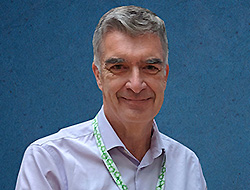
Professor Dan Shrubsole is a faculty member in the Department of Geography and Environment at Western University. His research focuses on integrated resource management, particularly water management and environmental policy, with an emphasis on Canada and Queensland, Australia. He has supervised numerous graduate students, including PhD candidates such as D. Bednar (2018) and F. Sekercioglu (2018), and Masters students like E. Cameron (2023). His work explores topics like climate change adaptation governance, small drinking water system sustainability, and flood management policy. Teaching includes GEO 9099 – Research Design and Presentation. Key publications address water governance in Ontario Conservation Authorities, flood risk perceptions, and integrated water resource management. His research spans over three decades, with notable contributions to policy analysis and environmental sustainability. Shrubsole's work bridges academic research and practical policy, emphasizing interdisciplinary approaches. His recent focus includes regulatory reforms for water systems and evaluating floodplain management strategies across Canadian regions. Collaborative projects highlight partnerships with institutions like the Upper Thames Conservation Authority and international case studies in Australia.
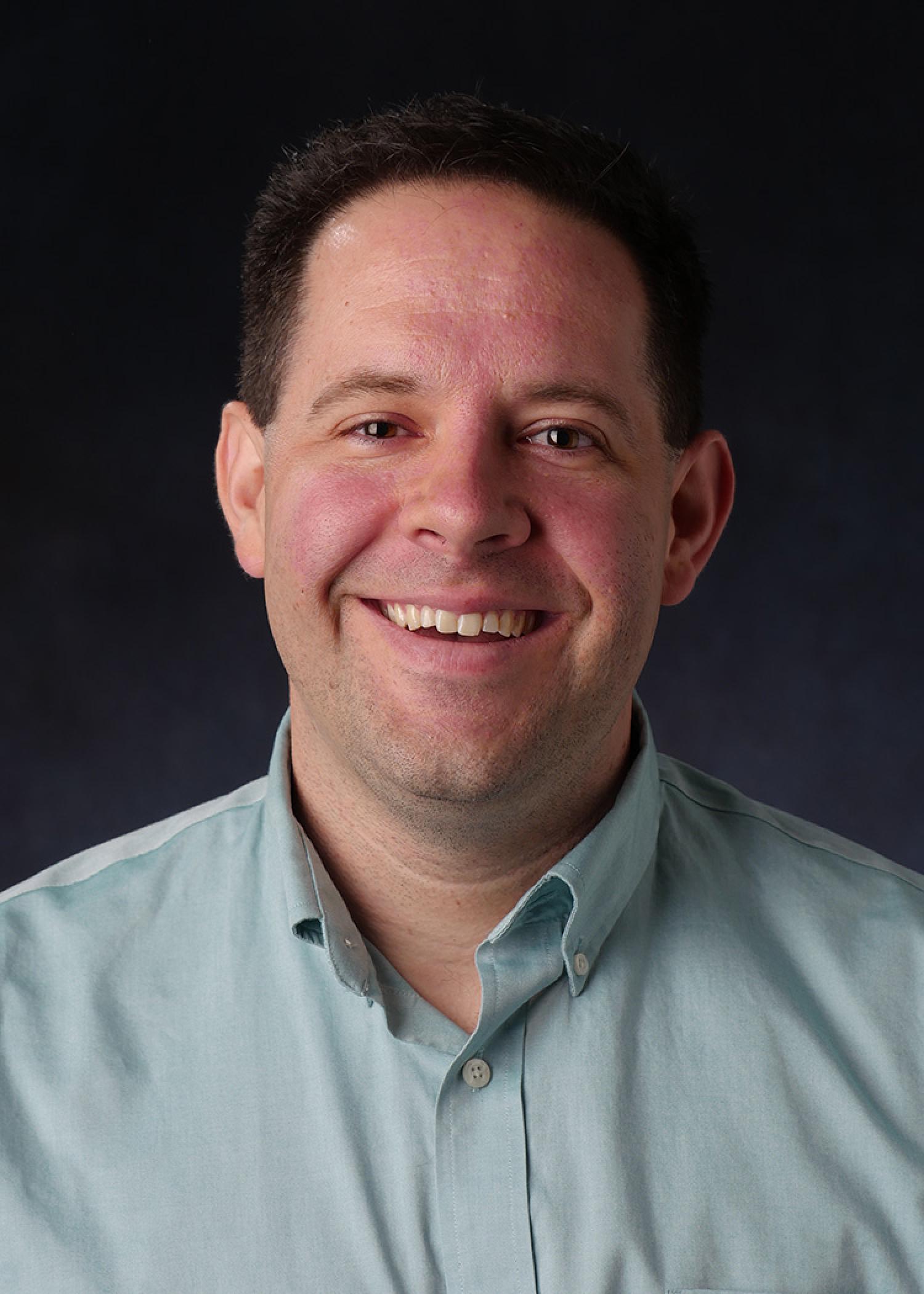
Joseph Trainor is the Interim Dean and Professor at the Joseph R. Biden, Jr. School of Public Policy and Administration, University of Delaware. He is a core faculty member of the Disaster Research Center, renowned for expertise in Disaster Science and Emergency Management. His research integrates behavioral and organizational dimensions of disasters, focusing on risk perception, warnings, equity, and policy integration. Trainor holds a PhD in Sociology from the University of Delaware (2009), with earlier degrees from the same institution and Millersville University. Education: Ph.D., Philosophy in Sociology, University of Delaware (2009) MA, Sociology, University of Delaware (2004) B.A., Double Major in Sociology and Psychology, Millersville University (2002) Research Interests: Trainor’s work spans risk communication, organizational management in crises, disaster mitigation, and equity. Key themes include household decision-making around insurance and retrofitting, multi-organizational response systems, and pandemic workforce dynamics. He emphasizes bridging academic research with practitioner needs, with a focus on policy applications. Public Service & Collaboration: Trainor collaborates with agencies like FEMA, DHS, and state emergency management offices. His projects address land-use policies, hurricane risk reduction, and pandemic response strategies. He frequently chairs doctoral committees and teaches at all academic levels. Labs & Teams: As part of the Disaster Research Center, he contributes to interdisciplinary teams advancing disaster science through mixed-methods approaches, including computational frameworks and community resilience models.
Tony Cookson is a Professor of Finance and the Michael A. Klump Endowed Professor at the Leeds School of Business , University of Colorado Boulder, where he has served since 2013. His research spans empirical finance , household and corporate financial decision-making , and the impact of social media and legal institutions on financial behavior. He has published in top journals like the Journal of Finance , Journal of Financial Economics , and Management Science , focusing on topics from investor disagreement to fracking-induced debt repayment . Education : Ph.D. in Economics (University of Chicago), M.S. in Statistics and Applied Economics (Montana State University), B.S. in Economics (Montana State University) His research interests include: How social media shapes investor sentiment and trading patterns The economic consequences of fracking and casino policy Legal institutions and their role in credit market development Behavioral finance through LLM-driven investor personas His scientific awards include the Best Paper in Investments and Asset Pricing (MFA 2023) , NASDAQ Best Paper in Asset Pricing (WFA 2021) , and Finalist for TIAA Paul A. Samuelson Award (2021) . He serves as Editor at the Review of Corporate Finance Studies and Associate Editor at multiple top journals.
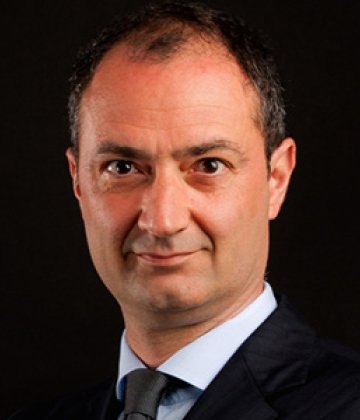
Giuseppe Corvino is a Professor of Financial Markets and Institutions at Bocconi University, specializing in investments, insurance, and pension funds. He has held visiting roles at Politecnico Milano and the MIB Trieste School of Management, and is a scientific partner of the Osservatorio sul Welfare by Luiss Business School. His research focuses on insurance companies, asset management, risk management, and regulatory frameworks. Corvino won the Bocconi University Research Incentives Award (with F. Saita) for work on retirement savings investment strategies. He designed executive programs for global financial institutions through SDA Bocconi School of Management. During an academic leave, he led BlackRock's Italy Institutional Client Business and Financial Institutions Group as a Managing Director. His professional roles include chairman, independent board member, and advisor to major financial institutions. He contributed to projects like the UN’s International Decade for Natural Disaster Reduction and served on the EIOPA Occupational Pensions Stakeholder Group. His teaching includes courses on risk management, banking, insurance economics, and international financial markets.
Dr. Paulo Miguel Madeira is an Adjunct Assistant Professor at the Institute of Geography and Spatial Planning (IGOT) of the University of Lisbon, holding a PhD in Geography (2019) and a Master's in Population, Society, and Territory (2012). His work spans regional development, urban segregation, environmental policies, and migration studies, with a focus on territorial justice and economic globalization. Education: PhD in Geography (University of Lisbon, 2019), Master in Population, Society, and Territory (University of Lisbon, 2012), BA in Geography (University of Lisbon, 1998) Research interests include regional disparities , climate adaptation policies , transnational migration , and spatial inequality . His recent publications analyze non-territorial governance, wildfire mitigation, and the localization of UN sustainability goals. His academic work intersects political geography , environmental justice , and urban dynamics , with case studies in Portugal, Spain, Sweden, and Brazil. No scientific awards or student advising information were explicitly mentioned in the provided data.
Olaf Weber is a Professor and CIBC Chair in Sustainable Finance at the Schulich School of Business, York University . He also serves as a Senior Fellow at CIGI and Adjunct Professor at the School of Environment, Enterprise and Development (SEED), University of Waterloo . His research focuses on the intersection of finance, sustainability, and policy, particularly addressing how financial institutions can advance sustainable development goals (SDGs), manage climate risks, and integrate ESG principles into investment strategies. He is the Director of the Centre of Excellence in Responsible Business at Schulich. Key research areas include sustainable finance regulation , ESG performance measurement , transition finance , and green bond markets . Weber critiques Canada’s lag in sustainable finance leadership, emphasizing the need for stronger policy alignment between financial activities and climate goals. His work highlights challenges such as fossil fuel financing by Canadian banks and proposes solutions like public-private partnerships and stricter sustainability criteria for investments. He advises on climate stress testing , carbon pricing mechanisms , and the role of institutional investors in driving sustainable transitions. Weber’s interdisciplinary approach combines finance, environmental science, and policy to address global sustainability challenges. His research has been applied to sectors like renewable energy, water management, and microfinance.
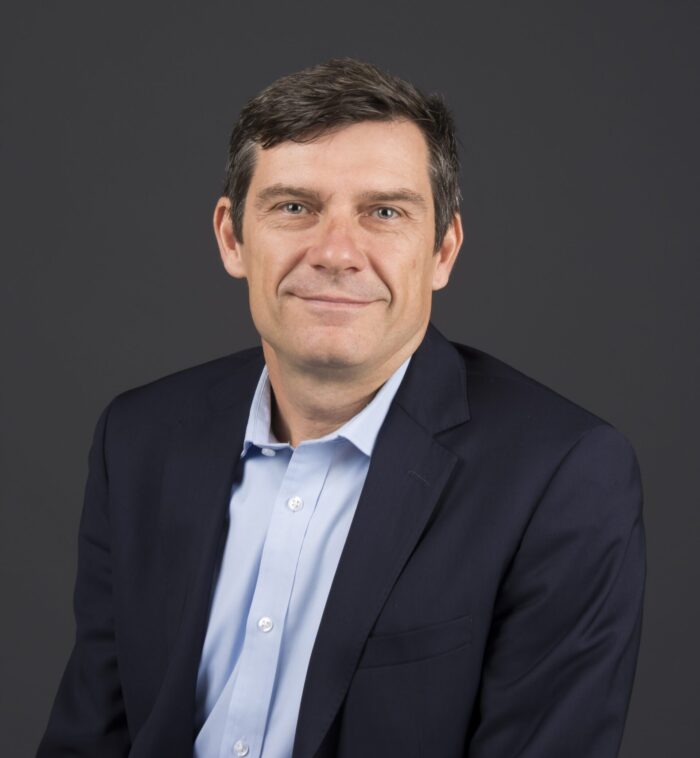
Edmund Penning-Rowsell serves as Pro Vice-Chancellor (Research) and Deputy Vice-Chancellor Academic at Middlesex University, leading institutional research strategy while maintaining an active research profile in flood risk management. His work bridges hydrological science, social policy, and economic appraisal to address complex flood and coastal challenges in the UK and globally. His research focuses on: Human dimensions of flood risk and social vulnerability Policy innovation in flood governance and insurance mechanisms Economic appraisal methods for coastal and flood risk management Climate adaptation strategies including Sponge Cities and floating architecture Transboundary cooperation and judicial conflict resolution in water management Distributional justice in flood risk reduction policies Recent publications (2020-2025) reveal an interdisciplinary trajectory emphasizing socio-technical integration, with significant work on policy experimentation in Austria, partnership models for coastal management, and data-driven approaches to flood risk assessment. His scholarship consistently connects academic research to real-world policy implementation through collaborations with government agencies and international bodies. No specific scientific awards were documented in the provided information. As senior research leadership, he oversees Middlesex University's research portfolio including Flood Hazard Research Centre initiatives, though specific student supervision details are absent from the text. His work demonstrates extensive collaboration with agencies like the Environment Agency and European Commission-funded projects. He is central to the Flood Hazard Research Centre at Middlesex University, which conducts applied research on flood risk governance through international partnerships. Current projects address data transparency for coastal resilience, innovative flood insurance models, and climate adaptation strategies across urban and rural landscapes.
Stefan Klonner serves as Professor of Development Economics at Heidelberg University's South Asia Institute since 2010, leading the Development Economics Team. His academic trajectory includes a Ph.D. in Economics from Heidelberg University (2001) and a Master's in Statistics and Econometrics from the University of Utah (1996), with prior appointments at Yale University (postdoctoral fellow and visiting lecturer), Cornell University (assistant professor), and Goethe University Frankfurt (Professor of International and Development Economics). His educational credentials: Ph.D. in Economics, Ruprecht-Karls University Heidelberg, 2001 Master's in Statistics and Econometrics, University of Utah, 1996 Klonner's research centers on microeconomic analysis of low-income economies, specializing in credit/insurance markets, health interventions, poverty targeting mechanisms, and impact evaluation of welfare programs. His extensive fieldwork in South India combines rigorous quantitative methods with deep regional expertise to address practical policy challenges in development contexts. This work bridges theoretical economics with real-world applications for poverty reduction. Analysis of his recent publications reveals consistent methodological rigor in evaluating social programs across India and Burkina Faso, with dominant themes including disaster resilience, maternal health financing, employment guarantee schemes, and poverty targeting. His research demonstrates strong regional specialization in South Asia while addressing universal development challenges through microeconometric approaches and field experiments. Professor Klonner actively engages public discourse through expert commentary in media outlets like Die Tageszeitung (taz) and La Liberté, along with invited lectures at institutions including the State Bank of India Leadership Institute and University of Cologne. His presentations address Sustainable Development Goals, fair trade, and poverty measurement methodologies. As head of the Development Economics Team within Heidelberg's South Asia Institute, he contributes to interdisciplinary research on South Asian economies through the Centre for Asian and Transcultural Studies (CATS), directing field studies and policy-relevant analysis focused on South India.
Ehsan Kabir is a Lecturer in Public Service Management at the University of South Wales' Faculty of Business and Creative Industries. His work focuses on displacement studies, climate change impacts, and vulnerable populations in South and Southeast Asia. Kabir has conducted extensive research on Rohingya refugees in Bangladesh, Afghan internally displaced persons (IDPs), and environmental migrants affected by river erosion and drought in Bangladesh. His research employs mixed-method approaches including GIS analysis, remote sensing, and qualitative case studies. Key themes include dignity frameworks in displacement contexts, climate adaptation strategies for coastal agriculture, and the socio-economic dynamics of internal migration. Kabir has contributed to over 20 peer-reviewed publications since 2012, with particular emphasis on Bangladesh's development challenges and humanitarian crises. While no formal awards are listed, his work demonstrates significant contributions to refugee policy analysis and environmental vulnerability frameworks. Teaching responsibilities include public service management modules, while research interests extend to disaster resilience and sustainable development goals implementation in marginalized communities.
Amisha Mehta is a prominent academic at Queensland University of Technology (QUT), specializing in risk communication, crisis management, and disaster communication. Her work bridges theoretical frameworks with practical applications in public relations, organizational trust, and emergency management. Dr. Mehta has contributed extensively to understanding trust dynamics in corporate and governmental communication during crises, particularly focusing on misinformation management, emergency warning systems, and community resilience-building strategies. Lead researcher in multiple disaster communication projects including the Bushfire and Natural Hazards CRC. Co-editor of the Routledge Handbook of Risk, Crisis, and Disaster Communication (2024). Published over 80 peer-reviewed articles and book chapters in journals like Disasters , International Journal of Disaster Risk Reduction , and Public Relations Review . Her research emphasizes practical outcomes for policymakers and practitioners, with a focus on multi-channel communication strategies, business continuity during disasters, and the role of social media in crisis response. She has advised government agencies on risk communication frameworks and participated in high-impact projects such as enhancing dam safety messaging and improving bushfire warning efficacy. Recent work explores the intersection of corporate sustainability strategies (e.g., Net Zero goals) and public trust, as well as the evolving challenges of misinformation in crisis contexts.
Guirong (Grace) Yan is a Professor in the Department of Civil, Architectural and Environmental Engineering at Missouri University of Science and Technology and serves as the director of the Wind Hazard Mitigation (WHAM) Laboratory. Her research focuses on mitigating hazards from extreme winds including tornadoes and hurricanes through engineering solutions and community resilience initiatives. Her primary research interests encompass numerical simulation of wind fields using computational fluid dynamics (CFD) and experimental methods in wind tunnels and tornado simulators, dynamic structural responses to extreme winds, and reproduction of real-world damage scenarios. She uniquely integrates engineering with social science to enhance public risk awareness and encourage proactive community resilience measures against wind hazards. Analysis of her recent publications (2023-2025) reveals dominant themes in tornado and typhoon wind modeling, particularly terrain and surface roughness effects using ultra-fine scale CFD simulations. Her work spans structural engineering, atmospheric science, and social dimensions of disaster recovery, with increasing emphasis on community resilience modeling, insurance mechanisms, and multidisciplinary approaches to risk reduction. Professor Yan has secured 20 research grants totaling $1.93 million. While specific student names are not listed in available materials, she mentors graduate students in the WHAM Laboratory through hands-on research in wind engineering and disaster resilience projects. As director of the WHAM Laboratory, she leads experimental research using specialized tornado simulators and wind tunnels to investigate extreme wind effects on civil structures. Her team develops advanced simulation techniques and mitigation strategies for wind-induced structural damage while collaborating with social scientists on community resilience initiatives.
Dr. Linda K. Nozick is a Professor and Director of Civil and Environmental Engineering at Cornell University, leading research in infrastructure resilience and disaster risk management. She co-founded the College Program in Systems Engineering and previously served as a Visiting Associate Professor at the Naval Postgraduate School. Her work focuses on mathematical modeling for complex systems, including transportation networks, natural hazard mitigation, and critical infrastructure protection. Education: B.S. in Systems Analysis and Engineering, George Washington University (1989) M.S./Ph.D. in Systems Engineering, University of Pennsylvania (1990-1992) Research Interests: She pioneers models for transportation systems, network science, and disaster risk management. Key areas include: Optimization of infrastructure resilience Hurricane evacuation modeling Insurance-market dynamics for catastrophic risks Seismic retrofitting strategies Data-driven decision support systems Recent Work Highlights: Recent studies address hurricane evacuation behavior prediction using mobility data, equity in hazmat routing, and multi-hazard risk assessment for power grids. Awards: 2011 Presidential Early Career Award for Scientists and Engineers NSF CAREER Award (1997) Sandia National Labs Recognition Award (2009) Member of Nuclear Waste Technical Review Board Academic Service: Leads Cornell's Master of Engineering strategic planning and coordinates the Engineering Systems & Management mission area. She advises federal agencies on infrastructure renewal through National Academy Committees. Lab/Team Affiliations: Directs research initiatives in disaster resilience engineering and collaborates with Sandia National Labs on infrastructure optimization tools.
Laura Bakkensen is the Mikesell Professor in Environmental and Natural Resource Economics at the University of Oregon's Department of Economics. Her research focuses on the economic impacts of natural disasters, particularly tropical cyclones and floods, using applied microeconometric techniques to analyze global risk patterns and inform policy on insurance regulation, post-disaster aid, and adaptation projects. Ph.D., Environmental and Natural Resource Economics, Yale University M.Sc., Environment and Development, London School of Economics B.A., Economics, Whitman College Her scholarly work explores: Economic consequences of climate change and disaster risk Flood cost assessment methodologies across North America Insurance market dynamics under climate uncertainty Behavioral economics of disaster preparedness Policy effectiveness in coastal and floodplain management International collaboration in climate impact research Scientific awards include: National Academies Gulf Research Program Early-Career Fellowship (2017-2019) JEEM Best Paper Award (2020) She has advised international initiatives through the National Science Foundation and Fulbright Teaching Grant to South Korea, with current research spanning three continents and involving interdisciplinary collaborations with climate scientists, hydrologists, and policy makers. Her methodological innovations in flood economic impact assessment have been adopted across Canada, Mexico, and the United States.
Rosalind Bark is a Lecturer in Ecological Economics at the School of Environmental Sciences, University of East Anglia. Her research combines environmental economics methodologies with social science frameworks to address sustainability challenges in water resources and ecosystem services management under changing conditions. Key Research Themes: Climate Change Adaptation Nature-Based Flood Risk Mitigation Participatory Governance Ecosystem Services Valuation Water Allocation Policy Community Engagement in Environmental Management Recent publications highlight trends in: Nature-Based Solutions implementation Transboundary water governance Urban riparian corridor valuation Climate risk communication Indigenous water rights Remote sensing applications for environmental valuation Email: r.bark@uea.ac.uk
Marcia G. Ory is a Regents & Distinguished Professor in the Department of Environmental and Occupational Health at Texas A&M University, driving transformative research in aging, chronic disease management, and implementation science. Her work bridges public health theory with community-based interventions to improve health outcomes for vulnerable populations, particularly older adults and caregivers. Education: BA in Sociology/Psychology, University of Texas at Austin MA in Sociology/Human Development, Indiana University Bloomington PhD in Family Studies (Sociology)/Human Development, Purdue University MPH in Chronic Disease Epidemiology, Johns Hopkins Bloomberg School of Public Health Research Focus: Dr. Ory pioneers evidence-based approaches to aging and health promotion, with groundbreaking work in dementia caregiving, diabetes self-management, and opioid crisis response. Her signature integration of health technology empowers patients through digital platforms like GamePlan4Care, while her implementation science expertise translates research into real-world community programs. She champions health equity through rural-focused initiatives addressing disparities in chronic disease management and access to care. Publication Trends: Recent work (2023-2025) reveals three dominant trajectories: (1) Digital health innovations for dementia caregivers and diabetes management; (2) Multi-ancestry genomic analyses of Alzheimer’s risk; (3) Policy-focused studies on opioid surveillance and transportation equity. Her research consistently leverages large-scale data (commercial insurance, national surveys) to expose urban-rural disparities while developing scalable interventions for vulnerable aging populations. Awards & Recognition: Fellow of four national academies (Behavioral Medicine Research, Health Behavior, Gerontology, Behavioral Medicine) World’s Top 2% Scientist (Stanford 2021-2023), Top 1000 Social Sciences Researcher (Research.com) APHA Philip G. Weiler Lifetime Achievement Award, Healthcare Leadership Council Redefining American Healthcare Award Distinguished Alumna/Scholar (Purdue), Distinguished Mentor (Gerontological Society) Mentoring & Leadership: As a nationally recognized mentor (TAMU Women’s Faculty Network Award), she cultivates next-generation researchers through doctoral seminars in implementation science. Her federally funded grants consistently emphasize community engagement, translating findings into evidence-based programs like the LIVE WELL Initiative that serve 50,000+ older adults annually. She directs major NIH-supported dementia caregiving studies while advising federal agencies on aging policy. Research Ecosystem: Dr. Ory leads the Center for Community Health and Aging, coordinating interdisciplinary teams across public health, gerontology, and data science. Her collaborations span the Texas A&M System, Johns Hopkins, and international partners in Ukraine and Australia, with recent projects developing virtual reality interventions for depression and autonomous vehicle interfaces for cognitively impaired older adults.