Gino Gandolfi is a Professor affiliated with Parma University and SDA Bocconi School of Management , where he holds the role of Affiliate Professor in Banking and Insurance. He has collaborated with SDA Bocconi since 1995, delivering workshops and courses for major European banking and insurance institutions. Educational Background : Ph.D. in Business Administration from Bocconi University and the University of Pavia Degree in Economics and Commerce from Parma University Research Interests : Asset management Risk management Retirement and insurance Portfolio optimization Innovation in financial services Gender dynamics in entrepreneurship Scientific Awards : Claudio Dematté Project Award (2017) Innovation in Technology-Based Learning (2015) Internationalization and Innovation Award (2013) Multiple Excellence in Program Coordination Awards (2010-2012) Entrepreneurship Award (2009) Excellence in Teaching Awards (2004, 2007-2008) Advising & Grants : His research has been published in journals like European Financial Management , Journal of Asset Management , and International Journal of Economics and Finance . He has secured grants for studies on fintech, innovation, and financial policy. Leadership Roles : President of Fiere di Parma SpA President of Le Village Parma by Crédit Agricole Member of the board of statutory auditors of SACE SpA
Hans-Martin von Gaudecker is a Professor of Applied Microeconomics at the University of Bonn's Department of Economics. He holds multiple significant academic positions including Cluster Faculty Member at ECONtribute, Principal Investigator of the Collaborative Research Center TR/224, Speaker of the Transdisciplinary Research Area 'Individuals, Institutions and Societies', and research fellow at the IZA Institute of Labor Economics, Reinhard Selten Institute, CESifo, and Netspar. His research focuses on modeling life-cycle behavior of households and informing public policy to reduce inequality. His work spans household finance and preferences, labor economics, health economics, and the economic impacts of the COVID-19 pandemic. He combines innovative data with economic models and up-to-date econometric methods to address questions about risk management over life cycles, labor market consequences of ill health, disability scheme design, and retirement decisions. His publication record shows a strong focus on empirical microeconomics with recent work increasingly addressing pandemic-related economic issues. His research employs sophisticated econometric techniques and emphasizes reproducibility, with many publications including replication code. His work appears in leading journals including Journal of Finance, American Economic Review, Journal of Labor Economics, and Journal of Econometrics. As an educator, Professor von Gaudecker teaches Applied Microeconomics for PhD and MSc students, Applied Data Analytics for BSc students, and Effective Programming Practices for Economists. His teaching emphasizes computational methods, reproducible research, and the integration of economic theory with data analysis skills. He has developed templates for reproducible research projects that are widely used by students and collaborators. He leads the C01 project within the Collaborative Research Center TR/224 and has been instrumental in developing software tools to enhance research reproducibility. His work with CentERdata on Dutch LISS panel data during the pandemic demonstrates his commitment to timely, policy-relevant research. His interdisciplinary approach bridges economics, public health, and computational science to address complex societal challenges.
Shawn A. Cole is the John G. McLean Professor in the Finance Unit at Harvard Business School, where he teaches and conducts research on financial services, impact investing, and Social Enterprise. He serves as faculty chair of the Social Enterprise Initiative and is an affiliate of the National Bureau of Economic Research, on the board of the Jameel Poverty Action Lab, and the faculty lead on Corporate Engagement. He is also an affiliate of Harvard's Center for International Development. Professor Cole received a Ph.D. in economics from the Massachusetts Institute of Technology in 2005, where he was an NSF and Javits Fellow, and an A.B. in Economics and German Literature from Cornell University. Before joining Harvard Business School, he worked at the Federal Reserve Bank of New York in the economic research department. His research focuses on how finance can create value for individuals, firms, and societies. He has extensively studied the design and distribution of financial services in emerging markets, financial decision-making, and financial education. More recently, he has examined the role of digital delivery of advice in agricultural decision making and sustainable and impact investing, with work examining financial and social returns globally. His work spans Asia, including China, India, Indonesia, South Africa, and Vietnam. Professor Cole's publications reveal a strong focus on experimental and empirical approaches to understanding financial markets, particularly in developing contexts. His work often combines field experiments with rigorous economic analysis to examine how financial products and services impact individual behavior and economic outcomes. A recurring theme is how technology, particularly mobile technology, can transform financial service delivery and improve decision-making in resource-constrained environments. Professor Cole has received several prestigious awards for his work: 2015 Shin Research Excellence Award from The Geneva Association and the IIS for his work on insurance 2021 Teaching Recognition Award for Excellence in Sustainable Finance Education from the Financial Times and the Impact and Sustainable Finance Faculty Consortium 2015 Faculty Pioneer Award from The Aspen Institute for work on Business and Society Outside of Harvard, Professor Cole co-founded Precision Development, a non-profit organization that has delivered agricultural advice to over 10 million farmers, and serves on the board of Our Kids Read, a US-based literacy non-profit. He has served on the Boston Federal Reserve's Community Development Research Advisory Council, served as an external advisor to the Gates Foundation, and was the chair of the endowment management committee of the Telluride Association. Professor Cole leads research initiatives through Harvard's Center for International Development and the Abdul Latif Jameel Poverty Action Lab (J-PAL), focusing on how financial innovations can address development challenges. His work often involves collaborations with policymakers and practitioners to translate research findings into practical applications that improve financial inclusion and economic outcomes.
Andrew Ryan, PhD, is Adjunct Professor of Health Management & Policy at the University of Michigan School of Public Health. He directs the Center for Evaluating Health Reform, co-directs the Center for Health Outcomes & Policy, and serves as Associate Director of Data & Methods for the Institute for Healthcare Policy & Innovation. Previously he was Associate Professor of Public Health at Weill Cornell Medical College. Education PhD in Social Policy with concentration in Health Policy, Heller School for Social Policy and Management, Brandeis University Research Interests Dr. Ryan’s work centers on the empirical evaluation of health-policy interventions, with particular emphasis on how alternative payment models—pay-for-performance, bundled payments, and Medicare Advantage reforms—affect quality, spending, and equity of care. He employs quasi-experimental designs and large administrative datasets to assess causal impacts of policy on provider behavior and patient outcomes. His investigations span Medicare hospital value-based purchasing, the Medicare Shared Savings Program, Medicare Advantage star ratings and overpayments, state-level affordability standards, and the distributional consequences of payment reform on disadvantaged populations. Publication Trends Across more than 100 peer-reviewed articles, Ryan’s recent output (2023-2025) exhibits three dominant themes: (1) rigorous assessment of Medicare Advantage payment accuracy and market behavior, including favorable selection and vertical integration; (2) evaluation of bundled-payment and ACO models on surgical quality and spending; and (3) methodological advances in difference-in-differences and propensity-score techniques applied to claims data. These studies appear in top-tier journals such as New England Journal of Medicine , JAMA , The Lancet , and Health Affairs . Scientific Awards 2009 AcademyHealth Dissertation Award for “The Design of Value-Based Purchasing in Medicare: Theory and Empirical Evidence” Advising & Grants Dr. Ryan mentors doctoral and post-doctoral trainees at the University of Michigan and is principal investigator on multiple NIH and CMS funded grants aimed at evaluating national payment reform initiatives. His research teams are interdisciplinary, drawing from health economics, biostatistics, and clinical epidemiology. Laboratories & Teams He leads the Center for Evaluating Health Reform and co-directs the Center for Health Outcomes & Policy , both housed within the University of Michigan School of Public Health. These centers serve as hubs for policy-relevant analyses, providing data infrastructure and methodological expertise to federal and state agencies as well as international collaborators.
John Kooti serves as the Dean and Professor of Finance at Shippensburg University of Pennsylvania within the John L. Grove College of Business, specifically in the Finance and Supply Chain Management Department. With extensive experience in both academia and professional finance, Dr. Kooti has established himself as a notable figure in business education and financial research. His leadership extends to editorial roles, including Executive Editor of the Academy of Business Disciplines Journal and Editor of the Journal of Applied Financial Research. Dr. Kooti holds a Ph.D. and M.S. from Michigan State University, complemented by a Post-Doctoral Program in Finance from the University of Florida completed in 2010. This robust academic foundation has supported his career trajectory from faculty member to academic leadership. Dr. Kooti's research spans several key areas within finance and economics, with particular expertise in Financial Economics, International Finance, Exchange Rates, International Trade, and Regional Economic and Financial issues . His scholarly work demonstrates a consistent focus on practical applications of financial theory to real-world economic challenges. He has also made significant contributions to the understanding of accounting accreditation and the integration of technology in business education. His research often addresses the intersection of policy, finance, and economic development, particularly in rural contexts. An analysis of Dr. Kooti's publication record reveals a strong emphasis on financial regulation, international economic relations, and business education quality. His work on the Chinese Yuan's appreciation demonstrates expertise in international trade dynamics, while his research on the Gramm-Leach-Bliley Act shows engagement with critical financial policy questions. The recurring theme of accreditation throughout his work highlights his commitment to educational standards in business programs. His research also spans diverse areas from disaster economics (Hurricane Katrina case study) to seasonal market effects (November Effect study), showcasing breadth within his financial expertise. Among Dr. Kooti's professional accomplishments is having a paper voted "best paper" at the 2006 International Business & Economic Research Conference in Las Vegas, Nevada. His editorial leadership with academic journals further demonstrates recognition of his expertise within the scholarly community. As Dean of the John L. Grove College of Business, Dr. Kooti oversees a comprehensive business education program that includes 15 student organizations, professional development options like the Small Business Development Center and the Charles H. Diller Jr. Center for Entrepreneurial Leadership and Innovation, and the Brad E. Hollinger Stock Trading Room. He has been involved in the Business Internship Program at Shippensburg University, which has operated since 1972, providing practical work experience to business students. His consulting work includes Educational Needs Assessment, Asset Valuations, and Economic Value of Life Estimation, demonstrating applied expertise beyond academia. Dr. Kooti's leadership extends to overseeing the John L. Grove College of Business's AACSB accreditation, a significant achievement that testifies to the college's excellence. He manages a large alumni network spread nationally and internationally that remains closely engaged with the university, providing mentorship and employment opportunities for Ship graduates.
Geoffrey C. Friesen is an Associate Professor of Finance at the University of Nebraska-Lincoln's College of Business, where he has been a faculty member since 2005. He was promoted to Associate Professor in 2011 after serving as an Assistant Professor from 2005-2011. He holds a Ph.D. from the University of Iowa (2003) and a B.S. from the University of Nebraska-Lincoln (1995). Research Focus: His work integrates behavioral finance with philosophical ethics, examining how cognitive biases influence financial decisions and how economic systems impact human flourishing. Current research critically analyzes the World Economic Forum's Great Reset Initiative and explores stakeholder engagement through the lens of Catholic Social Teaching. Key themes include: Human cognition's departure from 'rational' financial behavior Ethical foundations of financial models and their societal impact Mutual fund performance and investor psychology Subjective dimensions of work in economic systems Publication Trends: Recent articles (2020-2022) focus on ethical finance, human flourishing, and corporate decision-making, reflecting a philosophical shift from earlier empirical studies on market anomalies, options pricing, and mutual funds. His work consistently bridges behavioral economics with ethical frameworks. Awards & Recognition: UNL MBA Distance Teaching Award (2015-16) UNL MBA Distance Teaching Award (2017-18) Academic Leadership: Directs PhD students in finance research and has served as Finance PhD Program Director. Regularly teaches graduate courses like Advanced Financial Theory (FIN 961) and undergraduate courses including Investments (FIN 363) and Options & Futures (FIN 467). Institutional service includes chairing search committees and advising on graduate education policy.
Jenny Säve-Söderbergh is an Associate Professor at the Swedish Institute for Social Research (SOFI) , Stockholm University. She specializes in behavioral economics and labor economics with a focus on gender differences in economic decision-making , including negotiation behavior, pensions, risk-taking, and financial literacy. Research Groups : Labor Economics (AME), GAINS (Gender Analysis Network) Collaborators : Stockholm School of Economics, London School of Economics, Uppsala University, and Federal Reserve Bank of Philadelphia Her research spans gender gaps in salary negotiations , pension knowledge disparities , and labor market policy evaluation . She employs field experiments, natural experiments, and survey data to analyze decision-making under uncertainty. Recent Trends in her publications include experimental analyses of negotiation behavior , information interventions for gender parity , and randomized trials on labor market effects . Her work addresses policy implications for retirement planning and ethical investments. Collaborative Projects include studies on coordinated labor market support programs in Malmökraften and Samordningsförbund, with findings showing improved earnings from multi-agency interventions.
Zirui Song, MD, PhD, serves as Associate Professor of Health Care Policy and Medicine at Harvard Medical School and Faculty Director of Research for the Center for Primary Care. He practices as a general internist at Massachusetts General Hospital, providing primary care and inpatient medicine services while leading health policy initiatives across Harvard-affiliated institutions. His educational foundation includes: B.A. in Public Health Studies (Honors) from Johns Hopkins University M.D. from Harvard Medical School (magna cum laude) Ph.D. in Health Policy (Economics track) from Harvard University National Bureau of Economic Research Fellowship in Aging and Health Economics Dr. Song's research centers on optimizing healthcare value through rigorous analysis of payment systems, service pricing, insurance financing, and care quality. His work examines how employer strategies, peer influences, and population-level interventions impact spending and health outcomes, employing advanced econometric methods to address critical policy questions. Recent projects investigate private equity's effects on healthcare organizations, firearm injury consequences, and Medicare payment reforms. Analysis of his publication record reveals dominant themes in private equity impacts on healthcare delivery (hospitals, hospices, physician practices), Medicare Advantage payment dynamics , and innovative payment models for maternity and dental care. His work consistently bridges health economics theory with practical policy applications, often utilizing natural experiments and large-scale administrative data. His distinguished recognition includes: AcademyHealth Article-of-the-Year award NIHCM Foundation Health Care Research Award Society of General Internal Medicine Outstanding Junior Investigator Award Morton N. Swartz, M.D. Humanism in Medicine Award Multiple Harvard University Certificates of Distinction in Teaching As an educator, Dr. Song directs the MGH Internal Medicine Residency Health Policy concentration and co-directs Harvard's foundational Health Policy course for medical/dental students. He mentors PhD candidates and medical trainees while serving as JAMA Health Forum Associate Editor and Health Services Research editorial board member. His policy experience includes U.S. Department of Health and Human Services work on Medicare payment policy and Massachusetts Health Policy Commission fellowship.
Professor Kitsuchart Pasupa, Ph.D. , is a royal-appointed full professor and Vice Dean for Research & Innovation and International Affairs at the School of Information Technology (SIT) , King Mongkut's Institute of Technology Ladkrabang (KMITL) , Thailand. He has held academic positions at the University of Southampton, University of Sheffield, University College London, IIT Patna, and several European institutes, and is a senior member of both IEEE and the Asia Pacific Neural Network Society (APNNS). Education Ph.D. in Automatic Control & Systems Engineering, University of Sheffield, UK (2007) M.Sc.(Eng) in Control Systems, University of Sheffield, UK (2004) B.Eng. in Electrical Engineering, Sirindhorn International Institute of Technology, Thammasat University, Thailand (2003) Research Focus Professor Pasupa’s research lies at the intersection of machine-learning theory and real-world applications . He designs and deploys algorithms for chemoinformatics, bioinformatics, eye-tracking analytics, cyber-bullying detection, Thai natural-language processing, multimodal fusion, time-series forecasting , and healthcare AI . His work spans from foundational reservoir computing and extreme learning machines to large-scale deep learning systems operating on mobile devices and cloud platforms. Across more than 150 refereed publications , a clear trend emerges: leveraging limited or noisy data, handling concept drift, and delivering interpretable AI solutions for socially impactful domains such as medical imaging, precision livestock farming, financial analytics, and smart-city water management. Scientific Awards & Fellowships APNNS Young Researcher Award 2019 Multiple Best Paper Awards (ICITEE 2024, KST 2019, IC2IT 2018, NCIT 2015, NCCIT 2014) KMITL Honorable Fame Awards (2014–2022) Teaching Excellence Award 2017, KMITL Commander (Third Class) of the Most Noble Order of the Crown of Thailand (2020) Companion (Fourth Class) of the Most Exalted Order of the White Elephant (2017) Grants & Supervision He has attracted >30 M THB in research funding from Thai government agencies, EU (FP7), Indian DST, and industry partners (SCB, KBTG). He currently leads a 2025-2026 KMITL grant on multimodal financial Q/A for Hindi and Thai and has completed projects on cyber-bullying in ASEAN languages, car-parts segmentation, eye-tracking, SNP analytics, waste classification, and smart farming . PhD advisees: 3 current + 6 completed Master’s & Bachelor’s student supervision: >60 theses and projects Internship teams: guided award-winning student teams in international programming contests (NAPROCK, NSC, TICTA) Laboratory & Teams His Intelligent Systems & Machine Learning Research Group at SIT-KMITL collaborates closely with IIT Patna, University of Malaya, Aalto University, and University of Leoben, maintaining an active visiting-scholar program and hosting joint workshops and data challenges. The lab focuses on reproducible research and open datasets in Thai NLP, medical imaging, and smart-city analytics.
Irene Klein is an Associate Professor at the Department of Statistics and Operations Research within the Faculty of Business, Economics and Statistics at the University of Vienna. She has held this position since March 2007, following her Habilitation in Stochastics and Mathematical Finance and Actuarial Mathematics. Her educational background includes: Master's studies in mathematics at the University of Vienna (September 1988 - September 1993) Doctoral studies in mathematics at the University of Vienna under Walter Schachermayer (October 1993 - December 1996) Dissertation: "Asymptotic Arbitrage Theory" Dr. Klein's research focuses on Mathematical Finance, Stochastics, and Insurance Mathematics. Her work has significantly contributed to the understanding of large financial markets, asymptotic arbitrage theory, and asset pricing frameworks. She examines how market structures, transaction costs, and model uncertainties affect pricing mechanisms and investment strategies, bridging theoretical mathematics with practical financial applications. Analysis of her publication record reveals a consistent research trajectory focused on foundational aspects of mathematical finance. Her work spans from early contributions to asymptotic arbitrage theory to recent explorations of robust finance and model uncertainty. A key theme throughout her career has been examining conditions for market viability and the mathematical structures underlying asset pricing. Dr. Klein teaches various courses including Mathematics 1, Markov Processes, Introduction to Financial Mathematics, and PhD-level seminars in Advanced Probability and Statistics. Her teaching approach integrates theoretical foundations with practical applications, preparing students for both academic research and industry careers in quantitative finance.
Rosella Giacometti is a Full Professor in Mathematical Methods for Economics and Actuarial and Financial Sciences at the Department of Management, University of Bergamo, Italy. Since February 2022, she has served as Dean of the School of Economics and Management at the University of Bergamo. Her academic career spans several decades with extensive teaching experience in financial mathematics, risk measurement, and portfolio theory. Professor Giacometti earned her degree in Computer Science from the University of Milan in 1990, followed by an M.Sc. in Statistics and Operational Research from the University of Essex, UK (1993-94), and a PhD from the University of Brescia (1992-95). Her research focuses on financial risk management, particularly in market risk, credit risk, operational risk, and mortality risk. Her work combines mathematical modeling with practical applications in portfolio optimization and risk measurement. She has led several major research projects including the GACR 19-11965S "A network approach to portfolio optimization and tracking problems" (2018-2021). Professor Giacometti's recent publications demonstrate a strong focus on advanced portfolio optimization techniques, network analysis in banking systems, and the measurement of tail risks in financial markets. Her work increasingly addresses contemporary challenges such as climate risk exposure in banking and ESG-integrated risk measures. 2017 Winner of the national special funding for distinguished researchers (FFABR 2017) 1992 Winner of the scholarship funded by Banca Popolare di Bergamo 1995 Grant from IMI-SIGECO Professor Giacometti has advised numerous students and has been actively involved in professional training courses for banks and government institutions, including the Prime Minister's Office in 2012. She has held visiting positions at prestigious institutions including the University of Washington Bothell, Stony Brook University, and the University of Cyprus. Her research has been supported by multiple grants from MIUR (PRIN projects) and other funding bodies. She leads international collaborations through Erasmus+ agreements with Charles University, Prague, and Texas Tech University, and has served in various leadership roles including as Member of the University Board of Directors (2016-2018) and Director of the Master's Degree in "The Educational operator and Autism" (2015-2016).
Tao Zhang is a Senior Research Fellow at the Frisch Centre, affiliated with the University of Oslo. He holds a Dr.Polit in Social Economics (2004) and a Cand.oecon (1998), both from the University of Oslo. His research focuses on labor economics, econometrics, and social policy, with emphasis on unemployment, pension systems, and labor market interventions. Research Interests: Zhang's work spans unemployment dynamics, labor market policies for vulnerable groups (youth, immigrants, disabled persons), econometric methods for causal inference, pension reforms, and income volatility. He employs advanced statistical models to evaluate policy impacts in Norway and cross-national contexts. Publication Trends: His 15 most recent articles (2000–2025) reveal consistent themes: labor policy evaluation, econometric methodology, and socioeconomic inclusion. Key areas include active labor programs, housing economics, gender disparities in labor supply, and pension system sustainability. His research combines microdata analysis with policy-focused applications. Projects: Zhang leads/contributes to over 30 active projects at Frisch Centre, including: Qualifications, education, and productivity (ID: 1101) Economics of Adult Education (ID: 1107) Working life and welfare of the elderly (ID: 1133) Labor market exclusion (ID: 1156) Norwegian pension reform impacts (ID: 1175) He coordinates large-scale evaluations of labor market programs and collaborates on EU-funded initiatives like INPROD (Labor Market Inclusion) and SWiTCH (Workforce Transitions).
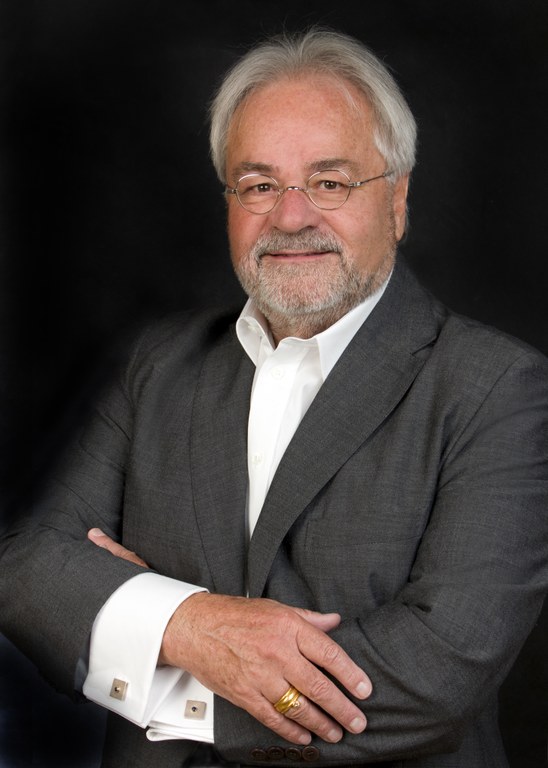
Mathias Dewatripont is Professor at Université Libre de Bruxelles (ULB), affiliated with the Solvay Brussels School of Economics and Management. He has held significant leadership roles including co-director of ECARES (1991-2001), Research Director of CEPR (1998-2011), Executive Director and Vice-Governor of the National Bank of Belgium (2011-2017), and current co-director of ULB's Institute for Interdisciplinary Innovation in Healthcare (I3h). His affiliations extend to the European Research Council Scientific Council (2005-2012), Basel Committee on Banking Supervision, and European Central Bank Supervisory Board. His research centers on contract theory, incentives, and regulation with applications spanning banking systems, healthcare innovation, and industrial policy. Key contributions include foundational work on prudential banking regulation, contract theory frameworks (with P. Bolton), and analysis of innovation-access tradeoffs in rare diseases. His methodology integrates theoretical modeling with policy-relevant empirical applications, particularly evident in post-COVID health economics research and banking crisis analyses. His extensive publication record shows evolving focus from core contract theory (1990s) to banking regulation (2000s), then expanding into health economics and industrial policy (2010s-present). Recent work addresses pandemic vaccination strategies, Silicon Valley Bank collapse implications, and EU banking resolution frameworks, demonstrating consistent engagement with urgent real-world policy challenges through rigorous economic analysis. 1998 Francqui Prize 2003 Jahnsson Medal Member of Académie Royale de Belgique Member of Academia Europaea Foreign Honorary Member of American Academy of Arts and Sciences Foreign Honorary Member of American Economic Association President of European Economic Association (2005) As advisor to major institutions including the European Central Bank and National Bank of Belgium, his work has directly influenced banking supervision frameworks globally. His current leadership of I3h demonstrates continued commitment to translating economic theory into healthcare innovation policy. Significant research grants include founding membership on the European Research Council Scientific Council and ongoing projects with CEPR on EU financial architecture. He leads ULB's Institute for Interdisciplinary Innovation in Healthcare (I3h), fostering collaboration between economists, medical researchers, and policymakers to address systemic healthcare challenges. His teams specialize in designing incentive-compatible regulatory frameworks for innovation-intensive sectors, with current projects focusing on pandemic preparedness infrastructure and rare disease therapeutic development.
Prof. Dr. Hans-Peter Schwintowski is a faculty member at the Humboldt University of Berlin , where he has held the University Professor (C 2) position since 1988. He also serves as Managing Director of the Institute for Energy and Competition Law in the Municipal Economy (since 2000) and the Research Centre for Legal Financing (since 2005). His academic career includes appointments at the Universities of Göttingen, Würzburg, Passau, and Berlin, along with advisory roles in institutions like the Scientific Advisory Board of the Association of Insured Persons and the Insurance Advisory Board of the Federal Financial Supervisory Authority. Research Focus: German and European Competition and Antitrust Law Commercial, Corporate, and Group Law Banking Law, Private Insurance Law Comparative Private Law, Economic Analysis of Law Basic Structures of the Decision-Making System Law His work combines legal theory with practical applications, particularly in energy markets, consumer protection, and regulatory compliance. Recent publications include analyses of energy legislation, judicial decisions, and critiques of digital pension systems, reflecting his interdisciplinary approach. He is actively involved in legal consulting, arbitration, and providing expert opinions, especially in insurance and energy law. Labs/Teams: Institute for Energy and Competition Law in the Municipal Economy (Humboldt University of Berlin) Research Centre for Legal Financing EWeRK (European Energy Law Network)
Assoc. Prof. Vasil Yanarliev, PhD, serves as a part-time lecturer at the Department of National and International Security, New Bulgarian University (NBU), a position he has held since the 2008/2009 academic year. Holding the scientific title of Associate Professor in Operational-Investigative Activities (awarded in 2005), his career spans both practical law enforcement and academic instruction. Prior to academia, he dedicated over three decades to the Bulgarian Ministry of Interior (1974-2006), progressing from operational roles to research leadership in crime prevention and investigative methodologies. His educational foundation includes a Master's degree in Physics from Plovdiv University "Paisiy Hilendarski", complemented by specialized qualifications in Criminal Law Sciences, Administrative Law Sciences, and Theory of Operational-Investigative Activity obtained at the Higher Special School "G. Dimitrov" (Ministry of Internal Affairs) in 1974. He further earned the scientific degree of "Doctor of Pedagogy" in 1990. Prof. Yanarliev's research centers on the intersection of security studies and criminal justice, with particular expertise in corporate security, national security frameworks, and operational-investigative techniques for combating economic crimes and organized criminal networks. His scholarly contributions emphasize practical applications, developing methodologies for crime detection in financial systems and insurance fraud, while also analyzing legislative frameworks governing police activities. This dual focus on theoretical rigor and field applicability defines his academic profile. His publication trajectory since 2002 reveals evolving engagement with Bulgaria's security landscape amid European integration. Early works concentrated on operational manuals for fraud detection, while later research expanded to policy analysis—examining security sector reforms, private security development, and the adaptation of investigative practices to evolving legal standards. This progression mirrors Bulgaria's institutional transformation within broader European security contexts. Scientific Awards: No scientific awards, prizes, or fellowships are documented in the available information. Advising and Grants: Prof. Yanarliev mentors students through bachelor's and master's courses at NBU, teaching subjects including Operational and Investigative Activity for Detecting Crimes. During his Ministry of Interior tenure, he led multidisciplinary research teams at NIKK-MIA. The provided text does not reference specific research grants or funding sources. Labs and Teams: His institutional affiliations include the Research Institute of Forensic Science and Criminology (RICC) and the National Institute of Criminal Investigations (NIKK-MIA) within the Ministry of Interior. At NBU, he contributes to the Department of National and International Security (formerly Center for Risk and Security Research), which focuses on security education and policy analysis through academic programs and conferences.