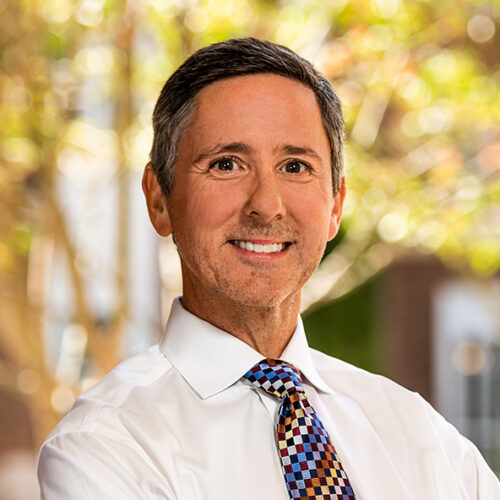
Cody Hyndman is a Full Professor and Acting Department Chair at the Department of Mathematics and Statistics, Concordia University, with a focus on Mathematical Finance, Machine Learning, and Stochastic Analysis. He has held significant administrative roles including Department Chair (2017–2023) and Acting Graduate Programs Director (2025–2025). Education: PhD, University of Waterloo (2005) MSc, University of Alberta BCom, University of Alberta His research spans Mathematical Finance , Stochastic Differential Equations , and Machine Learning , with notable contributions to arbitrage-free modeling, neural networks, and computational methods. Recent publications emphasize geometric deep learning and regularization techniques in finance. Scientific Awards: 2023: Concordia Academic Leadership Award Hyndman supervises graduate students in Mathematics and Statistics and co-founded the NSERC CREATE Program on Machine Learning in Quantitative Finance and Business Analytics (FIN-ML) , fostering industrial internships and interdisciplinary training.
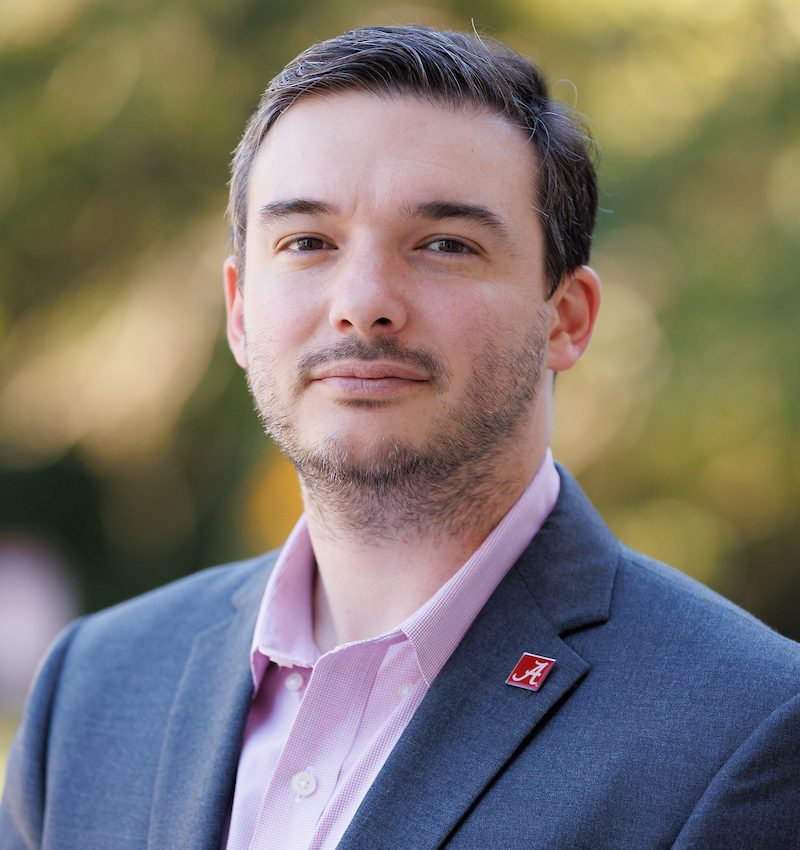
Aliasghar Arabmaldar is an Assistant Professor in Business Analytics and Systems (BAS) at the Hertfordshire Business School, University of Hertfordshire. He holds a PhD in Operations Research from the University of Sistan and Baluchestan (2017), an MSc in Applied Mathematics-Operations Research from the University of Guilan (2011), and a BSc in Applied Mathematics from the same institution (2009). His research focuses on robust optimization, data envelopment analysis (DEA), decision-making under uncertainty, and performance evaluation in complex systems. Key research interests include: Developing robust DEA models to handle uncertainty in data Resilience-efficiency trade-offs in retail logistics Network production processes and efficiency measurement Integration of undesirable outputs in performance evaluation Recent work emphasizes application in retail management, oil industries, and higher education sectors. His 2025 project, 'Enhancing Research Publication Skills Through Writing Retreats,' highlights his commitment to academic development. Peer-reviewed contributions appear in top journals like European Journal of Operational Research and Expert Systems with Applications. He serves as a reviewer for 12+ journals including OMEGA and Operations Research Spectrum, demonstrating his influence in operational research and analytics.
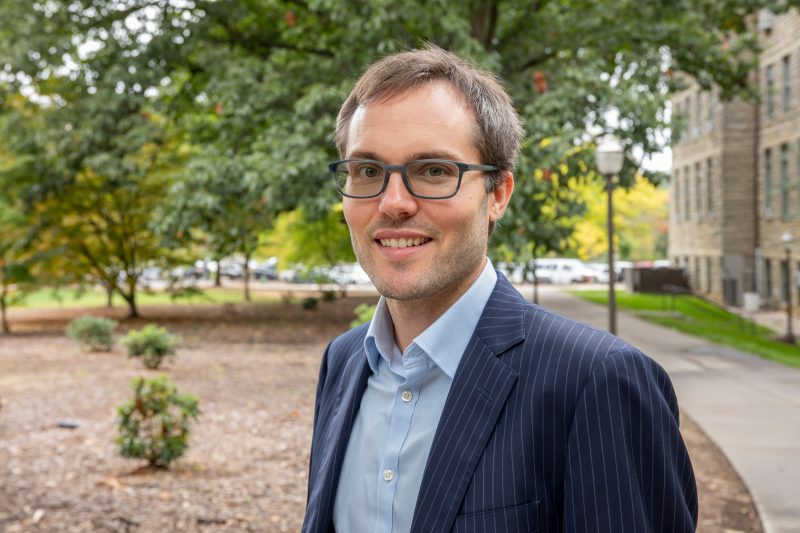
James M. Carson is the Daniel P. Amos Distinguished Professor of Insurance and Head of the Department of Insurance, Legal Studies, and Real Estate at the Terry College of Business, University of Georgia. He also serves as Director of the C. Herman Terry RMI Program, teaching courses at undergraduate, masters, and doctoral levels. Previously, he held the Midyette Eminent Scholar and Department Head roles at Florida State University (2001-2011) and the Katie Research Professor position at Illinois State University (1993-2001). PhD in Risk Management and Insurance, University of Georgia (1993) MA in Finance/Insurance, University of Nebraska-Lincoln (1989) BSBA in Finance/Insurance, University of Nebraska-Lincoln (1986) His research emphasizes the economics of risk and insurance, market discipline, insurer pricing, solvency, regulatory and ethical issues, and financial planning. He has extensively studied corporate risk management, internal capital markets, and the interplay between housing price declines and property insurance fraud. Professor Carson’s publications span journals such as the Journal of Risk and Insurance, Insurance: Mathematics and Economics, and the North American Actuarial Journal. His work explores themes in actuarial modeling, financial ethics, and insurance market efficiency. Past-President of the American Risk and Insurance Association (2004-2005) President of the Western Risk and Insurance Association (2000-2001) Awarded Midyette Eminent Scholar and Katie Research Professor titles He has co-authored seminal texts like Principles of Risk Management and Insurance and a forthcoming volume on Warren Buffett’s risk management principles. His prior roles include leadership in academic insurance programs and editorial contributions to journals such as the Journal of Risk and Insurance.
Marti G. Subrahmanyam is the Charles E. Merrill Professor of Finance, Economics and International Business at the Leonard N. Stern School of Business, New York University , and a Global Network Professor of Finance at NYU Shanghai . He holds a PhD in Finance and Economics (MIT, 1974) , a post-graduate diploma from the Indian Institute of Management, Ahmedabad (1969) , and a B.Tech. in Mechanical Engineering from IIT Madras (1967) , where he has also served as a visiting professor. His career spans over five decades, with editorial roles at top journals like Journal of Finance and Review of Financial Studies . Research Focus : Derivatives markets, corporate finance, fixed income, market microstructure, ESG investing, and quantitative easing. Academic Leadership : Founded NYU Stern and NYU Shanghai Undergraduate Honors Programs, served on over 85 doctoral committees, chaired 35. Scientific Awards : New York University Distinguished Teaching Medal (2003) Anneliese Maier Award (2016) - First economist to receive this honor Distinguished Alumnus Awards from IIT Madras (2004) and IIM Ahmedabad (2011)
Dr. Yongchao Huang is a Lecturer (Assistant Professor) in the School of Natural and Computing Sciences at the University of Aberdeen, where he has been employed since August 2023. He also holds affiliations with the University of Oxford and the University of Cambridge through past postdoctoral and collaborative roles. He is actively involved in research, teaching, and academic service, and is currently accepting PhD students. His educational background includes: DPhil in Engineering Science, University of Oxford (2013–2017) Additional training in Machine Learning at Oxford (2015–2019) Dr. Huang's research focuses on fundamental and physics-informed machine learning, with core interests in Bayesian inference, variational methods, generative modeling (especially score-based), reinforcement learning, and interdisciplinary AI applications in mechanics, biology, energy, climate, and finance. A central theme of his work is the inference and sampling of probability densities, particularly through innovative particle-based and physics-inspired computational frameworks. He founded the Computational and Physical Learning (CPL) lab at Aberdeen in 2023. His recent publications (2020–2025) reflect a strong trend in probabilistic machine learning, with increasing focus on physics-based inference methods such as electrostatics, fluid dynamics, and material point methods. These works bridge machine learning with applied mathematics and physical simulation, demonstrating a unique interdisciplinary approach. Topics span Bayesian neural networks, acoustic wave propagation, mortality modeling, and adversarial cybersecurity. Dr. Huang has received academic recognition through invitations to serve on program committees and editorial roles: Program Committee Member, ECAI 2024 Organizing Committee, Bioinference 2024 Guest Editor, Journal of Theoretical Biology Senior Scientific Advisor to a UK firm He has supervised 57 MSc theses independently and currently supervises one PhD student. He has secured research engagement through collaborations with institutions including Oxford, Cambridge, and industry partners. His teaching includes courses such as Introduction to Software Engineering , Software Process and Management , and Computational Intelligence at Aberdeen, as well as practicals in inference at Cambridge. Dr. Huang leads the Computational and Physical Learning (CPL) lab at the University of Aberdeen, a curiosity-driven research group focused on foundational advances in machine intelligence. Though currently a solo researcher due to limited resources, the lab emphasizes end-to-end research and open collaboration. He encourages student mobility and interdisciplinary exploration.
Hemant K. Bhargava is a Distinguished Professor at the Graduate School of Management, University of California Davis, where he holds the Jerome and Elsie Suran Chair in Technology Management. He serves as Associate Dean for Academic Affairs and Director of the Center for Analytics and Technology in Society (CATS), and previously served as Associate Dean for Instructional Programs (2010–2013) and Faculty Chair. He co-founded and was the first Academic Director of the UC Davis Master of Science in Business Analytics (MSBA) program. His educational background includes: Ph.D. in Decision Sciences, The Wharton School, University of Pennsylvania (1989) MBA, Indian Institute of Management Bangalore (1986) B.S. in Mathematics, University of Delhi (1984) Bhargava is a leading scholar in technology management, information systems, and decision analytics. His research focuses on the economics of digital goods and platforms, pricing strategies, AI in business, healthcare IT, and platform ecosystems. He builds economic models to study operations, marketing, and competitive strategy in tech-driven markets, with applications in healthcare, media, electric vehicles, and generative AI. His recent publications reveal a strong trend toward platform business models, data sharing, AI’s impact on research and education, and healthcare cost transparency. He explores how digital platforms shape competition, how data can be leveraged across markets, and how real-time decision tools can reduce prescription drug costs. His work bridges theory and practice, often involving collaboration with industry and policy makers. His scientific awards include: INFORMS Journal on Computing Test of Time Award (2023) INFORMS CIST Best Paper Award (2021) Google Research Excellence Gift (2017–18) Distinguished Alumni Award, IIM Bangalore (2024) INFORMS ISS President's Service Award (2023) Global 100 Top Academic Data Leaders (2020) Bhargava has played a pivotal role in academic leadership and program development. He co-founded the Theory in Economics of Information Systems (TEIS) workshop and has served on editorial boards of top journals including Management Science (where he is Department Editor for Information Systems), Operations Research, and Marketing Science. He has advised numerous campus initiatives, including the UC Davis Data Lab and Religions of India Initiative. His grants and collaborations include work with Google and healthcare organizations on real-time price transparency tools. He leads the Center for Analytics and Technology in Society (CATS), which focuses on the societal implications of data and AI. He also co-founded the MSBA program and continues to shape the future of business education in the age of AI through strategic planning committees.
Professor Vitali Wachtel of Bielefeld University's Faculty of Mathematics specializes in advanced stochastic processes, probability theory, and their applications in mathematical modeling. Since 2021, he holds a W3 Professorship and serves as Principal Investigator in CRC 1283 'Taming uncertainty and profiting from randomness and low regularity in analysis, stochastics and their applications' since 2023. Chaired Examination Boards for Bachelor & Master Business Mathematics Member, Bielefeld Graduate School in Theoretical Sciences Research focus: Markov processes, random walks in cones, branching processes Research Trends: His recent work spans critical multitype branching in random environments (2025), asymptotic expansions for conditioned random walks (2024), and invariance principles for integrated processes. He explores connections between stochastic processes, combinatorial structures, and risk modeling with level-dependent premiums. Awards: Feodor Lynen Research Fellowship (2017), Alexander von Humboldt Foundation Teaching: Coordinates modules including 'Stochastic Processes' (24-M-PT-STP) and 'Introduction to Probability Theory' (24-B-EW-5). Active in curriculum development and academic governance through multiple university committees.
Dr. Patrick Shane Crawford serves as Assistant Professor in the Department of Civil, Construction and Environmental Engineering at the University of Alabama's College of Engineering. Affiliated with the Center for Sustainable Infrastructure and Alabama Water Institute, his research focuses on enhancing community resilience to tornadoes, floods, and hurricanes through interdisciplinary engineering approaches integrating social science and policy perspectives. His educational background includes: B.S. in Civil Engineering (2012, University of Alabama) M.S. in Civil Engineering (2014, University of Alabama) Ph.D. in Civil Engineering (2018, University of Alabama) Dr. Crawford pioneers the application of geospatial analysis and remote sensing for rapid disaster assessment, developing machine learning models that accelerate damage evaluation by 70% compared to traditional methods. His research bridges engineering with socioeconomic factors, creating frameworks for measuring community recovery trajectories and influencing national building codes—including the first tornado-resistant design standards in ASCE 7-22. Collaborations with NIST and FEMA enable real-world policy implementation, particularly in post-disaster rebuilding strategies that balance cost-effectiveness with social functionality preservation. Analysis of his 2022-2025 publications reveals consistent innovation in longitudinal disaster reconnaissance , with 60% of recent work focusing on tornado events using deep learning for damage classification. Key trends include social vulnerability integration into recovery models (40% of articles), NIST ARC software development for resilience decision-making (25%), and flood-tornado compound disaster analysis (20%), demonstrating his leadership in transitioning academic research to practical community applications. Active in federal partnerships, Dr. Crawford's 2025 feature Confident but Exposed: How Prepared Are U.S. Homeowners for Extreme Weather? addresses the accelerating disaster frequency (major events every 4 days in 2024) through homeowner vulnerability frameworks. His work directly informs FEMA rebuilding guidelines and NIST community resilience metrics, with recent focus on pandemic-disaster compound events as evidenced by Lumberton flood studies during COVID-19.
Kate Ho is the John L. Weinberg Professor of Economics and Business Policy at Princeton University, where she also co-directed the Center for Health and Wellbeing (2018–2024). Her research focuses on the industrial organization of healthcare markets, with expertise in pharmaceutical policies, health insurance design, and provider-insurer interactions. She holds affiliations with the National Bureau of Economic Research (NBER) and the Center for Economic Policy Research (CEPR). Education includes a Ph.D. in Business Economics from Harvard University (2005) and degrees in Mathematics from Cambridge University (1993). Prior to academia, she served as Chief of Staff to the U.K. Minister of State for Health (1993–1997). Research interests emphasize healthcare market structure, drug pricing, and insurance competition. Recent work addresses formulary design, copayment coupons, and ACO savings. Awards include the Frisch Medal (2020) and Arrow Award (2010). She has edited leading journals like Econometrica and the RAND Journal of Economics . Teaching spans graduate courses in industrial organization and health economics at Princeton. Over 30 Ph.D. students have been advised, with placements at universities, policy institutions, and corporations. Active in professional service, including roles at the Congressional Budget Office and editorial leadership in economics. Labs/Teams: Co-leads Princeton’s Health and Wellbeing initiatives. Collaborates with researchers on projects funded by grants like the Commonwealth Fund ($50,000, 2015).
Dr. Zhi Chen is a Lecturer in Computing at the School of Mathematics, Physics and Computing, University of Southern Queensland, specializing in Artificial Intelligence and Machine Learning with applications spanning digital agriculture and healthcare systems. Education: Master of Information Technology (MIT), University of Queensland, 2018 PhD, University of Queensland, 2023 Research Focus: His work centers on zero-shot learning, domain adaptation, and multimodal systems, addressing core challenges in computer vision and deep learning. Current projects integrate AI with agricultural risk modeling and medical diagnostics, emphasizing real-world deployment of robust algorithms under data-scarce conditions. Publication Trends: Recent output (2022-2025) shows concentrated expertise in source-free domain adaptation and generalized zero-shot learning, with significant contributions to plant disease recognition (via mobile multimodal systems) and diabetes subgroup analysis. His work consistently appears in premier venues including AAAI, CVPR, and ACM MM, demonstrating methodological innovation applied to critical domains like climate-resilient agriculture and precision medicine. Supervision: Currently serves as Associate Supervisor for a doctoral candidate developing parametric insurance models for oyster farms to mitigate climate-related risks from king tides and extreme weather events. Awards: No scientific awards were documented in the provided materials.
Johannes Wiesel is an Associate Professor at the Department of Mathematical Sciences , University of Copenhagen. His research aligns with the Insurance and Economics Section , focusing on areas such as Insurance, Economics, Statistics, and Probability. Contact details: Email: wiesel@math.ku.dk Phone: +4535325194 Address: Universitetsparken 5, DK-2100 København Ø
John Bovay is an Associate Professor and Kohl Junior Faculty Fellow in the Department of Agricultural and Applied Economics at Virginia Tech. He leads the department's Extension program and focuses on food and agricultural policy, particularly environmental and health impacts. His roles include membership in the Chesapeake Bay Executive Council's Scientific and Technical Advisory Committee (2024–2026) and Chair of the AAEA Specialty Crop Economics Section (2024–2025). Education: Ph.D. in Agricultural and Resource Economics from UC Davis (2014), B.A. in Mathematics and Politics from Washington and Lee University (2007). His research integrates economic analysis of public policies, including food safety inspections, climate-smart agriculture, SNAP participation, and food waste. Notable projects include a USDA-NIFA grant (2022–25) on vegetable on-farm loss and a study on GMO labeling laws. Teaching includes a Ph.D. course on empirical market and policy analysis with Anubhab Gupta. Selected Awards: Southern Agricultural Economics Association Emerging Scholar (2021), Distinguished Young Alumnus (2017). Outreach efforts emphasize Extension programs like the 'Virginia Sustainable Farms and Agribusiness Education Initiative' and leadership in Virginia Cooperative Extension's Agribusiness Management & Economics team. Grants include the USDA's Climate-Smart Agriculture Alliance and I2GROW initiatives.
Giorgio Ferrari is a Full Professor for Mathematical Finance at the Institute for Mathematical Economics (IMW), Faculty of Economics, Bielefeld University. His research bridges stochastic control theory with applications in economics, finance, actuarial science, and epidemiology. Education: B.Sc. and M.Sc. in Physics and Mathematical Physics from the University of Rome La Sapienza, Ph.D. in Mathematics for Economic-Financial Applications (2012). Academic Appointments: Post-Doctoral Researcher (2012–2015), Substitute Full Professor (2015), Junior Professor (W1) (2016–2017), Associate Professor (2017–2023), and Full Professor (2023–present) at Bielefeld University. Research Interests focus on Singular Stochastic Control , Optimal Stopping , and Stochastic Games , with applications to economic policy, financial markets, and epidemic modeling. His work extends to Mean-Field Games for large-scale strategic interactions and Free-Boundary Problems for investment decision-making under uncertainty. Scientific Contributions include groundbreaking publications in Stochastic Processes and their Applications , Mathematical Finance , and SIAM Journal on Control and Optimization . His research projects, such as the DFG SFB 1283 subproject C4 and the Research Training Group 2865 , address uncertainty in dynamic economies through game-theoretic and stochastic frameworks. Notable Awards: AMASES Best Young Researcher Paper (2014), YITP Research Prize (2017), and multiple research fellowships from the University of Padova. Leadership: Director of the Bielefeld Graduate School in Theoretical Sciences (2023–present) and Principal Investigator in major DFG-funded initiatives.
Michel Mandjes is a Professor at the University of Amsterdam's Faculty of Science and holds a Visiting Professor position at the Faculty of Economics and Business (FEB). His research focuses on stochastic processes, queueing theory, and probability theory, with applications in risk modeling, network analysis, and operations research. Recent publications highlight his contributions to multivariate Hawkes processes , Lévy-driven systems , and dynamic random graphs , emphasizing large deviations, rare event simulation, and statistical inference. His work bridges theoretical probability with practical challenges in traffic flow, financial risk, and social network modeling. The trends in his research include the development of stochastic models for network stability, appointment scheduling optimization, and inference techniques for non-stationary processes. His methodological innovations often leverage advanced probability theory and queueing frameworks to address real-world problems in transportation, healthcare, and finance.
Erhan Bayraktar is a Professor of Mathematics at the University of Michigan, holding the Susan Smith Chair. He serves as Director of the Quantitative Finance and Risk Management Masters Program, which he established in 2015. His academic career at the University of Michigan spans since 2004, progressing from T. H. Hildebrandt Research Assistant Professor to his current full professorship. Professor Bayraktar earned his Ph.D. from Princeton University in 2004, following dual Bachelor's degrees in Electrical Engineering and Mathematics from Middle East Technical University in Turkey. His academic journey reflects a strong foundation in both theoretical and applied mathematical disciplines. Bayraktar's research focuses on mathematical finance, applied probability, machine learning, mean field games, stochastic analysis, stochastic control, and optimal stopping. His work bridges theoretical mathematics with practical applications in finance and risk management. He has developed sophisticated mathematical frameworks for analyzing complex financial systems, market behaviors, and optimal decision-making under uncertainty. His contributions to mean field games have provided new insights into large-scale interacting systems, while his work on stochastic control has advanced methodologies for optimal decision processes. His publication record demonstrates a consistent trajectory of high-impact research, with recent work focusing on Wasserstein space analysis, graphon particle systems, and applications of machine learning to financial mathematics. His research shows increasing interdisciplinary connections between traditional mathematical finance and modern computational approaches. Susan M. Smith Professorship (2010-present) National Science Foundation CAREER Grant (2010-2016) SIAM Activity Group on Financial Mathematics and Engineering Early Career Prize (2010) Professor Bayraktar has mentored 14 Ph.D. students (13 graduated) and approximately 40 post-doctoral researchers. His students hold prestigious positions in academia and industry, including tenure-track positions at Boston University, University of Colorado, University of Sydney, and University of Toronto. He has secured continuous funding from the National Science Foundation, including the current grant DMS-2507940 (2025-2028) and previous grants totaling over 15 years of continuous NSF support. As Director of the Quantitative Finance and Risk Management Masters Program, Bayraktar has built a robust academic community through the Financial/Actuarial Math seminar series, which hosts about 10 outside speakers annually, and by organizing international workshops in stochastic analysis for finance and insurance in Ann Arbor.