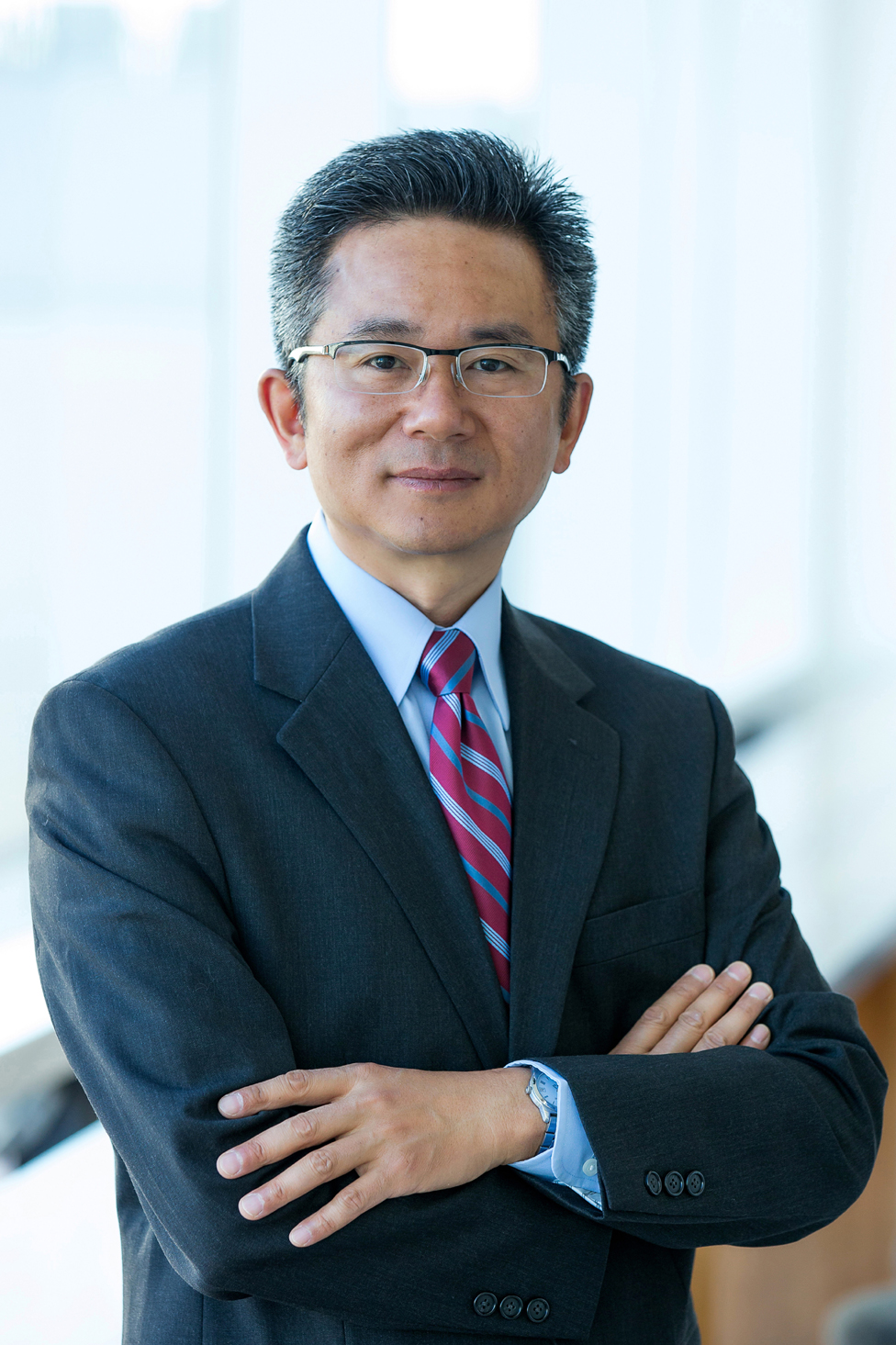
Rick Horan is a Professor in the Department of Agricultural, Food, and Resource Economics at Michigan State University (MSU), part of the College of Agriculture & Natural Resources. He holds a Ph.D., M.A. from Pennsylvania State University, and dual B.S. degrees from Appalachian State University. His research focuses on environmental and natural resource economics, particularly the interplay between economic and ecological systems. Key areas include endangered species management, invasive species control, wildlife disease dynamics, and agricultural pollution policy. He has published in top journals like PNAS, American Economic Review, and the American Journal of Agricultural Economics. Horan has served as Managing Editor of Resource and Energy Economics (2010–13), Associate Editor roles for American Journal of Agricultural Economics and Natural Resource Modeling , and contributed to a National Academy of Sciences report on environmental policy. His teaching includes Advanced Natural Resource Economics and Microeconomic Theory analysis. Research highlights include modeling ecological thresholds, bioeconomic approaches to species management, and integrating human behavior into epidemiological models. His work has been featured in media outlets like The Economist and Forbes. Horan’s advising and grants focus on interdisciplinary solutions for environmental challenges. His labs and research teams address complex issues like agri-environmental service coordination and sustainable land-use strategies. Current research explores policy mechanisms for balancing economic activities with ecosystem preservation.
Jeremy Grant Moulton is an Associate Professor of Public Policy and Director of Graduate Studies at the University of North Carolina at Chapel Hill. He holds a Ph.D. in Economics from the University of California, Davis. His research focuses on public and labor economics, utilizing natural experiments to analyze labor market dynamics, retirement decisions, and wealth transmission. He teaches graduate courses in microeconomic theory, econometrics, and undergraduate courses in statistics and public finance. Education: Ph.D. in Economics, University of California, Davis (2011) M.A. in Economics, University of California, Davis (2007) B.A. in Economics, University of California, Davis (2005) Research Interests: Dr. Moulton investigates policy impacts on labor markets, including the Earned Income Tax Credit (EITC), marriage dynamics influenced by education shocks (e.g., WWII GI Bill), and intergenerational wealth transfers. His work also addresses self-employment determinants, late-life income shocks, and housing market responses to environmental information. Awards: 2024 Real Estate Cycles Award 2024 Innovative Thinking Award 2019 Practitioner Research Award (CCIM) 2016 Excellence in Research on Military and Veteran Families Award Advising & Grants: Supervised over 20 graduate students across Public Policy and related fields. Secured grants including the Junior Faculty Development Award ($7,500) and interdisciplinary initiatives ($9,000). Service: Serves on editorial boards for journals like Journal of Policy Analysis and Management and Health Economics . Leadership roles include steering committees for the Carolina Applied Microeconomics Conference and CREED.
Gee Lee is an Associate Professor in the Department of Statistics & Probability and the Department of Mathematics at Michigan State University. His work bridges actuarial science with advanced statistical and machine learning methodologies, focusing on practical applications for insurance risk modeling. PhD, University of Wisconsin-Madison Associate (ASA), Society of Actuaries His research centers on insurance loss modeling for rate-making and loss reserving, multivariate insurance coverage optimization, dependence structure analysis, and integrating machine learning into actuarial frameworks. Current projects include deep neural networks for claim prediction, unstructured data analysis, and multivariate coverage optimization. Recent publications highlight trends in crop insurance modeling (2025), regularization techniques (2024), multivariate risk retention strategies (2023), textual data analysis (2022), copula regression (2022), and reinsurance game theory (2022). Earlier works explore shrinkage methods, word embeddings, longitudinal claims, healthcare data, and deductible ratemaking. Gee Lee supervises MS and PhD students in actuarial science. Former advisees include Leonard Korreshi (2024), Qiaozhen Qian (2023), and Scott Manski (2020, co-advised). He also supports undergraduate research through MSU’s REU program and directed study courses.
Professor Qihe Tang is a SHARP Professor at UNSW Business School's School of Risk and Actuarial Studies since 2017, where he also serves as Co-Director of the Innovations in Risk, Insurance and Superannuation (IRIS) Knowledge Hub. Previously, he was a Full Professor and held the F. Wendell Miller Endowed Chair at the University of Iowa (2006-2019), following academic appointments at the University of Hong Kong, University of Amsterdam, and Concordia University. Dr. Tang earned his PhD in Statistics from the University of Science and Technology of China in 2001. His research expertise centers on extreme value theory for insurance, finance, and quantitative risk management, with current focus areas including catastrophe risk modeling, systemic risk in financial networks, decision making under uncertainty, pricing in incomplete markets, and climate change impacts on insurance. His recent scholarly output demonstrates significant contributions to tail risk analysis, risk measurement methodologies, and insurance-linked securities pricing. The articles reveal a strong emphasis on extreme events, systemic risk propagation, and innovative approaches to quantifying and managing catastrophic risks in increasingly complex financial and environmental contexts. Elected Member of the International Statistical Institute (ISI) SHARP Professor at UNSW Sydney F. Wendell Miller Endowed Chair at University of Iowa Professor Tang has supervised over a dozen PhD students who now hold positions in academia and industry worldwide. He serves as Editor of Insurance: Mathematics and Economics and has been Principal Investigator for multiple major research grants including three ARC Discovery Projects, NSF funding, and several Society of Actuaries research grants. His research has achieved an H-index of 43 according to Google Scholar.
Colin M. Ramsay is a Professor in the Department of Finance at the Edwin J. Faulkner College of Business, University of Nebraska-Lincoln. His expertise lies in actuarial science, focusing on risk theory, pensions, health and disability insurance, and micro-insurance applications. B.Sc., City University, London M.Math. and Ph.D., University of Waterloo Ramsay’s research integrates economic principles into actuarial science, addressing challenges like the annuity puzzle, moral hazard, and adverse selection in insurance markets. He also explores peer-to-peer insurance and food security in developing regions. Recent publications highlight innovative annuity designs, LTC funding strategies, and stochastic modeling of insurance risks. His work spans theoretical advancements in ruin probability calculations and practical applications in funeral insurance and agricultural sustainability in the Caribbean. Ramsay teaches graduate and undergraduate courses in life contingencies and pension mathematics, emphasizing probabilistic models and actuarial assumptions.
Dr. Alison Clune Berg is an Associate Professor and Extension Nutrition and Health Specialist at the University of Georgia's College of Family and Consumer Sciences. She holds a PhD, MS, and BS in Foods and Nutrition from UGA, graduating in 2015, 2009, and 2007 respectively. Her research evaluates community nutrition education programs to prevent chronic diseases like obesity, cardiovascular disease, diabetes, and cancer, with a focus on implementing evidence-based interventions through the Cooperative Extension model. Education: PhD, MS, BS in Foods and Nutrition from University of Georgia Current Role: Associate Professor and Extension Nutrition and Health Specialist Dr. Berg specializes in chronic disease prevention through community nutrition education, implementation science, and translational research. Her work includes the National Diabetes Prevention Program (DPP) and Cancer Prevention initiatives. She bridges academic research with real-world health promotion, particularly in rural Georgia. Recent projects analyze dietary behavior change, program feasibility, and health equity in underserved populations. Her recent publications (2023-2025) span implementation science, diabetes prevention, rural community health, and adolescent nutrition education. Awards include the 2024 Chris Todd Outstanding Outreach Award, multiple 2024 Georgia Extension Association first-place awards for curriculum development, and the 2023 D.W. Brooks Excellence in Extension. She has authored or co-authored 20+ peer-reviewed articles and extension publications, including peer-reviewed guides on nutrition labels, diabetes management, and cancer prevention. Scientific honors include: 2024 Chris Todd Outstanding Outreach Award 2024 Georgia Extension Association Team Awards 2023 D.W. Brooks Excellence in Extension 2022 NEAFCS National Educational Awards 2019 Educational Curriculum Package Awards Dr. Berg collaborates with county extension agents, leads state-wide nutrition programs like Cooking for a Lifetime of Cancer Prevention, and mentors graduate students. She supervises research through courses like NUTR 7000/9000 and guest lectures on nutrition-disease relationships.
Gee Y. Lee is an Associate Professor with Tenure in the Department of Statistics and Probability and the Department of Mathematics at Michigan State University. Lee holds a PhD from the University of Wisconsin-Madison and is an Associate of the Society of Actuaries (ASA). Their research focuses on applying advanced statistical and machine learning methods to solve complex problems in actuarial science and insurance. Dr. Lee's educational background includes: PhD from the University of Wisconsin-Madison Associate (ASA) designation from the Society of Actuaries Dr. Lee's research spans several critical areas in modern actuarial science. Their primary focus includes insurance loss modeling for rate-making and loss reserving applications, optimization of multivariate insurance coverage, and dependence modeling. A significant portion of their recent work applies machine learning methods, particularly deep neural networks, to traditional actuarial problems. They are also pioneering research in analyzing unstructured data for insurance applications, which represents an emerging frontier in the field. Their work bridges theoretical statistical methods with practical insurance industry needs. Dr. Lee's publication record demonstrates a clear evolution from traditional actuarial methods toward more sophisticated and interdisciplinary approaches. Early work focused on fundamental aspects of insurance pricing and modeling, while more recent publications incorporate machine learning techniques, natural language processing, and advanced optimization methods. A notable trend is the increasing integration of unstructured data analysis into actuarial science, reflecting broader industry shifts. Their research consistently addresses both theoretical advancements and practical applications in insurance risk assessment and management. While specific awards aren't detailed in the available information, Dr. Lee's recognition includes: Associate (ASA) designation from the Society of Actuaries Michigan State University recognized by the Society of Actuaries as granting MS and PhD degrees focused on actuarial science (as of 2023) Dr. Lee actively mentors students at multiple levels, supervising undergraduate research through REU programs, directed studies (STT 490, MTH 490, MTH 491B), and graduate research for MS and PhD candidates. They have advised numerous students who have presented at UURAF (Undergraduate Research Assistant Fellowship) conferences. For graduate students, Dr. Lee supports research leading to MS degrees in Statistics, Applied Statistics, and Industrial Mathematics with actuarial science focus, as well as PhD dissertations in Statistics. Beyond direct student supervision, Dr. Lee has organized significant academic events including the Simon Conference for Young Researchers in Risk Management and Insurance (2019, 2023) and contributed to other workshops, demonstrating leadership in the actuarial research community. While specific lab names aren't mentioned, Dr. Lee appears to lead a research group focused on actuarial science and insurance analytics at Michigan State University. Their collaborative work with researchers like Scott Manski, Taps Maiti, Peng Shi, and others suggests an active research team working at the intersection of statistics, machine learning, and actuarial applications. The research group seems particularly focused on bridging traditional actuarial methods with modern data science techniques.
Prof. Dr. Michael Merz holds the Chair of Mathematics and Statistics in Economics at the University of Hamburg's Faculty of Business Administration. He specializes in actuarial science, risk management, and quantitative finance. His research focuses on stochastic claims reserving, solvency frameworks (Basel II/Solvency II), credibility theory, and risk-adjusted performance measurement. Education: Completed his Diplom in Mathematics (1.1 grade) at the University of Tübingen (2001) with a focus on stochastic processes and mathematical statistics. Earned his PhD (summa cum laude) in 2004 at Tübingen with a thesis on credibility models using orthogonal projections. Previously studied in Valencia, Spain (1998-1999). Research Interests: Actuarial valuation, stochastic reserving methods, risk theory, filter/control theory applications in finance, and capital allocation strategies. Key areas include Solvency II compliance, pricing models for insurance risks, and quantitative risk management frameworks. Publications: Authored/co-authored influential works like Financial Modelling, Actuarial Valuation and Solvency in Insurance (Springer, 2013) and Stochastic Claims Reserving Methods in Insurance (Wiley, 2008). Recent articles address claims uncertainty quantification, multivariate reserving models, and cost-of-capital approaches. Awards: SCOR Prize for Actuarial Science (2004), Promotionspreis der Universität Tübingen (2005), and academic distinctions in physics competitions during high school. Professional Roles: Program director for the Wirtschaftsmathematik program, speaker of the Institute for Statistics and Econometrics, and adjunct faculty at the University of Basel's Actuarial Science program. Served as actuary at Basler Versicherung (2004-2006) and held junior professorships at University of Tübingen (2006-2009).
Tarun Ramadorai is a Professor of Financial Economics at Imperial College London’s Business School. His research focuses on household finance, behavioral economics, real estate, and international finance, with publications in top journals like the American Economic Review and Journal of Finance. He received the Brattle Prize for best corporate finance paper in the Journal of Finance. Education: BA in Mathematics and Economics (Williams College), MPhil in Economics (University of Cambridge), PhD in Business Economics (Harvard University). Prior to Imperial, he spent over a decade at the University of Oxford. Research Interests: Household financial decision-making and market structures Behavioral biases in financial markets Policy implications of real estate taxation and climate regulation FinTech’s impact on financial advice and inclusion Policy Roles: Chairman of India’s Inter-Regulatory Committee on Household Finance Economic Adviser to the European Securities and Markets Authority Co-Chair of the India-UK Financial Partnership’s Fintech workstream Editorial Roles: Executive Editor of the Review of Financial Studies, former Editor/Associate Editor of leading finance journals. He is a Research Fellow at CEPR and Senior Fellow at ABFER/NCAER. Key Contributions: Pioneered the field of International Comparative Household Finance through the Sloan Foundation-funded initiative. Authored influential papers on mortgage markets, tax policy, and algorithmic credit systems.
Ehsan Kabir is a Lecturer in Public Service Management at the University of South Wales' Faculty of Business and Creative Industries. His work focuses on displacement studies, climate change impacts, and vulnerable populations in South and Southeast Asia. Kabir has conducted extensive research on Rohingya refugees in Bangladesh, Afghan internally displaced persons (IDPs), and environmental migrants affected by river erosion and drought in Bangladesh. His research employs mixed-method approaches including GIS analysis, remote sensing, and qualitative case studies. Key themes include dignity frameworks in displacement contexts, climate adaptation strategies for coastal agriculture, and the socio-economic dynamics of internal migration. Kabir has contributed to over 20 peer-reviewed publications since 2012, with particular emphasis on Bangladesh's development challenges and humanitarian crises. While no formal awards are listed, his work demonstrates significant contributions to refugee policy analysis and environmental vulnerability frameworks. Teaching responsibilities include public service management modules, while research interests extend to disaster resilience and sustainable development goals implementation in marginalized communities.
Bettina Grün is an Associate Professor and Deputy Head of the Institute for Statistics and Mathematics at Vienna University of Economics and Business (WU). Her research focuses on Bayesian mixture models, cluster analysis, and applying statistical methods to sustainability, tourism, and environmental studies. She has led multiple research projects, including studies on environmental behavior in tourism and advanced text modeling in economics. Grün holds a PhD in Technical Mathematics from TU Wien (2006) and a Habilitation in Statistics from Johannes Kepler University Linz (2012). She has authored over 150 publications in top journals like Journal of Environmental Management and Expert Systems with Applications . Her work emphasizes practical applications, such as reducing hotel waste through behavioral interventions and developing R packages like movMF and circlus for statistical clustering. Grün has received awards including the AIEST Best Contribution Award (2019) and the MRS Silver Medal (2016). Grün teaches courses on statistical modeling and leads projects like Analysis of Central Bank Communication (2022–2026) and Environmentally Friendly Behavior in Tourism (2019–2024).
Dr. Aneta Biały is an Assistant Professor at the Department of Civil Law, Faculty of Law, Canon Law and Administration of the John Paul II Catholic University of Lublin (KUL). She has held this position since 2010, following her doctoral studies which began in 2004 and teaching assistant role starting in 2007. Her academic work focuses on civil law with particular expertise in torts, compensation systems, insurance liability, and alternative dispute resolution methods. Dr. Biały graduated with a degree in law and administration from KUL. She defended her doctoral thesis in 2009 titled "Recognition and Enforceability of Arbitration Court Judgments" under Prof. Józef Jan Skoczylas. She completed postgraduate studies in judicial and extrajudicial mediation at KUL's Faculty of Social Sciences and a three-month research internship at the University of Waikato in New Zealand (2015). Her research primarily centers around tort law, compensation systems, insurance liability, personal rights, and amicable dispute resolution methods, with particular emphasis on mediation. Dr. Biały has conducted significant research on New Zealand's Accident Compensation System, comparing it with Polish legal frameworks. Her work bridges theoretical legal scholarship with practical applications in dispute resolution, examining statute of limitations for tort claims, liability of transport organizers, and mediation in civil disputes. Dr. Biały's scholarly contributions demonstrate consistent focus on civil law, particularly torts, compensation systems, and alternative dispute resolution. Her publications span Polish and international journals, reflecting engagement with comparative legal studies. A notable trend is her examination of New Zealand's Accident Compensation System as a model for potential reforms. Professional roles include: Secretary of the Second Department of Civil Law Supervisor of the University Legal Clinic Coordinator of the Civil Section of the University Legal Clinic Member of ADR Research Center "Law and Economy" Member of KUL Expert Team (civil law) Curator of ELSA - Lublin Branch Mediator at Lublin Arbitration and Mediation Center Arbitrator at Lublin Arbitration Court President of ADR Research Institute, Law and Economy Foundation Member of editorial board of Review of Comparative Law journal Dr. Biały has participated in numerous international projects including Erasmus+ mobility programs at universities in Spain, Portugal, and North Macedonia. She has led significant research projects including "Effective Direction of Business Cases to Mediation" funded by the Ministry of Justice, which aimed to encourage courts to direct business cases to mediation and increase mediation usage in commercial disputes.
Prof. Petra Steinorth holds the Chair of Risk Management and Insurance at the University of Hamburg Business School, part of the University of Hamburg. Her research focuses on risk attitudes, behavioral economics, insurance mechanisms, and the intersection of mental health with financial decision-making. She leads a team in the Risk Management and Insurance department, contributing to both theoretical and applied studies in insurance economics. Research interests include the influence of personality traits (e.g., Dark Triad) on health-related risk behaviors, multiplicative risk exposure effects, and family dynamics impacting risk preferences. Her work bridges experimental economics with real-world policy applications, such as flood insurance design and health insurer regulatory compliance. Notable studies analyze the correlation between self-reported risk measures and behavioral experiments, as well as the demand for sustainable insurance products. Publications span 2010–2025, emphasizing trends in risk-taking under varying socio-economic conditions and the role of background risks. Her recent work highlights pandemic-era behavioral shifts and climate-related insurance challenges. No awards or grants are explicitly listed, though her extensive publication record reflects sustained academic contribution. She advises the RMI team and maintains an office at Moorweidenstraße 18, Hamburg.
Philippe Gachon is a Professor in the Department of Geography at the University of Quebec at Montreal (UQAM), Director of the ESCER Research Centre, and leader of the Quebec InterSectoral Flooding Network (RIISQ). He specializes in hydro-climatology and climate risk assessment, with extensive experience at Environment Canada and as a Strategic Research Chair holder on Hydrometeorological Risks Related to Climate Change. His research examines climate change impacts on extreme weather events including floods, droughts, and heat waves. Recent work focuses on improving risk identification and adaptation strategies through intersectoral approaches. Key research themes include: Regional climate modeling and validation Hydro-meteorological hazard intensification Systemic risk assessment Community-scale resilience building Climate services development His recent publications demonstrate advanced statistical approaches for modeling non-stationary flood regimes, evaluating wildfire risks under climate change, and quantifying vector-borne disease transmission. Collaborative projects with 16 universities address physical climate risks and socioeconomic vulnerabilities across Quebec.
Pedro Portugal is an Adjunct Professor of Economics at Nova School of Business and Economics and a Senior Researcher at the Bank of Portugal. He holds a PhD in Economics from the University of South Carolina (1991) and an Agregação from Universidade do Porto (1999). His research focuses on applied labor economics, including unemployment dynamics, wage bargaining, microeconometric methods, and drug policy. He has published extensively in top journals like the American Economic Review and the Journal of Labor Economics. His work often explores worker displacement, firm survival, and labor market institutions. Portugal’s contributions include analyzing wage disparities, unemployment compensation systems, and the impact of drug decriminalization policies. He collaborates closely with institutions like the Bank of Portugal and international partners, contributing to policy-relevant economic analysis. Education: PhD in Economics, University of South Carolina, 1991 Agregação in Economics, Universidade do Porto, 1999 Master’s equivalent in Economics, Universidade do Porto, 1982 Research Interests: Portugal’s work spans microeconomic foundations of unemployment, wage determination mechanisms, and survival dynamics of firms. He employs advanced econometric techniques to analyze labor market structures, including the effects of collective bargaining, unemployment insurance systems, and labor contract types. His recent studies address wage persistence, gender wage gaps, and the socio-economic impacts of drug policy reforms. Grants and Collaborations: His research has been supported by international collaborations, including projects with the European Union and the Bank of Portugal. He frequently participates in policy forums addressing labor market challenges and economic recovery strategies post-recession. Labs/Teams: Leads research initiatives at the Bank of Portugal’s Economic Analysis Department, focusing on macroeconomic and labor market modeling. Collaborates with global institutions like IZA Institute of Labor Economics and the European Economic Association.