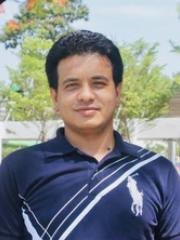
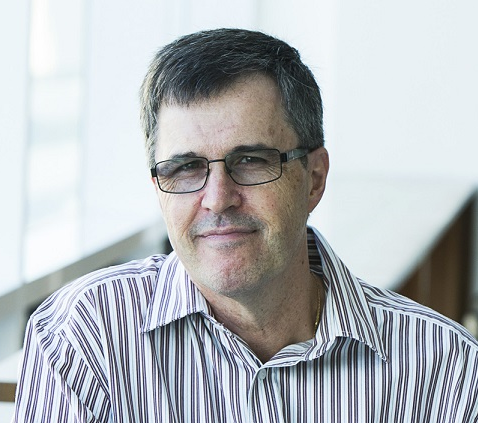
Professor Shaun Larkin is a part-time academic at the School of Public Health , University of Sydney, specializing in Health Policy and Financing . He is affiliated with the Leeder Centre for Health Policy, Economics and Data and a member of the Charles Perkins Centre . With a career spanning executive roles at HCF and non-executive directorships in health startups, his work bridges academia and industry. Education : Harvard Business School alumnus with a HlthScD, MBA, MHSc, and BHA. His research focuses on health economics , health policy , and health services management , emphasizing: Translational research in healthcare financing Trends in private-public healthcare partnerships Price transparency in private health insurance Leadership in health systems Chronic disease management Quality use of medicines His publications reveal a trajectory from foundational work in: Psychiatric services data standardization (2000) Heart disease and diabetes management (2013-2015) Telehealth interventions (2017-2018) Private sector policy frameworks (2019-2020) Saudi Arabian health reforms (2022-present) Private equity in healthcare (2025) As an advisor, he currently supervises research students on topics including: Quality use of medicines in Saudi Arabia Sustainable financial models for private hospitals Patient-reported outcome measures in Australia He also contributes to the Leeder Centre and engages with global health startups as an investor and advisor.
Demetris Christodoulou is an Associate Professor in Accounting, Governance and Regulation at the University of Sydney. He holds a BEcon from Piraeus University, an MSc(Fin) from the University of York (UK), and a PhD from Athens University of Economics and Business (AUEB). His research focuses on applying data analytics, econometrics, and visualization techniques to financial analysis, equity valuation, life insurance, and financial advice. He co-directs the PEMA research group, specializing in productivity and performance measurement analytics, and previously led the MEAFA research group (2007–2022). He has collaborated extensively with industry partners including Deloitte and Australian insurers, and developed training programs for over 1,000 executives. His work includes open-source contributions to Stata software and the Graph Workflow platform, alongside $662k in workshop-generated funds supporting academic programs. He has advised multiple PhD students and taught at leading universities globally. Education: BEcon in Economics (Econometrics), Piraeus University MSc in Finance, University of York (UK) PhD in Accounting and Financial Analysis, Athens University of Economics and Business His research interests span financial reporting models, life insurance underwriting strategies, and behavioral finance. Recent projects address dishonesty mitigation in insurance disclosures and the adviser effect on customer disclosures. He has published widely in top journals like the Review of Accounting Studies and Stata Journal , and his work was featured in The Australian for insights on insurance fraud reduction. He maintains international collaborations, including visiting roles at Columbia Business School and the University of Cyprus, and serves on advisory boards for organizations like Behaviour.ai. Publications highlight methodological innovations in econometrics and visualization, with 2025's upcoming Stata Journal paper advancing time-series analysis techniques. His grants include partnerships with industry on longitudinal studies of insured lives, aiming to improve risk modeling and public policy insights.
Aarti Singh is Associate Professor of Economics at the University of Sydney, specializing in macroeconomics and monetary policy. She serves as Associate Editor for the Journal of Money, Credit and Banking and the Journal of Economic Dynamics and Control. Her research examines optimal monetary policies in economies with heterogeneous agents, sectoral interdependencies, and incomplete markets. Singh collaborates with central banks globally and has held visiting positions at Cornell, Oxford, and the Federal Reserve Bank of St. Louis. Recent work analyzes how tax progressivity affects consumption insurance and the labor market impacts of monetary shocks. Grants include an ARC DECRA on human capital risk.
Colin Peter Green is a Professor of Economics at the Norwegian University of Science and Technology (NTNU) in Trondheim, Norway, where he serves in the Department of Economics within the Faculty of Economics. He also holds a research fellowship at the Institute of Labor Economics (IZA) in Bonn, Germany. Having earned his PhD from the University of Queensland in 2008, Green has established himself as a prominent researcher across multiple economic fields. Green's research spans labor economics, education economics, migration studies, health economics, political economy, and behavioral economics. His work frequently examines the intersection of these fields, with particular focus on how economic policies and structures impact individual behavior, educational outcomes, and well-being. Recent projects have investigated performance pay systems, political connections in business, refugee integration in educational settings, and the relationship between physical attractiveness and adolescent risk behaviors. His methodological approach typically employs rigorous empirical techniques applied to large-scale datasets from multiple countries. Green serves as Editor in Chief of the journal Education Economics and is an Associate Editor for the Journal of Economic Behavior & Organization (JEBO). He is also the organizer of the International Workshop on the Applied Economics of Education (IWAEE), demonstrating significant leadership in his academic community. His editorial roles and conference organization indicate substantial recognition from peers and influence in shaping research directions in education and labor economics. His extensive publication record includes articles in top journals such as Journal of Economic Behavior & Organization, Labour Economics, British Journal of Industrial Relations, and Journal of Population Economics. Green's research demonstrates consistent productivity with publications spanning from 2021 through 2025, covering diverse topics from the impact of bar closing hours on traffic accidents to the effects of political donations on UK democracy. Green maintains an active professional presence through his Bluesky account (@colinpgreen.bsky.social) where he engages with the academic community, shares conference announcements, and discusses research opportunities. His involvement in hiring PhD students and faculty positions at NTNU indicates ongoing commitment to departmental development and academic mentorship.
Professor Susan Thorp is a Finance academic at the University of Sydney Business School . With a PhD in Economics from UNSW and prior roles at University of Technology Sydney and the Reserve Bank of Australia, she focuses on household finance , retirement planning , and financial market behavior . BEc (Hons) - University of Sydney Dip. Ed. - University of New England PhD - University of New South Wales Her research interests include: Life-cycle financial decision-making Behavioral influences on savings and investments Superannuation policy and market integration Commodity market dynamics Economic impacts of financial literacy Crises-driven market contagion Recent publications analyze retirement decumulation , financial trust , and commodity-equity market correlations . She leads cross-disciplinary teams applying dynamic programming , econometric modeling , and experimental design to financial challenges. Her grants include ARC Linkage Projects and ASIC commissions for improving financial communication and regulatory frameworks . Media outlets frequently cite her expertise on superannuation policy , market volatility , and retirement savings behavior .
Professor Paul A. Raschky is affiliated with the Department of Economics at Monash University , where he also directs the SoDa Labs and co-founded the KASPR Datahaus PTY LTD and IP Observatory . His academic focus spans Political Economy , Environmental Economics , Insurance Economics , and Development Economics , with a specialization in natural hazards and data science applications. Education: PhD (University of Innsbruck, 2008), with a postdoctoral research visit at the Wharton School . Research: Explores intersections of disaster risk , governance , and economic development , leveraging machine learning and big data . Recent Publications: Focus on generative AI productivity , ethnic favoritism , disaster insurance , and conflict economics . Awards: Recipient of the ABDC Award for Innovation and Excellence in Research (2022) and Dean’s Excellence in Research Award (2016) . Projects: Leads initiatives on internet suppression in Myanmar , news media availability , and AI-driven policy insights in South-East Asia and the Pacific. Future Work: Will be on sabbatical in 2025 , likely expanding on AI applications and disaster resilience .
Chris Speed is a Professor of Design for Regenerative Futures at RMIT University, Australia, and Director of Regenerative Futures. Previously, he held academic roles at the University of Edinburgh, including leading the Institute for Design Informatics and co-designing the Edinburgh Futures Institute. His research focuses on design-driven solutions for social, environmental, and economic challenges, leveraging data and emerging technologies. Key areas include blockchain applications, sustainable design, and regenerative systems. Affiliations: RMIT University (Current), University of Edinburgh (2012–2024) Grants: £7.4m Creative Informatics (UK), £5m DECaDE (Digital Economy) Publications: Over 50 peer-reviewed articles on design informatics, regenerative futures, and blockchain ethics. Research interests span Design Informatics, Human-Computer Interaction, and Sustainable Design. He has supervised 23 PhD/MPhil students and pioneered projects like OxChain (blockchain for charitable giving) and Creative Informatics (data-driven creative industries). Awards: Fellow of the Royal Society of Edinburgh (2020), Chancellor’s Award for Research (University of Edinburgh, 2020). Collaborations include BBC, Oxfam, and the Digital Catapult. His work emphasizes co-creation with communities to address systemic challenges, such as climate action and cultural value measurement.
Professor John Piggott AO FASSA is Scientia Professor of Economics at the University of New South Wales, where he serves as Director of the Australian Research Council Centre of Excellence in Population Ageing Research (CEPAR). He has held significant leadership roles at UNSW including three terms as Head of School of Economics, Associate Dean Research for the Business Faculty for 7 years, and Interim Dean of the Faculty. His expertise spans retirement economics, pension systems, and population ageing issues, with particular focus on Asia-Pacific region. His educational background includes: BA from University of Sydney MSc from London School of Economics PhD from University of London Professor Piggott's research focuses on retirement and pension economics, population ageing, and public finance. His work examines pension system designs across different countries, with particular emphasis on emerging Asian economies. He has conducted extensive research on retirement income systems, long-term care financing, and the economic implications of demographic change. His research has significant policy relevance, having informed government reviews and international organizations' work on ageing populations. He has published widely in leading international economics and actuarial academic journals, with recent work analyzing pension reforms in Indonesia, Thailand, and China. His recent publications demonstrate a strong focus on population ageing in the Asia-Pacific region, particularly examining pension systems and long-term care in emerging economies. His work bridges economics, public policy, and health services research, with increasing attention to the interconnections between demographic change, economic development, and social policy in aging societies. His research has directly influenced policy discussions through participation in the Henry Tax Review and Australian Ministerial Superannuation Advisory Committee. Professor Piggott has received numerous prestigious awards and honors: Fellow of the Academy of the Social Sciences in Australia (1992) Scientia Professor at UNSW (2011-present) ARC Australian Professorial Fellow (2011-2015) UNSW Business School's Staff Excellence Global Impact Award (2020) Officer of the Order of Australia (AO) (2020) Professor Piggott has supervised numerous PhD students including Rafal Chomik, Hoang Hoyen, and T Le Trang. He has secured substantial research funding including multiple ARC grants totaling over $27 million for the CEPAR Centre, Japan Economic and Social Research Institute projects, and Rockefeller Foundation support. His research has directly informed policy discussions through participation in the Henry Tax Review and Australian Ministerial Superannuation Advisory Committee, and he was appointed co-chair of the Think20 Task Force on Aging Population during Japan's G20 Presidency. As Director of CEPAR, Professor Piggott leads a major research center focused on population ageing research, bringing together interdisciplinary expertise to address the challenges of aging societies. The center collaborates with international partners including the US National Academy of Medicine and OECD, and has played a key role in establishing the International Pension Research Association. His work has significant real-world impact, with his research on JobKeeper transition proposals during the COVID-19 pandemic receiving widespread media attention.
Christina Nikitopoulos Sklibosios is an Associate Professor in the Finance Discipline Group at the University of Technology Sydney (UTS) Business School. She specializes in energy finance, renewable energy economics, sustainable finance, and commodity markets. Her research focuses on analyzing price dynamics and volatility in energy markets, particularly addressing challenges posed by renewable energy integration, green bond markets, and climate transition risks. She has held leadership roles including Finance PhD Program Coordinator (2015–2023) and currently serves on the UTS Business School's Faculty Board and HDR Director (acting). Education: Doctoral and academic background in finance and energy economics (details not explicitly provided in texts). Her research projects include modeling electricity prices in Australia’s National Electricity Market (NEM), assessing renewable energy impacts on grid stability, and evaluating green bond premiums. Key grants include ARC grants on energy market volatility and climate risk (2010–2017), and recent awards such as the UTS Strategic Research Accelerator grant (2024–2025) for net-zero decision-making tools. Research interests span energy economics, sustainable finance mechanisms, and commodity market dynamics. She collaborates with international organizations like CEMA, IAEE, and AFFECT, and contributes to policy discussions on energy transition and financial market reforms.
Dr. Roger Moser is a Senior Lecturer at Macquarie University's Department of Management Innovation, Strategy and Entrepreneurship Research Centre. He also holds adjunct roles at the Indian Institute of Management Udaipur (since 2012) and the University of St. Gallen (since 2012). His research focuses on Decision Intelligence, Strategic Management, and International Management, particularly exploring how executives leverage data (small/big) to enhance decision-making frameworks. He has over 99 publications since 2005, with notable works in journals like Journal of Service Research and Journal of Business Research . Dr. Moser holds a Dr. rer. pol. from EBS European Business School (2006) and a lic. oec. HSG (MSc) from the University of St. Gallen (2003). His research interests include Decision Model Innovation, Social Capital in emerging markets, and strategic alignment in supply chains. He has conducted impactful studies on access-based services in India, supplier integration in China's automotive sector, and humanitarian logistics using satellite data. His recent work emphasizes technology integration in B2B value creation, decision frameworks for uncertainty reduction (e.g., in agriculture and disaster management), and AI-driven expert systems. He has presented at global forums on topics like digital transformation and decision intelligence applications, contributing to both academic and practitioner discourse. External Roles: Adjunct Professor of Business Policy, Indian Institute of Management Udaipur Titularprofessor / Permanent Lecturer, University of St. Gallen Notable impacts include a project providing clean drinking water in India through access-based solutions, recognized for quality-of-life and societal contributions. His research has been cited over 1,666 times with an h-index of 21.
Kendra Gonzales is a Research Fellow at the Fenner School of Environment & Society, Australian National University (ANU), and concurrently holds an appointment as Associate Professor at the Department of Environmental Science, Ateneo de Manila University. She previously served as the Director of the Ateneo Institute of Sustainability (2021-2024) and is involved in international initiatives like the World Climate Research Programme’s My Climate Risk project. Her research focuses on environmental performance metrics, climate resilience, and systems thinking applications. Education: BS Physics (Ateneo de Manila University), joint MSc Environmental Management (Ateneo/USF), PhD in Earth and Atmospheric Science (Purdue University). Research interests include sustainability, climate resilience, disaster risk management, and earth system science. She applies systems thinking to address environmental challenges, particularly in Southeast Asia, emphasizing interdisciplinary approaches to quantify resilience and develop systemic metrics for companies and investors. Recent work highlights policy-relevant climate science, disaster risk communication, and land-use change impacts. Her contributions span e-learning modules for climate education and frameworks for sustainable enterprise collaboration. Collaborates internationally with organizations like the Sustainable Development Solutions Network Philippines and the World Weather Research Programme. Labs/Teams: Part of Fenner School’s Earth systems and risk resilience research groups.
Dr. Miguel Olivo-Villabrille is a Research Fellow at the Tax & Transfer Policy Institute and Assistant Director of the Economic Analysis Team in the Australian Government Department of Education. He holds a PhD in Economics from the University of Calgary and has prior affiliations with UNSW and the University of Sydney. His research focuses on Labour Economics , Public Economics , and Family Economics , employing structural econometrics and causal analysis. Current projects include studying the elasticity of taxable income among high-income individuals, retirement behavior of couples, and the interplay between labor and marriage markets. His recent publications address disability insurance policy impacts, marital earnings dynamics, and household income inequality through assortative marriages. His work appears in journals like Labour Economics and Empirical Economics . He advises on policy-relevant research and leads economic analysis initiatives within government frameworks.
Dr. Nanda Kaji Budhathoki is a Postdoctoral Research Fellow at the School of the Environment , University of Queensland, with expertise in environmental economics, climate change adaptation, and behavioral economics. He completed his PhD in Agriculture and Environmental Economics from Charles Darwin University in 2020. Education : PhD in Agriculture and Environmental Economics (2020), Charles Darwin University Research Interests : Focus on climate risk mitigation for agricultural communities, behavioral aspects of climate adaptation, socio-economic impacts of extreme weather events, and economic modeling for private land conservation. His work integrates environmental, economic, and social data to develop sustainable solutions. Publication Trends : Recent work explores climate risk management in agriculture (2025-2020), with specific focus on index-based insurance, farmer risk perception, and adaptation strategies. Earlier publications examine rural development economics (2017-2010), including microcredit impacts and crop innovation adoption.
Associate Professor Jason Thompson holds an Associate Professor position in the Department of Psychiatry at the University of Melbourne. He is affiliated with the Faculty of Medicine, Dentistry and Health Sciences and previously served as Co-Director of the Transport, Health and Urban Systems (THUS) Research Laboratory at the Melbourne School of Design. He earned a PhD in Medicine (2015) from Deakin University, a Master's in Clinical Psychology, and a Bachelor of Science with Honours. His research focuses on computational social science applied to injury rehabilitation, compensation systems, and healthcare design. He has attracted over $5M in research funding and published over 100 articles. Key areas include agent-based modeling, systems dynamics, and policy analysis for public health challenges such as pandemic response and urban mobility. Thompson currently leads the NHMRC Centre of Excellence in Compensable Injury after Road Crashes. Grants: ARC Future Fellowship (2022), DECRA (2017) Awards: Best Paper Award (Computational Social Science Society of the Americas, 2017) Labs: THUS Research Lab (until 2024) His work bridges epidemiological modeling (e.g., influencing Victoria's 2020 pandemic exit strategy) and complex systems analysis for injury prevention and health system design.
Professor Denzil G Fiebig is a leading academic in econometrics and health economics, affiliated with the School of Economics at UNSW Business School . He has held visiting appointments at prestigious institutions including the University of Florida and Tilburg University. His research focuses on econometric modeling in healthcare decision-making and policy design. Member of the Australian Research Council College of Experts (2014-17) President of Australian Health Economics Society (2005-10) Chair of iHEA Scientific Committee (2016-19) His work has attracted over $AUD15.6 million in research funding from ARC and NHMRC. Key editorial roles include service on Economic Record and Social Science and Medicine . Recent publications analyze topics ranging from: Discrete choice experiments in healthcare Health insurance market dynamics End-of-life care economics Neonatal healthcare utilization Major awards include: 2016 Vice Chancellor’s Award for Teaching Excellence 2003 Fellow of the Academy of Social Sciences in Australia