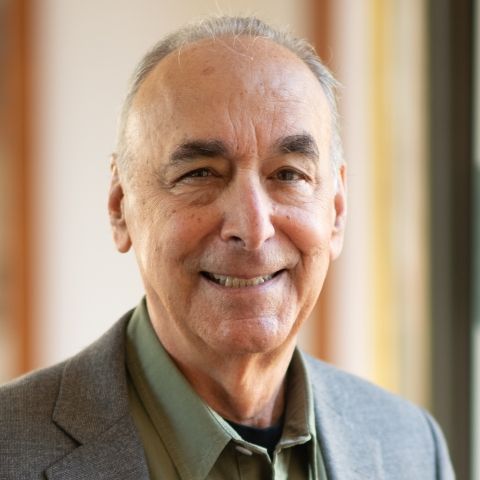
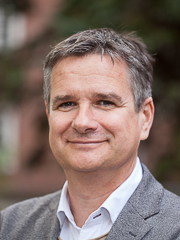
Colin M. Ramsay is a Professor in the Department of Finance at the Edwin J. Faulkner College of Business, University of Nebraska-Lincoln. His expertise lies in actuarial science, focusing on risk theory, pensions, health and disability insurance, and micro-insurance applications. B.Sc., City University, London M.Math. and Ph.D., University of Waterloo Ramsay’s research integrates economic principles into actuarial science, addressing challenges like the annuity puzzle, moral hazard, and adverse selection in insurance markets. He also explores peer-to-peer insurance and food security in developing regions. Recent publications highlight innovative annuity designs, LTC funding strategies, and stochastic modeling of insurance risks. His work spans theoretical advancements in ruin probability calculations and practical applications in funeral insurance and agricultural sustainability in the Caribbean. Ramsay teaches graduate and undergraduate courses in life contingencies and pension mathematics, emphasizing probabilistic models and actuarial assumptions.
Chris Rogers is a Professor of Statistical Science within the Department of Pure Mathematics and Mathematical Statistics (DPMMS) at the University of Cambridge, actively contributing to research at the intersection of probability theory, stochastic analysis, and financial applications. His academic profile reflects deep engagement with mathematical finance and theoretical probability through publications and departmental affiliations. His research spans financial mathematics, probability theory, stochastic analysis, statistics, and mathematical economics, with emphasis on rigorous mathematical frameworks for financial markets. Key themes include option pricing mechanisms, stochastic process modeling, and geometric probability applications, often addressing real-world financial instruments like Asian options and S&P500 index behaviors through advanced probabilistic techniques. Analysis of his 15 most recent publications (2016-2018) reveals consistent focus on stochastic calculus applications in finance, particularly Lévy processes, diffusion models, and optimal stopping problems. His work bridges theoretical probability with quantitative finance, demonstrating expertise in translating complex stochastic phenomena into financial modeling solutions across asset pricing, risk assessment, and market analysis domains. No scientific awards were documented in the provided source material. Information regarding PhD/Master's student supervision, research grants, or collaborative teams was not specified in the available texts, indicating absence of such details in the source documentation.
Professor Jae Kyung Woo is a distinguished academic in the School of Risk and Actuarial Studies at the UNSW Business School, University of New South Wales. She holds multiple prestigious professional designations including Fellow of the Institute of Actuaries of Australia (FIAA), Fellow of the Society of Actuaries (FSA), and Chartered Enterprise Risk Analyst (CERA). Her educational background includes MMath and Ph.D. degrees from the Department of Statistics and Actuarial Science at the University of Waterloo. She has held academic positions at Columbia University as Assistant Professor in the Department of Statistics (2011-2012), and at the University of Hong Kong as Assistant Professor in the Department of Statistics and Actuarial Science (2012-2017) before joining UNSW in July 2017. Research interests focus on risk theory, reliability theory, aggregate claim analysis, queueing theory, and dependence modelling Editorial Board member for ASTIN Bulletin (2021-present), European Actuarial Journal (2025-present), Probability in the Engineering and Information Sciences (2018-present), and Risks (2020-present) Principal investigator for ARC Discovery Projects (2020-2023) and Casualty Actuarial Society grants (2018-2020) Her research output includes 35 journal articles, 1 book, 1 thesis/dissertation, and 1 other publication, with recent work emphasizing shock models for correlated large losses, credibility theory under dependency structures, and advanced dependence modeling techniques in insurance contexts. Her work bridges theoretical stochastic analysis with practical applications in insurance and risk management. Fellow of the Institute of Actuaries of Australia (FIAA), since May 2018 Fellow of the Society of Actuaries (FSA), since Oct 2013 Chartered Enterprise Risk Analyst (CERA), since Jan 2012 Fellow Member of Actuarial Society of Hong Kong (ASHK), since Dec 2018 Professor Woo has secured significant research funding including an ARC Discovery Project grant of AUD 334,000 (2020-2023) for developing shock model-based frameworks for correlated large losses, and a Casualty Actuarial Society grant of USD 20,000 (2018-2020) for credibility theory research under general dependency structures. She served as Nominated Accreditation Actuary at UNSW until 2024.
Kenneth S. Abraham is a distinguished Professor at the University of Virginia School of Law, where he has established himself as one of the nation's leading scholars and teachers in the fields of torts and insurance law. With decades of academic excellence, Professor Abraham has shaped legal education and scholarship through his influential writings, teaching, and service to the legal profession. Professor Abraham's research focuses on the intricate relationship between tort law and insurance law, exploring how these two areas intersect to shape risk distribution, liability, and compensation systems. His scholarship spans historical analysis of legal developments, theoretical frameworks for understanding tort principles, and practical applications of insurance coverage doctrines. He has made significant contributions to understanding the evolution of tort liability, the role of insurance in shaping legal outcomes, and the theoretical underpinnings of modern tort doctrine. Professor Abraham's work often bridges historical perspective with contemporary legal challenges, revealing patterns and insights that inform current debates in tort and insurance law. His most recent scholarship demonstrates a continued focus on the theoretical foundations of tort law while addressing emerging challenges in areas such as cyber liability, police accountability, free speech implications for tort liability, and pandemic-related insurance claims. Abraham's articles frequently examine how historical developments have shaped current legal doctrines and identify conceptual gaps in existing tort theory, particularly regarding the underappreciated role of liability insurance in the tort system. William L. Prosser Award from the American Association of Law Schools (2024) Fellow of the American Academy of Arts and Sciences Life Member of the American Law Institute All-University of Virginia Outstanding Teacher Award Distinguished Faculty Achievement Certificate from the State Council of Higher Education for Virginia American Bar Association's Robert B. McKay Law Professor Award First law professor elected as an honorary fellow of the American College of Coverage Counsel Professor Abraham has served on the ALI Council for 20 years and has been an adviser to the ALI's 'Restatement of Torts (Third)' and the senior adviser to the 'Restatement of the Law of Liability Insurance.' His expertise is frequently sought in major insurance coverage cases involving commercial general liability, directors and officers liability, environmental cleanup liability, toxic tort and products liability, and property insurance claims. He has also served as an arbitrator for the Dalkon Shield Claimants Trust, resolving over 100 claims by women seeking damages for injuries caused by the Dalkon Shield intrauterine device.
Ida Scheel is an Associate Professor in Statistics and Data Science at the University of Oslo , Department of Mathematics. She specializes in Bayesian hierarchical modeling, recommendation systems, and stochastic processes on networks. Her research interests include: Bayesian statistics and model diagnostics Data science applications in environmental and health domains Network-based machine learning Uncertainty quantification in predictive modeling Recent publication trends show a focus on Bayesian model validation, machine learning for product adoption prediction, and real-estate analytics. She contributes to interdisciplinary projects like BigInsight and CELS . Scientific awards : Sverdrup Prize for Young Researchers (2011) Advising : Supervised 8 PhD students (main/co-supervisor) in areas spanning Bayesian causal effects, neural network survival analysis, and model conflict detection. Key grants include participation in the Data Science@UiO and Integreat projects. Labs/teams : Active member of the Center for Computational Inference in Evolutionary Life Science (CELS) and the BigInsight center.
Professor Qihe Tang is a SHARP Professor at UNSW Business School's School of Risk and Actuarial Studies since 2017, where he also serves as Co-Director of the Innovations in Risk, Insurance and Superannuation (IRIS) Knowledge Hub. Previously, he was a Full Professor and held the F. Wendell Miller Endowed Chair at the University of Iowa (2006-2019), following academic appointments at the University of Hong Kong, University of Amsterdam, and Concordia University. Dr. Tang earned his PhD in Statistics from the University of Science and Technology of China in 2001. His research expertise centers on extreme value theory for insurance, finance, and quantitative risk management, with current focus areas including catastrophe risk modeling, systemic risk in financial networks, decision making under uncertainty, pricing in incomplete markets, and climate change impacts on insurance. His recent scholarly output demonstrates significant contributions to tail risk analysis, risk measurement methodologies, and insurance-linked securities pricing. The articles reveal a strong emphasis on extreme events, systemic risk propagation, and innovative approaches to quantifying and managing catastrophic risks in increasingly complex financial and environmental contexts. Elected Member of the International Statistical Institute (ISI) SHARP Professor at UNSW Sydney F. Wendell Miller Endowed Chair at University of Iowa Professor Tang has supervised over a dozen PhD students who now hold positions in academia and industry worldwide. He serves as Editor of Insurance: Mathematics and Economics and has been Principal Investigator for multiple major research grants including three ARC Discovery Projects, NSF funding, and several Society of Actuaries research grants. His research has achieved an H-index of 43 according to Google Scholar.
Carlo Fezzi is an Associate Professor at the Department of Economics and Management, University of Trento. His research focuses on econometrics, environmental economics, and climate change impacts, particularly in policy design and integrated modeling. Teaches Applied Econometrics and Econometrics for Behavioral and Applied Economics and Mathematics programs. Leads workshops in the Market Analysis Laboratory (G3-2), emphasizing data-driven market understanding. Fezzi’s research integrates econometric methods with environmental policy, addressing biodiversity, climate adaptation, and energy economics. Recent work explores land use optimization under climate change, electricity demand forecasting, and coral reef valuation. His publications span topics like carbon trading, agro-environmental modeling, and non-market valuation techniques. Fezzi’s 15 most recent articles highlight trends in econometric applications to environmental challenges, including climate policy, energy demand modeling, and biodiversity conservation. His methodologies combine linear/nonlinear models, neural networks, and spatial analysis to address global issues like food security, carbon emissions, and ecosystem resilience.
Eric C.K. Cheung is an Associate Professor in the Department of Statistics and Actuarial Science at the University of New South Wales (UNSW), where he has worked since July 2017. Previously, he held positions at the University of Hong Kong (HKU) from 2010 to 2017, including Assistant Professor (2010–2016) and Associate Professor (2016–2017). He earned his BSc (Actuarial Science) from the University of Hong Kong and MMath and PhD in Actuarial Science from the University of Waterloo. His research focuses on insurance risk theory, ruin theory, stochastic processes, and financial mathematics. He has secured multiple grants, including from the Australian Research Council and the Society of Actuaries. Currently, he supervises PhD and Honours students in areas like risk analysis and financial modeling. Cheung teaches actuarial science courses at UNSW, HKU, and the University of Waterloo. His work appears in top journals like Insurance: Mathematics and Economics , and he is an Associate Editor of this journal. He has advised over 10 students at HKU and UNSW.
Prof. Dr. Michael Merz holds the Chair of Mathematics and Statistics in Economics at the University of Hamburg's Faculty of Business Administration. He specializes in actuarial science, risk management, and quantitative finance. His research focuses on stochastic claims reserving, solvency frameworks (Basel II/Solvency II), credibility theory, and risk-adjusted performance measurement. Education: Completed his Diplom in Mathematics (1.1 grade) at the University of Tübingen (2001) with a focus on stochastic processes and mathematical statistics. Earned his PhD (summa cum laude) in 2004 at Tübingen with a thesis on credibility models using orthogonal projections. Previously studied in Valencia, Spain (1998-1999). Research Interests: Actuarial valuation, stochastic reserving methods, risk theory, filter/control theory applications in finance, and capital allocation strategies. Key areas include Solvency II compliance, pricing models for insurance risks, and quantitative risk management frameworks. Publications: Authored/co-authored influential works like Financial Modelling, Actuarial Valuation and Solvency in Insurance (Springer, 2013) and Stochastic Claims Reserving Methods in Insurance (Wiley, 2008). Recent articles address claims uncertainty quantification, multivariate reserving models, and cost-of-capital approaches. Awards: SCOR Prize for Actuarial Science (2004), Promotionspreis der Universität Tübingen (2005), and academic distinctions in physics competitions during high school. Professional Roles: Program director for the Wirtschaftsmathematik program, speaker of the Institute for Statistics and Econometrics, and adjunct faculty at the University of Basel's Actuarial Science program. Served as actuary at Basler Versicherung (2004-2006) and held junior professorships at University of Tübingen (2006-2009).
Pablo Koch-Medina is an Associate Professor of Finance and Insurance and Head of the Department of Finance at the University of Zurich (UZH). He is a faculty member of the Swiss Finance Institute and Director of the Center for Finance and Insurance, which bridges finance and insurance research. Before joining academia, he spent over 20 years in the finance and insurance industry. Research Interests: His work focuses on mathematical finance, financial economics, risk management, and insurance. Key themes include asset-liability management, valuation of insurance liabilities, and regulatory frameworks in financial markets. He emphasizes interdisciplinary approaches combining theoretical finance with practical insurance applications. Recent Articles: Recent publications explore capital adequacy, risk measurement frameworks, and the interplay between insurance and financial markets. His work addresses challenges like currency risk in capital requirements and the dynamics of long-term insurance products. Affiliations: Besides UZH, he contributes to the Swiss Finance Institute and the Center for Finance and Insurance. His research collaborates with institutions like the École Polytechnique Fédérale de Lausanne and Maastricht University. Future Work: Ongoing projects include optimizing insurance firm investment strategies and analyzing systemic risks in pension systems. He advocates for integrating digitalization and data science into traditional actuarial models.
Dr. Aurelien Baillon is a Professor of Economics of Uncertainty at the Erasmus School of Economics , Erasmus University Rotterdam, specializing in the Department of Applied Economics . His research focuses on individual decision-making under risk and ambiguity, combining empirical and theoretical approaches to understand probability elicitation and expert opinion aggregation. Key research areas: Behavioral Economics, Risk Attitudes, Bayesian Modeling Major projects: Bayesian Markets , Personal Model of Trumpery , Malakoff Humanis Chair His recent publications explore ambiguity theories , cybersecurity decision-making , and linguistic deception detection . Notable grants include the ERC Starting Grant (2016) and NWO Vidi Grant (2014). Collaborations span institutions like BRiO , HITS Institute , and GATE . The Datavisualization project with Alice Havrileck demonstrates his interdisciplinary approach to uncertainty analysis.
Armin Rott is a Professor of Economics, specializing in Media Economics, at the University of Hamburg since 2010. He serves as Academic Director at the Hamburg Media School (HMS), overseeing curriculum development and didactic concepts for MBA programs in Media Management. His career spans roles at Dortmund University, Bauhaus-Universität Weimar, and HMS, with a focus on media economics and strategic leadership. Education: Diploma in Economics (University of Bayreuth, 1996); PhD in Economics (summa cum laude, University of Dortmund, 2002). Research interests center on media economics, competition dynamics in media sectors, and strategic leadership. His work analyzes advertising-financed media, audience demand, and the political economy of competition. Publications examine topics like audience-demand dependencies, bestseller success drivers, and football broadcast economics. Key article themes include media market competition, demand aggregation, and experimental economics teaching methods. His scholarly output spans empirical studies on television markets, advertising-audience dynamics, and strategic management in media industries. At HMS, Rott drives academic initiatives and curriculum innovation for media management programs. He collaborates with institutions like Dortmund University and Bauhaus-Universität Weimar, contributing to media economics discourse.
Vicky Fasen-Hartmann is a Professor at the Karlsruhe Institute of Technology (KIT) within the Department of Mathematics, specifically affiliated with the Institute of Stochastics. She has held her W3 Professor position since October 2012, with two periods of parental leave (August 2016-August 2017 and October 2018-October 2019). Prior to her current position, she held postdoctoral research positions at ETH Zurich (RiskLab), TU Munich, Université Pierre et Marie Curie, and Cornell University. Her educational background includes: Habilitation (2010) in Heavy Tails in Finance, Insurance and Telecommunication from TU Munich Ph.D. (2004) in Extremes of Lévy Driven Moving Average Processes with Applications in Finance from TU Munich Diploma in Mathematics (2002) from Karlsruhe Institute of Technology Professor Fasen-Hartmann's research spans multiple areas of theoretical and applied statistics with a focus on extreme value theory, heavy-tailed distributions, and their applications in finance and risk management. Her work bridges theoretical probability with practical financial applications, particularly in modeling rare events and systemic risks. She has made significant contributions to the understanding of Lévy processes, continuous-time ARMA models, and multivariate extremes. Her research combines rigorous mathematical theory with practical applications in financial mathematics, insurance, and telecommunications networks. The trends in her recent publications (2020-2025) show a clear evolution toward high-dimensional extreme value theory, financial network risk contagion, and advanced modeling of continuous-time processes. Her work increasingly addresses the challenges of modern financial systems, including systemic risk measurement, high-dimensional dependency structures, and the statistical properties of extreme events in complex systems. She has developed innovative methodologies for analyzing multivariate extremes, risk contagion, and continuous-time state space models. Professor Fasen-Hartmann has served in significant editorial roles including Associate Editor for the Scandinavian Journal of Statistics since 2014, Managing Editor of Lévy Matters (2008-2014), and Editor of Bernoulli News (2009-2011). She has also been active in academic service through committee work, including the Steering Committee of the Probability and Statistics Group in Germany (2014-2016) and the Examination Board of the Department of Mathematics at KIT (since 2017). She has supervised numerous doctoral and master's students, with current PhD candidates including Lucas Butsch (since 2021) and previously Lea Schenk, Celeste Mayer, Markus Scholz, and Sebastian Kimmig. Her teaching portfolio includes advanced courses in Time Series Analysis, Continuous Time Finance, Extreme Value Theory, and Asymptotic Stochastics. She regularly organizes workshops and conferences on specialized topics in probability and statistics, demonstrating her leadership in the academic community.
Karl Harmenberg is a Swedish economist based at the Department of Economics, University of Oslo since 2022. He holds a PhD from Stockholm University's Institute for International Economic Studies (2018) and previously worked at Copenhagen Business School (2018-2021) and BI Norwegian Business School (2021-2022). As a tenure-track associate professor , he teaches Macroeconomic Theory and develops open-source Python tooling for macroeconomic modeling. Key research themes include macroeconomic dynamics with heterogeneous agents , earnings distribution mechanisms , and integrated epi-econ modeling for pandemic preparedness His methodological innovations include the permanent-income-neutral measure for heterogeneous-agent models and directed cycle graph representations of macroeconomic frameworks Current projects include WaCoMacro (wage contracts and macroeconomics) and ongoing collaborations with Timo Boppart , Per Krusell , and Erik Öberg Recent publications span: 2025 International Economic Review work on unemployment-risk amplification mechanisms 2025 Quantitative Economics article on integrated epi-econ modeling 2024 Economics Letters paper establishing Pareto distribution in top earnings 2023 AER Insights research on wage contract rigidity 2021 Journal of Economic Dynamics & Control contribution on permanent income shocks His work has been cited in policy discussions regarding: Swedish automatic stabilizer design Norwegian pandemic response strategies Scandinavian labor market reforms Nordic macroeconomic teaching curricula
Stefan Rass is a Professor at the Institute of Networks and Security within the Faculty of Engineering & Natural Sciences at Johannes Kepler University Linz (JKU), where he leads the LIT Secure and Correct Systems Lab. As Principal Investigator for FFG-funded projects including reSilienz (digital supply chain resilience, 2023–2025) and ITPUK (AI signature verification, 2022–2024), he bridges theoretical game theory with practical cybersecurity solutions for critical infrastructures and robotics systems. His research spans game-theoretic security models (patrolling games, defense-in-depth strategies), quantum cryptography (QKD network architectures), and cyber deception frameworks like Honeyquest for measuring honeypot effectiveness. Recent work addresses robotics security benchmarking (RobotPerf), cryptographic instruction chaining for control flow protection, and risk assessment methodologies for interdependent infrastructures. His mathematical decision-making approach integrates bounded rationality and stochastic modeling to solve real-world security challenges. Professor Rass actively shapes the field through program committee roles (ARES 2023), peer reviews, and invited talks on security transparency. His current projects focus on cost-benefit-aware monitoring for cyber-physical systems and quantum key distribution standardization, reflecting Austria’s strategic priorities in digital resilience. The LIT Secure and Correct Systems Lab under his direction develops foundational theories while deploying tools for industrial applications, particularly in critical infrastructure protection and secure robotics workflows.