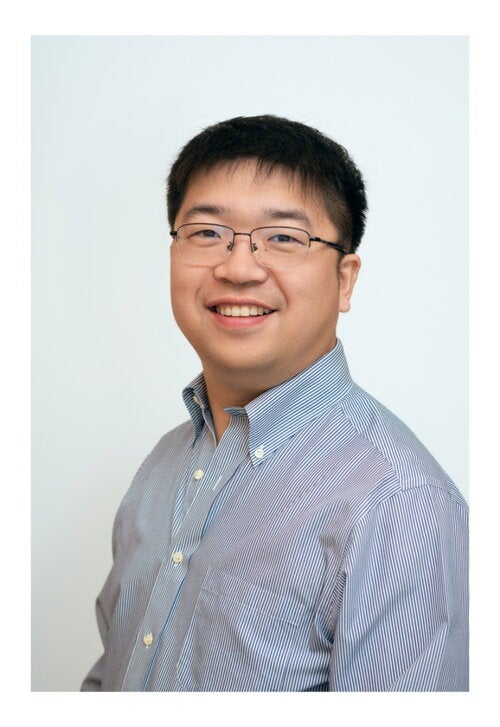
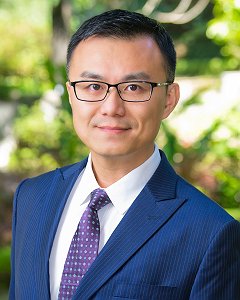
Tor Helge Aas is a Professor at the Department of Management and Innovation, School of Business and Law, University of Agder, and holds a part-time position as Professor II at Kristiania University College. He is the Director of the Executive MBA program at UiA and actively contributes to research and teaching in innovation management. His affiliations include the Research Centre for Studies of Innovation for Sustainable Transition (RIST) and the ISPIM Scientific Panel. His research interests focus on innovation management , particularly in digital servitization, service innovation, innovation processes, collaboration for innovation, and management control. He examines how organizations in manufacturing and service sectors transition to service-oriented business models through digital platforms and ecosystem collaboration. The recent publications highlight a strong trend in digital servitization , platform-based innovation , and human-technology interaction in Industry 5.0. His work spans business model innovation, legitimacy in smart services, and coopetition in R&D projects, with a consistent focus on organizational transformation and sustainable innovation. Scientific Awards and Recognitions: No explicit awards mentioned in the text. Advising and Grants: He has supervised Master’s and PhD students (implied through academic roles). Actively involved in Horizon 2020 projects: OpenInnoTrain (Work Package Manager) and REDI program. Research funded by EU frameworks, indicating competitive grant acquisition. Labs and Research Teams: Member of RIST – Research Centre for Studies of Innovation for Sustainable Transition . Active in ISPIM (International Society for Professional Innovation Management) Scientific Panel. Collaborates extensively with researchers like Anne-Laure Mention, Katja Maria Hydle, and Karl Joachim Breunig.
Zhiyu (Frank) Quan is an Assistant Professor at the University of Illinois at Urbana-Champaign (UIUC), holding positions in the Department of Mathematics, Department of Statistics, and National Center for Supercomputing Applications (NCSA). He is also an affiliate faculty member at Discovery Partners Institute as InsurTech Lead and serves as an ORMI Faculty Fellow in Finance. His research focuses on data science applications in actuarial science, including tree-based models, natural language processing, and deep learning for insurance risk modeling, predictive analytics, and InsurTech innovation. Education: Ph.D. in Actuarial Science (University of Connecticut, 2019), MS in Applied Statistics (Michigan State University, 2014), and BS in Mathematics and Applied Mathematics (Xiamen University, 2012). Research interests include computational statistics, insurance analytics, and leveraging machine learning for actuarial challenges such as claim prediction, rate-making, and cyber risk modeling. He leads the Illinois Risk Lab, bridging academic research with industry needs, and has pioneered hybrid tree-based models to address imbalanced data in insurance. Notable achievements include the Arnold O. Beckman Research Award and Society of Actuaries Research Institute recognition. He advises two doctoral students and teaches advanced predictive analytics courses, emphasizing practical applications in actuarial science and data ethics. Key collaborations involve InsurTech companies and NCSA, focusing on NLP-driven academic paper repositories (CyLit) and federated learning for privacy-preserving insurance data sharing. His work addresses real-world challenges in cyber insurance and automated machine learning systems.
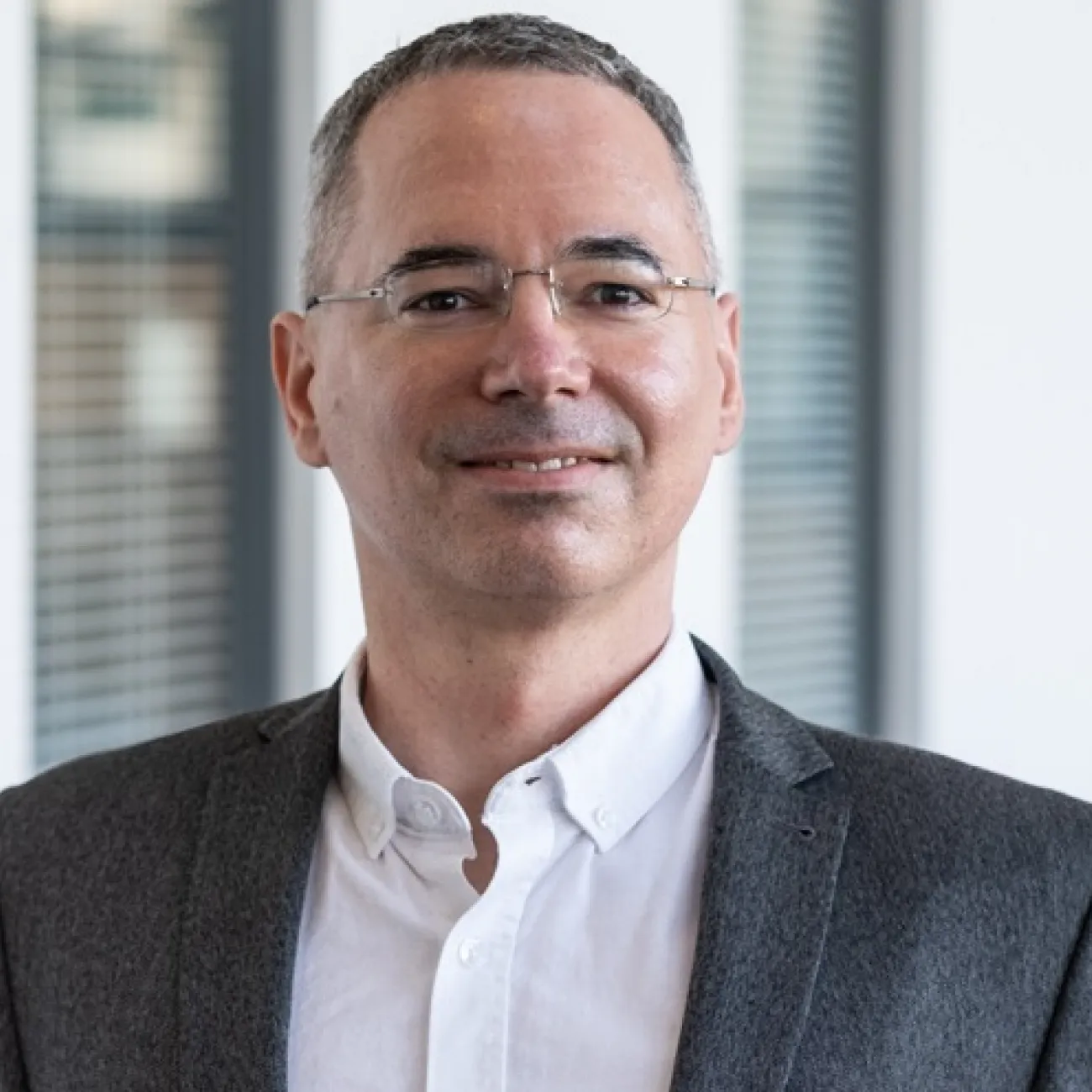
Dr Alex Zarifis is a Lecturer in Information Systems at the Southampton Business School , University of Southampton. His work focuses on the intersection of technology and business, with particular emphasis on financial technology applications. BSc from University of Leeds MSc and PhD from University of Manchester Research areas include: Trust in digital systems Blockchain and cryptocurrency Artificial Intelligence applications Financial technology (Fintech) Business model innovation Electronic business His recent publications explore: Trust mechanisms in Central Bank Digital Currencies (CBDC) AI governance in Fintech boards Decentralized exchange adoption factors Agile responses in e-governance Mental health implications of research collaboration Professional affiliations: Member of CORMSIS (Centre for Operational Research, Management Science and Information Systems) Research affiliate at Cambridge Center for Alternative Finance (CCAF)
Runhuan Feng is a Professor of Statistics and holds a secondary appointment in the Department of Mathematics at the University of Illinois at Urbana-Champaign. He is affiliated with the College of Liberal Arts & Sciences. His research focuses on risk analytics, actuarial science, quantitative finance, pension planning, healthcare data analytics, and innovations in FinTech/InsurTech. Recent work addresses risk aggregation methodologies, peer-to-peer insurance models for flood risks, multi-risk insurance frameworks, mortality shock management, and editorial leadership in actuarial science. His research bridges theoretical models with practical applications in finance and insurance sectors. No scientific awards are explicitly mentioned in the profile. Advising and grants sections remain unspecified. His research outputs reflect interdisciplinary collaboration, as seen in his editorial role and co-authored studies.
Dr. Ruilin Zhu is a Lecturer in Information Systems at Lancaster University Management School (LUMS), Lancaster University, within the Department of Management Science. His academic profile demonstrates active engagement in research supervision, with current PhD students under his guidance. Prior to his academic career, Dr. Zhu gained industry experience in financial institutions and completed visiting scholar positions internationally. Research Focus: Dr. Zhu's work integrates behavioral, economic, and legal perspectives to examine digital innovation phenomena. His primary domains include: FinTech and InsurTech systems development Health informatics and technology adoption Risk communication frameworks Digital transformation in business ecosystems Socio-technical aspects of information systems This multidisciplinary approach reflects his industry background and international research exposure. Publication Analysis: Recent scholarly output (2022-2024) reveals strong focus on crisis communication during COVID-19, health technology integration, and FinTech innovation. Methodologically, Dr. Zhu employs longitudinal studies, bibliometric analysis, and structural modeling to examine technology adoption patterns across healthcare, education, and SME sectors. Emerging themes include algorithmic fairness, digital banking evolution, and privacy concerns in technology deployment. Research Projects: Pennies Each Day (2024-2025): Micro-savings mechanisms in developed economies Digital health accessibility for elderly populations in Chinese communities (2019) Electronic food facilitation systems for export optimization in Bangladesh (2018-2019) Academic Leadership: Dr. Zhu currently supervises PhD candidate Itoro Abraham in Information Systems research. He contributes to LUMS research groups including the Centre for Technological Futures and Information Systems research cluster, facilitating cross-disciplinary technology innovation.
Antonio Pietrabissa is an Associate Professor at the Department of Computer, Control, and Management Engineering “Antonio Ruberti” (DIAG) of the University of Rome Sapienza, where he earned his degree in Electronics Engineering (2000) and PhD in Systems Engineering (2004). He has been teaching Automatic Control and Process Automation since 2010 and holds the National Scientific Qualification as Full Professor in Systems and Control Engineering (09/G1). Research interests include networked systems, robust control, Markov decision processes, and deep reinforcement learning. His work spans telecommunications, biomedical applications, and space systems, with a focus on federated learning and decentralized control. He has authored ~70 journal papers (Scopus h-index 22) and co-invented a patent for model predictive control in motor disability assistance. Awards include the 2021 Cybersecurity Award and ETRI Journal Best Paper. Current projects are NANCY (6G networks) and CADUCEO (AI-driven medical diagnostics). He is also CEO of Sapienza startup Automation Intelligence and Control (AICO), commercializing AI solutions for space, telecom, and biomedical sectors.
Jacky Wai Keung is an Associate Professor in the Department of Computer Science at City University of Hong Kong with extensive industry connections across the Asia Pacific region. He leads the Artificial Intelligence and Software Engineering Research Group (AiSE) and serves as Chairman of IEEE Computer Society Hong Kong Chapter and Vice-President of Hong Kong STEM Education Alliance. Prof. Keung received his B.Sc.(Hons) in Computer Science from the University of Sydney and Ph.D. in Software Engineering from the University of New South Wales, Australia, before working as a Research Scientist at NICTA (now DATA61, CSIRO) in Sydney. His research spans software engineering, data science, AI, FinTech, machine learning, blockchain systems, and large language models for code generation and analysis. His recent work focuses on applying large language models to software engineering challenges, with publications examining code translation, anomaly detection, and autonomous driving system testing. The research shows a strong trend toward practical applications of AI in software development processes, particularly in FinTech and autonomous systems domains. Among his numerous accolades, Prof. Keung has been named in Stanford's top 2% most highly cited scientists for both 2022 and 2023, received the President's Teaching Excellence Award in 2020, and earned multiple IEEE best paper awards. His editorial service includes roles as Area Editor for Journal of Systems and Software since 2017 and Associate Editor for Information and Software Technology since 2020. Prof. Keung has successfully secured over HK$20 million in research funding through GRF, ITF, and TDG grants, including major projects like 'Smart Intelligent Process Automation for the Mortgage Lending Industry' (HK$2.62 million) and 'Software Data Analytics and Blockchain Technological Advancements' (HK$6 million). His industry collaborations have significantly enhanced student opportunities, with CS student starting salaries increasing by over 15% year-on-year for the past three years. He currently leads multiple research initiatives including RealisticCodeBench for evaluating LLMs in code generation and FedLAD for federated log anomaly detection, with several active projects focused on AI-enhanced InsurTech systems and deep probabilistic reasoning using deep learning.
Dr. Catherine Lou is an Associate Professor in supply chain and logistics at Victoria University Business School, part of the College of Arts, Business, Law, Education & IT. She serves as Discipline Leader for Transformative Research in Policy, Economy and Business at the Institute for Sustainable Industries & Liveable Cities, and is the Global Head of the WiLAT Capacity Building Centre. Her academic journey began at Victoria University where she completed her PhD in Supply Chain Optimisation in 2015, after which she joined as a lecturer. Dr. Lou's educational background includes: PhD in Supply Chain Optimisation, Victoria University (2015) Graduate Certificate in Tertiary Education, Victoria University (2018) MSc, BUAA, China (2010) Dr. Lou's research spans multiple interdisciplinary areas with a strong emphasis on quantitative approaches including optimisation modelling, statistics, and advanced data analysis. Her primary research areas include Supply Chain Management (focusing on sustainability, operations management, and risk management), Green Tourism and Visitor Economy, Leadership and Diversity initiatives, International Education, and Business Information Systems. Her work consistently integrates quantitative methods to address complex challenges in sustainable development and supply chain optimization, with particular attention to practical applications that benefit industry and society. Dr. Lou's publication portfolio demonstrates a clear trajectory toward increasingly interdisciplinary research that bridges supply chain management with sustainability, social justice, and wellbeing. Her recent work shows a growing emphasis on regional disparities in green manufacturing, social procurement systems, and the intersection of international student experiences with mental health. The thematic evolution of her research reflects a deepening commitment to addressing complex societal challenges through supply chain innovation, with publications appearing in D1 (top 5%) and Q1 journals across multiple disciplines. Dr. Lou has received numerous prestigious awards recognizing her contributions to academia and professional practice: International Student of the Year - Postgraduate by Victoria State (2013) VU Outstanding Student Alumni Award (2015) Young Professional of the Year award by the Chartered Institute of Logistics and Transport in Australia (2018) Excellence in Women's Leadership (Supply Chain Education) Award at the IEOM conference (2024) As an active researcher and mentor, Dr. Lou has secured over $$1.3$$ million in competitive research funding from diverse sources including international foundations, national and state government agencies, philanthropic organizations, and industry partners. She currently supervises multiple PhD students across various topics including AI adoption in SMEs, ESG activities, environmental sustainability in sports, and insurtech innovation. Her leadership extends to significant roles in professional organizations, particularly as Australia Chairperson and Global Vice Chairperson for Women in Logistics and Transport (WiLAT), where she champions initiatives that foster diversity and inclusion worldwide. Dr. Lou plays a pivotal role in the WiLAT Capacity Building Centre, leading global initiatives that develop leadership capabilities and promote gender diversity in the logistics and transport sector. Her work bridges academic research with practical industry applications, creating meaningful impact across multiple sectors including tourism, infrastructure, and international education, with alignment to UN Sustainable Development Goals including Partnerships for the Goals, Good Health and Well Being, Industry Innovation and Infrastructure, and Sustainable Cities and Communities.
Dr Bilyaminu Auwal is a Senior Lecturer in Computer Science and Digital Technologies at the Department of Engineering & Computing, School of Architecture, Computing and Engineering, University of East London. He serves as Course Leader for BSc Computer Science and Undergraduate Academic Lead. His academic journey includes a PhD in Software Engineering (2016) from Brunel University, PG Cert in Higher Education (2018) from Coventry University, and a BSc (Hons) in Software Engineering (2012) from UEL. PhD in Computer Science (Software Engineering), Brunel University London (2016) PG Cert in Higher Education, Coventry University (2018) TERP10 SAP ERP Certification, SAP UK (2014) BSc (Hons) Software Engineering, University of East London (2012) Nigeria Certificate in Education (NCE), Shehu Shagari College of Education Sokoto (2008) His research focuses on Software Maintenance and Evolution, Blockchain-Oriented Software Engineering, Smart Contracts Reengineering, Circular Economy theory, and Digital Economy & FinTech. He has contributed to blockchain-based solutions for food redistribution and decentralized insurance systems, while earlier work addressed quality improvements in open-source software repositories. Recent publications highlight his interdisciplinary approach combining blockchain technology with sustainability, insurtech, and automated efficiency frameworks. Awards include Professional Membership of the British Computer Society, Fellowship of the Higher Education Academy (UK), and Fellowship of the Royal Society for the Encouragement of Arts, Manufacture and Commerce. Co-investigator of £23K UCL Centre for Blockchain Technologies project on 'Circularity and Blockchain Technology for Food Redistribution and Community Well-being' (2021) Co-investigator of £30K GCRF Royal Academy of Engineering seed funding project at Coventry University Software Development Consultant for €13M EU Horizon 2020 ECOBulk project He is a Research Associate at UCL Centre for Blockchain Technologies (2020-present) and founding member of the UEL FinTech Centre, contributing to its podcast series. His teaching portfolio spans Software Development, Doctoral Supervision, and Mobile & Distributed Systems.
Yunran Wei is a Tenure-track Assistant Professor at the School of Mathematics and Statistics, Carleton University. His research focuses on Quantitative Risk Management, Actuarial Science, Mathematical Finance, and FinTech/InsurTech. He holds a Ph.D. in Actuarial Science from the University of Waterloo, with supervisors Ruodu Wang and Gord Willmot, and has earned credentials including the Associate of the Society of Actuaries (ASA). Education: Ph.D. in Actuarial Science, University of Waterloo (Supervisors: Ruodu Wang, Gord Willmot) MMath in Statistics, University of Waterloo (Supervisor: Carole Bernard) BMath, Double Major in Pure Mathematics and Mathematical Finance, University of Waterloo Research Interests: Dr. Wei’s work bridges theoretical advancements in risk management and practical applications in financial markets. His research explores Cryptocurrency Market Risk , Risk Sharing Mechanisms , and Statistical Methods for Actuarial Applications . Recent projects analyze vulnerability in financial systems using conditional risk measures and investigate optimal allocations under heterogeneous beliefs. Awards & Funding: NSERC Discovery Grant (2023–2028) James C. Hickman Scholar Fellowship (2018–2019) Grants & Advising: As sole PI of NSERC grants totaling $39,500 CAD annually, Dr. Wei leads research teams focusing on risk analytics. His advising includes collaborations on cryptocurrency risk modeling and parametric risk measures. Professional Activities: Active contributor to journals like Mathematical Finance and Insurance: Mathematics and Economics , with a focus on advancing quantitative methods in finance and insurance.
Héctor Carretié, Ph.D., is a faculty member in the Department of Business and Economics at Saint Louis University-Madrid. With over 18 years of academic teaching experience and 12 years in industry roles such as CFO and Controller, he specializes in economics, accounting, and financial management. Doctor Europeus in Economics, Universidad Rey Juan Carlos (2012) – Summa cum laude Master's in International CFO, Universidad Rey Juan Carlos (2008) Licentiate in Business Administration and Management (Finance), Universidad Autónoma de Madrid (1994) His research explores Artificial Intelligence and Blockchain applications in Distributed Ledger Technologies (DLTs), Central Bank Digital Currencies (CBDCs), and FinTech/InsurTech. Prior work focused on financial data comparability, semantic web technologies, and business failure prediction. Notable publications include research on financial statement comparability and XBRL-based data analysis. Scientific Awards: Summa cum laude Doctor Europeus in Economics (2012)
João Freire de Andrade is a Lecturer at the Católica Lisbon School of Business and Economics (Universidade Católica Portuguesa). His academic and professional work focuses on Finance, Accounting, and FinTech, with significant contributions to entrepreneurship ecosystems in Portugal and beyond. Bachelor's Degree in Economics from Nova SBE Master in Management (Major in Finance) from Católica Lisbon SBE Completed Fintech course at Massachusetts Institute of Technology (MIT) Key initiatives include: Head of BiG Start Ventures (early-stage VC in FinTech/InsurTech) Founder of Portugal Fintech association Co-founder of Portugal FinLab and Fintech House President of Bring Entrepreneurs Together organization His NGO work includes supporting microfinance projects in Mozambique through Move. João also contributes to academic programs as a Teaching Assistant at Nova SBE's Master of Finance and Executive Education.
Prof. Dr. Ute Werner is an active Professor in the Department of Economics at Karlsruhe Institute of Technology (KIT), Germany, affiliated with the Institute for Finance, Banking and Insurance. Her office is located at Kaiserstraße 12, 76131 Karlsruhe, with contact details including phone 0721-608-6614 and fax 0721-358-663. Her primary research focuses on insurance management and risk assessment, particularly regarding natural hazards and behavioral economic factors in financial decision-making. Werner's research spans insurance management, risk assessment, natural hazards, behavioral economics, finance, and semiotics in business. She investigates psychological determinants of retirement savings behavior, methodologies for estimating industrial/commercial asset values in disaster risk assessment, and applications of semiotic theory in multicultural marketing. Her work emphasizes empirical studies on flood/earthquake impacts on businesses, corporate risk management under climate change, and the interplay between risk perception and insurance behavior, often through interdisciplinary collaborations with researchers like Borst, Seifert, and Thieken. Analysis of her 15 most recent publications (2005-2009) reveals consistent interdisciplinary trends: (1) Behavioral economics approaches to retirement planning using psychological/neuroeconomic frameworks; (2) Development of asset valuation methodologies for natural hazard risk assessment, particularly floods and earthquakes; (3) Empirical examinations of corporate risk management strategies in response to climate change; and (4) Integration of semiotic theory into business administration and insurance contexts. Her work bridges economics, psychology, and disaster management, frequently appearing in journals like Natural Hazards, Journal of Insurance, and NeuroPsychoEconomics.
Lars Hornuf is a Professor of Finance and Financial Technology at Dresden University of Technology. His research focuses on FinTech, artificial intelligence in finance, space economics, entrepreneurial finance, and blockchain technologies. He has contributed extensively to understanding the dynamics of crowdfunding, regulatory frameworks for financial innovation, and the ethical implications of AI-driven financial systems. Key areas of expertise include the economic impact of emerging technologies like generative AI and humanoid robots in banking, cybersecurity in blockchain ecosystems, and geopolitical aspects of space exploration funding. His work bridges academic research with practical applications, often collaborating with institutions like the Max Planck Institute and CESifo. He has received recognition for his paper 'How Do Banks Interact with Fintech Startups?' which won the Best Paper Award at the International FinTech, InsurTech & Blockchain Forum. His research frequently highlights the dual challenges and opportunities of integrating AI and data-driven tools into financial decision-making while addressing regulatory and ethical concerns. Lars Hornuf’s interdisciplinary approach spans corporate finance, entrepreneurial finance, and policy analysis, with a particular emphasis on fostering innovation while ensuring consumer protection and sustainable development.
Stefan Janßen is a Professor at Jade University of Applied Sciences since March 2014, affiliated with the School of Business and Department of Business . He holds additional roles as a part-time lecturer at Carl von Ossietzky University Oldenburg and Virtuelle Hochschule OnCampus, and serves on academic committees including the Studienkommission and Fachbereichsrat . Doctorate in Economics (2011) from Carl von Ossietzky University Oldenburg Degree in Economics and Business Administration (1997), University of Oldenburg Summer courses at UCLA (1993) and Middlesex University (1998) His research focuses on risk management , banking supervision , cooperative banking , and financial regulation . Recent projects include analyzing AI in credit processes, green bond frameworks, and risk culture under MaRisk 8.0. His work bridges regulatory compliance with practical banking challenges. Publications since 2016 cover topics like shadow banking , digital transformation , Basel II/III , and social media in finance , with a strong emphasis on empirical studies in the Weser-Ems region. He co-edited the Praktikerhandbuch Risikoinventur (2015, 2019) and Risikokultur in Kreditinstituten (2018). He participates in international conferences including the Financial Stability Conference and Hamburg Banking Supervision Days , and consults on regulatory compliance and risk management. He leads the dual study program Insurance, Banking, and Finance and chairs sessions on risk culture at conferences.