Shwai He is a PhD student and Affiliate Assistant Professor at the University of Maryland, advised by Ang Li. Their research focuses on advancing AI systems through innovative approaches in large language models (LLMs), fairness in machine learning, and efficient neural network architectures. Key areas include multi-agent systems, causal modeling for bias mitigation, and optimization techniques for mixture-of-experts models. Research interests span artificial intelligence, machine learning, and natural language processing with emphasis on practical applications like healthcare diagnostics and social pairing systems. Notable work includes developing GNWT-based multi-agent digital twins for social platforms and improving LLM transparency through token analysis. Publications highlight contributions to counterfactual fairness, dynamic-depth transformers, and parameter-efficient methods. Current efforts explore computational efficiency in vision-language models and bio-inspired antibody prediction systems. No scientific awards have been mentioned. Advising and grants: Currently a PhD student under Ang Li's supervision. Research involves collaborations across computer science and bioinformatics domains.
Dr. Ali Hurson is a Professor in the Department of Electrical and Computer Engineering at Missouri University of Science and Technology. His research spans high-performance computing, pervasive computing, mobile databases, personalized education, intelligent transportation systems, and cyber-physical systems. PhD, Computer Science, University of Central Florida MS, Computer Science, University of Iowa BS, Physics, University of Tehran Dr. Hurson’s research focuses on mobile data access systems, cybersecurity for critical infrastructure, and educational technologies. His work addresses challenges in data dissemination, power management, and fault propagation in heterogeneous systems. His recent publications emphasize agent-based modeling for cyber attacks, predictive analytics in education, and fault tolerance in cyber-physical systems. Trends include integration of machine learning, security frameworks, and sustainable computing. Editor-in-Chief, Advances in Computers Editor-in-Chief, Journal of Sustainable Computing and Communication Dr. Hurson has secured over $3 million in grants from NSF, DOE, DOT, and industry partners. He has held academic roles at Penn State University and the University of Oklahoma, transitioning to Missouri S&T in 2007.
Rajeev Barua is a Professor of Electrical and Computer Engineering at the University of Maryland, College Park, affiliated with the Institute for Systems Research (ISR) and the Computer Science Department. He holds a Ph.D. from MIT in Electrical Engineering & Computer Science (2000) and a B.Tech. from the Indian Institute of Technology Delhi (1992). His research focuses on compilers, cybersecurity, and parallel computing, with notable contributions to binary rewriting, automatic parallelization, and memory management for embedded systems. He has secured $6.95M in research grants and holds five patents. Barua founded SecondWrite Inc., commercializing cybersecurity software based on his research. He has received awards such as the NSF CAREER Award (2002) and the UMD George Corcoran Teaching Excellence Award (2003). Affiliations: Electrical & Computer Engineering Department, ISR, Computer Science Department Education: Ph.D., MIT (2000); S.M., MIT (1994); B.Tech., IIT Delhi (1992) Research Themes: Binary Rewriting, Cybersecurity, Parallel Programming, Embedded Systems, Compiler Optimization Key Projects: SecondWrite Inc., Raw Architecture chip development (IBM), ICE programming model for parallel computing Grants & Patents: $6.95M in grants, $2.4M in startup funding, five issued patents Teaching: Courses include ENEE 446 (Compilers), ENEE 350H (Embedded Systems), and advanced graduate topics. His work on binary rewriting addresses security and performance optimization, while his parallel computing research advances declarative programming models like ICE. Recent publications emphasize malware detection and efficient multiprogramming on multicore systems. Awards: NSF CAREER Award (2002) UMD George Corcoran Teaching Excellence Award (2003) UMD Jimmy Lin Innovation Award (2014) President of India Gold Medal (1992) Finalist, Inventor of the Year (2005) Labs & Teams: Leads research groups in compiler optimization and cybersecurity at UMD, collaborating with industry partners like IBM and Tilera. SecondWrite’s cybersecurity software has commercial applications in malware mitigation.
Manoj Franklin is an Associate Professor in the Department of Electrical and Computer Engineering at the University of Maryland, affiliated with Maryland Applied Graduate Engineering. He is based in A.V. Williams 1333 and can be reached at manoj@umd.edu. His research focuses on computer architecture, specifically instruction-level parallel (ILP) processing, compiling for ILP machines, memory systems, fault-tolerant computing, and digital logic testing. Franklin has received notable recognition, including the NSF CAREER Award (1997) and Clemson University's Board of Trustees Faculty Excellence Award (1997). His work has also been supported by the NSF Research Initiation Award (1994-1997). He has contributed to mentoring students, with alumni such as Mohamed Zahran (recognized with the IEEE Computer Society Award) and Neehar Peri (Undergraduate Researcher of the Year, now pursuing a PhD at Carnegie Mellon University). Franklin has also been honored for service to the ECE Department at the ECE Welcome Back Reception.
Ujjal Kumar Bhowmik is a Teaching Assistant Professor in the Department of Electrical & Computer Engineering at the University of Illinois at Urbana-Champaign (UIUC), affiliated with the Grainger College of Engineering. His expertise spans biomedical imaging, signal processing, and engineering education. He has held academic roles since 2008, with a focus on curriculum innovation and student learning experiences in ECE courses. Education: Ph.D. in Electrical Engineering, University of Alabama in Huntsville (2012) MSE in Electrical Engineering, University of Alabama in Huntsville (2008) M.Tech in Electrical Engineering, Indian Institute of Technology Kharagpur (India) B.Sc. in Electrical & Electronic Engineering, Khulna University of Engineering and Technology (Bangladesh) Research Interests: His work focuses on mitigating motion artifacts in 3D medical imaging systems, computational methods for engineering education, and GPU-accelerated solutions for environmental models. He has pioneered algorithms for crack segmentation in X-ray CT images and adaptive learning paths in parallel computing curricula. Awards & Honors: Collins Scholar (Grainger College of Engineering, 2019-2020) Strategic Instructional Innovations Program (SIIP) Award 2019 Kaman Best Teacher Award (2015, Catholic University of America) Best Technical Paper Award at IEEE SoutheastCon 2014 Phi Kappa Phi Honor Society (2011) Recent Contributions: His 2023 publications address curriculum improvements for parallel computing education, while earlier work (e.g., 2014) demonstrated a best paper in biomedical sensor design. He integrates computational thinking into lower-level courses through extended learning modules.
Jose Francisco Llosa Espuny is a faculty member at the Universitat Politècnica de Catalunya (UPC), affiliated with the Faculty of Computer Science of Barcelona (FIB) and the Department of Computer Architecture. He is a key member of the PM - Programming Models research group and has been involved in numerous competitive R&D projects related to high-performance computing and computer architecture. University: Universitat Politècnica de Catalunya School: Faculty of Computer Science of Barcelona Department: Department of Computer Architecture Research Group: PM - Programming Models Email: josepll@ac.upc.edu ORCID: 0000-0001-7740-3148 His research focuses on advanced computer architecture topics, particularly VLIW processors, software pipelining, register allocation, and compiler optimizations for high-performance and low-power systems. He has also made significant contributions to computer science education, exploring active learning, problem-based learning, and the use of interactive response systems for formative assessment. His recent publications and projects, including the European Master for HPC Curriculum and various HPC education initiatives, highlight his ongoing engagement in both technical research and pedagogical innovation. The articles reflect a strong trend in optimizing processor architectures for performance and energy efficiency, as well as improving teaching methodologies in computer science. He has been involved in significant research projects funded by the Spanish government and the European Union, such as those under the HORIZON 2020 program and various national R&D plans. Llosa Espuny has advised doctoral students, including Manoj Gupta and Francisco Zalamea, indicating his role in mentoring the next generation of researchers. He has collaborated extensively with leading figures in the field, such as Mateo Valero and Eduard Ayguadé, on numerous publications and projects. His work is associated with the Barcelona Supercomputing Center, a key entity in national and European high-performance computing efforts.
Eszter Simon is a Senior Lecturer in International Relations at Nottingham Trent University (NTU), specializing in crisis communication, nuclear risk reduction, and Hungarian foreign policy. Her work bridges theoretical analysis with practical applications in political science education. MA in Political Science (Central European University, 2002) PhD in Political Science (Central European University, 2008) Prior roles at University of Birmingham, Comenius University, and Central European University Her research focuses on trust in international relations, foreign policy decision-making, and the role of the Moscow-Washington hotline in crisis stability. Recent publications analyze emotional norms in diplomatic communication and the impact of trust on nuclear risk reduction. Scientific awards include: Fulbright Scholar-in-Residence (2010-2011) Fellow of the Higher Education Academy (2013) Principal investigator for Erasmus+ consortium grant BELONG She supervises PhD candidate Ben Seymour on populism and foreign policy in Turkey, and collaborates with institutions across Europe on educational development programs. Her work has been featured in outlets like The Conversation , The New Statesman , and BBC Radio .
Krzysztof Walkowiak is a Professor at the Faculty of Computer Science and Telecommunications, Wrocław University of Science and Technology (PWr), where he also serves as the Dean of the Doctoral School. He leads the Computer Networks Team (ZSK) and is actively involved in multiple research projects, including Dark-Box Optimization and evolutionary methods for multi-criteria network design. A Senior Member of IEEE and IEEE ComSoc, he contributes to academic governance as a member of the Polish Academy of Sciences’ Committee on Electronics and Telecommunications. PhD in Computer Science (2000, with distinction) Habilitation in Computer Science (2008) Professor of Technical Sciences (2017) Dean of the Doctoral School, PWr (since 2020) Senior Member, IEEE and IEEE Communications Society Member, Committee on Electronics and Telecommunications, Polish Academy of Sciences His research spans computer network optimization, machine learning in networks, evolutionary algorithms, survivable optical networks, and intelligent computational techniques . He has pioneered the integration of AI methods in teleinformatics and leads initiatives in intent-based and cognitive networking. His work emphasizes multi-layer, application-aware network design and distributed processing systems. The 15 most recent publications reflect a strong trend in optimization under uncertainty, AI-driven networking, and metaheuristic algorithm development . There is a clear focus on survivability, scalability, and automation in modern network architectures, with increasing attention to edge intelligence via TinyML and cognitive systems. His recent work also addresses internationalization and pedagogical innovation in doctoral education. Fabio Neri Best Paper Award 2014 (Elsevier Journal of Optical Switching and Networking) Best Paper Award, DRCN2009 (Washington, USA) Best Paper Award, RNDM2015 (Munich, Germany) Medal of the National Education Commission (2011) Scientific Scholarship, Wrocław University of Science and Technology (2017) Star of Internationalization 2024 – Teaching Star Professor Walkowiak has supervised 10 completed PhD theses and currently mentors 5 doctoral students. He has led or managed 13 research projects funded by NCN (including 4 OPUS grants), EU, NAWA, and national agencies. His grant leadership includes the NAWA InterDocSchool project (2021–2023) and the Unite! Doctoral School curriculum development. He has reviewed over 300 journal submissions and served as session chair at 22 international conferences. He leads several research teams: Computer Networks Team (ZSK), Machine Learning Team, Advanced Data Analysis Methods Team, Metaheuristics Team, and Teaching Team . He has developed innovative educational programs such as the Research Skills course and Recent Research Trends , promoting international collaboration and doctoral training. He championed the transition to English-language instruction in the Doctoral School and promotes internationalization as a 'team sport' across institutional levels.
John Regehr is a Professor in the School of Computing at the University of Utah. His research focuses on compilers, formal verification, software testing, and embedded systems. He has contributed to tools like Alive2, YARPGen, and ARMor, which address compiler correctness, fuzz testing, and secure isolation. His work emphasizes uncovering compiler bugs, optimizing low-level code, and ensuring system reliability. Key collaborations include Eric Eide, Yang Chen, and Nuno P. Lopes. His articles span compiler verification, fuzzing techniques, and embedded system safety, reflecting a strong commitment to both academic rigor and practical impact. Research interests include compiler optimization validation, undefined behavior analysis, and program synthesis. His work on peephole optimizations and formal methods has influenced LLVM and industry practices. He also explores scheduling algorithms for real-time systems and memory safety in constrained environments like TinyOS. Notable contributions include foundational papers on compiler bug detection (e.g., 'Finding and understanding bugs in C compilers') and tools like Minotaur for SIMD optimization. His lab's work often bridges theory and practice, with applications in security, performance, and embedded software reliability.
Manuel Alejandro Pajuelo González is a researcher at the Universitat Politècnica de Catalunya (UPC), affiliated with the Department of Computer Architecture and the School of Computer Science. His research focuses on Performance measurement Operating systems Virtualization Thread assignment in multithreaded processors Recent publications show strong trends in RISC-V architectures, cybersecurity, and performance optimization. Key themes include Hardware virtualization Intrusion detection frameworks Statistical thread assignment approaches Spin-lock overhead analysis Scientific awards include BDigital Global Congress 15ª Edició Computación de Altas Prestaciones VI HiPEAC Paper Award He participated in multiple competitive R&D projects, including the DRAC project focused on RISC-V accelerators for next-generation computing.
Dustin Richmond is an Assistant Professor in the Department of Computer Science and Engineering at the Baskin School of Engineering, University of California, Santa Cruz. His work focuses on secure, usable hardware systems with applications in FPGA acceleration, RISC-V architectures, and side-channel analysis. Email: drichmond@ucsc Office: Engineering 2, Room 221 Research Interests: Secure hardware systems FPGA-based computing Manycore processors High-level synthesis Side-channel vulnerabilities Notable Article Trends: Recent publications emphasize cloud FPGA security, manycore design optimization, and hardware security. Earlier works focus on RISC-V acceleration, OpenCL compiler enhancements, and heterogeneous computing systems. GitHub Contributions: Maintains open-source projects like RISC-V-On-PYNQ and PYNQ-HLS, addressing FPGA programming challenges and RISC-V integration. Active in resolving community issues related to toolchain compatibility and hardware-software interfaces.
Eric Larson is a Professor and Associate Chair in the Department of Computer Science at Seattle University's College of Science & Engineering. He holds a PhD in Computer Science & Engineering from the University of Michigan and maintains an active research program focused on software engineering tools with educational applications. His research interests include: Software testing and verification Concurrency and parallel programming Educational tools for computer science education Static and dynamic program analysis Mobile security and Android applications Computer architecture and simulation Dr. Larson's publication record shows a consistent research trajectory from low-level architectural simulation (MASE, 2001) to educational concurrency tools (MDAT, 2013) and specialized analysis tools (EGRET, 2016). His work demonstrates strong practical applications in computer science education, with tools designed specifically to help students grasp challenging concepts in programming and systems. Notable contributions include: EGRET for regular expression testing MDAT for multithreading education Permeate for Android security analysis ANNA for computer architecture education SUDS for bug detection infrastructure MASE for microarchitectural simulation Dr. Larson actively collaborates with students, as evidenced by numerous co-authored publications, and maintains laboratory space for software analysis and educational tool development. His personal website (last updated September 2022) serves as a repository for his research tools and publications, reflecting his commitment to open dissemination of educational resources.
Mª Angeles Solano Rodriguez is a researcher at the University of Murcia's Department of Language and Literature Teaching. Her work focuses on phraseology, paremiology, and translation studies with a strong emphasis on foreign language pedagogy. PhD in French Phraseology Member of the 'Phraseology, Paremiology and Translation' research group Previously part of 'Fonología y Lectura' research team Her research combines phraseological analysis with didactic strategies to enhance language acquisition. Key areas include: Pragmatic phraseological units Metacognitive learning frameworks Task-based language teaching Translation of literary idiomatic expressions Contrastive phraseology between languages Recent publications analyze phraseological patterns in Daniel Pennac's works, pragmatic markers in foreign language classrooms, and integrated phraseology projects for Spanish teaching. Her methodology emphasizes cognitive-emotional intersections in language learning and digital resource utilization for phraseological instruction.
Ralf Meyer holds the SHARCNET Research Chair position in the Department of Mathematics and Computer Science at Laurentian University, where he has been since July 2008, with a cross-appointment in the Department of Physics. His academic role combines research in computational materials science with extensive teaching across computer science and mathematics disciplines. Dr. Meyer earned his Ph.D. (Dr. rer. nat.) in theoretical physics from the University of Duisburg in 1998, establishing the foundation for his interdisciplinary research approach. His research specializes in computational modeling of materials, particularly investigating the structural and dynamic properties of nanoparticles and nanostructured materials. He leverages the high-performance computing resources of the Shared Hierarchical Academic Computing Network (SHARCNET) to conduct complex simulations, bridging computer science, physics, and materials engineering. This work contributes to advancements in nanotechnology through computational methodologies. Dr. Meyer has maintained a consistent teaching record since 2009, instructing courses such as Computer Organization (COSC 3406E), Parallel Computing (COSC 4456E), Numerical Methods (MATH/COSC 3416), and Object-Oriented Programming (COSC 2947E) at both undergraduate and graduate levels. His pedagogical focus spans foundational programming concepts to advanced high-performance computing applications. No scientific awards were documented in the provided information. Similarly, no formal advisees or grant funding details were specified, though his SHARCNET affiliation indicates institutional support for computational research infrastructure. His research operations are centered around SHARCNET resources, a consortium providing high-performance computing facilities across Ontario academic institutions, enabling large-scale computational experiments in materials science without dedicated on-campus laboratory facilities.
Тетяна Сергіївна Дьячук є старшим викладачем кафедри комп'ютерних систем та мереж Факультету комп'ютерних наук і технологій Запорізької національної технічної політехніки, де працює з 2006 року після закінчення університету з відзнакою. Вона є активним членом академічної спільноти, зосереджуючись на сучасних напрямках комп'ютерних наук та технологій. Освіта: Запорізька національна технічна політехніка, 2006 рік, спеціальність "Комп'ютерні системи та мережі", кваліфікація "Магістр комп'ютерних систем та мереж" (з відзнакою) Запорізька національна технічна політехніка, 2006 рік, кваліфікація "Менеджер-економіст" Наукові інтереси Тетяни Сергіївни охоплюють ключові напрями сучасних комп'ютерних технологій, зокрема розподілені та паралельні обчислення, блокчейн-технології, децентралізовані платформи та оптимізацію обчислень. Вона також активно займається дослідженнями в галузі Android-програмування та розробки мобільних додатків. Її наукова робота характеризується практичною спрямованістю, що знаходить відображення в численних публікаціях та конференціях. Аналіз наукових публікацій Тетяни Сергіївни показує чітку еволюцію її наукових інтересів від фундаментальних досліджень розподілених систем та алгоритмів планування ресурсів до сучасних технологій блокчейну, штучного інтелекту та автоматизації процесів програмування. Особливо вражає її здатність поєднувати теоретичні дослідження з практичними застосуваннями в різних галузях, від медичної діагностики до розробки мов високого рівня. Наукові досягнення: Понад 15 наукових публікацій в провідних наукових виданнях Активна участь у міжнародних наукових конференціях Реєстрація в наукометричних базах: Scopus, Web of Science, Google Scholar, ORCID Тетяна Сергіївна активно бере участь у науково-педагогічній діяльності, викладаючи курси, що відповідають сучасним тенденціям в комп'ютерних науках. Вона також займається науковою роботою зі студентами, сприяючи їх інтеграції в наукову спільноту через участь у наукових конференціях та проєктах. Незважаючи на те, що конкретні науково-дослідні гранти не зазначені в доступних джерелах, її публікаційна активність та участь у конференціях свідчать про продуктивну наукову діяльність. Хоча конкретні лабораторії або наукові групи, якими керує Тетяна Сергіївна, не зазначені в доступних джерелах, її наукова робота тісно пов'язана з розвитком сучасних технологій розподілених систем та обчислень, що ймовірно відбувається в рамках кафедри комп'ютерних систем та мереж Запорізької політехніки.

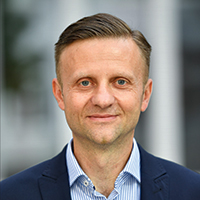

/0x49:1964x2351/prod01/channel_34/media/seattle-university/directory/faculty-amp-staff-directory/images/scieng/Larson,-Eric.jpg)