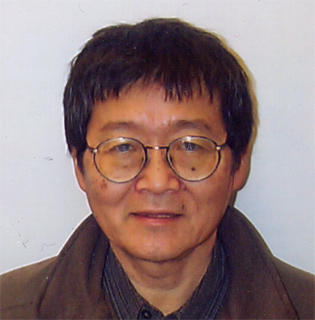
Vijaykumar is a Professor in the Elmore Family School of Electrical and Computer Engineering at Purdue University. His research focuses on computer architecture, VLSI design, and circuit optimization. He is affiliated with the Max W and Maileen Brown Family Hall at the West Lafayette campus. Education: B.E. (Hons) in Electrical and Electronics Engineering, M.Sc.(Tech) in Computer Science from Birla Institute of Technology and Science, Pilani, India (1990) M.S. in Computer Science from University of Wisconsin (1992) Ph.D. in Computer Science from University of Wisconsin (1997) His research spans machine learning acceleration, GPU computing, and hardware security. Recent work includes neural radiance field optimizations, speculative execution security, and processing-in-memory architectures. Publications demonstrate expertise in scalable verification, distributed rendering, and efficient data movement. He has contributed to GPU kernel concurrency, sparse tensor acceleration, and memory consistency verification. His email contact is vijay@ecn.purdue.edu , with office location at BHEE 320, Purdue University.
Christiane Helling is Full Professor in Weltraumwissenschaften (Space Sciences) at Graz University of Technology and Director of the Institute for Space Research Graz (IWF) at the Austrian Academy of Sciences. She previously held leadership roles at the University of St Andrews, including Director of the Centre for Exoplanet Science, and has been a Senior Scientist at the Netherlands Institute for Space Research. Habilitation in Astrophysics (TU Berlin) PhD in Astrophysics (TU Berlin, with distinction) Diploma in Physics (TU Berlin) Her research focuses on exoplanet and brown dwarf atmospheres, cloud microphysics, charge processes, and atmospheric chemistry. She integrates hydrodynamic simulations with space observations from missions like CHEOPS, JWST, and PLATO to map cloud distributions and study planetary climate. Her recent publications emphasize time-dependent cloud formation, thermodynamic disequilibrium in planetary disks, and exoplanet atmospheric characterization using space telescopes. Key collaborations include the CHAMELEON project (virtual laboratories for exoplanet atmospheres) and the MSG model for cloudy sub-stellar atmospheres. ERC Starting Grant (LEAP Project: Lightning, Electrical and Atmospheric Processes on exoplanets) Marie-Curie Innovative Training Network (CHAMELEON)
Dr Euan W McGookin is a Senior Lecturer in Autonomous Systems & Connectivity at the University of Glasgow, based in the Aerospace Sciences division of the James Watt Building South. He coordinates Glasgow-delivered aerospace degree programmes in Singapore and serves on the IFAC Technical Committee on Marine Systems, underlining his sustained engagement with both local and international academic activities. Education: 1st Class Honours Master of Engineering in Avionics, University of Glasgow PhD in Optimisation of Sliding Mode Controllers for Marine Applications, University of Glasgow (1997) Research Interests Dr McGookin’s core expertise lies in the design, simulation, control and physical realisation of autonomous robotic systems. His work spans Autonomous Underwater Vehicles (AUVs) , Unmanned Aerial Vehicles (UAVs) , Planetary & Terrestrial Rovers , and Biomimetic Robotics . He is particularly recognised for applying biologically inspired principles to robotic locomotion, navigation and control. Complementary themes include advanced control methodologies—Sliding Mode Control, H-infinity, Inverse Model Control—optimisation heuristics, guidance & navigation, fault detection & isolation (FDI), and system health monitoring for both terrestrial and space applications. Publication Trends Across 80 publications from 1995 to 2025, his work has evolved from early genetic-algorithm-based controller optimisation for marine vessels to cutting-edge multi-rover mission planning and health monitoring for planetary exploration. Recent outputs (2022–2025) concentrate on micro-rover coordination, friction modelling for planetary soils, reinforcement-learning-driven sensor fusion, and robust health-monitoring architectures, reflecting a strategic pivot toward space robotics while retaining strong roots in control theory and autonomous systems. Scientific Awards & Fellowships Member, IFAC Technical Committee on Marine Systems Grant & Advising Narrative While specific grant values are not disclosed, his continuous funding stream is evidenced by sustained publication output, international conference leadership, and ongoing supervision of postgraduate projects. Dr McGookin advises a steady cohort of PhD and MSc students whose theses align with his research themes—ranging from rover fault diagnosis to biomimetic AUV coordination—thereby fostering the next generation of control and robotics engineers. Laboratory & Team Dr McGookin heads research activities within the James Watt Building South, leveraging interdisciplinary laboratories that integrate simulation suites, rapid-prototyping facilities for AUV and UAV subsystems, and dedicated test rigs for biomimetic propulsion and rover mobility studies. Collaborative networks extend across the University of Glasgow’s Aerospace Engineering group, Singapore Institute of Technology partners, and international consortia such as ESA and IFAC.
Robert J. Nemiroff , University Professor of Physics at Michigan Technological University's College of Sciences and Arts , is a distinguished astrophysicist and Fellow of the American Physical Society. Known for co-creating the Astronomy Picture of the Day (APOD) in 1995 and founding the Astrophysics Source Code Library (ASCL) in 1999, he has significantly advanced open science and public engagement. His research spans gamma-ray bursts, gravitational lensing, and cosmological constraints, with a focus on relativistic effects and observational innovation. Education PhD in Astronomy and Astrophysics, University of Pennsylvania Research Interests Nemiroff's work explores gamma-ray bursts as cosmological probes, gravitational lensing phenomena, and relativistic illumination fronts to orient nebulae. He pioneered CONCAMs , fisheye cameras deployed globally for all-sky monitoring, and investigated unconventional ideas like ultralight energy and dark energy-Higgs connections . His recent studies include Cherenkov radiation coherence and AI-generated astronomical imagery. Scientific Awards NSF CAREER Award (1997) MTU Research Award (2012) MTU University Professor (2021) Exceptional Graduate Mentor Award (2021) Advising and Grants Mentoring eight PhD students, including Bijunath Patla (Harvard) and Lior Shamir (Lawrence Tech), Nemiroff emphasized collaborative research. His NSF-funded projects included deploying CONCAMs at major observatories and developing the ASCL, which now lists 2600+ codes. He also led interdisciplinary efforts to post free online courses like 'Physics X' and 'Astro 101'. Labs and Teams He led the Night Sky Live (NSL) project, creating a global network of fisheye cameras for cloud and transient monitoring. The ASCL, now housed at MTU, remains a critical resource for code transparency. His work often involved partnerships with NASA, Kitt Peak, and institutions in Thailand, Chile, and Israel.
Peter Brown serves as an Honorary Senior Lecturer at the School of Mathematics and Statistics, University of New South Wales (UNSW), Sydney. His academic role centers on undergraduate education as a casual tutor across first and second-year pure mathematics courses, while maintaining active research contributions in theoretical and historical mathematics. His research program bridges Number Theory and History of Mathematics, with significant work in Diophantine equations, arithmetic functions, and elliptic curves alongside cultural studies of Chinese mathematics and ancient Greek texts. This dual focus manifests in publications spanning rigorous theoretical proofs and contextual historical analysis, demonstrating consistent scholarly output from 1997-2015. Publication trends reveal evolving expertise: early work concentrated on classical number theory problems (Pell equations, Möbius functions), while later research incorporated historical dimensions (Chinese mathematics, cultural revolutions) and educational monitoring. The interdisciplinary nature connects abstract mathematical structures with socio-historical frameworks. Scientific Recognition Vice Chancellor's Teaching Award (2009) Science Faculty Lecturer of the Year (2016) Brown's teaching excellence has been formally acknowledged through university-wide awards, highlighting his effectiveness in foundational mathematics instruction. While specific grant funding and doctoral advising aren't documented, his sustained publication record and educational monitoring work indicate ongoing scholarly activity. The absence of laboratory facilities aligns with his theoretical research profile in pure mathematics.
Kinan Abbas is a researcher at the University of Strasbourg's College of Science and Engineering, Department of Computer Science, specializing in hyperspectral imaging and machine learning. His work focuses on spectral image processing techniques including unmixing, demosaicing, and low-rank matrix approximation. His research interests center on hyperspectral imaging and machine learning applications, particularly developing novel methods for snapshot spectral image processing. Key contributions include locally-rank-one-based joint unmixing frameworks, diffusion models for texture synthesis, and entropy-weighted spectral deconvolution techniques. His work bridges theoretical signal processing with practical applications in remote sensing and computational photography. Analysis of his publication trend (2021-2025) shows evolution from foundational spectral unmixing techniques toward advanced generative models, with increasing focus on diffusion-based synthesis and multifractal analysis. His research consistently addresses computational challenges in spectral image reconstruction. Abbas actively collaborates with researchers from ICube laboratory (Strasbourg), including Matthieu Puigt, Gilles Delmaire, and Gilles Roussel, evidenced by consistent co-authorship across 14 publications. His work appears in IEEE Transactions, ICASSP, and French GRETSI conferences, indicating strong institutional support for his research program.
Ingve Simonsen is a Professor in the Department of Physics at the Norwegian University of Science and Technology (NTNU), specializing in surface physics and light scattering phenomena. His research focuses on the theoretical and experimental characterization of randomly rough surfaces, electromagnetic wave interactions, and nanoscale optical phenomena. Affiliated with NTNU's Faculty of Natural Sciences, he maintains an active research program with extensive collaborations across international institutions. His research interests center on surface physics and light scattering , particularly the inversion of scattering data for surface characterization, plasmonics in nanostructures, and statistical properties of rough surfaces. His work bridges theoretical modeling with experimental validation, applying techniques like Mueller matrix ellipsometry and reduced Rayleigh equations to solve complex problems in optical metrology and nanomaterial characterization. Analysis of his recent publications reveals strong emphasis on multi-scale surface topography , polarized light interactions with disordered systems, and nanophotonic applications . His research demonstrates consistent innovation in developing computational frameworks for surface characterization and exploring novel optical phenomena in two-dimensional materials. Professor Simonsen actively mentors students and researchers, evidenced by frequent co-authorship with junior researchers on complex projects. His collaborative approach spans disciplines including condensed matter physics, materials science, and biomedical optics, as seen in his work on graphene-based virus detection sensors.
Prof. Dr. Özgür Özdemir is a faculty member at Istanbul Technical University , where he serves in the Department of Electronics and Communication Engineering within the College of Engineering. He earned his PhD from the New Jersey Institute of Technology in 2000. Research Interests : Signal Processing, Electromagnetics, Microwave & Antenna Technologies, Biomedical Imaging Technical Expertise : Photoacoustic Imaging, Microwave Imaging, Antenna Design, Terahertz Engineering His recent publications demonstrate a strong focus on photoacoustic imaging (4 out of 15) with applications in immune cell characterization , drug treatment analysis , and medical imaging physics . He also contributes to antenna engineering with 3 publications on Vivaldi antennas , patch arrays , and reconfigurable surfaces . His work spans microwave imaging (3 publications) and acoustic modeling (2 publications). Active Research Projects : Gold Nanoparticles in Photoacoustic Tomography (2025-2026, BAP) Photoacoustic-Guided Photothermal Therapy for Solid Tumors (2025-2028, BAP) Oxygen Saturation Detection via Photoacoustic Tomography (2024-2025, BAP) In vitro Effects of Therapeutic Agents on Eosinophils (2024-2026, BAP) Phantom Development for Photoacoustic Tomography (2024-2025, TUSEB) Photoacoustic Systems for Skin Cancer Diagnosis (2020-2023, TUBITAK) Drone-based SAR for Environmental Imaging (2020-2021, BAP) Collaboration Network : International cooperation in biomedical imaging and microwave engineering, with recent work in layered media acoustics , spiral actuators for endomicroscopy , and sparsity regularization techniques .
Olga Ortega-Martinez is a Researcher at the Department of Marine Sciences , University of Gothenburg. As an EMBO Fellow , her work focuses on molecular and developmental biology , stem cell behavior , and regeneration mechanisms in marine organisms, particularly echinoderms . Her research explores gene regulatory pathways shared between embryonic development and adult regeneration, with implications for chordate evolution . Institution: University of Gothenburg Department: Marine Sciences Email: olga.ortega-martinez@marine.gu.se Current projects investigate biomineralization and cell lineage regulation in brittlestars ( Amphiura filiformis ), integrating genomics and molecular biology to understand regenerative capacity and environmental stress adaptation . Her group examines how ocean acidification disrupts developmental pathways, linking these findings to global ecological challenges. Scientific contributions include studies on: Brittlestar genome (2024) - Echinoderm regeneration genomics Chondroitin sulfate roles (2017) - Glycobiology in regeneration Environmental stress impacts (2014, 2010) - Ocean acidification effects Marine population genetics (2022, 2023) - Ecotype differentiation Publications span marine molecular biology , regenerative medicine , and environmental genomics . Her work bridges fundamental developmental biology with applied climate change research , using advanced transcriptomic and proteomic techniques to analyze gene expression during regeneration and stress adaptation.
Robert Glück is a Professor at the Department of Computer Science under the Faculty of Science , University of Copenhagen. He also served as a Visiting Professor at the National Institute of Informatics, Tokyo . His research spans programming languages , reversible computing , and metaprogramming , with a focus on energy-efficient computation. Email: glueck@di.ku.dk Phone: +45 29611655 Address: Universitetsparken 5, Building B, 2100 Copenhagen Ø Glück's research interests center on reversible computing , program generation , and metaprogramming , particularly for low-energy systems. His work includes developing reversible logic circuits, invertible interpreters, and tools for program inversion via term rewriting systems. Recent publications highlight advancements in reversible flowchart languages , partial evaluation techniques , and compiler design . Key themes include garbage-free reversibility, memory-efficient algorithms, and formal verification of reversible systems. Scientific Awards: Japan Society for the Promotion of Science (JSPS) Fellowship Grants & Projects: Presto Basic Research Grant (JST) Danish Council for Strategic Research (DSF) project Danish Council for Independent Research (FNU) project Administrative Roles: Current member of the Study Board for Mathematics and Computer Science Former Head of Studies for the Master in Computer Science Professional Activities: IFIP Technical Committee WG 2.11 member (2004–) Steering Committee roles at LOPSTR 2024, FLOPS 2024, HCVS 2024, RC 2024 Editorial Board member for New Generation Computing (2005–)
Ludovic Sacchelli is an Inria researcher (CR) affiliated with the McTAO team at the Centre Inria d'Université Côte d'Azur and the Laboratoire J.A. Dieudonné of Université Côte d'Azur. His research spans control theory, sub-Riemannian geometry, and mathematical neuroscience, focusing on optimal control, observers, and estimation problems. His work on sub-Riemannian manifolds and control systems includes stabilization techniques for non-uniformly observable systems and applications to UAV control, neural fields, and bioprocess modeling. He has contributed to heat kernel analysis, line fields interpolation, and geometric models for sound processing. His recent publications address topics like distributed state estimation in neural models, polynomial state-affine control systems, and geometric algorithms for orientation field interpolation. He has also explored observability singularities in bilinear systems and stabilization of weakly contractive systems. Teaching roles include instructing Measure Theory , Stochastic Processes , and applied mathematics at institutions such as Université Côte d'Azur, Polytech Nice, Lehigh University, and École Polytechnique. His mentorship includes supervising a Masters research project on numerical implementation of line fields interpolation in 2019.
Martina Chirilus-Bruckner is an Assistant Professor in the Mathematical Institute at Leiden University, Faculty of Science, specializing in the analysis of applied nonlinear partial differential equations. She is a member of the Analysis and Dynamical Systems group and actively contributes to the mathematical community through her research and service roles. Dr. Chirilus-Bruckner received her PhD in Mathematics in 2009 from the University of Karlsruhe (now Karlsruhe Institute of Technology), Germany, following her Diploma in "Technomathematik" in 2006. Her academic journey includes postdoctoral and lecturer positions at Centrum Wiskunde & Informatica in Amsterdam, Boston University, Brown University, and Sydney University, establishing her international research profile. Her primary research focuses on nonlinear partial differential equations, dynamical systems, and their applications. She investigates pattern formation, wave propagation, stability of solutions, and bifurcation phenomena in various contexts including reaction-diffusion systems, nonlinear wave equations, and ecological models. Her work combines rigorous mathematical analysis with applications to physical and biological systems, demonstrating the power of mathematical modeling in understanding complex phenomena. Analysis of her recent publications reveals a consistent focus on nonlinear phenomena in spatially extended systems. Her research spans from theoretical investigations of fundamental equations like the Swift-Hohenberg, Klein-Gordon, and reaction-diffusion systems to applications in ecological pattern formation. A notable trend is her work on validity of approximation methods, particularly modulation equations like the Nonlinear Schrödinger and Korteweg-de Vries equations for describing complex wave dynamics. Dr. Chirilus-Bruckner is actively involved in the mathematical community as a member of the Board of NDNS+ (Nonlinear Dynamics and Natural Systems Plus) NWO-Cluster of Mathematics and serves on the Education Committee of the Mathematical Institute at Leiden University. She is organizing academic events including an upcoming Autumn School on "From microscopic dynamics to continuum limits," demonstrating her commitment to advancing research and education in her field. Her research collaborations span multiple institutions and countries, reflecting the international nature of modern mathematical research. She frequently collaborates with researchers from the Netherlands, Germany, and the United States, contributing to a vibrant network of scholars working on nonlinear phenomena.
Professor Adrian Hartley is a faculty member at the University of Aberdeen, affiliated with the School of Geosciences and Department of Geology & Geophysics. His research focuses on clastic sedimentology, sequence stratigraphy, and tectonostratigraphic evolution, particularly in continental environments and Large Igneous Provinces. He leads industry-funded projects like the Triassic JIP Phase 2 & 3 and the Fluvial System Research Group, collaborating with institutions such as University of New Mexico and Royal Holloway. Research Highlights : Application of geomorphology to rock records, Central Andes uplift/climate reconstruction, stratigraphic controls on subsurface resources, geothermal favorability mapping, and virtual field trip efficiency. Teaching : Coordinates field-based courses including the Level 3 Torridon/Gairloch Fieldtrip, Level 4 Mapping Project, and Level 5 MSc sedimentology fieldwork in Utah and the Pyrenees. Collaborations : Works with Gary Weissmann & Louis Scuderi (University of New Mexico), Amanda Owen (University of Glasgow), Anne Mather (University of Plymouth), and Laura Evenstar (University of Brighton). Email : a.hartley@abdn.ac.uk
Ken Nakayama is the Edgar Pierce Professor of Psychology at Harvard University, where he has been since 1990. Previously, he spent 20 years at the Smith Kettlewell Eye Research Institute in San Francisco. He holds a B.A. from Haverford College and a Ph.D. from UCLA. University: Harvard University Department: Department of Psychology Lab: Vision Sciences Laboratory Research Interests Nakayama’s work focuses on understanding the mechanisms of visual perception, including motion perception, attention, face recognition, and the neural basis of visual processing. He explores how the brain constructs coherent visual scenes from dynamic sensory inputs, emphasizing the interplay between low-level visual processing and higher-order cognitive functions. His research employs methods such as visual psychophysics, computational modeling, and neuroimaging to study topics like the perception of surfaces, motion, and attentional deployment. Recent work includes investigations into developmental prosopagnosia (face blindness) and the role of visual perception in social cognition. Key Contributions Nakayama has contributed fundamentally to understanding the aperture problem in motion perception, the role of attention in visual search, and the neural correlates of face recognition. He co-developed the Cambridge Face Memory Test, a gold-standard tool for assessing face recognition abilities. His lab has also studied the impact of perceptual learning, the effects of brain lesions on visual processing, and the application of visual psychophysics to neurological disorders. Collaborations with neuroscientists and clinicians highlight his interdisciplinary approach to understanding vision and cognition.
Raluca Felea is a Professor in the School of Mathematics and Statistics at the Rochester Institute of Technology (RIT), part of the College of Science. She holds a BS from the University of Iasi (Romania) and a Ph.D. from the University of Rochester. Her research focuses on Microlocal Analysis, FIOs with Singularities, Inverse Problems in SAR and Seismology, and Mathematical Modeling. She has published notable works in journals like Journal of Pseudo-Differential Operators and Applications and Inverse Problems and Imaging , addressing topics such as cusp singularities, Doppler SAR analysis, and SAR imaging dynamics. Felea has presented her research at venues including Michigan State University and conferences on seismic data analysis. She is actively involved in education, teaching courses like Linear Algebra, Boundary Value Problems, and Complex Variables. Her work also extends to organizing the Summer Math Workshop ( SMS ). Though no formal awards are listed, her contributions to inverse problems and applied mathematics highlight her scholarly impact.