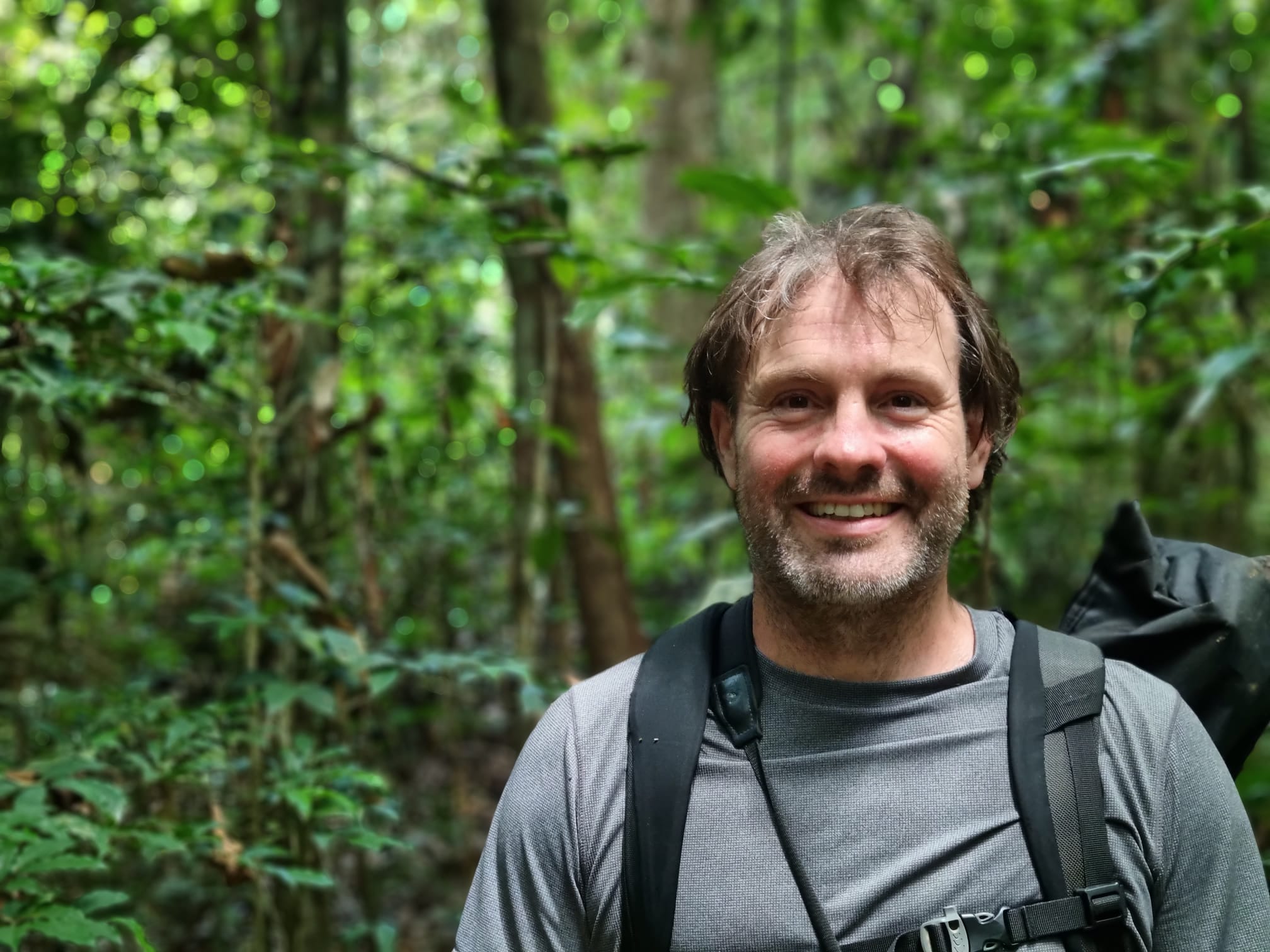
Professor Jos Barlow is a Distinguished Professor of Conservation Science at the Lancaster Environment Centre, University of Lancaster. His research focuses on understanding how human activities impact tropical forest biodiversity and ecosystem services, with a primary focus on the Brazilian Amazon. He co-founded the Sustainable Amazon Network (Rede Amazônia Sustentável) and serves as a Trustee of WWF-UK, Lead Author for the UN’s Science Panel for the Amazon, and Editor-in-Chief of the Journal of Applied Ecology. His work integrates field studies, collaborative networks, and policy engagement to address environmental and socio-economic challenges in tropical regions. Research Interests: Human impacts on tropical forest biodiversity Ecosystem services and climate resilience Amazonian forest dynamics and restoration Socio-ecological trade-offs in land-use change Publications: His recent work explores insect acoustic activity in Amazonian forests, holistic conservation strategies, and biodiversity database development. Key themes include climate impacts, deforestation drivers, and secondary forest regeneration. Advising: Supervises 4 postgraduate students, including Matthew Clark, Pablo Gallego Anex, and Oana Resiga. Collaborates with institutions like the Federal University of Pará, Brazil. Labs/Teams: Active in the Lancaster Environment Centre and co-leads the Sustainable Amazon Network, fostering interdisciplinary research on conservation and sustainable development.
Prof. Dr. J. Ellers is a Full Professor at the Faculty of Science, Vrije Universiteit Amsterdam , and a member of the Amsterdam Institute for Life and Environment . His research focuses on understanding how an individual’s phenotype is shaped by interactions between genes, genome, and environment , employing molecular, physiological, and experimental tools within an evolutionary framework. Ellers contributes to the Netherlands Society of Evolutionary Biology (NLSEB) as a co-founder and serves as Vice-Chair of the Dutch Biology Council , advocating for biology research and education in the Netherlands. Research Interests: Ellers explores the intersection of evolutionary biology, ecology, and environmental science , with key themes in phenotypic plasticity, urbanization effects on species, trait-based ecology, and adaptive signaling . His work spans soil fauna dynamics, invasive species impacts, and metabolic adaptations , emphasizing interdisciplinary approaches to link mechanisms with ecological and evolutionary outcomes. Recent Publications highlight trends in urban ecology, climate change impacts, and trait evolution . Notable studies examine how noise and light pollution alter animal communication , high-sugar diets affect microbiomes , and robot morphologies reflect biological systems . His research also addresses data interoperability through initiatives like ShareTrait and global soil arthropod assessments . Scientific Contributions: Ellers advocates for open-access publishing and interdisciplinary climate change experiments. His leadership in the Dutch Biology Council and co-founding of NLSEB reflect sustained commitment to scientific policy and community engagement. Supervised 23 PhD theses and teaching courses like Ecosystem Services and Scientific Advocacy underscore his mentorship and educational impact.
Dr. Heather Campbell is a Senior Lecturer in Entomology at Harper Adams University's Agriculture and Environment Department. Her research focuses on insect biodiversity conservation, community ecology, and social insects, particularly in arid ecosystems of southern Africa. She employs citizen science and explores insect-plant interactions to address ecological challenges. Professional affiliations include Fellowship of the Royal Entomological Society and membership in the British Ecological Society. Education includes a PhD, MSc, and BSc (Hons) in relevant fields. Key research interests span ant ecology, biopesticide development, and sustainable pest control strategies in agricultural systems. Recent work emphasizes integrating citizen science for biodiversity mapping and leveraging technology in ecological research education. Publications highlight innovative approaches to pest control, ant behavior studies, and global entomology priorities. Her work bridges academic research and practical applications, such as developing lure-and-kill systems for thrips and advancing biopesticide solutions for crop pests. Ongoing projects include exploring the impacts of climate change on insect communities in arid regions. Dr. Campbell actively advises on entomology education and outreach, contributing to public understanding of insect conservation through visual guides and media engagement. She leads the Entomology Group at Harper Adams University, fostering collaborative research networks across Africa and the UK.
Karin Wendin is a Professor in Food and Meal Science at the Department of Food and Meal Science, Faculty of Natural Science, Kristianstad University. She also maintains an Associate Professor position at the University of Copenhagen since 2012. Her research is centered within the Food and Meals in Everyday Life (MEAL) research group and she plays a key role in the Centre for Food, Health and Retail at Kristianstad University (FOHRK). Dr. Wendin earned her PhD in 'Sensory Dynamics in Emulsion Products Differing in Fat Content' from Chalmers University of Technology in 2001. Her academic career spans over two decades with significant contributions to sensory science and food research. She has collaborated extensively with research institutes including RISE and has held visiting researcher positions at the University of Copenhagen. Wendin's primary research focus is sensory science, defined as 'the discipline that evoke, measure, analyze and interpret reactions to characteristics of food and other materials perceived by the human senses.' Her work investigates how chemical and physical food properties influence human sensory perception through sight, smell, taste, touch and hearing. A substantial portion of her research addresses health, wellbeing, and sustainability challenges, particularly in developing food products with reduced fat, salt, and sugar while maintaining sensory appeal, and exploring alternative protein sources including insect-based foods. She has specialized in adapting food products for specific demographic groups including the elderly, children, teenagers, and individuals with weight concerns. Her research methodology incorporates both objective and subjective sensory assessments using various statistical approaches from classic to multivariate methodologies. Analysis of her recent publications reveals a strong emphasis on sustainable food systems, novel food sources, historical grains in modern contexts, and sensory evaluation methods for high-value products. Her work consistently bridges scientific analysis with practical food industry applications, with many projects involving direct collaboration between academia and industry partners. The research demonstrates increasing focus on UN Sustainable Development Goals related to sustainable consumption, health, and responsible production. Professor Wendin has extensive supervisory experience across multiple institutions including University of Copenhagen, University of Borås, Linköping University, Chalmers University of Technology, Örebro University, and Lund University of Technology. She has served on examination committees for PhD defenses at institutions across Scandinavia and internationally. Her research has been funded by major organizations including Formas, Vinnova, and the Family Kamprad Foundation, as well as through contract research with industry partners where results often remain confidential. She currently leads multiple significant projects including 'Food and Drinks for Seniors' (2024-2026), 'Ending food waste from plant to plate' (2023-2026), 'Nutritious, tasty and health-promoting novel wheat products' (2022-2025), and research on prediction methods for sensory properties of high-value sustainable products. These projects reflect her commitment to addressing contemporary food challenges through interdisciplinary research that combines sensory science with sustainability and health considerations.
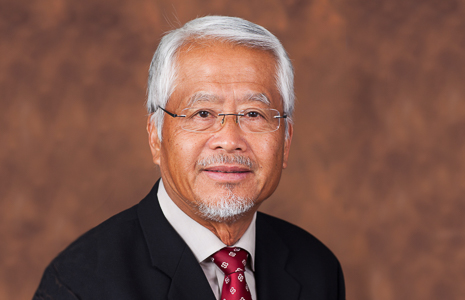
Nan-Yao Su is a Professor at the University of Florida 's Department of Entomology and Nematology, based at the Fort Lauderdale Research and Education Center . Renowned as an authority on termites, his work focuses on termite biology, population ecology, and innovative control strategies. Established the Sentricon baiting system for termite population control, reducing global pesticide use by over 9,000 metric tons. Recipient of the Presidential Green Chemistry Challenge Award for environmentally sustainable pest management. Technical advisor to governments of New Zealand, China, and Vietnam on termite issues. Research Interests span termite foraging behaviors, microbe interactions within colonies, and development of novel termite control tools. His work bridges fundamental biology with practical area-wide management programs, funded by royalty income from the Sentricon system and USDA-ARS grants. Scientific Contributions include over 260 peer-reviewed publications, with key studies on Formosan subterranean termites' economic impact (e.g., $300M annual losses in New Orleans) and drywood termite dispersal mechanisms. His research has led to standardized identification keys for Florida termites and advanced detection methods like termite-sniffing dogs and chemical barriers. Publications reveal a focus on invasive termite species, chitin synthesis inhibitors, and eco-friendly pest management. Awards include: Presidential Green Chemistry Challenge Award (2019) Establishment of the Nan-Yao Su Award for Innovation in Entomology
Dr. Jesse Vermaire is an Associate Professor in the Department of Geography and Environmental Studies at Carleton University . With a Ph.D. from McGill University and M.Sc. from the University of New Brunswick, his research focuses on the impacts of environmental change on freshwater ecosystems, particularly climate warming, nutrient enrichment, and extreme events like droughts and storm surges. His lab employs paleolimnological techniques and long-term datasets to study ecosystem resilience and recovery. Education: B.Sc. Honours (University of Guelph), M.Sc. (UNB), Ph.D. (McGill) His work spans multiple subfields, including microplastic pollution, metal contamination from historical mining, wildfire effects on lakes, and riparian development impacts. Recent publications highlight studies on plastic ingestion by Arctic seabirds, legacy arsenic pollution in Cobalt, Ontario, and critical thresholds for freshwater conservation. Collaborations with researchers like S.J. Cooke and J.P. Smol demonstrate his interdisciplinary approach. Key trends in his 15 most recent articles include: 1) Quantifying microplastic pollution in diverse ecosystems (Arctic, mangroves, agricultural soils); 2) Analyzing historical contamination impacts (arsenic, gold, lead mining); 3) Investigating climate-fire-sediment interactions; 4) Advancing monitoring methodologies (community science, multi-matrix sampling); 5) Critiquing environmental restoration practices; and 6) Developing evidence-based conservation frameworks.
Karen Abbott is a Professor and Associate Chair in the Department of Biology at Case Western Reserve University, specializing in theoretical population and community ecology. Her research employs mathematical modeling to investigate species distributions, abundance fluctuations, and ecological pattern formation. Her primary research interests include: Theoretical Population and Community Ecology Spatial Synchrony in Forest Insect Outbreaks Plant-Herbivore Dynamics and Inducible Defenses Evolutionary Responses to Climate Change Invasive Species Spread Mechanisms Ecological Time Series Analysis Recent publications (2023-2025) reveal strong emphasis on spatial ecology, transient dynamics, and network theory applications. Key trends involve modeling synchrony in ecological oscillators, life history effects on consumer-resource systems, and environmental stochasticity impacts on population cycles. Her work frequently addresses how new biologically-motivated models improve understanding of unexplained ecological phenomena. Scientific awards: None mentioned in provided text. Research funding includes the eMB Collaborative Research project (2023) on mathematical approaches for spatial synchrony in ecology. While specific student advisees aren't listed, her faculty role suggests graduate and undergraduate mentoring. Her lab maintains active research in theoretical ecology as evidenced by continuous publication output. She leads the Abbott Lab (https://abbottlab480702554.wordpress.com/), which focuses on mathematical modeling of ecological systems, investigating spatial synchrony, plant-herbivore interactions, climate change effects, and transient dynamics in population cycles.
David Lentink is a Full Professor of Biomimetics at the University of Groningen , leading the Biomimetics Group within the Faculty of Science and Engineering. His research bridges biomechanics, aerospace engineering, and robotics, focusing on avian flight mechanics and bio-inspired aerial robotics . Previously at Stanford University, he pioneered the development of the Aerodynamic Force Platform and low-turbulence wind tunnels for animal flight studies. Education : PhD in Aerospace Engineering (Stanford), MSc in Mechanical Engineering (Delft), BSc in Mechanical Engineering (Delft). Research Interests : Understanding bird flight biomechanics to design advanced drones, studying evolutionary adaptations in flight, and developing biohybrid robots with real feathers. Scientific Awards : Dutch Academic Year Prize for the Flight Artists (2013). World Economic Forum Young Scientist under 40 (2013). Alumnus of the Young Academy of The Royal Netherlands Academy of Arts and Sciences. Labs : The Lentink Lab at Groningen’s Linnaeusborg campus integrates bird aviaries, wind tunnels, and maker spaces for bio-inspired robotics development. His team collaborates globally with institutions like Stanford, TU/e, and Sorama.
Amanda N. Laubmeier is an Assistant Professor in the Department of Mathematics & Statistics at Texas Tech University. Her research integrates mathematical modeling with ecological systems, focusing on predator-prey dynamics, pest suppression, and biodiversity mechanisms. She holds a Ph.D. in Applied Mathematics from North Carolina State University (advised by H. T. Banks) and a B.S. in Mathematics from the University of Arizona. Her postdoctoral work at the University of Nebraska-Lincoln (under Richard Rebarber and Brigitte Tenhumberg) further developed her expertise in ecological modeling. Her research interests emphasize theoretical exploration and data-driven validation of ecological processes, particularly in agricultural and climate-sensitive contexts. Key areas include predator community dynamics, temperature effects on ecosystems, and the compatibility of biological control with pesticides. She actively engages in scientific outreach to promote inclusivity in academia and supports underserved communities in STEM. Her recent publications explore topics such as trap crop efficacy, predator-prey models under climate change, and parameter estimation in ecological systems. These studies highlight interdisciplinary approaches combining mathematical theory with empirical validation. She also contributes to educational initiatives like the Science Meets Popular Culture Speaker Series, bridging academic research with public engagement. Laubmeier advises students through her research group, which focuses on ecological modeling projects. While no named advisees are listed, her group’s work is detailed on her website. Her grants and funding history are not explicitly mentioned, but her CV (dated Jan. 2025) likely provides further details. She advocates for inclusive academic practices and integrates outreach into her professional activities.
Joana Falcao Salles is a Professor in the Faculty of Science and Engineering at the University of Groningen, leading the Salles Lab focused on Microbial Community Ecology. Her research integrates ecological and evolutionary theories to understand microbial community formation and their environmental impacts. She holds a PhD from Leiden University (2005) and has held academic positions since 2008. She serves as Treasurer on the Executive Board of the International Society for Microbial Ecology (ISME). Her expertise spans microbial ecology in soils, plants, and animals, with a focus on microbial diversity, invasion dynamics, and symbiotic relationships. Key projects include studying salt marsh microbiomes, plant-microbe interactions in agriculture, and the role of microbiomes in host immunity. She has secured grants for initiatives like PotatoMETAbiome and INSECTFEED, advancing sustainable agriculture and circular economy solutions. Salles has published over 150 peer-reviewed articles, with recent work on microbial solutions to climate change, antibiotic resistance, and gut-brain axis interactions. Her lab collaborates globally, addressing challenges in environmental sustainability and public health.
Dr. Joshua T. Vogelstein is an Associate Professor in the Department of Biomedical Engineering at Johns Hopkins University, holding joint appointments in Biostatistics, Applied Mathematics & Statistics, Neuroscience, and Computer Science. He leads the NeuroData lab, focusing on big data science, machine learning, and connectomics. Education: PhD and MSE in Neuroscience and Applied Mathematics from Johns Hopkins (2009), BS in Biomedical Engineering from Washington University (2002). Notable achievements include co-founding the Open Connectome Project (acquired by APL) and Gigantum (acquired by NVIDIA). Recognized with the NSF CAREER Award (2020), F1000 Prime (2014), and multiple Johns Hopkins Discovery Awards. Research emphasizes statistical connectomics, network science, and applying AI to biomedical challenges. Key contributions include mapping the first insect brain connectome (Science 2023) and developing open-source tools like CloudReg and BrainLine. Collaborates with Microsoft Research and industry partners, co-founding ventures like Global Domain Partners and Mind-X. Advised over 60 trainees, teaches machine learning and data science. Promotes open science through NeuroData's ecosystem of tools and data. Current work explores organoid intelligence, prospective learning, and neural network dynamics.
Nicholas H. Oberlies is the Patricia A. Sullivan Distinguished Professor of Chemistry and Graduate Director (MS and PhD) in the Department of Chemistry and Biochemistry at the University of North Carolina at Greensboro (UNC-Greensboro). He holds a B.S. in Chemistry from Miami University (1992) and a Ph.D. in Medicinal Chemistry and Pharmacognosy from Purdue University (1997). Before joining UNC-Greensboro in 2009, he conducted research at the Research Triangle Institute (RTI) under Drs. Mansukh Wani and Monroe Wall, renowned for discovering Taxol and Camptothecin. Serves as Principal Investigator for projects funded by the National Cancer Institute (NCI), National Institute of General Medical Sciences (NIGMS), and National Center for Complementary and Alternative Medicine (NCCAM). Research focuses on isolating bioactive compounds from fungi, plants, and bacteria for drug discovery and herbal drug standardization. Key projects include anticancer drug leads from filamentous fungi, milk thistle's hepatoprotective mechanisms, and drug-herb interaction studies. His lab collaborates across disciplines, including pharmacology, virology, and metabolism. Notable awards include the Matt Suffness Young Investigator Award and recognition as a Fellow and Past President of the American Society of Pharmacognosy. Current research teams include postdoctoral scientists, graduate (Ph.D.) students, and undergraduates. His group emphasizes team-based approaches, with projects published in journals like Proceedings of the National Academy of Sciences and Nature Chemical Biology . Labs and facilities include advanced NMR, mass spectrometry, and cell culture setups. Ongoing work explores natural product synthesis, drug delivery systems (e.g., lipid nanoparticles), and metabolomics-guided studies on honeybee diets.
Katherine Berthon is a postdoctoral Research Fellow at the Department of Zoology, University of Cambridge. Her work focuses on urban biodiversity, agroecology, and invasive species impacts. University: University of Cambridge Department: Zoology Academic Rank: Research Fellow Her research emphasizes: Urban Ecology and biodiversity conservation Regenerative agriculture practices Invasive species management (notably myrtle rust) Pollinator dynamics and green infrastructure Recent publications highlight trends in: Designing urban habitats for arthropods Green roof integration in cities Climate-resilient agricultural systems Policy frameworks for biodiversity-sensitive urban design
Terry A. Wheeler is a Professor at Texas A&M AgriLife Research in the Department of Plant Pathology and Microbiology , based in Lubbock. Her work focuses on managing soilborne pathogens affecting cotton, including nematodes and fungal diseases like Verticillium and Fusarium wilt. Research Interests : Identification and management of cotton plant pathogens Testing chemical/biological seed treatments for nematode control Systems-based projects analyzing tillage, irrigation, and crop rotation effects on pathogens Publication Trends : Recent articles emphasize cotton variety resistance to nematodes/fungal wilts, field trial methodologies, and integrated pest management strategies across Texas High Plains production systems. Scientific Contributions : Conducted multi-year variety screening trials for bacterial blight and wilt resistance Developed nematode management protocols for cotton producers Provided extension resources for regional pest/disease control Education : B.S. in Plant Science, Worcester Polytechnic Institute M.S. in Plant Pathology, Texas A&M University Ph.D. in Plant Pathology, North Carolina State University
Dr. Marcell K. Peters is a Senior Academic Councillor at the Chair of Animal Ecology and Tropical Biology (Zoology III) at the University of Bremen. His research focuses on biodiversity patterns, ecosystem functioning, and climate-land use interactions in tropical and montane environments, with extensive fieldwork in East Africa and the Amazon. He leads projects under DFG and EU funding, including the UPSCALE initiative. Habilitation in Zoology (University of Würzburg, 2018) PhD in Biology (University of Bonn, 2008) Diploma in Biology (RWTH Aachen & University of Bonn, 2003) Research spans multi-taxa community ecology, army ants and ant-following birds, DNA barcoding applications, and climate change impacts on pollination networks. Google Scholar highlights recent work on climate-agriculture interactions in sub-Saharan Africa, trait-based community assembly, and network resilience in biodiversity hotspots. His publications emphasize elevational gradients, disturbance ecology, and functional diversity across Mount Kilimanjaro studies. Current affiliations include the DFG Research Unit Kilimanjaro and EU-funded UPSCALE project. He employs advanced methods like airborne LiDAR for biodiversity prediction and investigates nutrient use by ant communities across continents.