Dr. Maarten Jongsma is a senior researcher at Wageningen University & Research 's BIOS Applied Metabolic Systems department, specializing in plant-insect interactions, chemical ecology, and food flavor biotechnology. His work bridges agricultural science with molecular biology. Current research focuses on terpene-based insect resistance and glucosinolate-mediated plant stress responses Develops bioluminescent "tongue-on-a-chip" technology for flavor analysis 2012 recipient of the Making sense Prize for innovative research Active in EU-funded LVVN projects (Sensory-on-chip 2.0, TrackGene) through 2028 Recent publications examine prey-sharing behavior in aphid predators, glucosinolate-heat stress interactions, and floral volatile emissions influencing pollinator behavior. His projects integrate metabolomics with agricultural applications.
Jim O. Vigoreaux is the Breazzano Family Green and Gold Professor in the Department of Biology within the College of Arts and Sciences at the University of Vermont. His research program focuses on fundamental mechanisms of muscle biology using insect flight muscle as a model system, with particular emphasis on protein structure-function relationships and biomechanics. His educational background includes a Ph.D. from the University of Oklahoma Health Science Center (1987) followed by research associate training at the Massachusetts Institute of Technology (1987-1991). Vigoreaux's research spans five interconnected domains: Novel muscle protein characterization : Discovery and analysis of projectin (invertebrate titin homolog) and flightin Integrative muscle biology : Multi-scale investigation from molecular changes to whole-organism locomotion Thick filament biomechanics : Structural properties defining muscle type differences and disease states Muscle energetics : Supramolecular enzyme complexes in energy metabolism Myosin regulatory light chain function : Pleiotropic effects on contractile regulation and behavior His recent publications (2006-2017) reveal consistent focus on Drosophila flight muscle proteins, with increasing emphasis on evolutionary conservation, phosphorylation dynamics, and biomechanical consequences of mutations. Key recurring themes include flightin's role in thick filament stability, regulatory light chain's impact on power output, and metabolic organization in muscle cells. Vigoreaux leads a collaborative research program with extensive multi-institutional partnerships, as evidenced by co-authorship patterns showing consistent collaboration with Maughan, Reedy, Irving, and others across decades of work. His lab maintains active research in protein biochemistry, genetic manipulation, and biomechanical analysis of muscle systems. The Vigoreaux lab operates within the Marsh Life Science building at UVM, utilizing specialized equipment for muscle fiber mechanics, protein analysis, and Drosophila genetics. His work bridges molecular biology, biophysics, and evolutionary studies to address fundamental questions in muscle function.
Julian Kiefer is a Scientist at the Department of Symbiosis, Max Planck Institute for Marine Microbiology. His research focuses on marine invertebrate symbiosis, particularly the invasion dynamics of the gutless oligochaete Olavius algarvensis into the Mediterranean Sea following the Messinian salinity crisis. Research Interests: His work explores symbiotic fidelity through genetic, physiological, and ecological investigations of host-microbe interactions. Key areas include biogeochemical cycling, microbial community regulation, and evolutionary adaptations in marine environments. Recent Publications: His studies span beetle microbiomes, Wolbachia interactions, pesticide impacts on symbionts, and mollusk gene expression. These reflect interdisciplinary approaches bridging symbiosis, environmental microbiology, and biogeochemistry. Current affiliation: Department of Symbiosis, Max Planck Institute for Marine Microbiology Email: jkiefer@mpi-bremen.de
Venera Ferrito serves as Associate Professor of Comparative Anatomy and Cytology (BIO/06) at the Department of Biological, Geological and Environmental Sciences, University of Catania, where she teaches Comparative Anatomy with Embryology in the Environmental and Natural Sciences program and chairs this academic program. Her office is located at Via Androne, 81, Catania, with contact details including telephone 095 7306030, mobile 347 8051531, and emails vferrito@unict.it and ferrito.venera@mail.gte.it. Her research spans Comparative Anatomy, Cytology, Marine Biology, and Evolutionary Genetics, with specialized focus on DNA barcoding for species authentication in seafood products, phylogeography of Mediterranean marine species, and environmental stress biomarkers. She employs molecular techniques like COIBar-RFLP to combat food fraud in fish-based products while investigating genetic diversity in organisms such as killifish, blennies, and anchovies across polluted marine ecosystems. Analysis of her 15 most recent publications (2015-2020) reveals consistent application of molecular diagnostics to address food safety and conservation challenges, particularly in Mediterranean fisheries. Her work bridges laboratory cytogenetics with field studies on heavy metal bioaccumulation, demonstrating how molecular tools can validate species labeling in commercial seafood while assessing ecological impacts of pollution. She publishes extensively in high-impact journals including Food Control, Molecules, and Marine Pollution Bulletin, with collaborative research addressing real-world problems from caviar fraud to baby food safety. Her leadership in the Environmental and Natural Sciences program underscores her commitment to training future scientists in applied marine and environmental research methodologies.
Patrice Eslin is a Lecturer in Animal Biology at the University of Picardy – Jules Verne, specializing in entomology, insect physiology, and host-parasite relationships. His research focuses on immune interactions between parasitoids and Drosophila hosts, population variability of immune resistance, and the impact of climate change on host-parasitoid systems. He has supervised PhD students like Mathilde Poyet (2014) and Sébastien Havard (2009) and serves as Head of the Animal Biology department. Specialties: Entomology, Cellular Immunity in Insects Key Projects: ANR-funded CLIMEVOL (2008) on climate change impacts, Drosophila suzukii invasion dynamics Teaching: Parasitology, Cellular/Molecular Biology, Integrated Crop Protection His work explores invasive species biology, particularly Drosophila suzukii’s spread across Europe and North America, analyzing cellular immunity mechanisms and temperature effects on host resistance. He investigates reservoir plants for pest management and compares parasitoid virulence strategies in Asobara species. Administrative roles include membership in recruitment committees for UPJV since 2008. Recent publications address invasive pest dynamics, biological control strategies, and climate-driven ecological shifts.
Alex Murphy is a Senior Research Associate at the Department of Plant Sciences, University of Cambridge, focusing on plant virology and molecular plant pathology. PhD in Molecular Plant Biology, University College London (1989-1992) BSc in Botany and Genetics, University College London (1985-1988) Research Interests Dr. Murphy investigates the interplay between plant viruses, insect behavior, and host resistance mechanisms. Key areas include: Viral manipulation of salicylic acid pathways Insect-mediated virus transmission dynamics Gene silencing in plant-pathogen interactions Ecological impacts of viral infections on pollination Development of sustainable agricultural practices Computational modeling of disease spread Scientific Awards Leverhulme Fellowship (2004-2008) Cambridge University Broodbank Independent Research Fellowship (1997-2000) Dr. Murphy's work explores how viruses subvert plant defenses and alter insect behavior to enhance their transmission, with implications for sustainable crop protection. Contact: amm1013@cam.ac.uk
Kendra Sewall is an Associate Professor in the Department of Biological Sciences at Virginia Tech, focusing on animal behavior and neurobiology. Her research explores how environmental factors such as urbanization, social dynamics, and early life conditions affect cognition, communication, and neural mechanisms in songbirds. Education: Ph.D. in Animal Behavior (University of California, Davis, 2008); B.A. in Biology (Middlebury College, 2000). Appointments: Assistant Professor at Virginia Tech since 2013; Postdoctoral Fellow at Duke University and University of North Carolina, Chapel Hill. Her work investigates the interplay between environmental stressors, hormone regulation (e.g., glucocorticoids, testosterone), and behavioral adaptations in urban and rural songbird populations. Recent studies examine territorial aggression, maternal investment, telomere dynamics, and neuroplasticity in response to urbanization. Publications highlight expertise in neuroendocrinology, behavioral ecology, and urban ecology, with a focus on species like song sparrows and zebra finches. Awards include the Fralin Life Sciences Institute Young Investigator Award and NIH IRACDA/SPIRE Postdoctoral Teaching Fellowship. 2018 Service Award, Virginia Tech 2014 Fralin Life Sciences Institute Young Investigator Award ($10,000) 2013 Virginia Tech Mentoring Grant ($1,500) 2013 American Ornithologists’ Union Travel Award ($800) 2008-2010 IRACDA/SPIRE Postdoctoral Teaching Fellowship, NIH The Sewall Lab employs interdisciplinary approaches, including brain omics and gene manipulation, to study wild avian species. Current research addresses urbanization's impact on stress physiology, aggression, and genetic structure, while also exploring social complexity as a driver of communication and cognition.
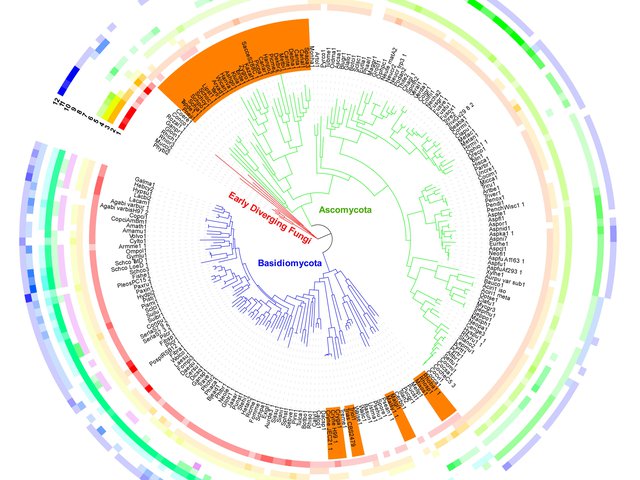
Dr. Robin A. Ohm serves as an Associate Professor in Molecular Microbiology at Utrecht University's Faculty of Science. He leads the Fungal Genomics research group, which focuses on applying functional genomics approaches to understand fungal growth, development, and pathogenesis. His work bridges fundamental research with practical applications in sustainability, particularly in food systems. Ohm's research spans fungal genomics, molecular biology, and bioinformatics, with a particular emphasis on model organisms like Schizophyllum commune. His work explores how fungi interact with their environments, develop complex structures like mushrooms, and interact with other organisms—including their roles as pathogens, symbionts, and decomposers. This research has implications for understanding fungal evolution, developing sustainable food systems, and addressing challenges in fungal pathogenesis. His extensive publication record demonstrates consistent contributions to fungal genomics, with recent work focusing on genome sequencing, gene regulation mechanisms, and the molecular basis of fungal development. Ohm's research shows strong interdisciplinary connections between basic fungal biology and applications in food sustainability and biotechnology. NWO Vidi Award (2019) ERC Starting Grant (2016) Ohm teaches multiple courses including Biotechnology, Fungal Biology, Microbial Genomics, and Research Profile Projects. His research group actively investigates fungal genomics through advanced sequencing technologies and molecular approaches, contributing to both fundamental understanding and practical applications in food sustainability. The lab maintains strong collaborations with other research groups both within Utrecht University and internationally, working on projects that span from basic fungal biology to applications in sustainable food systems.
Dr. John Stoffolano is a Professor at the University of Massachusetts Amherst, specializing in entomology with a focus on Diptera (true flies). His research spans insect physiology, neuroendocrinology, microbial transmission, and feeding behavior. Key affiliations include the Department of Biology at Princeton University (postdoctoral) and institutions like University of Connecticut, Cornell University, and State University of New York at Oneonta through his educational background. Education: Post Doctorate in Biology, Princeton University (1970-71) Ph.D. in Entomology, University of Connecticut (1970) M.S. in Entomology, Cornell University (1967) B.S. in Biology, State University of New York at Oneonta (1962) His work primarily investigates physiological and behavioral mechanisms in model species such as Musca domestica , Phormia regina , and Anastrepha ludens , with a focus on salivary glands, crop muscle dynamics, and microbial interactions. Recent studies include viral impacts on insect physiology and chitosan applications for pest management. Scientific awards or grants are not explicitly mentioned in the provided texts. Dr. Stoffolano maintains active collaborations, as evidenced by co-authorship with researchers like Victoria Salemmed and Jaime C Piñeroc. His laboratory employs advanced microscopy and bioassays to study insect-microbe relationships.
Dr. Marion Germain serves as a University Teaching Associate in the School of Biosciences at the University of Sheffield since 2021, following post-doctoral research positions at Sheffield (2018-2021) and Université du Québec à Montréal (2017-2018), plus teaching at Université Lyon II (2014-2016). Her educational background includes: PhD in Behavioural Ecology and Evolutionary Biology (University of Lyon I & Uppsala University, 2010-2014) MSc in Biostatistics and Modelling (University of Toulouse III, 2010) MSc in Biodiversity Ecology and Evolution (University of Toulouse III, 2009) Dr. Germain's research centers on behavioural ecology with dual emphases: fundamental studies of dispersal mechanisms in wild birds (examining lifetime fitness costs and habitat selection cues), and applied ecological solutions using avian bioindicators for forest pest monitoring. Her work combines long-term field studies of collared flycatchers and long-tailed tits with experimental manipulations, revealing how dispersal decisions impact reproductive success and how bird population dynamics can predict spruce budworm outbreaks years in advance. Analysis of her 2016-2023 publications demonstrates consistent focus on avian behavioural ecology, particularly cooperative breeding systems, dispersal trade-offs, and cross-species applications. Her research bridges evolutionary theory with practical conservation, showing how fundamental behavioural studies can yield tools for forest management. Dr. Germain maintains extensive international collaborations across European and North American institutions. Her applied work on spruce budworm monitoring indicates active engagement with forestry management stakeholders, though specific grant details aren't provided in available materials.
Jyoti Shah serves as Distinguished Research Professor and Chair of the Department of Biological Science at the University of North Texas, where he leads research in plant defense mechanisms since joining in 2007 after rising to Associate Professor at Kansas State University. His educational background includes: B.Sc. in Microbiology and Biochemistry (1983) from University of Bombay M.Sc. in Microbiology (1985) from University of Bombay Ph.D. in Biology (1991) from University of Notre Dame under Mary J. Clancy Shah's research program centers on plant-pathogen and plant-insect interactions, with particular focus on lipid signaling in stress responses. His lab pioneered model systems for studying aphid resistance and discovered novel roles for diterpenoids like dehydroabietinal in plant immunity and reproductive development. Current applications target engineering Fusarium head blight resistance in wheat through oxylipin pathway manipulation. His 15 most recent publications (2018-2022) reveal consistent emphasis on lipid-mediated defense signaling across multiple stress contexts, with recurring themes in aphid resistance mechanisms, diterpenoid signaling, and translational crop protection strategies. The work predominantly utilizes Arabidopsis thaliana models while increasingly incorporating wheat pathology applications. Shah's honors include UNT's University Distinguished Research Professor title, reflecting his 100+ publications with 8000+ citations. He mentors graduate students through UNT's Biochemistry & Molecular Biology program and currently leads three major USDA-funded projects: Developing New Technologies for Fusarium Head Blight resistance ($221,256; 2021-2024) Facilitation of Fusarium graminearum invasiveness by plant 9-lipoxygenase ($493,867; 2020-2023) Generating pathogen-resistant non-GMO cotton ($296,000; 2021-2024) His laboratory specializes in lipidomic analysis of plant stress responses and has developed key tools for studying phloem-feeding insect interactions, maintaining active collaborations with USDA-ARS and cotton research programs.
Andres Arce is a Senior Lecturer in the School of Biological and Chemical Sciences at Queen Mary University of London, specializing in ecology and conservation biology with a focus on pollinator health. His research integrates molecular biology, ecology, and risk assessment to investigate the impacts of environmental stressors, particularly pesticides, on bee populations. His primary research interests include pollinator conservation, pesticide risk assessment, environmental genomics, and insect toxicology. Arce employs interdisciplinary methodologies combining field studies, genomic analyses, and molecular techniques to examine how anthropogenic factors affect bee physiology, behavior, and population dynamics. His work frequently addresses critical gaps in understanding sublethal pesticide effects and historical environmental changes through innovative use of museum specimens. Arce has made significant contributions to regulatory science, most notably as a key contributor to the 2023 EFSA guidance document on plant protection product risk assessment for bees, which has been referenced in 22 policy documents and cited over 295 times. His research has garnered substantial attention, with multiple publications picked up by hundreds of news outlets and referenced in policy frameworks. His collaborative network spans international institutions, with extensive work on DNA preservation in historical specimens and the ecological dynamics of social insects. Arce's research demonstrates strong policy relevance, particularly in developing evidence-based frameworks for pollinator protection and pesticide regulation.
John R. Cooley is an Associate Professor in Residence in the Department of Ecology and Evolutionary Biology at the University of Connecticut . He holds a PhD and MSc in Biology from the University of Michigan and a BSc in Biology from Yale University, complemented by an MBA from the University of Connecticut. His research focuses on sexual selection , mating systems , and speciation in periodical cicadas (Magicicada spp.), with a particular emphasis on phylogeography , life cycle evolution , and behavioral ecology . Cooley has made significant contributions to understanding asymmetrical reproductive character displacement , geographic body size variation , and interactions with fungal pathogens like Massospora cicadina. His work often integrates molecular genetics , bioacoustics , and GIS-based mapping to analyze cicada brood distributions, hybridization dynamics, and responses to climate change. Cooley is also known for developing crowdsourced data collection methods to enhance cicada emergence mapping and for studying psychoactive alkaloid production by cicada pathogens. He maintains a strong collaborative network with researchers such as Chris Simon and David C. Marshall.
Matthew Schrader is an Associate Professor in the Department of Biology at The University of the South, where he conducts research at the intersection of evolutionary biology and behavioral ecology. His work focuses on understanding how cooperation and conflict within animal families influence evolutionary processes, particularly in the context of parental care systems. Dr. Schrader received his PhD in Biological Science from Florida State University in 2009, followed by postdoctoral positions at the University of Illinois (2009-2013) and the University of Cambridge (2013-2015). His educational background includes an MS in Biological Science from Florida State University (2003) and a BS in Zoology from the University of Florida (1997). His research program integrates multiple approaches from life-history theory, behavioral ecology, quantitative genetics, molecular ecology, and experimental evolution. Dr. Schrader primarily uses burying beetles as model organisms to investigate family dynamics, with specific projects examining adaptation to different mating systems, parental effects across generations, and communication mechanisms among family members. His earlier work explored maternal-fetal conflict in placental fish, specifically investigating how resource allocation conflicts can drive evolutionary diversification. Analysis of his 15 most recent publications (2016-2024) reveals a consistent research trajectory focused on evolutionary adaptation within family contexts. His work demonstrates sophisticated experimental approaches to studying phenotypic plasticity, particularly how social environments shape evolutionary outcomes. Key themes include parental investment strategies, sibling competition dynamics, and the coevolution of traits within family units. Evolutionary adaptation in family systems Experimental evolution approaches Phenotypic plasticity and resource allocation Parent-offspring conflict dynamics Mating system evolution Dr. Schrader actively mentors undergraduate researchers, having supervised projects by Lucy Rudman, Parker Hughes, Jack Galanek, Maddy Kaller, and Garret Lucey. He teaches Evolutionary Biology (BIOL213), Ornithology (BIOL201), Experimental Design and Data Analysis (BIOL217), and Field Biology (BIOL130), demonstrating his commitment to both research and education in the biological sciences. His laboratory maintains a strong experimental focus, using controlled manipulations of family environments to understand how social interactions generate natural selection and drive evolutionary change. This approach has positioned him as a contributor to our understanding of how family life shapes evolutionary trajectories across generations.
Prof. Dr. Ilona Grunwald Kadow is Vice Rector for Research and Young Scientists at the University of Bonn and Professor of Physiology at the Faculty of Medicine since 2022. She serves as Head of the Institute of Physiology II and leads the Grunwald Kadow Laboratory, which focuses on understanding how nervous systems enable humans and animals to adapt to environmental changes. She was elected as a member of the European Molecular Biology Organization (EMBO) in 2024, recognizing her outstanding achievements in life sciences research. Position: Vice Rector for Research and Young Scientists Institution: University of Bonn, Faculty of Medicine Department: Institute of Physiology II Research Focus: Neurogenetics of behavior, neural circuits, sensory processing Model Organisms: Drosophila melanogaster, mouse Professor Grunwald Kadow's research primarily investigates how sensations and needs influence individual behavior and decision-making. Her work spans multiple levels of analysis, examining behavior, neural circuits, and genes that control sensations and behavior. She combines neuroscience and physiology to understand brain-body communication at cellular and molecular levels. Her laboratory has made significant contributions to understanding how physiological states like hunger, reproductive status, and internal needs modulate sensory perception and decision-making processes. The research employs advanced techniques including computer-based behavioral analysis, (opto)genetics, and in vivo microscopy. Analysis of her recent publications reveals a strong focus on neural circuit mechanisms underlying state-dependent behavior. Her work frequently examines how physiological conditions alter sensory processing, with particular attention to dopaminergic signaling, glial function, and neural circuit plasticity. Her research spans multiple model systems including Drosophila, zebrafish, and mouse, demonstrating a commitment to cross-species validation of fundamental principles in neuroscience. A recurring theme across her work is how internal states gate sensory processing and behavioral output. EMBO Member (2024) ERC Starting Grant recipient EMBO Young Investigator Multiple prestigious fellowships including EMBO and Human Frontiers Science Program awards Recipient of the Otto Hahn Medal from the Max Planck Society Professor Grunwald Kadow leads the iBehave neuroscience network, which brings together scientists across disciplines to investigate survival-critical behaviors and underlying neural networks. Her laboratory maintains active collaborations and has secured significant third-party funding. She has successfully mentored numerous doctoral students and postdoctoral researchers, with several former team members establishing independent research careers. Her TEDx talk 'Sind wir die Opfer unserer Sinne?' (Are we victims of our senses?) demonstrates her commitment to public science communication.