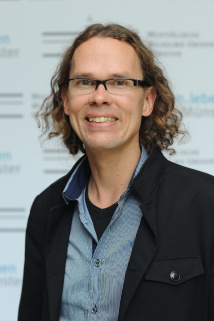
Joachim Kurtz is a Professor of Biology (Zoology) at the University of Münster, leading the Animal Evolutionary Ecology group. He holds roles including Vice Spokesperson of DFG CRC-TRR 212 and Spokesperson of DFG RTG 2220. His research focuses on host-parasite coevolution, immune system evolution, and niche construction. He completed his Dr. rer. nat. at the University of Bonn and has held positions at institutions like ETH Zurich and the Max Planck Institute for Limnology. His research interests span evolutionary ecology, immunology, and the interplay between hosts and pathogens. Notable projects include investigating the genomic basis of evolutionary innovations and the role of epigenetic regulation in beetles. He has supervised over 20 doctoral students and contributed to numerous collaborative grants, including DFG-funded initiatives. Kurtz has authored over 150 publications, with recent work exploring niche construction's impact on resistance evolution and immune memory mechanisms. His awards include the 2009 Goldener Hans and a 2006 fellowship from the Institute of Advanced Study. He serves on editorial boards for Frontiers in Immunology and Experimental Parasitology .
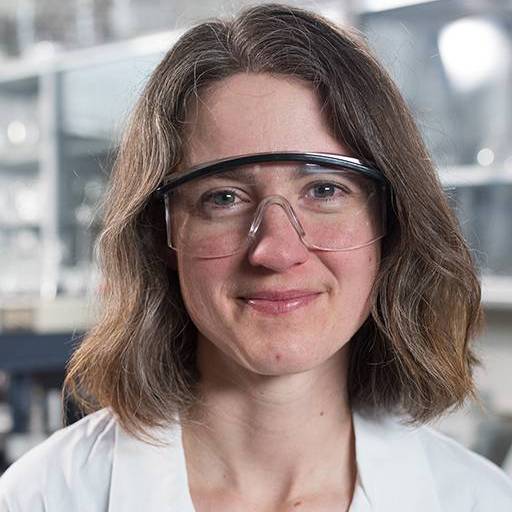
Dr. Rachael Lappan is an ARC DECRA Fellow (2023-2025) and Group Leader in the Department of Microbiology at Monash University's Biomedicine Discovery Institute. She holds a PhD from the University of Western Australia (2019), focusing on otitis media microbiome studies. Her research spans microbial ecology, aerobiology, and geobiology, with a focus on atmospheric microbiome dynamics and microbial communities utilizing trace gases. She leads the ARC-funded 'Microbial life in the atmosphere' project (2023-2025), exploring airborne microbial ecosystems' roles in health and environmental processes. Collaborations span health, biological, and earth sciences. Education : PhD in Microbiology, University of Western Australia (2015-2019) BSc (Hons) in Microbiology, University of Western Australia (2011-2014) Research Interests : Her work addresses atmospheric microbiome structure/function, microbial utilization of atmospheric gases, and microbial seeding in extreme environments (e.g., meteorites, glacial forelands). She integrates 'omics technologies, fieldwork, and bioinformatics, advancing One Health approaches for pathogen surveillance and antimicrobial resistance monitoring. Awards : Jim Pittard Early Career Award (Australian Society for Microbiology, 2022) J G Russell Award (Australian Academy of Science, 2023) Grants/Projects : ARC DECRA Fellowship (2023-2025) Leading the 'Microbial life in the atmosphere' research initiative Labs/Teams : Active in the Greening Lab, collaborating on aerobiology and microbial ecology projects. Associate Investigator in the 'Securing Antarctica's Environmental Future' initiative.
Laura Marri is an Associate Professor at the Department of Life Sciences, University of Siena. Her academic profile focuses on microbiology and microbial biodiversity, with particular emphasis on insect-microbe symbiotic relationships and environmental microbiology. She teaches courses in Biology of Microorganisms and Microbial Biodiversity to undergraduate and graduate students in Biological Sciences and Environmental Conservation. Research interests: Biodegradation of synthetic polymers through insect-associated microbial communities Functional characterization of microorganisms in insect vectors Biotechnological applications of microbial pigments and metabolites Evolutionary dynamics of primary symbionts in invasive species Scientific contributions: Recent publications highlight her work on polystyrene biodegradation mechanisms, olive fly symbiont biogeography, and microbial community analysis in plastic-eating insects. She actively investigates microbial solutions for environmental challenges through interdisciplinary approaches.
Lauren Lucas serves as a Senior Lecturer in the Department of Biology within the College of Science at Utah State University. With over a decade of service to USU and recognition as Faculty Teacher of the Year (2019), she has established herself as a dedicated educator and researcher specializing in evolutionary biology and ecology. Her work primarily focuses on butterfly systematics, population genetics, and plant-insect-microbe interactions. Other, Biological Sciences/Secondary Education, University of Wyoming, 2010 MS, Population and Conservation Biology, Texas State University, 2006 BA, Biology (Environmental Studies), St. Olaf College, 2004 Dr. Lucas's research centers on evolutionary processes in butterfly populations, particularly Lycaeides species. Her work examines genetic constraints on adaptation, hybrid zone dynamics, and the genomic basis of host plant shifts. She investigates how genetic variation influences phenotypic traits and ecological interactions, with particular attention to how these factors shape evolutionary trajectories in natural populations. Her research integrates field observations with genomic analyses to understand the mechanisms driving biodiversity patterns. Analysis of her recent publications reveals a consistent focus on butterfly-plant interactions, with increasing integration of genomic approaches since 2015. Her work demonstrates how genetic variation across multiple interacting species shapes ecological outcomes, with particular emphasis on hybrid zones, speciation processes, and adaptation to novel environments. The research often bridges fundamental evolutionary questions with practical conservation implications for specialized insect populations. Master Teacher Certificate, 2025 (Center for Empowering Teaching Excellence, USU) Mentor of UTF of the Year, 2024 (College of Science, USU) 10 years of service to Utah State University, 2023 (USU) Teaching Scholar Certificate, 2020 (Academic and Instructional Services, USU) Faculty Teacher of the Year, 2019 (College of Science, USU) Teaching portfolio workshop completion, 2016 (USU) Dr. Lucas has been instrumental in developing undergraduate research experiences, particularly through the Dr. Gene Miller Life Science Garden Laboratory. She co-received a five-year federally-funded grant to study plant-insect-microbe interactions, focusing on alfalfa and associated insect communities. Her educational research has demonstrated positive impacts of classroom research experiences on student attitudes toward science. She has advised numerous undergraduate researchers and integrated authentic research into her teaching curriculum. As co-director of the Dr. Gene Miller Life Science Garden Laboratory, Dr. Lucas oversees an experimental garden that serves as a living laboratory for undergraduate students. The garden, featuring genetically diverse alfalfa populations, supports research on plant-insect interactions, endophyte diversity, and eco-evolutionary dynamics. This facility has become a hub for participatory science, engaging both students and community members in biodiversity monitoring through the iNaturalist platform.
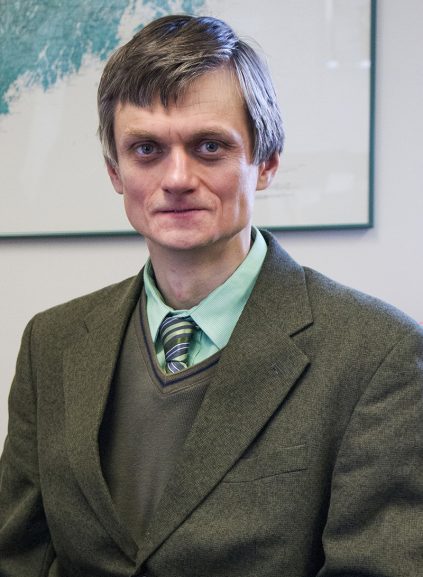
Andrei Alyokhin is a Professor of Applied Entomology at the University of Maine, affiliated with the School of Biology and Ecology within the College of Natural Sciences, Forestry and Agriculture. He is also associated with the Maine Agricultural and Forest Experiment Station (MAFES), where his research contributes to sustainable agricultural systems, particularly in potato production. His work is supported by the McIntire-Stennis program, focusing on ecological and evolutionary dimensions of pest management. Ph.D., University of Massachusetts, Amherst (1999) His research integrates ecology, evolution, and pest management to predict the impacts of human interventions—such as insecticides and transgenic crops—on insect communities. He emphasizes sustainable approaches to managing both destructive pests and beneficial organisms like pollinators. His work spans chemical ecology, population dynamics, biological invasions, and integrated pest management, with a strong focus on potato agroecosystems. The recent publications reflect a consistent focus on sustainable pest control, with emerging themes in RNAi-based insecticides, black soldier fly applications, and modeling of disease spread. His research combines molecular, ecological, and computational methods to address real-world agricultural challenges. Although no specific scientific awards are mentioned in the provided text, his publications in high-impact journals such as Nature and Pest Management Science indicate significant scholarly contributions. Alyokhin advises graduate and undergraduate students, leading a research group split between the Orono campus and the Aroostook Research Farm in Presque Isle. His lab investigates both applied and fundamental questions in entomology, with strong industry and extension relevance. While specific grants are not detailed, his work is supported by federal and institutional programs, including MAFES and McIntire-Stennis. His laboratory operates across two key locations: the main campus in Orono and the Aroostook Research Farm, managed by Aaron Buzza. This dual-site setup allows for both controlled experiments and field-based research in the heart of Maine’s potato-growing region, facilitating translational research from lab to farm.
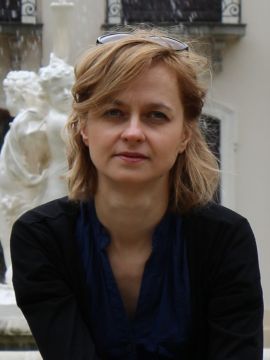
Agnieszka Hanaka is a university professor in the Department of Plant Physiology and Biophysics at the Faculty of Biology and Biotechnology, Maria Curie-Skłodowska University (UMCS) in Lublin, Poland. She currently serves as the Head of the Department and is actively involved in teaching, research, and academic leadership. Her office is located at Akademicka Street 19, 20-033 Lublin, and she holds regular consultations on Wednesdays from 10:00 to 12:00 in room 0172B. Her research focuses on plant responses to environmental stressors, including both abiotic (e.g., heavy metals, elevated temperature, copper) and biotic (e.g., insect herbivory, microbial interactions) factors. She investigates physiological and biochemical mechanisms such as oxidative stress, antioxidant systems, photosynthesis efficiency, and the role of signaling molecules like methyl jasmonate and salicylic acid. A significant aspect of her work involves studying plant-microbe interactions, particularly the role of soil microorganisms—including Mortierella species and bacteria from Spitsbergen—in promoting plant growth under stress conditions. The analysis of her recent publications (2020–2024) reveals a strong trend in environmental plant physiology, with a focus on phytoremediation, urban soil pollution, green extraction of bioactive compounds, and stress mitigation strategies in horticultural and wild plants. Her work frequently employs advanced biochemical and molecular techniques, including chlorophyll fluorescence, metabolite profiling, and experimental design optimization. She publishes extensively in journals such as International Journal of Molecular Sciences , Chemosphere , and Environmental Science and Pollution Research . Dr. Hanaka has not been publicly recognized with specific scientific awards in the provided text, but her substantial publication record (over 60 publications), high citation metrics (h-index up to 17 in Web of Science), and leadership in organizing special journal issues reflect significant academic impact. She actively mentors research and collaborates on interdisciplinary projects related to plant stress, soil contamination, and sustainable agriculture. While no formal list of students is provided, her frequent co-authorship with early-career researchers suggests an advisory role. She is involved in research on strategic heavy metal pollution in agricultural soils, antioxidant defense systems, and lipid metabolism in plant membranes. She leads a research team focused on plant biotechnology and environmental stress, contributing to both basic science and practical applications in agriculture and environmental management.
Dr. Jacob Luber is an Assistant Professor in the Department of Computer Science and Engineering at The University of Texas at Arlington, with affiliate appointments in Bioengineering and as a Guest Researcher at the National Cancer Institute (NIH). He directs the Health Data Science Lab and is a CPRIT Scholar in Cancer Research. PhD in Biomedical Informatics from Harvard University B.S. in Computer Science from Trinity University Dr. Luber's research focuses on: Building computational tools for petabyte-scale cancer imaging analysis Developing interpretable Bayesian models for oncology diagnostics Investigating microbiome impacts on cancer immunotherapy Integrating multi-omics data (single cell transcriptomics, spatial proteomics) Creating AI-driven compression/search systems for pathology slides His lab has received $2.25M in grants including CPRIT First Time Faculty Award and UT System Rising STARs Award. Recent publications demonstrate expertise in: Adversarial AI attacks on pathology models Variational autoencoder-based cancer slide compression Microbiome-driven lactate metabolism in athletes T-cell receptor-based tumor response tracking Single-cell immunology of diabetic NOD mice Polygenic risk scores for diverse populations Scientific Awards: CPRIT First Time Faculty Award UT System Rising STARs Award NSF GRFP Fellowship Keystone Symposia Travel Fellowship Function SIG/ISMB Best Poster Mach Research Fellowship Trinity CS Research Awards GCURS Research Talk Advising & Grants: Mentoring 12 active PhD/Master's students while leading a lab funded by $2M+ CPRIT grant and $250k UT STARs award. Current projects include cancer imaging search engines and microbiome-immunotherapy interactions.
MARÍA PIEDAD CAMPELO RODRÍGUEZ is a Professor at the University of León, affiliated with the School of Agrarian and Forestry Engineering and the Department of Agrarian and Agricultural Sciences. Her research focuses on the intersection of economics, sociology, and agricultural policy, with a particular emphasis on sustainable agrarian practices and biocontrol mechanisms using Trichoderma species. She is part of the research group "GUIAS Ingeniería y Agricultura Sostenible" and has contributed extensively to educational innovation in agrarian engineering curricula. Education: PhD in Agrarian Engineering from the University of León (2011), thesis on pathogenic microbiota in "alubia de León" beans and control methods. Research Interests: Sustainable agriculture, plant pathology, biocontrol, educational methodologies, entrepreneurship training, and agronomic innovation. Email: mpcamr@unileon.es Her recent publications highlight advancements in active learning strategies (e.g., Challenge-Based Learning, Lean Startup) to develop technical and social competencies in agrarian engineering students. She also investigates Trichoderma-based biocontrol for protecting bean crops against pathogens and pests. Key trends in her work include integrating entrepreneurial skills into technical education and exploring microbial interactions in agronomic systems. As a member of the "GUIAS Ingeniería y Agricultura Sostenible" group, she collaborates on projects related to integrated pest management and sustainable crop development. Her work spans both applied agricultural research and pedagogical innovation, reflecting her commitment to bridging technical knowledge with social and economic competencies in agrarian education.
Dr. Maximilian Lehenberger serves as a Project Group Leader in the Department for Biochemistry at the Max Planck Institute for Chemical Ecology in Jena, Germany. His research program focuses on the intricate ecological relationships between ambrosia beetles and their symbiotic microbial communities within forest ecosystems. His research interests span multiple interconnected domains: Biochemistry of plant-insect interactions Plant-Aphid and Plant-Pathogen Interactions Plant-Environment Interactions and Conifer Defense mechanisms Detoxification pathways and Mode of Action studies Forest Beetle ecology and symbiotic relationships Dr. Lehenberger's publication record reveals a consistent research trajectory examining the biochemical, genetic, and ecological dimensions of ambrosia beetle symbiosis. His work bridges microbiology, entomology, and chemical ecology to unravel how these insects cultivate fungal gardens in nutrient-poor substrates while managing complex microbial communities. His notable recognition includes: 2023: Förderpreis der Ingrid Weiss / Horst Wiehe Stiftung for research on symbiotic microbial communities in fungus-farming ambrosia beetles As leader of the 'Forest Beetles and Friends' project group, Dr. Lehenberger directs research investigating the biochemical mechanisms that enable ambrosia beetles to farm fungi in forest environments. His team employs genomic, biochemical, and ecological approaches to understand these specialized symbiotic systems and their implications for forest health and ecosystem dynamics.
Valerie Polonais is a Researcher affiliated with the IUT Clermont Auvergne at Université Clermont Auvergne . Her research focuses on microbial genomics, particularly the study of microsporidian pathogens, with emphasis on genome annotation workflows, protein localization, and comparative genomics. She has contributed to understanding the genetic mechanisms of these obligate intracellular parasites through analysis of model organisms like Drosophila melanogaster. Key research themes include: Microbial genome sequencing and annotation Host-pathogen interactions at molecular level Evolutionary genomics of minimal eukaryotic organisms Development of bioinformatics tools for genomic analysis Her work bridges fundamental microbiology with computational approaches, addressing both basic science questions and potential applications in infectious disease research. Recent studies emphasize functional characterization of polar tube proteins and genomic features of parasitic microbes.
Dr. Maricelis Acevedo is an International Research Professor at Cornell University's School of Integrative Plant Science, leading global agricultural initiatives to enhance crop resilience and food security. She directs the USAID-funded Feed the Future Insect-Resistant Eggplant Partnership and serves as Associate Director for Science in the Delivering Genetic Gain in Wheat project. Her work focuses on wheat and eggplant disease resistance, climate change adaptation, and capacity-building in South Asia and Africa. Education: BS in Biology (University of Puerto Rico), MSc in Crop Improvement (University of Puerto Rico), PhD in Plant Pathology (University of Nebraska). Postdoctoral training at USDA-ARS. Prior roles include Cereal Rust Pathologist at North Dakota State University. Research Interests: Host resistance mechanisms, integrated pest management, molecular biology of plant pathogens, technology adoption by farmers. Key projects include deploying Bt eggplant in Bangladesh and developing rust-resistant wheat varieties globally. Grants: $4.6M Feed the Future Eggplant Partnership (2020-2026), $34.5M Delivering Genetic Gain in Wheat (2016-2020), $6.4M South Asia Eggplant Improvement (2015-2020). Awards: 2010 Jeanie Laube Borlaug Women in Triticum Award. Labs/Teams: Collaborates with the Borlaug Global Rust Initiative (BGRI), Delivering Genetic Gain in Wheat consortium, and South Asian agricultural partners. Active in training PhD students and mentoring global scientists.
Prof. Mitja Remus-Emsermann is a Professor of Microbiology at Freie Universität Berlin since 2021, leading the Remus-Emsermann Group. Previously, he held academic roles at the University of Canterbury (2016–2021), including Senior Lecturer and associated investigator at the Biomolecular Interaction Centre. His research focuses on phyllosphere microbiology, bacterial colonization dynamics, and plant-microbe interactions, using advanced microscopy and genetic tools like the Chromatic Bacteria fluorescent tagging system. Education: PhD in Microbial Ecology, Dutch Institute for Ecology, 2012 _DIPLOMA IN BIOLOGY (Major in Botany and Microbiology), University of Bonn, 2007 Research Interests: His work explores spatial organization of microbial communities on plant surfaces, biocontrol strategies, antibiotic resistance in environmental bacteria, and tri-trophic interactions between plants, microbes, and herbivores. Key methodologies include confocal microscopy, spatial statistics, and genetic engineering of environmental bacteria. Grants & Awards: 2020–Present: Editorial advisory board roles for Journal of Basic Microbiology and Plant-Environment Interaction 2018: University of Canterbury Early Career Research Award 2010: NERN Publication Award for seminal work on bacterial reproductive success Lab & Collaborations: The lab develops tools like the Chromatic Bacteria system to study microbial behavior in natural habitats. Current projects include gnotobiotic plant-insect systems to trace microbiome impacts on herbivory and sustainable agriculture strategies.
Dr. Christophe LeMoine is a Professor in the Department of Comparative Animal Physiology at Brandon University. His research focuses on metabolic regulation and physiological adaptations in animals facing environmental and physiological challenges. He leads a lab investigating metabolic pathways at cellular and organismal levels, with a particular emphasis on plastic biodegradation (e.g., in waxworms), microplastic impacts, and climbing goby physiology. His work integrates biochemical, molecular, and evolutionary approaches. He teaches courses including Human Anatomy and Physiology, Animal Physiology, and Environmental Animal Physiology. Recent lab news highlights collaborations on plastic-eating insects and student achievements, such as NSERC scholarships and thesis defenses. Research interests include metabolic plasticity, microbiome roles in plastic digestion, and evolutionary adaptations. His lab uses zebrafish, Galleria mellonella, and climbing gobies as models. Collaborations with Bryan Cassone and others have yielded studies on polyethylene metabolism and microplastic effects. He supervises graduate and undergraduate students in projects addressing metabolic consequences of environmental stressors and gene knockdown techniques. Lab members have published on topics like waxworm microbiomes, microplastic transcriptional effects, and climbing goby locomotion. Teaching responsibilities include advanced courses in biomedical techniques and environmental physiology. Current opportunities exist for undergraduate research assistants in zebrafish and waxworm projects.
Els van de Zande is a researcher affiliated with Wageningen University & Research , specializing in leveraging insect-derived residual streams to improve crop growth and resilience. Her work aligns with circular agriculture principles, focusing on sustainable applications of insect frass and exuviae in agricultural systems. Research Interests : Soil amendment with insect waste, plant health enhancement, biological pest control, rhizosphere microbiology, circular economy in agriculture, and sustainable feed production. Publications & Projects : Her 2024 PhD thesis, Improving crop growth and resilience utilising residual streams from insect production , and a co-authored article in Functional Ecology highlight her contributions to understanding how insect exuviae improve plant resistance to pests. She has also co-authored multiple reports on insect-based sustainable feed systems. Collaborations : Works closely with Prof. Marcel Dicke (Promotor) and Dr. Joop van Loon (Promotor) on projects exploring insect waste applications.
Sven Warris is a researcher at BIOS Applied Bioinformatics within Wageningen University & Research. His work spans bioinformatics, genomics, and microbiome studies, with a focus on developing computational tools for genomic and metagenomic data analysis. PhD in Bioinformatics (2013-2019), Wageningen University Research Interests: Bioinformatics tool development for high-throughput data Gut microbiome analysis in insects Symbiotic virus colonization in parasitoids Metagenomic approaches to disease-suppressive soils Scientific Contributions: Developed Pacasus for palindromic sequence correction Contributed to chromosomal assembly of parasitic wasp genomes Studied gut bacteria impact on arbovirus transmission Advancing functional amplicon sequencing methodologies Projects: Microservices to connect genetic maps to (pan)genomes (2019) Low-cost high-performance biocomputing (PhD project, 2013-2019)