Jeri Barak is a Professor and Associate Dean for Academic Affairs at the University of Wisconsin-Madison's College of Agricultural and Life Sciences. She leads the Barak Lab, focusing on bacterial-plant interactions with implications for food safety. Education : BS in Marine Biology and English (San Jose State University, 1993); PhD in Plant Pathology (UC Davis, 2000) Research Interests center on how plant pathogens like Xanthomonas gardneri and Pseudomonas syringae pv. tomato alter host physiology to create niches for secondary microbes, particularly Salmonella enterica . Her work examines: Pathogen-induced apoplast modifications Bacterial community dynamics in infected plants Vector-mediated pathogen transmission (e.g., leafhoppers, thrips) Environmental factors affecting colonization Foodborne pathogen persistence Publication Trends reveal a focus on Salmonella and Xanthomonas interactions in tomato and lettuce systems. Keywords include microbial ecology, plant-pathogen dynamics, and agricultural safety. Student Mentorship highlights include advising Sofia Weinstein , who spearheaded the UW Organic Collaborative and Electric Food Truck initiative. Outreach & Education involves teaching Global Food Security (PP311) and leading initiatives like the Food Recovery Network. Her lab bridges plant pathology and public health through applied research.
Nicole Gerardo is a Professor at Emory University and Director of the Graduate Division of Biological and Biomedical Sciences. Her lab studies evolutionary ecology in insect-microbe systems, including aphid-bacteria symbioses and fungus-growing ants. Education includes a Ph.D. from University of Texas at Austin (2004) and B.A. from Rice University (1997). Research integrates experimental evolution , genomics , and field ecology to address: Mechanisms of symbiont-mediated pathogen defense Transmission dynamics in mutualisms Host immunological trade-offs Agricultural applications of protective microbes Recent work examines priority effects in symbiont colonization, monarch butterfly microbiomes, and coevolution in ant-fungal systems. Field sites span Panama, Brazil, and agricultural ecosystems.
Dagmar Woebken is Associate Professor and Head of the Department for Microbiology and Ecosystem Science at the University of Vienna, where she leads the Division of Microbial Ecology. Her research investigates microbial survival strategies in challenging soil habitats, particularly focusing on adaptation mechanisms to environmental stressors. Research encompasses three primary themes: Dormancy and reactivation dynamics in desert soil microbial communities Assembly and function of plant-associated microbiomes Ecological success factors of Acidobacteria in terrestrial environments Her group employs molecular techniques including metagenomics, stable isotope probing, and single-cell approaches (NanoSIMS, Raman microspectroscopy) combined with cultivation-based methods. Publications demonstrate expertise in: Microbial adaptation to extreme environments Plant-microbe-nutrient interactions Genomic basis of bacterial ecological strategies Recent work increasingly utilizes advanced imaging and isotopic tracing to investigate microbial processes at cellular scales. Dr. Woebken pioneered the NifMAP bioinformatic pipeline for analyzing nitrogen-fixing communities and developed methods combining Gold-FISH with NanoSIMS for targeted analysis of plant-associated bacteria. She leads research projects on microbial symbioses funded by the Austrian Science Fund (FWF). She directs a research group investigating microbial ecology across ecosystems from deserts to forests. Current projects include studies of ant-plant-microbe associations and microbe-mediated nitrogen cycling in grasslands. The group maintains collaborations with international institutions and participates in public outreach through science communication platforms.
Kathie Therese Hodge is an Associate Professor at Cornell University's School of Integrative Plant Science, specializing in fungal systematics and plant/insect pathogens. She leads the Cornell Plant Pathology Herbarium (CUP), a globally significant biodiversity repository with 300,000+ specimens. Her research focuses on fungal biodiversity, mycotoxin production in food systems, and evolutionary relationships among fungi. She also serves as Associate Director of Teaching for the School. Education: Ph.D. (1998), M.S. (1993) from Cornell University; B.Sc. (1990) from University of Toronto. Teaching includes courses like 'Magical Mushrooms, Mischievous Molds' and field-based 'Mushrooms of Field and Forest,' reaching over 300 undergraduates annually. Research Interests: Fungal classification and evolution Pathogens impacting global food systems Biohybrid robotics using fungal networks Public outreach on mycology Notable Achievements: 2024 Donald C. Burgett Distinguished Advisor Award Recipient of NSF-funded herbarium digitization projects Pioneered Paecilomyces niveus research linking fungal spoilage to patulin contamination Outreach: Leads New York State 'Peck' mushroom foray, maintains the Cornell Mushroom Blog and @cornellfungi Instagram, and advises on mushroom poisoning emergencies.
Eveline Verhulst is an Associate Professor at the Laboratory of Entomology within Wageningen University & Research, affiliated with the PE&RC (Production Ecology & Resource Conservation) research school. Her work focuses on evolutionary genetics of insects, particularly parasitoid wasps and their interactions with endosymbionts. Her research interests span entomology, evolutionary biology, and genetics with specific focus on parasitoid wasps (particularly Nasonia vitripennis), biological control mechanisms, endosymbiont relationships, CRISPR-Cas9 genome editing applications in insects, polyploidy in animal evolution, and sexual dimorphism. Her work bridges fundamental evolutionary questions with potential agricultural applications. Dr. Verhulst's recent publications demonstrate a strong trend toward applying cutting-edge genomic techniques to understand insect evolution and symbiosis. Her research combines molecular genetics with ecological perspectives, particularly examining how microbial symbionts influence host insect evolution and biological control potential. The work spans from basic mechanisms of gene regulation to applied agricultural contexts. NWO Vidi grant (€ 800.000) for research on 'How do differences between males and females evolve?' Dr. Verhulst actively supervises multiple PhD candidates including Williams, A., Sivaprakasham Murugesan, S., Guerra, F., Beekman, M., and Donner, H. Her research receives funding through various projects examining evolutionary transitions in pheromone communication, neopolyploidization mechanisms, Doublesex interactome, and defensive symbiosis in biocontrol. Her laboratory appears to focus on insect genomics, evolutionary genetics, and symbiosis research, with strong connections to agricultural applications in biological pest control.
James B Nardi serves as a Researcher in the Department of Entomology at the University of Illinois Urbana-Champaign, with 64 scholarly outputs including a 2023 Princeton University Press book. His work focuses on insect model systems like Manduca sexta and hemipterans to investigate developmental biology, immunology, and host-microbe symbiosis through cellular and morphological analyses. Dr. Nardi's research centers on Insect Immunology, Developmental Biology, and Entomology, with key investigations into hemocyte function, epithelial monolayer dynamics during metamorphosis, and microbial interfaces in insect midguts. His fingerprint analysis highlights Manduca Sexta (100%), Hemocytes (61%), and Epithelial Cells (53%) as core research pillars, utilizing advanced techniques to study tissue remodeling and immune responses. Recent publications (2018-2023) reveal concentrated exploration of insect midgut physiology and developmental transitions, particularly protein secretion during molting, luminal membrane structures in lace bugs, and abdominal epithelial remodeling in Manduca. These studies bridge Cell Biology, Microbial Ecology, and Insect Physiology, emphasizing the interplay between developmental processes and microbial associations. Scientific Awards: No awards, fellowships, or medals were documented in the source materials. Advising and grants: Information regarding student mentorship, postdoctoral supervision, or research funding sources was not provided in the available data. Laboratory infrastructure: While collaborations with Miller, Bee, and Wallace are evident, specific research teams, laboratory facilities, or institutional centers were not described.
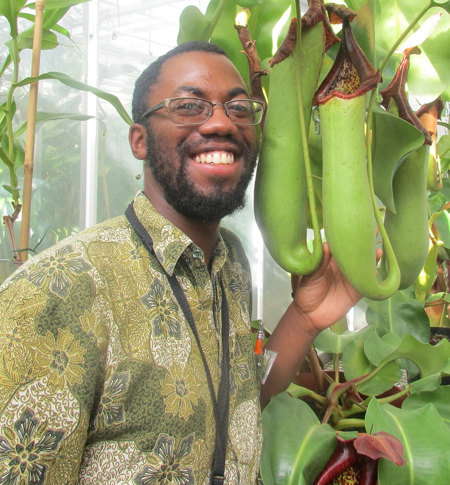
Kadeem Jamal Gilbert is an Assistant Professor at Michigan State University (MSU) affiliated with multiple programs and institutes: Plant Biology, Kellogg Biological Station, Molecular Plant Sciences Program, Plant Resilience Institute, and Ecology, Evolution & Behavior Program. His research focuses on plant-animal/microbe interactions, symbiosis, physiological regulation of leaf microenvironments, and carnivorous plants. Education: Ph.D. from Harvard University Dr. Gilbert's work integrates ecological and physiological approaches to study plant interactions with insects, microbes, and environmental gradients. His lab employs transcriptomics, chemical ecology, and community ecology frameworks to investigate carnivorous plant adaptations, phylloplane regulation, and global change impacts on species interactions. Recent publications highlight his research trajectory across plant physiology, microbial ecology, and evolutionary biology. These include studies on anthocyanin-mediated plant-insect interactions, fluid regulation in Nepenthes pitcher plants, and landscape-scale transcriptomic responses to environmental stressors. His work reveals fundamental insights about ecological filters in plant microhabitats and evolutionary tradeoffs in carnivorous species. Current research themes include plant volatile signaling in herbivore specialization, pH-mediated microbial community assembly, and ecological transcriptomics across environmental gradients. The Gilbert Lab maintains active outreach and press engagement while maintaining field sites at the Kellogg Biological Station.
Cameron Currie is a Professor in the Department of Biochemistry & Biomedical Sciences at McMaster University. His research focuses on microbial symbiosis, particularly in insect-fungus-bacteria relationships, with applications to antibiotic discovery and understanding the complex interactions in natural systems. His research interests span microbial ecology, antibiotic production, co-evolution, and biodegradation processes. He investigates the symbiotic relationships between insects (particularly ants) and microorganisms, exploring how these interactions can lead to novel drug discovery and insights into ecosystem dynamics. The recent publications of Dr. Currie cover diverse topics in microbiology, ecology, and biochemistry, with particular emphasis on lignocellulose degradation, microbial competition, fungal impacts on ecosystems, and biofilm inhibition. These articles demonstrate his focus on microbial interactions, particularly in insect agricultural systems. Dr. Currie teaches courses in drug discovery and development (BIOMEDDC 3B06) at McMaster University.
Andrea Perna is an Assistant Professor at the IMT School for Advanced Studies in Lucca, Italy, with a background in theoretical biology and biophysics. Previously, he held a Senior Lecturer position at the University of Roehampton, UK, and conducted research across Europe and Australia. His work focuses on collective animal behavior, pattern formation in biological systems, and ecology, combining experimental, computational, and mathematical approaches. Education: Degree in Biological Sciences from Scuola Normale Superiore and University of Pisa (Italy), followed by a PhD in Psychophysics (neurobiology) from Scuola Normale Superiore, Pisa. Research Interests: Collective behavior in fish schooling, termite nest architecture, biophysical principles of animal group cohesion, and the interplay between individual behavior and ecosystem properties. Notable projects include modeling trail networks in ants and exploring how environmental factors influence nest construction in termites. Labs/Teams: Leads the Networks Unit at IMT School, collaborating with institutions like the Hawk Conservancy Trust and international researchers in ecology, mathematics, and physics. Active in mentoring PhD and post-doctoral researchers in complex systems and ecological modeling. Grants/Funding: Secured funding for post-doctoral positions studying termite nest evo-devo and collaborative projects on raptor flight mechanics.
Joshua Benoit is a Professor of Biological Sciences at the University of Cincinnati, specializing in insect physiology and stress biology. His research focuses on mechanisms of insect stress tolerance, hormonal regulation of metabolism, and reproductive physiology, with applications to vector biology and pest control. He holds a B.S. in Biochemistry from Wittenberg University (2005) and a Ph.D. in Entomology and Physiology from Ohio State University (2009). His work integrates molecular, organismal, and population-based approaches to study medically important insects such as mosquitoes, tsetse flies, and ticks. Key research areas include insect lactation, dehydration tolerance, and the role of insulin in nutrient regulation. He leads the Benoit Lab , which emphasizes training biologists in diverse techniques (bioinformatics, field research, lab methods). Dr. Benoit has secured over $4.5M in federal grants, including NIH and USDA funding for projects on mosquito hydration, tick biology, and parasite resistance. Recent studies explore how environmental stress impacts vector-borne disease transmission and insect reproductive bottlenecks. His work bridges fundamental biology and applied pest management strategies.
Dr. Michael Wollenberg is an Associate Professor of Biology and Department Chair at Kalamazoo College. He holds a PhD from the University of Wisconsin-Madison and a BA from Swarthmore College. His research focuses on molecular mechanisms of bioluminescence in Photorhabdus luminescens , including its interactions with nematodes and insect hosts. He investigates bacterial symbiosis, microbial ecology, and the regulation of light production genes. Dr. Wollenberg teaches courses in microbiology, molecular biology, and evolutionary biology. Education: PhD in Medical Microbiology and Immunology, University of Wisconsin-Madison BA in Biology, Swarthmore College Research Interests: Photorhabdus luminescens bioluminescence evolution, Photorhabdus -nematode symbiosis, bacterial competition dynamics, and microbial community ecology. His lab uses interdisciplinary approaches including genetics, biochemistry, and computational biology. Grants & Awards: NSF ISO 1755230 (2018–2022) NSF Graduate Research Fellowship (2005–2008) NIH Traineeships in Oral Health & Microbial Disease (2010–2013) Teaching: Courses include BIOL 322 General and Medical Microbiology , BIOL 295 Computational Tools for Biologists , and BIOL 112 Evolution and Genetics . He emphasizes growth mindset and active learning in his pedagogy. Lab & Outreach: The Wollenberg Lab actively involves undergraduates in research. Current projects explore bioluminescence regulation and host-microbe interactions. His work has been featured in Proceedings of the National Academy of Sciences and Applied and Environmental Microbiology .
Professor James Cook is a Theme Leader for Plants, Animals and Interactions at the Hawkesbury Institute for the Environment (HIE) at Western Sydney University. He holds the academic rank of Professor and leads research focused on ecology, evolution, and symbiosis, with particular emphasis on pollination systems and insect ecology. Professor Cook received his BA in Zoology from Oxford University and his PhD in Evolutionary Biology from Imperial College London. His previous academic appointments include positions at La Trobe University, Imperial College London, and the University of Reading. Professor Cook's research interests lie at the intersection of ecology, evolution, and symbiosis , with particular emphasis on pollination systems and insect-microbe interactions . His work spans multiple scales from molecular to ecosystem levels, investigating how species interactions shape biological communities. He is particularly renowned for his expertise in fig-pollinator mutualisms and stingless bee biology . His research integrates field studies, laboratory experiments, and molecular approaches to address fundamental questions in evolutionary ecology while also addressing applied challenges in agricultural pollination and conservation biology . Analysis of Professor Cook's recent publications reveals a strong focus on pollination ecology and insect-microbe symbioses . His work spans both fundamental research on evolutionary processes and applied studies addressing agricultural challenges. A significant portion of his recent work examines stingless bees as potential managed pollinators for Australian horticulture, alongside investigations into alternative pollinators beyond honey bees. His research increasingly incorporates molecular methods to understand microbial communities and their impacts on host biology. There's also a growing emphasis on climate change impacts on pollination systems and the development of resilient pollination strategies for future agricultural systems. Natural Environment Research Council (NERC, UK) College Member (2007-2010) Royal Entomological Society Symbiosis Special Interest Group Convenor (2005-2012) Editorial Board Member, Journal of Evolutionary Biology (2005-2008) NERC Advanced Research Fellow (1998-2003) SERC Research Fellow (1993-1995) Royal 1851 Commission Research Fellow (1991-1993) Australian Entomological Society Conservation Committee Member (2017-present) Invited collaboration with Professor Wan-Jin Liao's group at Beijing Normal University Professor Cook currently leads multiple significant research projects focused on pollination services for Australian horticulture. His grant portfolio includes projects on stingless bee husbandry , alternative pollinators including flies, and pollinator health . He collaborates extensively with researchers across Australia and internationally, with projects spanning from basic research on fig-wasp mutualisms to applied studies on crop pollination. Professor Cook has authored over 70 research articles and six book chapters, demonstrating sustained research productivity throughout his career. Professor Cook's research involves extensive field, laboratory, and glasshouse work, with a strong emphasis on molecular methods. His work connects with collaborators across Australia, India, China, France, the UK, and the USA, creating a robust international research network focused on pollination ecology and insect symbioses. His leadership in the Plants, Animals and Interactions research theme at HIE provides a framework for integrating fundamental ecological research with practical applications for sustainable agriculture and conservation.
Benton Taylor is an Assistant Professor of Organismic and Evolutionary Biology and Faculty Fellow at the Arnold Arboretum, Harvard University. His research focuses on terrestrial ecosystem responses to global change drivers such as rising CO2, nutrient pollution, and extreme weather. He leads the Taylor Lab, investigating symbiotic nitrogen fixation, below-ground tree responses, and soil carbon dynamics across tropical to boreal ecosystems. His work integrates field experiments, observational studies, and global data analyses to understand feedbacks between ecosystems and climate change. Key research themes include nitrogen-fixing plant symbiosis, CO2 effects on root systems, and soil carbon sequestration mechanisms. Taylor collaborates internationally, with projects ranging from Costa Rican rainforests to Alaskan tundra. His lab emphasizes interdisciplinary approaches to address questions at molecular to ecosystem scales. Recent publications highlight novel insights into root exudation under elevated CO2, tropical nitrogen cycling gaps, and microbial mediation of tree responses. The lab actively mentors graduate students (e.g., Calvin Heslop, Carina Berlingeri) and postdocs (e.g., Lindsay McCulloch) exploring nutrient-cycling frontiers. Taylor’s team also prioritizes environmental justice through science communication and inclusive research practices, as stated in their lab’s diversity value statement.
Olaf Schmidt is a Professor at the School of Agriculture and Food Science, University College Dublin (UCD). His academic career includes roles such as Senior Lecturer/Associate Professor (2008–2017) and extends back to a Post-doctoral Research Assistant position (1999–2001). He holds a Ph.D. from UCD (2000), an M.Sc. in Soil Science from the University of Aberdeen (1993), and a Diplom-Agraringenieur from Martin-Luther-University Halle-Wittenberg (1992). Research Focus: Schmidt specializes in soil ecology, earthworm biology, stable isotope analysis, and sustainable agriculture. His work addresses topics like soil restoration, invasive species impacts, food authentication, and ecosystem rehabilitation. He leads projects such as Edaphobase 2.0 and the Gunnera tinctoria invasion studies. His research integrates molecular techniques, isotopic tracing, and large-scale data synthesis. Awards & Recognition: Fellow of the Royal Entomological Society (2023) Honorary Member of the Association of Applied Biologists (2022) Fellow of the Institute of Soil Science (2023) Teaching & Outreach: Coordinates modules on soil science, environmental microbiology, and the circular bioeconomy. Engages in public lectures on topics like earthworm contributions to soil health. Collaborates internationally, including a visiting professorship at the University of Agriculture in Kraków (2022). Grants & Impact: Contributed to the SmartGrass project, enhancing sustainable agricultural practices through multispecies swards. His work on peat alternatives and mine tailings rehabilitation has practical implications for environmental management and policy. Labs & Collaborations: Active in the Global Soil Biodiversity Initiative and Soil BON network. Edaphobase 2.0 exemplifies his data-driven approach to soil biodiversity research.
Rosario Gil García is a Professor in the Department of Genetics at the Faculty of Biological Sciences, University of Valencia. She is affiliated with the Institute for Biological Systems Integration (I2SYSBIO) and leads research within the GENEVOL Evolutionary Genetics group. Her work bridges molecular genetics, evolutionary biology, and systems biology. Her research focuses on evolutionary genetics of microbial symbioses , particularly in insects. Key areas include genome reduction, minimal genomes, endosymbiont evolution (e.g., Buchnera , Tremblaya , Wolbachia ), and the functional dynamics of gut microbiota in cockroaches and aphids. She investigates how long-term symbiosis shapes genome architecture and metabolic dependencies. The recent publication trends highlight a strong emphasis on minimal cellular systems , synthetic biology applications , and vector control strategies using Wolbachia-mediated incompatibility in Aedes albopictus . Her work combines comparative genomics, experimental microbiology, and systems-level modeling to understand the limits of life and harness symbiosis for biotechnological innovation. Scientific Awards: No awards explicitly mentioned in the provided text. Advising and Grants: While no list of advisees is provided, her role as a PhD supervisor (having been supervised herself) and her leadership in a major research group suggest active mentoring. She is likely involved in competitive research grants related to evolutionary genomics and synthetic biology, though specific funding sources are not listed. Labs and Teams: She is an integral member of the GENEVOL Evolutionary Genetics research group and the I2SYSBIO institute, both of which foster interdisciplinary research in biological systems, evolution, and genomics. These affiliations provide a collaborative environment for advanced genomic and experimental studies.