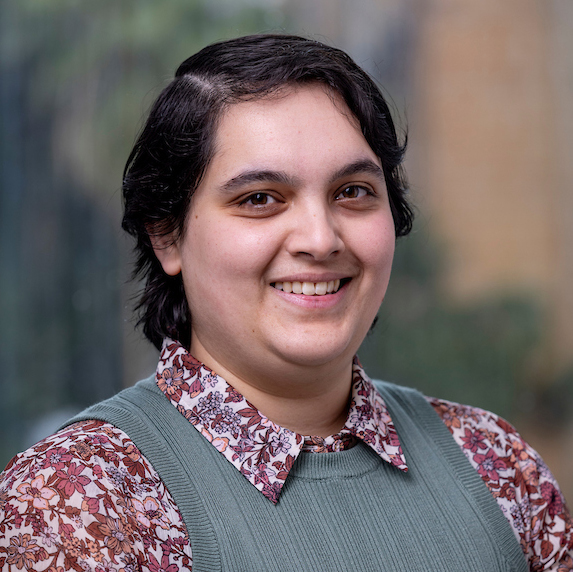
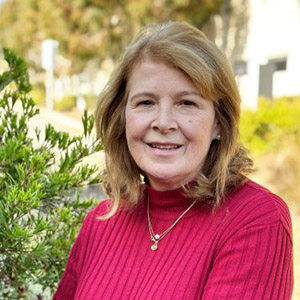
Dr Kenya Fernandes is an ARC DECRA Research Fellow at the University of Sydney's School of Life and Environmental Sciences. Her work bridges microbial ecology, drug discovery, and pollinator health. She investigates fungal pathogenesis mechanisms, antifungal therapies, and the antimicrobial properties of Australian honeys from bees and ants. Key affiliations include the Sydney Environment Institute, Sydney Institute of Agriculture, and the Centre for Drug Discovery Innovation. Her research emphasizes the ecological role of microbial communities in pollinator health, with a focus on stingless bees and their sugarbag honey. Recent studies explore how hive stress impacts honey activity and bee gut microbiomes. She also develops novel antifungal strategies using lactoferrin and amphotericin B combinations. Teaching responsibilities include lecturing in microbiology courses (MICR3021, MICR2031) and developing online content for infection biology. Currently supervises 2 PhD students and has guided 7 honours researchers in microbiology-related fields. Notable achievements include the 2025 Superstar of STEM title, multiple best presentation awards at international mycology conferences, and media recognition for discoveries on ant honey antimicrobial properties. Her work has been featured in outlets like The Guardian and Science magazine.
Professor James Cook is a Theme Leader for Plants, Animals and Interactions at the Hawkesbury Institute for the Environment (HIE) at Western Sydney University. He holds the academic rank of Professor and leads research focused on ecology, evolution, and symbiosis, with particular emphasis on pollination systems and insect ecology. Professor Cook received his BA in Zoology from Oxford University and his PhD in Evolutionary Biology from Imperial College London. His previous academic appointments include positions at La Trobe University, Imperial College London, and the University of Reading. Professor Cook's research interests lie at the intersection of ecology, evolution, and symbiosis , with particular emphasis on pollination systems and insect-microbe interactions . His work spans multiple scales from molecular to ecosystem levels, investigating how species interactions shape biological communities. He is particularly renowned for his expertise in fig-pollinator mutualisms and stingless bee biology . His research integrates field studies, laboratory experiments, and molecular approaches to address fundamental questions in evolutionary ecology while also addressing applied challenges in agricultural pollination and conservation biology . Analysis of Professor Cook's recent publications reveals a strong focus on pollination ecology and insect-microbe symbioses . His work spans both fundamental research on evolutionary processes and applied studies addressing agricultural challenges. A significant portion of his recent work examines stingless bees as potential managed pollinators for Australian horticulture, alongside investigations into alternative pollinators beyond honey bees. His research increasingly incorporates molecular methods to understand microbial communities and their impacts on host biology. There's also a growing emphasis on climate change impacts on pollination systems and the development of resilient pollination strategies for future agricultural systems. Natural Environment Research Council (NERC, UK) College Member (2007-2010) Royal Entomological Society Symbiosis Special Interest Group Convenor (2005-2012) Editorial Board Member, Journal of Evolutionary Biology (2005-2008) NERC Advanced Research Fellow (1998-2003) SERC Research Fellow (1993-1995) Royal 1851 Commission Research Fellow (1991-1993) Australian Entomological Society Conservation Committee Member (2017-present) Invited collaboration with Professor Wan-Jin Liao's group at Beijing Normal University Professor Cook currently leads multiple significant research projects focused on pollination services for Australian horticulture. His grant portfolio includes projects on stingless bee husbandry , alternative pollinators including flies, and pollinator health . He collaborates extensively with researchers across Australia and internationally, with projects spanning from basic research on fig-wasp mutualisms to applied studies on crop pollination. Professor Cook has authored over 70 research articles and six book chapters, demonstrating sustained research productivity throughout his career. Professor Cook's research involves extensive field, laboratory, and glasshouse work, with a strong emphasis on molecular methods. His work connects with collaborators across Australia, India, China, France, the UK, and the USA, creating a robust international research network focused on pollination ecology and insect symbioses. His leadership in the Plants, Animals and Interactions research theme at HIE provides a framework for integrating fundamental ecological research with practical applications for sustainable agriculture and conservation.
Professor Femi Akinsanmi is a Professorial Research Fellow at the Queensland Alliance for Agriculture and Food Innovation (QAAFI), a research institute within The University of Queensland. His research focuses on crop protection, specifically studying the biology, epidemiology and ecology of economically significant diseases and insect pests in agricultural systems. Professor Akinsanmi holds a Bachelor of Agricultural Science and a Masters (Research) from Obafemi Awolowo University, and a Doctor of Philosophy in Plant Pathology from The University of Queensland. His educational background has equipped him with expertise spanning agricultural science and plant pathology. His research interests center around Plant Disease Epidemiology and Management, with specific focus on Diagnostics, Ecology, Biology and Management of Plant Diseases, and Host-Pathogen interactions. Professor Akinsanmi's work aims to facilitate innovative and sustainable management of crop pests using disruptive new tools that can be incorporated with less harmful existing control options in diverse farming systems. Professor Akinsanmi's recent publications demonstrate a strong focus on macadamia diseases, particularly flower diseases, husk rot, abnormal vertical growth syndrome, and Phytophthora root rot. His research spans from fundamental studies of pathogen biology to applied field studies aimed at developing practical disease management strategies for growers. He has secured substantial research funding from organizations including Horticulture Innovation Australia Limited, Grains Research & Development Corporation, and Queensland Department of Agriculture and Fisheries. Current projects include 'An Integrated Disease Management program for the Australian almond industry' and 'Macadamia Industry Benchmarking and Industry Sustainability Insights.' Professor Akinsanmi is actively supervising multiple PhD students working on various aspects of crop protection, particularly focusing on macadamia diseases, almond diseases, and walnut diseases. His supervision history shows successful mentorship of numerous PhD candidates who have researched topics ranging from Botryosphaeria branch dieback to husk spot resistance in macadamia breeding families. Professor Akinsanmi leads a research group within QAAFI that focuses on crop protection, with particular emphasis on horticultural crops. His team employs a range of methodologies from traditional plant pathology techniques to molecular approaches and field epidemiology studies to address complex disease problems in agricultural systems.
Jeremy Brownlie is an Associate Professor of Genetics and Evolution at Griffith University's School of Environment and Science, specializing in symbiotic bacteria like Wolbachia and their impact on insect biology. He leads research initiatives addressing insect-borne disease control, agricultural pest management, and human evolution through genomic studies of ancient Australasian populations. His roles include Director of the Griffith Sciences Partnerships Office and Deputy Head of his school, emphasizing external collaborations and policy advocacy. Brownlie holds a PhD from ANU and has secured significant grants, including ARC Discovery Projects, focusing on Wolbachia's antiviral mechanisms and biosecurity applications. His work bridges molecular biology, applied entomology, and human evolutionary studies, with active involvement in science policy through the National Science and Technology Council. Educations: PhD in Genetics, Australian National University (2003) BSc (Hons) in Biological Sciences, Australian National University (1996) Research Interests: Symbiont biology, pest control strategies, Wolbachia-mediated antiviral protection, and genomic analysis of human migration in Southeast Asia/Australia. Key Collaborations: Australian Research Centre for Human Evolution, Environmental Futures Research Institute, and international agricultural agencies. Grants: Over $1.5M in funding from ARC, Griffith University, and industry partners for projects on Wolbachia, biofilm diagnostics, and pest control technologies. Professional Roles: President of Science & Technology Australia (2019–2021), Board Member of the National Science Council, and leader in STEM policy advocacy. Advisory Work: Supervised over 20 PhD/MSc students on topics ranging from Wolbachia genetics to antimicrobial resistance and bioinformatics. His laboratories focus on innovative solutions for global challenges in food security, disease control, and sustainable biotechnology, with interdisciplinary approaches combining genomics, entomology, and clinical microbiology.
Senior Professor Kristine French is affiliated with the School of Earth, Atmospheric and Life Sciences (SEALS) at the University of Wollongong. She holds the position of Senior Professor since 2023 and previously served as Director of the Janet Cosh Herbarium from 1993 to 2023. Her research focuses on invasion ecology, urban ecology, and conservation biology, with a strong emphasis on invasive species management, biosecurity, and biodiversity conservation. Her work spans diverse ecosystems, including arid zones, rainforests, and urban environments. Key themes in her research include plant-invasive species interactions, restoration ecology, and the impacts of pesticides and climate change on biodiversity. She has supervised numerous postgraduate students, contributing to advanced studies in ecological processes and conservation strategies. Professor French has secured significant funding for projects addressing weed invasions, urban greenspace dynamics, and pesticide effects on fauna. Her publications reflect a commitment to interdisciplinary approaches, integrating ecology, microbiology, and evolutionary biology to solve real-world conservation challenges. Her contributions include advancing understanding of seed bank dynamics, microbial interactions in restoration, and the ecological consequences of urbanization. Despite no explicit mention of awards, her extensive grants and high-impact publications underscore her academic influence.
Professor Michelle Harvey is an academic at Deakin University's Faculty of Science Engineering and Built Environment, with a focus on blowfly biology and its applications in forensic, medical, and veterinary contexts. She serves as Associate Dean, Teaching and Learning, and is affiliated with the Centre for Sustainable Bio-Products. PhD, University of Western Australia Master of Forensic Science, University of Western Australia Graduate Certificate in Higher Education, Deakin University Bachelor of Arts (Chinese), University of Queensland Bachelor of Science (Entomology), University of Queensland Bachelor of Science in Zoology, University of Western Australia Her research priorities include: Blowfly biology and behavior Maggot/microbe interactions Forensic entomology Medical and veterinary entomology Flystrike management Wound therapy applications Recent publications focus on decomposition dynamics in aquatic environments, forensic DNA transfer, and entomological contributions to postmortem interval estimation. Key articles examine biomass loss as PMI indicators, DNA quality degradation from insect activity, and maggot/microbe interactions in forensic contexts. Scientific Recognition: 2013 Winston Churchill Fellow 2005 Western Australia Woman of the Year (Science) 2003-2004 Sir Keith Murdoch Fellow 2002 Young Australian of the Year Finalist 2001-2002 Rotary Ambassadorial Fellow As supervisor, she has guided: Dr Bianca Szkuta (2017) Dr Natalie Gasz (2020) Dr Sarah Bray (2024) Current PhD candidates including Michaela Storen and Madison Bone
Daniel Montesinos Torres is a Senior Research Fellow at the College of Science and Engineering at James Cook University (JCU), stationed at the Australian Tropical Herbarium . His research focuses on the evolutionary ecology of invasive plants, particularly their rapid adaptation to new environments through biogeographic, reproductive, and seed ecology studies. He holds a Ph.D. in Plant Biology from CSIC/Universitat de València (2007). Research Interests: Invasive Plant Ecology: Studies plant invasions as natural experiments to understand local adaptation and community responses. Biogeography: Examines how invasive and non-invasive species’ distributions reveal evolutionary patterns. Reproductive Biology: Explores reproductive barriers and trait inheritance in invasive species. Seed Ecology: Investigates seed dynamics to improve invasive species management. Professional Roles: Editor-in-Chief of Web Ecology (since 2013). Member of the Wet Tropics Management Authority Scientific Advisory Committee (2023–2026). Former Secretary of the Portuguese Ecological Society (2017–2018). Grants & Projects: Leads initiatives like Weed ID workshops for Rangers (2024–2025) and manages the Northern Australia Plant Biosecurity Facility . Current research students study tropical savanna dynamics and plant-animal interactions. Awards: Marie Curie Fellow (2012). Teaching: Taught Biological Invasions in 2023 and mentors students in plant evolutionary ecology and conservation. Labs/Teams: Based at the Australian Tropical Herbarium, collaborating on global plant invasion research.
Dr. Orpheus Butler is an ARC DECRA Fellow at Griffith University's School of Environment and Science, affiliated with the Australian Rivers Institute. His research focuses on soil organisms, biogeochemical processes, and ecosystem responses to environmental change, including fire regimes, climate shifts, and land-use alterations. He holds a postdoctoral background from the University of Sydney and the Smithsonian Tropical Research Institute. Research Interests: Butler investigates the ecology, ecophysiology, and biogeochemical roles of soil organisms in contexts such as altered fire regimes, warming, and land-use changes. His work integrates field experiments, isotopic tracing, and collaborative global analyses to understand nutrient cycling dynamics. Funded Research: ARC DECRA Grant (2023–2026): Examines plant-soil feedbacks in fire-affected ecosystems ($501,301). AAS Thomas Davies Grant (2023–2024): Explores molybdenum's role in soil formation ($4,648). Awards: ARC DECRA Fellow (2023–present) Australian Academy of Science Research Grant (2023) Labs & Collaborations: Active within Griffith's Australian Rivers Institute, focusing on interdisciplinary environmental research. Collaborates globally, including with institutions in China and Panama.
Professor Scott Johnson is a community ecologist at Western Sydney University, specializing in insect-plant interactions and pest management. He holds a PhD from the University of York, UK, and has held academic positions at the University of Reading and The James Hutton Institute before moving to Australia in 2011. His research focuses on ecosystem resilience, climate change impacts, and silicon's role in plant defense mechanisms. Education: PhD in Ecology, University of York, UK Research Interests: His work explores novel pest management strategies, atmospheric and climate change effects on ecosystems, and plant-microbe interactions. Recent projects emphasize silicon’s functional role in enhancing plant resistance to pests and environmental stressors, particularly under climate change scenarios. Key themes include root-feeding herbivores, multi-trophic interactions, and ecosystem resilience. Awards: Australian Research Council Future Fellowship (2017-2021) Natural Environment Research Council CASE Award (2010-2014) Engineering & Physical Sciences Research Council CASE Award (2007-2012) Grants & Projects: Recent projects include: "Silicon: a novel solution to reduce water use and pest damage in wheat" (2023-2027, Australian Research Council Linkage) "Improving plant resilience via silicon accumulation" (2023-2028, Horticulture Innovation Australia) "Functional role of silicon in plant biology" (2016–present) Labs/Teams: His research is conducted within the Hawkesbury Institute for the Environment (HIE), collaborating with experts like David Tissue and Markus Riegler.
Dr Elisabeth Williamson is a Postdoctoral Researcher at the University of Adelaide's School of Biological Sciences (Ecology and Evolutionary Biology department). She is affiliated with the Invertebrate Systematics and Biodiversity lab. Her research focuses on sensory system evolution in subterranean beetles and microbial interactions in bees, combining genomic and molecular techniques. Education: PhD in microbial effects on native bees, Honours in honey bee density estimation via population genetics. Current work integrates RNA analysis, genomic sequencing, and molecular evolution studies in dark biosphere organisms. Research interests include evolutionary biology, microbiology, biodiversity, and population genetics. Her recent articles emphasize methodological advancements in DNA sampling and microbiota analysis.
Commonwealth Scientific and Industrial Research OrganisationAustralia
Dr. Gunjan Pandey serves as a Senior Research Scientist at CSIRO Environment in Canberra, Australia, within the Industry Environment Program. She concurrently holds an Adjunct Fellow position at Macquarie University since 2019 and serves on editorial boards for PLOS One and Insects journals. Her academic credentials include: PhD in Biotechnology from Institute of Microbial Technology, Chandigarh, India (2005) MSc in Biochemistry from G. B. Pant University of Agriculture and Technology, Pantnagar, India (1999) BSc in Zoology, Botany and Chemistry from Kumaun University, Nainital, India (1996) Her research integrates three core domains: applied genomics leveraging bioinformatics for accelerated discovery; insect-based engineering for circular economy waste conversion; and novel gene-enzyme systems for biotechnological innovation. This work spans environmental, health, food security, and biosecurity applications through genomic and synthetic biology approaches. Analysis of her 15+ publications reveals a dominant focus on chromosomal genome assembly of ecologically and agriculturally significant organisms using long-read sequencing technologies. Key thematic clusters include pest management (cotton bollworm, fire ants), circular economy applications (black soldier fly), crop improvement (cowpea, ryegrass), and ecosystem conservation (coral reef starfish). Her scientific recognition includes: Julius Career Award (CSIRO, 2014-2016) Senior Research Fellowship (DBT/CSIR India, 2002-2004) Junior Research Fellowship (DBT/CSIR India, 1999-2001) Dr. Pandey directs multiple grant-funded initiatives including bio-inspired plastic digestion (2023-2026), insect-based waste detoxification systems (2023-2026), and organofluorine bioremediation research (2021-2024), while serving on CSIRO's Institutional Biosafety Committee since 2011. Her editorial roles in PLOS One and Insects demonstrate active scholarly engagement. As lead researcher in CSIRO's Industry Environment Program, she develops genomic solutions for sustainable resource management, with particular emphasis on insect-mediated circular economy systems and translational biotechnology applications.
Professor Peter Waterhouse is a leading molecular geneticist at Queensland University of Technology (QUT), holding dual roles as Professor of Molecular Genetics and Australian Laureate Fellow. He is affiliated with QUT’s Faculty of Science (School of Biology & Environmental Science) and serves as Program Leader at the Australian Research Council (ARC) Centre of Excellence for Plant Success in Nature and Agriculture. A Fellow of the Australian Academy of Science and recipient of the Prime Minister’s Prize for Science (2007), his work spans RNA interference (RNAi), plant genomics, and epigenetics. Education: BSc (Hons) in Plant Biology from the University of Newcastle upon Tyne (1977), PhD in Plant Virology from the University of Dundee (1981). Career highlights include leadership roles at CSIRO Plant Industry, ARC Federation Fellowships (2008–2013), and honorary professorships at the University of Sydney. He has pioneered RNAi research with over 150 peer-reviewed publications (>20,000 citations, h-index >65). Research focuses on gene silencing mechanisms, viral biology, and plant biotechnology. Notable contributions include patents on RNAi applications, recombinant antibodies, and virus-resistant plants. His work bridges fundamental science with commercialization, exemplified by collaborations with industry partners like Bayer and Cambridge Antibody Technology Ltd. Awards: Prime Minister’s Prize for Science, CSIRO Chairman’s Medal, Victor Chang Medal Patents: 11 RNAi-related patent families, recombinant antibody patents, and plant resistance patents Leadership: Scientific advisory roles for organizations including the Prime Minister’s Science Council and the Ramaciotti Centre for Gene Function Analysis His recent publications emphasize multi-omic analyses of Nicotiana benthamiana, viral resistance mechanisms, and drought response strategies in plants. Ongoing work explores terminator elements to enhance transgene expression and improve biotechnological applications.
Paul Haynes is a Professor in the School of Natural Sciences at Macquarie University, specializing in plant and environmental proteomics with an active program in bioarchaeological proteomics. He holds roles including President of the Asia Oceania Agricultural Proteomics Organisation and editorial board memberships in Proteomics and Frontiers in Plant Proteomics. His research focuses on molecular-level responses of organisms to external pressures, integrating chemical and molecular techniques. He has secured over $13.5M in research grants, including ARC Discovery and Training Centre projects. His teaching includes postgraduate units in Protein Discovery and Proteomics Technologies, alongside courses in archaeological methods. As a dedicated supervisor, he has guided 27 PhD students to completion and currently oversees five full-time PhD candidates. He received the 2017 Macquarie University Excellence in Higher Degree Research Supervision Award. Haynes' research group explores abiotic stress responses in rice, proteomic changes in Alpine vegetation, and lead exposure effects in sparrows. Collaborations span bioarchaeology, synthetic biology, and clinical proteomics. His work has led to 192 peer-reviewed papers, 4 patents, and over 14,000 citations, with an H-index of 59. Education: PhD in Chemistry (Macquarie University, 1994), postdoctoral fellowships at Rockefeller University and University of Washington Affiliations: ARC College of Experts (2019–2022), American Society for Mass Spectrometry since 1999 Research Highlights: Bioarchaeological studies using molecular techniques to uncover historical insights Development of proteomic platforms for inner ear disease mechanisms Stress-resilient crop research through proteomic analysis of rice varieties Awards: 2017 Excellence in Higher Degree Research Supervision Award Grants & Funding: ARC grants totaling $12.5M and other grants ($1M) Current projects: FAAB Training Centre, Alpine vegetation impact assessment
Belinda de Villiers is a Research Fellow and Molecular Virologist at Griffith University's Institute for Biomedicine and Glycomics. Her career spans roles including Associate Research Leader (2024–present) and prior membership in the Institute for Glycomics (2018–2024). She holds a PhD from the University of the Witwatersrand (South Africa), MSc from the same institution, and BSc Honours from Rhodes University. Her research focuses on viral disease diagnostics, including rapid assays for HIV, HTLV-1, and hepatitis B, with a strong emphasis on improving healthcare in remote regions. She has pioneered virus-like-particle screening tools for SARS-CoV-2 research and developed microfluidics-based diagnostic technologies. Educations: PhD in Molecular Virology, University of the Witwatersrand MSc by Research, University of the Witwatersrand BSc Honours in Virology, Rhodes University Research Focus: HIV transmission mechanisms, HTLV-1 diagnostics, malaria vector control, and point-of-care viral disease assays Grants & Awards: AQIRF Fellowship ($113,985) for SARS-CoV-2 research ACH2/ACH4 grants for HTLV-1 diagnostics (up to $100,000) Supervision: Co-supervises 3 PhD students on vaccine strategies and CRISPR-based HIV diagnostics Labs/Teams: Institute for Biomedicine and Glycomics Research Group Her work has advanced understanding of viral entry mechanisms (e.g., HIV glycocalyx interactions) and contributed to novel diagnostic tools like magnetized nano-glycan-traps for HIV prevention. Media highlights include breakthroughs in vaginal microbe-HIV interactions and AQIRF-funded pandemic research.
Leslie Weston is a Professor at Charles Sturt University's Gulbali Institute, specializing in Plant Biology and Natural Products Chemistry. She holds the Gulbali Research Professorship and is affiliated with the Department of Plant Biology and Natural Products Chemistry. Her research focuses on chemical ecology, plant rhizosphere interactions, microbial diversity, and sustainable weed management strategies. She has been recognized as a Fellow of the Australian Academy of Science (2023) and has received multiple awards for her contributions to agricultural research. Education: PhD in Horticulture and Natural Products Chemistry (Michigan State University, 1987), MS in Horticulture (Michigan State University, 1982), BS in Plant Sciences (Cornell University, 1980). Research interests include plant-microbe interactions, biocontrol agents (e.g., dung beetles), herbicide resistance management, and metabolomics. She leads large-scale projects on integrated weed management and sustainable agricultural practices, contributing to over 360 publications. Her work aligns with UN Sustainable Development Goals, particularly in sustainable agriculture and ecosystem conservation. Notable achievements include the development of bioherbicides, microbial metabolites for pest control, and the $270M Cooperative Research Centre on Marine Bioproducts. Awards include the Molisch and Grodzinsky Award (2005), NSW OMSR Fellowship (2008–2012), and ASHS Educational Leadership Recognition. Leslie collaborates internationally and supervises graduate students in plant science and agricultural research. Her lab explores chemical signaling in plants, rhizosphere microbiomes, and ecological engineering solutions for pest management.