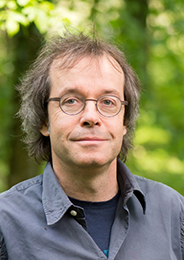
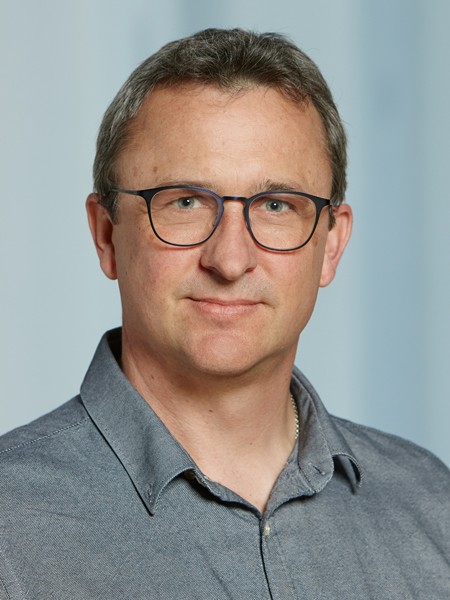
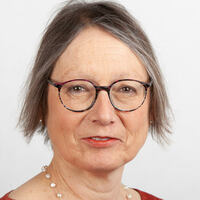
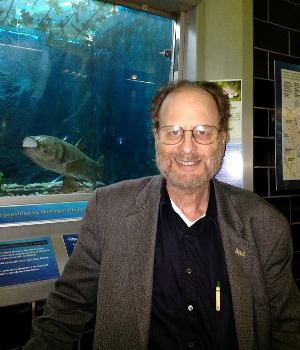
Charles L. Brockhouse is an Associate Professor in the Department of Biology at Creighton University's College of Arts and Sciences. His research focuses on black fly (Simuliidae) biology, genomics, and proteomics, with applications in public health and ecological studies. Academic Appointments: Associate Professor, Biology Department Research Themes: Vector biology, molecular ecology, horizontal gene transfer Dr. Brockhouse's work bridges science with the Catholic Intellectual Tradition, emphasizing interdisciplinary perspectives. His recent publications highlight advancements in Simulium genome analysis, CO2 receptor genetics, and aquatic silk proteins. Key presentations include topics on river blindness control and ecological genomics at international symposia. Scientific Awards: No direct mentions in provided text
Luca Fumagalli is an Associate Professor at the University of Lausanne since 2023, leading the Conservation Genetics Section within the Department of Ecology and Evolution under the Faculty of Biology and Medicine . With a career spanning over two decades at the University of Lausanne, he has held roles such as Maître d'enseignement et de recherche (2005–2022), Privat-docent (2002–2022), and Maître-assistant (2000–2022). Research Interests: His work focuses on conservation genetics , molecular ecology , and environmental DNA (eDNA) metabarcoding , addressing critical issues like hybridization between species , genetic diversity loss , and non-invasive wildlife monitoring . Notable contributions include studies on wolf-dog hybrids , avian malaria vectors , and genetic profiling of large carnivores via snow tracks . Article Trends: Recent publications emphasize eDNA applications for amphibian habitat use , primate dietary variation , and herbivore niche overlap . His group explores hybridization dynamics , MHC diversity in birds , and robotics in biodiversity monitoring . Education and Collaborations: He earned his PhD in Zoology and Ecology from the University of Lausanne (1984–1995) and conducted postdoctoral research at the University of Queensland (1996–1997). Collaborations include projects with the Institute of Human Forensic (since 2003) and institutions in Australia, China, and Ghana. Students and Grants: Supervised PhD candidates like Judith Schneider and Eduard Mas-Carrió , and Master’s students such as Loïc Brun and Carlo Ossola . His research is funded by ERC and SNSF Starting Grants , with a focus on conservation policy and genetic forensics . Labs and Teams: Leads the Laboratory for Conservation Biology (LCB) , integrating multidisciplinary approaches for threatened species management . The group collaborates with governmental agencies , NGOs , and forensic institutions to apply genetic tools in species reintroduction , hybrid detection , and ecosystem surveillance .
Kalev Adamson is a Research Fellow at the Chair of Silviculture and Forest Ecology within the Institute of Forestry and Engineering at Estonian University of Life Sciences. He has been employed in this position since January 2018, following previous roles as a Head Specialist, Junior Research Fellow, and Specialist within the same institution since 2012. His current research focuses on forest pathogens, particularly fungal diseases affecting coniferous trees and the ecological relationships between trees and their microbial communities. Estonian University of Life Sciences (2004-present): Doctoral studies completed in 2017, followed by research positions Mendel University in Brno (2019-2020): Research experience in Czech Republic Forest Research Alice Holt Research Station (2015): UK research experience Norwegian Forest and Landscape Institute (2015): Research in Norway Adamson's research interests center on forest pathology, with particular emphasis on invasive fungal pathogens affecting coniferous trees. His work examines the population genetics, distribution patterns, and ecological impacts of pathogens like Lecanosticta acicola (causing brown spot needle blight) and Diplodia sapinea. He also investigates the biology and ecology of Inonotus obliquus (Chaga fungus), including its distribution, impact on wood quality, and medicinal properties. His research integrates molecular techniques with ecological field studies to understand pathogen spread, host-pathogen interactions, and the effects of environmental factors on fungal communities in forest ecosystems. This work is increasingly relevant in the context of climate change and global trade, which facilitate the spread of invasive forest pathogens across geographical boundaries. Analysis of Adamson's recent publications reveals a strong focus on fungal pathogens in forest ecosystems, with particular emphasis on Lecanosticta acicola and Inonotus obliquus. His research spans multiple approaches including population genetics, field epidemiology, laboratory cultivation studies, and ecological community analysis. The work demonstrates a progression from basic pathogen characterization to understanding broader ecological patterns and impacts on forest health. His publications frequently appear in high-impact forestry and plant pathology journals, indicating significant contributions to understanding invasive forest pathogens in European contexts. Adamson is actively involved in numerous research projects, both as principal investigator and team member. Current projects include investigations into improving the success of Chaga fungus cultivation in forests (2024-2027), developing new methods for quarantine rust fungi identification (2024-2027), and European projects on forest adaptation to changing climate conditions. He has participated in multiple COST actions including UB3Guard, PINESTRENGTH, and Global Warning. His work often involves international collaboration with researchers across Europe, reflecting the transnational nature of forest pathogen research. Adamson's laboratory work focuses on forest pathology, with particular expertise in fungal culturing, DNA analysis of pathogens, and field assessment of disease symptoms. His research group collaborates with international partners on projects monitoring invasive pathogens across Europe. The work often involves field sampling across multiple countries, laboratory analysis of pathogen genetics, and ecological modeling of pathogen spread. His research has practical applications for forest management and conservation, particularly in developing strategies to prevent the introduction and spread of invasive pathogens in European forests.
Prof. Ladislav Hamerlík is a Professor in the Department of Biology and Environmental Studies at the Faculty of Arts, Matej Bel University, Banská Bystrica, Slovakia. His expertise centers on aquatic ecology with specialized focus on chironomids as bioindicators for environmental changes in high-mountain and arctic ecosystems globally. His academic credentials include: Associate Professor in General Ecology (2016, Comenius University, Bratislava) Ph.D. in Ecology (2008, Technical University of Zvolen) M.Sc. in Ecology (1998, Technical University of Zvolen) Hamerlík's research integrates taxonomy, paleolimnology, and climate science to analyze chironomid responses to environmental stressors including climate change, eutrophication, and acidification. His fieldwork spans alpine lakes, glacier-fed streams, and tropical cenotes, with emphasis on larval/pupal identification for reconstructing historical ecosystem conditions. He has developed illustrated taxonomic guides for Central America, the Yucatan Peninsula, and the Tatra Mountains. Analysis of his 15 most recent publications reveals consistent methodological approaches: using chironomid assemblages as paleoenvironmental proxies across diverse biomes from the Arctic to the Neotropics. His work frequently employs multi-proxy sediment analysis and cross-regional comparisons to isolate climate signals from anthropogenic impacts, demonstrating exceptional geographic and taxonomic breadth. He currently leads two major research initiatives: the POLONEZ project reconstructing 200,000 years of Neotropical climate change using Lake Petén Itzá sediments, and the APVV-15-0292 project documenting deglaciation effects in the High Tatra Mountains. These projects involve extensive international collaboration networks spanning Europe and the Americas. His research methodology combines field sampling in extreme environments with advanced laboratory techniques, maintaining active partnerships with the Polish Academy of Sciences, University of Copenhagen, and institutions across Central America. This global approach enables comprehensive analysis of climate change impacts on freshwater ecosystems at planetary scale.
Daniel Pavuk is a faculty member at Bowling Green State University's Department of Biological Sciences within the College of Arts and Sciences. His research focuses on insect ecology, parasitoid dynamics, and agricultural ecosystem management. Research Highlights: Investigates habitat fragmentation and its influence on host-parasitoid interactions Examines arthropod biodiversity in agricultural systems Studies conservation biological control through habitat management Recent Publications emphasize habitats in fragmented landscapes, soybean agroecosystem interactions, and biodiversity trends. Key themes include ecological modeling, parasitoid behavior, and conservation strategies across temperate ecosystems.
Milan Hadži-Milić serves as an Associate Professor in the Department of Surgery, Orthopedics and Ophthalmology at the University of Belgrade's Faculty of Veterinary Medicine. He teaches General Surgery, Special Surgery, and Surgical Methods in Diagnosis and Therapy of Animal Diseases, demonstrating active engagement in veterinary medical education. His research spans Veterinary Surgery, Veterinary Ophthalmology, Animal Diseases, Zoonotic Diseases, and Canine Health, with significant contributions to understanding canine ocular conditions like keratoconjunctivitis sicca, entropion, and thelaziosis. His work integrates surgical techniques, diagnostic methods, and zoonotic disease surveillance, reflecting a clinically oriented approach to animal health. Analysis of his eight publications (2001-2020) reveals consistent expertise in canine ophthalmology and surgical interventions, with emerging focus on zoonotic parasitology and sustainable animal nutrition. Key trends include the identification of Serbia as an endemic region for canine thelaziosis and innovative applications of alternative feeds in poultry production. No scientific awards are documented in the available materials, though his publication record indicates sustained scholarly activity in specialized veterinary domains.
Marina Piria is a Full Professor at the University of Zagreb's Faculty of Agriculture, Department of Fisheries, Apiculture, Wildlife Management and Special Zoology. Her research focuses on freshwater ecology, invasive fish species, ichthyology, and morphometric analysis of aquatic organisms. Key Projects: Coordinator of 'LIFE for Mauremys' (2022-2026) and 'Aquatic Invasive Species in Europe' (2016-2025). Global Collaborations: Worked with institutions in New Zealand, Czech Republic, and Montenegro on ecological data analysis and invasive species management. Her publications analyze invasion dynamics of species like round goby and topmouth gudgeon, environmental impacts on fish populations, and risk assessment tools. She contributes to EU programs and Croatian science foundations while advising on sustainable fisheries and climate change adaptation. Marina actively participates in the European Inland Fisheries and Aquaculture Advisory Commission (EIFAAC) since 2003 and leads courses on ichthyology and aquatic ecosystem management.
Christoph Vorburger serves as an Adjunct Professor at the Institute of Integrative Biology within ETH Zurich's Department of Environmental Systems Science and leads the Evolutionary Ecology research group at EAWAG's Aquatic Ecology Department in Dübendorf, Switzerland. His academic background includes: Biology studies and PhD at University of Zurich under Prof. Uli Reyer Postdoctoral research at La Trobe University Melbourne with Dr. Paul Sunnucks Senior Research Associate at University of Zurich's Institute of Zoology (2004-2009) SNSF Professor for Evolutionary Ecology at ETH's IBZ (2009-2015) Professor Vorburger's research centers on evolutionary mechanisms maintaining genetic diversity, with specific expertise in: Sexual vs. asexual reproduction evolution Insect host-parasitoid dynamics Endosymbiont-mediated ecological interactions His work bridges theoretical frameworks with empirical field studies in natural populations. He teaches Autumn Semester 2025 courses including Aquatic Ecology II, Ecological Parasitology, and Aquatic Ecology with identification components. As research group leader at Eawag, he directs experimental programs in evolutionary ecology. His SNSF Professorship demonstrates prior success in securing competitive research funding, though current grants aren't detailed in available materials.
Dr. Jeongmin Choi is a Royal Society University Research Fellow and Group Leader in the Department of Plant Sciences at the University of Cambridge's School of Biological Sciences. She heads the Crop Resilience Group based at the Crop Science Centre, focusing on molecular mechanisms of nutrient signaling in plant-microbe interactions. Her educational background includes a PhD in Plant, Insect and Microbial Sciences from the University of Missouri (2008-2013), an MSc in Crop Science and Biotechnology from Seoul National University (2006-2008), and dual bachelor's degrees in Agriculture and Archaeology/Art History from Seoul National University (2001-2006). Dr. Choi's research centers on how nutrient signaling regulates arbuscular mycorrhizal symbiosis in crops, with the long-term goal of improving crop nutrient uptake to reduce dependency on environmentally costly fertilizers. Her work bridges plant molecular biology , nutrient signaling pathways , and sustainable agriculture , contributing significantly to global food security research. Analysis of her publication record shows consistent high-impact research in plant-microbe symbiosis, particularly in rice systems, with a progression from fundamental receptor identification to complex signaling pathway elucidation. Her work spans molecular genetics , signal transduction , and crop improvement strategies , demonstrating both theoretical depth and practical applications for sustainable agriculture. Royal Society University Research Fellow Leverhulme Early Career Fellow EMBO Long-term Fellow As a Royal Society University Research Fellow and Principal Investigator, Dr. Choi leads an independent research group with significant funding support. Her research program aims to provide solutions to global food security challenges through improved understanding of plant nutrient acquisition mechanisms, with potential applications in reducing fertilizer dependency while maintaining crop yields. She is affiliated with the Cambridge Global Food Security initiative and contributes to interdisciplinary research on sustainable agricultural systems. Dr. Choi leads the Crop Resilience Group at the Crop Science Centre, where her team employs advanced techniques including plant genetics, transcriptome analysis, protein-interaction studies, and subcellular imaging to investigate molecular mechanisms underlying plant symbiosis and nutrient signaling. Her research group is part of the broader Plant Sciences Department network collaborating on sustainable crop solutions.
Prof. Dr. Juliane Hollender serves as Senior Scientist and Group Leader of the 'Contaminant fate processes' research group at Eawag (Swiss Federal Institute of Aquatic Science and Technology) in the Department of Environmental Chemistry. She is also an Adjunct Professor in the Department of Environmental Systems Science at ETH Zurich since 2010 and has been lecturing there since 2007. Previously, she was an Adjunct Professor for Environmental Hygiene & Ecological Chemistry at Technical University of Aachen (2006-2014) and held a Group Leader & Lecturer position at the same university from 1994-2005. Dr. Hollender completed her PhD studies in Environmental Engineering at Technical University of Berlin (1991-1994) and earned her Diploma in Chemistry from University of Bonn & Freiburg i.Br. with specialization in biochemistry (1984-1990). Her research focuses on the fate of organic contaminants in natural and engineered environments, organic trace analytics using LC-HRMS/MS for identification of transformation products, bioaccumulation and biological transformation of organic compounds in aquatic organisms, and linking exposure with effects of organic pollutants. She is an expert in computational methods, biological degradation, bioaccumulation, groundwater analysis, and mass spectrometry. Her recent publications demonstrate a strong emphasis on non-target and suspect screening methodologies, bioaccumulation studies, and the development of analytical approaches for identifying emerging contaminants in water systems. Her work bridges analytical chemistry with environmental risk assessment, particularly focusing on pharmaceuticals, pesticides, and other micropollutants in aquatic environments. Dr. Hollender leads the research group 'Contaminant fate processes' at Eawag, which includes PhD students, postdoctoral researchers, and technicians working on various aspects of environmental contaminant analysis and fate. Her team is involved in major projects including PARC (assessment of risks from chemicals), advancing bioaccumulation science, and PFAS studies during wastewater treatment.
Jolanta Marciniuk is a University Professor with PhD at the Institute of Biology, Faculty of Natural Sciences, University of Warsaw. Her research spans biological sciences (75%) and health sciences (25%), with specialized expertise in plant taxonomy and ecology, particularly focusing on dandelion species (Taraxacum) in Polish ecosystems. Her primary research interests include: Plant Systematics and Taxonomy Dandelion (Taraxacum) Research Polish Flora Studies Plant Ecology and Habitat Preferences New Species Discovery and Description Plant Morphology and Anatomy Professor Marciniuk has published 97 scientific works with an h-index of 9 in both Scopus and Web of Science. Her research demonstrates consistent productivity with a Total Impact Factor of 43.154, Total SNIP of 31.272, and Total CiteScore of 55. Her publications primarily focus on Taraxacum systematics, including taxonomic revisions of Taraxacum sect. Palustria, morphological variations in Taraxacum mniszekii, and ecological studies of rare dandelion species in Polish habitats. Her scientific contributions have earned her a Total ministerial score of 1,794, reflecting the significant impact of her research in plant sciences. She maintains an active ORCID profile (0000-0002-5171-0956) and is listed in major academic databases including Scopus, Web of Science, and Europe PMC. She is a member of research team 152/23/B at the University of Warsaw.
Professor Nurcan Özkan is a full-time faculty member at Trakya University , serving in the Faculty of Education, Department of Mathematics and Science Education , specifically within the Department of Science Education . She holds the academic rank of Professor Doctor , awarded in 2024. Her academic journey began with a Bachelor’s degree in Biology from Trakya University, followed by a Master’s in Zoology and a Ph.D. in Limnology from the same institution. Before her university career, she taught biology at several high schools under the Turkish Ministry of National Education. Education: Bachelor’s Degree in Biology, Trakya University (1987) Master’s Degree in Zoology, Trakya University Institute of Science (1991) Doctoral Degree in Limnology, Trakya University Institute of Science (1998) Research Interests: Professor Özkan’s research spans limnology , aquatic ecology , environmental science , and science education . Her work focuses on the biodiversity and ecology of Chironomidae (Diptera) and other macroinvertebrates in Turkish freshwater systems, particularly in the Thrace region. She also investigates environmental education , teacher training , and sustainable development through educational and ecological lenses. Scientific Awards: TÜBİTAK ULAKBİM Publication Awards for multiple articles (2010, 2017, 2018) Supervision & Grants: She has supervised master’s theses in science education, including studies on EBA usage in education and biology teachers’ use of educational materials. Her work has been supported by national funding agencies and academic institutions. Academic Contributions: Professor Özkan is a prolific author with over 100 publications, including books, book chapters, and peer-reviewed articles. She has presented at numerous national and international conferences and served as a referee for various journals. Her leadership roles include session chairmanship at multiple academic congresses.
Anna Maria Pappalardo is an Associate Professor of Comparative Anatomy and Cytology (BIO/06) at the University of Catania, Italy, where she is a member of the Animal Biology section within the Department of Biological, Geological, and Environmental Sciences. Her office is located at Via Androne 81, 95124 Catania, with office hours held on Fridays from 11:00 to 13:00 by appointment via email. Dr. Pappalardo earned her doctoral degrees with two significant theses: her first in 2006 focused on Intraspecific variation in the killifish Aphanius fasciatus , and her second in 2012 on DNA Barcoding and Molecular Biodiversity: Case Studies in the Fisheries Sector . Her research program bridges comparative anatomy, cytology, and molecular genetics to address practical challenges in marine biology and food safety. She specializes in DNA barcoding techniques for species identification, particularly in seafood products, with emphasis on detecting mislabeling and fraud in the seafood industry. Dr. Pappalardo has developed the COIBar-RFLP method as an efficient molecular approach for species authentication in processed seafood products, with applications spanning from fish eggs to sushi verification. Her work integrates morphological analysis with molecular techniques to study fish population genetics and biodiversity. Analysis of her publication record reveals a clear trajectory from fundamental studies of fish population genetics toward increasingly applied research in food safety. Recent work demonstrates expansion into baby food safety concerns and citizen science approaches to monitor seafood mislabeling across Italy. Her research spans marine, freshwater, and even terrestrial ecosystems, with studies on spiders from the Namib Desert showing the versatility of her methodological approaches. Dr. Pappalardo maintains extensive collaborations both within Italy (particularly with V. Ferrito, C. Ferrante, and S. Saccone) and internationally with researchers from Portugal, Croatia, Namibia, and other Mediterranean countries. She teaches courses at the University of Catania, including Cell Biology as noted in department announcements from March 2020.
Dr. Jeffrey Ram is a Professor at the Wayne State University School of Medicine, affiliated with the Department of Biochemistry, Microbiology, and Immunology. His research spans aquatic physiology, microbial ecology, and wastewater surveillance, focusing on biodiversity, neurophysiology, and public health applications. Cell Physiology and Neurophysiology Gastrointestinal Physiology and Microbiome Environmental Microbiology and Invasive Species Wastewater-Based Epidemiology Dr. Ram's work on aquatic organisms like zebra mussels and water mites has led to international recognition, including leadership in the International Society for Invertebrate Reproduction and Development. His recent projects emphasize SARS-CoV-2 wastewater monitoring and microbial bioinformatics. Key research trends from Dr. Ram's publications include: Development of advanced wastewater sampling techniques Microbial metabolomic responses to environmental stressors Integrative taxonomy using DNA barcodes Calcium signaling mechanisms in cell physiology Scientific awards and honors include International research grants National Science Foundation grant for Detroit education programs Past-president of the International Society for Invertebrate Reproduction and Development Dr. Ram's laboratory (ramlabwsu.org) investigates aquatic biodiversity, microbial detection methods, and environmental health impacts. His team has developed automated systems for ballast water analysis and bioinformatics pipelines for pathogen identification.
Venera Ferrito serves as Associate Professor of Comparative Anatomy and Cytology (BIO/06) at the Department of Biological, Geological and Environmental Sciences, University of Catania, where she teaches Comparative Anatomy with Embryology in the Environmental and Natural Sciences program and chairs this academic program. Her office is located at Via Androne, 81, Catania, with contact details including telephone 095 7306030, mobile 347 8051531, and emails vferrito@unict.it and ferrito.venera@mail.gte.it. Her research spans Comparative Anatomy, Cytology, Marine Biology, and Evolutionary Genetics, with specialized focus on DNA barcoding for species authentication in seafood products, phylogeography of Mediterranean marine species, and environmental stress biomarkers. She employs molecular techniques like COIBar-RFLP to combat food fraud in fish-based products while investigating genetic diversity in organisms such as killifish, blennies, and anchovies across polluted marine ecosystems. Analysis of her 15 most recent publications (2015-2020) reveals consistent application of molecular diagnostics to address food safety and conservation challenges, particularly in Mediterranean fisheries. Her work bridges laboratory cytogenetics with field studies on heavy metal bioaccumulation, demonstrating how molecular tools can validate species labeling in commercial seafood while assessing ecological impacts of pollution. She publishes extensively in high-impact journals including Food Control, Molecules, and Marine Pollution Bulletin, with collaborative research addressing real-world problems from caviar fraud to baby food safety. Her leadership in the Environmental and Natural Sciences program underscores her commitment to training future scientists in applied marine and environmental research methodologies.