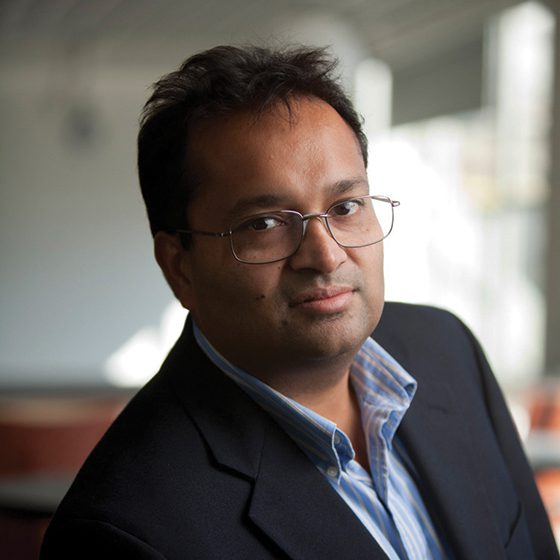
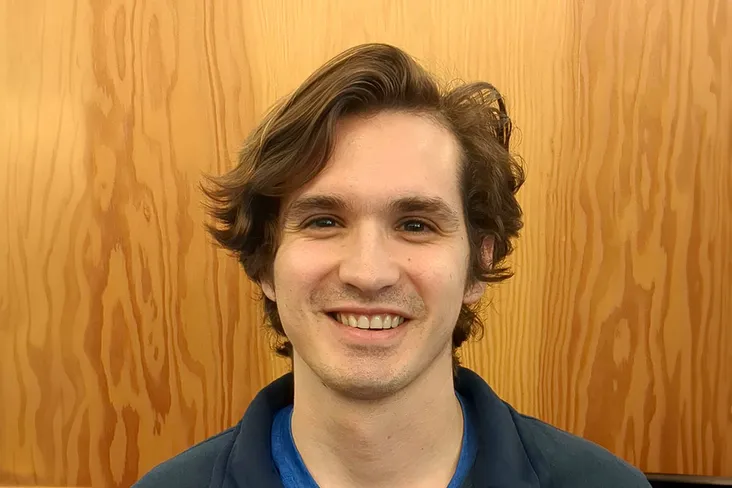
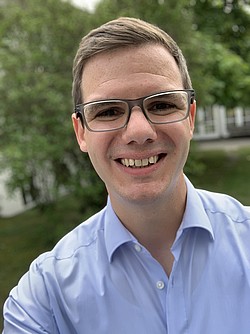
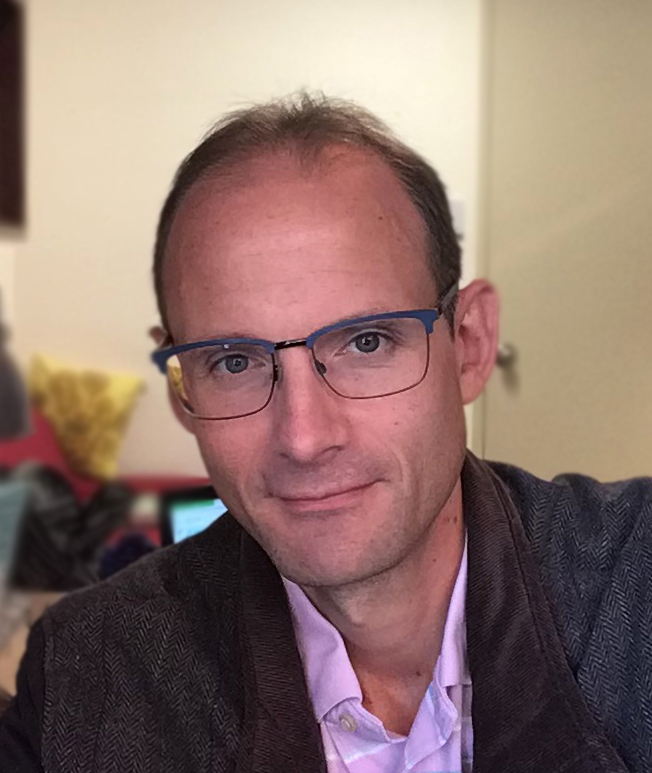
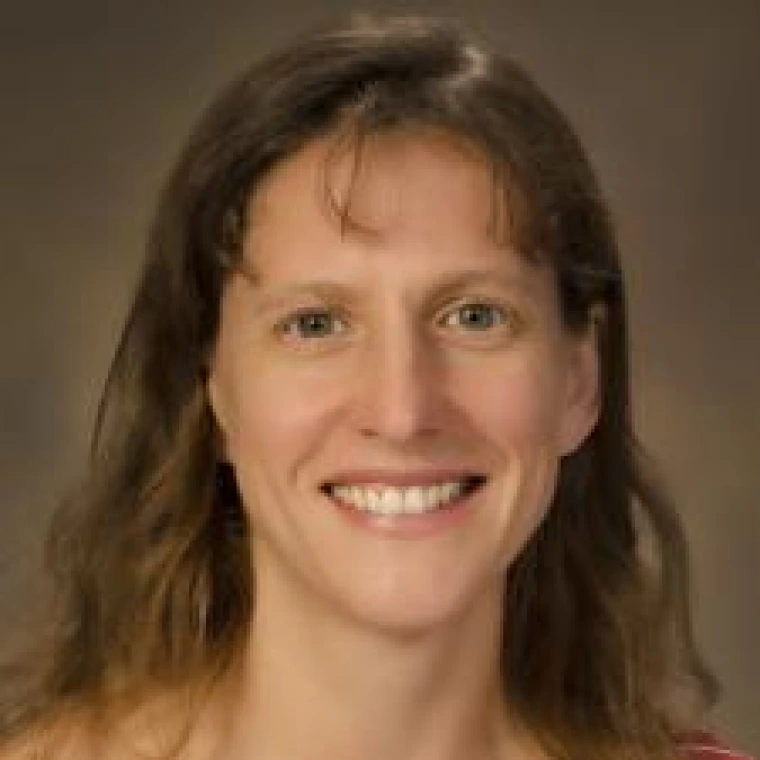
Dr. Anna Spescha is a Lecturer at ETH Zurich's Department of Environmental Systems Science, researching biological control of insect pests using Pseudomonas bacteria combined with nematodes and fungi. Her work focuses on developing sustainable agricultural solutions through microbial consortia that target below-ground pests like the cabbage maggot. Research Highlights: Triple-combination biocontrol systems Field validation of entomopathogenic efficacy Risk assessment frameworks for biocontrol agents Current Projects: Optimizing Pseudomonas-based formulations for bean seed fly and cabbage maggot control.
Gianfranco Anfora is a Full Professor at the University of Trento, affiliated with both the Department of Civil, Environmental and Mechanical Engineering and the Center Agriculture Food Environment (C3A), where he serves as Deputy Dean. His research focuses on agricultural entomology, biological control, and sustainable pest management. Key expertise areas include integrated pest control, semiochemicals, and viticulture-related challenges. Anfora teaches courses on biopesticides, vine protection, and eco-sustainable management of invasive species. His research emphasizes vibrational communication in pests like Halyomorpha halys and Drosophila suzukii, exploring non-chemical control strategies such as sterile insect techniques and biological control agents. Collaborative projects include classical biological control programs targeting invasive species in vineyards and果园. Anfora’s work often bridges ecology and applied pest management, addressing climate and landscape impacts on agricultural practices. Recent studies highlight innovations in vibrational mating disruption, substrate-borne signaling, and radiation effects on pest behavior. His contributions aim to balance productivity, environmental sustainability, and regulatory compliance within agri-food systems. No scientific awards are explicitly mentioned, but his extensive publication record reflects significant contributions to entomological and agricultural research.
Alfons Oude Lansink is a Professor and Chairholder in Business Economics at Wageningen University, Netherlands. He holds adjunct professorships at Universitas Padjadjaran (Indonesia) and the University of Florida (USA), and serves on the Dutch Ministry of Agriculture's CDM committee and Rabobank's scientific advisory board. His academic career spans roles as director of Wageningen School of Social Sciences (WASS) and Secretary-General of the European Association of Agricultural Economists. Education: MSc and PhD in Agricultural Economics from Wageningen University Leadership: Head of Business Economics group since 2003 His research focuses on dynamic technical and economic efficiency , sustainable performance of food supply chains , and economics of plant health . Recent work examines climate adaptation strategies, circular economy applications, and cross-border agri-food innovation dynamics using advanced econometric models. Key projects include MINDSTEP (modeling farm decisions), Closing the Loop (insect-based agriculture), and Food Pro-tec-ts (transboundary food technologies). Publications address topics like: Technical efficiency in dairy and arable farming Economic impacts of climate change on agriculture Corporate social responsibility in food manufacturing Policy evaluation for biogas and organic farming He serves as: Secretary/Treasurer of agricultural economics journal foundation Advisor to Universitas Padjadjaran (Indonesia) on policy and PhD supervision Editorial board member of Agronomy Journal and European Review of Agricultural Economics
Markus Friedrich is a Professor in the Department of Biological Sciences at Wayne State University, affiliated with the College of Liberal Arts and Sciences. His research focuses on insect development, gene family evolution, and arthropod visual systems, with a particular interest in cave-adapted species. He has held roles including Editor-in-Chief of the Molecular Biology and Genomics Section for the journal Insects and advised on the Australian Research Council project DP230100731 (2023-2024). Education: PhD in Zoology from Ludwig-Maximilians-Universität München (1995), postdoctoral training at Caltech (1996–1999). His research interests span comparative genomics, evolutionary developmental biology, and the genetic basis of sensory adaptations. Notable work includes studies on opsin gene evolution, cave animal adaptations, and the genomic basis of arthropod diversification. Recent publications highlight discoveries in harvestmen relict eyes, horseshoe crab Pax6 homologs, and cave beetle sleep behavior. Teaching includes courses like BIO4220 Biological Dimensions of Evolutionary Psychology and BIO1500 Basic Life Diversity . He has supervised numerous students and volunteers, fostering a dynamic research lab environment. His work integrates genomic, developmental, and evolutionary approaches to unravel mechanisms of trait evolution in insects. Grants/Awards: Australian Research Council funding, editorial leadership in entomology journals. Labs/Teams: The Friedrich Lab focuses on evolutionary genetics, with projects involving Tribolium beetles, cave organisms, and comparative genomics.
Amit Lal is a Professor in the School of Electrical and Computer Engineering at Cornell University, with affiliations in Biomedical Engineering, Applied Engineering Physics, and Mechanical and Aerospace Engineering. He is a member of key research centers including Cornell CCMR, NBTC, and KAUST-CU. Education: B.S. in Electrical Engineering, California Institute of Technology, 1990 Ph.D. in Electrical Engineering, University of California, Berkeley, 1996 Prof. Lal's research focuses on the development of integrated microsystems using micro- and nanoscale fabrication. His work spans ultrasonic MEMS, low-power IoT sensors, atomic microsystems, and bio-robotics. He directs the SonicMEMS Laboratory, advancing technologies in GHz ultrasonics, inertial sensing, and chip-scale manipulation of particles. His interdisciplinary interests include biomedical imaging, solid-state devices, nanotechnology, and plasma science. His recent publications highlight innovation in energy harvesting, MEMS gyroscopes, and biologically integrated systems. The works reflect strong trends in autonomous sensing, miniaturized power sources, and hybrid bio-electromechanical systems, particularly for medical and navigation applications. Scientific Awards and Honors: NSF CAREER Award Whitaker Foundation Award Department of Defense Exceptional Service Award Best Program Manager Award, DARPA IEEE Ultrasonics and Frequency Control Symposium Best Paper Award IEEE NEMS Best Paper Award Robert M. Scharf 1977 Professor, Cornell Engineering HHMI Visiting Scientist, Janelia Farms Intel Fellowship (awarded to advisee) Prof. Lal has advised numerous students who have gone on to win awards and publish impactful research. He has secured significant research funding through DARPA and other agencies, managing and initiating multiple high-impact programs. His leadership extends to service on technical committees for IEEE conferences and journals, including Transducers and the IEEE Sensors Council. He has also contributed to academic recruiting within ECE. He leads the SonicMEMS Laboratory , a multidisciplinary research group focused on transforming sensing, communication, and computation at the microscale. The lab fosters collaboration across engineering and life sciences, pushing the boundaries of what integrated microsystems can achieve.
Prof. Dr. Florian Jeltsch leads the Plant Ecology and Nature Conservation research group at the Institute of Biology and Biochemistry, University of Potsdam. His work spans multiple ecological domains with a focus on understanding biodiversity patterns and processes in changing environments. His research group investigates community ecology across various landscapes including grasslands, agricultural systems, and drylands. Dr. Jeltsch's research interests encompass Community Ecology of Grasslands and Agricultural Landscapes, Community Ecology of Drylands, Biodiversity in Heterogeneous Environments, Movement Ecology and Biodiversity Dynamics, and Applied Regional Conservation. His work integrates theoretical and empirical approaches to address pressing ecological questions related to global change. He has been instrumental in developing and applying individual-based models to understand complex ecological systems. Analysis of Dr. Jeltsch's recent publications reveals a strong focus on individual-based ecological modeling, movement ecology, and the impacts of landscape heterogeneity on biodiversity. His work spans from theoretical foundations to practical conservation applications, with particular emphasis on savanna ecosystems, habitat fragmentation effects, and climate change impacts. The research demonstrates integration of multiple scales from individual energetics to community dynamics. Dr. Jeltsch has mentored numerous doctoral students and postdoctoral researchers who have gone on to establish their own research careers. His group has been involved in multiple collaborative projects including BioHet, GrassYear, BioMove, and ORYCS, addressing biodiversity conservation in heterogeneous environments. The Plant Ecology and Nature Conservation group maintains active research stations including the Gülpe Research Station, providing field-based research opportunities. The group's work bridges theoretical ecology with practical conservation applications, particularly in the context of global environmental change.
Steven Ceron is an Assistant Professor in Robotics at the University of Michigan's College of Engineering. His research focuses on swarm robotics, multi-agent systems, and programmable self-organization of micro- and macro-scale robot swarms. He leads the Synergetic Adaptive Machinas (SAM) Lab, which develops reconfigurable robot swarms for biomedical applications and smart materials integration. Key research areas include microrobot fabrication, heterogeneous swarm coordination, and self-reconfigurable modular systems. His work envisions seamless integration of robot swarms into daily life through innovations in design, control, and scalability. Recent publications emphasize swarmalator dynamics, strain-based coordination in soft robots, and scalable fabrication methods. His lab explores both theoretical frameworks and practical implementations, bridging micro-scale and macro-scale robotics applications. Though no awards were explicitly listed, his contributions to novel fabrication techniques and modular robotics suggest ongoing recognition in the field. Advising and grant details are not provided here, but his lab's focus on biomedical and aerospace applications indicates active collaborative projects.
Prof. Ingo Grass is a Full Professor at the University of Hohenheim, heading the Department of Ecology of Tropical Agricultural Systems (490f) and serving as Deputy Head of the Department of Crop Production in the Tropics and Subtropics (490e). He is Director of the Hans Ruthenberg Institute for Tropical Agricultural Sciences and an Equal Opportunities Officer within the Faculty of Agricultural Sciences. His research focuses on agroecology, tropical agricultural systems, and biodiversity conservation in human-modified landscapes. Education: PhD in Biology from Philipps-Universität Marburg (2014). PostDoc at University of Göttingen (2014-2019) before moving to Hohenheim. Research Interests: Agroecosystem biodiversity, pollination ecology, land-use impacts on ecosystems, and sustainable farming practices. His work emphasizes reconciling productivity with biodiversity preservation, with a focus on tropical regions and temperate grasslands. Articles Trends: Recent work explores pesticide impacts on non-target insects, agroecological strategies to enhance pollination and biocontrol, and biodiversity benefits of diversified crops. He frequently collaborates on global studies involving tropical landscapes and urban agriculture dynamics. Awards: Maria Sibylla Merian Award (2013), Teaching Excellence Awards (2016 & 2018). Labs/Teams: Leads interdisciplinary teams in tropical agroecology, collaborating with institutes in Indonesia, Madagascar, and South Africa.
Leif Ristroph is an Assistant Professor of Mathematics at the Courant Institute of Mathematical Sciences , New York University . His research bridges experimental physics and applied mathematics , focusing on fluid-structure interactions in both biological and geophysical contexts. Key research areas include: Biophysical Flows : Aerodynamics of insect flight ( Applied Mathematics Laboratory ), hydrodynamics of fish schooling, and flow-sensing mechanisms via the fish lateral line system Geophysical Flows : Shape evolution during erosion, dissolution patterns in fluid flows, and bubble formation dynamics Recent publications (2019-2015) explore: Flow interactions in flapping swimmers and hovering systems Evolutionary optimization of wing shapes and self-sculpting processes Stability mechanisms in tandem flapping and insect flight His work has been featured in major media outlets like Nature , New York Times , and ScienceDaily . Ristroph's lab at NYU's Applied Mathematics Laboratory combines physical experiments, computational models, and theoretical analysis to study complex fluid-structure interactions.
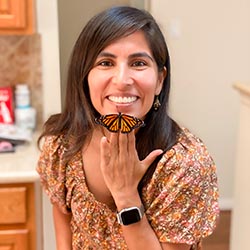
Lina Bernaola is an Assistant Professor in the Department of Entomology at Texas A&M University AgriLife Research. She holds a Ph.D. in Entomology and an M.S. in Agronomy from Louisiana State University, alongside a B.S. in Biology from Universidad Nacional Mayor de San Marcos (Peru). Her research focuses on plant-insect interactions, particularly rice pests, and explores the role of arbuscular mycorrhizal fungi (AMF) in enhancing plant defense systems. She develops sustainable pest management strategies integrating agronomy, biochemistry, and ecology. Her expertise spans Host Plant Resistance, Plant-Microbe-Insect Interactions, and Integrated Pest Management. Recent work includes studies on rice delphacid control, biocontrol mechanisms, and the ecological impacts of mycorrhizal symbiosis. She is recognized for her leadership, becoming the first Latina president of the Entomological Society of America (ESA). Education: B.S. Biology, Universidad Nacional Mayor de San Marcos M.S. Agronomy, Louisiana State University Ph.D. Entomology, Louisiana State University Awards/Honors: Incoming President, Entomological Society of America (2023). Her research bridges fundamental and applied entomology, aiming to improve crop resilience through multidisciplinary approaches. Collaborations emphasize translational science for practical agricultural solutions.
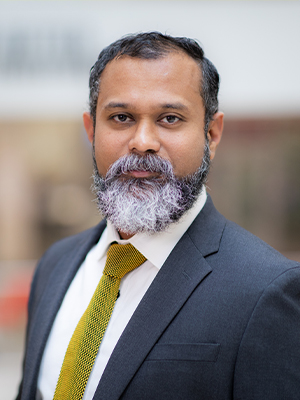
Isuru Godage is an Assistant Professor in the Department of Engineering Technology & Industrial Distribution at Texas A&M University's College of Engineering. He holds affiliated faculty positions in Mechanical Engineering and Multidisciplinary Engineering. His work focuses on advanced robotics systems, particularly soft robots, continuum arms, and their applications in surgery and blockchain-based collaboration. He earned a B.Sc. (Hons) in Electronic and Telecommunication Engineering from the University of Moratuwa, Sri Lanka (2007), and a Ph.D. in Robotics, Cognition, and Interaction Technologies from the University of Genova – Italian Institute of Technology, Italy (2013). Research Interests: Soft robots and continuum robots Modular robotic systems MRI-compatible surgical robotics for intracerebral hemorrhage evacuation Motion planning and control of underactuated systems Blockchain-enabled trustless collaboration between humans and robots His publications emphasize dynamic control of soft robotic arms, kinematic modeling of continuum systems, and bio-inspired designs for medical and industrial applications. Recent work explores locomotion strategies for soft quadrupeds and snake-like robots, alongside innovations in decentralized robotic data frameworks. Dr. Godage has secured grants such as the NSF CAREER Award (2021) focused on transformable soft robots and collaborative projects with the National Robotics Initiative (NRI). His research bridges robotics mechanics, control theory, and emerging technologies like blockchain for swarm robotics.
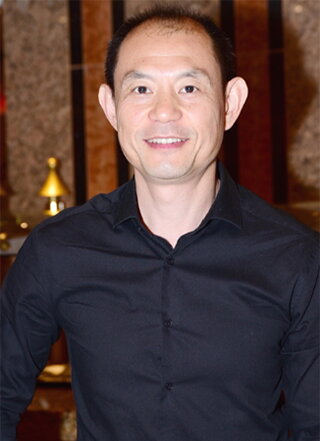
Xuguo (Joe) Zhou is a Professor of Entomology at the University of Illinois at Urbana-Champaign, holding the Kearns, Metcalf and Flint Endowed Chair. He is affiliated with the Carl R. Woese Institute for Genomic Biology and the College of Liberal Arts & Sciences. His research focuses on Behavior, physiology, and genomics of social insects Chemical communication in insect systems Insect-plant interactions Recent publications highlight his work in RNA interference mechanisms in beetles, CRISPR gene editing applications in insect pigmentation, and studies on herbicide degradation pathways. These contributions span molecular entomology, agricultural biotechnology, and environmental microbiology. Zhou's work integrates genomic approaches with ecological and physiological studies, particularly evident in his studies on gene function analysis in pest species and development of RNA-based biopesticide strategies. He is based in Morrill Hall, Urbana, Illinois, and can be contacted at xgzhou@illinois.edu.
Heidi Brown is a Professor and Program Director at the University of Arizona , affiliated with multiple programs including the Mel and Enid Zuckerman College of Public Health, Entomology and Insect Science, Remote Sensing and Spatial Analysis, and the School of Geography and Development. PhD in Epidemiology of Microbial Diseases (Yale University) MPH in International Health Promotion (George Washington University) Postdoctoral experience at Oxford University (Zoology) and CDC (Bacterial Diseases Branch) Her research focuses on infectious disease epidemiology , emphasizing the spatial and temporal dynamics of diseases, vector-borne/zoonotic transmission, and environmental determinants of health. She integrates epidemiological and spatial analysis to address climate change impacts on disease patterns. Recent publications highlight her work linking climate variability to infectious diseases like Campylobacter, stakeholder engagement in climate adaptation, and dual hazard response strategies during the 2020 heat-COVID overlap. Her 2019 Fulbright in Brazil and 2023 sabbatical at Heidelberg Institute of Global Health underscore her international expertise. Scientific Awards: Fulbright (2019) She leads projects such as Adaptation Mal-Adaptation Assessment , Climate and Health Adaptation Monitoring Program (CHAMP) , and initiatives on heat health resilience. Her work bridges academic research with practical implementation for state and local health departments.
Jennifer Williams is a Professor in the Department of Geography at the University of British Columbia (UBC), located on the traditional, ancestral, and unceded territory of the Musqueam People. She holds a PhD from the University of Montana (2008) and a BA from the University of California, Berkeley. Her primary research focuses on understanding how interacting ecological and evolutionary processes influence species distributions and abundances, particularly in the context of global environmental changes like climate change, habitat fragmentation, and biological invasions. Her work integrates field experiments, observational studies, and mathematical modeling to address conservation challenges. Her current research themes include eco-evolutionary dynamics of range expansion, species interactions in Garry oak savannas, plant life history responses to climate change, and invasive species management. She received the prestigious Killam Research Fellowship in 2020, recognizing her contributions to biodiversity and climate science. Williams teaches courses in geography and ecology, and her lab actively collaborates with the Biodiversity Research Centre. Her recent work emphasizes forecasting species' responses to climate change and developing strategies for ecosystem resilience.
Ueli Grossniklaus is an Ordinary Professor at the University of Zurich within the Faculty of Mathematical and Natural Sciences , affiliated with the Department of Plant and Microbiology . His work focuses on plant developmental biology, particularly epigenetic and genetic mechanisms governing reproduction and adaptation. Key Courses: Epigenetics, Plant Biology Workshop, Group Seminars on Current Research Laboratory Techniques: Advanced methods in plant cell mechanics, transcriptomics, and genome editing Research Interests span plant epigenetics, reproductive biology, and the interplay between environmental stress and genetic regulation. He investigates: Mechanistic control of gametogenesis and fertilization Epigenetic contributions to plant adaptation Evolutionary implications of asexual reproduction Biophysical forces in plant cell growth Publication Trends (2025–2018) reveal expertise in: Arabidopsis and fern model systems Epigenetic regulation (DNA methylation, histone dynamics) Apomixis and hybrid seed failure mechanisms Biomechanics of pollen tubes and carnivorous plants Genome editing tools (CRISPR) and long-read sequencing Scientific Collaborations include interdisciplinary projects on: Microfluidic devices for plant cell analysis Gene drive ecology and ethics 3D imaging of plant reproductive structures Advising and Grants focus on mentoring through research internships in developmental biology, genetics, and systems biology. His lab engages in: Epigenetic response to environmental stress Cell wall mechanics in reproduction Computational modeling of plant growth Laboratory Teams integrate plant biologists, bioengineers, and computational scientists to study: Mechanistic gene regulation Evolutionary developmental biology Microrobotics for cellular force measurement