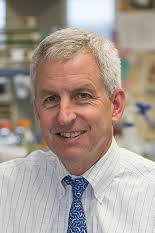
Barry TrimmerView profile
Professor
Barry Trimmer is the Henry Bromfield Pearson Professor of Natural Science in the Department of Biology at Tufts University, with additional appointments as Professor of Biomedical Engineering and Assistant Professor of Neuroscience. He leads the Neuromechanics and Biomimetic Devices Laboratory (BDL), where he studies the neurobiology of soft-bodied locomotion using the tobacco hornworm Manduca sexta as a model system. His research spans multiple interdisciplinary areas including neuromechanics of locomotion, nociception modulation, soft robotics development, and tissue engineering. Dr. Trimmer's work bridges fundamental biological research with engineering applications, particularly in creating bio-inspired soft robots and exploring cellular agriculture applications. The recent publications reflect a strong trend toward applying biological principles to robotics and sustainable food production. His work increasingly focuses on translating insights from insect neurobiology into soft robotics design, while expanding into cellular agriculture applications using insect cell cultures. This represents a growing interdisciplinary convergence between neurobiology, robotics, and sustainable food technology. Professional Distinctions: Distinguished Visiting Fellow at Scottish Informatics and Computer Science Alliance, University of Edinburgh (2018) Benjamin Meaker Visiting Professor at University of Bristol (2017) Nominated for IEEE EMBS Distinguished Lecturer (2019) Dr. Trimmer advises multiple PhD students including Gayathri Kondakath (studying nociception circuits) and Naya McCartney (investigating muscle development). His laboratory collaborates extensively with Professors Kaplan and Levin on tissue engineering projects. The lab maintains active grant funding from NSF, NIH, and DARPA for research on soft-bodied locomotion, biocomponent devices, and soft robotics. The Neuromechanics and Biomimetic Devices Laboratory focuses on three major research thrusts: understanding neuromechanical control systems in soft animals, developing SoftWorm robot platforms, and engineering novel biological devices through tissue engineering approaches. The lab combines neurobiological studies with advanced fabrication techniques including multi-material 3D printing.