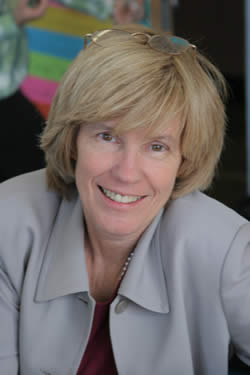
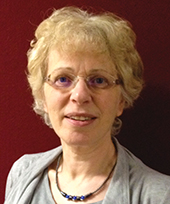
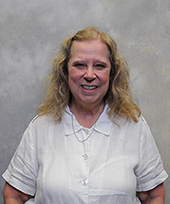
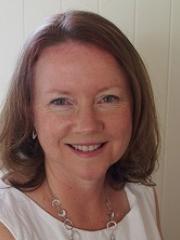
Associate Professor Graham Heaslip is a Visiting Professorial Fellow at UNSW Canberra within the School of Business , specializing in Humanitarian Logistics , Supply Chain Management , and Civil-Military Coordination . His research focuses on optimizing Disaster Relief operations through Systems-Based Approaches and Service Operations Management . Research Interests Humanitarian Logistics and Disaster Response Civil-Military Cooperation in Relief Operations Supply Chain Integration and Optimization Service-Oriented Operational Frameworks Information Flow Challenges in Crisis Logistics Capacity Building for Humanitarian Missions Publications Overview His scholarly work spans 15+ years , covering topics like Cash-Based Relief , Military-Humanitarian Interface , and Digital Learning Behaviors . Key contributions include analyzing systems inter-relationships in disaster logistics and proposing service research opportunities in humanitarian operations. Collaborations He works with international experts including Dr. Jari Honkanen , Dr. Maria Christopher , and Professor John Donovan , often bridging academic inquiry with practical implementation in crisis scenarios.
Keitha-Gail Martin-Kerr serves as Associate Professor and Department Associate Chair in the Department of Curriculum and Instruction at the University of Minnesota's College of Education and Human Development. A queer Black immigrant from Jamaica, she centers her work on resistance to normativity and anti-oppressive pedagogy across elementary and teacher education contexts, with research intersecting racial justice, queerness, and collective memory work. Education PhD in Curriculum and Instruction, University of Minnesota MA, Touro College MS, City University of New York BA, Northern Caribbean University, Jamaica Her scholarship employs critical phenomenology and feminist methodology to advance healing justice, anti-oppressive pedagogies, and mentoring for equity. She investigates literacy coaching through decolonial lenses and develops collective leadership frameworks that center Black and queer experiences in educational spaces, drawing from her identity as a Black immigrant scholar. Analysis of her 12 publications (2018-2025) reveals consistent thematic focus on queer pedagogy, decolonizing practices, and innovative methodologies like post-intentional phenomenology. Her work spans Jamaica, Guyana, and U.S. contexts, addressing teacher education through critical colonial consciousness while amplifying marginalized voices in elementary literacy and curriculum development. Scientific Awards No specific awards were documented in the provided information. Advising and Grants Dr. Martin-Kerr emphasizes collaborative mentoring, supporting students in research co-creation and conference presentations. She leads the Jamaica Exchange in Teaching Program (JET), a sponsored initiative fostering international teacher development through Minnesota-Jamaica partnerships, while advocating for transparent communication and identity-affirming guidance in doctoral supervision. Labs and Teams As JET program director, she coordinates cross-cultural exchanges that build equity-minded teaching practices through co-created professional development, connecting Minnesota educators with Jamaican counterparts to address colonial legacies in teacher preparation.
Tyler Musgrave is an Assistant Professor in the School of Information Sciences at Wayne State University . Her scholarship bridges digital archival studies, social media and HCI research, and Black digital culture, with a focus on how Black communities create, preserve, and contest digital cultural heritage. Education: Ph.D. in Information, University of Michigan, Ann Arbor (July 2025) B.A. in Global Studies, Minor in Health Science, Long Island University, Global College (December 2015) Research Focus: Musgrave’s work centers on Black online life as a lens for understanding equity, justice, and design in socio-technical systems. She explores how Black communities navigate platforms as spaces of conflict, care, and memory, and develops frameworks like technomediated justice to reimagine digital infrastructures toward equitable futures. Scientific Awards & Fellowships: City of Detroit Mayoral Fellow Foreign Language and Area Studies Fellowship U.S. Department of State Critical Language Fellowship for Kiswahili Justice Fellow at the Center for Police Equity Mozilla Fellow with XRStudio Professional Experience: Beyond academia, Musgrave served with the U.S. Peace Corps in Cameroon, worked in operations at a VR company in San Francisco, and facilitated restorative justice programs in the Bay Area. She currently teaches INF6010 – Information in Society and enjoys exploring Detroit, practicing hot yoga, and international travel.
Marco Temperini is an Associate Professor of Information Processing Systems at Sapienza University of Rome, where he teaches programming techniques and web programming languages. With a Mathematics degree (1986) and Computer Science PhD (1992) from Sapienza University, he has established himself as a prominent researcher in educational technology. His educational background includes: Laurea in Matematica (1986, Sapienza University of Rome) Dottorato in Informatica (1992, Sapienza University of Rome) Professor Temperini's research focuses on Technology Enhanced Learning, with particular expertise in Student and Teacher Modeling, Adaptive e-learning systems, and the application of Data Mining and Artificial Intelligence techniques to personalize learning content. His work extends to Social and Collaborative Learning environments, Game Based Learning approaches, and innovative Automated and Peer Assessment methodologies. With extensive international collaboration experience, he has coordinated research units and served as work-package leader in numerous projects including EuroCompetence, UnderstandIT, and 9Conversations. His recent publications (2023-2024) reveal a strong trend toward applying advanced AI techniques, particularly large language models, to educational assessment challenges. These works demonstrate increasing sophistication in leveraging natural language processing for automated analysis of student work, concept maps, and programming assignments, while maintaining a strong focus on practical educational applications. Notable scientific recognition includes: 2023 Best Reviewer Award 2023 Best Paper Award 2022 Best Paper Award 2021 Best Paper Award 2018 Best Paper Award at ICWL2018 Membership on the Human-Computer Interaction Awards Committee (2021.6-2024.7) Professor Temperini has been highly active in the academic community, serving as Conference co-Chair for ICWL (2016), Technical Program co-Chair for multiple conferences including MIS4TEL and SETE, and General Chair for MIS4TEL2022 and SETE2023. He is a member of the Steering Committee for ICWL and MIS4TEL conferences and serves on the IEEE Technical Committee on Learning Technology. As an associate editor for the International Journal on Distance Education Technology, Frontiers in Artificial Intelligence, and Computers & Education: Artificial Intelligence, he plays a significant role in shaping research directions in educational technology. His leadership extends to numerous international projects where he has served as coordinator of research units and work-package leader, including EuroCompetence, Socrates Project 56544-CP-1-98-1; CIOC, NFU Project 18; mENU, e-learning Project 2002-0510/001-001; QUIS, e-learning Project 2004-3538/001-001; UnderstandIT, Leonardo Da Vinci Transfer of Innovation; and 9Conversations: Network building for self-employment of refugees. These projects demonstrate his commitment to applying technology to address real-world educational challenges across diverse contexts.
Noriyuki Inoue, Ph.D. (Columbia University), is a Professor at Waseda University's Faculty of Human Sciences. With prior faculty roles at the University of San Diego (Associate Professor), University of Saint Joseph (Assistant Professor), and Teikyo Post University (Instructor), he specializes in educational psychology, action research, lesson study, and inquiry-based teaching. Ph.D. & M.A., Columbia University M.Ed., Harvard University Editor-in-Chief, Japanese Journal of Research on Educator Transformation His research explores social-emotional learning , teacher reasoning , and epistemological pluralism , with recent work on non-cognitive skills and cross-cultural educational innovation. Publications in Teaching and Teacher Education and others analyze consensus-building ('neriage') in Japanese mathematics pedagogy and teacher decision-making. Key awards include the 2014 University Professorship Award and 2010 Distinguished Faculty Award from the University of San Diego, plus a Fulbright Scholarship (1992). He leads international collaborations on lesson study and teacher development projects funded by the Japan Society for the Promotion of Science .
Regina Polak is a Professor at the Department of Practical Theology within the Faculty of Catholic Theology at the University of Vienna. Her work spans practical-theological ecclesiology, ecumenical engagement, and interdisciplinary reflections on religion in secular and plural contexts. She teaches courses such as Learning Christian Faith in Secular and Plural Contexts and Practical-theological Ecclesiology , emphasizing experiential and contextual theological inquiry. Her research focuses on Practical Theology , Ecumenism , and the intersection of Religion and Democracy . Recent publications explore themes like Migration Theology , Interreligious Dialogue , and Synodal Governance , reflecting her commitment to addressing societal challenges through theological frameworks. Regina Polak’s academic contributions include analyzing the role of religion in democratic societies, theological responses to migration, and biblical interpretations for modern ethical dilemmas. Her work appears in media outlets such as ORF and Ö1, where she contextualizes theological concepts for public discourse. She also contributes to interdisciplinary projects like the European Values Study , examining religiosity’s impact on social attitudes.
Min Yeo (he/him/his) is a Design Critic in Landscape Architecture at Harvard University's Graduate School of Design (GSD), within the Department of Landscape Architecture. His research explores formal responses to ecological forces at the intersection of architecture, urbanism, and landscape architecture. His doctoral work examined the organizational challenges of experimental design research through a historical analysis of the Princeton Architectural Laboratory (1949–1954). He teaches core landscape architecture courses such as Landscape Architecture III, Landscape Representation I and II, and Landscape Architecture II. These courses emphasize design methodologies and representation techniques central to contemporary landscape practice. While no formal grants or awards are listed, his scholarly publications span neuroscience and behavioral studies, including work on transcranial magnetic stimulation (TMS) and cognitive reappraisal. These interdisciplinary contributions suggest a dual focus on design pedagogy and neuroscientific inquiry. His academic role at the GSD emphasizes studio-based teaching and critical design discourse, reflecting his commitment to advancing ecological and urban design practices through historical and experimental lenses.
Casey Ankeny is a Teaching Professor of Biomedical Engineering and Assistant Dean for Master’s Programs at Northwestern University’s McCormick School of Engineering. She holds additional roles as Associate Director of the Northwestern Center for Engineering Education Research and Director of the MS Program in Biomedical Engineering. Her research focuses on cyber-based student engagement strategies in biomedical engineering courses, standards-based grading, and improving student persistence in student-centered learning environments. Education: PhD in Biomedical Engineering from Georgia Institute of Technology and Emory University (Atlanta, GA), and a BS in Biomedical Engineering from the University of Virginia (Charlottesville, VA). Her research explores flipped classrooms, active learning pedagogies, and faculty development programs to enhance educational outcomes. Key areas include evidence-based instructional strategies (EBIS), formative feedback systems, and scaling faculty development initiatives across disciplines. She has contributed to studies on implicit gender biases in academic roles and student-centered learning efficacy. Publications reflect her emphasis on educational innovation, including works on virtual labs, standards-based grading, and interdisciplinary faculty training programs. Her work has been presented at the ASEE Annual Conference and Exposition, with notable contributions to understanding connections between classroom practices and student attitudes. As a leader in educational research, Ankeny oversees programs promoting active learning and has developed tools like web-enabled ‘muddiest point’ reflections to enhance student engagement. Her efforts aim to bridge research and practice in engineering education through scalable, evidence-driven approaches.
Thomas M. Philip is a Professor at the Berkeley School of Education, University of California, Berkeley, where he serves as Faculty Director of the Berkeley Teacher Education Program (BTEP). His work centers on the intersections of ideology, learning, and equity in educational contexts, examining how teachers navigate power structures to transform classrooms toward more just and democratic practices. His research interests include: Teacher Education and Professional Development Critical Studies of Race, Class, and Gender in Education Learning Sciences and Human Development Digital Learning Technologies and Artificial Intelligence in Education Educational Equity and Social Justice Frameworks Ideological Dimensions of Learning Philip's scholarship analyzes how educators exercise agency within hierarchical systems, with particular focus on teachers of color and the political dimensions of classroom practice. His recent work critically examines AI implementation in education, highlighting tensions between technological promises and equity realities. His significant contributions have been recognized with prestigious awards: Fellow of the American Educational Research Association (AERA) Fellow of the International Society of the Learning Sciences (ISLS) AERA Division K Midcareer Award AERA Division G Early Career Award AERA Division C Jan Hawkins Award National Association for Multicultural Education Carl A. Grant Multicultural Research Award National Academy of Education/Spencer Postdoctoral Fellowship National Science Foundation Graduate Research Fellowship As BTEP Director, Philip secured the Spencer Midcareer Grant (2015) and led the program to receive the 2023 AERA Division K Award for Innovations in Research on Equity and Social Justice and the 2024 UC Berkeley Chancellor’s Award for Advancing Excellence and Equity. He collaborates extensively through groups like The Politics of Learning Writing Collective, advancing critical perspectives in learning sciences amid rising nationalism. Philip holds a PhD in Cognition and Development and BS in Electrical Engineering & Computer Science from UC Berkeley, uniquely bridging technical expertise with critical educational scholarship to address contemporary challenges in democratic education.
Lucy M. Calkins is the Robinson Professor in Children's Literature and Director of the Literacy Specialist Program at Teachers College, Columbia University. She founded the Teachers College Reading and Writing Project (TCRWP), dedicated to fostering literacy skills in students through research, curriculum development, and collaborative partnerships with educators globally. Her work spans over 600 schools across the U.S. and internationally, emphasizing standards-aligned curricula and leadership development. Education: B.A. in Liberal Arts (Williams College), M.A. in Teaching Reading (University of Hartford), Ph.D. in English Education (NYU). Her research focuses on reading/writing pedagogy, curriculum design, and the role of children's literature in education. Notable publications include The Art of Teaching Reading and Pathways to the Common Core . Her writing emphasizes balancing fiction and nonfiction in literacy programs, advocating for 'real books' to engage young readers. She critiques overly prescriptive curricula while promoting teacher-led, inquiry-based approaches. The TCRWP supports schools through professional development, coaching, and resources like the Units of Study series.
Dr. Patricia Duff is a Professor at the University of British Columbia in the Department of Language and Literacy Education. Her research focuses on bilingual/multilingual education, identity formation, language ideologies, and decolonizing methodologies in language learning contexts. English and Mandarin language proficiency 604-827-5028 contact Active in language socialization studies across classrooms, families, and diaspora communities Research interests center on language socialization processes in transnational environments, heritage language education, academic discourse communities, and the intersection of pop culture with language pedagogy. She pioneered case study methods in applied linguistics and co-edited the Routledge handbook of research methods in applied linguistics . Key publication trends show sustained focus on Chinese language education (40+ publications), family/workplace language planning (15+), and critical discourse analysis of multilingual identities (25+). Her work spans qualitative classroom research, policy analysis, and sociocultural theory applications.
Ruth Kershner is a University Lecturer in Psychology of Education and Primary Education at the Faculty of Education, University of Cambridge. She serves as Deputy Chair of the University Psychology Research Ethics Committee and contributes to the Psychology, Education and Learning Studies research group. Her career bridges educational practice and academic research through extensive school partnerships. Her educational qualifications include: BA (Hons) Social Studies PGCE Primary Education MSc Psychology and Education of Children with Special Needs MSc Child Development with Clinical Studies (professional educational psychology training) Kershner's research centers on primary classroom dynamics , investigating how dialogic approaches transform learning environments. She examines inclusive pedagogy through psychological and sociocultural lenses, focusing on children's active participation, teacher-student relationships, and knowledge construction. Her work pioneers dialogic research methods that empower educators to conduct classroom-based inquiries, while addressing critical gaps in knowledge exchange between scientific research and educational practice. Current projects explore diversity, belonging, and technology-enhanced collaborative learning in primary settings. Analysis of her 15 most recent publications reveals three dominant trajectories: (1) Development of practical tools like T-SEDA for analyzing classroom dialogue, (2) Integration of psychological principles into inclusive teaching frameworks, and (3) Technology-mediated collaborative learning in science education. Her work consistently connects theoretical rigor with classroom applicability across primary education contexts. Kershner actively shapes educational practice through funded research initiatives including ESRC Impact Acceleration projects (T-SEDA), British Academy/Leverhulme grants on diversity in primary classrooms, and Isaac Newton Trust studies on children's epistemological development. Though not currently accepting PhD students, she mentors Master's candidates in Primary Education, Psychology and Education, and Research Methods programs. Her leadership extends to the Cambridge Educational Dialogue Research Group (CEDiR) where she develops dialogic methodologies adopted internationally. She co-founded the Cambridge Educational Dialogue Research Group (CEDiR), creating a collaborative hub for advancing dialogic theory and practice. Her research methodology development occurs through sustained partnerships with primary schools across Cambridgeshire, focusing on practical implementation of inclusive pedagogies and dialogue-based learning frameworks. Current work with the Psychology Research Ethics Committee shapes ethical standards for educational psychology research nationally.
Fran Riga is a Researcher at the University of Cambridge’s Faculty of Education, specializing in STEM education and research. She holds a PhD from the University of Cambridge and has extensive experience in secondary science and mathematics education across South Africa, Greece, and England. Her primary roles include research projects on adaptive learning, dialogic teaching, inquiry-based methodologies, and the intersection of science and religion in education. She also contributes to postgraduate teaching in Science MEd and Researching Practice courses. Education: BSc (University of Cape Town) PGCE (University of Cape Town) MEd (University of Cambridge) PhD (University of Cambridge) Research Interests: Fran’s work focuses on conceptual development in astronomy, adaptive learning technologies, dialogic pedagogy, and supporting gifted students in STEM—particularly females. She explores how inquiry-based approaches enhance student engagement and bridges between scientific theories and religious beliefs. Her research methodologies include both quantitative and qualitative analyses. Publications Trends: Her recent work emphasizes theoretical frameworks (e.g., Dewey’s pragmatism), practical pedagogy (e.g., inquiry-based learning), and equity issues (e.g., inclusive education for the gifted and gender balance in STEM). She collaborates frequently with peers like K.S. Taber on interdisciplinary topics such as science-religion dynamics and teacher training. Teaching and Supervision: Fran supervises postgraduate students in science education and contributes to PGCE assessment processes. She has no listed advisees but actively mentors trainee teachers through her course responsibilities. Labs/Teams: Her affiliations include CEDiR (Centre for Education Design, Evaluation, and Research) and the INSTRUCT Research Group, focusing on young children’s reasoning in chemistry.
Dr Linda Willis is an Honorary Senior Fellow in the School of Education at The University of Queensland. Her research focuses on parent-school-community engagement, educational leadership, and innovative pedagogical practices in teacher education. She has led projects such as the Principal Leadership for Parent-School-Community Engagement in Disadvantaged Schools Project , exploring strategies to enhance engagement in educationally disadvantaged contexts. Her work emphasizes the role of principals in fostering collaborative partnerships, leveraging digital tools for parent involvement, and integrating social justice principles into curriculum design. Willis has contributed to international publications on topics like coteaching, critical visual literacy, and the ethical use of social media in education. Willis has presented at conferences including the Australian Association for Research in Education and the Helping Families Change Conference, and her research has informed policy briefs for the Queensland Department of Education. She holds a PhD in Education from Queensland University of Technology (2013) and has authored/co-authored over 100 scholarly works across books, journal articles, and conference papers.
Dr. Britta Lübke is a Researcher in Biology Education at the University of Hamburg's Faculty of Education, affiliated with the Department of Social Sciences, Mathematics and Natural Sciences Education (EW5). Her work focuses on integrating uncertainty as a pedagogical dimension, particularly in STEM education and biology didactics. She co-leads the Urban Gardening project, fostering interdisciplinary education and community engagement through urban green spaces. Her research explores the intersection of uncertainty, scientific thinking, and teacher professionalization, with contributions to understanding how educators navigate epistemological challenges in classrooms. Lübke actively participates in the faculty's research priority on 'Uncertainty as a Dimension of Pedagogical Action,' emphasizing methodological innovation and cross-disciplinary collaboration. She also contributes to pre-service teacher training through practical fieldwork and innovative teaching methodologies. Education: Doctorate in Biology Education (not explicitly stated in texts, inferred from title) Key Projects: Urban Gardening (sustainable urban education), Uncertainty in Biology Classrooms (pedagogical frameworks) Teaching: Courses on biology didactics, urban gardening, and interdisciplinary education practices Her publications analyze disciplinary cultures in science education, the role of uncertainty in fostering critical thinking, and the integration of performative and outdoor learning strategies. She is a member of the faculty's research focus group on uncertainty and collaborates with institutions like the Sustainability Office to expand educational outreach.