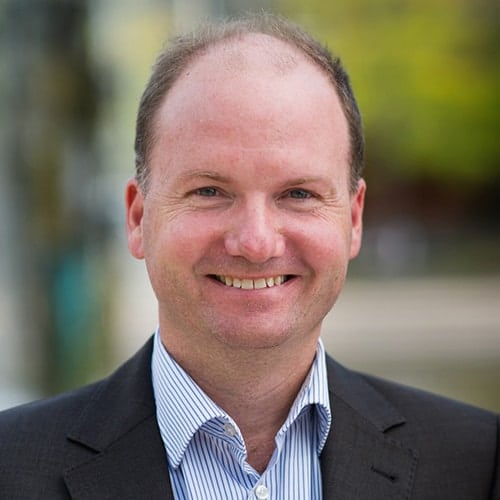
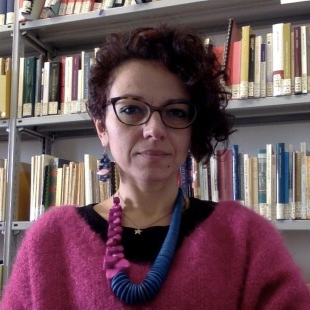
Ciprian Cimpan is an Associate Professor at the Department of Green Technology (IGT), University of Southern Denmark, and a key member of the SDU Climate Cluster and SDU Life Cycle Engineering. His research focuses on Circular Economy , Industrial Ecology , Waste and Resources Management , and Life Cycle Assessment , with a strong emphasis on sustainable growth and resource efficiency. Postdoctoral Fellow, Norwegian University of Science and Technology (2019–2021) His recent publications highlight applications of LCA in evaluating additive manufacturing , plastic packaging , and critical material recycling within green transition contexts. He also investigates systemic challenges in textile waste , ICT product obsolescence , and rebound effects in reuse practices . Scientific awards include the DANROAD Prize (2025) for innovative drug recycling. He supervises PhD student Bubinek R. and teaches courses on Eco-efficient Engineering , Waste Management , and Solid Waste Processing .
Giulio Cimini is Associate Professor of Theoretical Physics in the Department of Physics at the University of Rome Tor Vergata and a Research Associate at the 'Enrico Fermi' Research Center. He is a statistical physicist with a strong interdisciplinary focus on complex networks and their applications in socio-economic systems. His research interests include: Statistical Physics of Complex Networks Reconstruction and Validation of Economic Networks Social Network Interactions and Financial Markets Systemic Risk and Financial Contagion Scientific Success, Fitness, and Complexity Adaptive Social Recommendation Codon Usage Bias and Protein Interaction Networks His recent publications reveal a strong trend in applying statistical physics to real-world networks, particularly in finance and social systems. Key themes include the modeling of systemic risk in supply chains and financial networks, the dynamics of collective action on platforms like Reddit (e.g., the GameStop short squeeze), and the development of network reconstruction methods using maximum entropy and optimal transport frameworks. His work often combines empirical analysis with theoretical modeling. Scientific awards and recognitions include: Associate Editor, Frontiers in Physics – Interdisciplinary Physics Board Member, Network Science Society Member, Council of the Complex Systems Society Steering Committee, CCS/Italy He has advised or collaborated with numerous researchers, particularly in projects related to economic networks and complex systems. His work has been supported by Italian national grants such as PRIN and PNRR. He leads or co-leads research projects including RENet and C2T. His research is conducted within interdisciplinary teams involving physicists, economists, and computer scientists, often in collaboration with institutions like ISC-CNR, IMT Lucca, and the Network Science community.
Thomas Choi is a Regents Professor and AT&T Professor of Business at the W. P. Carey School of Business, Arizona State University. He is a leading scholar in supply chain management, with a focus on supply networks and complex adaptive systems. He co-directs the Complex Adaptive Supply Networks Research Accelerator (CASN-RA) and previously served as Executive Director of CAPS Research and Co-Editor-in-Chief of the Journal of Operations Management. Research Interests: His work centers on the upstream side of supply chains, examining how firms interact with networks of suppliers. He investigates structural resilience, risk propagation, and adaptive behaviors in global supply networks. His research integrates network theory, operations management, and organizational theory to understand the dynamics of complex supply ecosystems. Publication Trends: His recent publications emphasize the mapping and modeling of global supply networks, highlighting systemic risks and the need for transparency. Collaborative works in 2024 focus on visualizing supply chain interdependencies using data-driven approaches and economic modeling. Scientific Awards: Distinguished Operations Management Scholar by the OM Division at the Academy of Management (2012) Highly Cited Researcher by Clarivate’s Web of Science Top 50 Researchers by Publication Score (Babbar et al., 2019) Advising and Grants: While specific students are not listed, Thomas Choi has led major research initiatives including CASN-RA and CAPS Research, which involve funding from industry and government partners. His role as Executive Director and editorial leadership indicates extensive grant and program management experience. Labs and Teams: He is a founding co-director of the Complex Adaptive Supply Networks Research Accelerator (CASN-RA), a multidisciplinary research group focused on modeling and analyzing supply network dynamics.
Maria Del Rio-Chanona is an Assistant Professor in the Department of Computer Science at University College London (UCL), where she conducts interdisciplinary research at the intersection of network science, machine learning, and economic modeling. She is also a member of the External Faculty at the Complexity Science Hub since January 2025, reflecting her ongoing engagement with complex systems research. Her academic background includes a PhD in Mathematics from the University of Oxford, where she was part of the Institute for New Economic Thinking at the Oxford Martin School, and undergraduate studies in Physics at UNAM, Mexico. Her research interests center on understanding socioeconomic transformations using computational methods. She specializes in applying Large Language Models (LLMs), Agent-Based Models (ABMs), and network analysis to study the impacts of generative AI, the net-zero transition, and global crises like the COVID-19 pandemic on labor markets, economic resilience, and public discourse. Her work often involves analyzing large-scale digital trace data, including online labor platforms and social media, to uncover behavioral and structural shifts. The recent publications reveal a consistent focus on labor market dynamics in the face of technological disruption. Her work examines how generative AI reshapes demand for freelance skills, reduces public knowledge sharing on platforms like Stack Overflow, and influences mental health discourse in relation to employment decisions. She also investigates broader economic modeling, including pandemic shock propagation and employment transitions during decarbonization. Among her scientific recognitions is the Emerging Scientific Award from the Complex Systems Society in 2023. She has collaborated with international policy organizations such as the International Monetary Fund (IMF) and the International Labour Organisation (ILO), underscoring the policy relevance of her research. Maria Del Rio-Chanona has held prestigious research positions, including as a James S. McDonnell Foundation (JSMF) Postdoctoral Fellow at the Complexity Science Hub and a Visiting Fellow at the Growth Lab, Harvard Kennedy School. These roles have enabled her to lead and contribute to high-impact interdisciplinary projects. While no current advisees are listed, she actively engages with PhD opportunities and interdisciplinary research networks. She is involved in multiple research initiatives, including the development of HuBERT, an NLP algorithm for extending the Seshat Global History database, and projects studying labor transitions in net-zero scenarios. Her work on the HiST-LLM benchmark for historical knowledge in LLMs highlights her innovative integration of AI with social science.
Rasmus Kehlet Skjødt Berg is an Assistant Professor at the Department of Economics , University of Copenhagen, within the Faculty of Social Sciences . His research focuses on environmental and climate economics, political economy, and computable general equilibrium (CGE) modeling. Position: Assistant Professor University: University of Copenhagen Department: Economics Email: rasmus.kehlet.berg@econ.ku.dk Research Interests Berg specializes in integrating environmental and climate considerations into macroeconomic modeling. Key projects include the development of the MEE (Model of the Economy with Emissions) and GREEN REFORM models to analyze policy impacts on emissions and economic growth. Publications & Projects Recent work includes studies on green national accounting, social security design, and energy systems. He explores the economic costs of climate change, renewable energy integration, and policy barriers in Denmark. Collaborations & Tools Collaborates with researchers like Peter Birch Sørensen and Janek Bligaard Eskildsen. Develops open-source CGE tools ( GitHub ) for environmental policy simulation.
Gert Frølund Pedersen is a Professor at the Department of Electronic Systems , Aalborg University , within the Technical Faculty of IT and Design . His research focuses on antennas, propagation, and millimeter-wave systems. He leads projects like DRONES (30 million DKK from Innovationsfonden) for drone-based electromagnetic signature analysis and EcoSurf6G for energy-efficient reconfigurable surfaces in 6G networks. With over 758 research outputs and 21 PhD students supervised, he contributes extensively to wireless communication advancements. Antenna Engineering Millimeter-Wave Systems Reconfigurable Intelligent Surfaces Deep Learning in Antenna Design His recent work emphasizes millimeter-wave IoT applications , UWB propagation channels , and 5G/6G antenna arrays . Publications highlight innovations in transmitarray antennas , liquid crystal polarization control , and metasurface design using AI. His research spans from fundamental electromagnetic safety to cutting-edge wireless infrastructure. Notable awards include Best Reading Paper of the Issue (IEEE Transactions on Microwave Theory and Techniques, 2020), ESI Highly Cited Paper (2019), and Ridder af Dannebrog (2021). He frequently engages with media to address public concerns about mobilstråling (mobile radiation) and its safety.
János Kertész is a Professor and Head of the Department of Network and Data Science at the Central European University (CEU), currently based in Vienna. He is also an elected member of the Hungarian Academy of Sciences. Previously, he held professorial and research positions at the Budapest University of Technology and Economics and the Hungarian Academy of Sciences, where he served as Director of the Institute of Physics. His research lies at the intersection of statistical physics and social sciences, with major contributions to network science, econophysics, computational social science, and algorithmic fairness. He investigates systemic risks in economic networks, opinion dynamics in algorithmically biased environments, poverty mapping using big data, and the role of automation in online extremism. The most recent articles highlight a strong trend in applying complex systems methodologies to real-world socioeconomic problems—particularly through large-scale network analysis, multimodal data integration, and policy-relevant modeling in inequality, supply chains, and digital fairness. His collaborative work spans institutions like the Complexity Science Hub (CSH) in Vienna. Elected member of the Hungarian Academy of Sciences He has advised numerous researchers and contributed to major interdisciplinary grants, particularly in complexity science and data-driven social science. His leadership in organizing NetSci 2023, the largest network science conference, underscores his role in fostering global scientific collaboration. He is central to projects involving high-resolution poverty mapping, economic systemic risk, and ethical AI applications. He is actively involved with the Complexity Science Hub (CSH), where CEU is a partner institution, and contributes to interdisciplinary teams working on economic modeling, social network analysis, and crisis preparedness using granular supply chain and VAT data.
Fabian Wagner is a senior research scholar at the International Institute for Applied Systems Analysis (IIASA), with adjunct faculty status at the Technical University of Vienna and Associate Faculty affiliation at the Complexity Science Hub (CSH) Vienna. He previously served as the Gerhard R. Andlinger Visiting Professor for Energy and the Environment at Princeton University’s Andlinger Center and Woodrow Wilson School during 2014–2016. Education: PhD in Theoretical Physics, University of Cambridge (UK) Master’s in Mathematics, University of Cambridge (UK) Master’s in History and Philosophy of Science, University of Cambridge (UK) Fabian’s research centers on sustainability science, particularly the interconnections between energy, water, climate, air, health, and sustainable development goals (SDGs). He employs advanced methodologies including network analysis, deep learning, optimization, and risk modeling. His current focus includes urban metabolism, resilience, climate-economy modeling, and integration of process-based and input-output analysis techniques. His interdisciplinary approach bridges physical, environmental, and socio-economic systems. The analysis of his publications from 2010 to 2025 reveals a consistent trajectory in sustainability and systems modeling, with increasing integration of data-driven methods like deep learning and network science. His work spans climate policy, urban sustainability, and global environmental change, often addressing complex, multi-scale challenges through integrated modeling frameworks. Scientific Awards: Cambridge University’s J.T. Knight’s Prize in Mathematics (1998) Fabian has advised interdisciplinary research initiatives and has consulted for major international organizations including the United Nations Framework Convention on Climate Change (UNFCCC) and the International Monetary Fund (IMF), indicating involvement in high-level policy-oriented research and advisory roles. While specific grants are not listed, his long-standing position at IIASA and collaborations with global institutions suggest sustained funding and leadership in large-scale research projects. He is actively involved in interdisciplinary research teams at IIASA, CSH Vienna, and through his affiliations with Princeton and TU Vienna, contributing to collaborative efforts in complexity science, energy systems, and sustainable development.
Troels Bundgaard Sørensen is an Associate Professor at the Department of Electronic Systems, Aalborg University under The Technical Faculty of IT and Design. His research focuses on wireless communication systems, cellular networks, and unmanned aerial vehicle (drone) communications. He holds a PhD in Wireless Communication from Aalborg University's Department of Electronic Systems (2002). Key research interests include MIMO systems, path loss modeling, satellite integration in 5G/6G networks, and IoT applications in rural connectivity. He has supervised 5 PhD students and led/co-led 21 research projects, including notable initiatives like the Drone Critical Communications (DroC2om) and SAMURAI: Spectrum Aggregation and Multi-User MIMO projects. Recent publications (2023-2025) explore topics such as LoRaWAN optimization, cellular-satellite multi-connectivity for livestock monitoring, and real-time network performance analysis. His work bridges theoretical advancements with practical applications in next-generation communication systems. Collaboration highlights include partnerships on mobility management in beyond-4G networks and experimental studies on pipe monitoring sensor communications. Media engagements address public concerns about 5G signals and network coverage reliability.
Rossana Mastrandrea is an Assistant Professor at IMT Institute for Advanced Studies Lucca, affiliated with the AXES research unit. Her work integrates methods from mathematics, economics, and complex systems to study economic, social, and biological networks. Research Interests: Her primary fields include Complex Networks, Health Economics, Environmental Economics, Game Theory, and Behavioural Economics. She applies Graph Theory, Statistical Physics, and Agent-Based Modeling to understand macroeconomic networks, innovation diffusion, and human behavior dynamics. A significant focus is on pharmaceutical innovation, particularly mRNA vaccine development through patent citation analysis, and on modeling pro-environmental behavior using evolutionary game theory and peer effects. Recent Research Trends: Her recent publications (2025–2010) reveal a consistent trajectory in network science applied to economic systems. The work increasingly integrates behavioral and cognitive dimensions into network models, with a growing emphasis on health and environmental policy implications. The use of interdisciplinary methodologies—especially from physics and biology—is a hallmark of her approach. Scientific Projects: Local Coordinator, PRIN Project (2023–2025): "The Role of the Public and Private Sectors in Pharmaceutical Breakthrough Innovations (3PBI)" Former member, INET Project: "Empirical and theoretical analysis of macroeconomics networks" Visiting Fellow, Lorenz Institute of Theoretical Physics, Leiden Advising and Grants: While no formal students are listed, her leadership in the PRIN project indicates mentoring and team coordination responsibilities. She has secured competitive research funding through national (PRIN) and international (INET) programs, supporting interdisciplinary work at the intersection of economics, physics, and biology. Labs and Research Groups: She is actively involved with the AXES research unit at IMT Lucca and previously collaborated with the research group of Prof. Garlaschelli at the Lorenz Institute. Her work is embedded in the broader complexity science community, as evidenced by participation in events like the Econophysics Colloquium and CSH Workshop.
Hamid Raza is an Associate Professor at Aalborg University Business School, affiliated with The Faculty of Social Sciences and Humanities. His primary research focuses on macroeconomic modeling, stock-flow consistent frameworks, and policy analysis within the context of small open economies like Denmark. Raza leads the MaMTEP (Macroeconomic Methodology, Theory and Economic Policy) research unit and has contributed significantly to understanding unemployment insurance, income distribution, and financial stability through empirical models. Research Interests: Stock-flow consistent (SFC) macroeconomic models Unemployment benefits and macroeconomic policy Denmark's economy and structural dynamics Functional income distribution and wealth dynamics Financial cycles and household debt impacts Crisis analysis in small open economies Publications highlight his work on quarterly empirical models for Denmark, ecological SFC-IO frameworks , and policy simulations . Recent articles (2024–2025) emphasize model flexibility and environmental integration. His 2020 Teacher of the year award reflects his pedagogical contributions. Current projects include developing an Interactive Web-based Platform for Ecological Stock Flow Consistent Input-Output (E-SFC-IO) Model (2024), collaborating with Hamid Bekamiri to advance sustainability-linked macroeconomic tools. Labs/Teams: Active in the MaMTEP research unit, focusing on policy-relevant macroeconomic modeling and interdisciplinary collaboration.
Bo Weidema is a Professor at the Department of Sustainability and Planning, Aalborg University, affiliated with The Technical Faculty of IT and Design and the Danish Centre for Environmental Assessment. He holds a senior consultant role at 2.-0 LCA Consultants since 2000. His research focuses on Life Cycle Assessment (LCA), sustainability metrics, and environmental policy, contributing to UN Sustainable Development Goals such as climate action and responsible consumption. Key areas include consequential LCA methodologies, resource management, and integrating social and environmental impact assessments. He leads major projects like GTDR (Getting the Data Right) and EPOG-DN (Economic policies for global bifurcation), emphasizing data transparency and policy modeling. His work has been recognized with the 2019 ESWC Best Poster Award for contributions to open data frameworks. Weidema advises on PhD projects, including modeling household consumption in input-output tables. He collaborates extensively on open-source ontologies for sustainability assessment and contributes to international standards like the Product Environmental Footprint (PEF) guidelines.
Simon Fløj Thomsen is a Research Fellow at Aalborg University Business School, part of the Faculty of Social Sciences and Humanities. His research focuses on macroeconomic modeling with an emphasis on ecological sustainability, unemployment policy, and environmental regulations. He holds a PhD Fellow position and is affiliated with the MaMTEP (Macroeconomic Methodology, Theory and Economic Policy) research group. Teaching responsibilities include Mathematics for Economists, Advanced Macroeconomics, Econometrics, and Causal Inference at both BA and MA levels. He has also developed data analysis courses using DataCamp's interactive platform. His key research areas include stock-flow consistent models, input-output analysis, and the evaluation of Danish unemployment policies. Recent work explores the Porter Hypothesis and carbon leakage under environmental regulations, as well as macroeconomic impacts of policy decisions. He has contributed to 6 peer-reviewed publications between 2024-2025. Recipient of the prestigious Inge Røpke Award (2023), he actively participates in academic networks such as the International Input-Output Association and organized/co-organized workshops like the 'Economic Policies in the Socio-Ecological Transition II' conference (2025). His research integrates ecological and economic systems through advanced modeling frameworks.
Jeppe Dyrberg Andersen serves as Associate Professor in the Section of Forensic Genetics at the University of Copenhagen's Faculty of Health and Medical Sciences. His research focuses on advanced genetic analysis techniques for forensic applications, particularly with degraded biological samples from crime scenes. His primary research domains include: Forensic investigative genetic genealogy using shotgun sequencing Molecular autopsy for sudden unexpected death investigations Pigmentation genetics (hair, skin, eye color prediction) Ancestry determination using AIMs Epigenetic analysis for age/lifestyle prediction Skin cancer and melanoma biomarker research Recent publications demonstrate leadership in developing RNA and DNA analysis protocols for challenging forensic samples, with 77 research outputs including high-impact journals like Forensic Science International: Genetics. His work integrates methylome, transcriptome, and genome analyses to solve complex forensic cases. Professional activities include 14 recorded engagements such as lectures at ISFG 2024 and workshops on shotgun sequencing preparation. His technical expertise spans whole genome/exome/transcriptome sequencing, bioinformatics, and high-throughput data analysis for forensic contexts.
Björn Thor Arnarson is an Assistant Professor at the Department of Economics, Faculty of Social Sciences, University of Copenhagen. His office is located at Øster Farimagsgade 5, Building 26, 1353 Copenhagen K, Denmark. He holds a PhD in Economics from Lund University (2016) and maintains an active research profile in international economics and labor economics. His ORCID identifier is 0000-0003-4981-8965 and his professional website is available at https://www.bjornthorarnarson.com/. His educational background includes: PhD in Economics, Lund University, Sweden (2011-2016) Thesis: Exports and Externalities Arnarson's primary research interests focus on International Economics, Labour Economics, and Economic Geography, with specific attention to International Trade, Labour Economics, Öresund Region, Globalization, and Trade Policy. His work bridges theoretical economic frameworks with empirical analysis of real-world trade patterns and labor market phenomena. He has developed particular expertise in analyzing how firms navigate international markets and how policy interventions affect economic outcomes. His recent publications demonstrate a clear research trajectory examining globalization's multifaceted impacts, from traditional trade economics to contemporary issues like pandemic responses. The articles show methodological diversity, employing both theoretical modeling and empirical analysis of large datasets. Notably, his work connects micro-level firm behavior with macroeconomic outcomes, particularly in international trade contexts. His research on COVID-19 school closures represents a timely application of economic analysis to urgent public health policy questions. While no specific awards are listed in the available materials, his publications show significant scholarly impact with multiple citations across academic and policy contexts. His work on the Icelandic Paternity Leave Act has been referenced in policy sources and picked up by news outlets, indicating real-world relevance. As an Assistant Professor, Arnarson contributes to the academic mission of the Department of Economics through research and likely teaching responsibilities, though specific teaching assignments aren't detailed in the provided materials. His affiliation with Asian Dynamics suggests potential interdisciplinary connections beyond the economics department.