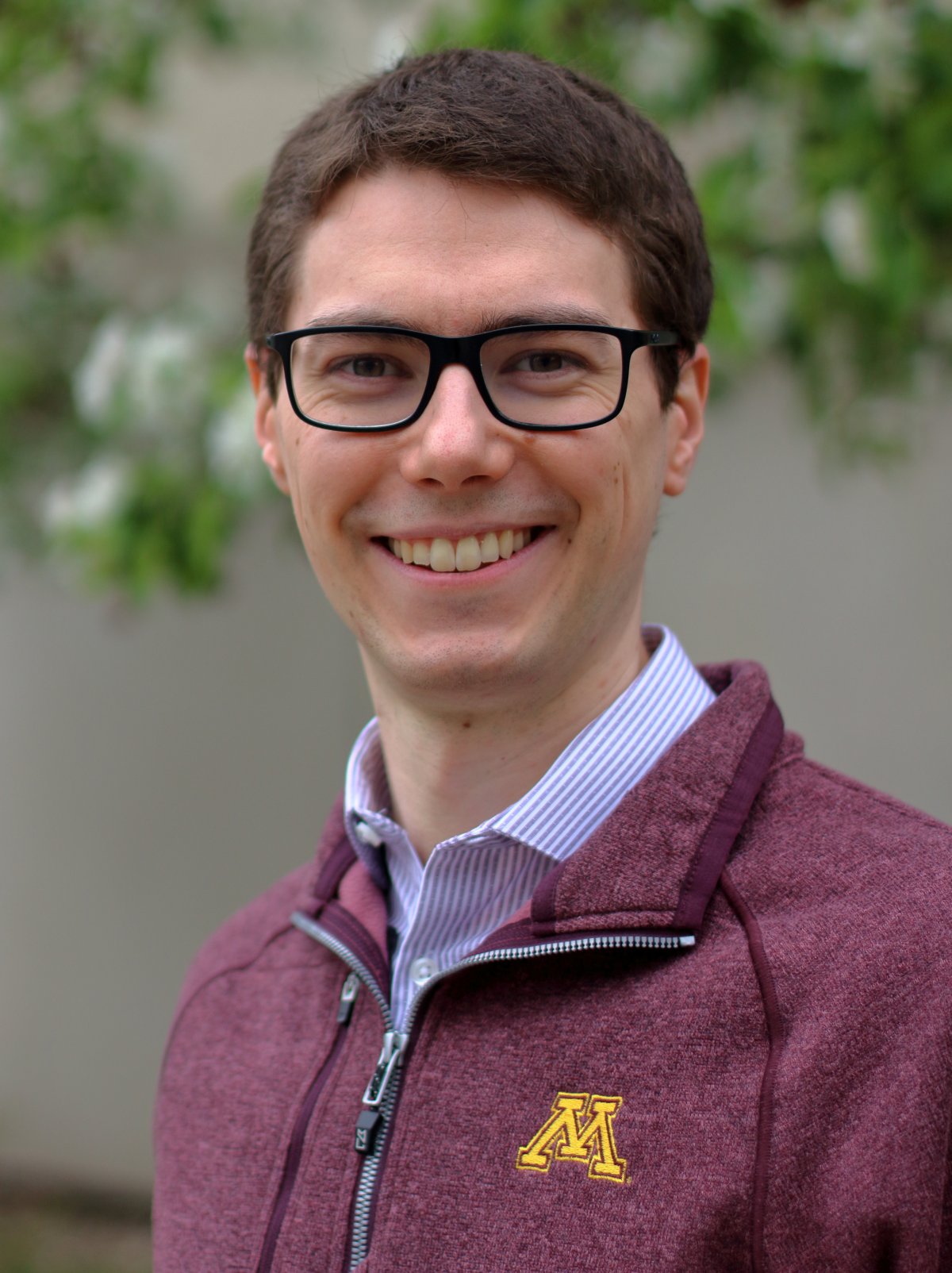
Peter Kondor is an Assistant Professor affiliated with the London School of Economics & Political Science (LSE) and Central European University (CEU). His research focuses on finance, asset pricing, liquidity risk, market microstructure, and arbitrage dynamics. Research Interests: Asset pricing with heterogeneous agents Liquidity risk and intermediary capital Over-the-counter market structures Behavioral finance and sentiment analysis Global financial cycles and investment waves Information diffusion and market stability Key Publications Trends: 2011-2025: Explores causal inference in asset pricing, hedge fund impacts on idiosyncratic risk, and liquidity risk dynamics. 2018: Investigates arbitrage capital and liquidity risk in global markets. 2020-2025: Analyzes rational sentiments, narrative momentum, and aggregate earnings.
Dr. Prasanth Venugopal is an Associate Professor specializing in Power Electronics with a focus on advanced energy transfer systems and battery technology. His research spans wireless power transfer, electric vehicle charging, and electrochemical impedance spectroscopy for battery diagnostics. Primary research areas: Wireless Power Transfer (100%), Harmonics (88%), Inductive Power Transfer (87%), Battery Engineering (48%) Recent publications demonstrate expertise in transformerless converter designs, multi-level architectures, and AI-driven battery capacity estimation. He has pioneered meander coil topologies for harmonic mitigation and developed computation-light models for battery aging analysis. His work includes collaborations on Li-ion battery degradation, onboard chargers for electric vehicles, and hybrid power systems for electric aircraft. Despite significant output in IEEE Transactions, no explicit awards or student mentoring data appears in the provided texts.
Thiago Batista Soeiro serves as a Full Professor with exceptional scholarly impact, evidenced by over 200 research publications and an h-index of 27. His work fundamentally advances power electronics applications in transportation and energy systems, particularly through innovations in electric vehicle infrastructure and sustainable power conversion technologies. Despite the absence of explicit institutional affiliation in source materials, his research permeates critical IEEE journals and conferences. Professor Soeiro's research portfolio centers on: Power converter design for electric vehicle charging systems AI-driven battery health estimation using electrochemical impedance spectroscopy Wireless power transfer optimization for automotive applications High-efficiency topologies for more electric aircraft Hydrogen energy system integration Advanced semiconductor utilization in grid-connected systems Analysis of his 2023-2025 publications reveals accelerating innovation in wide-voltage-range converters, predictive battery management, and fault-tolerant power systems. His work increasingly bridges machine learning with power electronics, notably through computation-light AI models for battery diagnostics, while maintaining strong focus on practical implementation challenges in EV charging and aircraft electrification. No scientific awards or honors were documented in the available materials. Similarly, information regarding student supervision, research grants, laboratory facilities, or collaborative teams was not provided in the source texts.
Joost de Moor is an Assistant Professor in Political Science at Sciences Po’s Centre for European Studies and Comparative Politics (CEE) . His research bridges Environmental Politics , Social Movements , and Political Participation , with a focus on climate activism, lifestyle politics, and post-political strategies. He holds a PhD in Social Sciences: Political Science from the University of Antwerp (2016) and has held postdoctoral positions at Keele University (2016-2018) , Stockholm University (2018-2021) , and Leiden University (2021) . A visiting scholar at the University of Mannheim (2015) , his work spans urban environmentalism, climate summit dynamics, and strategic movement adaptation.
Craig A. Bond is a Professor at the RAND School of Public Policy, a Senior Economist at RAND Corporation, and Editor-in-Chief of the RAND Journal of Economics. His work bridges military resource allocation and environmental economics through advanced econometric modeling. Current Roles: Research QA Manager (RAND Arroyo Center), Senior Economist Methodological Expertise: Stochastic dynamic programming, discrete choice modeling, non-market valuation Key Research Themes: Military readiness, coastal resilience, green infrastructure, post-disaster recovery Research Interests: Craig Bond specializes in natural resource economics , environmental economics , and applied welfare economics , with recent work focusing on: Risk modeling for defense acquisitions and personnel strategy Resilience dividend valuation frameworks Green infrastructure cost-benefit analysis Climate adaptation in coastal communities Publication Trends: His 15 most recent works (2017-2025) show interdisciplinary focus across: Military Economics: Recruiting optimization, training requirements, economic multipliers Environmental Policy: Coastal land loss, invasive species impact, water management Resilience Modeling: Disaster recovery frameworks, adaptive systems
Jeffrey Heinz is a Professor at Stony Brook University, with a joint appointment in the Department of Linguistics and the Institute for Advanced Computational Science. He holds a Ph.D. from UCLA (2007) and previously served on the faculty at the University of Delaware from 2007–2017. His research bridges theoretical linguistics, computational learning theory, and formal language models, focusing on phonology, linguistic typology, and grammatical inference. He has contributed to influential works on computational phonology and edited volumes on topics like phonological stress and learning theory. Key academic achievements include the 2017 Linguistic Society of America Early Career Award for contributions to computational inference in language. His work emphasizes the intersection of formal models and empirical linguistics, with applications to reduplication, phonological processes, and machine learning benchmarks like MLRegTest. Heinz has co-authored a book on grammatical inference and guest-edited special issues in Machine Learning and Phonology . His research also extends to interdisciplinary applications, such as modeling human-robot interaction and pediatric motor rehabilitation through grammatical inference techniques.
Professor Alexander Koller is a leading academic in Computational Linguistics at Saarland University's Department of Language Science and Technology. He holds a courtesy appointment in Computer Science and contributes to the Saarland Informatics Campus - one of Europe's premier computer science research centers. He leads the Computational Linguistics group and serves as speaker for the DFG-funded Research Training Group 'Neuroexplicit Models of Language, Vision, and Action'. PhD in Computer Science (Saarland University) Former positions: University of Potsdam, Columbia University, University of Edinburgh Sabbatical experiences: Meta AI (Paris), Allen Institute for AI (Seattle) His research focuses on computational modeling of meaning and reasoning in NLP, combining neural and symbolic approaches. Key contributions include semantic parsing systems like the AM parser and Alto, neurosymbolic models, and the GIVE Challenge for NLG evaluation. His recent work explores LLMs' limitations in problem-solving and compositional generalization. Recent publications highlight diverse applications across semantic parsing, dialogue systems, and LLM evaluation. Awards include ACL 2020 Best Theme Paper and multiple Outstanding Paper recognitions at ACL conferences. 2025 - AI Action Summit keynote speaker 2023 - ACL Outstanding Paper Awards 2022 - ELLIS Faculty appointment He maintains the DialogOS system for spoken dialogue development and teaches advanced computational linguistics topics. His group includes multiple postdocs and PhD students working across LLMs, dialogue systems, and semantic modeling.
Gang (Gary) Tan is a Professor at the Pennsylvania State University's College of Engineering, specializing in computer security, formal methods, and programming languages. He co-directs the Institute for Networking and Security Research (INSR) and leads the Security of Software (SOS) Group, focusing on compiler, programming language, and formal method techniques to enhance computer security. Education: B.E. in Computer Science from Tsinghua University Ph.D. in Computer Science from Princeton University His research integrates formal verification with practical security applications, particularly emphasizing: Compiler-based security enforcement Side-channel mitigation in speculative execution Fairness analysis in machine learning systems Formal grammar approaches for software reliability Key article trends show: Security-focused formal methods (15% of publications) ML fairness verification (20% of recent work) Compiler-based security solutions (30% of output) Side-channel defense mechanisms (25% of research) Parser design and formal grammar synthesis (10% of contributions) Scientific achievements include: NSF CAREER Award Google Research Awards (2x) PLDI 2024 Best Paper James F. Will Career Development Professorship Outstanding Research Award at Penn State Ruth and Joel Spira Excellence in Teaching Award Dr. Tan actively contributes to academic communities through: DARPA ISAT study group membership Program committee roles (CGO 2024, ECOOP 2018, etc) Leadership in security research initiatives
Larry Abbott is the William Bloor Professor of Theoretical Neuroscience at Columbia University, with joint appointments in the Department of Physiology and Cellular Biophysics (within Biological Sciences) and the Mortimer B. Zuckerman Mind Brain Behavior Institute. He serves as Co-Director of the Center for Theoretical Neuroscience and is a Senior Fellow at HHMI Janelia Farm. PhD in Physics (1977), Brandeis University His research focuses on computational and mathematical modeling of neurons and neural networks, emphasizing spike-timing-dependent plasticity, sensory encoding in olfaction, and dynamics of internally generated neural activity. He explores how chaotic neural activity is harnessed for motor output and how perception involves dynamic inference and synaptic plasticity. Recent publications highlight applications of recurrent neural networks, hierarchical control mechanisms, and sensory-motor integration. Collaborative work spans institutions like MIT, Hebrew University, and the Allen Institute for Brain Science. Awards include the NIH Director’s Pioneer Award and the Swartz Prize in Theoretical Neuroscience. NIH Director’s Pioneer Award (2004) Swartz Prize (2010) First Annual Prize in Mathematical Neuroscience (2013) Irving Institute Mentor of the Year (2013)
Joseph Francois is a Professor of Economics and Director at the World Trade Institute (WTI) , affiliated with the Economic Institute at the University of Bern. He previously served as Deputy Director of the NCCR Trade Regulation (2015–2017) and held professorships at Johannes Kepler Universität Linz, Erasmus University Rotterdam, and other institutions. His research spans international economics, trade policy, globalization, environmental economics, and computable general equilibrium (CGE) modeling. Key focus areas include cross-border production chains, trade in services, open economy competition policy, financial market integration, and the interplay between trade agreements and sustainability goals. Scientific distinctions include a Fellowship at the Centre for Economic Policy Research (London). His methodological expertise includes CGE modeling, econometric estimation of large nonlinear systems, and policy analysis of trade disputes, carbon border adjustments, and non-tariff measures. Education: Ph.D. in Economics, University of Maryland BA in Economics and History, University of Virginia He has contributed extensively to policy briefs and technical reports, particularly in analyzing trade impacts on employment, economic development, and environmental outcomes.
Associate Professor at the University of Lisbon's School of Economics and Management (ISEG) since 1983, João Carlos Lopes specializes in Portuguese economic analysis with emphasis on sectoral dynamics, European integration impacts, and circular economy applications. His institutional affiliation spans decades of active teaching and research within Portugal's premier economics institution. Research interests center on Input-Output Analysis , Circular Economy transitions , and Portuguese industrial history , particularly the cork sector. His work examines EU structural funds' regional impacts, migration economics through consumption patterns, and austerity policy consequences. Key thematic areas include: Macroeconomic policy evaluation in peripheral Eurozone economies Historical evolution of Portuguese industrial clusters EU migration's economic consequences via input-output modeling Rural innovation driven by young farmers in peripheral regions His 15 most recent publications (2013-2024) reveal a clear trajectory toward circular economy applications in Portuguese automotive and construction sectors, while maintaining core focus on EU integration challenges. Articles consistently employ Portuguese case studies to address broader European economic questions, with strong methodological emphasis on input-output frameworks and historical institutional analysis. Supervising over 40 Master's students since 2010, his advising portfolio shows thematic consistency with research interests: Circular Economy : 7 theses on automotive, construction, and pharmaceutical sectors EU Policy Analysis : 12 theses on migration, fiscal policy, and structural funds Portuguese Industry : 9 theses on cork, rubber, and regional specialization Teaching responsibilities include Macroeconomics I and EU Economics courses, with documented instruction from 2007-2025 across undergraduate and graduate programs.
Ryan Caverly serves as an Associate Professor in the Department of Aerospace Engineering and Mechanics at the University of Minnesota, Twin Cities, holding the prestigious McKnight Land-Grant Professorship. His research bridges theoretical control frameworks with practical aerospace and robotics applications, focusing on dynamic modeling and system control. Education: BS in Honours Mechanical Engineering from McGill University MS in Aerospace Engineering from the University of Michigan PhD in Aerospace Engineering from the University of Michigan Professor Caverly's research centers on input-output stability, robust control of nonlinear systems, and computationally efficient modeling of flexible structures. His work spans aerospace vehicles, spacecraft, and robotic manipulators, emphasizing theoretical rigor alongside real-world implementation challenges in structural flexibility and control precision. Recent publications reveal strong emphasis on predictive control for orbital mechanics, hypersonic vehicle dynamics, and cable-driven systems. His work consistently integrates convex optimization, state estimation, and structural dynamics to solve complex problems in solar sail technology, UAV navigation, and hypersonic flow measurement. Scientific Awards: McKnight Land-Grant Professor Caverly leads multiple externally funded projects including NASA-sponsored research on solar sail momentum management, UAV state estimation with Honeywell, hypersonic bow shock measurements with the Air Force, and deployable space structure control. His grants portfolio demonstrates significant industry and government collaboration in aerospace innovation. He directs the Aerospace, Robotics, Dynamics, and Control (ARDC) Lab, which specializes in the intersection of dynamic modeling and control theory for flexible multi-body systems, with particular focus on cable-driven mechanisms and lightweight aerospace structures.
Anne J. Shiu is a Professor in the Department of Mathematics at Texas A&M University. She holds a Ph.D. in Mathematics (2010) from the University of California Berkeley with advisors Bernd Sturmfels and Lior Pachter. Her career includes postdoctoral positions at Duke University (2010-2011) and the University of Chicago (2011-2014), followed by a faculty role at Texas A&M since 2014. Research Focus: Algebraic, geometric, and combinatorial approaches to mathematical biology, specializing in biochemical dynamical systems, neural coding, parameter identifiability, algebraic statistics, and genomics. Academic Contributions: Over 15 recent publications spanning identifiability in compartmental models, multistationarity in reaction networks, convexity analysis of neural codes, and algebraic robustness in biochemical systems. Scientific Recognition: Association of Former Students Distinguished Achievement College-Level Award in Teaching (2019) Invited speaker for Ethel Ashworth-Tsutsui Memorial Lecture (2018-2019) Current Research: Investigates structural identifiability in biological models, focusing on compartmental systems, reaction networks, and neural codes through algebraic methods and computational tools. Her work bridges abstract algebra with practical biological applications, including parameter estimation and robustness analysis. Grant Support: Recipient of NSF CAREER award (2018-2023), prior NSF grants (2010-2017), and Simons Foundation Collaboration Grant (#521874, 2017-2018). Academic Leadership: Organized multiple international workshops/conferences including SIAM conferences and Banff workshop. Currently an Associate Editor for SIAM Journal on Applied Mathematics and serves on the AIM Scientific Research Board.
Professor Paolo Rapisarda is a faculty member at the University of Southampton , holding the position of Professor of Electronics and Computer Science. His academic journey began with a Ph.D. in Mathematical Systems and Control Theory at the University of Groningen, Netherlands, under the guidance of Prof. Jan C. Willems and Prof. H.L. Trentelman.
Michio Sugeno is a distinguished Professor at Tokyo Institute of Technology's Graduate School of Information Science and Engineering, Department of Computational Intelligence. With a career spanning over four decades, he has established himself as a leading figure in fuzzy systems and computational intelligence. His research interests encompass Fuzzy Systems, Computational Intelligence, Nonlinear Control, Choquet Integral theory, Brain-Computer Interfaces, and Linguistic Computing. Sugeno's work has fundamentally shaped modern fuzzy control theory, particularly through his development of the Takagi-Sugeno fuzzy model which has become a standard approach in industrial applications. Analysis of his recent publications reveals a continued focus on piecewise nonlinear modeling, stability analysis of fuzzy systems, and the application of Choquet calculus to various computational problems. His work demonstrates a consistent trajectory from theoretical foundations to practical implementations in control systems and intelligent computing. IEEE Pioneer Award in Fuzzy Systems IFSA Fellow Emanuel R. Piore Award Sugeno has mentored numerous researchers who have become prominent in their own right, including Tadanari Taniguchi, Luka Eciolaza, and Anh-Tu Nguyen. His laboratory has been instrumental in developing novel approaches to nonlinear control systems using piecewise bilinear models and fuzzy logic. Current research directions include brain-computer interfaces using EEG analysis and the development of everyday language computing systems that enable more natural human-computer interaction.