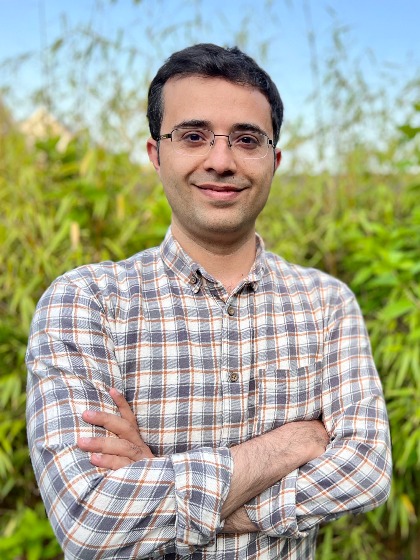
Dr. Prasanth Venugopal is an Associate Professor specializing in Power Electronics with a focus on advanced energy transfer systems and battery technology. His research spans wireless power transfer, electric vehicle charging, and electrochemical impedance spectroscopy for battery diagnostics. Primary research areas: Wireless Power Transfer (100%), Harmonics (88%), Inductive Power Transfer (87%), Battery Engineering (48%) Recent publications demonstrate expertise in transformerless converter designs, multi-level architectures, and AI-driven battery capacity estimation. He has pioneered meander coil topologies for harmonic mitigation and developed computation-light models for battery aging analysis. His work includes collaborations on Li-ion battery degradation, onboard chargers for electric vehicles, and hybrid power systems for electric aircraft. Despite significant output in IEEE Transactions, no explicit awards or student mentoring data appears in the provided texts.
Thiago Batista Soeiro serves as a Full Professor with exceptional scholarly impact, evidenced by over 200 research publications and an h-index of 27. His work fundamentally advances power electronics applications in transportation and energy systems, particularly through innovations in electric vehicle infrastructure and sustainable power conversion technologies. Despite the absence of explicit institutional affiliation in source materials, his research permeates critical IEEE journals and conferences. Professor Soeiro's research portfolio centers on: Power converter design for electric vehicle charging systems AI-driven battery health estimation using electrochemical impedance spectroscopy Wireless power transfer optimization for automotive applications High-efficiency topologies for more electric aircraft Hydrogen energy system integration Advanced semiconductor utilization in grid-connected systems Analysis of his 2023-2025 publications reveals accelerating innovation in wide-voltage-range converters, predictive battery management, and fault-tolerant power systems. His work increasingly bridges machine learning with power electronics, notably through computation-light AI models for battery diagnostics, while maintaining strong focus on practical implementation challenges in EV charging and aircraft electrification. No scientific awards or honors were documented in the available materials. Similarly, information regarding student supervision, research grants, laboratory facilities, or collaborative teams was not provided in the source texts.
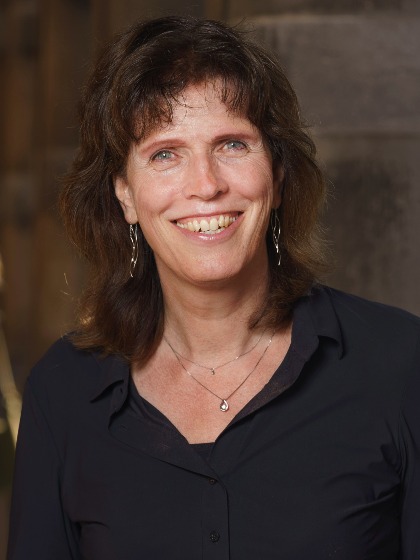
Nina Schwarz is Assistant Professor of human-environment interactions in cities at the Department of Urban and Regional Planning and Geo-Information Management, ITC—University of Twente. Holding a Diploma in Environmental Sciences (University of Lüneburg, 2003) and a PhD in Social and Economic Sciences (University of Kassel, 2007), she spent a decade as senior scientist at the Helmholtz Centre for Environmental Research – UFZ before joining ITC. Her interdisciplinary research integrates urban land-use science, ecosystem-service evaluation and advanced modelling techniques—especially agent-based models—to explore sustainable urban development under global change. Research interests revolve around three interconnected themes: (i) urban land-use change —understanding how residential, commercial and green-space dynamics co-evolve; (ii) urban ecosystem services —quantifying both supply and demand of services such as local climate regulation, recreation and biodiversity; and (iii) behavioural modelling —formalising human decision-making to simulate policy scenarios ranging from slum-upgrading to vineyard management. She actively links these themes to UN Sustainable Development Goals, notably SDG 11 (Sustainable Cities) and SDG 15 (Life on Land). Recent publications (2022-2025) reveal a methodological breadth spanning citizen-science impact assessment in Suriname, cooling effects of urban water bodies in Chinese mega-cities, European wine-growers’ adaptive behaviour, and methodological advances in upscaling and validating agent-based land-use models. Across these studies, Schwarz consistently combines empirical field data, geospatial analytics and participatory approaches to produce policy-relevant insights for cities in both the Global North and South. She has (co-)authored >80 peer-reviewed works, accumulating c. 5 900 citations and an h-index of 28 (Scopus). While specific honours are not itemised in the supplied text, her sustained citation impact and invited contributions to major conferences (e.g., iEMSs 2020, IAHR 2025) underscore scientific recognition. Schwarz frequently engages with societal stakeholders: her projects have generated open datasets on urban green-space monitoring in Paramaribo, e-learning modules for Latin-American universities, and interactive dashboards for sustainable water management. Within ITC she contributes to capacity-building programmes for emerging economies, supervises graduate researchers and maintains active collaborations across Europe, Latin America, Africa and Asia. No explicit lists of PhD students or personal grants are provided in the current corpus, but her leadership of externally funded projects (e.g., citizen-science evaluation, vineyard decision-making database) indicates ongoing acquisition of research funding.
Nima Monshizadeh Naini is a Professor in the Faculty of Science and Engineering at the University of Groningen. He holds the position of Chair of the IEM Program Committee and serves on the boards of ENTEG and YSEN. His academic journey includes a PhD in Control Systems from the University of Groningen (2013, Cum Laude), followed by postdoctoral research at the University of Cambridge (2016-2017) and the University of Groningen (2014). He has been an Assistant Professor since 2018 and was awarded the NWO Open Competition Grant in 2021. His research focuses on Cyber-Physical Human Systems (CPHS) , addressing two core areas: (1) Coordination of self-interested users in power systems and traffic networks using dynamic information design and game-theoretic mechanisms; and (2) Privacy-aware control and optimization with tailored encryption methods for dynamic systems. Applications include energy markets, microgrids, and smart grids. He has published extensively in top venues like IEEE CDC and Automatica, with key topics including privacy-preserving algorithms, distributed control, and optimal intervention design. His work contributes to UN Sustainable Development Goals related to affordable energy and responsible consumption. Education: PhD in Control Systems, University of Groningen (2013) Research Associate, University of Cambridge (2016-2017) Postdoctoral Researcher, University of Groningen (2014) Awards: Cum Laude distinction for PhD thesis (2013) NWO Open Competition Grant (2021) Advising & Grants: Supervised 5 PhD students Editorial roles in IEEE journals and conference proceedings Labs/Teams: Leading the Cyber-physical systems group within the Smart Manufacturing Systems institute.
Prof. Charles van Marrewijk is a Professor of Economics and Head of the Department at the Utrecht University School of Economics (Utrecht University, since 2008). He specializes in International Trade, International Macroeconomics, Regional Science, and Economic Development. He holds academic leadership roles, including former Head of Research at institutions like the Tjalling Charles Koopmans Institute (2009–2013) and the Utrecht University School of Economics Research Institute (2018–2022). Education: Erasmus University Rotterdam (BSc/MSc, 1981–1985) and Purdue University (PhD, 1985–1988). Career highlights include roles at the University of Groningen (1987–1990), Erasmus University Rotterdam (1990–2008), and Xi'an Jiaotong-Liverpool University (2014–2017). Research focuses on geographical economics, economic growth, and institutions. Key themes include the Belt and Road Initiative's impact, urban development in China, and global supply chains. He has authored over ten books, including International Economics and Business (Cambridge University Press) and edited three journals. His work emphasizes policy-relevant analysis, such as trade dynamics and sustainability pathways. Publications include influential studies on Dutch cities' comparative advantages, cross-border mergers in the U.S., and demographic shifts' effects on global income inequality. His research bridges theory and policy, addressing contemporary challenges like slowbalization and regional resilience.
Rodrigo González is an Assistant Professor at the Department of Mechanical Engineering, Eindhoven University of Technology, since 2022. His research focuses on data-driven modeling, estimation, and control methods for high-tech precision systems, with applications in motion control and continuous-time system identification. Education: Ph.D. in Electrical Engineering (KTH Royal Institute of Technology, 2022) M.Sc. in Electronic Engineering (Universidad Técnica Federico Santa María, 2016) His work emphasizes continuous-time system identification, state-space modeling, and Bayesian estimation techniques. Key research themes include motion control tuning, multivariable systems, and noise/disturbance modeling in precision engineering applications. Rodrigo has received the Best Electronic Engineering Student Award (2016) and Best Thesis Award from Universidad Técnica Federico Santa María. He has active collaborations with institutions like Universidad Técnica Federico Santa María through visiting researcher appointments. Scientific awards include: Best Electronic Engineering Student Award (2016) Best Thesis Award (Universidad Técnica Federico Santa María)
Jacquelien Scherpen is a Professor at the University of Groningen, currently serving as Rector Magnificus. She holds a position in the Engineering and Technology institute Groningen (ENTEG) within the Faculty of Science and Engineering. Her academic journey includes a PhD in Applied Mathematics from the University of Twente (1994) and post-doctoral roles at Delft University of Technology before joining Groningen in 2006. She has been a leader in systems and control research, with roles as Scientific Director of ENTEG (2013–2019) and Director of the Groningen Engineering Center (2016–2023). Her research focuses on model reduction, nonlinear control, smart energy systems, and distributed control applications in smart grids. Key achievements include the Automatica Best Paper Prize (2020), Knight of the Order of the Netherlands Lion (2019), and the Prince Friso Engineer of the Year Award (2023). She has held leadership roles in organizations like the European Control Association (EUCA) and is a Fellow of IEEE. Her professional activities include editorial roles in journals like the IEEE Transactions on Automatic Control and the International Journal of Robust and Nonlinear Control. She has organized major conferences, including the European Control Conference (ECC) 2021 and 2023. Her work bridges theoretical advancements with practical applications, emphasizing sustainability and engineering innovation.
Claudio De Persis is a Professor in the Faculty of Science and Engineering at the University of Groningen, Netherlands. He holds a Laurea degree (cum laude) in Electrical Engineering from the University of Rome La Sapienza (1996) and a PhD in Control Systems (2000) from the same institution. His research focuses on automatic control, particularly data-driven control, nonlinear systems, cyber-physical systems, and energy systems. He has held academic positions at the University of Rome La Sapienza (2002–2011), the University of Twente (2009–2011), and currently leads the Groningen Center for Systems and Control within the Engineering and Technology Institute. His expertise includes fault detection in nonlinear systems, resilient control under Denial-of-Service attacks, and distributed control of energy networks. He has authored over 250 publications, including seminal works on quantized control and cyber-physical systems. He serves on editorial boards of journals like Automatica and IEEE Transactions on Automatic Control . De Persis has received two IEEE Outstanding Paper Awards for contributions to control theory. His research integrates control theory with data science, addressing challenges in smart grids and distributed systems. He holds patents for energy system control and collaborates on interdisciplinary projects, such as data center optimization and resilient networked systems. His current research emphasizes data-driven methods for controller synthesis, leveraging convex optimization and system identification to ensure stability and performance. He also explores privacy-preserving distributed control algorithms for power networks and aggregative games.
Devrim Murat Yazan is an Associate Professor at the University of Twente, affiliated with the Department of Industrial Engineering & Business Information Systems and the Digital Society Institute. He holds a PhD from the Interpolytechnic School of Doctorate (Politecnico di Bari, Politecnico di Milano, and Politecnico di Torino, 2011, Italy). His research focuses on sustainable supply chain management, circular economic business models, industrial symbiosis networks, and decision-making frameworks for transitioning to a circular economy. Methodologies include input-output modeling, game theory, and agent-based simulation. He leads the 'Sustainable Circular Economy' research group, supported by a Horizon 2020 grant (€725k contribution from UT). The group explores decision-making in industrial symbiosis, efficient network operations, and cost/benefit-sharing mechanisms. Recent work includes developing matchmaking platforms for circular construction ecosystems and analyzing greenwashing impacts on brand perception. Awards include the CIOB Award (2024). His teaching includes courses like 'Sustainable Business Development' and 'Sustainable Supply Chains for Consumer Products'. His work contributes to UN Sustainable Development Goals related to responsible consumption and production (SDG 12) and climate action (SDG 13). Grants and collaborations involve EU Horizon 2020 and diverse institutions. Research outputs span 62 peer-reviewed articles, with a focus on circular economy implementation, industrial symbiosis dynamics, and decision-support tools.
Tiziano De Matteis is an Assistant Professor in the @Large Research group at Vrije Universiteit Amsterdam's Faculty of Science, Department of Computer Systems. He also holds an affiliation with the Network Institute. His research focuses on overcoming post-Moore architecture challenges through parallel and distributed computing, high-performance systems, energy efficiency, and FPGA applications. Previously, he was a PostDoc at ETH Zurich's SPCL Group and earned his MSc/PhD from the University of Pisa. Education PhD in Computer Science, University of Pisa MSc in Computer Science, University of Pisa Research Interests Post-Moore architectures for distributed ecosystems Energy-aware parallel computing High-level abstractions for parallel software development FPGA-based hardware acceleration Data stream processing and distributed systems Recent Research Trends Recent work emphasizes: Data center risk analysis and sustainability Optimizing microservices and distributed scheduling LLM model offloading to NVMe storage Python-based data-centric programming productivity GPU interconnect performance in supercomputing Grants & Projects Participates in the EU-funded 'Extreme and Sustainable Graph Processing' project (2023-2025), exploring scalable graph algorithms and energy-efficient computing systems. Teaching Accelerator-Centric Computing Ecosystems Computer Organization Distributed Systems Systems Seminar
Dr. Frederic Ang is an Associate Professor in the Business Economics Group at Wageningen University & Research since 2023, specializing in agri-food sector productivity and sustainability. He holds a joint Ph.D. from KU Leuven and Hasselt University (2015), followed by postdoctoral roles at the University of Reading and Swedish University of Agricultural Sciences. His research focuses on sustainable intensification, dynamic optimization, and agricultural productivity analysis. He currently serves as Associate Editor of the Journal of Productivity Analysis and Co-Editor of the Journal of Agricultural Economics . Key honors include the 2023 AES Outstanding Contribution Award and 2020 Best Referee Award. His work addresses agricultural efficiency, environmental policy, and farm-level decision-making. Education: Joint Ph.D. in Bioscience Engineering and Business Economics (2015) Master of Advanced Studies in Economics (2015) M.Sc. in Tropical Natural Resources Management (2009) B.Sc. in Biosystems Engineering (2007) Research Interests: Dr. Ang examines agricultural productivity through lenses of production economics, exploring sustainable practices and environmental-economic trade-offs. His work bridges theoretical models (e.g., Hicks-Moorsteen productivity indicators) with applied analyses of farm-level data, emphasizing nitrogen management, energy resilience, and microbial innovations. Awards & Grants: Recognized for contributions to agricultural economics journals and policy research. Active in OECD initiatives on productivity and environment. Projects include leading the SIMBA initiative on microbiome applications and the MINDSTEP project modeling farmer decisions under EU policies. Labs & Collaborations: Engaged with interdisciplinary teams in the Business Economics Group and international partners via projects like MIXED (agroforestry systems) and MINDSTEP. Coordinates research on circular economy principles and climate-smart agriculture.
Felix Leopold Schwenninger is an Associate Professor at the University of Twente, affiliated with the Digital Society Institute and working in Mathematical Systems Theory. His research lies at the intersection of functional analysis, operator theory, and control systems, with a strong focus on semigroups, admissibility, and functional calculus. His research interests include: Functional Analysis and Operator Theory Admissibility and Controllability in Infinite-Dimensional Systems Semigroup Theory and Evolution Equations Functional Calculus for Operators Numerical Range and Spectral Theory Mathematical Foundations of Control Systems His recent publications (2024–2025) show a strong trend in duality concepts in stability, sharp bounds in functional calculus, and structural properties of operators in Banach spaces. These works are primarily theoretical, contributing to the rigorous mathematical underpinnings of control and operator theory. Scientific contributions and service include: Associate Editor, Optimal Control Applications and Methods (since 2021) Active publication in top mathematical journals and preprint servers (e.g., arXiv) Contributor to conference presentations, including on Barron spaces and embeddings He has supervised at least one PhD student (T. Heeringa) and continues to be actively involved in research, editorial work, and academic collaboration. He is part of a vibrant network in applied mathematics and systems theory, with international collaborations evident in recent outputs.
Joschka Hüllmann is an Assistant Professor in Industrial Engineering & Business Information Systems, currently affiliated with ERCIS CC Smarter Work as a Co-Lead. His research focuses on technology-mediated work practices, computational methods in process theorizing, and the societal implications of algorithmification, particularly in balancing data-driven innovation with employee/consumer rights. Co-Lead, ERCIS CC Smarter Work Artificial Intelligence Expert in Human-AI Interaction, Data Mining, and Process Mining Recent work includes leveraging digital twins for resilient multimodal corridors, advancing agile methodologies in safety-critical industries, and analyzing human-AI configurations in agriculture. He also explores esports team dynamics through systematic reviews. His research spans Computer Science , Industrial Engineering , and Social Sciences , with a focus on computational methods, societal impacts of AI, and smart industry transitions. Collaborations include cross-disciplinary studies in agricultural AI and data-driven business models. Key labs and teams: ERCIS CC Smarter Work , where he drives AI innovation projects integrating digital and societal contexts.
Hakan Köroğlu is an Assistant Professor at the University of Twente , affiliated with the Faculty of Engineering Technology and the Control and Mechatronics group within the Mechanics of Solids, Surfaces & Systems department. He holds a Ph.D. in Electrical and Electronics Engineering from Bilkent University (2001) and has held academic and research positions at Delft University of Technology, Eindhoven University of Technology, King Fahd University of Petroleum and Minerals, and Chalmers University of Technology. B.Sc. , M.Sc., and Ph.D. from Bilkent University Postdoctoral Research Associate at Delft University of Technology (2004-2009) Researcher at Eindhoven University of Technology (2009-2011) and King Fahd University (2011-2012) Researcher and Teacher at Chalmers University (2013-2017) His research focuses on Control Systems , particularly in nonlinear systems and time-delay systems , with applications in adaptive control, observer design, and stability analysis. His work has explored robust control, feedforward controllers, and backstepping methods for systems with time-varying delays. Recent trends in his publications emphasize Lyapunov-based stability analysis , adaptive observers , and control algorithms for systems with time delays. His articles highlight interdisciplinary applications in control theory and engineering, particularly in compensating delays in dynamic systems. As part of the Digital Society Institute at the University of Twente, he contributes to research on control systems and mechatronics. His collaborations include industry projects with ASML, focusing on lithographic process control .
Herbert Bos is a Full Professor at Vrije Universiteit Amsterdam, holding positions in the Faculty of Science (Computer Systems department), the Network Institute, and the Systems and Network Security group. His research focuses on hardware and software security, including transient execution attacks, memory exploitation, and vulnerability detection. He has authored over 229 research outputs, including influential papers on Spectre mitigation, Rowhammer attacks, and fuzzing techniques. Notable contributions include frameworks like PANDAcap and BinRec. Bos teaches courses such as Binary and Malware Analysis and Operating Systems. His work aligns with UN Sustainable Development Goals related to innovation and infrastructure security. Education details are not explicitly provided, but his academic titles (prof. dr. ir.) suggest advanced degrees in computer science and engineering. Ancillary activities include roles as an author for Pearson textbooks and a member of the Kiesraad in The Hague. Research interests emphasize cutting-edge hardware vulnerabilities (e.g., Spectre, Rowhammer), memory safety, and automated testing (fuzzing). Recent work highlights practical defenses against transient data leaks (Phantom Trails) and data-only attacks. Collaborations span international institutions, reflecting his global influence in cybersecurity. Publications since 2016 showcase advancements in CPU architecture security, kernel exploitation, and embedded device defenses. His datasets (e.g., PANDAcap SSH Honeypot) provide foundational resources for the security community. Grants and lab affiliations are inferred through his research outputs and teaching roles.