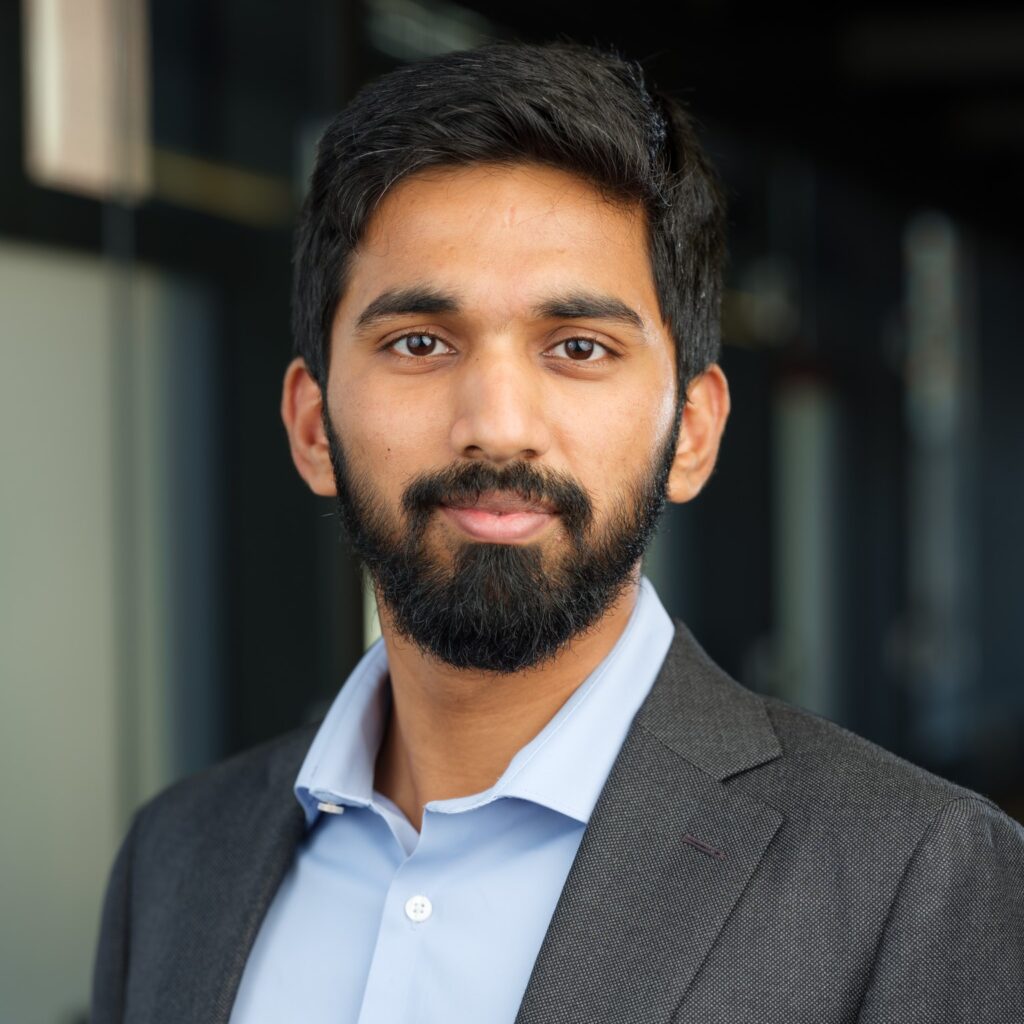
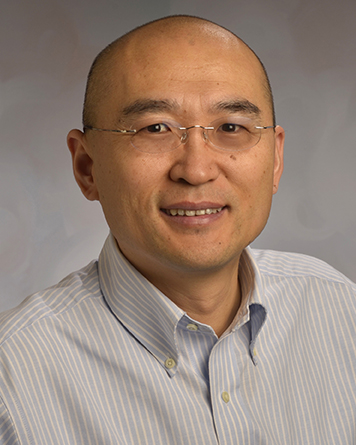
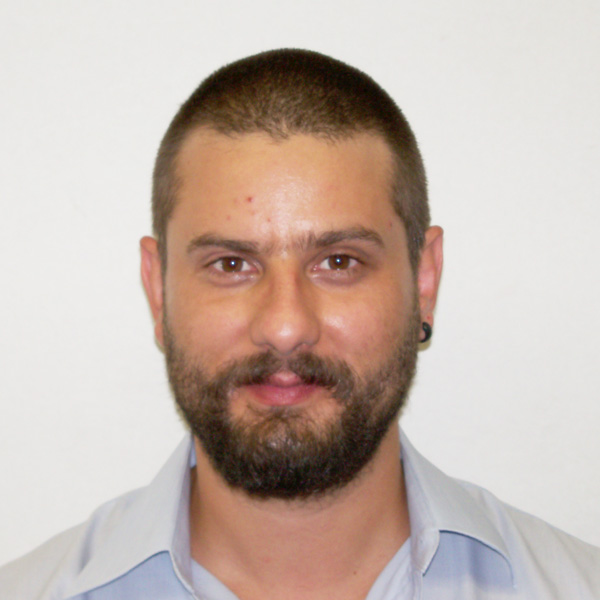
Dinesh Jayaraman is an Assistant Professor at the University of Pennsylvania, with primary and secondary appointments in the Department of Computer and Information Science (CIS) and Electrical and Systems Engineering (ESE), respectively. He leads the Perception, Action, and Learning (PennPAL) Research Group at the GRASP Laboratory, focusing on interdisciplinary research at the intersection of robotics, machine learning, and computer vision. Research Interests: Robotics, computer vision, reinforcement learning, and autonomous systems. Recent Publications: His work explores vision-language models for robotic tool use, symmetry-based control acceleration, articulated object modeling, and in-context learning frameworks. Awards: Recipient of the 2022 NSF CAREER Award for innovative contributions to robotics and AI. Teaching: Co-teaching a robot-learning seminar (CIS 7000/ESE 6800) with Antonio Loquercio in Spring 2025. Students: Advising PhD candidates including Edward Hu, Arjun Krishna, and co-advised students with Osbert Bastani, Vijay Kumar, and Rajeev Alur.
Olindo Isabella serves as a Full Professor within the Faculty of Electrical Engineering, Mathematics and Computer Science at Delft University of Technology. She heads the Photovoltaic Materials and Devices (PVMD) research group, driving innovation in solar energy conversion technologies. Her academic role encompasses teaching, research leadership, and extensive collaboration with industry and international institutions to advance photovoltaic science and engineering. Professor Isabella's research spans multiple domains of photovoltaics, including silicon and perovskite solar cells, thin-film technologies, offshore floating systems, and agrivoltaics. She investigates material properties, device physics, and system performance to enhance efficiency, reliability, and environmental sustainability of solar energy solutions. Her work integrates experimental and computational approaches for comprehensive analysis. Analysis of her recent publications indicates a strategic focus on machine learning for PV-climate classification, impedance spectroscopy of silicon solar cells, offshore floating platform engineering, and perovskite crystallization processes. These studies collectively address key barriers to large-scale solar deployment, such as performance prediction, structural integrity in marine environments, and novel material synthesis. Scientific Awards: The available information does not mention any specific awards or honors for Professor Isabella. She has guided the research of 20 students and secured competitive funding for impactful projects. Currently, she leads SYMBIOSYST (2023-2026), which explores symbiotic relationships between solar PV and agriculture, and recently completed TRUST-PV (2020-2024), aimed at improving PV plant integration across market segments through machine learning and monitoring technologies. The PVMD group under her direction operates state-of-the-art laboratories for solar cell fabrication and characterization. The team collaborates with global partners on field trials, data analysis, and technology development, contributing to both fundamental knowledge and practical applications in renewable energy.
Marie Hardin, Ph.D. serves as the 10th president of Quinnipiac University, assuming office on July 1, 2025. Previously, she was dean of the Donald P. Bellisario College of Communications at Penn State University since 2014, where she also held a professorship. As president, she oversees all academic units including the Frank H. Netter MD School of Medicine, School of Law, and College of Arts and Sciences. Dr. Hardin earned her Ph.D. in mass communication from the University of Georgia, an M.A. in communication from Georgia State University, and a B.A. in theology from Ambassador College. As a first-generation college graduate, she brings personal understanding of educational access challenges. Her research focuses span sports media representation, gender studies in communication, and journalism education. She has significantly influenced communication pedagogy through leadership roles in national accreditation bodies and professional organizations. Dr. Hardin's scholarly impact is reflected in her editorial leadership as co-editor of the Sage journal "Communication & Sport" and two book series in her field. Her administrative approach emphasizes student media development, having created The News Lab at Penn State and championed student media consortiums. George W. Atherton Award for Excellence in Teaching (2009) University of Georgia Grady College Distinguished Alumni Scholar (2013) 2024 Scripps Howard Administrator of the Year AEJMC President (2019) President Hardin actively mentors emerging scholars while leading university-wide strategic initiatives. She chairs the national committee for the Accrediting Council on Education in Journalism and Mass Communication and the Hearst Foundations Journalism Awards Steering Committee. Her leadership extends to community engagement through partnerships with media organizations and professional development programs for journalism educators. As an avid runner who has completed over 30 marathons, she models resilience and dedication to the Quinnipiac community. Her administrative philosophy emphasizes innovation in career-ready education within an inclusive learning environment that values lifelong learning.
Anand Bhojan is an Associate Professor (Educator Track) at the Department of Computer Science, School of Computing, National University of Singapore (NUS). He is a member of the Communication and Internet Research Lab and serves on the Graduate Studies Committee. Dr. Bhojan is also the founder of Anuflora Systems and Virtual and Augmented Reality Labs (www.varlabs.org), and serves as Associate Editor of Computers and Electrical Engineering Journal, Elsevier, and Vice President of International Researchers Club, Singapore. Dr. Bhojan earned his Ph.D. in Computer Science & Engineering from NUS in 2011, where his thesis was nominated for the Best PhD Thesis Award. He also holds a Professional Master's in Computer Applications from Bharathidasan University (1999), a Bachelor's degree in Computing with Gold Medal (University topper) from Bharathiar University (1994), and a Postgraduate Certificate in Teaching Higher Education from University of Sheffield, UK (2003). His research spans multiple domains including Distributed Computing and Wireless Networks (IoT, Security, Blockchain), Artificial Intelligence (Generative AI, FinTech), and Entertainment Computing with focus on Games, VR/AR/Metaverse technologies. Dr. Bhojan leads the Metaverse Foundry research group which focuses on content generation for games & XR simulations across multiple domains including entertainment, healthcare, and architecture, while also experimenting with innovative teaching methods for entertainment media technologies. Dr. Bhojan's recent research has pioneered hybrid rendering techniques that strategically combine ray tracing and rasterization to create more realistic video game graphics without compromising performance. His work addresses critical challenges in real-time rendering, particularly in depth of field and motion blur effects, with the goal of making Hollywood-quality graphics accessible on a wider range of hardware. Earlier work focused on energy efficiency in mobile gaming, including power management techniques and latency optimization for cloud gaming. Among his notable achievements: 2012 Nominated for Best PhD Thesis Award (Wang Gungwu Medal & Prize), NUS 2011 Dean's Graduate Research Achievement Award (PhD), SoC, NUS 2006 Best R&D Project award from TOTE Board, Singapore 1995 Gold medal for first Rank (out of 4000) in Computing, Bharathiar University Dr. Bhojan has served as Organizing Chair and Program Chair for multiple international conferences and has delivered keynote talks at IEEE/ACM International Conferences. He teaches courses including Computer Networks Practice, Game Development, Interaction Design for Virtual and Augmented Reality, and Game Development Project. He leads the Metaverse Foundry research group and the Virtual and Augmented Reality Labs, where undergraduate and graduate students have won multiple research and innovation awards. His research bridges entertainment, education, and emerging technologies with practical applications in making immersive experiences more accessible across different hardware capabilities while maintaining energy efficiency.
Dr. Louise Alexander is an Associate Professor in Mental Health Nursing at Deakin University's School of Nursing & Midwifery (Faculty of Health). She holds prior academic roles including Senior Lecturer (ACU, 2018–2023) and Lecturer positions (ACU and Holmesglen Institute). Her research focuses on mental health nursing workforce sustainability, stigma reduction, simulation-based education, and curriculum development. Key interests include nurse resilience, pandemic impacts on healthcare workers, and improving student attitudes towards mental illness. Education: PhD from Deakin University; GCHE qualification Certifications: University of Melbourne's Emerging Leaders & Management Program (2021–2022) Teaching: Leads courses in forensic mental health, therapeutic communication, and health promotion Research Highlights: Recent work examines pandemic trauma among nurses, alcohol consumption trends post-COVID, and leadership's role in workforce retention. Her studies emphasize qualitative methods and integrative reviews to address systemic challenges in mental health nursing education and practice. Awards/Grants: No explicit awards listed; research supported by institutional collaborations. Active in developing transition-to-practice programs and evaluating simulation-based training efficacy. Labs/Teams: Collaborates with interdisciplinary teams on mental health workforce resilience and stigma reduction initiatives. Engages in national and international nursing education networks.
Jindong Tan is a Professor in the Department of Mechanical, Aerospace, and Biomedical Engineering at the University of Tennessee, Knoxville (since 2015). Previously, he held roles at Michigan Technological University (2002–2015) and Northeastern University, China (1995–1998). He specializes in medical/surgical robotics, human-robot interactions, wearable sensors, control systems, and mechatronics. His research integrates robotics, biomedical engineering, and computer science to advance minimally invasive surgical tools, wearable technology, and autonomous systems. Education: Ph.D. in Mechanical Engineering from Michigan State University (2002), M.S. from Northeastern University (1995), and B.S. from Lanzhou University of Technology (1992). Research interests focus on developing innovative medical robotic systems, including laparoscopic camera robots, magnetic actuation mechanisms, and human-robot collaboration frameworks. He has contributed to advancements in wearable sensors for healthcare, sensor networks for dynamic environments, and calibration techniques for bio-inspired robots. Key projects include the design of an untethered laparoscopic camera robot (s-CAM), magnetic localization for surgical tools, and frameworks for controlled robot language in human-robot collaboration. His work emphasizes practical applications in surgical environments and wearable health monitoring. Professional service includes roles with the IEEE Robotics & Automation Society, Engineering in Medicine and Biology Society, and the Association for Computing Machinery. Contact: tan@utk.edu, Perkins Hall 315.
Chris Harrison is an Associate Professor at Carnegie Mellon University's School of Computer Science, directing the Future Interfaces Group . His research focuses on novel human-computer interaction technologies, including haptics, AR/VR/XR, and ubiquitous computing. Research Interests: Ubiquitous Computing, Human-Centered AI, Physical Interfaces (Sensing, Haptics, Fabrication), AR/VR/XR, Social Computing Advisees: Daehwa Kim, Nathan DeVrio, Vimal Mollyn, Vivian Shen Scientific Recognition: Forbes 30 Under 30 (Science), MIT Technology Review 35 Innovators Under 35, Smithsonian Innovator (2013), Google/Microsoft/Qualcomm Fellows Contact: chris.harrison@cs.cmu.edu His recent publications explore advanced haptic systems (Reel Feel, Fluid Reality), body-centric sensing (SkinTrack), and environment-embedded interfaces (Wall++). Current work integrates UWB/IMU fusion for pose estimation and synthetic jet haptics.
Professor Haijiang Li is a Chair in BIM for Smart Engineering at Cardiff University's School of Engineering. His roles include leading the Computational Mechanics and Engineering AI Research Group, directing the BIM for Smart Engineering Centre, and overseeing the BIM MSc programme. He holds editorial roles for journals like Construction Innovation and Automation in Construction , and chairs the European Group of Intelligent Computing in Engineering (EG-ICE). Research focuses on smart computational engineering platforms integrating BIM, AI, and big data for sustainable infrastructure. Key areas include digital twins, disaster management, and resilient urban systems. He has secured £40M in research funding, including £9M as PI, and led over 70 research staff and students. Prof. Li is a Standards Committee Technical Executive at buildingSMART, driving international BIM standards. His work includes co-authoring a book on BIM standards across China, the US, and the UK. Awards include Fellowships from the British Computer Society (FBCS) and the Higher Education Academy (FHEA). His research outputs span over 250 publications, covering topics like AI-driven bridge maintenance, ontology-based decision-making, and energy-efficient urban systems. Collaborations with industry and global partners emphasize practical applications of BIM and smart technologies.
Theo Damoulas is a Professor of Machine Learning at the University of Warwick with a joint appointment in the Department of Computer Science and Statistics. He is a Turing AI Fellow (2021-2026) through UK Research and Innovation, an ELLIS member, and a Visiting Professor at New York University's Center for Urban Science and Progress (CUSP). He founded and leads the Warwick Machine Learning Group and has directed major projects at The Alan Turing Institute including Project Odysseus and the London Air Quality project. Education includes: PhD in Probabilistic Multiple Kernel Learning (University of Glasgow, 2009) MSc in Informatics (Distinction, University of Edinburgh, 2004) MEng in Mechanical Engineering (1st Class, University of Manchester, 2003) His research focuses on probabilistic machine learning and Bayesian statistics, emphasizing the integration of structural priors, spatiotemporal dependencies, physical laws, and causal relationships. Key applications include Digital Twins, urban science, and computational sustainability. His work advances robust and scalable inference methodologies for complex real-world systems. Publications demonstrate strong emphasis on Bayesian methods, spatiotemporal modeling, and uncertainty quantification, with applications spanning battery modeling, urban mobility, federated learning, and causal inference. Recent work shows increased focus on physics-informed models, federated learning frameworks, and causal abstraction techniques. Major scientific awards: Turing AI Acceleration Fellowship (2021-2026) Best Paper Awards (Wilkes 2024, AISTATS 2022, IEEE ICMLA 2010) ACM SIGMOD Most Reproducible Paper (2017) Dissertation Award (Classification Society 2012) Teaching Excellence nominations (Warwick 2015-2017) He actively advises PhD students and secured significant grants including the £multi-million Turing AI Fellowship. Current doctoral researchers investigate federated learning, causal inference, and spatiotemporal modeling. He leads the Warwick Machine Learning Group, a cross-departmental team developing foundational ML methods for scientific and societal challenges.
Dr. Wim Biemans is an Associate Professor at the Faculty of Economics and Business of the University of Groningen, specializing in Innovation Management and Marketing. He holds a PhD from Eindhoven University of Technology (1989) and has over 25 years of experience in research, teaching, and consulting. His work focuses on service innovation, B2B marketing, customer involvement in innovation, and the marketing-sales interface. He has authored over 100 peer-reviewed articles and books, including the best-selling Dutch B2B marketing textbook. His research has been recognized with awards like the Thomas P. Hustad Best Paper Award. He serves as Triage Editor for the Journal of Product Innovation Management and editorial board member for Industrial Marketing Management and Journal of Business & Industrial Marketing. Biemans teaches at the University of Groningen and multiple international institutions, including guest professor roles in Europe, Asia, and the U.S. He also designs executive programs for managerial training in innovation management and customer value creation. His recent research explores humor’s impact on creativity, digital tools in sales-marketing integration, and bridging technology-to-product development gaps. He emphasizes end-to-end value creation through intra-organizational collaboration and has published on the Valley of Death ecosystem challenges in innovation commercialization.
Pamela J. Hinds is the Rodney H. Adams Professor and Fortinet Founders Chair in Stanford University's School of Engineering, holding a joint appointment in the Department of Management Science and Engineering. She co-directs the Center on Work, Technology, and Organization and serves on the Director's Council for the Hasso Plattner Institute of Design. Her research focuses on technology's impact on teams, collaboration, and innovation in global and cross-cultural contexts. She earned her Ph.D. in Organizational Science and Management from Carnegie Mellon University (1997). Research Interests: Dr. Hinds explores cross-boundary work teams, particularly those spanning national borders, examining cultural dynamics, language barriers, and site visits' role in knowledge sharing. She investigates human-robot interaction in workplaces and emerging technologies' effects on work practices, including AI, 3D printing, and open innovation systems. Her work bridges organizational behavior, human-computer interaction, and global work dynamics. Awards & Recognition: Lasting Impact Award (2018) Senior Editor of Organization Science Co-editor of Distributed Work (MIT Press) Advising & Leadership: As department chair, Hinds shapes educational and research agendas. Her grants include NSF-funded studies on digital technologies in agriculture and crowd-based innovation. She advises initiatives at the intersection of technology, work design, and global collaboration. Labs & Teams: Co-leads the Center on Work, Technology, and Organization, fostering interdisciplinary research on modern work environments. Engages in Stanford's Design School (d.school) to integrate human-centered design principles into workplace innovation.
Dr. Ly Fie Sugianto is an Associate Professor in the Department of Accounting at Monash Business School, Monash University. Her research focuses on the integration of data analytics, artificial intelligence, and machine learning in accounting and business systems, with applications in the energy sector and organizational behavior. Monash Business School, Monash University Department of Accounting Specialization: Accounting Information Systems, Data Analytics, AI Her research interests span Accounting Information Systems , Agent-Based Simulation , Decision Support Systems , and Technology Adoption . She applies computational methods to study competitive dynamics in deregulated electricity markets and the impact of digital tools on employee well-being and organizational resilience. The recent publications reflect a strong trend in using AI and simulation to analyze complex socio-technical systems, particularly in energy markets and leadership dynamics. Keywords across her work include agent-based modeling , data analytics , servant leadership , and enterprise social media , indicating interdisciplinary research at the intersection of information systems, management, and public policy. Her scientific awards include competitive grants from the ARC (SPIRT/Linkage) , the Australia Indonesia Governance Research Partnership (AIGRP) , and the Sumitomo Foundation . ARC Grant: Dispatch Optimisation in the Australian National Electricity Market Sumitomo Foundation: Technology Use and Employee Well-Being AIGRP: Governance and MSME Resilience during Pandemic Dr. Sugianto has advised research projects and collaborated with industry partners such as Western Power , Ecogen Energy , and AEMO . She is currently accepting PhD students and leads externally funded research initiatives. Her work contributes to UN Sustainable Development Goals related to industry innovation and responsible consumption. She is affiliated with research teams focusing on intelligent decision support systems and digital transformation in business , with active collaborations in Australia and Indonesia.
Daniel Sierra Ramos is an Adjunct Professor at IE University, Spain, and Co-Founder of Fitizens, a startup developing AI-driven wearables for physical activity quantification. He has over 6 years of experience as a Lead Data Scientist at Telefónica and Synergic Partners, specializing in AI applications for industries like banking, retail, and telecommunications. His expertise includes machine learning models for customer segmentation, predictive maintenance, and demand forecasting, alongside Big Data and cloud technologies (AWS/Azure). Education: Master in Telecommunication Engineering (Carlos III University, 2015) Master in Multimedia and Communications (Carlos III University, 2015) Bachelor in Telematic Engineering (Carlos III University, 2013) His research focuses on integrating AI into wearable devices and industry-driven data solutions. He trains professionals in AI from technical and business perspectives, emphasizing autonomy in data-centric environments. Active in corporate roles since 2015, he bridges technological innovation with practical business applications.
Emma Brunskill is an Associate Professor of Computer Science at Stanford University, with a courtesy appointment in Education. She holds a PhD in Computer Science from MIT (2009). Her research focuses on reinforcement learning, educational technology, and healthcare applications, aiming to develop AI systems that support human learning and decision-making. Notable projects include AI tutoring systems, policy evaluation methods, and behavior change interventions using large language models. Her work bridges theory and practice, addressing challenges in off-policy evaluation, fairness-aware decision making, and scalable educational tools. Brunskill has contributed to foundational research in reinforcement learning algorithms and their applications in real-world scenarios such as healthcare, education, and human-AI collaboration. She also leads initiatives to improve equity and efficiency in educational technologies through data-driven approaches. Brunskill's research has been supported by grants such as the NSF RI: Small grant for data-efficient reinforcement learning. She actively explores the ethical implications of AI systems, particularly in healthcare and education settings. Her recent work emphasizes leveraging large language models (LLMs) for personalized feedback and simulated training environments, as seen in studies like GPTCoach and LLM-based counselor upskilling.
Clio Andris is an Associate Professor at Georgia Tech, jointly appointed in the School of City and Regional Planning and the School of Interactive Computing. She directs the Friendly Cities Lab, focusing on mathematical models of social networks applied to urban planning, transportation, and geography. Her work integrates spatial analysis with visualization, emphasizing interdisciplinary collaboration. Education and Career: Andris earned a PhD in Urban Information Systems from MIT (2011), where she was an NDSEG Fellow. She held postdoctoral positions at Singapore-MIT Alliance for Research and Technology and the Santa Fe Institute. Prior to Georgia Tech, she was a faculty member at Penn State’s Department of Geography, affiliated with the GeoVISTA Center. Research Focus: Her research bridges social networks, geovisualization, and urban informatics. Key areas include spatial social network analysis, GIS applications for urban policy, and the impact of digital tools on civic engagement. She has developed innovative visual analytics tools like SNoMaN and ROBIN to democratize spatial data exploration. Awards: She received the NSF CAREER Award (2021) and NDSEG Fellowship (2011). Her lab is affiliated with the Center for Spatial Planning Analytics and Visualization (CSPAV) and the Information Visualization Lab. Labs and Collaborations: The Friendly Cities Lab focuses on socially just urban design through computational methods. Her work addresses issues like food security networks, pandemic impacts on biodiversity, and community mapping for activism. Grants and Outreach: Her NSF-funded projects emphasize public good applications, such as real-time pandemic risk communication and educational tools for migration data. She actively collaborates with non-profits and policymakers to translate research into actionable urban strategies.