Nathaniel GreeneView profile
Associate Professor
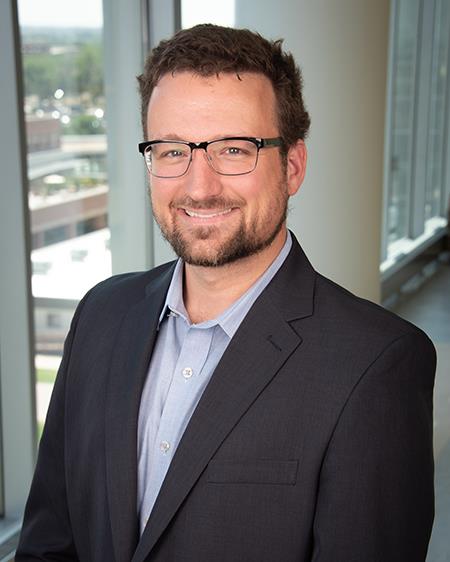
Nathaniel Greene, PhD is an Associate Professor in the Department of Otolaryngology - Head and Neck Surgery at the University of Colorado Anschutz Medical Campus School of Medicine. His academic credentials include a PhD and MS from the University of Rochester (2012 and 2009 respectively) and a BA from Wittenberg University (2004). Dr. Greene's research program focuses on the mechanics and physiology of the auditory system, with particular emphasis on hearing restoration devices and the mechanisms of hearing loss during high-level sound exposure. His laboratory investigates the causes of residual acoustic hearing loss in cochlear implant patients, transmission of sound via bone conduction, and the effects of surgical procedures on inner ear stimulation. His work bridges basic science and clinical applications, addressing critical challenges in hearing preservation and restoration. Analysis of Dr. Greene's recent publications reveals a strong progression in understanding intracochlear pressure dynamics, cochlear implant technology, and binaural hearing mechanisms. His research spans from fundamental auditory mechanics to clinical applications, with increasing focus on translational research that addresses real-world hearing challenges. The work demonstrates sophisticated experimental approaches combining physiological measurements, computational modeling, and clinical assessments across multiple species. Loan Repayment Program Recipient, NIH (2020) T32 Postdoctoral Fellow, University of Colorado Otolaryngology Department (2015) T32 Predoctoral Fellow, University of Rochester Otolaryngology Department (2012) Dr. Greene maintains active professional engagement through memberships in the Association for Research in Otolaryngology, Society for Neuroscience, The Acoustical Society of America, and the American Speech-Language-Hearing Association. His clinical certification as a Certified Occupational Hearing Conservationist (CAOHC) demonstrates commitment to practical hearing conservation applications. His work shows strong collaborative patterns with researchers across multiple institutions, particularly with Dr. Tollin's research group, indicating an active research program with significant external funding support.