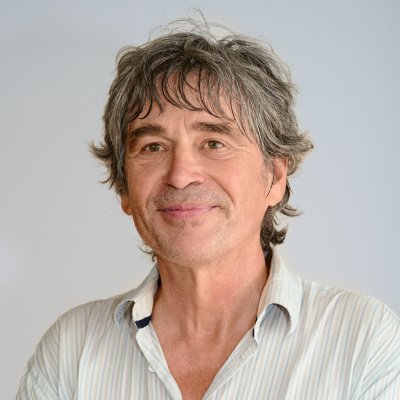
Lionel CavinView profile
Professor
Lionel Cavin is a Full Professor in Genetics & Evolution at the University of Geneva, affiliated with the MuseumLab research team based at the Natural History Museum of Geneva (MHNG). His research focuses on the evolutionary histories of bony fishes, particularly coelacanths and actinopterygians from the Mesozoic Era. His research aims to decipher patterns and processes characterizing the evolution of bony fishes, which comprise three clades representing more than half of vertebrate diversity. He studies several aspects of the evolutionary history of ray-finned fishes (Actinopterygii), lungfishes (Dipnoi), and coelacanths (Actinistia) by analyzing their anatomy, phylogeny, diversity dynamics over time, and paleogeographic and paleoecological history. His work focuses on the Mesozoic Era (252-66 million years ago) with synthetic approaches, testing these perspectives using case studies based on fossil assemblages mainly from Western Europe, North Africa, the Near East, and Southeast Asia. Cavin's research relies on fine anatomical reconstructions based on direct observations, micro-CT, and synchrotron imaging. His main current research interests include coelacanths, which display remarkable anatomical features and evolutionary traits, such as an unexpected hearing function based on a lung-inner ear connection in some fossil forms, and exceptionally long morphological stases observed in lineages during the Cretaceous. His publication record shows consistent high-impact research output across multiple disciplines including paleontology, evolutionary biology, and ichthyology, with a particular emphasis on understanding evolutionary patterns in "living fossil" lineages like coelacanths. His work demonstrates how detailed fossil analyses can reveal unexpected bursts of morphological disparity even in lineages traditionally considered to evolve slowly. Among his notable scientific contributions is research demonstrating that coelacanths, despite being considered "living fossils" due to their slow morphological evolution, experienced an early Mesozoic burst of morphological disparity following the Permian-Triassic mass extinction. Cavin has been actively involved in numerous international collaborations, working with researchers across Europe, Africa, Asia, and South America to understand the global distribution and evolutionary history of ancient fish lineages. His work on the biogeography of mawsoniid coelacanths has demonstrated how wide geographic distribution may contribute to the resilience of certain lineages to extinction events.