Douglas Hemingway is a Research Assistant Professor at the Institute for Geophysics within the Jackson School of Geosciences at The University of Texas at Austin. His research focuses on planetary geophysics, particularly the internal structures and evolutionary processes of planetary bodies like icy moons (e.g., Enceladus, Europa), Mars, and the Moon. He employs geophysical modeling techniques constrained by spacecraft data to study gravitational/magnetic fields, tidal interactions, and surface deformation patterns. Key research areas include: Interior composition and dynamics of icy satellites Evolution of Martian and lunar magnetic fields Space weathering effects on lunar surfaces Geophysical exploration strategies for future planetary missions Recent work emphasizes: Seismic studies of Mars' solid inner core Enceladus' ice shell structure and subsurface ocean Assessment of geological activity potential on Europan seafloors Gravitational field modeling for Uranian moons He collaborates on mission concepts such as Uranus orbiter investigations and NanoSWARM nanosatellite projects. His research bridges theoretical modeling with observational data from missions like Cassini and InSight.
Anneli Aitta is a Researcher at the Department of Applied Mathematics and Theoretical Physics (DAMTP) at the University of Cambridge. Her work bridges theoretical physics, geophysics, and planetary science through mathematical modeling of planetary interiors and fluid dynamics. Her research focuses on Planetary interior structure (e.g., Mars, Venus, Pluto) Earth's core composition and dynamics Tricritical phenomena in fluid flow and phase transitions Solidification processes in ternary alloys and planetary cores Analysis of her 15 most recent publications reveals a trajectory spanning planetary geophysics, fluid dynamics, and high-pressure thermodynamics, with recurring themes of symmetry breaking, core-mantle interactions, and computational modeling of phase transitions.
Michael I. Bergman is the Emily H. Fisher Professor of Physics at Bard College at Simon's Rock, where he has been teaching since 1994. His academic affiliations include the Science, Mathematics, and Computing division, with a focus on Physics and Pre-Engineering programs. B.A. in Geophysics, Columbia University (summa cum laude, 1986) Ph.D. in Geophysics, Massachusetts Institute of Technology (1992) Post-doctoral Fellow, University of Glasgow (1992) and Harvard University (1993-1994) Dr. Bergman's research bridges Geophysics and Materials Science , focusing on the evolution of Earth's core , solidification of metallic alloys , and geophysical fluid dynamics . His work combines laboratory experiments with theoretical modeling to study core dynamics and planetary interior processes. Key publications include Nature , Geophysical Research Letters , and Physics of the Earth and Planetary Interiors . His 2025 article on planetary core slurry models and 2018 studies on grain boundary sliding highlight his ongoing contributions to understanding Earth's inner core mechanics. Research trends span core convection , texture formation , and magnetohydrodynamic processes . Scientific Awards : Doornbos Memorial Prize (2000) NSF Fellowship NASA Fellowship NATO Fellowship NSF-NATO Postdoctoral Fellow (1992) Dr. Bergman has advised student co-authors on multiple projects and secured grants from the NSF and Research Corporation. He served as Secretary for the international SEDI organization and developed innovative lab experiments on core solidification and ultrasonic alloy properties . His work connects planetary geophysics with industrial materials science applications.
Mathieu Dumberry is an Associate Professor in the Department of Physics at the University of Alberta, where he also serves as Director of the Institute for Geophysical Research and Chair of the Study of Earth's Deep Interior division within the International Union of Geodesy and Geophysics. He earned a B.Sc. in Physics from Université de Sherbrooke (1994), an M.Sc. in Geophysics from the University of British Columbia (1998), and a Ph.D. in Geophysics from Harvard University (2004). A NERC postdoctoral fellow at the University of Leeds (2004-2007), he joined the University of Alberta as Assistant Professor in 2008 and was promoted to Associate Professor in 2014. Research Interests: Dumberry's work focuses on planetary interior dynamics, particularly Earth's fluid and solid cores, Mercury, and the Moon. His research explores rotational dynamics, magnetic field generation, core convection, and fluid-solid interactions. He investigates how core flows affect Earth's rotation, gravity, and magnetic field, and extends these studies to exoplanets, emphasizing tidal dissipation and librations. His theoretical approach combines numerical simulations with observational data to probe planetary structure and evolution. Scientific Awards: Editors’ Citation for Excellence in Refereeing, Journal of Geophysical Research - Planets (2016) Best Young Scientist Award, Canadian Geophysical Union (2013) Zatman Lecture (Young Scientist Award), Study of the Earth's Deep Interior (SEDI) (2008) Students: He supervises current graduate students Roman Bukatiuk (MSc), Huifeng Zhang (PhD), Ian MacPherson (MSc), and undergraduate Logan Smith. Former advisees include Colin More (PhD), Christopher Stys (MSc), and several others now in academia, industry, and government roles. Article Trends: His recent publications (2023-2025) emphasize core-driven rotation changes, climate-rotation interactions, and libration-induced dissipation in Mercury, the Moon, and TRAPPIST-1 exoplanets. Keywords span geophysics, planetary science, fluid dynamics, and magnetic field studies.
Christine Thomas is a Professor at the Institute of Geophysics, University of Münster, Germany, where she has been a faculty member since January 2009. She also holds an adjunct professorship at the Geological Survey of Denmark and Greenland (GEUS) starting November 2024. Her research is centered on global and array seismology, with a focus on the Earth's deep interior, including the lower mantle, core-mantle boundary (D" region), and mantle transition zone. She investigates seismic anisotropy, mantle dynamics, and the impact of wind turbine noise on seismic stations, as well as wavefield prediction for gravitational wave detection and icequakes in polar regions. PhD, University of Göttingen (1996–1999) Diploma, University of Erlangen-Nuremberg Pre-Diploma, University of Marburg Her research interests span global seismology , array seismology , deep Earth structure , mantle dynamics , seismic anisotropy , and environmental seismology . She employs advanced seismic array techniques, tomography, and numerical modeling to study mantle heterogeneities, phase transitions, and core-mantle interactions. Her work integrates geodynamic modeling with observational seismology to interpret complex seismic signals. The trends in her recent publications (2020–2023) reflect a strong focus on the lowermost mantle and core-mantle boundary , utilizing PKP and other core-reflected phases to image structures, investigate scattering layers, and infer flow patterns. She also explores seismic noise mitigation , particularly from wind turbines, and applies array methods to mining and volcanic environments. Her interdisciplinary reach extends to biomedical sensing , as seen in her 2021 paper on smartwatch diagnostics. Christine Thomas leads and participates in numerous funded projects, including: DFG Individual Grants (e.g., TH 1530/25-1, TH 1530/16-3) ErUM-Wave (Federal Ministry, 05D23PM1) LASSIE (DFG, TH 1530/24-1) Deep Earth Rotational Seismology (DFG, AB 887/1-1) CREEP (EU H2020, 642029) AlpArray (SPP 2017, TH 1530/15-1) She has supervised or collaborated with numerous researchers and students, contributing significantly to the training of early-career scientists. Her work is supported by major national and international funding bodies, including the DFG, BMBF, and EU. She is a key contributor to large-scale seismic experiments like AlpArray and RHUM-RUM. Her lab and research team at Münster focus on seismic data analysis, array processing, and geodynamic modeling, often in collaboration with international institutions. She continues to be actively involved in advancing methodologies in seismology and expanding the applications of seismic techniques.
Dr. David Birch is an Associate Professor of Aerospace Engineering and Head of the Centre for Aerodynamics & Environmental Flow at the University of Surrey. He holds roles as Director of Research at Surrey Sensors Ltd., a Sustainability Fellow at the Institute for Sustainability, and Visiting Lecturer at Imperial College London. His expertise spans experimental aerodynamics, fluid metrology, and turbulent vortex flows. Education: B.Eng., M.Eng., Ph.D. (McGill University, 1999–2005), and a Post-Graduate Certificate in Academic Practice (University of Surrey, 2011). Research focuses on advanced measurement techniques, wind tunnel calibration, turbulence, and urban environmental flows. Key projects include the 'Smart Cube' wind tunnel model and the EPSRC-funded 'Managing Air for Green Inner Cities.' Publications emphasize wind tunnel corrections, sensor development, and fluid dynamics. His work bridges academia and industry, with collaborations at QinetiQ, Airbus, and King's College Hospital NHS Trust.
John Vidale serves as Dean's Professor of Earth Sciences at the University of Southern California. His research investigates earthquake processes, Earth structure analysis, and geophysical hazard mitigation strategies. Former director of seismic networks including SCEC and PNSN. Research focuses on inner core dynamics, seismic wave propagation, and earthquake forecasting systems. Recent publications examine core-mantle boundary phenomena, deep-focus earthquakes, and planetary rotation variations.
Prof Louis Moresi is a Professor at the Research School of Earth Sciences, Australian National University. His research focuses on the thermal-mechanical evolution of the Earth's deep interior, particularly mantle convection, plate tectonics, and lithospheric dynamics. He develops computational tools like the Underworld software suite to simulate geodynamic processes, emphasizing open-source practices and reproducible research. Education: DPhil (PhD) in Geophysics, University of Oxford BA (Honors) in Natural Sciences, University of Cambridge Research Interests: Prof Moresi investigates how convective heat loss from the Earth's mantle manifests as plate tectonics, the role of continents in modulating this process, and the interplay between surface processes (e.g., climate change) and deep Earth dynamics. His work integrates numerical modeling, open-source software development, and geodynamic theory to address questions about continental collision, subduction zone dynamics, and lithospheric rheology. Awards: Fellow, Australian Academy of Science (2023) Fellow, American Geophysical Union (2017) Fellow, Royal Astronomical Society (2000) Advising & Grants: He supervises research students and leads projects funded by grants such as "How Large Earthquakes Change Our Dynamically Deforming Planet" (2024–2027). His work includes collaborations on seismic imaging (e.g., Eyre Peninsula Nodal Array) and computational infrastructure for geodynamic modeling (SAM Underworld software system). Labs/Teams: Prof Moresi is a core developer of the Underworld software framework, a collaborative effort advancing numerical geodynamic modeling through Python-based tools for high-performance computing and cloud deployment.
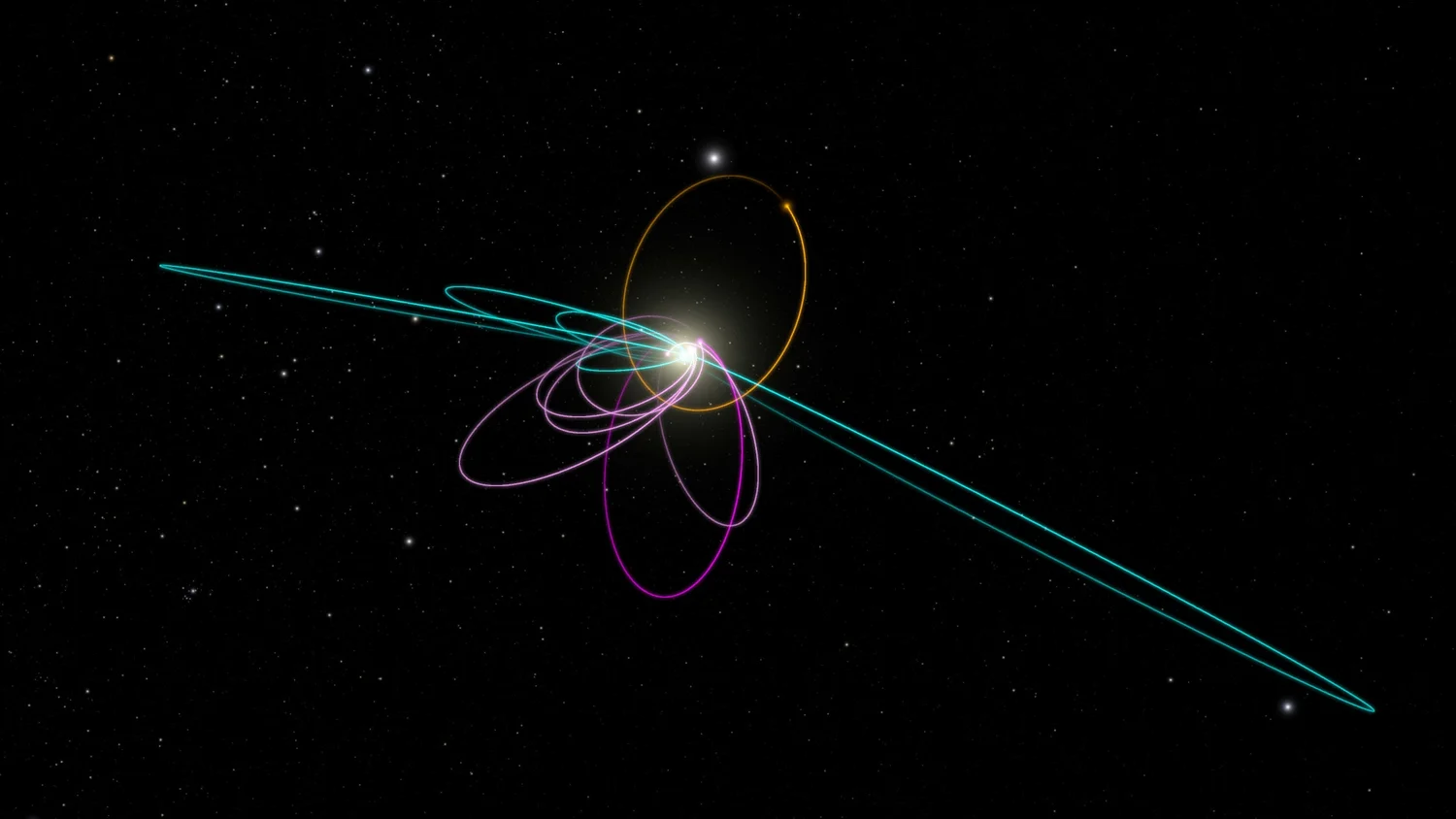
Dr. Konstantin Batygin is a Professor of Planetary Science at the California Institute of Technology’s Division of Geological and Planetary Sciences. His research focuses on planetary astrophysics, with an emphasis on solar system formation, exoplanet dynamics, and chaos theory. He is renowned for his work on the hypothetical Planet Nine and its influence on trans-Neptunian objects. Research interests include: Formation and evolution of planetary systems Circumplanetary disk dynamics and satellite formation Tidal interactions in exoplanetary systems Chaotic orbital mechanics and resonances Recent work explores tidal heating effects in sub-Neptunes, Jupiter’s inner moons’ migration, and interstellar object capture mechanisms. His team leverages analytical models and numerical simulations to address these topics. Key contributions include proposing Planet Nine’s existence, studying the stability of compact exoplanet systems, and modeling circumplanetary disk evolution. Collaborations span observational and theoretical astrophysics, with a focus on bridging gaps between solar system and extrasolar planet research.
Douglas Houston is a Professor in the Department of Biology at the University of Iowa, where he also serves as Director of the Developmental Studies Hybridoma Bank (DSHB). He holds a PhD from the University of Miami. His research investigates vertebrate developmental mechanisms, with a focus on maternal signaling pathways, RNA localization, and cytoskeletal dynamics in Xenopus models. Key areas include cortical rotation, Wnt signaling activation, and the role of asymmetrically localized mRNAs in embryonic axis formation. His work spans Cell and Developmental Biology and Neurobiology , emphasizing molecular regulation of early embryogenesis. Research integrates genetic, biochemical, and imaging approaches to dissect mechanisms of dorsal axis specification and neural development. Recent studies explore antibody validation protocols to enhance biomedical research reproducibility. Houston directs the DSHB, a core facility supporting antibody-based research globally. The lab employs Xenopus laevis and Xenopus tropicalis for functional genomics, including CRISPR-based editing and maternal mRNA manipulation techniques.
Rachael Filwett is an Assistant Professor in the Department of Physics at Montana State University's College of Letters & Science. Her research focuses on energetic particles originating from the Sun and their behavior in interplanetary space and planetary magnetospheres. Her educational background includes a B.S. in Physics, East Asian Studies, and Mathematics from Valparaiso University (2013), followed by M.S. (2016) and Ph.D. (2018) in Physics from the University of Texas at San Antonio. Her academic journey has positioned her at the forefront of space physics research. Dr. Filwett's research centers on ion particle acceleration and transport mechanisms, with particular emphasis on how particles accelerated at the Sun and shocks move through interplanetary space. She utilizes both space-based and ground-based data to investigate particle origins and acceleration processes, with applications to space weather prediction. Her work extends to energetic particle entry and trapping in terrestrial and gas giant magnetospheres. A significant portion of her research involves developing next-generation miniaturized particle instruments for SmallSats that maintain high mass and energy resolution, addressing critical needs in space instrumentation. Her publication record reveals strong emphasis on heliospheric science, with key contributions in solar wind dynamics, particle acceleration mechanisms, and space weather applications. Recent work shows increasing focus on community development, accessibility, and mental health awareness within the heliophysics field. Dr. Filwett actively secures competitive research funding, with current projects including: Suprathermal Property Scaling and Acceleration Processes from the Near-Sun Environment to 1 AU (NASA) Resolving Uncertainty in Past 14C Spikes from Tree Rings (NSF) CAREER: Evolution of Stream Interaction Regions from 1 to 5.4 au and Implications for Geomagnetic Induced Currents (NSF) LabOratory for the Behavior of the SloT Region (LOBSTR) (NASA) She is deeply committed to educational outreach, having developed the CS CORE course ASTR 120 'The Sun and Society' for non-STEM majors and taught various physics courses including honors-level general physics and electromagnetism. Her service includes committee work for the Conference for Undergraduate Women in Physics. Dr. Filwett also champions inclusivity in space physics, advocating for accessibility and mental health awareness within the scientific community.