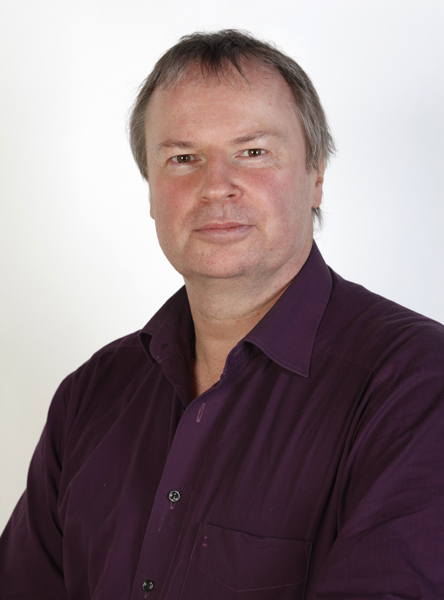
Mustafa Aksu is a Professor at Istanbul University's Faculty of Law, Department of Civil Law. His research spans Civil Law , Intellectual Property Law , Information Law , and EU Legal Harmonization . He has advised 26 theses and published extensively on digital rights, family law, and obligations law. Research Interests: Focus on AI and law, copyright exhaustion in digital markets, EU-Turkey legal alignment, domain name regulation, and protection of computer programs. Publications: Recent works include AI's legal frameworks (2023), medical informatics law (2021), and digital exhaustion doctrine (2016). His research emphasizes cross-border IP enforcement and EU court precedents. Contact: Email aksum@istanbul.edu.tr | Office: Hukuk Fakültesi Binası, İkinci Kat, Oda No: 38, Beyazıt, Istanbul, Turkey.
Erin Stiles, Professor of Anthropology at the University of Nevada, Reno, specializes in the intersections of religion, law, and gender. Her ethnographic work in Zanzibar, Tanzania, Ghana, South Africa, and Utah examines Islamic family law, legal pluralism, and Mormon spiritual experiences. Ph.D., Washington University in St. Louis M.A., University of Colorado, Boulder A.B., Duke University Stiles' research explores: Islamic legal reasoning in marital disputes and inheritance law Gender dynamics in LDS fundamentalist and Irish Traveller communities Spirit-world encounters in Utah Mormonism Comparative legal practices across sub-Saharan Africa and the Indian Ocean Her recent publications focus on global Islamic divorce mechanisms, LDS spiritual ethics, and postcolonial legal adaptations in East Africa. She teaches courses ranging from introductory cultural anthropology to specialized topics in African studies and Islamic law. Stiles actively mentors graduate students working on: Healing practices among LDS fundamentalists Marriage customs in Irish Traveller communities Islam and migration in Japan LGBTQ+ affirming Protestant groups
Prof. Dr. Fatih BOZKURT serves as an Associate Professor in the Department of History at Sakarya University's Faculty of Humanities and Social Sciences. With academic appointments dating back to 2012, he has established himself as a prominent scholar specializing in Ottoman socio-economic history, material culture, and estate records research. His academic journey reflects deep engagement with Ottoman institutional structures and daily life patterns. Doctorate (2005-2011): Sakarya University, Institute of Social Sciences/History (Thesis: Estate books and change in Ottoman material culture (1785-1875 Istanbul example)) MA (2000-2003): Celal Bayar University, Institute of Social Sciences/Modern Age History (Thesis: Social and economic situation of Gördes district according to the Ministry of Finance Dividend Books) Licence (1996-2000): Istanbul University, Faculty of Literature/Department of History Professor BOZKURT's research primarily focuses on Ottoman socio-economic structures, particularly through the lens of estate records (tereke defterleri). His work examines material culture transformations, tradesmen organization, and daily life patterns in Ottoman society. He has made significant contributions to understanding Ottoman urban economies, inheritance practices, and cultural changes, especially during the 18th and 19th centuries. His methodological approach combines archival research with social history frameworks to reconstruct Ottoman economic and social realities. His extensive publication record reveals consistent thematic focus on Ottoman economic history, with particular attention to estate records as historical sources. The research demonstrates evolving sophistication in using these records to explore wealth distribution, consumption patterns, and social structures. His work bridges economic history with cultural studies, examining how material culture reflected and influenced social relations in Ottoman society. Certificate of Appreciation from the DIRECTORATE OF RELIGIOUS AFFAIRS (2015) Certificate of Appreciation from OSARK (International Ottoman Research Congress) (2015) Professor BOZKURT has supervised numerous graduate theses focusing on Ottoman institutions and civilization, guiding research on topics ranging from estate records to daily life practices. His current research includes a TÜBİTAK-1001 project titled 'Osmanlı İstanbul'unun Servet ve Demografik Yapısı (1650-1810)' which continues his longstanding interest in Ottoman economic and demographic structures. He has also participated in various TÜBA (Turkish Academy of Sciences) projects related to Turkish-Islamic scientific and cultural heritage. As an active academic administrator, he has served as Deputy Director of the Social Sciences Institute (2019) and History Department Deputy Chair (2023-2024). He has organized and participated in multiple International Ottoman Research Congresses (OSARK), contributing significantly to the institutional framework of Ottoman studies in Turkey.
William Balch, PhD, is a Professor in the Department of Molecular and Cellular Biology at Scripps Research. His research focuses on linking genetic variation in human populations to protein function using machine learning tools like Gaussian Process (GP) modeling. He pioneered concepts in proteostasis and spatial covariance, exploring how genetic and environmental factors influence protein folding and disease. Education: Ph.D. in Microbiology from University of Illinois (1979) Research interests include inherited diseases (e.g., CFTR, AATD, NPC1), aging-related proteostasis collapse, and host-pathogen interactions in SARS-CoV-2. His lab develops computational platforms to model protein design and discover therapeutic interventions. Key projects involve GP-based analysis of genetic diversity, small molecule therapeutics targeting chaperone systems, and understanding viral evolution via spatial covariance. His work bridges genomics and phenomics to address disease mechanisms at atomic resolution. Grants and collaborations focus on protein-folding correction, with applications in precision medicine and climate change mitigation through RuBisCo optimization in plants.
Prof. Dr. Kenny R. Cupers is Professor of Architectural History and Urban Studies at the University of Basel , affiliated with the Department of Social Sciences in the Faculty of Humanities and Social Sciences . He co-founded and leads the Urban Studies division, focusing on the intersections of architecture, urbanism, colonialism, and planetary design in African and European contexts. PhD, Harvard University (2010) M.Sc. and B.Sc. in Architecture, Catholic University of Leuven Studies in Visual Culture and Urban Theory, Goldsmiths College, London His research centers on architectural modernism, housing, infrastructure, and decolonization . Key themes include the planetary politics of design, coloniality of infrastructure, and the role of architecture in state transformation. He is currently working on two book projects in Kenya: one on unmaking the plantation system through arts and architecture, and another on post-independence Nairobi’s urban history. Recent publications include The Earth that Modernism Built: Empire and the Rise of Planetary Design (2024) and The Social Project: Housing Postwar France (2014). He leads the Sinergia project Governing through Design (2020–2025) and previously directed the SNF-funded How Infrastructure Shaped Territory in Africa (2018–2022). His work appears in journals such as e-flux Architecture , Antipode , and Architectural Theory Review . Scientific Awards: No specific awards listed in the provided text. As an educator, Cupers promotes engaged pedagogy and collaborative research, co-editing What is Critical Urbanism: Urban Research as Pedagogy (2022). His public research projects include Swiss Corporate Coloniality and Lamu Futures . He has advised multiple PhD and Master’s students, though specific names are not listed. He is part of a vibrant research team including Dr. Ernest Sewordor, Dr. Laura Nkula-Wenz, and Dr. Prita Meier. Laboratories and Research Teams: Urban Studies, University of Basel Critical Urbanisms Program Sinergia Project: Governing through Design How Infrastructure Shaped Territory in Africa (completed) Infrastructure Space and the Future of Migration Management (completed)
Anna Singer is a Professor of Civil Law, specializing in Family Law , at the Department of Law , Uppsala University . She serves as Dean of the Faculty of Law and contributes extensively to research on children's rights , inheritance law , and legal challenges in reproductive technology . Contact: Anna.Singer@jur.uu.se | Phone: 018-471 20 35 | Address: Trädgårdsgatan 1, Uppsala. Education: Juris Doctor (JD), Doctor of Juridical Science (doc) Research Interests: Cultural tensions in family law, Nordic inheritance systems, children's legal status, DNA technology in parenthood, international family law comparisons, and postmodern legal reforms. Publication Trends: Recent works emphasize Nordic legal harmonization , children's autonomy , and ethical dilemmas in reproductive law , with a focus on Scandinavia and cross-cultural analysis. Advising & Grants: No explicit student advising details. Collaborated on EU family law reports and Nordic cohabitation law projects.
Eva Enkelmann is an Associate Professor at the University of Calgary's Department of Earth, Energy, and Environment. She leads research on orogenic systems evolution using geo- and thermochronology methods. Educational Background: PhD Geology, TU Bergakademie Freiberg, 2005 MSc Geology and Paleontology, University of Freiberg, 2001 Her research examines mountain belt evolution across spatial scales, focusing on interactions between tectonic forces and surface processes. She specializes in multi-method dating of mineral grains and thermochronologic method development. Current projects include geothermal potential assessment in the Liard Basin (NWT), Cu-porphyry exploration in British Columbia, and rock exhumation studies in Yukon. Recent publications focus on methodological advances in detrital thermochronology, including laser ablation (U-Th-Sm)/He dating, zircon triple-dating, and novel data analysis techniques for complex thermal histories. Scientific Awards: Fellow, Geological Society of America (2022) Outstanding Achievements Award, Faculty of Science, University of Calgary (2023) She teaches courses on global tectonics, structural geology, and field methods, including the Canadian Cordillera Field School.
Karl-Oskar Lindgren is a Professor at the Department of Government, Uppsala University, with affiliations to IFAU (Institute for Evaluation of Labour Market and Education Policy) and the Uppsala Center for Labor Studies. His research focuses on political representation, participation, political economy, and EU politics, with publications in top-tier journals like American Political Science Review and Nature . Major Research Themes: Transmission of political inequality across generations Gendered effects of divorce on voter behavior Immigrant representation in political systems Impact of education on electoral equality Birth order and political candidacy Publication Trends: His recent work examines how social and structural factors (e.g., family dynamics, ethnic enclaves, education reforms) influence electoral participation and political representation. Articles span comparative studies (Sweden vs. India), quantitative register data analyses, and interdisciplinary approaches combining political science with behavioral genetics and social network theory. Collaborations: Regular co-authorships with Sven Oskarsson, Kåre Vernby, Christopher Dawes, and Rafaela Dancygier suggest strong institutional and international research networks.
Shu-Jung Sunny Yang is a Professor and Chair in Operations Management at the School for Business and Society, University of York. He has held faculty positions at institutions including the University of Melbourne, University of Essex, and National Taiwan University, alongside administrative roles such as department head and research centre director. He earned his PhD in Management from the Australian Graduate School of Management (AGSM) at the University of Sydney and University of New South Wales. His research focuses on Supply Chain Resilience, Sustainable Operations, and Data-Driven Operations, combining formal theory, data science, and operational research. Recent work includes modeling supply chain collaboration for medical mask distribution during disruptions and exploring altruistic venturing through community-based approaches. His book Building Resilience: Consistent Re-rationalisation in Digital Transformation and Business Inheritance won the 2022 Golden Book Award in Taiwan. Awards: 2022 Golden Book Award (Taiwan) 2004 Sasakawa Young Leader Fellow (Japan) 2019 Ta-Yu Wu Memorial Award (Taiwan) Yang leads the Human futures in the digital transformation interdisciplinary cluster. His teaching includes Operations Management and Supply Chain Management. He currently serves as a guest editor for Transportation Research Part E and holds editorial roles at Journal of General Management and Journal of Management and Systems . Research grants include the British Academy-funded project on Optimising Product Line Design in Professional Service Operations . He actively collaborates with industry and academia, emphasizing practical applications of operations strategy.
Eva-Maria Knoll is a senior researcher at the Austrian Academy of Sciences , affiliated with the Institute for Social Anthropology . Her work bridges medical anthropology, health equity, and island studies, focusing on the Indian Ocean World, particularly the Maldives. Education : Socio-Cultural Anthropology, PhD (2011), University of Vienna Research Interests : She explores the biosocial impact of inherited blood disorders (thalassaemias, sickle cell disease), health landscapes in island cultures, and mobility patterns in health-related contexts. Her comparative ethnographic approach integrates collaboration with local clinics and patient advocacy groups. Publications Trends : Her recent articles examine genetic responsibility, health equity in remote regions, and the intersection of mobility, disease, and cultural identity in the Indian Ocean World. Themes include medical anthropology, island studies, and global health challenges. Projects : Leader: Genetic Responsibility & Remoteness Transition in Rare Diseases Collaborator: Health and Environmental Challenges in Indian Ocean Islands and Shoreline Countries Co-Edited Books : She has co-edited five books, including Disease Dispersion and Impact in the Indian Ocean World and Camels in Asia and North Africa .
Jochen Wolf is Chair of the Evolutionary Biology Division at Ludwig-Maximilians-Universität München (LMU) and a Max Planck Fellow of the Max Planck Institute for Biological Intelligence since 2022. His research integrates evolutionary biology, genomics, and ecology to address fundamental questions about speciation, adaptation, and biodiversity across multiple biological systems. Dr. Wolf's research program applies an integrative approach to understand microevolutionary processes and genetic mechanisms underlying species divergence. His work combines large-scale genomic analyses with laboratory and field experiments to characterize genomic divergence across populations and species. Key empirical systems include natural populations of birds (particularly corvids, swallows, and cuckoos), marine mammals (pinnipeds and killer whales), plant communities, and experimental evolution in fission yeast. His research spans multiple scales from immediate microevolutionary processes to broader evolutionary patterns across time. His recent publications reveal a sophisticated integration of genomic, epigenetic, and ecological perspectives. A notable trend shows increasing focus on structural genomic variation, chromosomal rearrangements, and epigenetic mechanisms as drivers of evolutionary processes. His work demonstrates how these molecular mechanisms interact with ecological factors to shape patterns of biodiversity and adaptation. Dr. Wolf's research has gained significant recognition through publications in top-tier journals including Nature, Science, and Nature Ecology & Evolution. His groundbreaking studies on crow hybrid zones, killer whale ecotypes, and experimental evolution of speciation have been featured in prominent media outlets such as The New Yorker, The Guardian, Scientific American, and Der Spiegel, demonstrating the broad impact of his work. As Principal Investigator, Dr. Wolf actively mentors doctoral students and postdoctoral researchers, fostering the next generation of evolutionary biologists. His lab maintains strong international collaborations, particularly through affiliations with SciLifeLab in Uppsala. Research in his group is supported by multiple funding sources including German Research Foundation grants and European Union programs, enabling both fundamental research and applications to conservation biology. The Wolf lab operates within LMU's Division of Evolutionary Biology, which provides access to state-of-the-art facilities including the Leibniz Supercomputing Centre. The lab maintains strong connections with the Max Planck Institute for Biological Intelligence and SciLifeLab in Uppsala, creating a rich collaborative environment for interdisciplinary research in evolutionary genomics. This network enables comprehensive studies spanning from molecular mechanisms to ecological and evolutionary consequences across diverse biological systems.
Peer Bork is a Professor at the European Molecular Biology Laboratory (EMBL) in Heidelberg, where he serves as Strategic Head of Bioinformatics and co-head of the Structural and Computational Biology Unit. He also holds honorary professorships at the University of Würzburg (Germany) and Fudan University (China). Educational background: PhD in Biochemistry (1990) Habilitation in Theoretical Biophysics (1995) Research interests span bioinformatics , systems biology , and microbiome analysis , focusing on functional prediction, comparative genomics, and data integration. His work explores global patterns in microbial communities, including enterotypes, drug-microbiome interactions, and planetary-scale gene fluxes. Scientific impact includes over 550 publications (70+ in Nature , Science , and Cell ) and groundbreaking discoveries like the human gut enterotypes and microbiome-based cancer biomarkers . Key projects include the SPIRE microbiome resource and the TARA Oceans expedition . Honors and leadership: EMBO member (2000) Nature Creative Mentoring Award (2008) ERC Advanced Investigator Grants (2011, 2015) Leopoldina member (2014) Honorary doctorate (University of Utrecht, 2017) Co-founder of 5 biotech companies Collaborative networks include partnerships with institutions in Berlin (Max-Delbrück-Center), Würzburg (Germany), and Shanghai (China), as well as global initiatives like the TREC expedition for environmental microbiome analysis.
Praveena Kodoth is a Professor at the Centre for Development Studies (CDS) in Trivandrum. Her work focuses on Gender, Migration, and Human Development, with a strong emphasis on women's labor rights and social equity in Kerala and South India. Ph.D in Economics (University of Hyderabad, 1999) M.Phil in Economics (University of Hyderabad, 1992) M.A. in Economics (Madras University, 1990) B.Com (Christian College, Chennai, 1987) Her research explores gendered migration patterns, dowry practices, and property rights in Kerala, particularly analyzing the vulnerabilities of domestic workers in the Middle East and the impacts of state policies. She has authored multiple book chapters and journal articles in Economic and Political Weekly , Development and Change , and edited volumes on gender and migration. Scientific awards include the Sir Ratan Tata Fellow (2006) and a postdoctoral fellowship (2001). She currently teaches Gender and Development at CDS and leads research projects on child migration and the political economy of nurse/domestic worker migration.
Dr. Lin Su is a Lecturer in Engineering Biology at Queen Mary University of London, leading the Biohybrids group. His research focuses on biohybrid systems in synthetic biology, particularly electron transfer mechanisms between microorganisms and materials, with applications in bioelectrical systems and artificial photosynthesis. Dr. Su holds a PhD in Biomedical Engineering from Southeast University (2021), with postdoctoral research at the University of Cambridge (2021–present). His work includes collaborations with Lawrence Berkeley National Lab and Rice University (2016–2021). He is a Leverhulme Early Career Fellow (2022–2025) and an Isaac Newton Trust Grant recipient. He also serves as a Fellow at Lucy Cavendish College, Cambridge. Research interests span synthetic biology, microbial-material interfaces, and energy-related bioengineering. His lab develops novel platforms integrating living and non-living components for sustainable technologies. Awards: Leverhulme Early Career Fellowship Isaac Newton Trust Grant Fellow of Lucy Cavendish College Grants: Collaborative funding via Leverhulme Trust and Isaac Newton Trust. Labs/Teams: Director of the Biohybrids Group (https://biohybrids.group/), focusing on interdisciplinary engineering-biology research.
Dr. Ramanjulu Sunkar is a Regents Professor in the Department of Biochemistry & Molecular Biology at Oklahoma State University. He leads research on epigenetic and small RNA mechanisms in plant stress responses, focusing on gene regulation under drought, heat, and abiotic stresses. His work integrates genomic tools like ChIP, RNA sequencing, and CRISPR/Cas9 to study stress tolerance in crops. Education: B.Sc. (Sri Venkateswara University), M.Sc. and Ph.D. (Sri Krishnadevaraya University, India), followed by postdoctoral research at the Weizmann Institute (Israel), University of Bonn (Germany), and UC Riverside (USA). He joined Oklahoma State University in 2006, becoming Professor in 2016 and Regents Professor in 2024. Research Interests: Epigenetic modifications (DNA methylation, histone changes), microRNA-guided gene regulation, plant stress memory, and translational control mechanisms. His lab uses model systems like Arabidopsis, rice, and sorghum to study adaptive responses to environmental challenges. Grants: Over 15 grants, including USDA-funded projects on microRNA roles in photosynthesis, epigenetic control of drought tolerance, and systems genetics in rice. NSF-EPSCoR support for bioenergy research. Teaching: Courses include 'Plant Biochemistry,' 'Epigenetics,' and graduate supervision through research credits. Developed new courses on plant stress biology and molecular techniques. Labs/Teams: Leads a research group focused on epigenomics and RNA regulation in plants. Collaborates internationally on projects like the Arabidopsis transcriptome and stress memory mechanisms.