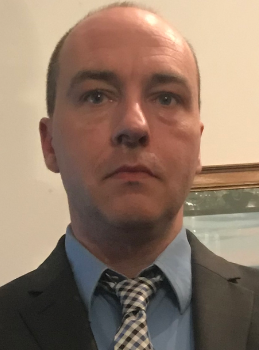
Jeffrey A. Cooper is a Professor of Law at Quinnipiac University School of Law , where he teaches courses in estate planning, wills and trusts, and taxation. He previously served as Associate Dean for Research and Faculty Development and is currently faculty adviser to the Quinnipiac Probate Law Journal . Education: AB from Harvard University, JD from Yale University, LLM from New York University Research Interests: His work focuses on tax policy , estate and gift taxation , and the intersection of federal tax law with state probate systems . He specializes in trust enforceability , uniform trust code , and historical analysis of tax legislation. Publications: Recent articles address perpetual trusts , state death tax decline , and curriculum reforms in estate planning education. His scholarship is widely published in national law journals and cited in casebooks. Scientific Awards: Academic Fellow, American College of Trust and Estate Counsel (ACTEC) Faculty Scholar, Quinnipiac University Professional Background: Before academia, Cooper practiced law for over a decade as a principal at Cummings & Lockwood, senior officer at United States Trust Company, and special counsel to Shipman & Goodwin. He also served as a senior adviser to Fiduciary Trust Company International.
David Arbesú is Professor of Spanish at the University of South Florida, serving as Head of the Spanish Section and Graduate Program Director for the MA in Spanish within the Department of World Languages. He has presented at over 70 national and international conferences on medieval and Golden Age Spanish literature. His research specializes in manuscript studies, codicology, and palaeography, with significant contributions to Golden Age textual scholarship and Florida colonial history. Arbesú has discovered key historical manuscripts including Pedro Menéndez de Avilés' conquest records and legal proceedings concerning colonial Florida, demonstrating interdisciplinary expertise in literary analysis and historical documentation. Recent publications (2018-2023) reveal sustained focus on critical editions of medieval Spanish texts like Sendebar and Libro de los gatos , alongside colonial Florida manuscripts. His work consistently bridges philological precision with historical context, producing authoritative editions that illuminate textual transmission and cultural frameworks of Iberian literature. Arbesú serves on the Editorial Board of Harvard UP’s Dumbarton Oaks’ Medieval Library Spanish Series and as Book Review Editor for La corónica: A Journal of Medieval Hispanic Languages, Literatures, and Cultures , maintaining active leadership in scholarly publication standards.
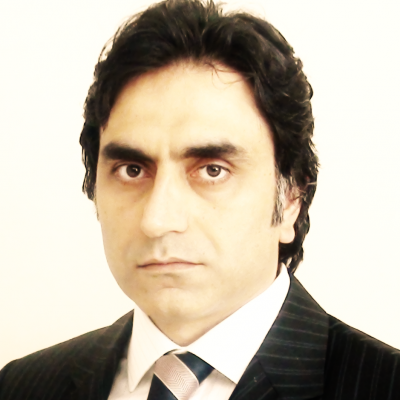
Prof. Dr. Halis Aydemir is a Professor at the Department of Basic Islamic Sciences in Dumlupınar University's Faculty of Theology. He holds concurrent administrative roles including Vice Rector (2015–2019), Dean of the Faculty of Islamic Sciences (2015–2020), and Head of the Hadith Department. His academic journey includes a BSc in Electrical Engineering (Istanbul Technical University, 1995) and a PhD in Basic Islamic Sciences (Uludağ University, 2004). His research focuses on applying probability theory to Hadith transmission systems, developing mathematical models for inheritance calculations in Islamic law, and Arabic language education. Notable projects include the 'Al-Musnad al-Sahih' manuscript verification (2002–2012) and multiple inheritance calculation software projects. He has authored over 80 publications including critical editions of Hadith collections and theoretical works on Hadith reliability. Awards: No scientific awards explicitly mentioned. Administrative roles include leadership in religious affairs projects and educational software initiatives. Research highlights include probabilistic analysis of narrator reliability, isnad model evaluation, and digital tools for Islamic legal calculations. His work bridges traditional Islamic scholarship with modern quantitative methods.
Mashood Baderin is a Professor at SOAS University of London's School of Law, where he has established himself as a leading scholar in Islamic law, international law, and human rights. With over 90 publications spanning more than two decades, Professor Baderin has made significant contributions to bridging Islamic legal traditions with contemporary international legal frameworks. Professor Baderin's research interests focus on the intersection of Islamic jurisprudence with modern legal challenges. His work explores how Islamic legal principles can inform contemporary human rights frameworks, international criminal justice systems, and social reform initiatives in Muslim-majority countries. He has extensively examined Islamic legal theory (usul al-fiqh), the application of Islamic law in modern contexts, and the relationship between Islamic law and international legal norms. His most recent publications reveal a continued focus on the universality of international law from Islamic perspectives, the application of Islamic law in African contexts, and the relationship between Islamic principles and human rights frameworks. Professor Baderin has edited significant works including 'Islamic Legal Theory' (2014) and authored the widely recognized 'Islamic Law: A Very Short Introduction' (2021). Professor Baderin has supervised numerous doctoral students working on Islamic law topics with regional focus on Nigeria, Saudi Arabia, and the UAE. His students' research often examines gender issues, legal reform, and the practical application of Islamic law in contemporary settings.
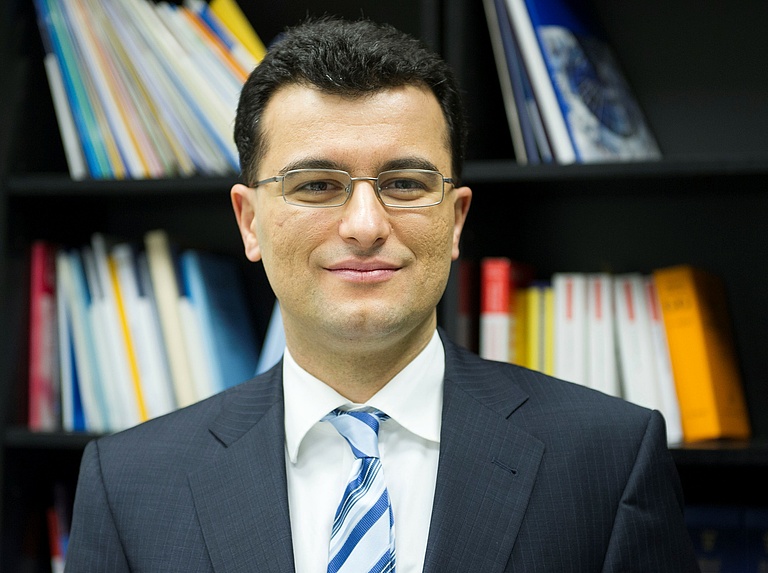
Wolfgang Forster is a Professor of Civil Law, Comparative Legal History and Legal Philosophy at the University of Tübingen, where he has been teaching since 2011. He served as Dean of the Faculty of Law from October 2020 to September 2022. Prior to his appointment at Tübingen, he was Professor of Civil Law and Legal Philosophy at the University of Giessen from 2007 to 2011. He completed his habilitation at LMU Munich in 2005 with a thesis on insolvency law history and earned his doctorate in 2000 with research on Karl Christian Friedrich Krause's legal philosophy. Forster studied law and philosophy at the Ludwig Maximilian University of Munich from 1987 to 1992, supported by the German Academic Scholarship Foundation and the Bavarian Scholarship for Gifted Students. He passed his first state examination in law in 1992 and his second in 1995. Between 1995 and 2000, he served as a research assistant at KU Eichstätt/Ingolstadt before becoming a research assistant at FAU Erlangen from 2000 to 2003 and at LMU Munich from 2003 to 2007. His research focuses on Civil Law, particularly the general part of the law of obligations, contract law, and family law; German and Spanish legal history, especially regarding insolvency law; History of Canon Law; and Legal philosophy and history of legal philosophy, with special emphasis on Karl Christian Friedrich Krause's legal philosophy. His work bridges historical legal scholarship with contemporary legal theory, examining how historical legal concepts inform modern jurisprudence. Forster's approach combines meticulous historical research with philosophical analysis, revealing continuities and transformations in legal thought across centuries. His publications demonstrate a consistent focus on the intersection of legal history, philosophy, and practical application. Forster has published extensively on Krausist legal philosophy, Spanish legal history, insolvency law development, and historical aspects of family law. His work shows particular strength in analyzing how legal concepts migrate across national boundaries and historical periods, with recurrent attention to German-Spanish legal connections. Hermann Conring Prize 2010 (for his habilitation thesis) Max Weber Prize of the Bavarian Academy of Sciences (for his dissertation) Faculty Prize of the Faculty of Law of the LMU Munich (for his dissertation) Forster has received significant research funding, including publishing support from the German Research Foundation for his habilitation thesis. He co-organized the 40th German Legal Historians' Day in 2014 and was a co-applicant for the interdisciplinary research training group 'Ambiguity: Production and Reception' approved by the DFG in 2013. He has also served as a visiting professor at the University of Wisconsin Law School in Madison, USA. His work demonstrates strong institutional support and recognition within the German and international legal academic community.
Aglaia McClintock is an Associate Professor of Roman and Ancient Law (IUS/18) in the Department of Law, Economics, Management and Quantitative Methods at the University of Sannio. Her research examines Roman legal institutions through interdisciplinary lenses including anthropology, gender studies, and symbolic analysis. Research Focus: She specializes in archaic Roman criminal law, gender dynamics in legal systems, the evolution of punitive practices, and cross-cultural juridical symbolism. Her work frequently intersects with: Anthropological interpretations of legal concepts Historical analysis of women's rights and social weapons Ritual aspects of justice administration Comparative Indo-European legal traditions Publication Trends: Her recent articles (2016-2024) demonstrate concentrated scholarship on: 1) deconstruction of archaic penal systems and social control mechanisms, 2) gender-focused reexamination of Roman legal anthropology, and 3) symbolic analysis of justice iconography in classical civilizations. Methodologically, she employs textual analysis, linguistic etymology, and socio-legal contextualization. Awards & Recognition: No scientific awards or fellowships are documented in available sources. Academic Service: She has contributed to international conferences on Roman law and authored commemorative works for legal scholars like Francesco Salerno. No information regarding student advising, grants, or laboratory leadership is present.
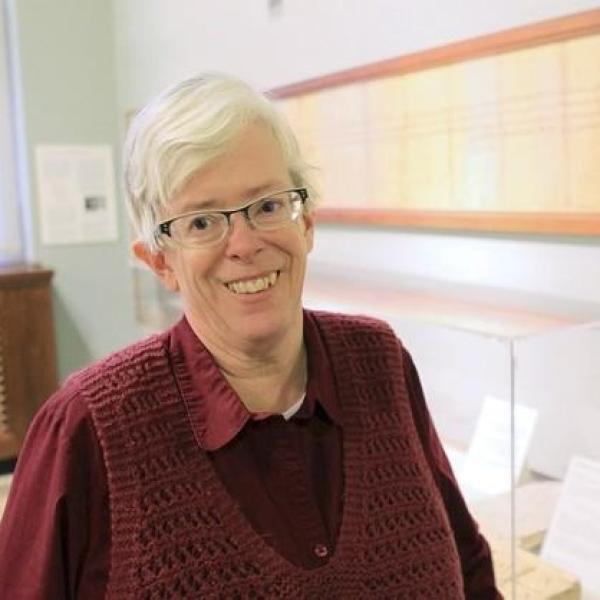
Janet H. Johnson is the Morton D. Hull Distinguished Service Professor of Egyptology at the University of Chicago, affiliated with the Oriental Institute. She has been teaching and researching at UChicago since 1971. Her expertise spans Egyptian language, particularly Demotic, and the history of Egypt's Late Period (1st millennium B.C.). Education: Ph.D. in Egyptology, University of Chicago, 1972 Research Interests: Johnson focuses on Demotic grammar, legal texts, gender studies in ancient Egyptian society, and economic practices. She directs the Chicago Demotic Dictionary Project , a foundational resource for studying this ancient language. Her work bridges linguistic analysis with social history, particularly examining women’s roles, property rights, and legal frameworks in Late Period Egypt. Teaching & Contributions: She teaches courses on Middle Egyptian hieroglyphs, ancient Near Eastern history, and gender in Egyptology. Her publications include Thus Wrote 'Onchsheshonqy (a Demotic grammar) and analyses of Demotic verbal systems. She frequently collaborates on projects involving Demotic papyri and museum artifacts. Labs/Teams: Lead director of the Chicago Demotic Dictionary Project , an interdisciplinary effort to document and analyze Demotic language materials.
Stefan Gosepath is a Professor of Practical Philosophy at the Institute of Philosophy, Faculty of Humanities, Free University of Berlin. He serves as Principal Investigator for multiple major research projects including the Volkswagen Foundation's 'The Deserving Rich' and the Excellence Cluster 'Contestations of the Liberal Script' (SCRIPTS), where he coordinates the Research Unit 'Order'. His academic affiliations include membership in the Academy of Sciences and Literature Mainz and participation in the Berlin-Potsdam Research Group on International Rule of Law. His research spans political philosophy with particular focus on theories of justice (global and intergenerational), equality, democracy, human rights, and responsibility. Key areas include social and legal philosophy, action theory, meta-ethics (particularly rationality and normativity), and theories of the good life. His work critically examines meritocracy, inheritance systems, and wealth distribution within liberal democracies. Notable publications demonstrate evolving focus from foundational theories of egalitarian justice to contemporary challenges including pandemic ethics, digital governance, and contestations of liberal democracy. His recent work analyzes merit systems, inheritance justice, and global philosophical frameworks through interdisciplinary lenses combining philosophy, sociology, and political science. Opus Magnum Stipendium der VW Stiftung (2021/22) Ordinary Member, Academy of Sciences and Literature Mainz (since 2020) Principal Investigator, Excellence Cluster SCRIPTS (since 2019) Gosepath leads multiple collaborative research initiatives including 'Transforming Solidarities' (Berlin University Alliance) and 'Liberal Order, Legitimate Authority and Disagreement' (with Mattias Kumm). His work connects theoretical frameworks with practical policy challenges, particularly regarding social cohesion in migration societies and democratic resilience. He maintains active engagement with public discourse through media appearances and policy-relevant interventions on issues of justice and democratic governance.
Erin Stiles, Professor of Anthropology at the University of Nevada, Reno, specializes in the intersections of religion, law, and gender. Her ethnographic work in Zanzibar, Tanzania, Ghana, South Africa, and Utah examines Islamic family law, legal pluralism, and Mormon spiritual experiences. Ph.D., Washington University in St. Louis M.A., University of Colorado, Boulder A.B., Duke University Stiles' research explores: Islamic legal reasoning in marital disputes and inheritance law Gender dynamics in LDS fundamentalist and Irish Traveller communities Spirit-world encounters in Utah Mormonism Comparative legal practices across sub-Saharan Africa and the Indian Ocean Her recent publications focus on global Islamic divorce mechanisms, LDS spiritual ethics, and postcolonial legal adaptations in East Africa. She teaches courses ranging from introductory cultural anthropology to specialized topics in African studies and Islamic law. Stiles actively mentors graduate students working on: Healing practices among LDS fundamentalists Marriage customs in Irish Traveller communities Islam and migration in Japan LGBTQ+ affirming Protestant groups
Praveena Kodoth is a Professor at the Centre for Development Studies (CDS) in Trivandrum. Her work focuses on Gender, Migration, and Human Development, with a strong emphasis on women's labor rights and social equity in Kerala and South India. Ph.D in Economics (University of Hyderabad, 1999) M.Phil in Economics (University of Hyderabad, 1992) M.A. in Economics (Madras University, 1990) B.Com (Christian College, Chennai, 1987) Her research explores gendered migration patterns, dowry practices, and property rights in Kerala, particularly analyzing the vulnerabilities of domestic workers in the Middle East and the impacts of state policies. She has authored multiple book chapters and journal articles in Economic and Political Weekly , Development and Change , and edited volumes on gender and migration. Scientific awards include the Sir Ratan Tata Fellow (2006) and a postdoctoral fellowship (2001). She currently teaches Gender and Development at CDS and leads research projects on child migration and the political economy of nurse/domestic worker migration.
Rhenish Friedrich Wilhelm University of BonnGermany
Prof. Dr. Mathias Schmoeckel is a Professor of German and Rhenish Legal History at the University of Bonn, where he serves as Managing Director of both the Institute for German and Rhenish Legal History and Civil Law and the Rhenish Institute for Notarial Law. He previously held administrative leadership roles including Dean of the Faculty of Law and Political Science (2003-2004) and Vice Dean (2004-2005). Education Studied art history and law at Bonn, Geneva, and Munich universities (1983-1989) First State Examination in Law (1989) Second State Examination in Law (1993) Doctorate from University of Munich (1993) on international law in the Third Reich Habilitation on evidence/criminal procedural law (1200-1800) Research Focus His research spans interdisciplinary legal history with emphasis on: Law-religion intersections : Canon law and Reformation impacts Historical jurisprudence : Evolution of evidence systems (6th-19th c.) and international law frameworks Modern legal developments : Civil law under National Socialism and inheritance law Honors George Sarton Medal for outstanding contributions to legal history (Ghent University, 2019) Professional Engagements Key roles include: Liaison lecturer for Konrad-Adenauer-Stiftung (since 2002) Director of international doctoral program at Université Paris-Sud Board positions at Stephan Kuttner Institute and Althusius Society Co-editor of 8+ academic series including Revue historique de droit français Administrative Leadership Manages research operations at two institutes and previously hosted the 35th German Legal Historians' Day under dual presidential patronage.
Prof. Dr. Fatih BOZKURT serves as an Associate Professor in the Department of History at Sakarya University's Faculty of Humanities and Social Sciences. With academic appointments dating back to 2012, he has established himself as a prominent scholar specializing in Ottoman socio-economic history, material culture, and estate records research. His academic journey reflects deep engagement with Ottoman institutional structures and daily life patterns. Doctorate (2005-2011): Sakarya University, Institute of Social Sciences/History (Thesis: Estate books and change in Ottoman material culture (1785-1875 Istanbul example)) MA (2000-2003): Celal Bayar University, Institute of Social Sciences/Modern Age History (Thesis: Social and economic situation of Gördes district according to the Ministry of Finance Dividend Books) Licence (1996-2000): Istanbul University, Faculty of Literature/Department of History Professor BOZKURT's research primarily focuses on Ottoman socio-economic structures, particularly through the lens of estate records (tereke defterleri). His work examines material culture transformations, tradesmen organization, and daily life patterns in Ottoman society. He has made significant contributions to understanding Ottoman urban economies, inheritance practices, and cultural changes, especially during the 18th and 19th centuries. His methodological approach combines archival research with social history frameworks to reconstruct Ottoman economic and social realities. His extensive publication record reveals consistent thematic focus on Ottoman economic history, with particular attention to estate records as historical sources. The research demonstrates evolving sophistication in using these records to explore wealth distribution, consumption patterns, and social structures. His work bridges economic history with cultural studies, examining how material culture reflected and influenced social relations in Ottoman society. Certificate of Appreciation from the DIRECTORATE OF RELIGIOUS AFFAIRS (2015) Certificate of Appreciation from OSARK (International Ottoman Research Congress) (2015) Professor BOZKURT has supervised numerous graduate theses focusing on Ottoman institutions and civilization, guiding research on topics ranging from estate records to daily life practices. His current research includes a TÜBİTAK-1001 project titled 'Osmanlı İstanbul'unun Servet ve Demografik Yapısı (1650-1810)' which continues his longstanding interest in Ottoman economic and demographic structures. He has also participated in various TÜBA (Turkish Academy of Sciences) projects related to Turkish-Islamic scientific and cultural heritage. As an active academic administrator, he has served as Deputy Director of the Social Sciences Institute (2019) and History Department Deputy Chair (2023-2024). He has organized and participated in multiple International Ottoman Research Congresses (OSARK), contributing significantly to the institutional framework of Ottoman studies in Turkey.
Rolandino De’ Passaggeri (c. 1215–1300) was a prominent notary, politician, and academic figure in medieval Bologna. He served as a notary for influential guilds, including bankers and money changers, and authored foundational legal texts such as the Summa totius artis notariae (the Rolandina), which became a cornerstone of European notarial practice. In 1251, he founded a notarial school at the University of Bologna, shaping legal education for generations. Born to Rodolfino, an innkeeper and tax collector, Rolandino’s career began in 1234 with the notary’s guild. He played a pivotal role in Bologna’s resistance to imperial authority, notably responding to Frederick II’s threats with a civic manifesto. His legal reforms included drafting statutes for guilds and co-authoring the Liber Paradisus (1257), which emancipated serfs to expand tax bases. Rolandino’s works span notarial practices, rural legal frameworks, and contractual law, reflecting his dual focus on practical jurisprudence and civic governance. His legacy lies in institutionalizing notarial education and advancing Bologna’s legal autonomy amid political turmoil.
Rhenish Friedrich Wilhelm University of BonnGermany
Prof. Dr. Foroud Shirvani is a distinguished Professor at the Chair of Public Law within the School of Law at the University of Bonn. Their research focuses on property law , state liability law , environmental law , constitutional law (including fundamental rights, party, and parliamentary law), and social law with a constitutional foundation. Additional expertise spans municipal law , police law , and energy law . Department of Law, University of Bonn Chair of Public Law Research trends include the socialization of property , compensation for pandemic-related expropriation-like interventions , and procedural limits to property rights under administrative law . Shirvani’s work bridges historical legal developments (e.g., expropriation law from the 19th century to the Weimar Constitution) with contemporary challenges like housing shortages and energy policy. Key publications include: Property without owners? (2024, co-edited with Judith Froese) Commentary on State Liability Law (2024, co-authored with Hans-Jürgen Papier) Compensation for expropriation-like interventions (2022) Commentary on Article 34 of the Basic Law (2020, co-authored with Hans-Jürgen Papier) Shirvani actively contributes to constitutional and administrative law , with a focus on the intersection of property rights and public policy.
Mouez Khalfaoui is Professor of Islamic Law at the Center for Islamic Theology at the University of Tübingen, where he has served since 2014. He previously held the position of Junior Professor for Islamic Law (2012-2014) and served as Deputy Director of the Center for Islamic Theology from 2021-2023. His administrative roles include Head of the Examination Board, Member of the Study Commission, and Member of the Center Council. Dr. Khalfaoui earned his Doctorate in Islamic Studies from the University of Erfurt in 2008 and completed his State Examination in Islamic Studies and Arabic Studies at Manouba University of Tunis, Tunisia in 1998. Prior to his academic career, he served in the Kuwaiti Embassy in Berlin (2010-2012) and worked as an Academic lecturer for Islamic and Arabic studies at the Free University of Berlin (2009-2012). His research focuses on Islamic law, normative theory and history, Islamic theology, minority rights, Islamic education, and social ethics with particular emphasis on Islam in European contexts. Dr. Khalfaoui has led major research projects including comparative studies of work ethics across Abrahamic religions, Islamic Law and Ethics from a European perspective, Islamic family law in Europe, and the normativity of the Quran in contemporary contexts. His work addresses critical issues such as Muslim minority rights, the role of women in Islam, Islamic family law in Europe, Sharia and secular law, and Islamic work ethics in global contexts. Analysis of his recent publications reveals a consistent focus on the intersection of Islamic legal tradition with contemporary European contexts, particularly examining how Muslim minorities navigate religious obligations within secular legal frameworks. His work demonstrates a methodological approach combining historical, sociological, philosophical, legal and theological perspectives to address current challenges facing Muslim communities in Europe. Dr. Khalfaoui has been awarded research funding for projects including the comparative study of work ethics across Abrahamic religions and research on Islamic family law in Europe. His work has been supported by institutions including the Akademie für Islam in Wissenschaft und Gesellschaft (AIWG) and the Deutsche Forschungsgemeinschaft (DFG), with a recent May 2024 application for research on 'The primacy of what is right in a plural and multi-religious society'. He supervises the interdisciplinary post-doc research group 'Religion and Rationality − Faith and Reason in the Life and Thought of Muslims, Christians and Jews in the Context of Plural Societies' and serves as consultant and reviewer for European foundations including DAAD, Humboldt Foundation, and Porticus Foundation. Dr. Khalfaoui is actively involved in academic organizations as co-founder of the German International Society for Theological Studies (DIGITS), founding member of the Berlin Institute for Public Theology, and founding member of the Tübingen School of Education.