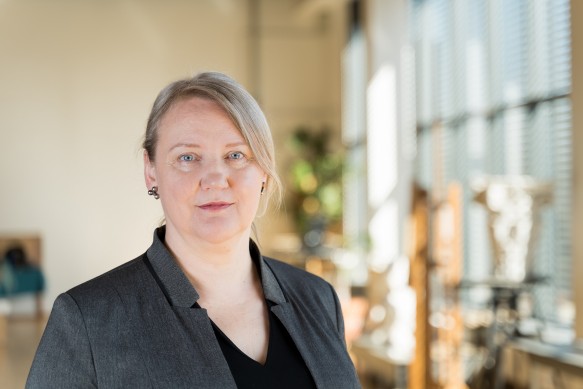
Rie Suzuki is a Professor of Public Health & Health Sciences at the College of Health Sciences, University of Michigan-Flint. Her work focuses on health disparities, disability, and environmental influences on health outcomes, particularly among aging populations and underserved communities in Flint, MI. RPh.D. in Health Education and Behavior (2005) and M.A. in Health Education (2001) from University of Texas at Austin Postdoctoral training in Disability and Health Promotion from Oregon Health and Science University (2008) Her research examines health equity in adults with physical disabilities, environmental and social determinants of health, and interventions to improve healthcare access. She employs mixed methods, including surveys and medical records, to evaluate program effectiveness and community-based initiatives. Recent publications emphasize quality of life, food access, and AI tools like Amazon Echo Dot to combat loneliness in aging populations. Grants include NSF funding for home health technology (2025–2029) and a Center for Aging grant (2023) on AI and self-efficacy. Golden Apple Teaching Award (2020–2024) Michigan Road Scholar (2011) Pilot Scholar, Michigan Center for Urban African American Aging Research (2010)
Evgeny Aleksandrovich Vaganov is a distinguished academic serving as the scientific director of Siberian Federal University (SFU) and a member of both the Academic Council of SFU and the Scientific and Technical Council. As an Academician of the Russian Academy of Sciences, he holds one of the highest scholarly honors in Russia. His primary research address is at Akademgorodok, 50A, building 2, office 511 in Krasnoyarsk. Dr. Vaganov earned his education at Krasnoyarsk State University, specializing in Biophysics in 1971. His academic journey has led him to become a leading expert in dendrochronology and environmental science. Vaganov's research focuses on the analysis of tree rings as indicators of climate change and environmental conditions, with significant contributions to ecological modeling. His work bridges the gap between traditional dendrochronology and modern climate science, developing innovative methods to extract climate signals from wood anatomy. He has pioneered approaches in quantitative wood anatomy and developed models like VS-Cambium-Developer to understand cambium functioning under environmental stress. His extensive publication record demonstrates a clear progression from traditional tree-ring width analysis to more sophisticated dendroanatomical and dendrochemical approaches. Recent work emphasizes high-resolution analysis of wood cells, soil carbon dynamics, and the development of process-based models that connect daily meteorological conditions with tree growth patterns. His research spans multiple Siberian ecosystems, from the Western Sayan Mountains to Central Siberian forests. Diploma "Golden Badge of Public Recognition" (Russia) Laureate of the Alexander von Humboldt Foundation Prize (Germany) Laureate of the V. N. Sukachev Prize of the Presidium of the Russian Academy of Sciences Honorary badge "Silver Sigma" for many years of creative work Medal of the Order "For Merit to the Fatherland", 2nd degree Order of Friendship Honorary citizen of Krasnoyarsk As scientific director of SFU, Vaganov oversees significant research initiatives, particularly those related to forest-climate interactions and carbon cycling. His work on Russian forests' contribution to climate change mitigation has informed national policy discussions related to the Paris Climate Agreement. He has led major projects examining the carbon budget of Siberian forests and the role of Russian forests in global carbon cycling. Vaganov's research group operates within Siberian Federal University's extensive research infrastructure, conducting field studies across Siberia's diverse forest ecosystems. His team utilizes advanced laboratory techniques for wood anatomy analysis and maintains long-term ecological monitoring sites throughout the region. Current work focuses on developing high-resolution climate proxies from wood anatomy and understanding forest responses to increasing climate variability.
Shih-Yi Chien is an Associate Professor in the Department of Management Information Systems at National Chengchi University, Taipei, Taiwan. His research focuses on User Experience , Human-Robot Interaction , and Robotics , with applications in Information Behavior and Machine Learning . Education: Ph.D. in Information Sciences from University of Pittsburgh (2009–2017). Professional Experience: Assistant Professor (2018–2023), then Associate Professor (2023–present) at NCCU. His research spans Explainable AI (XAI), Dementia Prediction , Fake News Detection , and Human-Automation Trust . Recent work includes cross-cultural studies on AI perception and neuromarketing applications in e-commerce robotics. Publications appear in Information Systems Frontiers , IEEE Transactions on Human-Machine Systems , and ACM/IEEE International Conference on Human-Robot Interaction . Notable scientific awards include: 2024 Yushiu Creative Award (Silver) 2023 National Somatic Interactive Technology First Prize 2022 Fubon Life Insurance Thesis Excellence Award Multiple INFORMS/IEEE/HICSS conference recognitions He has led research grants from Taiwan's National Science and Technology Council (MOST) on topics like human-multirobot cognitive processes and AI-driven high-age dementia care . Collaborative labs include the Ambient e-Services Laboratory and Digital Innovation & Management Research Lab at NCCU, focusing on smart contracts , human-robot collaboration , and digital sustainability .
Massimo Zucchetti is a Full Professor at Politecnico di Torino, Department of Energy (DENERG), where he has been teaching Radiation Protection and Nuclear Power Plants. He maintains a significant international presence as a Research Affiliate at the Plasma Science and Fusion Center at MIT, a position he has held since 2005. His academic journey began at Politecnico di Torino, where he graduated in Nuclear Engineering in 1986 and completed his PhD in Energetica between 1986-1990. He progressed through the academic ranks at Politecnico di Torino from Associate Professor (1998-2002) to Full Professor (2002-present), with prior research experience at the European Commission Joint Research Centre. Zucchetti's research spans nuclear fusion engineering, radioactive waste management, and energy policy. His work focuses particularly on controlled thermonuclear fusion, nuclear safety, and radioactive waste management, with emphasis on tritium transport in fusion reactors, safety analysis of fusion power plants, and environmental impact assessment. He has led multiple significant research projects including TITANS (Tritium Impact and Transfer in Advanced Nuclear reactorS, 2022-2025), components for ITER (2008-2010), and innovative materials for fusion reactors (2004-2006). As coordinator of the IEA Program on Environmental, Safety and Economic Aspects of Fusion Power, he plays a key role in international fusion research collaboration. His recent publications show a clear trend toward practical applications of fusion technology, particularly in the ARC (Affordable Robust Compact) reactor design. These works emphasize neutronics, thermal-hydraulics, tritium management, and safety analysis for compact fusion systems. His research demonstrates increasing focus on making fusion energy more commercially viable through innovative engineering solutions while maintaining rigorous safety standards. The interdisciplinary nature of his work connects nuclear engineering with environmental science and energy policy. Fellow of Plasma Science and Fusion Center, MIT (2015-present) Research Affiliate Fellow at Laboratory for Nuclear Science, MIT (2005-2015) Nomination for 2015 Nobel Prize in Physics for research on advanced fuel nuclear fusion Editor-in-Chief of multiple journals including International Journal of Ecosystems and Ecology Science and Journal of International Environmental Application & Science Zucchetti actively mentors PhD students in the Energetica program at Politecnico di Torino, with current advisees working on topics ranging from multiphysics modeling in ARC-class reactors to innovative materials for next-generation nuclear reactors. He coordinates significant research grants from competitive funding programs including EURATOM and PRIN. His laboratory work focuses on fusion reactor components, particularly breeding blankets and tritium management systems. The TESIN research group within DENERG serves as his primary research team, working on thermal-hydraulic analysis, neutronics, and safety assessments for advanced nuclear systems.
Professor Steven Kenway is a distinguished water leader at The University of Queensland's Australian Centre for Water and Environmental Biotechnology within the Faculty of Engineering, Architecture and Information Technology. With extensive experience spanning research, industry, and government sectors, his work focuses on urban water security, water-energy nexus, and circular economy principles. He has developed foundational concepts in urban metabolism theory and has secured over $8 million in research funding since 2005. Bachelor (Honours), The University of Queensland Doctor of Philosophy, The University of Queensland Professor Kenway's research spans environmental, chemical and civil engineering, natural resources management, and urban planning. His work addresses critical urban water challenges including net zero carbon water cycles, hybrid/decentralized systems performance, and sustainable urban design. He has demonstrated how 9% of Australia's energy use is influenced by urban water systems, establishing vital connections between water management and energy consumption. His recent publications reveal strong trends in water-energy nexus research, urban metabolism applications, and water-sensitive urban design. These works examine household water-energy connections, urban infill development impacts, climate adaptation strategies, and decarbonization pathways for water systems. His research increasingly focuses on practical implementation of theoretical frameworks through stakeholder collaboration and real-world testing. Professor Kenway is a regular plenary and invited keynote presenter at peak international forums including the World Water Forum, World Water Congress, World Water Week and Singapore International Water Week. His presentations help disseminate research findings to global policy and practice communities. He has secured and delivered substantial research funding (over $8m since 2005), with major projects for the Asian Development Bank, Water Research Foundation (USA), and CRC Water Sensitive Cities. His supervision includes numerous PhD and MPhil students through The University of Queensland's research programs. Professor Kenway catalyzed and led the creation of the Industrial Ecology Virtual Laboratory (IELab), a game-changing e-research infrastructure valued at approximately $4 million. His work with the CRC Water Sensitive Cities has developed new designs for urban precincts serving up to 10,000 people, demonstrating how cities can become more liveable, water-sensitive and energy-efficient through integrated water management approaches.
Dr. Oliver Roider is a researcher at the Institute of Transport Studies , part of the University of Natural Resources and Life Sciences, Vienna (BOKU) . With a career spanning over two decades, he specializes in transport modeling, mobility behavior analysis, and sustainable transport policy development. Education : PhD from BOKU (2012), Civil Engineering degree from BOKU (1987-1994) Key Affiliations : Institute of Transport Studies (BOKU), University of Applied Sciences Technikum Wien (2005-2021) His research focuses on transport models , mobility behavior , and public transport optimization , with particular emphasis on transport economics and rural mobility solutions . He has led numerous projects analyzing the impact of mobility hubs , sustainable transport policies , and autonomous vehicle integration in rural areas. Recent publications examine shared micromobility adoption , mobility hub deployment , and stakeholder governance in transport initiatives . His work has been supported by diverse funders including the European Commission , FFG , and City of Vienna . Scientific Awards : 2012 Anerkennungspreis für Dissertationen from Austrian Road & Rail Research Society As an active member of academic committees, he has served in Austrian Society for Transport Science and contributed to QUALIVERMO quality guidelines . He has organized international conferences like IATBR 2024 and presented at key events in Edinburgh, Brussels, and Washington DC.
Michael Johansson serves as a Research Professor at Northeastern University's Roux Institute, maintaining offices in London, UK and Portland, ME. His work bridges public health research and operational response through advanced statistical and mathematical modeling of infectious diseases, with primary focus on vector-borne pathogens including dengue, Zika, chikungunya, and West Nile virus. Previously with the CDC in Puerto Rico for over a decade, he co-founded the Epidemic Prediction Initiative and led modeling efforts during Zika, COVID-19, and dengue emergencies. His research integrates biological, ecological, climatic, socioeconomic, and behavioral factors to understand disease emergence and transmission dynamics. Key methodologies include network-based forecasting models, climate-disease interaction analysis, and development of early warning systems. Current work emphasizes improving surveillance, burden estimation, and control strategy evaluation for arboviral diseases through quantitative tools. Recent publications demonstrate expertise in dengue synchronization across the Americas, West Nile virus forecasting, and addressing biases in mobility data for outbreak modeling. His work spans from molecular-level antibody response analysis to global risk mapping, consistently emphasizing operational implementation of research findings. Johansson actively contributes to public health practice through conference presentations including the 2025 American Mosquito Control Association Annual Meeting. His modeling frameworks have directly informed CDC emergency responses and the development of collaborative forecasting initiatives that pioneer open, transparent disease prediction.
Sandra Treija is a Professor at the Institute of Architecture and Design, Riga Technical University (RTU), specializing in urban architecture, urban regeneration, and the quality of the housing environment. With over two decades of academic and administrative experience at RTU (including Deputy Dean roles), she focuses on sustainable urban development, community engagement, and architectural education. Doctor of Architectural Sciences Active in urban planning since 2012 Key affiliations: Latvian Union of Architects, Docomomo National Group Her research bridges theoretical and practical urban planning, emphasizing participatory budgeting, public space dynamics, and post-socialist housing estates. Recent projects explore digital tools in regeneration and the interplay between historic preservation and modernization. Publications highlight challenges in densification, privatization of public spaces, and cross-cultural urban studies (Taiwan-Baltic comparisons). She supervises doctoral students, contributes to international conferences, and serves on editorial/review boards for journals like Architecture and Urban Planning and Sustainability . Her work integrates community-led initiatives with formal academic frameworks, addressing urban sprawl, green space, and housing policy.
Anders Schomacker is a Professor at the Arctic University of Norway (UiT), actively involved in geoscience education and learning environment development. His professional email is anders.schomacker@uit.no . He contributes to the iEarth center for integrated geoscience education and previously led initiatives related to the Institute for Geosciences' relocation to the Naturfagbygget building. Primary Affiliation: Arctic University of Norway (UiT) Research Focus: Geoscience education, formative assessment, and learning environment design Recent work includes implementing formative assessment strategies across geoscience courses at UiT, UiB, and UNIS in 2021, and overseeing the Institute for Geosciences' return to the Naturfagbygget facility in 2023. His publications reflect practical approaches to improving undergraduate geoscience education through infrastructure and pedagogical innovations.
Assoc. Prof. Irena Emilova is an Associate Professor at the Administration and Management Department of New Bulgarian University (NBU). She holds a PhD in Economics and Tourism Management, and her academic roles include heading the Tourism Section, chairing the Program Council, and participating in the Faculty Council of FDENO. Her research focuses on tourism markets, urban tourism management, entertainment industry management, and experience economy, with additional interests in travel agency competitiveness and transport organization in tourism. Doctor in Economics and Tourism Management (VAK) Prof. Emilova has led and participated in numerous national and international projects, including digital education initiatives and tourism season extension studies. Her teaching portfolio spans tourism economics, market analysis, and destination management. She has received the Socrates award for innovative student engagement and contributes to tourism policy through roles in the Bulgarian Chamber of Education and the National Agency for Assessment and Accreditation. Her recent publications emphasize digital transformation in tourism, urban development strategies, and experiential economic models. Collaborative efforts include monographs on entertainment industry management and tourism brokerage, alongside conference papers on Sofia's tourism experience design. She mentors student internships and advises on tourism product development.
Prof. Dr. Turgay Kerem Koramaz is a faculty member at Istanbul Technical University, holding the academic rank of Professor in the Department of Urban and Regional Planning under the School of Architecture. He has served in administrative roles such as Deputy Head of Department (2018-2020) and Chairman of the Urban Planning Working Group (2015-2016), with visiting positions at the University of Sheffield (2015) and Royal Institute of Technology (2008). PhD in Urban and Regional Planning, Istanbul Technical University (2002) MA in Urban Design, Istanbul Technical University (1999) Licence in Urban and Regional Planning, Istanbul Technical University (1995) His research interests span Urban Planning , Information Technologies in Planning , Conservation , and Urban Archaeology , with a focus on heritage data platforms, urban regeneration, and socio-spatial inequalities. Recent work includes digital twin models for heritage sites , residential mobility under large-scale projects , and smart solutions for historical preservation . Key trends in his recent publications include heritage site monitoring (2025, 2023), urban food systems (2025), residential displacement (2023), and transport equity (2020). His work often integrates GIS , digital twins , and spatial analysis to address urban challenges. Scientific Awards TÜBİTAK Support and Award Programs to Encourage Participation in International Collaborations (2024) He has led projects such as the Spatial Segregation Characteristics of Household Housing Preferences (2018-2021) and contributed to international initiatives like Urban-Ist (2006-2012) and Solar Decathlon Europe 2021 . Contact: koramaz@itu.edu.tr
Elif Kısar Koramaz is an Associate Professor at Istanbul Technical University (ITU), Faculty of Architecture, Department of Landscape Architecture. She has been a faculty member at ITU since 2020, where she teaches first-year basic design studios, GIS courses, and graduate-level classes on public open spaces and housing design. Her career includes prior roles as Assistant Professor and Department Head at Istanbul Trade University (2015–2020) and Guest Lecturer at Okan University (2012–2013). PhD in Urban and Regional Planning, ITU (2010) MA in Landscape Planning, ITU (2003) BSc in Urban and Regional Planning, ITU (2000) Her research focuses on housing studies, urban renewal, public spaces, urban green spaces and quality of life, cultural infrastructure, and environmental psychology. Her work examines how spatial configurations in property-led regeneration impact urban environments and social integration, often employing space syntax methodologies. Recent projects include "Planning Strategies and Actions for the Effects of Plot-Level Housing Renewal on the Urban Environment and Quality of Life" (2024–2026, ITU BAP), analyzing housing interior transformations and user evaluations in Istanbul. Her publications highlight interdisciplinary trends in urban studies, including urban parks' contributions to quality of life, coworking spaces' influence on urban dynamics, and ecological planning strategies for districts like Beşiktaş. She is associated with ITU's TETA LAB, contributing to research on disaster-resilient open-green space planning and solar decathlon sustainable housing projects.
Dr. Vangelis Marinakis is an Assistant Professor at the School of Electrical and Computer Engineering (ECE) of the National Technical University of Athens (NTUA). His academic background includes an Electrical and Computer Engineering degree and a PhD in Decision Support Systems for Sustainable Energy Planning from NTUA. PhD in Decision Support Systems for Sustainable Energy Planning (NTUA) Electrical and Computer Engineer (NTUA) His research focuses on designing methodologies for intelligent energy management across Smart Homes, Buildings, Cities, and Districts, leveraging technologies like IoT, AI, and Big Data. He has contributed to over 25 European (Horizon Europe, H2020) and national projects, with more than 50 journal publications and book chapters. Key research areas include Decision Support Systems , Energy Efficiency , and Renewable Energy Integration . He has led research in AI-driven energy forecasting, federated learning for privacy-preserving data models, and blockchain applications in energy markets. His work explores the intersection of Smart Grids , Building Informatics , and Climate Resilience . Dr. Marinakis has developed frameworks for: Decarbonization-as-a-Service in building renovations Scalable Big Data architectures for smart buildings Multi-criteria optimization of EV charging stations Explainable AI in energy decision-making Climate resilience assessment for urban housing
Carlo Aall serves as an Adjunct Professor of Sustainable Development at Western Norway University of Applied Sciences and as a Leading Senior Researcher at Vestlandsforsking, where he leads the Norwegian Centre for Sustainable Climate Adaptation (Noradapt). With over three decades of research experience, his work bridges academic scholarship and practical climate adaptation solutions for municipalities and regional authorities. Dr. Aall earned his natural resource management degree from the Norwegian University of Life Sciences in 1987 and completed his doctorate at Aalborg University in 2002. His academic credentials were further recognized in 2012 when Aarhus University awarded him professorial competence in sustainable development. Since 2016, he has contributed to higher education through his part-time professorship at Western Norway University of Applied Sciences, teaching in the Master's program in Climate Change Management. His research focuses on the complex interplay between climate risks, sustainable development, and governance structures. Dr. Aall has pioneered approaches for municipal climate risk assessment and developed frameworks for analyzing transboundary climate risks that cross political boundaries. His work emphasizes practical implementation of climate adaptation strategies at local levels, with particular attention to how municipalities can integrate climate considerations into their planning and operations while navigating political and administrative constraints. Analysis of Dr. Aall's recent publications reveals a growing emphasis on transboundary climate risks, the limitations of current climate transition frameworks, and the need for worst-case scenario planning in adaptation efforts. His research increasingly examines the tension between renewable energy transitions and emerging climate risks, challenging conventional approaches to sustainability planning. Professorial competence in sustainable development from Aarhus University (2012) Dr. Aall has led numerous research projects funded by Norwegian research councils, many featuring international collaboration across Nordic and European countries. His project portfolio includes developing national climate vulnerability analysis methods, exploring risk ownership related to transboundary climate impacts, and analyzing adaptation policy landscapes across Nordic nations. As director of Noradapt, he oversees a comprehensive research program that translates scientific understanding into practical tools for municipalities and regional authorities. Through Noradapt, Dr. Aall coordinates research on sustainable climate adaptation strategies that address both immediate climate risks and long-term transformation needs. The center works directly with municipalities to develop climate risk budgets, analyze vulnerabilities in transportation infrastructure, and create integrated approaches for managing climate and natural risks simultaneously. This applied research focus ensures that theoretical insights directly inform practical adaptation measures at the community level.
Silvia Nuere Menendez-Pidal is a Professor at the Department of Mechanical, Chemical and Industrial Design within the Technical School of Engineering in Industrial Design at Universidad Politécnica de Madrid . Her academic work bridges art, design, and engineering through humanistic approaches to education. Research interests include: Project-based learning methodologies Art-science integration in curricula Visual literacy frameworks Smart campus evaluation systems Digital divide in academic communities She has directed over 30 educational innovation projects and founded the ArDIn: Art, Design and Engineering journal in 2011. Her publications analyze 3D printing applications in medical education, digital pedagogies, and student-led academic associations like Etsidi-Design that mobilize interdisciplinary collaboration.