Shana Agid is an Associate Professor of Art, Media, and Communication at Parsons School of Design, The New School. Currently serving as Dean of the School of Art, Media, and Technology at Parsons, she holds a Ph.D. in Design from RMIT University, an MA in Visual and Critical Studies, and an MFA in Printmaking and Book Arts from California College of the Arts. Her research focuses on participatory design, critical prison studies, and visual culture, with a practice bridging art, activism, and education. Agid co-developed the 'Working with People' curriculum (working-with-people.org), emphasizing critical frameworks for collaborative practices. Her work critiques systems of power through design interventions, abolitionist methodologies, and community-led frameworks. She is a founding member of Critical Resistance and a longtime advocate for transformative justice. Recent roles include the Transformative Justice Skill Up Fellowship at Interrupting Criminalization (2024–2025). Publications span design theory, abolitionist praxis, and pedagogy, including contributions to Space and Culture , Design in Crisis , and Design Studies . Her art practice includes letterpress printing and book arts, reflecting themes of resistance and collective agency.
Professor Hongmian Gong is a faculty member in the Department of Geography and Environmental Science at Hunter College (CUNY). He holds a Ph.D. in Geography from the University of Georgia (1997) and has extensive academic credentials from institutions in China and the U.S. His research focuses on urban geography, GIS applications, and transportation systems. He has led numerous grants from the U.S. Department of Transportation and other agencies, including projects on GPS integration in urban studies and transportation data collection. Notably, his work has been cited in The Wall Street Journal and media outlets like Sinovision. His teaching spans courses such as Urban Geographic Theory, GIS Applications, and World Regional Geography. He has authored/co-authored over 30 peer-reviewed publications, including a 2016 Routledge book on urban hierarchy and corporate control. Recent research explores shrinking cities, post-9/11 urban restructuring, and geospatial methodologies for transportation surveys. He has organized events like the 2013 GPS for Transportation Symposium at Roosevelt House. His work emphasizes practical GIS tools and urban policy implications. Education: Ph.D., 1997 – University of Georgia, Geography M.A., 1993 – University of Akron, Urban Studies M.S., 1987 – Sun Yat-sen University, China, Geography B.S., 1984 – Sun Yat-sen University, China, Geography Key Research Themes: Urban GIS applications Transportation data analytics Urban resilience and post-disaster recovery Socio-spatial inequalities His grants include over $2M in funding from federal transportation agencies, focusing on GPS/GIS integration and sustainable urban mobility. He advises students on spatial analysis and has collaborated with institutions across the U.S. and Hong Kong. Media engagements include commentary on NYC's geographic advantages and GPS-based urban research innovations.
António Manuel de Bastos Pereira is a Full Professor at the Department of Mechanical Engineering, University of Aveiro, Portugal. He has held significant leadership roles including Director of the Master's program in Welding Engineering and Director of the Research Unit Centre for Mechanical Technology and Automation (TEMA) from 2015 to 2024. Under his leadership, TEMA was classified with the highest rating by FCT and included in the European network of Key Enabling Technologies institutions. Dr. Pereira's research focuses on materials science, particularly the study of materials from composites to metals. His work spans advanced manufacturing technologies, surface engineering, and mechanical characterization of materials. He has published 97 articles in SCI journals with 2140 citations and an h-index of 29 (Scopus), demonstrating significant impact in his field. His research has led to the development of over 500 industrial projects worth approximately 100 million euros. His recent publications reveal consistent research trends in materials characterization, advanced manufacturing processes, and sustainable engineering solutions. Key themes include laser processing of materials, welding technologies, composite materials, surface treatments, and thermal engineering applications. His work often combines experimental and numerical approaches to solve practical engineering challenges, with growing emphasis on sustainable manufacturing methods and energy efficiency. Dr. Pereira has supervised numerous graduate students across various mechanical engineering topics, particularly in welding, materials processing, and mechanical design. He has been Principal Investigator for 39 scientific research projects and collaborated in 68 projects total, securing significant research funding. His project portfolio includes national and European initiatives focused on sustainable manufacturing, advanced materials, and innovative industrial processes. As Director of TEMA, he coordinated over 100 researchers within the Research Unit Centre for Mechanical Technology and Automation. TEMA is included in the "Portuguese Roadmap of Research Infrastructures of Strategic Relevance" and was selected to be part of the European network of institutions relevant within Key Enabling Technologies (KETs). Dr. Pereira also coordinated the thematic line "Innovative and Sustainable Industries" of LASI, Portugal's largest associated laboratory with around 500 PhD researchers. His leadership has positioned these research units as key players in technology transfer to small and medium enterprises across Portugal.
Dr Andrii Zharikov is a Senior Lecturer at the University of Portsmouth’s School of Law, serving as Departmental Director for Postgraduate Research. He holds fellowships from the Higher Education Academy and the Chartered Institute of Arbitrators, alongside membership in the Society of Legal Scholars. His expertise spans commercial law, alternative dispute resolution (ADR), trade finance, and lex mercatoria. Zharikov earned his LL.B. from Taras Shevchenko National University of Kyiv, LL.M. in International Trade Law from the University of Essex, and Ph.D. from Aston University. He has practiced law in Ukraine, focusing on banking, international trade, and dispute resolution. His teaching includes coordinating the Theory of Alternative Dispute Resolution module and contributing to International Commercial & Investment Arbitration and Dispute Resolution Skills . Research interests emphasize commercial law evolution, ADR mechanisms, and transnational legal frameworks. Zharikov’s work aligns with UN SDG 16 (Peace, Justice, and Strong Institutions) through contributions to fair dispute resolution systems. Key achievements include receiving the Best ECR Paper award from the University of Portsmouth (2023/22) and top honors at the Society of Legal Scholars (2020). His research explores topics like arbitration policy improvements, transnational construction law, and post-conflict Ukraine rebuilding. He has led projects fostering UK-Ukraine academic collaboration and pioneered interactive polling techniques in online legal education. Zharikov actively participates in international conferences and serves on editorial and advisory boards. His recent publications address lex mercatoria’s role in trade finance and challenges in enforcing arbitral awards in Russia. He supervises postgraduate research and maintains links with professional arbitration bodies.
Professor Maria Burke holds a PhD in Information Systems, an MBA, and a Diploma in Management Studies. She is affiliated with Winchester Business School within the Faculty of Business and Digital Technologies at the University of Winchester. Her research focuses on digital technologies' application to economic, environmental, and social systems, with notable work in knowledge management, organizational design, and sustainable leadership. She has secured significant grants including a £1.4M EPSRC project exploring digital technologies for high streets. Education: PhD (Information Systems), MBA, DMS (Management Studies). Research spans cross-cultural knowledge sharing, low-energy housing innovation, and leadership in turbulent environments. She has authored textbooks like I am Seeing Things: TOTeM and contributed to journals such as Journal of Documentation and Library Review . Notable achievements include the EPSRC National Impact Prize (2012) and B2B Best Internet Award (2011). Her work has been featured in WIRED , New Scientist , and international media. She collaborates with institutions globally including universities in Poland, China, and Russia. Grants & Projects: Led £1.4M EPSRC project on high street digital innovation, secured Templeton/Metanexus funding for religious roots of information systems research, and managed Leadership Foundation grants on organisational revitalisation. Labs/Teams: Leads interdisciplinary teams in digital economy research, IoT applications, and sustainable technology initiatives. Active in editorial roles for Journal of Documentation and Elsevier's International Journal of the Digital Human .
Prof. Dorota Praszałowicz is a Full Professor at Jagiellonian University's Faculty of International and Political Studies, leading the Chair of Migration and Ethnic Studies. She is affiliated with the Institute of American Studies and Polish Diaspora and serves on committees such as the Migration Studies Committee of the Polish Academy of Sciences and the Board of the Polish American Historical Association. Her research focuses on historical and contemporary migration patterns, ethnic communities, and theoretical migration frameworks, with a particular emphasis on Polish diaspora dynamics in North America and Europe. Education and Visiting Positions: She has held visiting scholar roles at New York University (2003/04), Ruhr Universität Bochum (1991-1993, 1997/98), University of Washington Seattle (2022), and Freie Universität Berlin (1998). Collaborations include projects with the Immigration History Research Center at the University of Minnesota and the University of Wisconsin-Milwaukee. Research Interests: Her work examines cultural transformations in immigrant communities, institutionalization of migration processes, gender perspectives in migration studies, and the humanitarian crisis on the Polish-Belarusian border. She has published extensively on Polish communities in Berlin, Seattle, and Milwaukee, analyzing historical and modern integration challenges. Awards and Grants: A Fulbright Scholar (2003/04), she has led major research projects including the National Science Centre-funded study on Poles in Seattle (2021–2026) and the Kosciuszko Foundation-supported project on Polish communities in the Pacific Northwest. Her editorial roles include serving as Editor-in-Chief of Studia Migracyjne – Przegląd Polonijny (2009–2022) and co-editor of the Peter Lang Verlag series Migration – Ethnicity – Nation . Grants and Teams: Collaborates with the Jagiellonian Centre of Migration Studies and the Researchers on the Border group. Recent works include studies on transnational Polish families and the role of religious institutions in immigrant integration.
John Herbert is a Senior Lecturer in Computer Science at University College Cork (UCC), Ireland. His research focuses on pervasive computing, wireless sensor networks, and healthcare informatics, with notable projects like the CARA framework for falls assessment in the elderly. He holds a PhD in Computer Science from Cambridge University and has held visiting roles at institutions including SRI International and the University of Cambridge. Education: BSc (Experimental Physics), MSc (Experimental Physics), Postgraduate Diploma (Computer Science) from UCC; PhD (Computer Science) from Cambridge University. Research Grants: Led projects funded by Science Foundation Ireland (163,726) and the Irish Research Council (71,250), focusing on cloud computing and healthcare applications. His work emphasizes context-aware systems, data quality in medical environments, and real-time analysis. Selected awards include an International Fellowship from Digital Systems Research Center (1989) and visiting fellowships at Cambridge (2008-2009). Teaching: Courses include Advanced Software Engineering, Formal Methods, and Model-Based Software Development. Outreach: Advisor to award-winning student teams (e.g., IEEE mobile app contest) and collaborator with industry partners in China and Europe.
Alessandro Aurigi is a Professor of Urban Design at the University of Plymouth's School of Art, Design and Architecture. He previously held leadership roles including Head of the School of Architecture, Design and Environment (2009–2016), Associate Dean for Research (2016–2019), and Associate Dean for Internationalisation (2016–2022). He has taught at Newcastle University, University College London (UCL), and led postgraduate programs in Digital Architecture and Architecture. His research focuses on urban design, digital urbanism, and the integration of technology in urban spaces. He contributes to UN Sustainable Development Goals related to sustainable cities and communities. His work explores smart cities, AI in urban planning, and virtual reality applications in architectural education. He has supervised over ten PhD and MPhil students, including studies on virtual cities, knowledge in urban development, and the Internet of Things. Aurigi serves on peer review panels for UKRI Future Leaders Fellowships and the AHRC. Teaching interests include architectural design processes, urban social challenges, and digital tools in urban design. He has led modules like 'Architecture in the Information Age' and 'The Digital City.'
Patrick Cordier is a Distinguished Professor of Physics at the University of Lille, France, and a Senior Member of Institut Universitaire de France. He has held academic positions since 1989, including leadership roles at UMET Institute and significant contributions to mineral physics and materials science. Education: Habilitation (1995), PhD (1989), and M.S. (1985) in Materials Science from University of Lille. His research focuses on nanomechanical testing of minerals, plastic deformation mechanisms under high pressure, and multiscale numerical modeling of material behavior. He pioneered TEM-based defect characterization and developed physics-based models for mantle rheology. Recent publications highlight stress-induced amorphization, pure climb creep mechanisms, and TEM-based dislocation analysis, spanning materials science, geophysics, and solid-state physics with applications to Earth's mantle dynamics. Scientific Awards: Dana Medal (2016), ERC Advanced Grants (2011, 2018), Fellowships (American Geophysical Union, Mineralogical Society of America), and French academic honors. Cordier supervised 18 completed PhDs, 3 ongoing, and 8 habilitations. He served as Chief Editor of European Journal of Mineralogy and led major research groups and infrastructure projects at University of Lille.
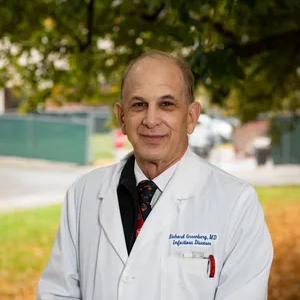
Dr. Richard Greenberg is a Professor of Internal Medicine with a focus on Infectious Diseases at the University of Kentucky. His career spans over three decades, with expertise in vaccine development, HIV/AIDS research, and clinical trials for antifungal therapies. He holds academic appointments in the School of Medicine and collaborates with institutions like the National Institutes of Health (NIH) and pharmaceutical companies on vaccine trials for diseases such as hepatitis, HIV, pneumococcal pneumonia, and smallpox. His research emphasizes translational medicine, particularly in vaccine efficacy, immune response characterization, and antifungal drug efficacy in immunocompromised patients. Dr. Greenberg has led numerous clinical trials for novel vaccines (e.g., oral cholera, pandemic influenza) and contributed to pivotal studies on zoster (shingles) vaccine safety and pneumococcal conjugate vaccines in elderly populations. His work bridges academia and industry, addressing global health challenges through rigorous clinical research. Education : Medical Degree: Tufts University School of Medicine Residency: Indiana University Medical Center and Louisiana State University Medical School Fellowship: Louisiana State University Medical Center NIH Training Fellowship: University of Virginia Medical Center Research Interests : Dr. Greenberg’s research centers on: Vaccine development for infectious diseases (e.g., HIV, influenza, smallpox) Immunocompromised patient care, particularly in histoplasmosis and cryptococcosis Antifungal therapy optimization (e.g., isavuconazonium for mucormycosis) HIV-associated complications and antiretroviral drug effects Clinical trials for novel drug delivery systems like MucoJet oral vaccines Grants & Collaborations : His work has been funded by NIH (NIAID), industry partnerships (e.g., Bavarian Nordic, GSK), and DoD for defense-related vaccines (e.g., botulism, plague). He serves as a sub-investigator for NIH-funded VTEU trials and leads vaccine efficacy studies at the University of Kentucky’s clinical research unit. Labs & Teams : Collaborates with the university’s infectious disease research group and biostatistics core, focusing on clinical trial design and biomarker analysis for vaccine responses.
Dragi Kimovski is a Habilitated Assistant Professor in Distributed Systems at Klagenfurt University, Austria, focusing on Edge Computing and AI. He previously held roles at the University of Innsbruck and the University of Information Science and Technology in Macedonia. His research spans Edge/Fog/Cloud computing, multi-objective optimization, and high-performance computing. He has coordinated major projects like 6GContinuum and KärtnerFog, and led initiatives such as DataCloud and ASPIDE. His teaching includes courses on Distributed Computing, Cloud Computing, and IoT. He is the co-creator of the Carinthian Computing Continuum and maintains a blog on Edge AI World. His work emphasizes sustainable and efficient computing solutions for emerging technologies. Education: Not explicitly listed in the provided text. Research Interests: Edge Computing, Fog Computing, Cloud Computing, Multi-objective Optimization, High-Performance Computing, AI in Distributed Systems. His work addresses challenges in resource management, latency reduction, and scalability across heterogeneous environments, with applications in healthcare, IoT, and 6G networks. Projects: 6GContinuum (Coordinator): Focuses on AI services over 6G networks. KärtnerFog (Scientific Coordinator): Develops adaptive Fog infrastructures over 5G. DataCloud (WP5 Leader): Manages Big Data pipelines on the Computing Continuum. ASPIDE (Scientific Coordinator): Advances exascale programming models for data processing. Teaching: Klagenfurt University: Courses include Distributed Computing, IoT, Cloud Computing, and Advanced Programming. University of Innsbruck: Taught Advanced Parallel and Distributed Systems. University of Information Science and Technology: Courses in High-Performance Computing and Network Architectures. Labs/Teams: Co-created the Carinthian Computing Continuum, an automated SDN testbed for Edge computing research. Active in interdisciplinary teams addressing extreme data processing and sustainable computing.
Regan Zane is the David G. and Diann L. Sant Endowed Professor in the Department of Electrical and Computer Engineering at Utah State University. His research focuses on high-efficiency power converters for transportation electrification, battery systems, and microgrid applications. PhD, MS, BS in Electrical Engineering, University of Colorado Boulder IEEE Fellow and recipient of 15+ scientific awards including NSF CAREER and IEEE Bass Award Recent work emphasizes dynamic wireless charging for electric vehicles, second-life battery reconditioning , and high-frequency converter design . Publications span topics in ZVS analysis, resonant topologies, and grid-integrated systems. Key awards include: 2020 Utah Clean Cities Sustainability Partner of the Year 2019 Utah Innovation Award in Clean Technology 2008 IEEE Richard M. Bass Outstanding Young Engineer Mentored 20+ graduate students in power electronics and electrified transportation projects. Led development of USU's EVR Research Facility and contributed to DARPA/MIT collaborations on solid-state hydraulic systems.
Dr. Murtaza Haider is a Professor of Data Science and Real Estate Management at Toronto Metropolitan University, holding an adjunct professorship at McGill University’s Department of Engineering. He is the Research Director of the Urban Analytics Institute and a Director of Regionomics Inc., a consulting firm focusing on urban and regional economics. His research interests span analytics, data science, urban economics, housing markets, transport planning, and South Asian economic development. He holds a PhD in Civil Engineering from the University of Toronto, with a focus on transport engineering. His work has been published in leading journals such as International Journal of Information Management and Journal of Transport and Health . He authored Real Estate Markets: An Introduction (2020) and Getting Started with Data Science (2016). His weekly real estate column appears in The Financial Post and other major newspapers. Dr. Haider has received multiple awards, including the Morrison Hershfield Teaching Excellence Award and the Canadian Transportation Research Forum’s Best Doctoral Research Paper Award. He has led research projects funded by organizations like Canada Mortgage and Housing Corporation and Transport Canada, focusing on urban infrastructure, freight logistics, and housing policy. His teaching spans courses in global logistics, urban transportation, and applied retail research. He has advised on policy initiatives such as Ontario’s infrastructure investment strategies and Pakistan’s urbanization challenges. His work bridges academia and practice, emphasizing data-driven solutions for urban and economic development challenges.
María José Palacín Sánchez is a Full Professor at the University of Seville's Faculty of Economics and Business Administration, specializing in Financial Economics and Operations Management. Her research focuses on corporate finance, capital structure, SME financing, trade credit, venture capital, and regional economic development. She has led numerous projects including studies on the MARF (Alternative Stock Market in Spain), venture capital in Andalusia, and the financial ecosystem's impact on SME growth. Education: No explicit details provided, but extensive academic career implies advanced degrees in Finance/Economics. Her research interests span corporate finance theory, SME financing challenges, and the role of regional institutions in business growth. Recent work emphasizes the financial ecosystems' role in supporting young SMEs and quantifying trade credit dynamics. Publications highlight analysis of alternative stock markets (e.g., MARF) and comparative studies of financial structures across regions. She has directed doctoral theses on trade credit, outsourcing, and capital structure determinants. Grants/Projects: Over 20 projects, including contracts with companies (e.g., MARF diagnostic studies) and regional research grants (SEJ-381 group). She has advised three doctoral candidates and contributed to conferences worldwide, focusing on SME finance and entrepreneurship. Her work bridges academic research with practical policy implications for business financing and regional development.
Dr. Elizabeth M. Gillespie is an Assistant Professor in the Department of Public and Nonprofit Administration at the University of Memphis, where she joined in 2020. She is also an affiliate faculty member with the Institute for Philanthropy and Nonprofit Leadership. Dr. Gillespie has established herself as a prominent researcher in nonprofit organizations and philanthropy, with a particular focus on women's philanthropy, women's grantmaking foundations, social change organizations, and nonprofit fundraising capacity. Her work bridges academic research with practical application through strong connections with the Memphis nonprofit community. Dr. Gillespie's educational background includes: Ph.D. in Public Administration from the University of Nebraska at Omaha (2015-2020) M.P.A. from Drake University (2013-2014) B.A. in History, with minors in French and English, from the University of Iowa (2000-2005) Dr. Gillespie's research centers on philanthropy, women's giving, nonprofit fundraising, grantmaking foundations and funds, and feminist and social change organizations. Her work often examines nonprofit and philanthropic approaches to social change, gender equality, and public administration, incorporating feminist theories and practices. Women's philanthropy forms a central theme in her scholarship, with specific attention to women's grantmaking for economic security, empowerment-focused philanthropy through women's funds, and girls' philanthropy in educational settings. Her research seeks to enhance understanding and advance effective strategies within the nonprofit and philanthropic sectors, fostering impactful social change. Analysis of Dr. Gillespie's publication record reveals a clear trajectory focusing on women's roles in philanthropy and nonprofit leadership. Her work spans theoretical explorations of feminist organizations, empirical studies of women's foundations and funds, and practical applications in community settings. A notable trend is her increasing focus on intergenerational philanthropy, particularly with her 2025 publication on girls' philanthropy in girls' schools. Her research consistently connects feminist theory with organizational practice, demonstrating how women-led philanthropic organizations can drive social change while addressing gender inequities. Through her professional activities, Dr. Gillespie bridges theory and practice in meaningful ways. She performs consultant work for nonprofits, specializing in resource development and capacity building through her role at the University of Memphis. Additionally, she writes grants for small to mid-sized nonprofits through her work with Change Granted. In 2025, she co-founded The Women's Giving Collective (WGC), a philanthropic women's giving circle dedicated to empowering women through collective giving. The WGC invests in causes that strengthen communities, transform lives, and advance gender and social equity through collaborative, values-driven philanthropy. Dr. Gillespie serves on the boards of The Memphis Challenge, Academic Women in Public Administration, and The Arc Mid-South, demonstrating her commitment to community engagement and leadership development. Her nearly decade of prior nonprofit leadership experience, beginning at the Women's Resource and Action Center during her undergraduate studies, informs her academic work and commitment to preparing the next generation of nonprofit leaders.