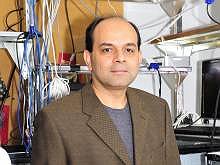
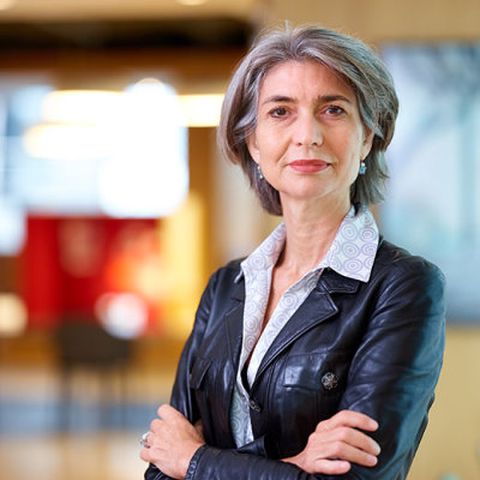
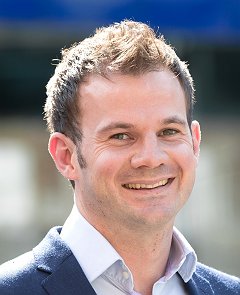
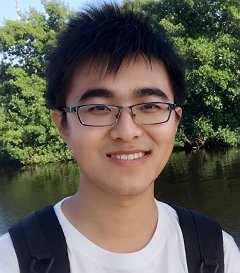
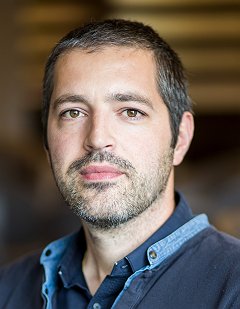
Nathan Weise serves as an Associate Professor in the Electrical and Computer Engineering Department within Marquette University's Opus College of Engineering. He established the Electric Machines and Power Electronics at Marquette (EMPOWER) laboratory in 2014, developing it into a world-class research facility. His academic journey includes a Ph.D. (2011), M.S. (2007), and B.S. (2005) in Electrical/Computer Engineering from the University of Minnesota. Dr. Weise specializes in power electronics with research spanning Power and Energy Conversion , Electric Drives , Vehicular Power Systems , and Control of Renewable Energy Sources . His work focuses on high-power-density GaN-based systems for electric aircraft, ultra-fast EV charging infrastructure, and DC circuit breakers. He has secured two highly competitive U.S. Department of Energy ARPA-E grants addressing critical energy challenges. His publication portfolio reveals strong emphasis on GaN semiconductor applications , thermal management systems , and advanced control algorithms for multilevel converters. Recent work shows progression toward aerospace electrification and ultra-high-power systems, with 2025 publications indicating cutting-edge research in electric aircraft propulsion. Way Klingler Young Scholar Award (2020-2021) Marquette Teacher of the Year (2019) IEEE Eta Kappa Nu Beta Omicron Chapter Award Dr. Weise has developed industry-critical courses in digital control of renewable energy, power electronics, and hands-on lab experiences. His future research plans include establishing a world-leading power electronics lab, creating a medium-voltage facility, and authoring the textbook Digital Control of Power Electronics with accompanying lab materials.
Fitsum Meshesha Kifetew is a tenured researcher at Fondazione Bruno Kessler (FBK) in Trento, Italy, where he works in the Software Engineering unit within the Digital Industry center. With over a decade of experience in software engineering research, he has established himself as a leading expert in automated software testing and requirements engineering. His work bridges theoretical foundations with practical applications, particularly through search-based software engineering techniques that have significantly advanced the field of test automation. PhD in 2015 from University of Trento/Fondazione Bruno Kessler Thesis: 'Evolutionary Test Case Generation via Many Objective Optimization and Stochastic Grammars' Supervised by Paolo Tonella and Roberto Tiella Kifetew's research primarily focuses on automated software testing and requirements engineering, with particular emphasis on search-based software engineering (SBSE) techniques. His work spans multiple domains including test generation, software adaptation and evolution, and requirements analysis. He has pioneered approaches that combine evolutionary algorithms with model-based testing, significantly advancing the state of the art in automated testing. His recent work explores the intersection of AI and software testing, particularly through large language models for test oracle generation and reinforcement learning for game testing. An analysis of Kifetew's recent publications reveals a strong trajectory in evolving testing methodologies from traditional code-based approaches toward more sophisticated model-based and AI-enhanced techniques. His work shows increasing focus on energy efficiency in testing processes, adaptation to complex domains like game testing and safety-critical systems, and integration of machine learning to address longstanding challenges like the test oracle problem. The research demonstrates consistent innovation in applying multi-objective optimization to software testing challenges. His notable recognitions include: IEEE Computer Society TCSE 10 Year Most Influential Paper Award for 'Reformulating branch coverage as a many-objective optimization problem' Best paper award at ICST'2025 Tool Competition UAV Testing Track Best paper award at SSBSE'18 for 'Incremental Control Dependency Frontier Exploration for Many-Criteria Test Case Generation' Kifetew has played significant leadership roles in major software engineering conferences, serving as Program Co-Chair for ICST 2022 and participating in numerous program committees. He has secured substantial research funding through EU projects including iv4XR (H2020 grant 856716), GAUSS (PRIN project funded by MIUR), and SUPERSEDE (H2020 grant 644018). His work has resulted in multiple research prototypes including DynaMOSA, Stochastic Grammar Based Testing, and EvoSuite-SVD, which have been widely adopted in both academic and industrial settings. He leads research on intelligent verification and validation for extended reality systems through the iv4XR project and has contributed to tools for model-based player experience testing. His work bridges theoretical computer science with practical software engineering challenges, particularly in the domains of game testing, safety-critical systems, and requirements engineering.
Atif Memon is a Professor in the Department of Computer Science at the University of Maryland, College Park (UMCP), where he has been a faculty member since 2001, progressing from Assistant Professor to Associate Professor and finally to Professor in 2015. He is also a Professor at the Institute for Advanced Computer Studies at UMCP. Dr. Memon founded and heads the Event Driven Software Lab (EDSL), where his research focuses on design, development, quality assurance, and maintenance of event-driven software applications. Dr. Memon received his Ph.D. in Computer Science from the University of Pittsburgh in 2001, with a dissertation titled "A Comprehensive Framework for Testing Graphical User Interfaces." His advisors were Martha Pollack and Mary Lou Soffa. Prior to his Ph.D., he earned an M.S. in Computer Science from King Fahd University of Petroleum and Minerals in Saudi Arabia (1995) and a B.C.S. in Computer Science from the University of Karachi (1991). Dr. Memon's research primarily focuses on software testing, particularly for event-driven systems. He is renowned for designing and developing GUITAR, a model-based GUI testing framework that operates on Android, iPhone, Java Swing, .NET, Java SWT, and web systems. His work extends to Community Event-based Testing (COMET), a community infrastructure for event-based testing researchers. His research interests include: Automated GUI and mobile application testing Model-based software testing techniques Event-driven software quality assurance Testing methodologies for emerging technologies Test automation and script maintenance Flaky tests and test reliability Dr. Memon's recent publications demonstrate a strong focus on practical applications of software testing, particularly in mobile environments. His work bridges theoretical testing concepts with real-world implementation challenges, with significant contributions to GUI test automation, mobile application testing, and test script maintenance. The trend in his recent work shows increasing emphasis on mobile platforms, security testing, and addressing the challenges of flaky tests in continuous integration environments. His research spans both academic innovation and practical industry applications, as evidenced by his collaborations with companies like Google, Apple, and others. Among his notable achievements, Dr. Memon received the Best Paper Award at SECURWARE 2014 for his work on "N-Gram Based User Behavioral Model for Continuous User Authentication" and a retrospective award for the most influential paper among the papers of 2003 Working Conference on Reverse Engineering. Dr. Memon currently advises six PhD students at Maryland on various aspects of testing event-driven software systems, and so far six students have completed their doctoral thesis work under his guidance. His research has been supported by significant funding from agencies including DARPA, NSF, NIH, and NSA for projects such as "Vetting Android Applications for Security Using Graphical User Interface Logic," "COMET - Community Event-based Testing," "Algorithms and Software for the Assembly of Metagenomic Data," and "Research in Science and Public Policy for the U.S. National Security Agency." As the founder and head of the Event Driven Software Lab (EDSL), Dr. Memon leads a team focused on advancing the state of the art in testing event-driven software applications. The lab has developed several influential tools and frameworks, most notably GUITAR, which has been widely adopted in both academic and industrial settings. Dr. Memon has also been instrumental in developing community infrastructure for testing researchers through COMET, enabling uniformity in experimentation and benchmarking in event-driven software testing.
Christian Seiler serves as Professor and Dean of the Faculty of Civil Engineering at Munich University of Applied Sciences, based in Room F 1.01a at Karlstraße 6, Munich. His leadership extends across academic administration and practical engineering applications, with core responsibilities in structural engineering fundamentals and civil infrastructure development. His research expertise encompasses: Structural Engineering (concrete/steel systems) Bridge Engineering (cable-stayed, composite, timber) Finite Element Analysis for structural simulations Normative Standards (DIN, Eurocode implementation) Railway Infrastructure and Noise Barrier Systems Prestressed Concrete and Timber Construction Analysis of his 2007-2012 publications reveals consistent focus on practical engineering challenges: dynamic analysis of railway noise barriers (2012), Eurocode-compliant concrete design (2012), vehicle impact simulations for road safety (2010), and DIN standard updates for bridges (2010). His work bridges theoretical modeling with industry applications, particularly in German infrastructure projects. Professor Seiler actively contributes to research infrastructure as: Member of Laboratory for Concrete Structures and Structural Engineering Consultant for Laboratory for Steel and Light Metal Construction (FE simulations) Active member of BayIngKa-Bau engineering organization Former Chairman of Bavarian Chamber of Civil Engineers' Standardization working group
Dr. Yvonne Hong is a Senior Lecturer at the School of Information Management, Victoria University of Wellington. She previously served as a Lecturer (Teaching) at the University of Auckland from January 2020 to July 2022. Her educational background includes: Doctor of Philosophy from University of Auckland Master of Commerce from University of Auckland Bachelor of Commerce (Honours)/Bachelor of Health Sciences (Conjoint) from University of Auckland Dr. Hong's research focuses on the impact of emerging technologies on individuals, organizations, and society, with particular emphasis on hybrid learning and artificial intelligence in education. Her work spans across several key areas including AI ethics in education, digital transformation in higher education, human-AI collaboration, and educational technology. She has published extensively on topics related to AI-assisted academic writing, self-regulation in digital learning environments, and digital inclusion, with over 25 publications since 2017. Her research often employs innovative methodologies such as epistemic network analysis and multimethodological approaches combining qualitative content-coding with thematic analysis. Dr. Hong serves on numerous conference committees and editorial boards, including roles as Mini-track co-chair for Hawaii International Conference on System Sciences (HICSS) and program committee member for various international conferences. She is also an Associate Editor for journals including Journal of Information Technology and Communications of the Association for Information Systems. Her notable scientific contributions include: Development of a conceptual model for digital transformation in higher education with Activation, Implementation, and Institutionalisation Layers Research on human-AI collaboration patterns in academic writing Analysis of organizing visions for Generative AI in education Framework for ethical principles in artificial intelligence in education Dr. Hong actively supervises doctoral and master's students, with current supervision including projects on human-AI collaboration in innovation practices, AI for environmental sustainability, and GenAI for fraud detection. She has secured research grants including "Empowering Education: Advancing the Integration of AI into Aotearoa New Zealand's Secondary Education" running from December 2024 to March 2026. Her work aligns with Sustainable Development Goals 4 (Quality Education) and 10 (Reduced Inequalities), reflecting her commitment to equitable and high-quality educational technology implementation.
Claudie Boiteau is an Associate Professor of Law and Professor of Public Law at Paris-Dauphine University, specializing in public economic law, energy law, and economic regulation law. Her academic work focuses on the intersection of legal frameworks and economic regulation, particularly in energy markets and public services. Professor Boiteau directs the Master 2 "Market Law and Regulation" (291), which accommodates apprenticeships, initial, and continuing education. She co-heads the "public economic law" section of the French Journal of Administrative Law (RFDA) and serves as Head of commentaries and annotations of the Energy Code (Dalloz). Her recent research explores energy sovereignty, economic regulation mechanisms, and the judicial aspects of regulatory frameworks. Professor Boiteau has published extensively on energy crisis management, soft law litigation, railway infrastructure governance, and the impact of geopolitical events like the Ukraine war on energy markets. Her work demonstrates consistent focus on evolving regulatory challenges in European energy and economic contexts. Professor Boiteau holds significant positions including membership on the Sanctions Committee of the Prudential Supervision and Resolution Authority (ACPR), Honorary Presidency of the French Energy Law Association (AFDEN), membership on the Scientific Council of the European Federation of Energy Law Associations (EFELA), and participation in the Energy Commission of the Club des juristes. She organizes the Dauphinoises Regulatory Meetings in partnership with the LEDa-CGEMP and the Council of State, facilitating dialogue between academia, regulatory bodies, and industry stakeholders in economic regulation.
Lokke Moerel serves as Professor of Global ICT Law at Tilburg University and concurrently holds the position of Senior of Counsel at Morrison & Foerster in Brussels. She provides strategic guidance to multinational organizations on technology implementation, digital transformation, and cybersecurity frameworks. Her institutional affiliations include key advisory roles with the Dutch Cyber Security Council, the Monitoring Committee of the Dutch Corporate Governance Code, and the European Commission's Horizon2020 Innovation Program. Her research spans Global ICT Law, Cybersecurity, Digital Transformation, Data Protection, and AI Ethics, with particular emphasis on constitutional implications of digital sovereignty and ethical technology governance. She investigates regulatory frameworks for emerging technologies, cross-border data flows, and the intersection of legal systems with digital innovation, focusing on practical solutions for complex multinational compliance challenges. Her seminal 2020 publication "Reflections on Digital Sovereignty" establishes foundational principles for national and supranational digital governance. The work demonstrates consistent thematic focus on balancing innovation with fundamental rights protection, addressing sovereignty tensions in cloud infrastructure, and developing ethical guardrails for AI deployment within constitutional frameworks. Scientific recognition includes: 2018 International Law Office Client Choice Award for Best Internet & Technology lawyer Germany 2018 Acquisition International Global Excellence Award for Most Influential Woman in Data Protection Law Professor Moerel actively shapes policy through governmental advisory roles including service on the Ethics Board for the Dutch government's Covid-19 tracing application. Her Tedx presentation on AI Ethics underscores her commitment to translating academic research into practical ethical frameworks for technology implementation, bridging theoretical scholarship with real-world organizational challenges.
Robert Sutherland is a Professor and Director at the Canadian Centre for Behavioural Neuroscience (CCBN), University of Lethbridge. His research focuses on neural mechanisms of memory, hippocampal function, and cognitive recovery in conditions like stroke and fetal alcohol spectrum disorders. He holds a B.Sc., M.A., and Ph.D. in Psychology. Research interests span: Hippocampal neurogenesis and memory consolidation Impact of stress on stroke recovery Episodic memory systems in rodents Neurodegeneration and regeneration models Cognitive deficits in fetal alcohol disorders His publications (2011-2014) emphasize hippocampal-dependent memory, stress-pathology interactions, and innovative behavioral paradigms. Trends include rodent models of cognitive deficits, temporal coding in neural circuits, and critiques of experimental methodologies. As Principal Investigator, he secured major grants: CIHR ($683,550, 2010-2015): Hippocampal dentate gyrus repair CFI ($8,030,000, 2009-2010): Epigenetics infrastructure NSERC ($338,335, 2007-2012): Hippocampus and memory NIH ($346,000, 2003-2008): Adult neurogenesis He directs the CCBN, overseeing advanced neuroimaging facilities and collaborative projects on neural plasticity.
Alastair F. Donaldson is a Professor in the Department of Computing at Imperial College London, leading the Multicore Programming Group. His research focuses on programming languages, compilers, and automated testing of software systems. He previously directed GraphicsFuzz, an Imperial College spinout acquired by Google in 2018. Education: PhD in Computer Science (University of Glasgow), Postdoctoral Research Fellow (University of Oxford), Visiting Researcher (Microsoft Research Redmond) His research interests include: Compiler Design and Verification Randomized Testing Techniques Multicore and GPU Programming Formal Methods for Software Reliability Recent publications emphasize compiler fuzzing, metamorphic testing, and verification of GPU systems. He actively contributes to the development of testing tools for programming languages and hardware interfaces. Alastair holds leadership roles in academic conferences, including Publicity Co-Chair for POPL 2024 and committee roles in ASE, ECOOP, PLDI, and SPLASH. He maintains a personal website at http://www.doc.ic.ac.uk/~afd and has been registered on conf.researchr.org since 2015.
Professor Jennifer Schooling serves as Professor of Digital Innovation and Smart Places within the Faculty of Science and Engineering at Anglia Ruskin University, Cambridge. Her research centers on sociotechnical aspects of city-scale digitalisation, emphasizing governance frameworks and ethical innovation practices to deliver public value through digital solutions. Education: She holds a PhD in Materials Science from the University of Cambridge and maintains Chartered Engineer status. Research Focus: Her work spans critical domains including: Smart places and urban digital ecosystems Digital innovation in public infrastructure AI applications for sustainable development Ethical governance of emerging technologies Decarbonisation of construction through data-driven approaches Research Leadership: She co-directs the DARe Research Hub for Decarbonised, Adaptable, climate Resilient transport and previously led the Cambridge Centre for Smart Infrastructure and Construction as its Director. Her influential work includes authoring the Carbon Reduction Code for the Built Environment. Professional Recognition: Her standing in the field is evidenced by: Fellowship of the Institution of Civil Engineers Chartered Engineer accreditation Strategic Advisory Roles: She provides expert guidance to key national bodies through positions on: Secure Connected Places Advisory Board (UK Department for Science, Innovation and Technology) Infrastructure Client Group’s Digital Transformation Task Group Institution of Civil Engineers Decarbonisation Community Advisory Board
Junjie Chen is a Professor at the College of Intelligence and Computing, Tianjin University, where he leads the Software Engineering Team. He has been a Professor since January 2024, after serving as an Associate Professor from July 2019 to January 2024. Prior to his position at Tianjin University, he completed his PhD in Computer Science at Peking University under the supervision of Prof. Bing Xie, Prof. Lu Zhang, Prof. Dan Hao, and Prof. Yingfei Xiong. During his PhD studies, he was also a visiting PhD student at The University of Texas at Dallas under Prof. Lingming Zhang. His educational background includes a Bachelor's degree in Software Engineering from Beihang University (2010-2014). Professor Chen's research focuses on four main areas: Software Fuzzing : Focusing on fundamental software testing for compilers, operating systems, chip design systems, and AI infrastructure. Intelligent Software Engineering : Applying LLMs and deep learning to solve software engineering challenges like code generation, test generation, and code review. Trusted AI : Improving AI security, fairness, robustness, and performance through adversarial attacks, data optimization, and software engineering methodologies. Software Maintenance : Researching bug localization and fixing, as well as AIOps for anomaly detection and diagnosis. His recent publications (2024-2025) demonstrate a strong focus on the intersection of software testing, compiler infrastructure, and large language models. His work spans from practical compiler testing techniques to advanced applications of AI in software engineering. His research shows a clear trajectory toward addressing the challenges of modern software systems, particularly those involving AI and deep learning components. Professor Chen has received numerous prestigious awards including: National Key R&D Program Young Scientist (2024) Huawei Spark Award (2024) National Excellent Young Scientists Fund recipient (2023) China Institute of Electronics Natural Science First Prize (2023) CAST Young Elite Scientists Sponsorship Program (2022) Multiple ACM SIGSOFT Distinguished Paper Awards He is actively involved in academic service, serving on editorial boards for JCST and ASEJ, and as a program committee member for major conferences including ICSE, ASE, FSE, and ISSTA. He has also co-organized workshops and seminars, including the Compiler Technology Seminar under the CCF System Software Committee. Professor Chen leads a research team at Tianjin University that is actively recruiting PhD and Master's students with strong programming skills and interests in Software Engineering, LLMs, Security, and Program Analysis.
Ben L. Titzer is a researcher affiliated with Carnegie Mellon University specializing in programming language implementation and virtual machine technology. His work focuses on WebAssembly tooling, compiler design, and JavaScript engine optimization, with consistent contributions to major conferences including PLDI, SPLASH, and ICFP since 2015. His research interests center on WebAssembly infrastructure , where he develops tools for debugging, testing, and benchmarking WebAssembly modules. He has pioneered techniques in record-replay systems (Wasm-R3), program reduction, and diversified execution for uncovering elusive concurrency bugs. His work bridges theoretical compiler design with practical constraints of real-world deployment in browser and non-browser environments. Trends across his publications reveal a consistent focus on making WebAssembly more practical for developers through improved tooling and reliability. His recent work emphasizes standalone WebAssembly execution environments beyond browsers, addressing debugging challenges and performance bottlenecks in compilation pipelines. Earlier work examined JavaScript engine evolution (particularly V8) and memory management optimizations. Titzer actively contributes to the programming languages community through program committee service across multiple conferences including PLDI, POPL, SPLASH, and ISMM. He has chaired workshops and sessions on WebAssembly and virtual machine technologies, and delivered keynotes on WebAssembly's potential as a universal compilation target. As an organizer, he has served as Rebase Co-chair for SPLASH and co-chaired JENSFEST. His tutorial development work helps disseminate WebAssembly research tools to broader audiences. His research has practical impact through integration with major browser engines and WebAssembly toolchains.
Diomidis Spinellis is Professor of Software Engineering in the Department of Management Science and Technology at the Athens University of Economics and Business, Greece, where he heads the Business Analytics Laboratory (BALab). He also holds a position as Professor of Software Analytics in the Department of Software Technology at the Delft University of Technology. His academic career spans multiple prestigious institutions and research domains. Spinellis's research interests center on software engineering, IT security, and computing systems. He has made significant contributions through his work on code quality, software tools, program comprehension, and debugging methodologies. His research bridges theoretical foundations with practical applications, evident in his development of widely-used open-source tools and his contributions to operating systems like Apple's macOS and BSD Unix. His scholarly output includes over 300 technical papers with more than 10,500 citations, demonstrating substantial impact across the software engineering community. His publications span diverse topics including software analytics, program comprehension, debugging techniques, and open-source software quality. Among his notable recognitions are two award-winning, widely-translated books: Code Reading and Code Quality: The Open Source Perspective , followed by Effective Debugging: 66 Specific Ways to Debug Software and Systems in 2016. His work has been influential in both academic and industry settings. IEEE Software editorial board member for a decade Editor-in-Chief of IEEE Software for four years Elected member of IEEE Computer Society Board of Governors (2013-2015) Senior member of ACM and IEEE Spinellis actively contributes to the software engineering community through tool development (CScout, UMLGraph, dgsh), conference leadership roles, and mentoring activities. His professional service includes program committee memberships across major software engineering conferences including ICSE, ESEC/FSE, and ASE.
Prof. Dr. Jacques Klein is a Chief Scientist (Full Professor) and Co-head of the TruX Research Group at the SnT Centre (Security and Trust Centre) of the University of Luxembourg. With a career spanning over 15 years at the university, he has progressed from Research Scientist (2010-2015) to Senior Research Scientist (2015-2019), Associate Professor (2019-2022), and finally to Full Professor in 2023. His research focuses on three main areas: program analysis applied to mobile security, software debugging (particularly bug localization and program repair), and NLP/AI for software engineering. He has supervised numerous PhD students and has acquired over 5 million euros in research funding through projects from the Luxembourg Research Agency, European Commission, and industrial partnerships. Prof. Klein is an active member of the software engineering research community, serving as General Co-Chair of ASE 2023 and MobileSoft 2025, and as a steering committee member for ISSTA, ASE, and MobileSoft. He is also an Editorial Board Member of the Springer Empirical Software Engineering Journal since 2021. His recent publications demonstrate a strong focus on applying AI and machine learning techniques to software security challenges, particularly in the Android ecosystem, with significant contributions to malware detection, code analysis, and privacy compliance. His work has been recognized with multiple prestigious awards including the ICSE 10-year most influential paper award and the PLDI Most Influential Paper Award. Member of the Institut Grand-Ducal - Section des Sciences (since June 2024) Principal Investigator on numerous research projects Extensive service on program committees for major software engineering conferences He teaches courses on static program analysis, software vulnerabilities, and security analysis at the Master's level, and has made significant contributions to the Android research community through the AndroZoo dataset containing over 24 million Android applications.
Mohamed Wiem Mkaouer is an Associate Professor of Software Engineering in the Golisano College of Computing and Information Sciences at Rochester Institute of Technology (RIT). He serves as the principal investigator of the SMILE (Software Maintenance and Intelligent Evolution) Research Lab, which focuses on designing intelligent algorithms to tackle software engineering problems. Dr. Mkaouer has published over 130 peer-reviewed papers in top venues including TSE, TOSEM, EMSE, ICSE, FSE, CHI, and ASE, and has secured $1.5 million in externally funded projects as PI/Co-PI. PhD in Computer and Information Science, 2016, University of Michigan MS in Computer Science, 2010, University of Geneva (Switzerland) BS in Computer Science, 2007, University of Tunis (Tunisia) Dr. Mkaouer's research spans the intersection of Software Engineering and Artificial Intelligence, with particular focus on software quality assurance, systems refactoring, and the application of search-based techniques. His work increasingly explores the integration of large language models in software development processes, examining how AI tools like ChatGPT impact developer workflows, code quality, and refactoring practices. His research often employs empirical methods, mining software repositories, and conducting large-scale studies of developer behavior. Analysis of Dr. Mkaouer's recent publications reveals a strong trend toward investigating AI-assisted software development, particularly focusing on how developers interact with large language models for code refactoring and quality improvement. His work bridges traditional software engineering concerns with emerging AI capabilities, examining both infrastructure-as-code quality and mobile application development challenges. His research methodology typically combines empirical studies of developer practices with the development of intelligent tools to support software maintenance. Recipient of 5 best-paper/presentation awards RIT GCCIS Best Emerging Researcher Award (2020) Dr. Mkaouer actively mentors a diverse group of students at multiple levels, from undergraduate to PhD candidates, through the SMILE Research Lab. His externally funded projects demonstrate the practical relevance of his research to industry needs. He also contributes significantly to the software engineering community through service on program committees for major conferences including ASE, ICSE, and ICSME, where he frequently serves in leadership roles for tracks related to software maintenance, refactoring, and AI in software engineering. The SMILE Research Lab, under Dr. Mkaouer's leadership, maintains strong industry connections and collaborates with researchers worldwide. The lab's work has practical implications for improving software quality, reducing technical debt, and enhancing developer productivity through intelligent tooling and evidence-based practices.