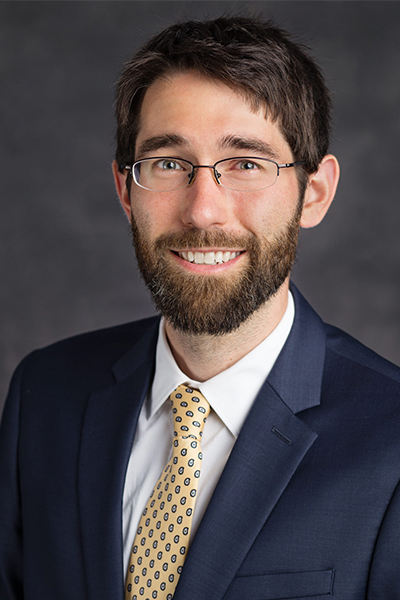
Patrick Singleton is an Associate Professor in the Department of Civil and Environmental Engineering at Utah State University, specializing in transportation research. His work bridges travel behavior, safety analysis, and health impacts of transportation systems, with a focus on active transportation and data science applications. Academic Background: PhD in Civil and Environmental Engineering (Portland State University, 2017) Research Areas: Travel behavior, transportation-electrification, pedestrian safety, health-wellbeing in transport Recent research trends emphasize data-driven approaches to pedestrian and bicycle safety, transportation electrification, and the impact of environmental factors like air quality on travel patterns. His lab develops tools for pedestrian data analysis and systemic safety improvements. Scientific recognition includes multiple UDOT awards and a 2017 Best Paper award. He mentors graduate students in transportation modeling and safety analysis.
Gregory Prastacos is a Professor of Management Science and former Dean (2012-2024) at Stevens Institute of Technology's School of Business. He holds degrees from Columbia University, including a doctorate in Operations Research. His academic leadership spans roles as Rector of Athens University of Economics and Business (AUEB, 2007-2011) and founding director of AUEB’s International MBA Program and Management Science Laboratory. His research focuses on analytics, innovation, and digital transformation, with over 60 journal articles and 11 books. Notable awards include the Edelman Award (1979) and INFORMS Honorary Medal (2008). Education: B.Sc. and M.Sc. in Computer Science (Columbia University), Ph.D. in Operations Research (Columbia University). Research interests include supply chain analytics, technology management, and leadership ethics. His work on blood inventory management was recognized in Science magazine. As Dean at Stevens, he achieved AACSB accreditation, launched new programs, and secured NSF funding for the CRAFT Center. He co-chairs AACSB's Digital Transformation Affinity Group, leading the MaCuDE initiative to redefine business education for the digital era. Awards include Stevens' inaugural Leading by Example Award (2024), ROI New Jersey’s Higher Education Influencer (2022, 2024), and the Jacques Barzun Award (2017). He has advised Fortune 500 companies and served on boards of Deloitte, Onassis Foundation (USA), and the Hellenic Management Association. Grants and leadership: Over 25 major research projects funded by EU, Greek Ministry of Research, and others. Key initiatives include the MaCuDE program (AACSB/PwC, 2019), the Athens International Airport Impact Study (2009), and the Mapping Black Sea Research (2004). He has supervised 7 doctoral students and authored/co-authored influential works like Managerial Decision Making (2009) and Leading and Managing in the Digital Era (2024). Consulting and industry ties include Deloitte’s Management Consulting Practice (1997-2002), strategic advising for telecoms, banking, and logistics sectors. He launched OMAS SA, a leading Greek consulting firm, and co-founded the Business Confucius Institute of Athens.
Erik Prytz is a Senior Associate Professor in Cognitive Science at the Department of Computer and Information Science (IDA) at Linköping University. His research focuses on applying human factors principles to improve safety-critical systems, particularly in emergency response domains such as first aid, disaster medicine, and prehospital care. He holds a PhD in Human Factors Psychology and has served in roles including Director of the Forum Securitatis graduate school and Program Chair for the Cognitive Science BSc program. Education: PhD in Human Factors Psychology (Old Dominion University, 2014), MSc in Cognitive Science (LiU, 2010). Research Interests: Simulation-based training, stress and mental workload, emergency responder teamwork, and human-system interaction in crisis scenarios. His work emphasizes interdisciplinary collaboration, combining cognitive science, computer science, and medicine to enhance emergency response systems. Recent projects explore driver behavior toward emergency vehicles, ad-hoc responder group dynamics, and optimal placement of bleeding control kits in public spaces. He contributes to initiatives like the Center for Advanced Research in Emergency Response (CARER) and the Forum Securitatis graduate school. Erik’s teaching includes courses on human factors, distributed cognition, and emergency response systems. He actively participates in curriculum development and quality assurance committees within the Faculty of Arts and Sciences.
Stuart Gordon is a Professor in Managing Humanitarianism and Programme Director for the International Development and Humanitarian Emergencies MSc at the London School of Economics and Political Science (LSE). His academic affiliations include the Department of International Development at LSE, where he also coordinates consultancy programs. He holds roles as an Associate Fellow at Chatham House and Senior Fellow of the Higher Education Academy. His research focuses on humanitarian governance, civil-military interaction, and the impact of counter-terrorist legislation on humanitarian operations. Prior to academia, he served as a senior adviser on UK Afghanistan strategies and held roles in the UK Armed Forces (RAF and Army), retiring as a Lieutenant Colonel. He has conducted fieldwork in conflict zones such as Afghanistan, Syria, and Somalia. Key areas of expertise include humanitarian accountability, risk management in crisis responses, and health emergencies like Ebola. He co-directs the LSE-ODI Senior Level Course on Conflict and Humanitarian Response with Sara Pantuliano and sits on the editorial board of the Disasters journal. His work bridges humanitarian principles, security policies, and practical challenges in conflict settings. Notable contributions include analyzing the unintended consequences of civil-military cooperation in peace operations and the impact of financial de-risking on Syrian humanitarian aid. His publications span over three decades, addressing themes from Afghanistan stabilization to medical ethics in conflict zones.
Eileen Martin is an Associate Professor in the Department of Geophysics and Applied Math and Statistics at the Colorado School of Mines. Her research focuses on near-surface geophysics, environmental monitoring, and the application of distributed acoustic sensing (DAS) technology. She leads projects involving fiber-optic sensing for permafrost degradation, urban seismic monitoring, and mining safety. Martin has developed open-source tools like DASCore and contributes to scalable computational methods for geophysical data analysis. Education: PhD (2018) in Computational and Mathematical Engineering from Stanford University; MS (2017) in Geophysics from Stanford; BS (2012) in Mathematics and Physics from UT Austin. Research interests include fiber-optic sensing systems, seismic imaging, data-intensive computing, and applications in environmental science. Her work bridges geophysics with computational methods, emphasizing real-world deployment in challenging environments like arctic permafrost sites and underground mines. Her recent work explores DAS for glacier monitoring, mine seismicity detection, and urban infrastructure assessment. Collaborative projects include Arctic permafrost monitoring and developing public datasets for geoscience research (PubDAS repository). Grants and lab activities include NSF CAREER funding for scalable computational seismology and partnerships with industry on fiber-optic monitoring solutions.
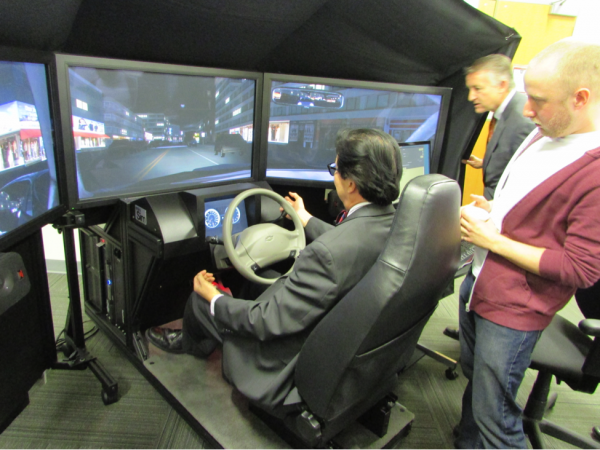
Professor Chris Lee is a faculty member in the Department of Transportation Science and Engineering at the University of Windsor's Faculty of Engineering. His research focuses on advancing transportation safety through the analysis of driver behavior, traffic flow dynamics, and the integration of emerging technologies like autonomous vehicles and machine learning. Key areas include collision risk prediction, driver vigilance assessment, and the development of advanced car-following models. He has contributed to initiatives such as the Transportation Science and Engineering scholarship program, supporting student research in innovative technologies like driving simulators for lane change behavior studies. His work bridges engineering and human factors, addressing challenges such as driver response to autonomous systems, heavy vehicle traffic management, and cross-cultural automotive design. Lee's interdisciplinary approach leverages data analytics, physiological signals, and machine learning to solve real-world transportation problems. His research has implications for policy-making, infrastructure design, and vehicle safety standards. Lee has collaborated extensively on projects analyzing crash precursors, variable speed limits, and the impact of ITS (Intelligent Transportation Systems) on safety. His publications span over two decades, demonstrating a commitment to both academic rigor and practical applications in transportation engineering. Notable contributions include refining car-following models, studying driver aggression, and evaluating the effectiveness of traffic management strategies.
Klaus Moeltner is a Professor in the Department of Agricultural and Applied Economics at Virginia Tech since 2015. He previously held positions at the University of Nevada, Reno, including Associate and Assistant Professor roles. His expertise lies in environmental economics, natural resource valuation, and applied econometrics. He has secured over $6 million in grants as PI or Co-PI and contributes to interdisciplinary research through the Global Change Center and Remote Sensing Program at Virginia Tech. Education: Ph.D., Economics, University of Washington, 2000 M.A., Economics, University of Washington, 1998 M.A., International Policy Studies, Monterey Institute of International Studies, 1994 M.S., Environmental Planning & Engineering, University of Agriculture and Forestry, Vienna, Austria, 1990 Research Interests: Dr. Moeltner’s work focuses on environmental and natural resource economics, including water quality valuation, wildfire health impacts, urban water use, and coastal flooding risks. His research employs advanced econometric methods, such as Bayesian modeling and meta-regression, to inform policy decisions. Current projects include analyzing the economic benefits of stream restoration, harmful algal bloom forecasts, and offshore wind farm co-location opportunities. Awards: 2023: Distinguished Graduate Teaching Award (AAEA) 2014: Best Paper in Environmental and Resource Economics (EAERE) 2004: CABNR Outstanding Instructor Award Advising & Grants: Advised 6 Ph.D. students and secured over $6 million in grants. Research collaborations include USDA-NIFA, EPA, and the European Union. Labs & Teams: Active in interdisciplinary groups like the Global Change Center and Remote Sensing Program at Virginia Tech.
Dr. Jose Escribano is a Lecturer in Aviation & Logistics at the Department of Civil and Environmental Engineering within the Faculty of Engineering at Imperial College London. His research focuses on humanitarian logistics optimization, AI-driven airspace management, and urban resilience strategies. He holds a First Class Honours bachelor’s degree (2015) and a PhD (2021) from Imperial College London. Dr. Escribano is affiliated with the Centre for Transport Engineering and Modelling and the Transport Systems and Logistics Project D-Risk SHIFT. His academic qualifications include a BEng in Engineering and a PhD in Civil Engineering, both from Imperial College London. His professional affiliations include the Institution of Civil Engineers, Chartered Institute of Logistics and Transport, and the American Institute of Aeronautics and Astronautics. He has received the 2023 Transportation Research Board Best Paper Award and a JSPS Fellowship for urban evacuation modelling. Dr. Escribano’s research integrates stochastic modelling, machine learning, and simulation to address challenges in humanitarian response, UAV coordination for disaster relief, and airspace safety. His work emphasizes endogenous value-of-information analysis and the application of cutting-edge technologies to enhance societal resilience. He has collaborated with the United Nations World Food Programme on UAV deployment models for humanitarian contexts. His recent publications span topics like air traffic network resilience, autonomous vehicle optimization, and last-mile delivery mechanisms. He advises doctoral candidates in transportation systems, logistics, and air traffic management, offering opportunities for PhD research in these domains.
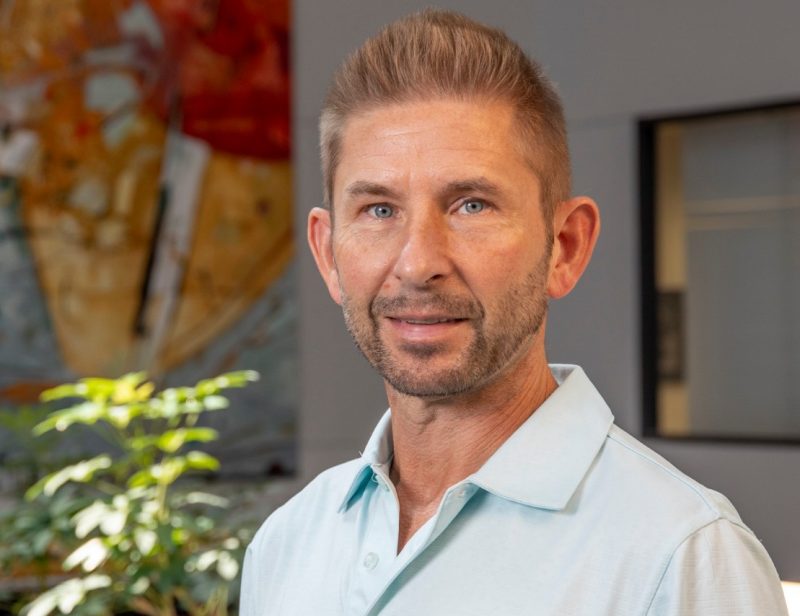
Haitham Al-Deek is a Professor in the Department of Civil, Environmental, and Construction Engineering at the University of Central Florida's College of Engineering and Computer Science. He leads the Intelligent Transportation Systems and Data Analytics Lab and has over 32 years of experience in transportation engineering, planning, and operations. His work is nationally recognized, particularly in freeway operations and intelligent transportation systems (ITS). Ph.D., Civil Engineering-Transportation Engineering, University of California, Berkeley (1991) M.S., Civil Engineering-Transportation Engineering, University of California, Berkeley (1987) B.S., Civil Engineering (with Honors), University of California, Berkeley (1985) Dr. Al-Deek's research focuses on wrong-way driving countermeasures, connected and automated vehicles, traffic safety, and data analytics. He pioneered innovative ITS solutions for detecting and preventing wrong-way driving, including the development of a high-success-rate detection system in partnership with the Central Florida Expressway Authority (CFX). His work extends to freight transportation, electronic toll collection, and sustainable transportation systems. He has also contributed to safety performance functions and driver behavior modeling. His recent publications highlight advanced methodologies in network screening for crash modeling, the use of crowdsourced data (e.g., Waze) for incident detection, optimization of wrong-way driving countermeasures, and benefit-cost analyses of safety technologies. These works reflect a strong trend toward data-driven, real-time, and cost-effective solutions in transportation safety and operations. Scientific awards and recognitions include: TRB Chairman Award (2018, 2012) Multiple TRB Best Paper Awards (Freeway Operations and Regional TSM&O, 2023–2003) TRB Best Student Paper Awards (2022, 2019, 2018, 2017) UCF Excellence in Research Award (2018) UCF Researcher of the Year (1999) Distinguished Researcher, UCF College of Engineering (2003) Dr. Al-Deek has supervised 15 Ph.D. students and 29 M.S. theses and has secured over $10.3 million in research funding from agencies including FDOT, TRB, USDOT, and CFX. He serves as a technical editor for TRR and associate editor for the Journal of Intelligent Transportation Systems. He also chaired key TRB paper review subcommittees and is an active professional engineer in Florida. He leads the Intelligent Transportation Systems and Data Analytics Lab, which focuses on real-world applications of ITS, data warehousing, and advanced analytics for transportation safety and efficiency.
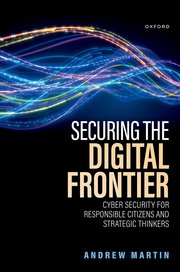
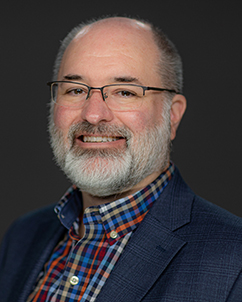
Professor Andrew Martin is a leading academic in Systems Security at the Department of Computer Science, University of Oxford, and a Governing Body Fellow at Kellogg College. His research focuses on trusted computing, cybersecurity, and secure distributed systems, with applications in cloud computing, IoT, and smart grids. He has been instrumental in advancing secure architectures using hardware-based trust mechanisms such as Intel SGX and Trusted Platform Modules. Research Interests: His work spans Systems Security , Trusted Computing , Confidential Computing , Secure Multi-Party Computation , and Privacy in Distributed Systems . He investigates how hardware-enforced security can mitigate risks in large-scale environments, particularly where privacy and trust are paramount. Publication Trends: His recent publications reveal a strong focus on Trusted Execution Environments (TEEs), remote attestation, and secure cloud architectures. He critically examines the feasibility of using hardware enclaves for both defensive and offensive security, emphasizing architectural soundness and real-world applicability. Scientific Awards: No specific awards mentioned in the provided text. Advising and Grants: Professor Martin has supervised numerous PhD and Master’s students in cybersecurity and systems research. His projects include CRANE , Trustworthy Logging , webinos , TCLOUDS , and Secure Networking by Design (SNbD) . He has secured funding for research in trusted computing and secure distributed systems, contributing to both theoretical foundations and practical implementations. Labs and Teams: He leads a research group focused on systems security and trusted computing, collaborating with industry and academic partners on large-scale security challenges. His team works on developing secure middleware, analyzing vulnerabilities in consumer devices, and designing privacy-preserving protocols for smart infrastructure.
Jonathan L. Goodall is a Professor of Civil and Environmental Engineering and Director of the Link Lab at the University of Virginia. His research focuses on hydroinformatics, urban hydrology, and flood modeling, leveraging data science and cyber-physical systems to enhance resilience in coastal urban environments. He leads efforts in reproducible environmental modeling through integration of platforms like HydroShare, emphasizing open science and computational workflows. His work includes advancing machine learning techniques for real-time flood forecasting, integrating IoT and sensor networks for smart city applications, and assessing climate change impacts on coastal communities. Notable contributions involve developing surrogate models for flood prediction in Norfolk, VA, and studying compound flooding effects using hydrodynamic modeling paired with crowdsourced data. Collaborations span universities, national labs, and agencies like CUAHSI, focusing on environmental data interoperability and infrastructure resilience. Goodall’s research often addresses socio-technical challenges in urban flood management, combining engineering solutions with community engagement strategies. His lab explores reinforcement learning for real-time stormwater control, IoT education initiatives, and geospatial tools for flood vulnerability analysis. Projects frequently involve interdisciplinary teams and emphasize reproducibility through containerized environments and metadata standards.
Wayne G. Lutters is a Professor and Associate Dean for Faculty in the College of Information Studies (INFO) at the University of Maryland. He holds office in Patuxent 1109C and can be reached at lutters@umd.edu. His research focuses on sociotechnical systems, computer-supported cooperative work (CSCW), and social informatics, with emphasis on IT-mediated infrastructural work and cybersecurity advocacy. Current projects include studies on scientific cyberinfrastructure, usable privacy and security, and moderation in social media. Dr. Lutters advises the Dean’s Student Advisory Council and explores topics like data privacy, sociotechnical cybersecurity, and the future of work. His recent work addresses challenges in security awareness programs, code set redundancy in healthcare, and collaborative systems design. He is actively involved in developing tools like the Value Set Hub to improve healthcare data curation practices. His research consistently bridges theory and practice, emphasizing ethical technology design and interdisciplinary collaboration. Notable contributions include frameworks for cybersecurity advocacy roles and methodologies for synthesizing scholarly knowledge. While currently not accepting new PhD students, he remains a key figure in shaping academic and infrastructural innovation at UMD.
Nick Thieberger is an Associate Professor in the School of Languages and Linguistics at the University of Melbourne, Australia. He also holds adjunct positions at the University of Sydney, University of Hawai'i, LaTrobe University, Australian National University, and the University of Tasmania. Thieberger serves as Director of PARADISEC (Pacific and Regional Archive for Digital Sources in Endangered Cultures), President of DELAMAN (Digital Endangered Languages and Musics Archives Network), and Deputy Director of the Research Unit for Indigenous Language at the University of Melbourne. He is a Fellow of the Australian Academy of the Humanities and leads multiple major research projects including Nyingarn and Modularised cultural heritage archives. Thieberger's primary research interests focus on language documentation, endangered languages, and digital archiving methodologies. His work bridges linguistics, digital humanities, and Indigenous language preservation, with particular emphasis on Pacific and Australian Indigenous languages. He has developed innovative approaches to linguistic archiving, including the creation of PARADISEC, which has become a model for digital language archives worldwide. His research spans theoretical linguistics, practical archiving solutions, and community-based language work, with significant contributions to Nafsan (South Efate) language documentation and Australian Indigenous language preservation. His recent publications demonstrate a clear trend toward integrating digital humanities with language documentation, particularly focusing on computational approaches to endangered language preservation. Thieberger's work increasingly addresses ethical considerations in linguistic archiving, community-led documentation models, and the development of platforms that give Indigenous communities control over their linguistic heritage. His research shows a progression from descriptive linguistics toward infrastructure development for language preservation, with growing emphasis on access protocols, data sovereignty, and the technical challenges of long-term digital preservation. Open Scholarship Award (2025) for PARADISEC team Digital Repository of Ireland Award for Research and Innovation (2024) DASSH award for Research Partnership and Social Impact (2021) Fellow of the Australian Academy of the Humanities (2021) Ludwig Leichhardt Jubilee Fellowship by Alexander von Humboldt Foundation (2013-2015) ARC Australian Postdoctoral award (2004-2007) QEII Fellowship (2009-2014) Future Fellowship (2014-2018) Thieberger has secured substantial grant funding throughout his career, including multiple ARC grants as Chief Investigator. He leads the ARC LIEF grant 'Nyingarn: a platform for primary sources in Australian Indigenous languages' (2021-2025) and another ARC LIEF grant for 'Modularised cultural heritage archives – future-proofing PARADISEC' (2022-2025). He also serves as Chief Investigator in the ARDC-funded 'Online Heritage Resource Manager to Describo Collections' project (2023-2024) and in the ARC Centre of Excellence for the Dynamics of Language (2014-2025). His grant portfolio reflects his dual focus on theoretical linguistic research and practical infrastructure development for language preservation. Thieberger directs PARADISEC, a pioneering digital archive for endangered language materials that has become an international model. He also leads the Nyingarn project team, which is developing a platform specifically for Australian Indigenous language materials. Through DELAMAN, he coordinates with other language archives worldwide to establish best practices for digital language preservation. His work with the Language Data Commons of Australia (LDACA) further demonstrates his commitment to building research infrastructure that serves both academic researchers and Indigenous communities.
Will Hughes is a Professor in the School of Construction Management and Engineering at the University of Reading, UK, where he has been a central figure in construction management research for decades. His work focuses on procurement, contract management, risk in bidding, and organizational dynamics in construction projects. His research interests include Construction Management, Construction Procurement, Contract Management, Risk Analysis in Construction, Performance-Based Contracting, and Organizational Behavior in Construction. He has extensively studied how contractors price risk, the role of formal and informal elements in project conflicts, and the evolution of professional institutions in the built environment. The most recent articles show a consistent focus on performance-based contracting, risk allocation, role conflict, and client engagement in construction. His work combines theoretical frameworks like actor-network theory with practical case studies across international contexts, including the UK, Australia, and Ghana. Professionalism and professional institutions in times of change Best practice in dispute board appointments Weather-aware planning tools He has supervised several PhD students, including S. Laryea and S. Kabiri, and has collaborated with leading scholars such as Stephen Gruneberg and Patricia Hillebrandt. His editorial roles in major journals and conference proceedings underscore his leadership in the academic community. He has also contributed to policy discussions through reports for organizations like Transport for London and the Royal Institution of Chartered Surveyors. He is affiliated with research groups and initiatives focused on construction innovation, West Africa built environment research, and sustainable procurement, indicating a commitment to global and interdisciplinary impact.
Prim. Assoc. Prof. PD Dr. Walter Struhal MSc FEAN serves as Head of the Clinical Department of Neurology at University Hospital Tulln since 2017 and holds a shared leadership role at the University Clinic for Neurology (Karl Landsteiner Private University of Health Sciences) since 2019. His career bridges clinical neurology and translational research in autonomic nervous system disorders. Research Focus : Struhal specializes in autonomic dysfunction, particularly its role in Alzheimer's dementia, post-COVID-19 neurological sequelae, and neurodegenerative diseases like multiple system atrophy. His work emphasizes modern diagnostic tools such as wearable ECGs and power modulation spectrum algorithms for signal quality control. Recent collaborations include developing the NEUROGED Guidelines for neurogenic urinary/sexual symptoms and mapping autonomic education gaps in European neurology training. Scientific Contributions : As a Fellow of the European Academy of Neurology (FEAN) , he co-led international studies on ECG quality indices (PDQI/MSQI) and participated in the AFFRICATE Project analyzing autonomic impacts of cerebral vascular interventions. His 15 most recent publications (2020-2025) span stroke care economics, dysphagia management, and autonomic testing innovations, reflecting his commitment to clinical-neurological research infrastructure development. Scientific Awards : Metric-based scholarship for Austro-Mir space research Fellow of the European Academy of Neurology (FEAN)