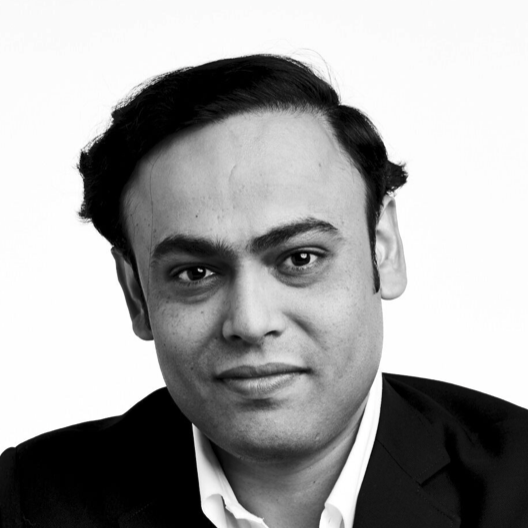
Henrik Sandberg is a Professor at the Division of Decision and Control Systems , KTH Royal Institute of Technology , Stockholm, Sweden. He holds the title of Deputy Head of Division and is affiliated with the School of Electrical Engineering and Computer Science . Education: MSc in Engineering Physics (1999) PhD in Automatic Control (2004) from Lund University Postdoctoral position at Caltech (pre-2007) Research Interests: Focus on cyber-physical systems security , power systems , model reduction , and fundamental limitations of control systems . Key sub-areas include attack detection , networked control , privacy-preserving estimation , and resilient control architectures . Publications: Over 150 papers across IEEE Transactions and Automatica , covering topics like stealthy attacks , distributed control , LQG optimization , and thermodynamic costs in filtering . Recent work includes LWE-based encrypted control and Bayesian deception mechanisms . Scientific Awards: Best Student Paper Award Finalist at IEEE CASE 2014; Best Student-Paper Award at IEEE CDC 2004. Grants & Projects: Leads the DYNACON project (WASP Cybersec cluster) and collaborates on CERCES (critical infrastructure resilience). Serves as examiner for multiple advanced courses in cybersecurity and control systems. Contact: Email: hsan@kth.se Phone: +46 (0)8 790 7294 Room: A:607, Malvinas Väg 10, Stockholm
Carina Mallard is Professor of Experimental Perinatal Brain Injury Research and Pro-Vice-Chancellor at the University of Gothenburg since July 2023, where she oversees research infrastructure and chairs the Research Board. She previously served as Deputy Vice-Chancellor (2021–2023) and Head of Core Facilities (2018–2021). Her academic career began with a Physiology degree from Lund University and a PhD in Pediatrics at the University of Auckland (1995), followed by a professorship appointment in 2006. Her research focuses on perinatal brain injury , particularly in premature infants , investigating neuroinflammatory mechanisms maternal dietary interventions neurovascular unit dynamics microglia activation long-term consequences of maternal obesity . Recent publications highlight her work on neonatal rodent models , transcriptomic profiling , and anti-inflammatory therapies . Key themes include RNA degradation , mitochondrial protection , and immune-neurovascular interactions . She has supervised 20 doctoral students since 2004 and collaborates internationally with institutions like King's College London. Contact details include two institutional emails and physical addresses across Gothenburg's biomedical campuses. Her leadership roles span research strategy, doctoral education, and EU-level scientific initiatives.
Dean B. Carson is a researcher at Umeå University , affiliated with the Faculty of Medicine, Department of Epidemiology and Global Health , and the Arctic Research Centre . His work focuses on rural health systems, social care workforce challenges, sustainable rural development, and community-based approaches to healthcare and food security. Rural Health : Explores capacity-building in rural health research and medical education reform. Public Health : Analyzes service delivery models and co-creation frameworks for elderly care. Geography : Investigates spatial dynamics in northern peripheries, including food production networks and micro-urbanization. Recent publications (2024-2025) examine topics such as rural health research capacity frameworks , hospital-to-home transfer systems , and non-commercial food distribution networks . His studies often integrate theoretical models like Rural Nursing Theory and Beyond Periphery while emphasizing stakeholder engagement and policy translation. Grants and Collaborations : Funded by the Swedish Research Council Formas, American National Science Foundation (NSF), and Riksbankens Jubileumsfond. Collaborates with Arctic-FROST networks and Lifestyle Migration Hub researchers.
Lars Nordström is a Professor at the Division of Electric Power and Energy Systems within KTH Royal Institute of Technology, Stockholm, Sweden. His work bridges control systems , communication networks , and power systems , with a focus on future architectures, functionality, and quality aspects of ICT for power grid operations. He has led initiatives such as the Swedish Centre of Electric Power Engineering and served as Thematic Leader for Smartgrids in KIC InnoEnergy. In 2014, he was a Visiting Professor at Washington State University. Education : Ph.D., MSc.EE Nordström's research explores the intersection of smart grids , machine learning , and cybersecurity for power systems. Key areas include: Wide-Area Monitoring and Control (WAMC) systems Decentralized control strategies for DC microgrids Impedance modeling using neural networks Data-driven methods for islanding detection ICT reliability and protocol design for grid operations His recent publications emphasize machine learning applications in power systems, including LSTM networks for EV charging management, graph attention networks for stability monitoring, and digital twin approaches for cyber-attack mitigation. These works span disciplines such as Smart Grids, Power Electronics, and Data Science. Scientific Recognitions : Senior Member, IEEE Senior Member, CIRED Senior Member, Cigre Past Chairman, Swedish IEC TC57 Mirror Committee Nordström actively teaches and examines graduate courses like Communication and Control in Electric Power Systems and Computer Applications and Machine Learning in Electric Power Systems . His work influences industry practices through collaborations on digital substations, energy market analysis, and resilience strategies.
Saurabh Amin is a Professor in the Department of Civil and Environmental Engineering at the Massachusetts Institute of Technology (MIT), where he also serves as the Edmund K. Turner Professor and Undergraduate Officer. He is a Principal Investigator at the Laboratory of Information and Decision Systems and holds affiliations with the Operations Research Center and the Center for Computational Science and Engineering. His educational background includes: B.Tech. 2002, Indian Institute of Technology (IIT) Roorkee M.S. 2004, University of Texas (UT) Austin Ph.D. 2011, University of California (UC) Berkeley Saurabh Amin's research focuses on the design and control of infrastructure systems using game theory and optimization in networks. His work spans three main areas: resilient network control, information systems and incentive design, and optimal resource allocation in large-scale infrastructure systems. By concentrating on critical infrastructure domains including highway transportation, electric power distribution, and urban water networks, his research develops innovative theory and tools to enhance system performance against both stochastic and adversarial disruptions. His approach involves modeling cyber-physical interactions in infrastructures to assess vulnerabilities, developing detection and response tools for failures at various scales, and designing economic incentive schemes that improve aggregate public good while accounting for dependencies and private information among strategic entities. Amin's work bridges mathematical systems theory with practical civil engineering applications, creating a rigorous theoretical foundation for infrastructure resilience that addresses diverse failure mechanisms from natural disasters to deliberate malicious actions. His recent publications demonstrate a strong focus on decarbonization of energy systems, resilient infrastructure planning under climate uncertainty, optimization methods for complex networked systems, and game-theoretic approaches to sustainable infrastructure management. His work increasingly integrates artificial intelligence and machine learning techniques with traditional control theory to address contemporary challenges in infrastructure resilience and sustainability. The research shows a clear trajectory toward addressing climate change impacts on infrastructure systems while maintaining economic efficiency and operational reliability. Professor Amin has received numerous prestigious awards and honors: Common Ground Excellence in Teaching Award, 2025 HSCC Test-of-Time Award, 2024 MIT CEE, Distinguished Service and Leadership Award, 2023 Samuel M. Seegal Prize (SoE) – inspiring students in pursuing and achieving excellence, 2022 Earll M. Murman for Excellence in Undergraduate Advising, 2022 C3.ai Digital Transformation Institute Research Award, 2020 MIT, Ole Madsen Mentoring Award, 2020 MIT, Energy Initiative Research Award, 2020 National Academy of Engineering, China-America Frontiers of Engineering Symposium speaker, 2019 MIT, Robert N. Noyce Career Development Professor, 2015-2018 Google Faculty Research Award, 2015 National Science Foundation CAREER Award, 2015 Siebel Energy Institute Research Award, 2015 MIT, Solomon Buchsbaum AT&T Research Fund Award, 2012 Professor Amin has been actively involved in significant research projects including the C3.ai DTI project on Causal Reasoning for Real-Time Attack Identification in Cyber-Physical Systems and another on Learning in Routing Games for Sustainable Electromobility. He serves as the chief scientist on multi-institutional NSF grants, including the $9 million Foundations of Resilient Cyber-Physical Systems (CPS) project. His teaching portfolio includes courses such as 1.008 Engineering for a Sustainable World, 1.104 Sensing and Intelligent Systems, 1.020 Engineering Sustainability: Analysis and Design, and 1.208 Resilient Networks. As Undergraduate Officer, he plays a key role in shaping the educational experience for civil and environmental engineering students at MIT. Professor Amin leads the Resilient Infrastructure Networks Lab at MIT, where his team develops theoretical foundations and practical tools for infrastructure resilience. The lab focuses on the intersection of control theory, game theory, and optimization applied to cyber-physical infrastructure systems. Current research directions include pandemic-resilient urban mobility and hurricane-resilient smart grid operations, reflecting the lab's commitment to addressing pressing societal challenges through rigorous systems engineering approaches.
Professor Göran Broström works at the Department of Marine Sciences at the University of Gothenburg . His research focuses on physical oceanography, marine turbulence, tidal energy systems, and biophysical processes in marine ecosystems. Current research themes include methane emissions from ocean infrastructure, turbulence in tidal flows, and wave-current interactions He utilizes advanced numerical modeling (e.g., Large Eddy Simulation, Bayesian inversion) and field observations Recent publications emphasize climate impacts (methane plumes), tidal energy innovations, and marine ecological connectivity His work appears in high-impact journals like Nature , Molecular Ecology , and Frontiers in Marine Science . Collaborative projects span oceanographic modeling, environmental monitoring, and marine renewable energy. No specific student advising information appears in the provided text.
Sven Werner is a Senior Professor at Halmstad University's Academy of Entrepreneurship, Innovation and Sustainability. His expertise lies in district heating and cooling systems, with a focus on decarbonization, energy efficiency, and fourth/fifth generation technologies. He has authored foundational textbooks, such as Energiförsörjning: En introduktion till vårt energisystem , and contributed to international platforms like DHC+ and the IEA's Low-Temperature District Heating Annex. His research includes pioneering the concept of 'Fourth Generation District Heating' and analyzing global heating/cooling demands. Key achievements include over 50 short courses for industry professionals and presentations across 20 countries. Current projects include a book on the world history of district heating. Research Highlights: Low-temperature systems, renewable integration, and thermal storage. Impact: Most-cited article on district heating (Annex X Final Report, 2014), cited every six hours in 2021. International Contributions: Co-developed the Pan-European Thermal Atlas (PETA) and advised the EU Energy Council on energy efficiency. Werner's work bridges academia and industry, emphasizing practical solutions for sustainable energy systems. His publications span journals, conference papers, and policy guides, addressing topics like heat distribution costs, industrial heat recovery, and smart grid technologies.
Olof Sundin is Professor of Information Studies at Lund University's Department of Arts and Cultural Sciences, where he serves as Manager of Research and Research Education at the Division of ALM, Digital Cultures and Publishing Studies. He coordinates the research node Dīcit: Disinformation, Conspiracy Theories, and Infrastructures of Information. His research examines sociomaterial configurations and control mechanisms of digital information, focusing on: Disinformation dynamics and generative AI's impact on expertise/trust Search engine functionality in everyday contexts Media/information literacy as infrastructural meaning-making Evolution of information-seeking behaviors in AI-driven environments Recent publications demonstrate strong focus on AI's transformative impact on information literacy practices, source evaluation frameworks, and emerging digital market behaviors. His work consistently intersects technology, society, and epistemological concerns. Awards include: Best paper award (2025) Källkritikpriset: The golden magnifying glass 2023 (National award from Swedish Internet Foundation) Sundin leads multiple research initiatives: RE-SEARCH project (Swedish Research Council): Analyzing youth information-seeking in AI-infused educational environments 'Who is the Expert?' project (Crafoord Foundation): Investigating generative AI's impact on expertise and evidence Lund lead for 'The Digital Welfare State' project Member of Nordic Disinformation Resilience Network He coordinates the Dīcit research node and leads doctoral education in Information Studies, teaching courses on digital libraries and information institutions.
Jonas Eliasson is a Visiting Professor at Linköping University's Department of Science and Technology (ITN), focusing on Communications and Transport Systems. He concurrently serves as Director of Transport Access at the Swedish National Transport Administration and chairs the Planning & Construction committee of the Royal Academy of Engineering Sciences. Previously, he was Director of the Stockholm City Transportation Administration (2016–2019) and a professor at the Royal Institute of Technology (KTH) from 2007 to 2016. His research emphasizes transport policy design and evaluation, including cost-benefit analysis, transport pricing, railway capacity allocation, and public acceptability of policies. He advises governments on sustainable transport planning, congestion pricing, and socio-economic appraisals. His work bridges theoretical frameworks and practical implementation, with a focus on accessibility, equity, and climate targets. Key research themes include infrastructure cost overruns, traffic demand reduction strategies, and the integration of passenger and freight transport systems. Recent publications analyze policy impacts, forecasting methods, and carbon-neutral transportation systems. His interdisciplinary approach addresses both technical and socio-political dimensions of transport challenges. Eliasson collaborates with research groups like Railway and Public Transport and contributes to initiatives like the 'Next Generation Smart Transportation Systems' project. Despite extensive professional roles, no formal student advisees are listed. His work is disseminated through journals like Transportation Research Part A and policy reports for national and regional governments.
Patrik Hilber is a Professor at KTH Royal Institute of Technology, working in the Division of Electromagnetic Engineering and Fusion Science within the School of Electrical Engineering and Computer Science (EECS). He serves as Deputy Director of First and Second Cycle Education at EECS and heads the QED AM research group. He is also a board member of YH-electrical engineering. Research Interests: His research focuses on reliability engineering, asset management, maintenance optimization, and smart grid technologies in electric power systems. Key areas include transmission and distribution systems, dynamic line and transformer rating, wind power integration, multiobjective optimization, condition monitoring, and data quality in power systems. He applies advanced modeling and data-driven approaches to improve power system planning, operation, and resilience. The recent trends in his publications (2020–2025) highlight a strong emphasis on dynamic rating technologies (DLR and DTR), data quality and machine learning applications in outage analysis, reliability-centered planning for wind farms and distribution systems, and the integration of renewable energy and electric vehicles. His work bridges theoretical modeling with practical utility applications. Teaching and Academic Leadership: He is examiner and course responsible for several degree projects in electrical engineering, power systems, and energy innovation. He also teaches courses on reliability evaluation, asset management, and innovation in electric power engineering. Publications and Books: He has authored a book titled Reliability Analysis and Asset Management Applied to Power Distribution (2014) and a book chapter on cable segment replacement optimization. His scholarly output includes numerous peer-reviewed articles in leading journals such as IEEE Transactions on Power Systems , Reliability Engineering & System Safety , and Applied Energy . Education: He holds a Ph.D. (2008), a Licentiate degree (2005), and an M.Sc. (2000), all from KTH. He became a Docent (Associate Professor) in 2014.
Ulla Mörtberg is a Professor and Docent at KTH Royal Institute of Technology's Digital Futures Faculty, specializing in Sustainable Development, Environmental Science and Engineering. She holds academic roles in the Department of Sustainable Development, Environmental Science and Engineering and is actively involved in interdisciplinary projects such as the EO-AI4GlobalChange initiative and the Embedding AI in geospatial policy tools for clean cooking adoption. Her work bridges geospatial technologies, environmental policy, and sustainable urban planning. Key research focuses include renewable energy planning (wind farms, bioenergy), urban ecosystem services, biodiversity conservation, and geodesign applications. She leads projects addressing climate solutions in Stockholm, such as integrating nature-based solutions into urban compaction strategies and evaluating green infrastructure impacts on urban heat. Her methods emphasize GIS-based decision support systems and multi-criteria analysis for balancing environmental, social, and economic objectives. Recent publications highlight advancements in ecosystem services assessment frameworks, wind energy sustainability, and urban biodiversity dynamics. Notable contributions include spatial optimization models for forest management and policy assessments of Brazil's Forest Code. Her work often involves global case studies but emphasizes regional applications in Sweden and the Stockholm region. Mörtberg collaborates extensively with municipal planners and policymakers, contributing to sustainable development goals through actionable research. Her projects often involve international partnerships and address global challenges such as deforestation in the Amazon and energy transition pathways in Europe.
Gurjot Singh is a Research Fellow at the Department of Computer and Information Science (IDA) at Linköping University, Sweden. His research focuses on cybersecurity in aviation systems, next-generation communication networks, and industrial IoT security. He collaborates with prominent researchers like Andrei Gurtov and Suleman Khan, contributing to projects such as SEC-AIRSPACE and Post Quantum Secure Handover Mechanisms. His work spans vulnerability assessments, secure protocol design, and post-quantum cryptography applications. Education details are not explicitly stated, but his research aligns with advanced cybersecurity and network engineering domains. Key research interests include aviation cyber risk assessment, secure data link communications, and privacy-preserving authentication mechanisms for IoT and industrial environments. Publications emphasize cybersecurity challenges in aviation, industrial networks, and IoT, with recent work addressing quantum-resistant protocols and drone remote identification security. Collaborations include contributions to conferences like NordSec and AIAA DATC. He is affiliated with the cybersecurity lab at LiU, supporting educational programs like Digital4Business, which integrates AI and cybersecurity expertise. His role in the Database and Information Techniques (ADIT) division highlights involvement in interdisciplinary research groups.
Susann Baez Ullberg is an Associate Professor and Senior Lecturer in Cultural Anthropology at Uppsala University's Department of Cultural Anthropology and Ethnology. She holds a PhD in Social Anthropology from Stockholm University and is an affiliated researcher at the CNDS Centre of Natural Hazards and Disaster Science. Her work focuses on environmental and disaster anthropology, with a regional emphasis on Latin America, particularly Argentina and Peru. She currently leads the C-URGE project, a Marie Skłodowska-Curie Actions-funded initiative training climate anthropologists across Europe. Her research explores disaster memoryscapes, crisis temporality, and groundwater politics, combining ethnographic fieldwork with interdisciplinary collaborations. Notable projects include studying water infrastructure in Peru's Majes Siguas Project and analyzing recovery processes after wildfires in Sweden. She coordinates Uppsala University's Water Initiative and directs the undergraduate program in Cultural Anthropology. Awarded for her 2013 thesis on Santa Fe's flood management, she supervises three PhD students and contributes to policy-relevant research on climate resilience. Her publications span environmental governance, megaprojects, and the socio-political dimensions of disasters.
Emma Tegling is a Senior Lecturer (Associate Professor) at the Department of Automatic Control, Faculty of Engineering (LTH), Lund University, Sweden. She joined the department in January 2021 and holds a prestigious WASP (Wallenberg AI, Autonomous Systems and Software Program) professorship. Her research focuses on the analysis and control of large-scale networked systems, with applications in distributed electric power networks and socio-epidemiological networks. She is actively involved in multiple research projects, supervises several PhD students, and contributes to major academic events in control theory. Education: Ph.D. in Electrical Engineering, KTH Royal Institute of Technology (2019) M.Sc. in Engineering Physics, KTH Royal Institute of Technology (2013) B.Sc. in Engineering Physics, KTH Royal Institute of Technology (2011) Emma Tegling's research centers on the fundamental limitations of distributed control, particularly in large-scale and non-normal network systems. Her work addresses critical challenges in vehicular formations, power grids, and social networks. She develops scalable control designs, consensus protocols, and optimal control strategies for complex networked environments. Her recent publications highlight breakthroughs in string stability, transient performance, and distributed optimization. The trend in her articles shows a strong focus on mathematical control theory, network dynamics, and real-world applications in socio-technical systems. Scientific Awards: WASP professorship (Wallenberg AI, Autonomous Systems and Software Program) Emma Tegling leads and co-leads several significant research grants, including WASP NEST: Learning in Networks and Dynamics of Complex Socio-Technological Network Systems. She actively supervises PhD students such as Jonas Hansson and David Ohlin, whose work has led to novel consensus protocols and optimal control formulations. Her academic leadership extends to organizing the European Control Conference and co-organizing interdisciplinary workshops on power and democracy in modern societies. She is also involved in public engagement and academic service through supervision and project coordination. Emma Tegling is a key member of the Department of Automatic Control at Lund University, contributing to research teams focused on networked systems, control theory, and AI integration. She collaborates extensively within ELLIIT (the Linköping-Lund initiative on IT and mobile communication) and participates in cross-disciplinary labs working on AI, digitalization, and natural/artificial cognition. Her work is aligned with UN Sustainable Development Goals related to sustainable energy and resilient infrastructure.
Angela Sasic Kalagasidis is a Professor and Department Head at Chalmers University of Technology , leading the Building Physics research group. She serves as a board member of the Moisture Center at Lund University of Technology , contributing to interdisciplinary research in building science. Building Physics Heat and Mass Transfer Energy Efficiency Moisture Safety Indoor VOC Emissions Climate Change Adaptation Her recent publications focus on aerogel-based materials for insulation, urban heat island mitigation , and thermal energy storage systems . Key methodologies include CFD simulations , field testing , and life cycle assessment frameworks . Research trends show emphasis on: Advanced computational tools for hygrothermal analysis Integration of phase change materials in building systems Climate resilience in building envelopes Optimization of ventilation and moisture control