David Hugill is an Associate Professor in the Department of Geography and Environmental Studies at Carleton University , where he has worked since 2018. His research focuses on urban geography, colonial urbanisms, and inner-city inequity . PhD from York University (2009-2015) Visiting scholar at University of Minnesota (2011-2012) Postdoctoral work at Simon Fraser University (2015-2017) Current research explores racial capitalism and settler colonial structures in North American cities, particularly through qualitative projects with graduate students. Recent publications analyze Minneapolis' postwar urban development and settler colonial violence in Prairie West cities. He collaborates with scholars like Heather Dorries and Julie Tomiak, focusing on critical urban theory , racial inequity , and Indigenous resurgence . Contact details include office B349 Loeb Building, Carleton University.
Titti Mattsson is a Professor of Public Law at the Faculty of Law, Lund University, specializing in Health Law, Social Welfare Law (including child law and elder law), and Human Rights Law. She served as Pro Dean of Research at the same faculty from 2021 to 2023. Editor of the European Journal of Health Law Board member of the Swedish Institute of Human Rights, Swedish National Agency for Health and Care Analysis, and Swedish National Council on Medical Ethics Vice Chair of the Region Skåne Ethical Board Coordinator of the Health Law Research Centre and the Law and Vulnerabilities Group at Lund University Her research focuses on the governance of welfare state issues from national and transnational perspectives, emphasizing outcomes for vulnerable groups and the individual through a human rights lens. Key areas include legal, social, and ethical issues in health and community care for children, disabled persons, and older adults. She leads interdisciplinary projects such as Children's Rights and Evidence-based Care (2020-2023) and Child Care Investigation in Private Government (2018-2022), funded by organizations like Forte and the Kamprad family research foundation. Her work contributes to UN Sustainable Development Goals, particularly in Social Sciences and Law. Mattsson teaches public law, health law, and elder law at advanced levels, supervises six doctoral projects, and engages in outreach through expert assignments and collaborations with international institutions like Emory University and Haifa University.
Venkatesh Merwade is a Professor in the Lyles School of Civil Engineering at Purdue University , where he has been since 2007. His research focuses on GIS applications in water resources engineering , surface water hydrology , river hydraulics , and cyberinfrastructure for hydrology , with regional interests in water management in developing countries . PhD in Civil Engineering (University of Texas at Austin, 2004) MSc in Engineering Hydrology (National University of Ireland, Galway, 2000) B.Engg. in Environmental Engineering (Shivaji University, India, 1997) His work includes floodplain mapping , hydrological modeling , and cyber-enabled hydrology education via tools like RWater and SWATShare . He has received awards such as the 2022 Purdue Individual Graduate Student Mentorship Award and 2018 Seed for Success for securing major research grants. Merwade collaborates with students and colleagues on flood prediction , soil moisture assimilation , and hydro-climatic impact analysis . His projects emphasize data-driven modeling , uncertainty quantification , and GIS integration for watershed management. He is affiliated with the Burke Hydraulics and Hydrology Lab and Purdue's Center for the Environment .
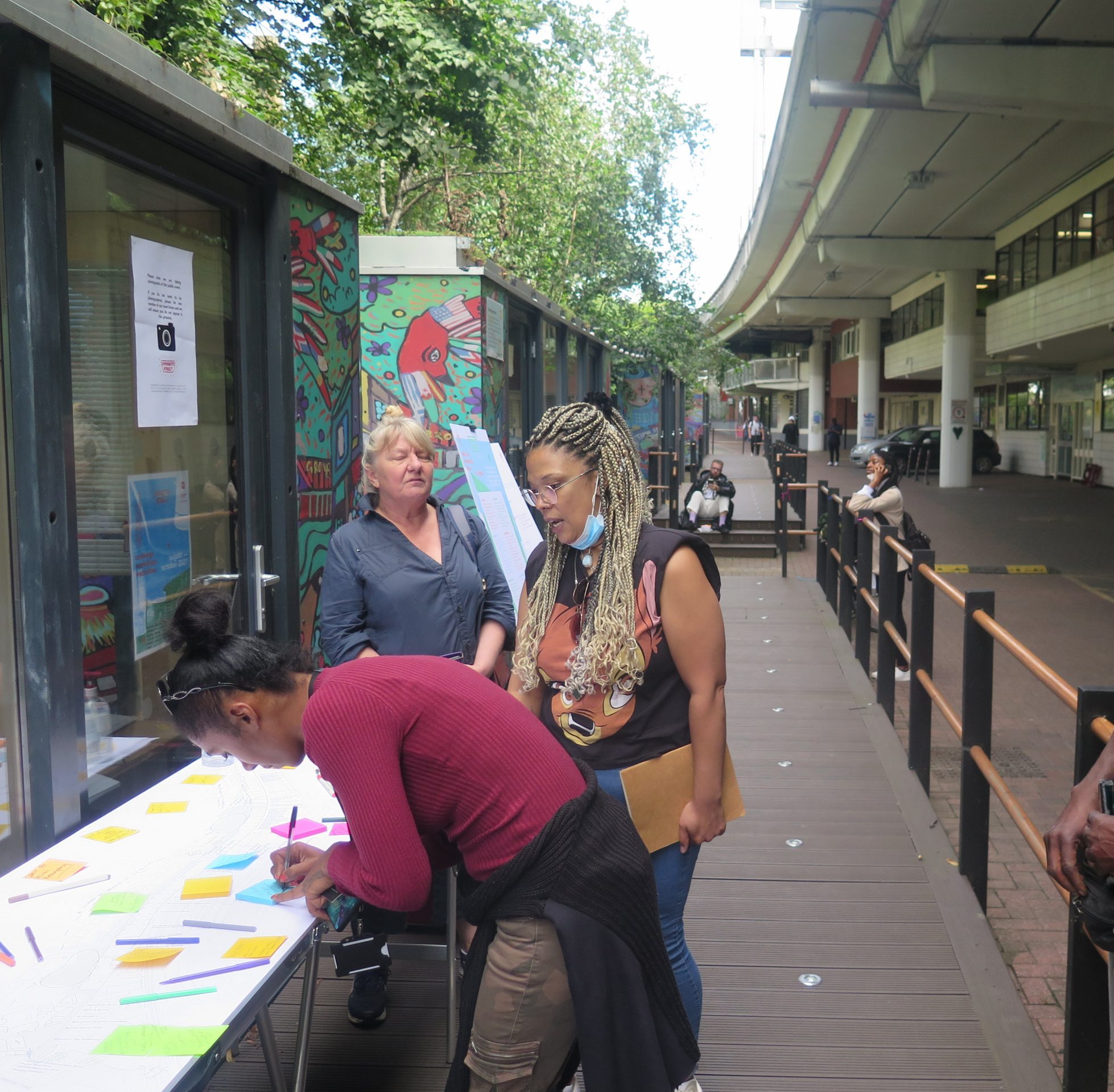
Pablo Sendra is an Associate Professor in Planning and Urban Design at The Bartlett School of Planning, University College London. He serves as Director of the MSc Urban Design and City Planning Programme and Coordinator of the Civic Design CPD and Cultural Infrastructure short course. Sendra combines his academic work with professional practice through his urban design firm LUGADERO LTD, which specializes in community co-design processes, and is co-founder of the CivicWise network. Architect Engineer, Universidad de Sevilla (2007) MArch Urban Design, University College London (2009) MSc in Sustainable City and Architecture, Universidad de Sevilla (2011) PhD in Architecture, Universidad de Sevilla (2014) Sendra's research focuses on social housing, community activism, co-design methodologies, social infrastructure, and public spaces, particularly examining how regeneration processes impact communities. His work emphasizes participatory action research conducted directly with communities, exploring how to design urban environments that encourage unplanned activities, social interaction, and collective governance. He advocates for disorder as a productive force in urban planning, challenging conventional top-down approaches to city design. His publications reveal a consistent focus on community-led alternatives to conventional urban regeneration, with particular attention to social housing estates. The research demonstrates a methodological commitment to co-production with communities, resulting in practical tools and frameworks that empower residents to develop their own regeneration proposals. His work bridges academic theory with practical application through community engagement. Fellow of the Higher Education Academy (2017) Designing Disorder included in The Observer's (The Guardian) Best Books of 2020 Sendra has secured significant research funding including a British Academy/Leverhulme Small Grant as Principal Investigator for the project 'Community-led social housing regeneration: between the formal and the informal,' and two Higher Education Innovation Fund grants for co-producing community-led proposals for social housing regeneration. His work with community groups such as Just Space and Granville Community Kitchen demonstrates a commitment to practical application of academic research. He has also served as a referee for numerous prestigious journals including International Journal of Urban and Regional Research, City, and Journal of Urban Design. Through LUGADERO LTD and the UCL Civic Exchange team, Sendra facilitates co-design processes for community street projects, public space transformations, and social infrastructure development. His work with the Westway Trust's Community Street project and Play Wimbledon demonstrates practical application of his research on collaborative urbanism. The CivicWise network serves as a platform for citizen-led initiatives in urban development.
Victor Vianu is a Professor in the Department of Computer Science and Engineering at the University of California, San Diego, within the Jacobs School of Engineering. His work focuses on the intersection of database theory and verification techniques, particularly in the context of data-driven business processes and workflows. Research Interests Professor Vianu's primary research interests span database theory, verification of database-driven systems, and computational logic. His current work focuses on automatic verification of interactive data-driven web services and business processes, exploring how to provide customized workflow views for different stakeholders in organizational settings. His research addresses significant technical challenges at the intersection of data management and process modeling, requiring novel approaches that go beyond traditional relational algebra to handle both data and process aspects simultaneously. His work on data-driven business processes investigates how to specify, analyze, and synthesize views of workflows that expose only information relevant to specific user roles. This research has important applications in e-commerce, digital government, healthcare, and scientific infrastructure, where different stakeholders require varying levels of workflow abstraction and detail. Research Contributions and Trends Professor Vianu's recent publications demonstrate a consistent focus on the integration of data management and workflow processes. His work has evolved from foundational database theory to increasingly practical applications in business process management. A key trend in his research is the development of formal frameworks for workflow views that maintain consistency while providing appropriate abstractions for different user roles. His publications reveal a progression from theoretical foundations to more applied aspects of workflow verification and integration, often in collaboration with researchers from INRIA and other institutions. Advising and Research Support Professor Vianu leads the UCSD Database Laboratory, which conducts research on database systems and theory. He currently advises graduate student Marysia Tran and has likely mentored numerous other students throughout his career. His research is supported by the National Science Foundation under grant "Views of Data-Driven Business Processes: Foundations and Applications" (NSF Project III 1815247). This project brings together techniques from logic, automata theory, complexity theory, algorithms, and automatic verification to address challenges in workflow management. Research Environment Professor Vianu is an active member of the UCSD Database Laboratory, which maintains a regular research seminar series. He has collaborated extensively with researchers including Alin Deutsch (UC San Diego), Serge Abiteboul (INRIA and ENS-Paris), Pierre Bourhis (Univ. of Lille and CNRS), and Adrien Koutsos (ENS Cachan). His foundational work includes co-authoring the influential textbook "Foundations of Databases" with S. Abiteboul and R. Hull, which remains a standard reference in database theory.
Dr. Tommaso Gabrieli is an Associate Professor in Real Estate at the Bartlett School of Planning, University College London (UCL), where he has been employed since September 2015. His academic career spans multiple institutions including the University of Reading, City University London, University of Warwick, and the Catholic University of Milan. His educational background includes: PhD in Economics from the University of Warwick (2009) MSc in Economics from the London School of Economics and Political Science (2003) Fellowship of the Higher Education Academy from the University of Reading (2013) As a theoretical economist trained in the ambrosian tradition of social welfare, Gabrieli's research focuses on the economic analysis of urban policy issues. His expertise encompasses economic modeling of real estate markets, financial viability of urban projects, multi-dimensional value measurements, and value-capture mechanisms. He has developed novel interdisciplinary methods bridging urban planning and design with economics, making him one of few economists actively collaborating with urban planning scholars in the UK. His work addresses Sustainable Development Goals including No Poverty, Good Health, Decent Work, Reduced Inequalities, Sustainable Cities, and Climate Action. His recent publications demonstrate a strong focus on urban design governance, value capture mechanisms, and the interface between economic theory and urban planning practice. The research spans theoretical explorations of post-growth planning and practical applications in land value recovery, particularly examining implications for housing affordability, wealth distribution, and community wellbeing in both urban and rural contexts. His work often integrates behavioral economics with spatial planning considerations. Professional recognition includes: Fellow of the Higher Education Academy Gabrieli has extensive experience supervising PhD and MSc dissertations across multiple institutions. His teaching portfolio includes Real Estate Appraisal and Valuation at UCL, where he leads relevant modules for both undergraduate and graduate programs. He has contributed to significant research projects including 'Street Appeal' commissioned by Transport for London and the Horizon 2020-funded 'UrbanMaestro' project worth 1 million Euros. His research impact has been formally recognized by Transport for London. Currently, he leads the 'Future Urban Growth Lab' project, funded by UCL Knowledge Exchange and Innovation Funding, in partnership with the Royal Town Planning Institute and Politecnico of Turin. This project aims to operationalize an urban growth model prototype for use by local authorities in planning future city development, bridging academic research with practical planning applications.
Vinod M. Vokkarane is a Professor in the Department of Electrical and Computer Engineering at the University of Massachusetts Lowell, where he serves as Director of the Center for Smart Cyber-Physical Systems (SCyPS) and Director of Advanced Computer Network Labs. Previously, he was an Associate Professor at University of Massachusetts Dartmouth from 2004 to 2013 and a Visiting Scientist at MIT's Research Laboratory of Electronics from 2011 to 2014. His extensive research portfolio spans multiple domains of advanced networking and cyber-physical systems. Dr. Vokkarane earned his educational foundation with a B.S. from University of Mysore, India (1999), followed by an M.S. (2001) and Ph.D. (2004) in Computer Science from the University of Texas at Dallas. His dissertation focused on optical burst-switched networks, establishing the foundation for his future research trajectory. His research interests center on Cyber-Physical Systems, Network Optimization, Reliability, Smart Grids, and Cyber-Security, with particular expertise in the design, analysis, and modeling of architectures, protocols, and algorithms for ultra-high speed networks including Optical networks, Grid/Cloud networks, and Big-data networks. His work bridges theoretical foundations with practical implementations, often addressing critical challenges in network reliability, security, and efficiency. His research has received significant recognition through numerous best paper awards and substantial external funding. Analysis of his recent publications reveals a clear evolution toward increasingly sophisticated integration of cyber-physical systems with power infrastructure, particularly in the areas of grid resilience and observability. His work has expanded from fundamental optical networking research to address critical infrastructure challenges, with a growing emphasis on machine learning applications for network optimization and power system monitoring. The recent focus on PMU networks, disaster resilience, and cyber restoration demonstrates his strategic pivot toward addressing national security and critical infrastructure protection challenges. UMass Dartmouth Scholar of the Year Award (2011) UMass Dartmouth Chancellor's Innovation in Teaching Award (2010-11) University of Texas at Dallas Computer Science Dissertation of the Year Award (2003-04) Multiple Best Paper Awards including IEEE GLOBECOM 2005, IEEE ANTS 2010, ONDM 2015, ONDM 2016, and IEEE ANTS 2016 Texas Telecommunications Engineering Consortium Fellowship (2002-03) Dr. Vokkarane has successfully mentored numerous graduate students who have contributed significantly to his research projects, with several going on to successful careers in academia and industry. His research has been consistently supported by major funding agencies including NSF, DOE, and USMC, with recent projects totaling over $5 million in funding. Current projects include Unified Post-Disaster Restoration Planning for Cyber-Physical Power Distribution Systems (ONR, $550K), CyberCARE: Northeast University Cybersecurity Center (DOE, $3.5M), and Flexible Spectrum Allocation in Next-Generation Optical Networks (NSF, $350K). He leads the Center for Smart Cyber-Physical Systems (SCyPS) and Advanced Computer Network Labs at UMass Lowell, where his research teams work on cutting-edge problems in network architecture, cyber-physical security, and infrastructure resilience. His labs collaborate extensively with national laboratories and industry partners to translate theoretical advances into practical solutions for real-world infrastructure challenges.
Adeel Tariq is a Post-Doctoral Researcher at the Industrial Engineering and Management department of LUT School of Engineering Sciences , Lappeenranta University of Technology, Finland. He completed his Ph.D. (2019) and MBA (2014) at the School of Management , Asian Institute of Technology, Thailand. Research Focus: Technology and innovation management, digital transformation, sustainable development, knowledge management, and leadership studies. Peer Review: Active reviewer for journals including Leadership & Organization Development Journal , Journal of Intellectual Capital , and European Journal of Innovation Management . Collaborations: Regular co-author with Waqas Tariq, Muhammad Saleem Sumbal, and Marko Torkkeli on topics like digital governance, fintech, and SME sustainability.
James Alexandre Goulet is a Professor in the Department of Civil, Geological and Mining Engineering at Polytechnique Montréal. His research focuses on Machine Learning Methods for Civil Engineering applications such as structural health monitoring (SHM) and infrastructure maintenance planning. He leads the Canari project for online change point detection in SHM and contributes to open-source libraries like cuTAGI for Bayesian neural networks. Affiliations : Chair in Machine Learning for Infrastructure Monitoring at Polytechnique Montréal, IVADO Institute member, and GRS (Structural Engineering Research Group) member Expertise : Building engineering, structural safety, applied probability, learning theories Recent research trends include Bayesian state-space models, LSTM neural network integration for infrastructure forecasting, and uncertainty quantification in SHM systems. His work emphasizes probabilistic methods and analytical inference over black-box approaches. Teaching includes courses on structural reliability and probabilistic data analysis for civil engineers. He supervises graduate students in topics ranging from damage detection algorithms to stochastic deterioration modeling of infrastructures.
Jodi Schneider is an Associate Professor at the University of Illinois Urbana-Champaign , with affiliate appointments at the Beckman Institute , Health Care Engineering Systems Center , European Union Center , and Center for Health Informatics . She directs the Information Quality Lab and focuses on the science of science through argumentation and evidence analysis. PhD in Informatics (National University of Ireland, Galway) M.S. in Library and Information Science (UIUC) M.A. in Mathematics (UT-Austin) B.A. in Liberal Arts (St. John's College) Her research examines how scientific controversies persist through citation patterns, the role of knowledge brokers in public policy, and information quality in biomedical contexts. She has developed semantic frameworks for micropublications and knowledge maintenance in digital libraries. Recent publications include citation integrity studies in Scientometrics , retraction indexing in STI Conference , and argumentation mining in Human Language Technologies . Collaborative projects span institutions like Harvard Radcliffe Institute and RWTH Aachen . NSF CAREER Award IMLS Early Career Award Senior Member, Association of Computing Machinery Marie Curie Fellow She advises graduate students in information quality and knowledge representation , with funding from the Alfred P. Sloan Foundation , NIH , and European Commission . Her lab develops tools to combat scientific misinformation and improve public health informatics .
Kep Kee Loh is a Senior Tutor in the Department of Psychology at the National University of Singapore (NUS). Currently, he also holds an NUS Overseas Postdoctoral Fellowship position at both the Montreal Neurological Institute (McGill University) and the University of Oxford. His research focuses on comparative primate neuroanatomy, examining what makes the human brain special compared to other primates through multimodal MRI techniques. Ph.D. in Neuroscience from Université Claude Bernard Lyon I (2014-2018) M.Sc. in Cognitive Neuroscience from University College London (2011-2012) B.Soc.Sci. (Hons.) in Psychology from National University of Singapore (2007-2011) Dr. Loh's research primarily investigates the anatomical organization of brains across humans and various primate species including chimpanzees, baboons, and macaques. He employs different magnetic resonance imaging techniques (anatomical, resting-state, diffusion-weighted MRI) to compare brain organization across species, with particular focus on the medial frontal cortex, sulcal anatomy, and the evolution of speech and language in the human brain. His work adopts a multimodal approach to provide an integrative view of what sets human brains apart from other primates. His recent publications demonstrate a strong focus on comparative neuroanatomy across species, with particular emphasis on primate brain evolution, frontal cortex organization, and language-related neural pathways. The research spans multiple disciplines including neuroscience, cognitive science, and evolutionary biology, with increasing attention to methodological advancements in neuroimaging techniques for cross-species comparisons. NUS Overseas Postdoctoral Fellowship (2021) Institute of Language, Communications and the Brain (ILCB) Postdoctoral Fellowship (2019) Fondation Recherche Médicale (FRM) Fin de Thèse (PhD funding) (2017) BRAIN Student Travel Award, 6th Motivation and Cognitive Control Symposium (2016) Dr. Loh has been involved in numerous collaborative research projects across international institutions, including the French Institute of Health and Medical Research (Stem Cell and Brain Research Institute), Aix-Marseille Université, and currently McGill University and the University of Oxford. His work has received significant recognition with over 1,000 citations for his 33 publications. While specific grant information isn't detailed in the provided text, his postdoctoral fellowships indicate successful competitive funding. Dr. Loh collaborates with several research groups including the Montreal Neurological Institute at McGill University and research teams at the University of Oxford. His work connects with broader initiatives like the collaborative resource platform for non-human primate neuroimaging, indicating participation in larger research networks focused on advancing primate neuroscience through shared resources and methodologies.
Joseph Holden holds the Chair of Physical Geography at the School of Geography, University of Leeds , and serves as Director of water@leeds and the Yorkshire Integrated Catchment Solutions Programme (iCASP) . His expertise spans peatlands , hydrology , soil dynamics , and carbon cycling under environmental change. Education: MA Geography (Cambridge), PhD Peatland Hydrology (Durham) Key Roles: Pro-Dean for Research (2013-2019), NERC Freshwater Quality Programme Champion (2022-2027) Research focuses on peatland hydrology , agricultural impacts on water quality , and hazard cascades like flooding and pollution. He leads major projects including: EU-funded WaterLANDS (wetland restoration, 2021-2026) West Yorkshire Flood Innovation Programme (£300k+ UKSPF, 2022-2025) Environmentally Sensitive Hydropower (Nature Water, 2022) Scientific awards include: 2007 Philip Leverhulme Prize (outstanding research contribution) 2011 Gordon Warwick Medal (British Society for Geomorphology) Fellowships: Royal Geographical Society, Royal Meteorological Society He supervises 13 PhD students globally and leads £30M+ in active grants, including the £6M iCASP and £8.4M NERC Freshwater Quality Programme. His work combines field research, modeling, and policy engagement across Southeast Asia, Europe, and Africa.
Maria Monica Wihardja serves as a Visiting Fellow and Co-coordinator of the Media, Technology and Society Programme at ISEAS–Yusof Ishak Institute while holding an Adjunct Assistant Professor position at the National University of Singapore. Her career bridges academic research and high-impact policy engagement, including former roles as World Bank Economist in the Poverty and Equity Global Practice and senior advisor to Indonesia's Presidential Executive Office on strategic economic reforms. Her educational background features: PhD in Regional Science, Cornell University MPhil in Economics, Cambridge University BA in Applied Mathematics-Economics, Brown University Wihardja's research integrates economic analysis with sociotechnical systems, focusing on digital transformation's impact on labor markets, food security, and democratic processes. She examines how technological disruption creates both opportunities for inclusion and risks of inequality, particularly through studies of platform economies, electoral disinformation, and sustainable agro-food systems. Her methodology combines quantitative econometrics with policy-oriented field research, often leveraging large-scale datasets from government and private sector partnerships. Analysis of her recent publications reveals three dominant research trajectories: (1) Digital economy effects on labor market polarization and inclusion, (2) Food system resilience through agricultural modernization, and (3) Geopolitical dimensions of supply chain reconfiguration. These intersect with her policy engagement in ASEAN economic integration frameworks and Indonesia's G20 presidency initiatives. Her scientific recognition includes: Nikkei Asian Scholar 2023 award Wihardja actively shapes regional discourse through editorial roles at East Asia Forum and Center for Indonesian Policy Studies. Her grant-funded work frequently involves World Bank partnerships and Indonesian government collaborations, particularly on stunting prevention and food policy reforms. Current projects examine deepfake impacts on electoral integrity and sustainable financing mechanisms for green transitions. She leads the Media, Technology and Society Programme at ISEAS, coordinating interdisciplinary research on digital governance and Southeast Asian technology policy. The programme partners with regional think tanks, government agencies, and private sector stakeholders to develop evidence-based policy responses to technological disruption.
Andrea Armstrong is the Dr. Norman C. Francis Distinguished Professor of Law at Loyola University New Orleans College of Law and a 2023 MacArthur Fellow. She joined the faculty in 2010 and is a leading expert on prison and jail conditions, certified by the U.S. Department of Justice as a Prison Rape Elimination Act auditor. J.D., Yale Law School, 2007 M.P.A., Princeton University School of Public and International Affairs, 2001 B.A., New York University, 1996 Her scholarship focuses on the constitutional dimensions of prisons and jails, particularly prison labor practices, the intersection of race and incarceration, public oversight of detention facilities, and healthcare disparities. She integrates law with history, public policy, and the arts to highlight the human costs of incarceration, advocating for systemic reforms through environmental justice and anti-discrimination frameworks. Andrea’s research includes 15 recent articles, spanning public health in prisons, constitutional challenges to labor practices, and environmental justice analyses of death row conditions. Her work emphasizes transparency, government accountability, and the systemic failures in carceral healthcare. Scientific Awards: 2023 MacArthur Fellow 2019 Interdisciplinary Research Leader, Robert Wood Johnson Foundation Armstrong has testified before Congress on prison labor and deaths in custody, served on Louisiana legislative committees, and collaborated with museums and foundations to make incarceration law accessible. She founded IncarcerationTransparency.org and leads grant-funded projects requiring IRB approval.
Holger Schüttrumpf serves as a Professor at RWTH Aachen University, leading the Chair and Institute of Hydraulic Engineering and Water Management. His institutional presence is evidenced by active contact details and departmental affiliation within the university's engineering framework. His research spans critical domains in water systems engineering, with primary focus areas including: Hydraulic Engineering (core infrastructure design and analysis) Water Management (resource allocation and sustainability) Fluid Dynamics (theoretical and applied flow mechanics) Environmental Hydraulics (ecosystem interactions) River Engineering (flood control and channel morphology) Coastal Engineering (shoreline protection and marine structures) No scientific awards or honors are documented in the provided institutional materials. Similarly, details regarding graduate student supervision, research grants, or collaborative projects remain unspecified in the available public profiles. The institute operates under his leadership as a central unit for hydraulic research within RWTH's engineering ecosystem, contributing to the university's broader research initiatives in sustainable infrastructure as reflected in their institutional communications.