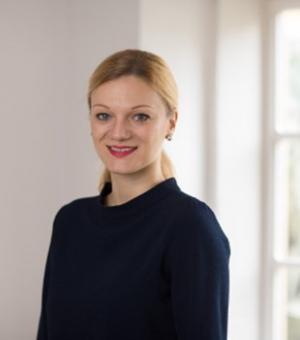
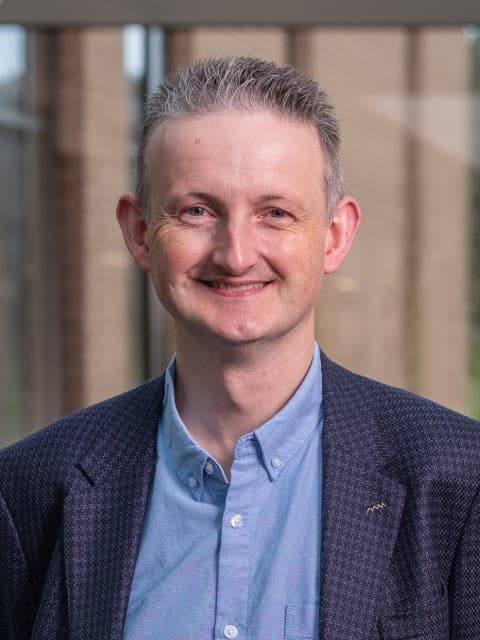
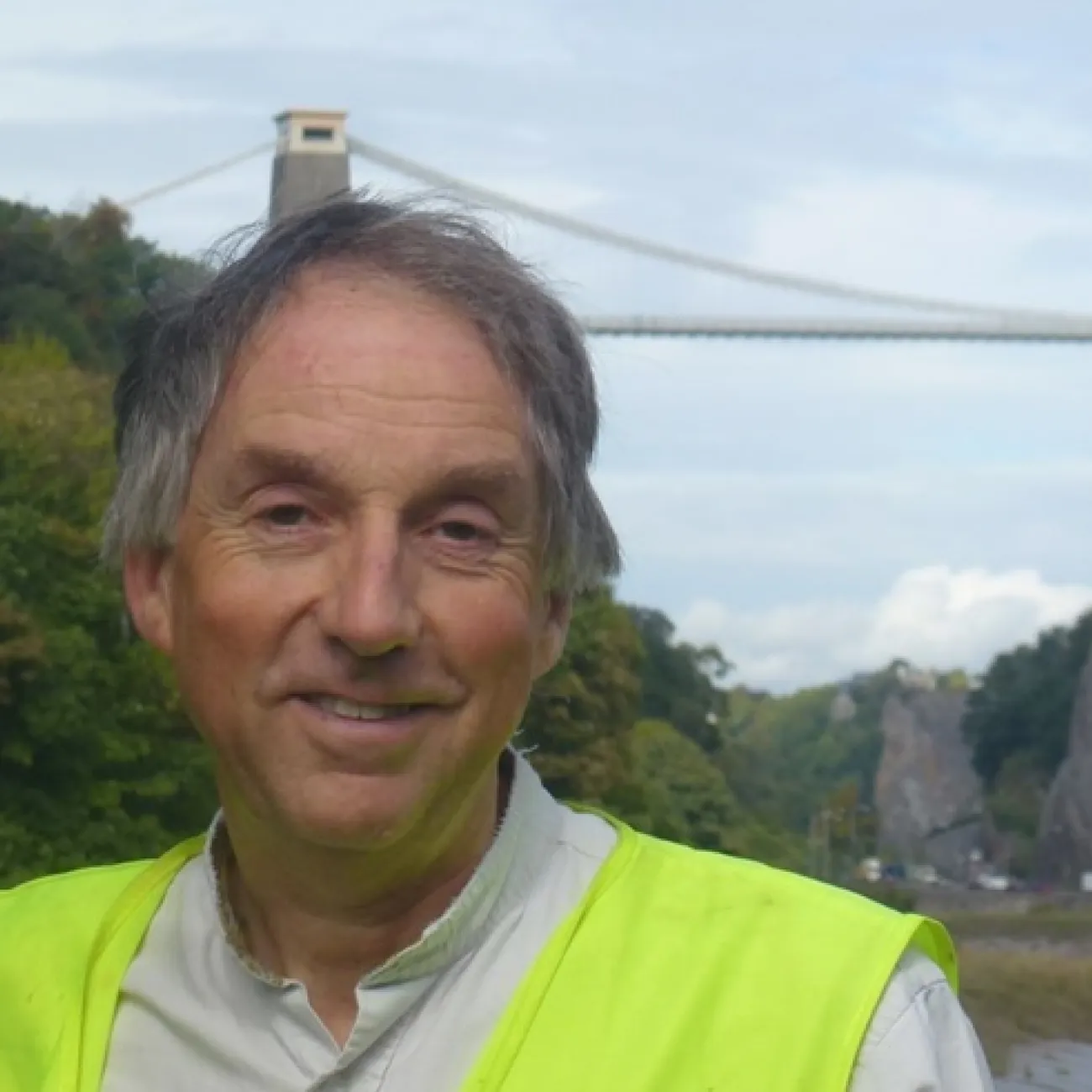
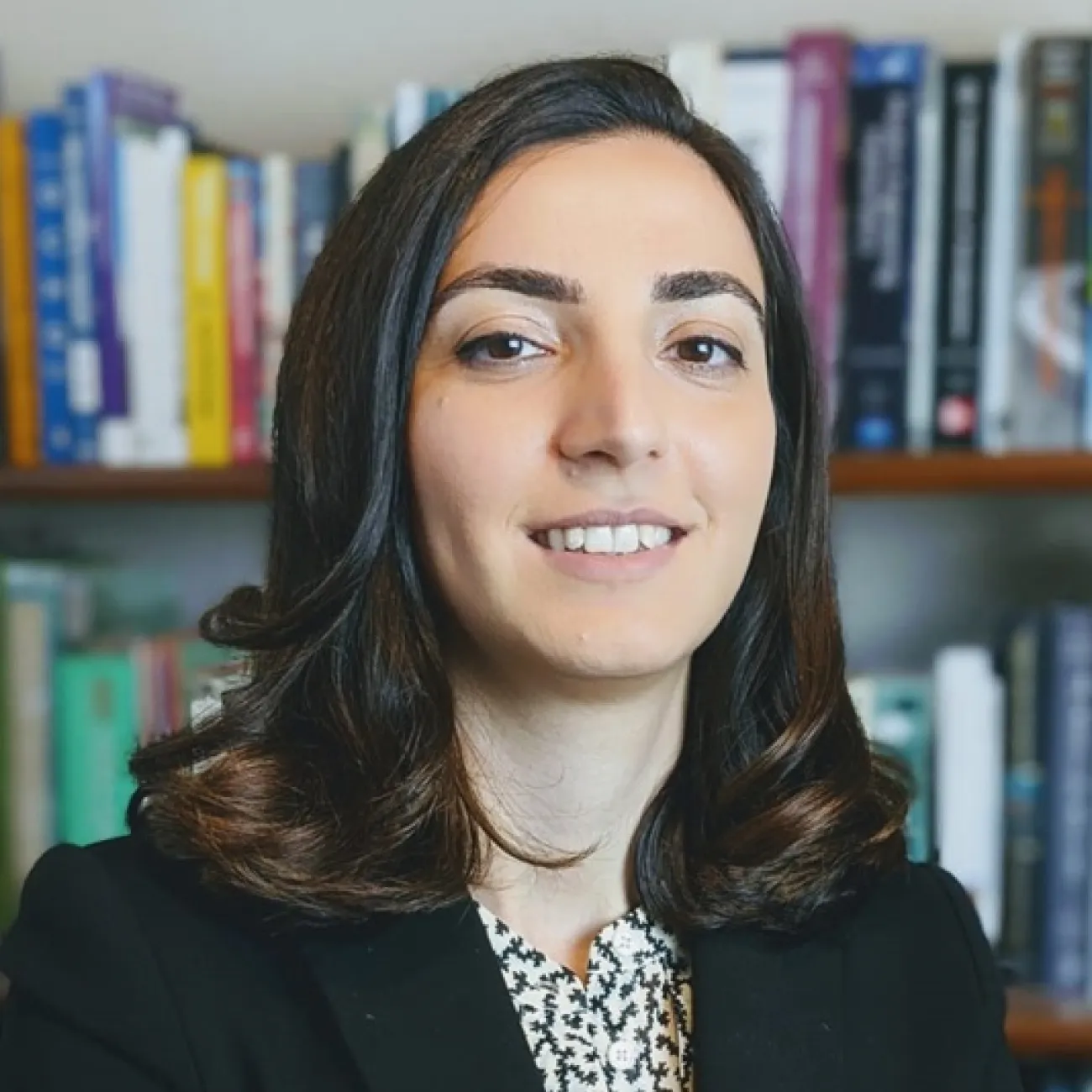
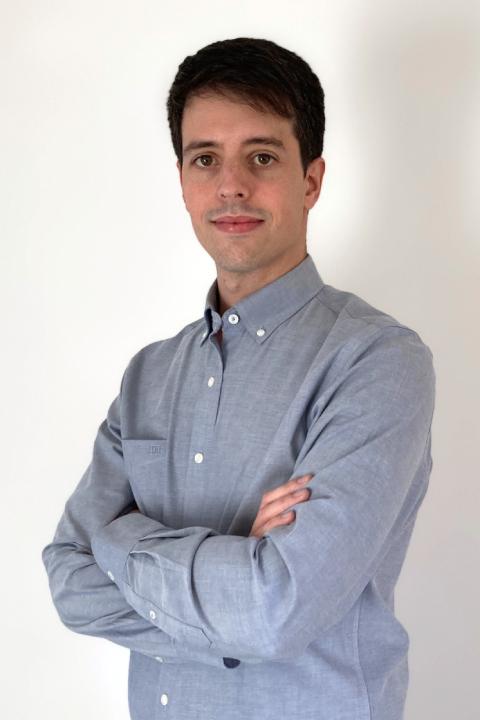
Professor Stephen Graham at Newcastle University is a leading scholar in critical urban studies, focusing on the intersections of militarism, surveillance, and urban infrastructure. His work explores how cities are shaped by and become sites of geopolitical conflict, technological control, and social inequality. Research spans urban verticality , military urbanism , and digital surveillance . Key themes include infrastructure disruption , elite spatial practices , and post-conflict urbanism . Recent publications analyze the militarization of urban space , robotic imperialism , and surveillance societies . His "Splintering Urbanism" framework remains foundational for understanding fragmented urban networks. Current work investigates vertical geopolitics , elite bunkering , and smart city security , with a focus on planetary-scale urban systems and their vulnerabilities.
Janina Dill holds the Dame Louise Richardson Chair in Global Security at the Blavatnik School of Government, University of Oxford. She is also a Professorial Fellow at Trinity College and Co-Director of the Oxford Institute for Ethics, Law, and Armed Conflict (ELAC). Her academic work focuses on the intersection of law, morality, and international relations in the context of war. Her research spans three interconnected strands: the legal requirements for military operations under international law; theoretical frameworks for understanding how international law serves as an instrument of morality in war; and empirical investigations into how moral and legal norms affect real-world military decision-making and public opinion in conflict zones. Professor Dill's work has particular relevance to contemporary conflicts, with extensive analysis of the wars in Ukraine and Gaza. She has examined how international humanitarian law applies to these conflicts, the moral arguments employed by different parties, and the practical challenges of implementing legal constraints in complex warfare environments. Her research has been recognized with the prestigious Philip Leverhulme Prize in 2021, which she has used to advance her work on the moral psychology of decision-making in war. She is currently leading multiple significant research projects, including a three-year ESRC/NSF-funded study on "Cumulative Civilian Harm" and an expert process with the ICRC on military objectives under international humanitarian law. Professor Dill is frequently consulted by international media outlets including The Guardian, The Economist, BBC, CNN, and major European publications. Her expertise is regularly sought on matters related to the laws and ethics of war, particularly regarding the conflicts in Ukraine and Gaza. She has received recognition for her contributions to the field through numerous speaking engagements, media appearances, and her influential research that bridges theoretical legal scholarship with practical applications in contemporary conflicts.
Dr Dominic McCafferty is a Senior Lecturer in Physiology, Ageing & Welfare at the University of Glasgow, based at the Scottish Centre for Ecology and the Natural Environment. He holds academic roles including Editor-in-Chief of the Journal of Thermal Biology and previously Ibis . His research focuses on thermal adaptation, behavioral thermoregulation, and urban wildlife ecology, particularly using thermal imaging techniques. He has a Ph.D. and BSc in Ecological Science from the University of Edinburgh (1989–1993 and 1985–1989). His work spans physiological studies in mammals, birds, and marine species, emphasizing conservation applications. Notable projects include habitat suitability modeling for urban water voles and thermal physiology studies in elephant seals. His educational background includes advanced studies in ecological science, complemented by post-doctoral research at institutions like the British Antarctic Survey (1993–1998). He has contributed to over 99 publications, advancing methodologies in non-invasive wildlife monitoring and ecological field studies. His editorial roles reflect expertise in thermal biology and avian science. McCafferty has led projects on carrion dynamics, stress physiology, and behavioral adaptations in diverse species, with a focus on applying findings to conservation challenges. Labs/Teams: Scottish Centre for Ecology and the Natural Environment (SCENE), part of the broader University of Glasgow's ecological research network. Collaborations include the Muséum National d’Histoire Naturelle in France and the National Trust for Scotland.
Professor Mark King is a leading academic in Sports Biomechanics at Loughborough University, affiliated with the School of Sport, Exercise and Health Sciences, where he serves as Lead for the Sport Performance Research Theme. He holds a BSc (1993) and PhD (1998) in Mathematics and Sports Science from Loughborough, with career progression from Lecturer (1999) to Senior Lecturer (2006), Reader (2012), and Professor (2019). He is also Warden of Royce Hall since 1999, overseeing 375 students' welfare. Education: BSc in Mathematics and Sports Science (1993), PhD in subject-specific computer simulation of dynamic jumping (1998). Affiliations: England and Wales Cricket Board (ECB), International Cricket Council (ICC), Badminton World Federation, Lawn Tennis Association. His research focuses on optimizing elite sport performance through biomechanical analysis, particularly in cricket and badminton. Key areas include injury prevention (e.g., ACL risks in badminton, lumbar stress injuries in cricket bowlers) and technique optimization. He has pioneered ICC-accredited testing for illegal bowling actions and explored machine learning applications in data collection. His work highlights trends in cricket fast bowling kinematics, racket sports smash mechanics, and gender-specific performance metrics. He actively collaborates with national and international sports organizations to translate research into practical guidelines for athletes and coaches. Awards: None explicitly mentioned in the text. Grants/Advising: No listed advisees, but extensive industry partnerships support his research. Labs/Teams: National Centre for Sport and Exercise Medicine (NCSEM), part of his research infrastructure.
Dr. Mo Adda is a Principal Lecturer at the University of Portsmouth's School of Computing, part of the Faculty of Technology. He holds a PhD in Distributed Systems and Parallel Processing from the University of Surrey. His research focuses on network security, distributed systems, wireless networks, and cybercrime prevention. He leads projects in the Centre for Cybercrime and Economic Crime, exploring fault management in networks, blockchain applications, and IoT forensics. With 16 supervised theses, he advises on topics like energy-efficient cloud systems and machine learning for environmental modeling. His work bridges academia and industry, addressing challenges in software-defined networks, traffic control, and secure data sharing in social networks. Education: PhD in Distributed Systems (University of Surrey) Affiliations: Centre of Excellence in Defence, Risk & Resilience; Portsmouth Centre for Advanced Materials and Manufacturing Research Interests Dr. Adda's research spans: Network security and fault detection mechanisms Blockchain applications in IoT and forensics Energy-efficient cloud data center optimization Machine learning for climate modeling Self-organizing network protocols Grants & Collaborations His projects include collaborations with industry partners on secure data leakage detection in cloud systems and resilient wireless protocols for harsh environments. He has pioneered fault classification systems using clustering algorithms and fuzzy logic. Labs & Teams He contributes to the Centre for Cybercrime and Economic Crime, focusing on digital forensics and network intrusion analysis. His team develops frameworks for privacy management in social networks and proactive routing in software-defined networks.
Professor Andrew Hudson-Smith is the Director of the Bartlett Centre for Advanced Spatial Analysis (CASA) at University College London (UCL), where he holds the title of Professor of Digital Urban Systems. He leads UCL's academic and applied research in smart cities, digital twins, and urban informatics. His roles include Editor-in-Chief of the Future Internet Journal and academic lead for the Smart Queen Elizabeth Park project. He contributes to strategic initiatives such as the Greater London Authority Smart London Board and EPSRC Digital Economy Programme Advisory Board. Education: PhD (2003), MSc (1996) from UCL; BSc in Geography from the University of Plymouth (1992). Research focuses on digital urban systems, IoT applications, sustainable urban planning, and cyberphysical systems. Notable projects include urban heat island monitoring, participatory planning platforms, and metaverse-driven urban design. His work bridges technology, art, and public engagement, exemplified by initiatives like Tales of Things and the Haggle-O-Tron. Recent publications emphasize digital twins, metaverse urbanism, and IoT integration in urban environments. Awards include a Fellowship of the Royal Society of Arts. His work addresses SDGs 3 (Good Health) and 11 (Sustainable Cities), with a focus on equitable smart city development and public space innovation.
Professor Haijiang Li is a Chair in BIM for Smart Engineering at Cardiff University's School of Engineering. His roles include leading the Computational Mechanics and Engineering AI Research Group, directing the BIM for Smart Engineering Centre, and overseeing the BIM MSc programme. He holds editorial roles for journals like Construction Innovation and Automation in Construction , and chairs the European Group of Intelligent Computing in Engineering (EG-ICE). Research focuses on smart computational engineering platforms integrating BIM, AI, and big data for sustainable infrastructure. Key areas include digital twins, disaster management, and resilient urban systems. He has secured £40M in research funding, including £9M as PI, and led over 70 research staff and students. Prof. Li is a Standards Committee Technical Executive at buildingSMART, driving international BIM standards. His work includes co-authoring a book on BIM standards across China, the US, and the UK. Awards include Fellowships from the British Computer Society (FBCS) and the Higher Education Academy (FHEA). His research outputs span over 250 publications, covering topics like AI-driven bridge maintenance, ontology-based decision-making, and energy-efficient urban systems. Collaborations with industry and global partners emphasize practical applications of BIM and smart technologies.
Professor Emily So serves as Deputy Head of the School of Arts and Humanities at the University of Cambridge and directs the Cambridge University Centre for Risk in the Built Environment (CURBE). A chartered civil engineer with extensive field experience, she holds leadership roles in the Open-Oxford-Cambridge AHRC Doctoral Training Partnership and chairs the Faculty EDI Committee. Her research focuses on urban risk and resilience , particularly in earthquake-prone regions. Combining structural engineering with epidemiological approaches, she develops innovative casualty estimation models and engages directly with affected communities worldwide. Her work spans seismic safety, disaster epidemiology, and remote sensing applications for rapid damage assessment. Professor So's publication trends reveal strong emphasis on machine learning for disaster risk modeling , with recent work featuring graph neural networks, deep clustering for urban morphology, and LSTM-based population forecasting. Her research bridges engineering, social sciences, and data science to address resilience in developing nations. 2010 Shah Family Innovation Prize (Earthquake Engineering Research Institute) Fellow of the Institution of Civil Engineers (FICE) Scientific Advisory Group for Emergencies (SAGE) member advising UK government As Director of CURBE, she leads interdisciplinary collaborations with EEFIT, Global Earthquake Model (GEM), World Bank, and USGS. Her field investigations following major earthquakes inform practical solutions for vulnerable communities, notably contributing to the 2017 World Building of the Year design in China. Current work includes sabbatical research for 2025-2026 focused on decolonizing architectural approaches to disaster resilience. Professor So maintains active roles in professional organizations and international disaster response frameworks, with her CURBE team developing methodologies now implemented globally for seismic safety improvements.
Professor Ana Mijic is a leading academic in water systems integration at Imperial College London's Department of Civil and Environmental Engineering (Faculty of Engineering). Her work focuses on developing systems tools to balance economic growth with sustainable water use, flood management, and water quality under future uncertainties. She leads high-profile projects like the EPSRC VENTURA initiative and the NERC CAMELLIA impact programme, emphasizing adaptive planning and grey/green infrastructure integration in urban systems. Education: BEng (First Class) in Civil Engineering from the University of Belgrade (Serbia), MSc (Distinction) in Hydrology for Environmental Management, and PhD in Earth Science & Engineering from Imperial College London (2013). Previously served as a teaching assistant in Fluid Mechanics and Hydrometry at Belgrade University. Research interests include whole-water system modelling, socio-hydrological interactions, and nature-based solutions for resilient urban water systems. Her work bridges academia and practice through partnerships with regulators like the UK Environment Agency and global initiatives like the IAHS HELPING programme. Awards include the Satish Dhawan Visiting Chair Professorship (2022) and the 2019 Imperial President’s Award for Excellence in Research (as part of her Hydrology team). She co-leads Imperial’s Transition to Zero Pollution (TZP) Urban Ecosystems theme and serves on editorial boards for journals like Water Security . Her contributions span over 50 peer-reviewed articles (2020–2025), focusing on integrated water management frameworks, AI-driven monitoring, and systemic approaches to urban resilience. She advocates for participatory decision-making and policy coherence in water governance.
William Powrie is Professor of Geotechnical Engineering at the University of Southampton and former Dean of the Faculty of Engineering and the Environment (2010-2018). He authored the seminal textbook 'Soil Mechanics: Concepts and Applications' and chairs HS2's Independent Geotechnical Expert Panel. Research focuses on geotechnical challenges in transportation infrastructure including railway track behavior, earthworks, tunneling, and groundwater control. His work applies soil mechanics principles to complex materials like landfilled waste and railway ballast. As Convenor of the UK Collaboratorium for Research on Infrastructure and Cities (UKCRIC) and leader of UK Rail Research and Innovation Network (UKRRIN), he coordinates national infrastructure research initiatives. Recent publications emphasize experimental and numerical investigations of infrastructure performance, particularly railway geotechnics and sustainable construction practices. Awards and honors include Fellowship of the Royal Academy of Engineering (2009), British Geotechnical Association Medal (2017, 2021), and invited lectureships worldwide. Current research projects receive support from EPSRC, Network Rail, and HS2. Advises multiple PhD students including Akeem Faniran, Benjamin Robert Lee, and Tracey Anne Najafpour Navaei. Leads the iPACT network developing infrastructure solutions for coastal communities.
Aeli Roberts is a Professorial Teaching Fellow at The Bartlett School of Sustainable Construction, University College London, specializing in sustainability, health and safety, and sustainable construction practices. She is a member of BSSC's Centre for Sustainable Governance and Law in the Built Environment, a partnership between UCL and Gatehouse Chambers. Her educational background includes a diverse range of qualifications: PhD from Open University (2004), Bar Vocational Course from BPP Law School (2005), BSc in Construction Management from University College London (2003), MSc from Royal Holloway (1988), BSc from Royal Holloway (1986), and Higher National Diploma from Camberwell College of Art (1990). Initially trained as a chemist, she worked in industry and taught material science to conservation students before transitioning to construction management. Roberts' research focuses on integrating green space within urban environments for environmental and social benefits, health and safety in construction, and sustainable building practices. Her work examines sustainability in small and medium enterprises (SMEs), which employ 85% of UK construction workers, and explores architect-client interactions for sustainable domestic construction. She has conducted comparative studies of health, safety, and well-being in UK and Hong Kong construction industries. Her publication record shows a strong focus on operational failure mitigation, knowledge transfer for safety culture, and the role of building control in sustainable construction. Recent work emphasizes climate change impacts on construction, wellbeing in the industry, and sustainable design integration. Her research bridges academic theory with practical application in the construction sector. Scientific Awards: Significant contributions serving the Design Futures Council's London and Cambridge Think Tank (2012) Roberts has held teaching positions across multiple subject areas including materials science, law, and sustainability. She has developed a third-year module on built asset management, emphasizing the importance of post-occupancy building performance. Her teaching philosophy connects historical building conservation with contemporary sustainability challenges, particularly in the context of upgrading existing housing stock to meet carbon reduction targets. She has been involved in collaborative research projects with organizations including the London Chamber of Commerce and Industry (LCCI), focusing on eco-design training for the construction supply chain. Her work with the CIC 2050 Group demonstrates engagement with industry-wide sustainability initiatives.
Professor Stephen Chan is a faculty member at SOAS University of London in the Department of Politics and International Studies (POL) . With a focus on African political thought and international relations, his work critically examines postcolonialism, decoloniality, and global governance. Key research themes include: Decolonizing international relations theory Sino-African political dynamics Election observation and democratic processes Non-Western cosmopolitanism Comparative diplomatic practices His recent publications analyze the ideological ambiguity of decoloniality (2023), pluralist visions for global security (2017), and the legacy of African liberation movements (2021). He has advised multiple theses on topics ranging from parliamentary governance in Kenya/Zimbabwe to China-Africa media interactions. Notably: Critiqued the misuse of 'decoloniality' as ideological rhetoric (2023) Authored a poetic autobiography of political engagement (2022) Traced Africa's intellectual history of freedom (2021) Examined Zimbabwean elections (2017) Explored non-Western modernity (2018)
Dr Bahareh Zaghari (MSc, PhD, CEng, FHEA) is a Lecturer in the Electrical Power Engineering group at the University of Southampton's School of Electronics and Computer Science. Her research focuses on electrified aircraft systems, sensors with machine learning applications, electrical power systems, and nonlinear dynamics modeling. Current projects include acoustic sensing for temperature/flow measurement Co-design of electrical machines for aircraft electrification Research activities span hybrid-electric aircraft design (FutPrint50 Horizon project), fully electric aircraft development (EnabEl Innovate UK), and smart sensing systems for aerospace components. Industrial collaborations include KISTLER, iNetic, PALL Aerospace, Safran, ARUP, Embraer, and BAE Systems. Conference coordinator for IEEE Transportation Electrification Council's Electrified Aircraft committee Chair of IEEE/AIAA Electrified Aircraft Technology Symposium (2023) Panel moderator at AIAA Propulsion and Energy (2021) Her work demonstrates innovative applications of acoustic transducers in harsh environments, with contributions to temperature mapping, fault analysis, and energy harvesting systems. She currently supervises PhD student Shikhar Singh.
Dr Daniel Fosas de Pando serves as Chancellor's Fellow in Net Zero Buildings at the University of Edinburgh's School of Engineering, within the Department of Civil and Environmental Engineering and the Research Institute for Infrastructure and Environment. His work bridges building science, climate resilience, and humanitarian engineering with a focus on practical decarbonization strategies. Research interests center on net zero building retrofits at scale , indoor air quality optimization , and climate-adaptive design , particularly in vulnerable contexts like refugee shelters. His methodology combines computational modeling with field monitoring to address energy-carbon trade-offs under climate change constraints, emphasizing actionable decision-making tools for designers and policymakers. Publication trends reveal strong focus on building decarbonization pathways (38% of recent work), shelter environments for displaced populations (29%), and climate risk communication (16%). Key themes include scaling retrofit interventions, occupant behavior impacts, and simplified modeling for resource-constrained settings. Major recognitions include: Dufton Silver Medal (2022) for pioneering Active Buildings framework Best Paper Award Theme Energy (2022) Best Paper Award (2017) for building simulation research He leads the £36m InBuilt project decarbonizing non-domestic building portfolios, supervises PhD candidate M. Yildrim, and collaborates with international teams across Japan, Ethiopia, and the UK. His grant portfolio emphasizes scalable solutions for building stock management and climate resilience. Research is conducted through the Infrastructure and Environment Institute with strong ties to humanitarian engineering networks, producing open datasets on shelter thermals and building decarbonization pathways.
Professor Ruchi Choudhary is a Professor in Architectural Engineering at the University of Cambridge, Department of Engineering, within the School of Technology. She leads the Energy Efficient Cities initiative (EECi), a cross-disciplinary research project focused on strengthening the UK's capacity to address energy demand reduction and environmental impact in cities through research in building and transport technologies, district power systems, and urban planning. Her research interests span urban energy systems, building energy modeling, sustainable cities, geothermal energy systems, and data-driven energy modeling . She has pioneered work in digital twins for energy systems, urban subsurface thermal modeling, and building-integrated agriculture. Her research group develops numerical tools to improve energy efficiency of cities, with particular focus on modeling energy consumption of large building sets at multiple time and spatial resolutions. Analysis of her recent publications reveals a strong trend toward integrating machine learning with physics-based modeling for energy systems, with increasing emphasis on uncertainty quantification, digital twins, and value of information analysis for decision-making. Her work bridges the gap between theoretical modeling and practical urban implementation, with significant focus on city-scale geothermal potential, underground climate change impacts, and energy equity considerations. Professor Choudhary has supervised numerous PhD students who have gone on to prominent positions at institutions including UCL, University of Cambridge, BEIS, Arup, and various international universities. Her research group includes faculty members, research associates, graduate students, and international collaborators from institutions worldwide. Her current research focuses on two parallel investigations: one on using multi-scale multidisciplinary models to address energy use questions in the built environment, and second, on quantifying uncertainties in model outcomes. Current projects include integration of food production in urban environments, analysis of underground transport systems as energy sources, large-scale integration of ground source heat pumps, and distributed energy networks.