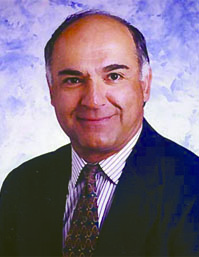
Khuzaima Daudjee is a Professor and David R. Cheriton Faculty Fellow in the Cheriton School of Computer Science at the University of Waterloo. His research focuses on systems-oriented problems at the intersection of systems and data management, particularly building large-scale systems, storage infrastructure in the cloud, and modern hardware applications. He leads projects in distributed database systems, elastic scaling, and resource optimization. His recent work includes Caerus (geo-replicated transactions), Tiresias (predictive storage), and MorphoSys (automatic physical design metamorphosis). Daudjee has chaired major conferences including ICDE 2026 and serves on editorial boards for VLDB, SIGMOD, and IEEE TKDE journals. His awards include ACM Distinguished Scientist and multiple best paper awards. Educational initiatives include developing distributed systems teaching materials and supervising graduate students across database and distributed systems domains. His industry collaborations involve cloud infrastructure optimization and scalable data processing frameworks.
Mohamed Noureldin is an Assistant Professor at the Department of Civil Engineering, Aalto University , Finland, with prior academic roles at Sungkyunkwan University, South Korea (2015–2022). His expertise lies in integrating Artificial Intelligence (AI) with Structural Health Monitoring (SHM) , Structural Digital Twin , Predictive Maintenance , and Seismic Retrofitting . Research Focus : AI-powered sustainable structural design, smart retrofitting, predictive maintenance, structural material innovation, and next-generation performance-based seismic/wind design. Industrial Experience : 20+ years in offshore/onshore structural engineering (Hyundai Heavy Industries, Samsung Engineering, Arab-Swiss Engineering Company, Zuhair Fayez Partnership). Teaching : Courses in structural analysis, seismic design, dynamics, and reinforced concrete at Aalto and Sungkyunkwan Universities. Laboratory : Leads the Structural Design AI Lab (SDAI), focusing on AI-driven resilient infrastructure. Contact : mohamed.noureldin@aalto.fi , +358504544861. His publications explore cutting-edge applications of AI, ML, and DL in seismic retrofitting, structural durability, soil stabilization, and hybrid damping systems. Collaborative work emphasizes life-cycle cost assessment and augmented reality for predictive maintenance.
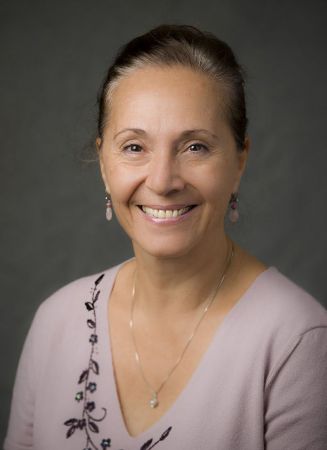
Dr. Kai Gong is an Assistant Professor of Civil and Environmental Engineering at Rice University, with affiliations at the Rice Advanced Materials Institute and Ken Kennedy Institute. His research focuses on sustainable infrastructure materials, environmental sustainability, and materials science. He holds a Ph.D. in Civil & Environmental Engineering and Materials Science from Princeton University, an MEngSci from Monash University (Australia), and dual B.S. degrees from Monash University and Central South University (China). Research Interests: Development of durable, sustainable infrastructure materials Waste encapsulation and conversion to value-added products Carbon mineralization and utilization Advanced characterization techniques (synchrotron/neutron scattering) Data-driven modeling and atomistic simulations Notable Awards: 2023 Le Chatelier Medal (Cement and Concrete Research) 2024 Giatec Award for Best Paper in Sustainability Walbridge Fund Graduate Award (2019) His work integrates computational methods (e.g., molecular dynamics) with experimental techniques to address decarbonization challenges in infrastructure. The Gong Research Group actively seeks motivated researchers for opportunities in sustainable materials innovation.
Professor Hong Hao is a John Curtin Distinguished Professor at Curtin University, affiliated with the School of Civil and Mechanical Engineering and the Curtin Research Centre for Infrastructural Monitoring & Protection. His expertise spans Structural Dynamics, Earthquake Engineering, Blast and Impact Engineering, and Structural Health Monitoring. He holds prestigious roles like Fellow of ATSE, ISEAM, and ASCE, and has led organizations such as the International Association of Protective Structures and the Australian Earthquake Engineering Society. Education: BE (Tianjin University, 1982), MSc (UC Berkeley, 1985), PhD (UC Berkeley, 1989). Awards include the Tan Chin Tuan Fellowship and multiple Ko Medals. He has authored over 200 journal articles, with recent work focusing on blast-resistant materials, seismic fragility, and AI-driven structural health monitoring. His research emphasizes resilient infrastructure, including metaconcrete structures, corrosion-resistant materials, and sensor-based damage detection. Ongoing projects involve smart tunnel safety under BLEVE explosions and modular building systems.
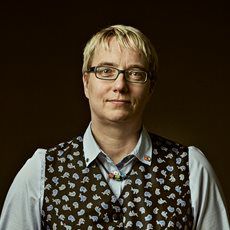
Prof. Antje Stokman is a Professor of Landscape Architecture and Landscape Planning at HafenCity University Hamburg. Her department researches and designs landscape-, nature-, and water-related transformation processes, with teaching and research focused on the design and collaborative creation of urban landscapes in their dynamic interactions between natural and human habitats. Her research interests include: Landscape Architecture and Urban Design Climate-Adapted Urban Landscapes Blue-Green Infrastructure Water-sensitive Urban Design Linear Infrastructure Landscapes Urban Transformation Processes Prof. Stokman has led several significant research projects including the LILAS research network (Linear Infrastructure Landscapes as Open Spaces for the City in Climate Change), the City on the Blue Belt project, and the Blue-Green Infrastructure Dialogue Process. Her recent publications focus on transforming urban linear infrastructure landscapes and developing water development corridors along federal waterways as open space potential for urban green-blue infrastructure. Scientific awards: City of Hamburg's Teaching Prize (Hamburg Teaching Award) Prof. Stokman supervises doctoral projects including Katarina Bajc's work on "Perception and Design of Ecological Processes in Landscape Architecture" and Anne Kittel's research on "The Transformation of Metropolitan Landscapes." She has received research funding from various sources including the Federal Environment Agency, BMUV, BMBF, and EU Horizon 2020. She co-leads the Blue-Green Infrastructure Lab (BGI-Lab) with Prof. Wolfgang Dickhaut, which focuses on interdisciplinary research at the intersection of environmentally sound urban planning and landscape architecture.
William Powrie is Professor of Geotechnical Engineering at the University of Southampton and former Dean of the Faculty of Engineering and the Environment (2010-2018). He authored the seminal textbook 'Soil Mechanics: Concepts and Applications' and chairs HS2's Independent Geotechnical Expert Panel. Research focuses on geotechnical challenges in transportation infrastructure including railway track behavior, earthworks, tunneling, and groundwater control. His work applies soil mechanics principles to complex materials like landfilled waste and railway ballast. As Convenor of the UK Collaboratorium for Research on Infrastructure and Cities (UKCRIC) and leader of UK Rail Research and Innovation Network (UKRRIN), he coordinates national infrastructure research initiatives. Recent publications emphasize experimental and numerical investigations of infrastructure performance, particularly railway geotechnics and sustainable construction practices. Awards and honors include Fellowship of the Royal Academy of Engineering (2009), British Geotechnical Association Medal (2017, 2021), and invited lectureships worldwide. Current research projects receive support from EPSRC, Network Rail, and HS2. Advises multiple PhD students including Akeem Faniran, Benjamin Robert Lee, and Tracey Anne Najafpour Navaei. Leads the iPACT network developing infrastructure solutions for coastal communities.
Micah Hale is a Professor and Department Head of Civil Engineering at the University of Arkansas, Fayetteville, and holds the Twenty First Century Endowed Leadership Chair in Civil Engineering. His work focuses on concrete materials, structural performance, and sustainable construction practices. Education: Ph.D., M.S., and B.S. in Civil Engineering from the University of Oklahoma. Dr. Hale’s research explores High-Performance Concrete , Bond Behavior of Prestressing Strands , and Mitigation of Alkali-Silica Reaction (ASR) . He also investigates Thermal Energy Storage applications for solar power systems and sustainable ultra-high-performance concrete (UHPC) development. His publications highlight advancements in concrete durability, prestressed girder analysis, and environmentally conscious material design. Recent studies emphasize calcium oxychloride formation , prestress transfer modeling , and self-consolidating concrete optimization. His scholarly output spans structural mechanics, chemical durability, and material sustainability. Awards: Twenty First Century Endowed Leadership Chair in Civil Engineering As an educator, Dr. Hale teaches Reinforced Concrete Design , Prestressed Concrete Design , and Concrete Materials and Mixture Proportioning . His contributions to engineering ethics education and student engagement further underscore his academic leadership.
Rudolf Neu serves as Professor at the Technical University of Munich (TUM) within the School of Engineering and Design, holding a dual appointment as head of an independent research group at the Max Planck Institute for Plasma Physics (IPP) since 2014. His expertise centers on plasma-material interactions critical for fusion energy development. His academic foundation includes: Physics studies at University of Tübingen Doctorate in Nuclear Physics (1992) Habilitation in Experimental Physics at University of Tübingen (2004) Professor Neu's research pioneers tungsten-based materials for fusion reactor first walls, addressing extreme thermal and plasma conditions in devices like ASDEX Upgrade and ITER. His work bridges materials science and plasma physics to solve erosion, impurity control, and component longevity challenges essential for viable fusion power. Publication trends reveal progressive refinement from experimental ASDEX Upgrade studies (2009-2013) toward advanced tungsten solutions for DEMO reactors (2016), consistently targeting plasma-facing component durability. This trajectory demonstrates strategic alignment with international fusion roadmap milestones. Key recognition includes: Highly Cited Researchers designation (ISI Engineering category, 2014) His leadership spans critical fusion initiatives including JET task force coordination (2011-2012) and EFDA's ITER Physics Department direction (2012-2013), establishing him as a central figure in Europe's fusion research infrastructure.
Mehrdad Ehsani is a Robert M. Kennedy Endowed Professor of Electrical Engineering at Texas A&M University, leading the Power Electronics and Motor Drives Laboratory. He holds a Ph.D. from the University of Wisconsin-Madison and has over four decades of expertise in power electronics, electric/hybrid vehicles, and energy systems. His research focuses on sustainable energy, advanced power conversion, and vehicle electrification. Educational Background: Ph.D., Electrical Engineering, University of Wisconsin-Madison (1981) M.S., Electrical Engineering, University of Texas at Austin (1974) B.S., Electrical Engineering, University of Texas at Austin (1973) Research Interests: Sustainable power systems, electric/hybrid vehicles, energy storage, power electronics, and aerospace power systems. His work emphasizes practical applications, such as transmotor technology for energy efficiency and grid-interactive buildings. Awards & Recognition: Life Fellow of IEEE SAE Fellow (2005) IEEE Vehicular Technology Society Avant Garde Award (2001) Recipient of multiple Prize Paper Awards (IEEE-IAS) Advising & Grants: Director of Advanced Vehicle Systems Research Program. His lab collaborates with industry on patents, including over 30 granted/pending patents, and advises on sustainable transportation technologies. He has consulted for over 60 companies and government agencies. Labs & Teams: Founder and director of the Power Electronics & Motor Drives Lab, focusing on electric vehicle propulsion, renewable energy integration, and advanced control systems.
Nam Sung Kim is the W. J. "Jerry" Sanders III-Advanced Micro Devices Inc. Endowed Chair and holds a Professorship in Electrical and Computer Engineering at the University of Illinois. He is also affiliated with the Siebel School of Computing and Data Science, Coordinated Science Lab, and National Center for Supercomputing Applications (NCSA). His research focuses on computer architecture, memory systems, chiplet integration, and hardware security. Key areas include energy-efficient computing, processing-in-memory (PIM), and mitigating hardware vulnerabilities like rowhammer attacks. Kim has received prestigious awards including IEEE Fellow (2016), MICRO Hall of Fame (2018), NAI Fellow (2023), and NSF CAREER Award (2015). His work spans publications in top venues like ASPLOS and IEEE journals, addressing topics such as CXL-based memory systems, DRAM module optimization, and GPU architecture improvements. Collaborations emphasize interdisciplinary research in hardware-software co-design and emerging technologies. His labs and teams at Coordinated Science Lab and NCSA drive innovations in scalable computing, near-memory processing, and cloud infrastructure for AI workloads. Ongoing projects include developing resilient memory hierarchies and accelerating large-scale machine learning models through novel architecture designs.
Scientia Professor Nasser Khalili is the Head of the School of Civil and Environmental Engineering at the University of New South Wales (UNSW). He also serves as the Director of the ARC Research Hub for Resilient and Intelligent Infrastructure Systems (RIIS), President of the Australian Association for Computational Mechanics (AACM), and a core member of the International Technical Committee on Unsaturated Soil (TC106). His research focuses on geotechnical engineering, computational mechanics, porous media behavior, and sustainable infrastructure systems. Key areas of expertise include unsaturated soils, hydraulic fracturing modeling, and advanced material characterization for asphalt mixtures. Professor Khalili's work integrates computational methods with experimental analysis to address challenges in infrastructure resilience and environmental sustainability. He has pioneered studies on pore pressure dynamics, fracture mechanics in porous media, and the application of waste materials in construction. His leadership roles in national and international committees reflect his influence in advancing geotechnical and computational engineering practices. His scientific contributions include over 150 peer-reviewed articles, with recent work emphasizing machine learning applications in civil engineering and innovative solutions for sustainable asphalt mixes. Awards include Fellowship of the Academy, recognizing his significant impact on the field.
Nedim Pervan is a Full Professor at the Faculty of Mechanical Engineering, University of Sarajevo, Bosnia and Herzegovina. His academic position focuses on mechanical engineering with emphasis on product design, structural analysis, and biomechanical applications. He maintains an active research profile with numerous publications and collaborations across various engineering disciplines, with office hours every workday from 09:00 to 10:00 in room 314. Professor Pervan's research interests span multiple domains of mechanical engineering. He has made significant contributions to additive manufacturing, particularly in polymer gear production and analysis. His work explores mechanical properties, failure mechanisms, and service life of polymer gears manufactured through additive processes. Additionally, he has conducted extensive research on external fixation devices used in orthopedic treatments, analyzing their biomechanical characteristics and structural stability under various loading conditions. His expertise extends to finite element analysis, structural optimization, and the application of 3D scanning technologies within Industry 4.0 contexts. His research demonstrates a strong connection between theoretical engineering principles and practical applications across automotive, medical devices, and manufacturing industries. His recent publication record reveals a strong trend toward interdisciplinary research bridging mechanical engineering with biomedical applications and advanced manufacturing technologies. A significant portion of his work focuses on polymer gears and additive manufacturing, examining material properties and performance characteristics. Another substantial research stream involves biomechanical engineering, particularly the analysis of external fixation devices. His publications demonstrate a methodological approach combining experimental testing with finite element analysis. More recently, his research has expanded into 3D scanning applications in manufacturing and the electrification of transportation systems in Bosnia and Herzegovina. Professor Pervan has been involved in numerous research projects that have advanced the capabilities of the Faculty of Mechanical Engineering. These include the "Integrated Intelligent CAD System for Interactive Design, Analysis and Prototyping of Compression and Torsion Springs" (2022), "Opremanje Laboratorije za razvoj i dizajn proizvoda" (2020), and "Modernizacija Laboratorije za ispitivanje mašinskih konstrukcija" (2019-2020). These projects have focused on developing advanced laboratory facilities, intelligent CAD systems, and equipment for mechanical design and analysis, with several specifically targeting 3D scanning technology implementation. His collaborative work extends across multiple research teams within the Department of Mechanical Constructions at the University of Sarajevo. He frequently collaborates with researchers including Adis Muminović, Elmedin Mešić, and Muamer Delić on projects related to additive manufacturing, biomechanical engineering, and structural analysis. His research group appears actively involved in both theoretical and applied engineering research with practical industrial and medical applications, contributing significantly to Bosnia and Herzegovina's engineering research landscape.
Sibel Pamukcu is a Professor in the Department of Civil and Environmental Engineering at Lehigh University, affiliated with the P.C. Rossin College of Engineering and Applied Science. Her research focuses on electroremediation of soils and groundwater, advanced geo-materials, and sensor systems for subsurface monitoring. She has held leadership roles including interim Chair of Civil and Environmental Engineering and co-director of Lehigh’s ADVANCE grant. Pamukcu teaches courses in geotechnical and environmental engineering at both undergraduate and graduate levels. Education: Ph.D. in Civil Engineering, Louisiana State University M.S. in Civil Engineering, Louisiana State University B.S. in Civil Engineering, Bogazici University, Turkey Research Interests: Her work spans electrochemical methods for environmental detoxification, development of polymer-enhanced sands, and distributed sensor networks for real-time subsurface monitoring. Key focus areas include: In-situ destruction of contaminants in clay-rich soils Enhanced oil recovery via electric fields Wireless and fiber-optic sensor systems for hazard mitigation Grants & Awards: Principal investigator on over 60 grants from NSF, DOE, DOD, and others. Notable awards include the Alfred Noble Robinson Award (Lehigh University) and the ASCE Civil Engineering Foundation Grant Award. Her lab holds multiple patents on soil remediation techniques and polymer-coated sands. Advising & Service: Supervised 9 Ph.D. and 25+ M.S. students Appointed to Martindale Center faculty and Sigma Xi leadership Contributed to 50+ peer-reviewed articles and 100+ technical publications Labs & Teams: Leads interdisciplinary initiatives in electrokinetic remediation and underground sensing, collaborating with industry partners like Electric Power Research Institute and the Pennsylvania Department of Transportation.
Professor Nicole Metje is a Professor of Infrastructure Monitoring at the Department of Civil Engineering, University of Birmingham, and Director of the National Buried Infrastructure Facility. She also serves as Co-director of the Institute of Quantum Technology. Her research focuses on quantum sensing, geotechnical engineering, and infrastructure monitoring, with a particular emphasis on buried infrastructure detection and sustainable urban development. Education: PhD in Civil Engineering (University of Birmingham, 2001); Dipl.-Ing. in Civil Engineering (Hannover University, Germany, 1998). Key roles and affiliations include membership in EPSRC Infrastructure Strategic Advisory Team, Chartered Institution of Civil Engineering Surveyors, and international advisory boards for Hong Kong Polytechnic University. She has authored/co-authored over 50 journal papers and a textbook on tunnel construction. Research areas include quantum sensor applications for buried asset detection, geophysical soil properties, and sensor development for infrastructure monitoring. She leads projects such as UKCRIC National Buried Infrastructure Facility and Quantum Technology Hub in Sensors and Metrology. Awards and fellowships include FICE, FCInstCES, CEng, FHEA, and multiple committee memberships in national/international bodies. Teaching includes MSc courses on underground construction and geotechnical engineering. She supervises doctoral research on quantum sensors, soil-structure interactions, and sustainable infrastructure.
Dr. Qian Shunzhi is an Associate Professor and Program Director for the Bachelor of Engineering (Civil) at NTU's School of Civil and Environmental Engineering. He holds a PhD from the University of Michigan (2007), with prior faculty experience at Southeast University (2009-2013) and postdoctoral research at TU Delft (2007-2009). His research focuses on advanced construction materials like Engineered Cementitious Composites (ECC), self-healing concrete, and 3D-printable concrete, alongside life cycle assessment of infrastructure. Key interests include sustainable materials, CO2 sequestration, and material durability. Education: Bachelor's: Southeast University (Nanjing, 1998) Master's: Chinese Ministry of Transport Highway Research Institute (Beijing, 2001) PhD: University of Michigan (Ann Arbor, 2007) Research Interests: Novel cementitious composites for infrastructure resilience Recycled materials in construction 3D printing applications in concrete Material lifecycle analysis Notable contributions include bacterial encapsulation for self-healing, graphene-enhanced antibacterial surfaces, and CO2 sequestration via reactive materials. His work bridges material science, sustainability, and advanced manufacturing techniques.