Jonathan Baugh is a Professor in the Department of Chemistry at the University of Waterloo, serving as Director of the Quantum Information Graduate Program. His research focuses on quantum devices, nanoelectronics, and molecular electronics with affiliations at the Institute for Quantum Computing and Waterloo Institute for Nanotechnology. He leads the Baugh Research Lab, exploring quantum control, semiconductor spin qubits, and superconducting hybrid systems. Research interests include quantum information processing, nanoscale charge transport, and the development of next-generation photonic sources. His work bridges quantum physics and materials science, with recent breakthroughs in dopant-free semiconductors and single-molecule transistors. Publications emphasize scalable quantum architectures, noise mitigation in quantum control, and phase-coherent molecular electronics. Current projects involve cryogenic CMOS device modeling and topological quantum computing in silicon-based systems. No awards are explicitly listed, though his work has been highlighted in invited reviews and special sessions on quantum systems. Advising focuses on graduate students in quantum nanotechnology and condensed matter physics. His lab collaborates on integrated quantum networks and III-V/Si nanowire photodetectors. Labs/Teams: Baugh Research Lab (Quantum Nanoelectronics Group), Institute for Quantum Computing (IQC), Waterloo Institute for Nanotechnology (WIN).
Katrina Morgan-Innes is a Lecturer (Assistant Professor) at the School of Electronics and Computer Science, University of Southampton. Her research focuses on advanced flexible materials for energy harvesting and storage, leveraging semiconductor industry fabrication techniques to develop wearable thermoelectric devices and next-generation batteries. She leads the Morgan Materials and Devices for Energy (MADE) research group and a £220k EPSRC New Horizons grant (Smart Cloth). Her work emphasizes commercial scalability and integration of 2D materials with flexible substrates. Education: MPhys in Physics (University of Sussex, 2011), CASE Award PhD in Electronics and Computer Science (University of Southampton, 2016–2022). Previous roles include Photonics Development Engineer at the AIM Photonics Programme (SUNY) and Visiting Fellow at the Optoelectronics Research Centre. Research interests include energy harvesters, flexible wearables, 2D materials, and nanofabrication. She has pioneered scalable manufacturing methods for photonic and energy devices and contributed to chalcogenide material applications. Her research group aims to create fully flexible systems enabling integrated sensing, power, and communication on lightweight platforms. Key grants include EPSRC funding for wearable thermoelectric generators and collaborations like the ChAMP/WAFT-funded projects on flexible ion sensors and 3D nanophotonics. She has published in high-impact journals (e.g., ACS Applied Materials and Interfaces , npj 2D Materials and Applications ) and conferences, focusing on thermoelectric materials, photonic heterostructures, and scalable manufacturing. Awards: UNSW Women in Engineering Visiting Fund (2019), Top 100 Physics Paper (2020), Outreach Engagement Award (2016) Labs/Teams: Morgan MADE Group, Collaboration with Optoelectronics Research Centre and Zepler Institute Advocacy: Chair of WiSET+ (University-wide STEM+ Equality Committee), founder of Early Career Researcher Forum
Michal Lipson serves as the Eugene Higgins Professor of Electrical Engineering and Professor of Applied Physics at Columbia University's Fu Foundation School of Engineering and Applied Science. Elected to both the National Academy of Engineering and National Academy of Sciences, she pioneered critical building blocks in silicon photonics that have transformed the field, with over 50,000 related publications annually. Her research has generated more than 250 scientific publications and 45 issued patents. Lipson's research focuses on nanophotonics and silicon photonics, where she demonstrated the ability to tailor electro-optic properties of silicon in landmark 2004 and 2005 Nature papers. Her work has enabled the development of photonic devices and circuits that now form the foundation of over 1,000 papers published yearly. She investigates novel optical phenomena while developing practical applications that address major bottlenecks in microelectronics. Her research spans fundamental physics to practical device implementation, with particular emphasis on integrated photonic systems. Analysis of her recent publications reveals a strategic expansion from foundational silicon photonics into emerging applications including quantum information processing, machine learning acceleration, biomedical sensing, and topological photonics. While maintaining core expertise in silicon-based devices, her work increasingly incorporates 2D materials, heterogeneous integration, and novel optical phenomena to push performance boundaries. The research demonstrates consistent progression from fundamental device physics to system-level implementations with practical applications. National Academy of Engineering (2025) National Academy of Sciences MacArthur Fellowship Blavatnik Award Optica's R.W. Wood Prize IEEE Photonics Award John Tyndall Award NAS Comstock Prize in Physics Thomson Reuters Top 1% Highly Cited Researcher (annually since 2014) Professor Lipson has mentored an exceptional research group, graduating 40 PhD students and 2 MS students, with numerous postdocs and visiting researchers. Her alumni occupy prominent positions including professorships at major universities (Rochester, Ottawa, UNICAMP, Johns Hopkins), leadership roles at Intel, Bell Labs, and startups she co-founded (HyperLight, Voyant Photonics). Her laboratory has received substantial research funding supporting cutting-edge work in nanofabrication, optical characterization, and device development. Current research directions include quantum photonics, AI-accelerated optical systems, and novel materials integration. The Lipson Research Group operates state-of-the-art facilities for nanophotonic device design, fabrication, and characterization. The team comprises principal investigators, postdoctoral researchers, PhD students, and administrative staff working collaboratively across disciplines including electrical engineering, materials science, physics, and applied physics. The group maintains strong industry partnerships while pursuing fundamental scientific advances in light-matter interactions at the nanoscale.
Özüm Asirim is a Researcher at the Technical University of Munich (TUM) under the Associate Professorship of Computational Photonics led by Prof. Christian Jirauschek. Her work focuses on computational photonics , quantum optics , and nonlinear optical phenomena , particularly in micro-resonators and semiconductor devices. Education: Ph.D. in Electrical Engineering from Middle East Technical University (Ankara, Turkey). Research spans optical parametric amplification , Fourier domain mode-locked lasers , self-phase modulation , and machine learning applications in photonics . Her studies include optimizing gain factors, enhancing harmonic generation, and modeling supercontinuum sources via carrier injection. Recent publications (2019–2023) highlight interdisciplinary approaches, merging photonics with computational finance and nonlinear dynamics . She contributes to EU Project QOMBS and teaches courses like Python for Engineering Data Analysis and Quantum Engineering and Machine Learning seminars. Collaborations include Prof. Christian Jirauschek (TUM), Prof. Mustafa Kuzuoğlu (Middle East Technical University), and teams in computational photonics and quantum optics. Her work impacts semiconductor physics , laser technology , and adaptive optical systems .
Dr. John Reynolds is a Professor of Chemistry and Biochemistry at the Georgia Institute of Technology with a 40-year legacy in polymer chemistry. He serves as founding Director of the Georgia Tech Polymer Network (GTPN) and a member of the Center for Organic Photonics and Electronics (COPE). Research spans conjugated polymers, electrochromism, organic LEDs, photovoltaics, and bioelectronics Expert in optoelectronic and redox properties of electroactive materials Co-editor of the Handbook of Conducting Polymers His group has published over 450 peer-reviewed papers and holds ~45 issued patents. Recent research focuses on: Advanced electrochromic materials for visible and infrared applications Next-generation organic solar cells with green processing techniques Supercapacitor and electrochemical transistor materials Space exploration polymer applications Scientific recognition includes: ACS Cope Scholar Award (2020) ACS Florida Award (2019) ACS Applied Polymer Science Award (2012) Fellowships from Royal Society of Chemistry, Materials Research Society, and PMSE (2013) His editorial contributions include serving on boards for multiple prestigious journals including ACS Central Science and Chemistry of Materials . The Reynolds Group actively trains PhD and postdoctoral researchers, with recent members advancing to positions at University of Michigan, ExxonMobil, Northwestern, and Intel.
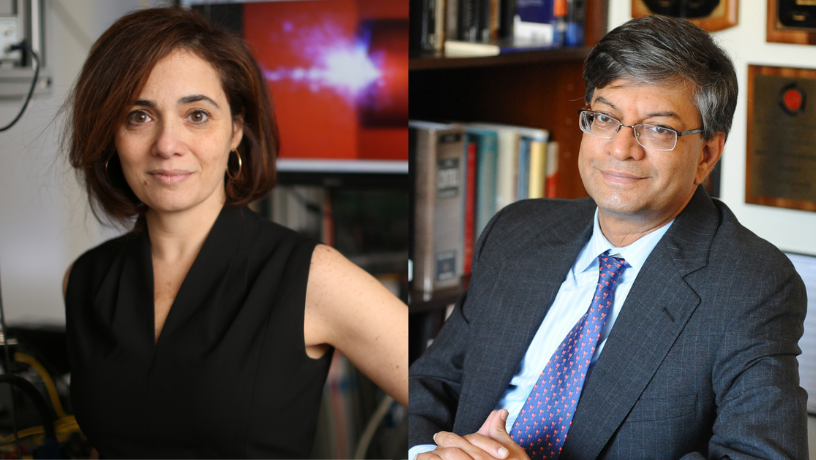
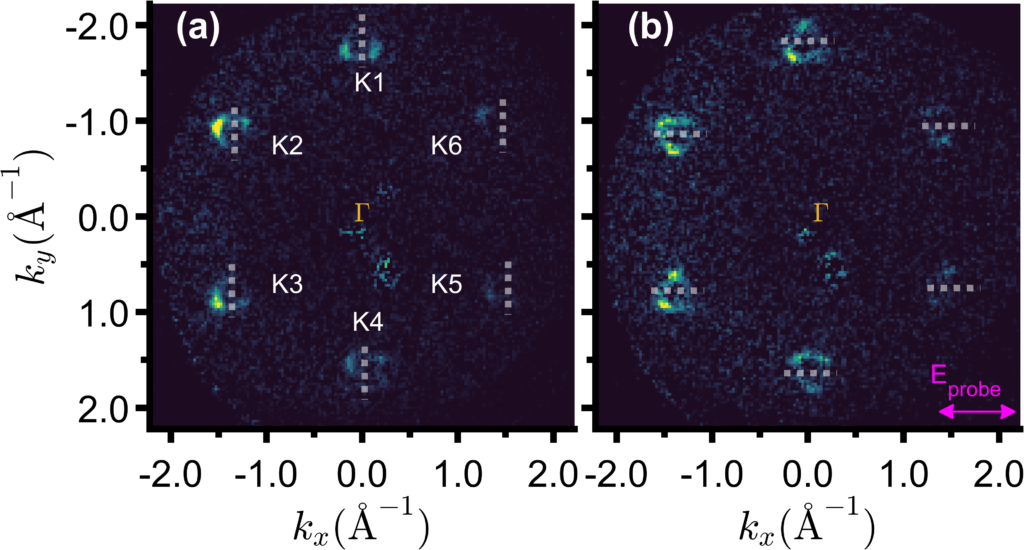
Professor Tom Allison leads an active research group at Stony Brook University focusing on ultrafast laser spectroscopy and nonlinear optics. His laboratory specializes in time- and angle-resolved photoemission spectroscopy (tr-ARPES) and frequency comb laser development for studying ultrafast dynamics in novel materials. His research interests center on understanding electron dynamics in two-dimensional materials, particularly graphene and transition metal dichalcogenides. Using sophisticated tr-ARPES instrumentation, his group investigates pseudospin dynamics, valley polarization, and exciton coupling with unprecedented momentum and energy resolution. The research bridges condensed matter physics, quantum materials, and ultrafast optical science. Professor Allison's recent publications demonstrate a strong focus on 2D materials physics, with particular attention to momentum-resolved phenomena in graphene and TMD heterostructures. His group combines cutting-edge experimental techniques with theoretical modeling to unravel complex ultrafast processes at the quantum level. Scientific Recognition: DOE Office of Science Highlight for work on valley polarization dynamics in monolayer WS2 NSF Major Research Instrumentation grant for developing high-power frequency combs Marie Skłodowskiej-Curie fellowship awarded to group member Grzegorz Professor Allison has successfully mentored multiple graduate students to completion of their degrees, including PhD candidates Jin Bakalis and Myles Silfies, and MS student Michael Wahl. His former postdoc Alice Kunin has secured an assistant professor position at Princeton University. Current research is supported by NSF funding for developing advanced frequency comb technology spanning from THz to soft x-ray regions.
Jung Han is the William A. Norton Professor of Electrical & Computer Engineering at Yale University, affiliated with the School of Engineering & Applied Science. He holds a Ph.D. from Purdue University and leads the Optoelectronics Materials and Devices Group, focusing on interdisciplinary research in III-nitride semiconductors, optoelectronics, and power electronics. His work bridges fundamental materials science with practical applications in solid-state lighting, energy harvesting, and next-generation electronics. Research interests include wide-bandgap semiconductor materials (e.g., GaN), nanoscale device fabrication, and epitaxial growth techniques. He pioneered nanoporous GaN distributed Bragg reflectors (DBRs) for high-efficiency LEDs and lasers, as well as selective-area growth methods for power electronics. His lab explores green energy technologies, flexible electronics, and hybrid organic-inorganic semiconductors. Publications emphasize advancements in GaN-based vertical-cavity surface-emitting lasers (VCSELs), SWIR detectors, and micro-LED displays. Recent work addresses challenges in defect control, scalability of III-nitride devices, and integration with emerging materials. His group collaborates across engineering, applied physics, and chemistry to advance sustainable energy and high-performance optoelectronics. Notable contributions include wafer-level integrated white-LEDs with quantum dots, damage-free in-situ GaN etching via TBCl, and stacking-fault-free GaN growth on foreign substrates. His research has been recognized in high-impact journals like Advanced Materials and Applied Physics Letters .
Prof. Peter Müller-Buschbaum is a Full Professor and Head of the Chair of Functional Materials at the Physics Department of the Technical University of Munich (TUM). He has held this position since April 2018 and also served as Scientific Director of the Research Neutron Source Heinz Maier-Leibnitz (FRM-II) and the Heinz Maier-Leibnitz Center (MLZ) from 2018 to 2023. His leadership extends to multiple roles including Core Member of the Integrated Research Institute Munich Institute of Integrated Materials, Energy and Process Engineering (MEP) since 2021, and Head of the Renewable Energies Network (NRG) at MEP. Full Professor (W3), Head of the Chair of Functional Materials at TUM School of Natural Sciences (since 04/2018) Deputy Editor of "ACS Applied Materials & Interfaces" (since 01/2024) Supervising Professor "Electronics Laboratory" at TUM School of Natural Sciences (since 11/2023) Member of TUM Sustainability Board (since 05/2023) Core Member of MEP Institute (since 10/2021) Head of Renewable Energies Network at MEP (since 10/2021) Prof. Müller-Buschbaum's research spans energy materials for photovoltaics and battery technologies, smart responsive materials that adapt to environmental stimuli, and nanocomposite materials with tailored properties. His group employs advanced scattering techniques to characterize materials at the nanoscale, providing insights into structure-property relationships critical for developing next-generation energy technologies. His extensive publication record demonstrates particular expertise in perovskite solar cells, lithium-ion battery technologies, and polymer-based functional materials, with recent work focusing on improving device stability and efficiency while understanding fundamental degradation mechanisms. His publications reveal a strong emphasis on energy conversion and storage technologies, with particular attention to interfacial engineering in both photovoltaic and battery systems. The research shows sophisticated integration of materials synthesis, advanced characterization, and device engineering to address critical challenges in renewable energy technologies. His work bridges fundamental science with practical applications through collaborations with major international research facilities. Scientific Service and Recognition Member of the Council of the Cluster of Excellence "ORIGINS" (since 01/2019) Spokesperson of the Chemical Physics and Polymer Physics Association of DPG (03/2021-10/2022) Member of the European Spallation Source Scientific Advisory Panel (since 03/2011) German representative at the European Polymer Federation for polymer physics (since 03/2011) Chairman of the Keylab "TUM.solar" in the Bavarian research project "Solar Technologies Go Hybrid" (since 03/2012) Prof. Müller-Buschbaum actively contributes to academic community through editorial work, having served as Associate Editor (2012-2022), Executive Editor (2023), and currently Deputy Editor (2024-present) of "ACS Applied Materials & Interfaces". He maintains strong international collaborations with synchrotron and neutron facilities worldwide, reflecting his expertise in advanced materials characterization techniques essential for cutting-edge materials research.
Ye (Sarah) Sun is an Associate Professor in the Department of Mechanical Engineering at the University of Virginia (UVA), part of the School of Engineering and Applied Science. She joined UVA in 2021 after serving as an Associate Professor at Michigan Technological University. Her work focuses on wearable sensors, robotics, smart health systems, and cyber-physical systems. She leads the WEARLab research group. Education: Ph.D. in Electrical Engineering from Case Western Reserve University (2021), B.S. in Instrumentation Engineering from Tianjin University (not specified). Research interests include wearable electronics, health monitoring, and human-technology interaction. Her interdisciplinary approach integrates engineering innovations with healthcare applications. Notable projects involve self-powered triboelectric sensors and optical fiber-based health monitoring systems. Recent publications highlight advancements in photodiode technologies for high-frequency applications, including millimeter-wave generation and photonic integrated circuits. Awards include the NSF CAREER Award (2018) and NSF BRITE Award (2022). She has organized major conferences and holds editorial roles in health technology journals. Grants include NSF funding for cyber-physical systems and smart health initiatives. Her lab collaborates on projects involving wearable robotics and connected health solutions, with a focus on real-world applications in healthcare and IoT.
Robert M. Weikle, II is a Professor in the Charles L. Brown Department of Electrical and Computer Engineering at the University of Virginia, with a courtesy appointment in the Department of Physics. He earned his B.S. from Rice University (1986), M.S. (1987), and Ph.D. (1992) in Electrical Engineering from Caltech, followed by postdoctoral work at Chalmers University of Technology (1992). His research focuses on millimeter-wave and terahertz electronics , applied electromagnetics, integrated antennas, low-noise sensors, and heterogeneous integration of compound semiconductors. His work bridges electronics and photonics for spectrum access, with applications in astronomy, spectroscopy, and metrology. He has published extensively on micromachined silicon substrates, superconducting materials, and emerging technologies. Scientific Awards: IEEE Microwave Prize (1993) David A. Harrison III Award (1999) University of Virginia All-University Outstanding Teaching Award (2000) Edlich-Henderson Innovator of the Year (2016) Fulbright Scholar (2001) As Chief Technology Officer and co-founder of Dominion Microprobes, Inc., he commercializes micromachined wafer probes for high-frequency metrology. His lab, located in E220 Thornton Hall and the Jesse W. Beams Physics Building, has produced 15+ recent publications on submillimeter-wave devices, THz probes, and calibration techniques.
Dr. Pier-John Sazio is a Principal Research Fellow at the University of Southampton. He is affiliated with the Smart Lasers and Special Fibres research group and has been involved in multiple research projects funded by the Engineering and Physical Sciences Research Council (EPSRC) and the United States Air Force. His work focuses on advanced materials engineering, photonics, and energy technologies, including photonic fibre technologies for solar fuels, solid-state batteries, and infrared sources. Research projects include: Roll-2-Roll (R2R) Manufacture of multilayer solid-state batteries Composite material hollow core fibres for active photonics Photonic Fibre Technologies for Solar Fuels Catalysis Zinc Selenide Fiber Infrared Sources & Isolators His research interests span photonics, materials engineering, and nanotechnology applications in energy storage and optoelectronics. He collaborates with international teams through initiatives like the Materials World Network. While no specific publications are listed here, his projects reflect contributions to cutting-edge materials and photonics research. Dr. Sazio has secured funding for over a dozen projects, demonstrating expertise in translating fundamental research into applied technologies. He is part of interdisciplinary teams addressing challenges in renewable energy, defense, and advanced manufacturing.
Maiken H. Mikkelsen is the James N. and Elizabeth H. Barton Associate Professor in the Department of Electrical and Computer Engineering at Duke University, with a joint appointment in the Department of Physics . Her research focuses on quantum nanophotonics , plasmonics , and light-matter interactions in nanoscale materials, aiming to advance optoelectronics, quantum science, and biomedical diagnostics. Education B.S. in Physics, University of Copenhagen (2004) Ph.D. in Physics, University of California, Santa Barbara (2009) Postdoctoral Fellowship, University of California, Berkeley Her work explores nanophotonic engineering for quantum optics , spintronics , and ultrafast optoelectronics , with recent studies on nonlinear metasurfaces and plasmonic enhancement of immunoassays for point-of-care diagnostics. Publications highlight 2D semiconductor emission control , ultrafast single-photon sources , and metasurface-based photodetectors . Scientific Awards Maria Goeppert Mayer Award (2017) NSF CAREER Award (2015) Moore Inventor Fellow (2021) ONR/Air Force/Army Young Investigator Awards (2015-2017) Cottrell Scholar (2016) Stansell Family Distinguished Research Award (2021) She advises graduate students in Duke’s Electrical & Computer Engineering and Physics programs and leads the Mikkelsen Lab , which emphasizes ultrafast spectroscopy and quantum material development . The lab has graduated PhD students like Eunso Shin and Hengming Li (2025).
Dr. Qingbo Sun is a researcher at the Department of Materials Physics, Australian National University, specializing in advanced materials for energy and electronic applications. His work focuses on defect engineering, dielectric materials, and photovoltaic effects in nanocrystalline systems. Research interests include: Defect-driven local symmetry breaking Colossal dielectric permittivity Photocatalytic heterojunctions High-pressure material transformations Doping strategies in semiconductors Nonlinear electric polarization Research trends from his publications highlight innovations in TiO2-based photocatalysts, SnO2 dielectrics, and ferroelectric heterostructures. Collaborations span materials synthesis, computational modeling, and international experimental studies. His work is cited extensively in Scopus with 294 citations.
Vladimir Bulović is a Professor of Electrical Engineering and Computer Science at MIT, holding the Fariborz Maseeh Chair in Emerging Technology. He serves as Founding Director of MIT.nano, a 20,000 m² nanofabrication and prototyping facility. His research focuses on nanoscale materials, renewable energy, and optoelectronics, with emphasis on scalable solar technologies and printed electronics. Education: B.S.E. and Ph.D. in Electrical Engineering from Princeton University. Research Interests: Development of thin-film photovoltaics (perovskites, organic PVs), energy-efficient optoelectronics, and advanced manufacturing techniques. His work bridges nanotechnology with real-world applications, such as transparent solar cells and flexible electronics. Key innovations include vapor transport deposition (VTD) for perovskite solar cells and scalable printed electronics. Publications: Over 250 articles (45,000+ citations) focus on perovskite materials, semiconductor fabrication, and optoelectronic device optimization. Recent trends emphasize machine learning-driven materials design and stability enhancement strategies for photovoltaics. Awards: MacVicar Fellowship (2018), Top 1% Highly Cited Researcher (2018) Advising & Grants: Co-founded Ubiquitous Energy, Kateeva, and QD Vision. Led projects on grid-edge solar solutions and MIT-Eni Solar Frontiers Center. Served as Associate Dean for Innovation and Director of MIT’s Innovation Initiative (2013–2018). Labs/Teams: Directs the Organic and Nanostructured Electronics Lab and oversees MIT.nano’s interdisciplinary research programs.
Associate Professor Judy Hart is a materials scientist at the School of Materials Science & Engineering, UNSW Sydney , specializing in the development of semiconducting materials for renewable energy applications. Her work integrates computational (DFT) and experimental approaches to understand composition-property relationships in systems like solid solutions , heterostructures , and doped materials for photocatalysis and solar cells . She leads projects funded by ARC Discovery and Linkage grants , including work on photo-electro-catalysis systems and stabilizing ceramic materials . Education: PhD in Materials Engineering (Monash University, 2007), BEng (Materials) (Monash, 2002) Professional Experience: Senior Lecturer (UNSW, 2017–), Lecturer (UNSW, 2013–2017), University of Bristol (2007–2012) Research Interests Her research focuses on designing materials for renewable energy , particularly photoelectrochemical water splitting and organic oxidation reactions . Key areas include Density Functional Theory (DFT) , defect engineering , band gap tuning , and nanostructured materials . She investigates ferroelectric polarization effects , metal oxide heterostructures , and stability of battery components , with applications in hydrogen production , CO2 conversion , and advanced battery materials . Scientific Awards Ramsay Memorial Fellowship (University of Bristol, 2007–2009) Teaching Contributions She is co-author of the 1st Australian & New Zealand edition of "Materials Science and Engineering: An Introduction" , and teaches courses on computational materials science , corrosion-resistant surfaces , mechanical behavior of metals , and materials design .